Bear Market Financial Report Comparison: Pure Crypto Exchanges vs. Multi-Asset Platforms, Robinhood More Resilient Than Coinbase

marsbitPubblicato 2026-05-14Pubblicato ultima volta 2026-05-14

Introduzione

Bear Market Earnings Showcase the Resilience of Multi-Asset Platforms vs. Crypto-Only Exchanges Coinbase and Robinhood's recent earnings reports, both missing expectations and erasing $12 billion in market value, highlight a core vulnerability of exchange models in a crypto downturn: heavy reliance on transaction fees. Coinbase's Q1 revenue fell 31% to $1.41 billion, with a net loss of $394 million, driven by a 40% drop in transaction revenue as spot trading volumes plummeted. While its subscription and services segment (44% of revenue) offers some buffer, key components like stablecoin revenue remain tied to trading activity. In contrast, Robinhood reported a 15% revenue increase to $1.07 billion, with net income of $350 million. Although its crypto trading revenue fell 47%, this was offset by strong growth in other areas: prediction market revenue surged 320%, stock revenue grew 46%, and options revenue rose 8%. This diversification, with transaction revenue still at 58% of the total, made Robinhood more resilient. The analysis extends to platforms like Revolut, where payments and banking are central. In 2025, Revolut's revenue grew 45% to $6.1 billion, evenly spread across segments. Its wealth segment (including crypto, stocks, and CFDs) constituted just 15% of revenue, making it far less exposed to crypto market cycles than Coinbase or even Robinhood. The key takeaway is that platforms with diversified, non-correlated revenue streams—particularly through derivatives, ...

Author: Lex

Compiled by: Deep Tide TechFlow

Deep Tide Introduction: Coinbase and Robinhood both reported earnings below expectations last week, erasing $12 billion in market value. This exposes a fundamental issue with the exchange model: how to survive in a bear market when revenue is highly dependent on trading fees? Platforms like Revolut, which are payment-centric, are almost unaffected, with trading income accounting for only 15% of their revenue. This comparison reveals the underlying logic of competition among fintech platforms.

Cryptocurrency is in the depths of a bear market.

Bitcoin hovers around $80,000, down approximately 36% from its peak of $126,000 in October 2025. Spot trading volume on centralized exchanges has fallen to its lowest level since September 2019, down 44% year-over-year in the first quarter according to Coinbase data.
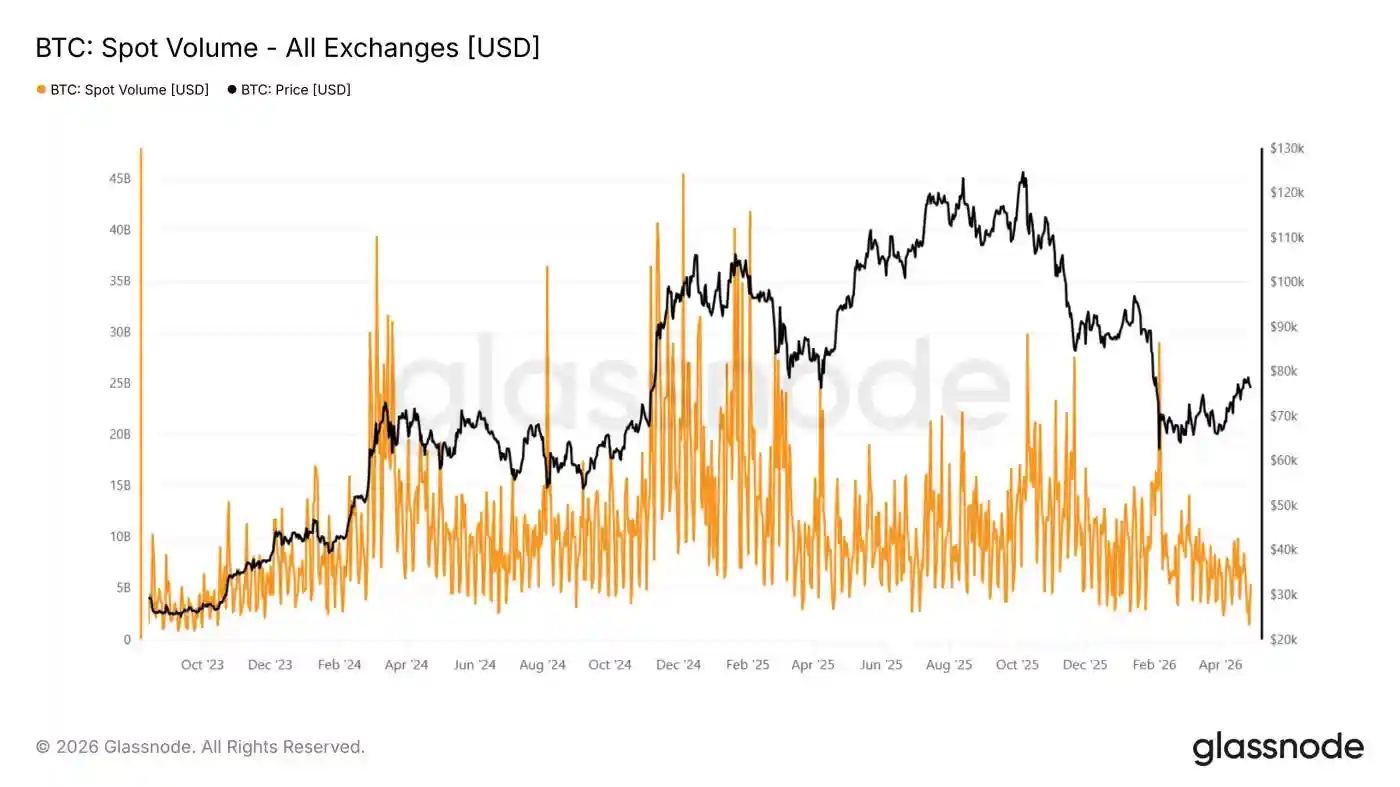
Some on-chain analysts believe the recent rebound from $60,000 may lack sustained momentum. This has been the longest bear market rally of the past two cycles, but it appears more technically than fundamentally driven. Open interest in derivatives (perpetual contracts) has risen, but spot activity is low, suggesting the rise is driven more by short liquidations and speculative position unwinding than persistent buying.

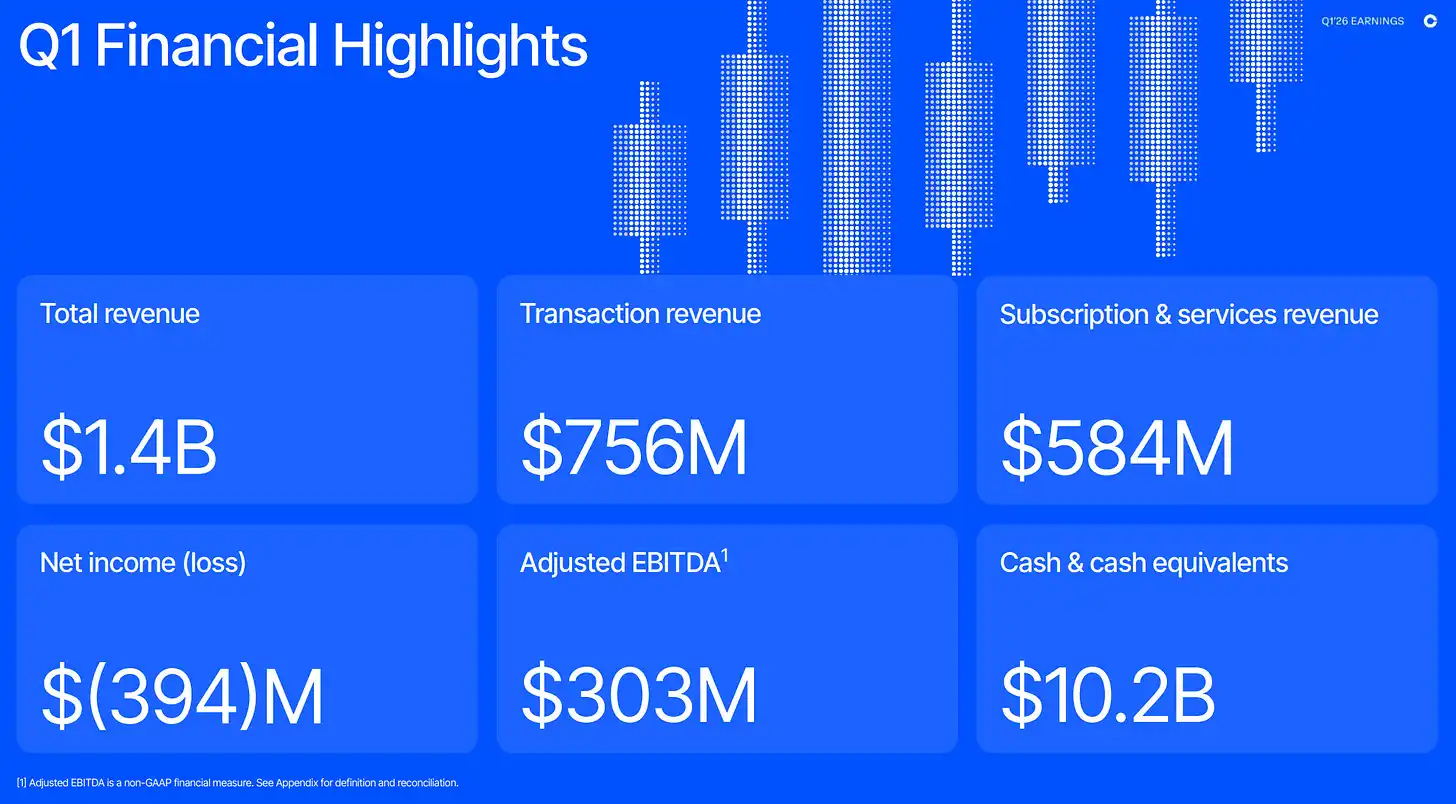
Decreased trading activity is eroding platform revenue. Coinbase's revenue fell 31% year-over-year to $1.41 billion, with a net loss of $394 million, compared to a profit of $66 million in the same period last year. Management also announced layoffs of 700 employees (about 14% of its workforce) the same week, citing both crypto cyclicality and a cost "reset for the AI era."
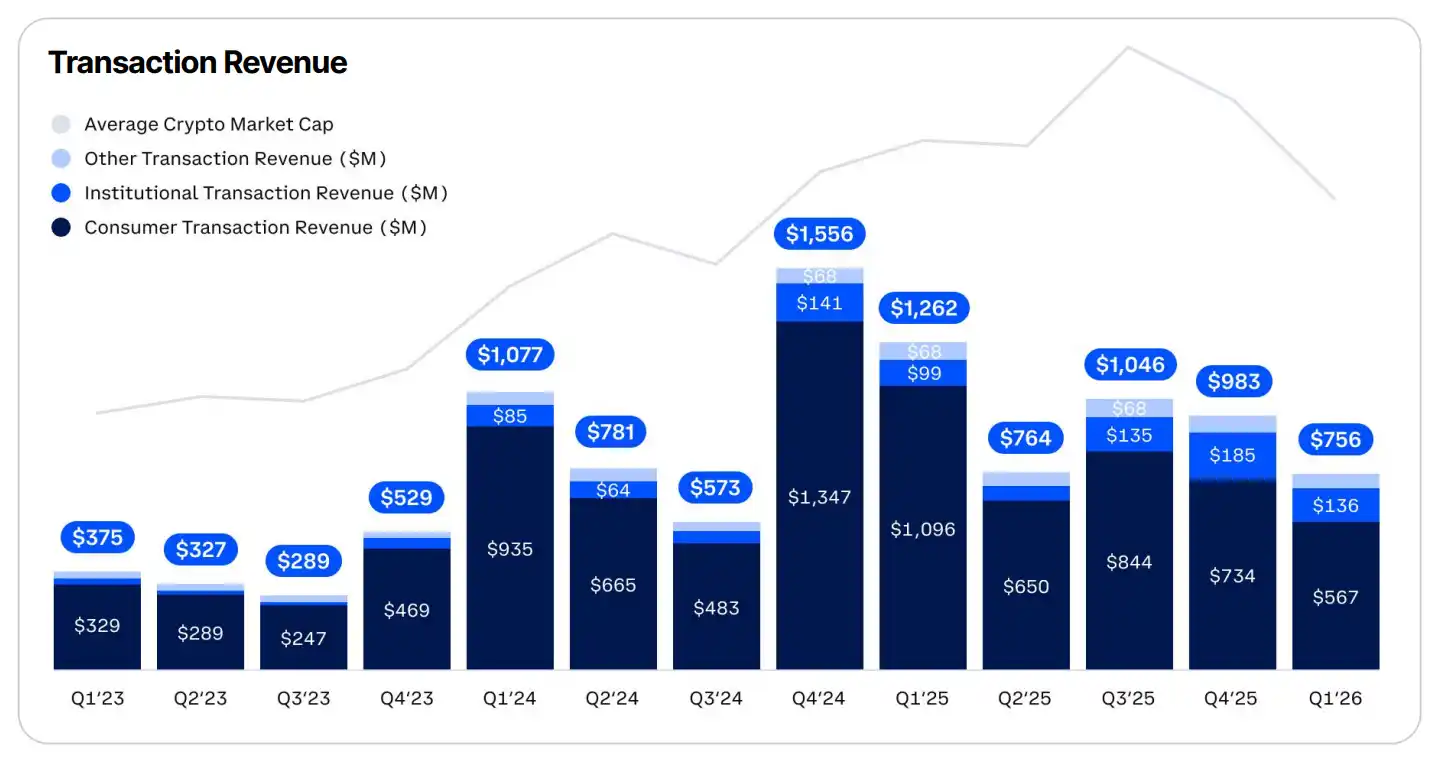
Trading business is at the center of the decline.

Transaction revenue accounted for 56% of total revenue in Q1, down 40% year-over-year. Consumer transaction revenue fell 48% to $567 million. Institutional transaction revenue actually grew during this period, but this was almost entirely due to the $4.3 billion acquisition of Deribit completed in August 2025; organic institutional trading volume actually fell 48%.
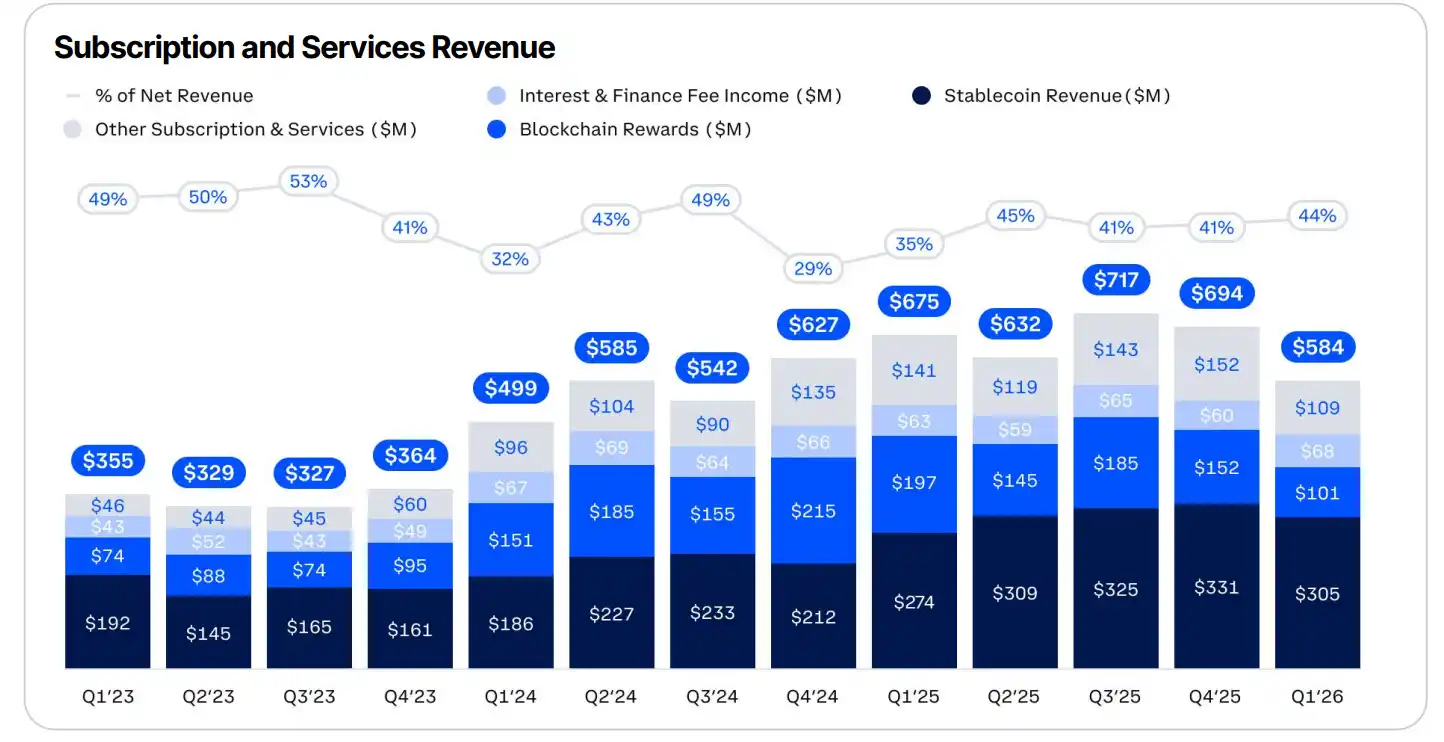
The remaining revenue comes from subscriptions and services, distributed across stablecoin revenue (interest earned from customer USDC balances via Coinbase's partnership with Circle), blockchain rewards, interest and financing fees, and other subscription products like Coinbase One.

This segment now accounts for 44% of total revenue, which management positions as a "durable buffer" against trading volatility. But this is somewhat misleading. Stablecoin revenue is the largest single item, accounting for 22% of net revenue, up 11% year-over-year, but it is also highly correlated with trading volume. Customers move into USDC to avoid volatility or rotate between assets, but reconfigure back into volatile assets once the market turns. This dynamic partly explains why the proportion of subscription and service revenue to total revenue has looked fairly steady over the past 3 years.
Meanwhile, Robinhood reported stronger numbers.

Revenue increased 15% year-over-year to $1.07 billion, with net profit of $350 million, but still missed analysts' revenue expectations. Like Coinbase, the miss was driven by crypto, with related transaction revenue falling 47% year-over-year to $134 million. Notably, this was the only major revenue line item to decline year-over-year.
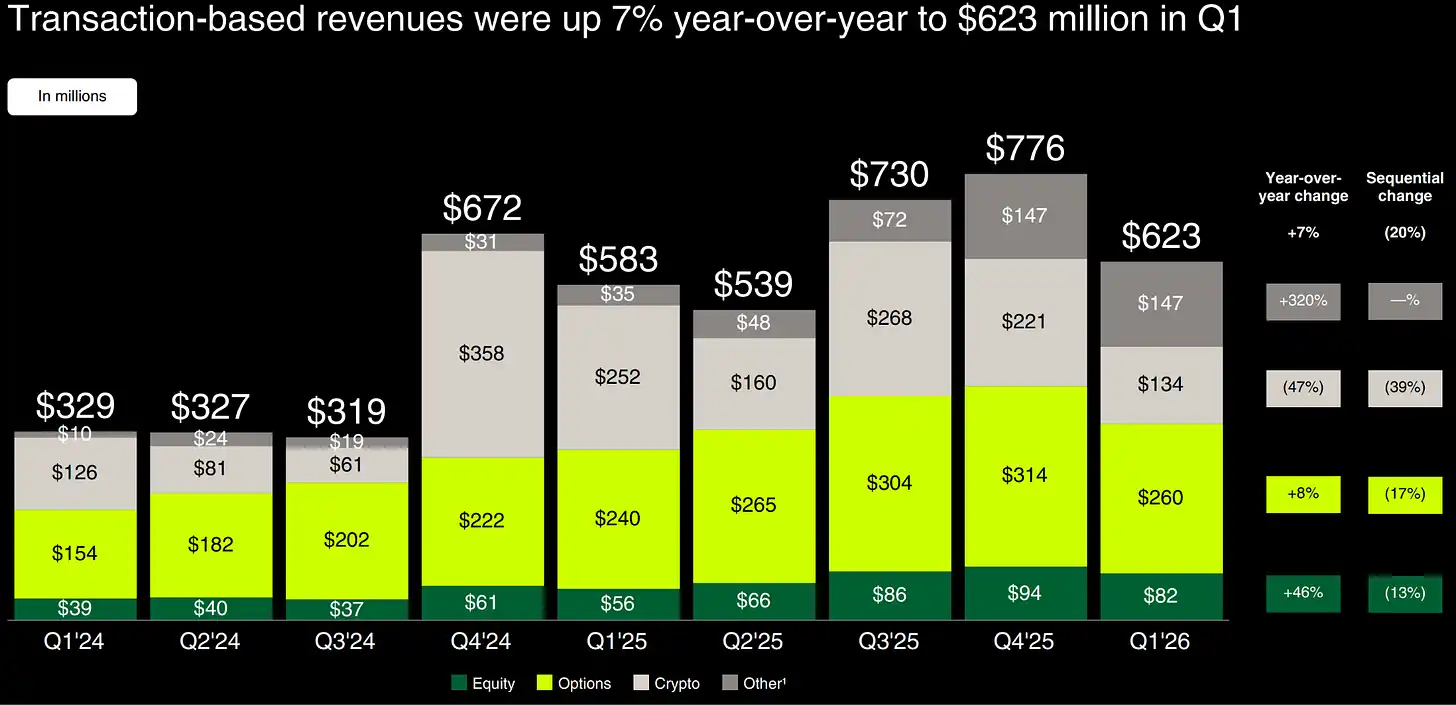
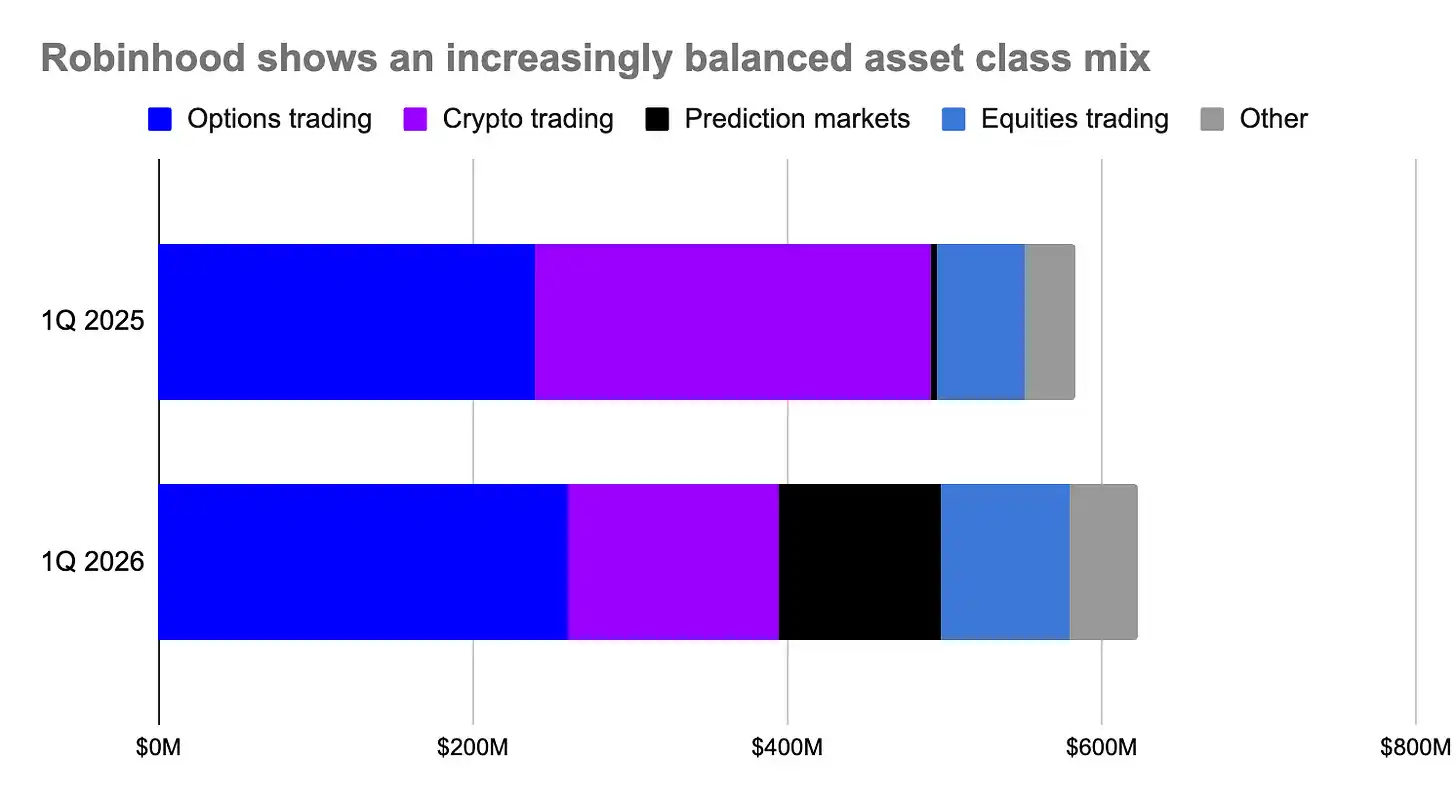
Trading still accounts for 58% of Robinhood's revenue, basically flat from a year ago. But due to the diversity of tradable asset classes, the company has performed better throughout the bear market. Total transaction revenue grew 7% year-over-year to $623 million, driven by a 320% surge in prediction market revenue via Robinhood's partnership with Kalshi, a 46% increase in stock revenue, and 8% growth in options.
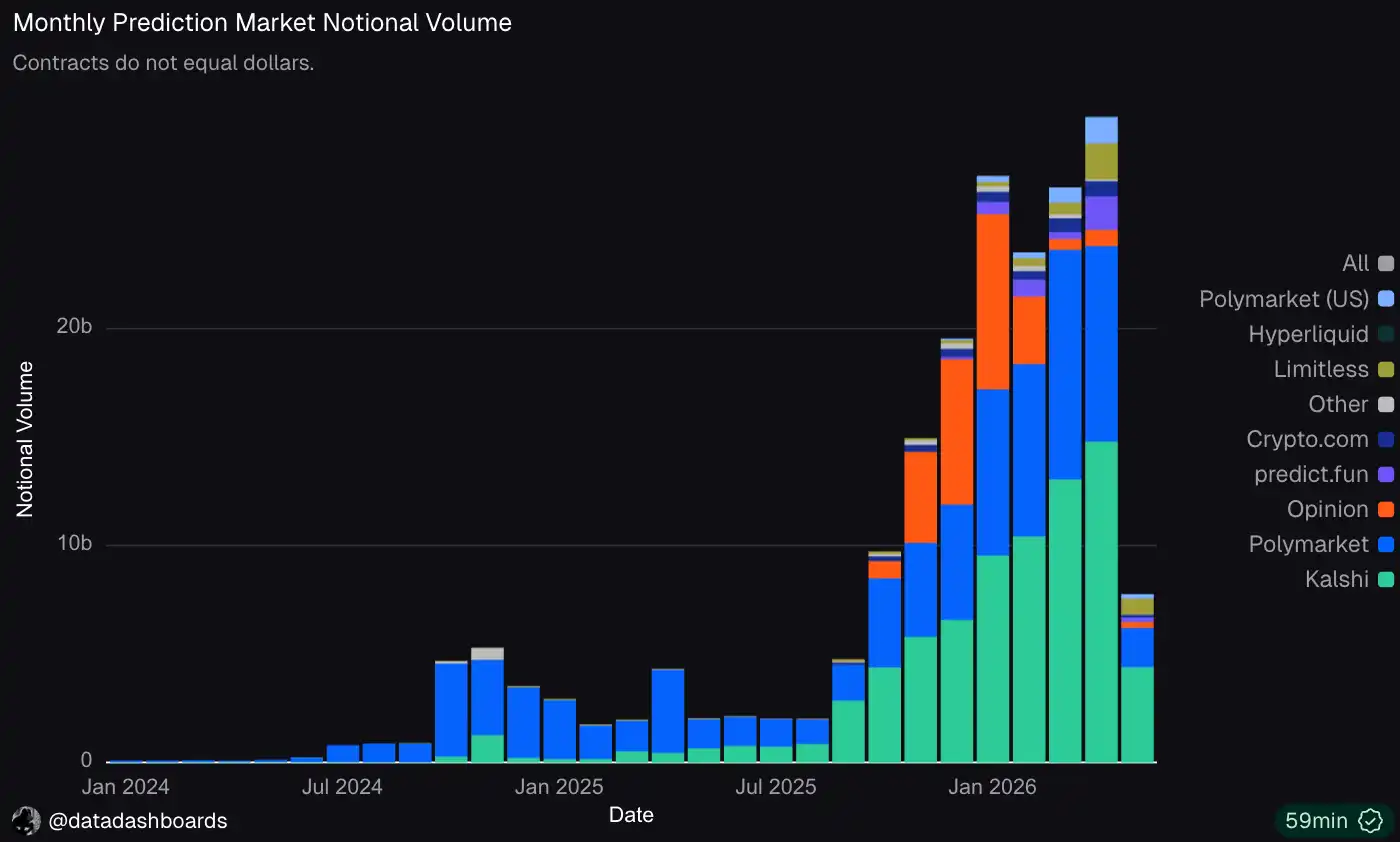
Derivatives like prediction markets and perpetual contracts have shown more resilience during downturns. Kalshi raised $1 billion last week at a $22 billion valuation, doubling its valuation in just 6 months and tripling its annualized trading volume to $178 billion.

Event-driven trading, like predictions, often focuses on sports, elections, and economic data, making it less sensitive to the broader market. But growth also stems from institutions starting to use it as a hedging tool during market volatility. There is an organic adoption tailwind masking the cyclicality.
Perpetual contracts show a similar pattern. As of the end of April, the total value of leveraged positions by traders on Hyperliquid (measured as "open interest") was $4.3 billion, having grown 9% over the past two months despite the general collapse in spot markets. While this metric is still down from the October peak, it is clearly performing better.

This is significant for trading platforms that have these features.

Prediction markets now account for 17% of Robinhood's total transaction revenue!

While it doesn't directly offer perpetual contracts, it does offer similar margin trading on stocks and crypto, and earns interest from it. In Q1 2026, margin interest revenue grew 75% year-over-year to $193 million, accounting for 18% of total revenue.

Coinbase is a latecomer to this shift. While it launched prediction markets and perpetual contracts for retail customers in January 2026, it hasn't yet had a material impact on its P&L. Consequently, the exchange has greater exposure to spot trading.

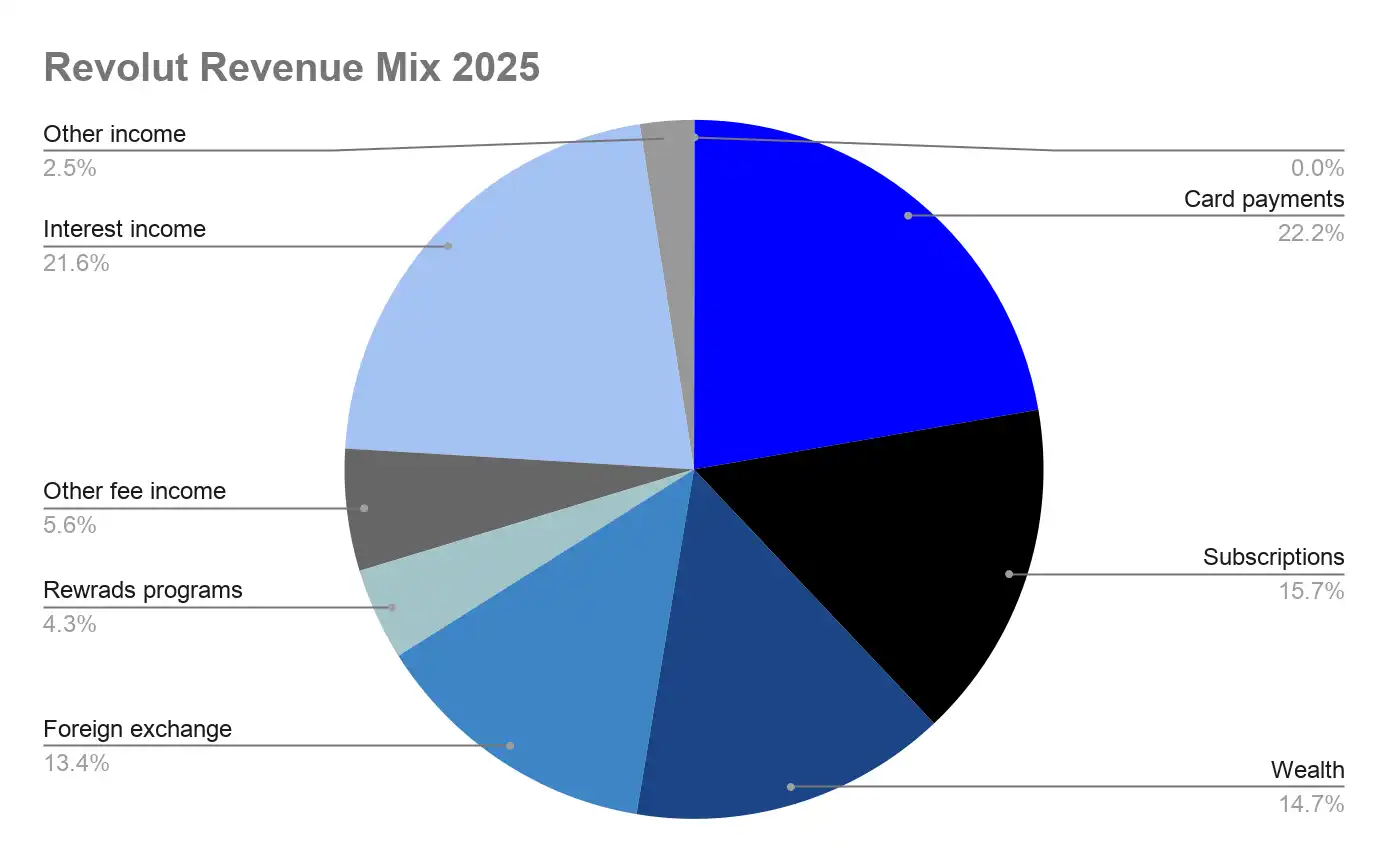
Fintech platforms centered on payments and banking, but with significant trading activity like Revolut, are much less affected. Revenue grew strongly by 45% to $6.1 billion in 2025, with a balanced distribution across major revenue streams, each accounting for 13-22% of total revenue.

Card interchange fees and interest income are the two largest items, each around $1.3 billion. Crypto trading, along with stocks and CFDs, falls under the Wealth segment, accounting for 15% of total revenue—a fraction of Robinhood's exposure and a sliver of Coinbase's.
Notably, Revolut's interest income is similar to Coinbase's stablecoin revenue, both monetizing idle customer balances. As of year-end, Revolut held 90% of its $68 billion customer balance in cash and treasury investments. But the behavior driving these balances is fundamentally different. Revolut's deposits grow with primary banking relationships and direct deposit growth (up 45% year-over-year), while Coinbase's USDC balances grow as willingness to trade declines. If the crypto market turns more bullish, Coinbase is more likely to see balances decline.

The challenge for trading-first platforms like Coinbase and Robinhood is whether they can meaningfully expand into adjacent financial products while being tightly linked to market cycles. Robinhood has shown that diversity in tradable asset classes, especially prediction markets and derivatives, can act as a hedge.

Coinbase is moving in a similar direction. The risk is that a prolonged bear market hinders their growth ability, while fintech competitors like Revolut, Nubank, and Cash App take a greater share of customer deposits.


Domande pertinenti

QAccording to the article, why did Coinbase's revenue decline in the last quarter, and what was the main driver?

ACoinbase's revenue declined 31% year-over-year to $1.41 billion, primarily driven by a 40% drop in transaction revenue. This was due to decreased trading activity in the crypto bear market, with consumer transaction revenue specifically falling 48%.

QHow did Robinhood's performance in the recent quarter differ from Coinbase's, especially regarding revenue sources?

ARobinhood's revenue grew 15% year-over-year to $1.07 billion, while Coinbase's fell. A key difference was the diversity of Robinhood's revenue streams. Although its crypto transaction revenue dropped 47%, this was offset by significant growth in prediction markets (up 320%), stock trading (up 46%), and options trading (up 8%).

QWhat is the fundamental business model challenge highlighted for trading-first platforms like Coinbase and Robinhood during a bear market?

AThe fundamental challenge is their heavy reliance on transaction fees, which are highly cyclical and tied directly to market trading volumes. During a prolonged bear market with low activity, their core revenue stream suffers significantly, raising questions about sustainability and growth.

QWhy is a platform like Revolut less affected by the crypto bear market compared to Coinbase or Robinhood, based on the article?

ARevolut is less affected because its business model is centered on payments and banking, not trading. Crypto trading is part of its 'Wealth' segment, which constitutes only about 15% of its total revenue. Its largest revenue streams are card interchange fees and interest income, which are more stable and less tied to crypto market cycles.

QWhat new product areas does the article suggest are more resilient during market downturns, and which company has benefited from this?

AThe article suggests that derivatives and event-driven trading products like prediction markets are more resilient during downturns. Robinhood has significantly benefited from this through its partnership with Kalshi (prediction markets), which now represents 17% of its total transaction revenue and saw a 320% year-over-year increase.

Letture associate

Warsh's First Day in Office, Markets Deliver a 'Wake-up Call': Rate Hike Expected This Year

On his first day in office, newly inaugurated Federal Reserve Chairman Warsh received a stark market warning, with expectations now fully pricing in a 25-basis-point interest rate hike this year. The shift was triggered by hawkish remarks from Fed Governor Waller, who stated that inflation is now the key policy "driver" and that the odds of a hike or cut are evenly split. This sent short-term Treasury yields higher. Waller signaled a significant pivot in his stance, citing disappointing inflation and labor data. He suggested removing "easing bias" language from Fed statements and did not rule out future rate increases if inflation fails to recede, though he noted immediate action isn't warranted without signs of unanchored inflation expectations. Chairman Warsh faces immediate pressure at his first FOMC meeting in June. With the preferred inflation gauge at a three-year high, analysts warn that failing to hike could be interpreted as an implicit easing of policy. The geopolitical situation in the Middle East is adding to existing price pressures. The market's expectation for a hike contrasts sharply with earlier forecasts for multiple cuts. While long-term Treasury yields have been contained by lower energy prices recently, analysts note they remain under structural upward pressure. Warsh's swearing-in at the White House highlights political scrutiny over Fed independence. However, the market has made it clear that inflation is the most urgent challenge, leaving the new chairman little time to settle in.

marsbit1 h fa

Warsh's First Day in Office, Markets Deliver a 'Wake-up Call': Rate Hike Expected This Year

marsbit1 h fa

Has Microsoft Lost Its Way in the AI Race, and Can Copilot Bring It Back on Track?

Microsoft, once seen as an early AI frontrunner due to its investment in OpenAI, is navigating a strategic shift amid increased competition. Its initial reliance on OpenAI’s GPT models has been complicated by OpenAI’s growing ambitions as a direct competitor, rapid advancements from rivals like Claude and Gemini, and the disruptive rise of AI agents, which challenge its traditional SaaS business model. These factors contributed to stock declines and slower-than-expected adoption of its flagship Copilot products. In response, CEO Satya Nadella has taken a hands-on role in product development, signaling the urgency of change. Microsoft is pivoting from a model-centric strategy to a "model-agnostic" enterprise platform approach. It aims to become the foundational layer connecting various AI models—from OpenAI, Anthropic, or its own new "Superintelligence" team—with enterprise workflows, data, security, and cloud services. Recent organizational changes merged consumer and enterprise Copilot teams to accelerate innovation, exemplified by new products like Copilot Tasks and Copilot Cowork. However, this transformation comes at a high cost. Microsoft faces massive capital expenditures, potentially reaching ~$190 billion by 2026, to support AI infrastructure. While its platform strategy shows early signs of traction with growing Azure AI revenue, it must balance startup-like agility with the reliability expected by enterprise clients. The core challenge is no longer being the sole AI winner but defending its position as the essential enterprise software entry point amidst rapid technological commoditization and the shift towards always-on AI agents.

marsbit1 h fa

Has Microsoft Lost Its Way in the AI Race, and Can Copilot Bring It Back on Track?

marsbit1 h fa

Why Haven't Forex Stablecoins Taken Off?

Why FX Stablecoins Never Took Off: A Path Forward via Synthetic FX Despite the explosive growth of stablecoin-powered digital banking, which has seen ~$6B in VC investment and a 24x surge in crypto card spending in under a year, a major limitation persists: these banks are essentially dollar-only accounts. This leaves 95-99% of global accounts, which are denominated in non-USD currencies, underserved. Attempts to create native foreign currency (FX) stablecoins (like EURC) have largely failed, with total FX stablecoin TVL at ~$600M compared to $400B for USD stablecoins—a 700x gap. These FX tokens face critical challenges: fragile pegs due to low liquidity, limited exchange/FinTech acceptance, poor on/off-ramps, complex regional compliance, and a chicken-and-egg adoption problem. The article argues that the solution lies not in competing with entrenched USD stablecoin networks (USDT/USDC), but in adopting a synthetic FX model inspired by traditional finance. Specifically, it advocates for Mark-to-Market Non-Deliverable Forwards (NDFs)—cash-settled FX derivatives that allow users to maintain underlying USD stablecoin holdings while having their account balance and P&L denominated in a foreign currency. This approach offers key advantages: strong oracle-based pegs, retention of deep USD stablecoin liquidity and yield, superior on/off-ramps, scalability to any currency with a reliable feed, and capital efficiency. It mirrors how modern institutional FX markets operate. Primary use cases for on-chain NDFs include: 1. **Digital Banks/Wallets:** Enabling multi-currency accounts for international users without leaving the USD stablecoin ecosystem, boosting deposits and retention. 2. **FX Carry Trade Vaults:** Offering access to sovereign interest rate differentials (e.g., earning yield on BRL) in a more stable and scalable format than crypto-native products like Ethena. 3. **Global Enterprise Payments:** Allowing merchants to receive payments in local currency equivalents while settling in USD stablecoins, similar to services offered by Stripe for fiat. The conclusion is that synthetic FX, not native FX stablecoins, is the viable path to integrating foreign exchange into the growing stablecoin digital banking landscape, potentially unlocking the next phase of institutional DeFi and multi-trillion-dollar global adoption.

链捕手2 h fa

Why Haven't Forex Stablecoins Taken Off?

链捕手2 h fa

Trading

Spot
Futures
活动图片




