Bear Market Financial Report Comparison: Pure Crypto Exchanges vs. Multi-Asset Platforms, Robinhood More Resilient Than Coinbase

marsbitPubblicato 2026-05-14Pubblicato ultima volta 2026-05-14

Introduzione

Bear Market Earnings Showcase the Resilience of Multi-Asset Platforms vs. Crypto-Only Exchanges Coinbase and Robinhood's recent earnings reports, both missing expectations and erasing $12 billion in market value, highlight a core vulnerability of exchange models in a crypto downturn: heavy reliance on transaction fees. Coinbase's Q1 revenue fell 31% to $1.41 billion, with a net loss of $394 million, driven by a 40% drop in transaction revenue as spot trading volumes plummeted. While its subscription and services segment (44% of revenue) offers some buffer, key components like stablecoin revenue remain tied to trading activity. In contrast, Robinhood reported a 15% revenue increase to $1.07 billion, with net income of $350 million. Although its crypto trading revenue fell 47%, this was offset by strong growth in other areas: prediction market revenue surged 320%, stock revenue grew 46%, and options revenue rose 8%. This diversification, with transaction revenue still at 58% of the total, made Robinhood more resilient. The analysis extends to platforms like Revolut, where payments and banking are central. In 2025, Revolut's revenue grew 45% to $6.1 billion, evenly spread across segments. Its wealth segment (including crypto, stocks, and CFDs) constituted just 15% of revenue, making it far less exposed to crypto market cycles than Coinbase or even Robinhood. The key takeaway is that platforms with diversified, non-correlated revenue streams—particularly through derivatives, ...

Author: Lex

Compiled by: Deep Tide TechFlow

Deep Tide Introduction: Coinbase and Robinhood both reported earnings below expectations last week, erasing $12 billion in market value. This exposes a fundamental issue with the exchange model: how to survive in a bear market when revenue is highly dependent on trading fees? Platforms like Revolut, which are payment-centric, are almost unaffected, with trading income accounting for only 15% of their revenue. This comparison reveals the underlying logic of competition among fintech platforms.

Cryptocurrency is in the depths of a bear market.

Bitcoin hovers around $80,000, down approximately 36% from its peak of $126,000 in October 2025. Spot trading volume on centralized exchanges has fallen to its lowest level since September 2019, down 44% year-over-year in the first quarter according to Coinbase data.
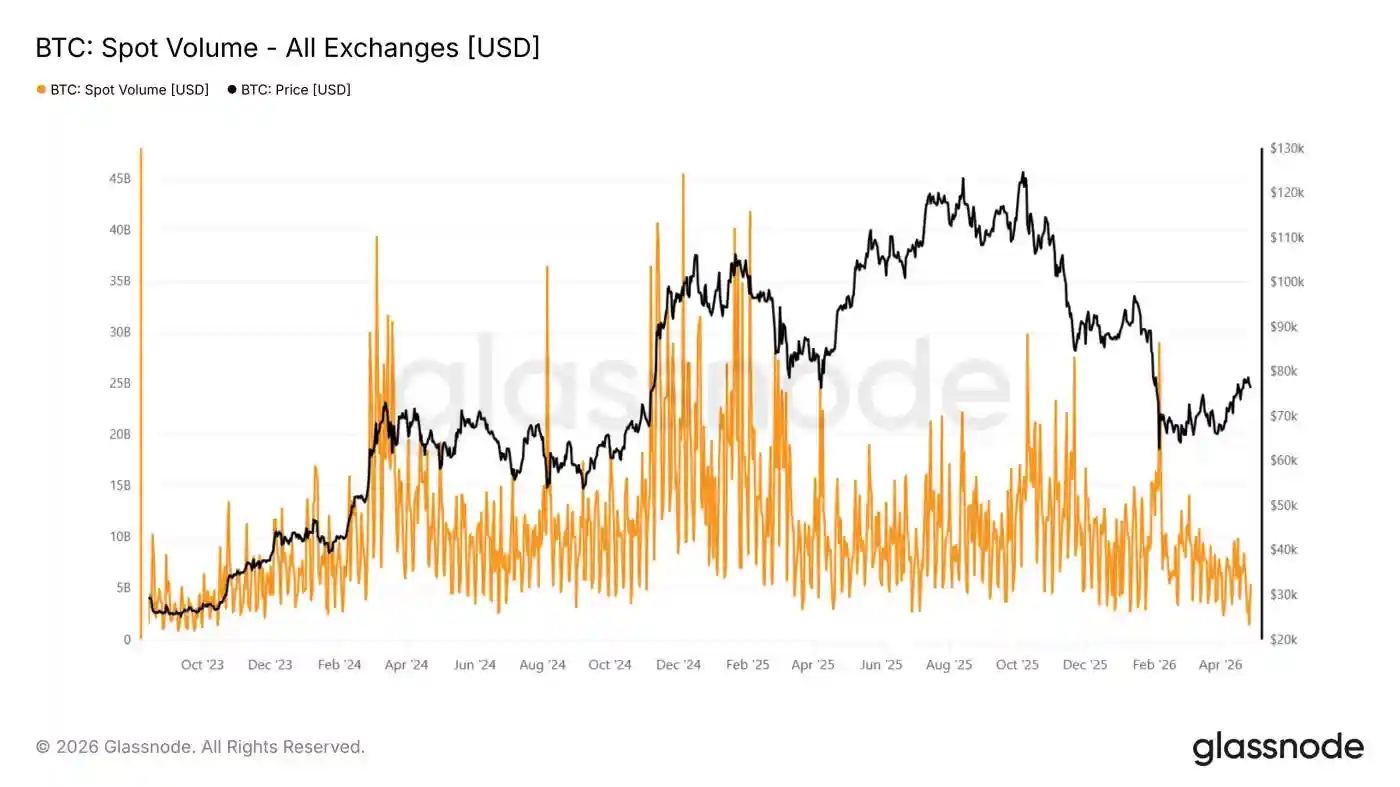
Some on-chain analysts believe the recent rebound from $60,000 may lack sustained momentum. This has been the longest bear market rally of the past two cycles, but it appears more technically than fundamentally driven. Open interest in derivatives (perpetual contracts) has risen, but spot activity is low, suggesting the rise is driven more by short liquidations and speculative position unwinding than persistent buying.

Decreased trading activity is eroding platform revenue. Coinbase's revenue fell 31% year-over-year to $1.41 billion, with a net loss of $394 million, compared to a profit of $66 million in the same period last year. Management also announced layoffs of 700 employees (about 14% of its workforce) the same week, citing both crypto cyclicality and a cost "reset for the AI era."
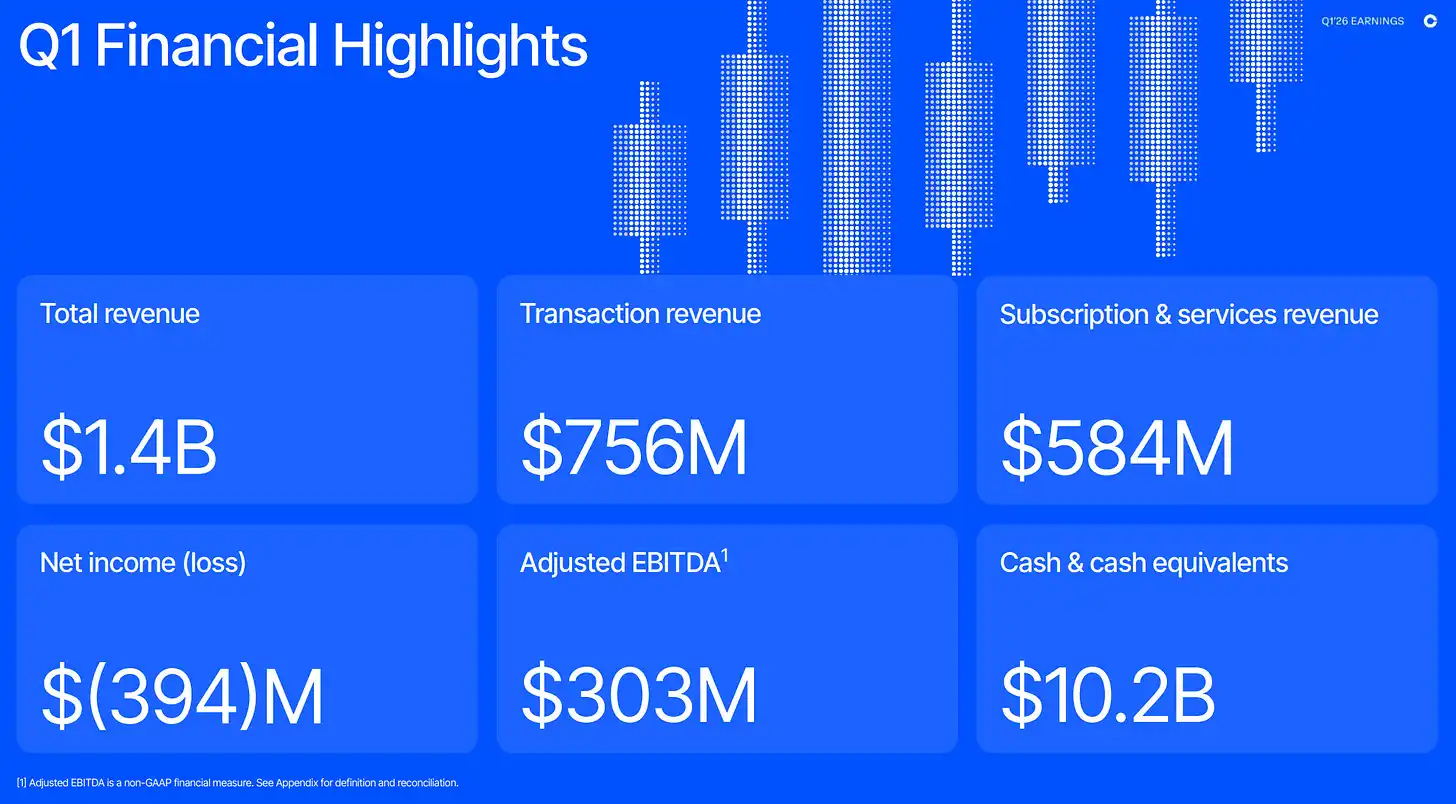
Trading business is at the center of the decline.

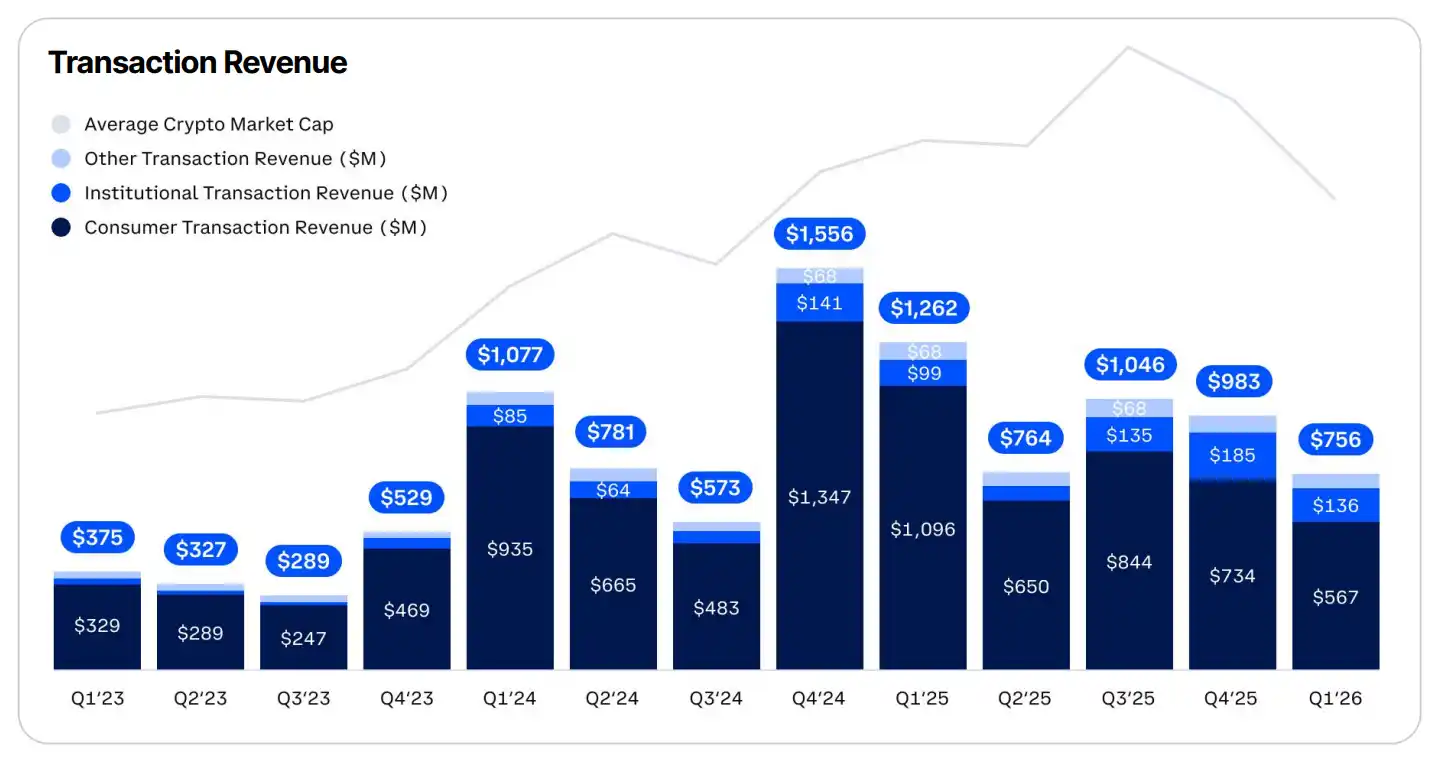
Transaction revenue accounted for 56% of total revenue in Q1, down 40% year-over-year. Consumer transaction revenue fell 48% to $567 million. Institutional transaction revenue actually grew during this period, but this was almost entirely due to the $4.3 billion acquisition of Deribit completed in August 2025; organic institutional trading volume actually fell 48%.
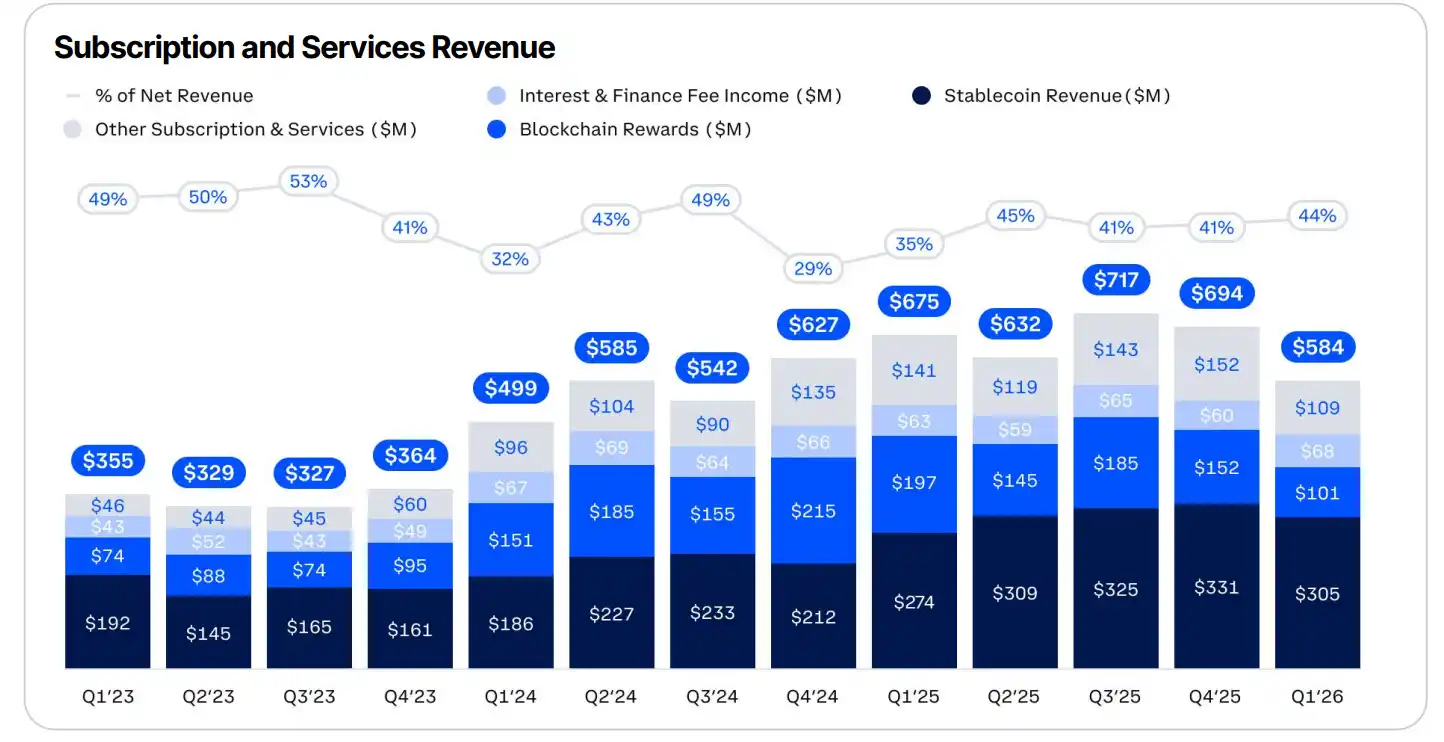
The remaining revenue comes from subscriptions and services, distributed across stablecoin revenue (interest earned from customer USDC balances via Coinbase's partnership with Circle), blockchain rewards, interest and financing fees, and other subscription products like Coinbase One.

This segment now accounts for 44% of total revenue, which management positions as a "durable buffer" against trading volatility. But this is somewhat misleading. Stablecoin revenue is the largest single item, accounting for 22% of net revenue, up 11% year-over-year, but it is also highly correlated with trading volume. Customers move into USDC to avoid volatility or rotate between assets, but reconfigure back into volatile assets once the market turns. This dynamic partly explains why the proportion of subscription and service revenue to total revenue has looked fairly steady over the past 3 years.
Meanwhile, Robinhood reported stronger numbers.

Revenue increased 15% year-over-year to $1.07 billion, with net profit of $350 million, but still missed analysts' revenue expectations. Like Coinbase, the miss was driven by crypto, with related transaction revenue falling 47% year-over-year to $134 million. Notably, this was the only major revenue line item to decline year-over-year.
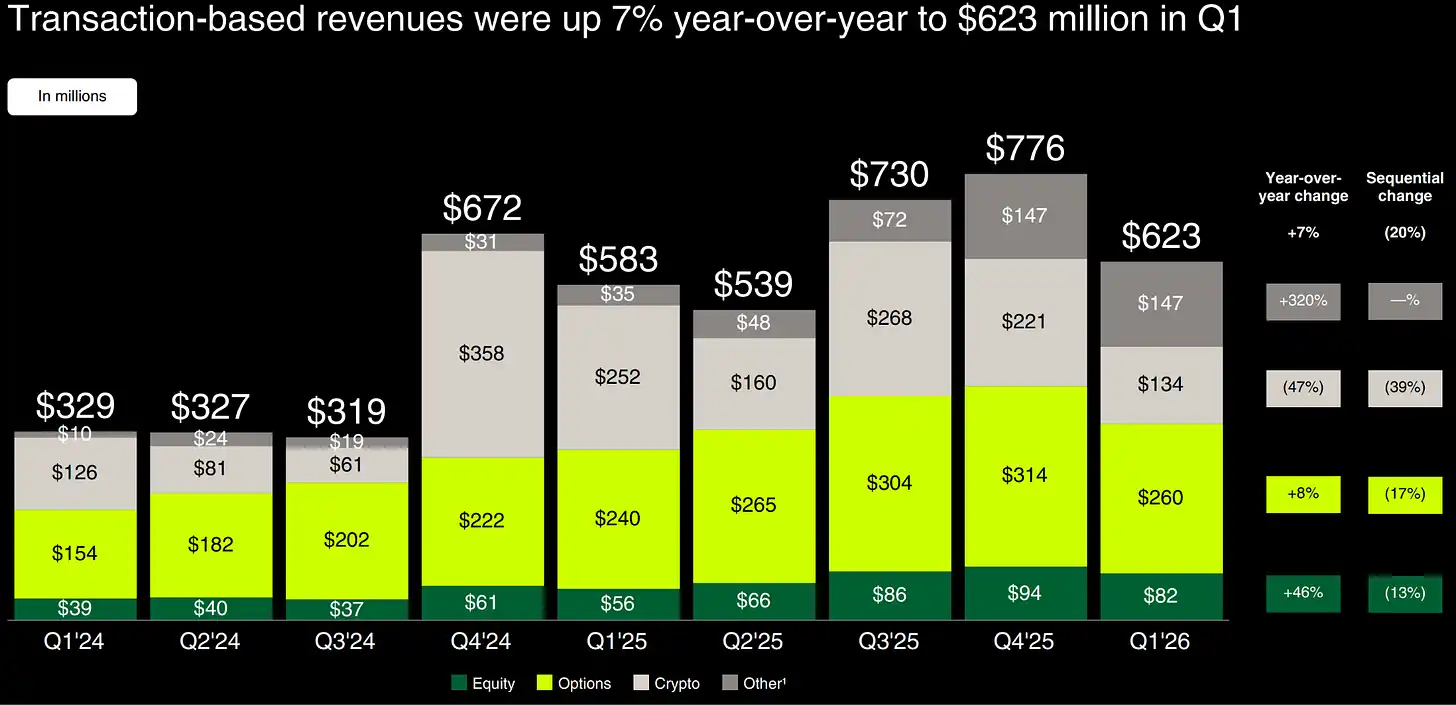
Trading still accounts for 58% of Robinhood's revenue, basically flat from a year ago. But due to the diversity of tradable asset classes, the company has performed better throughout the bear market. Total transaction revenue grew 7% year-over-year to $623 million, driven by a 320% surge in prediction market revenue via Robinhood's partnership with Kalshi, a 46% increase in stock revenue, and 8% growth in options.
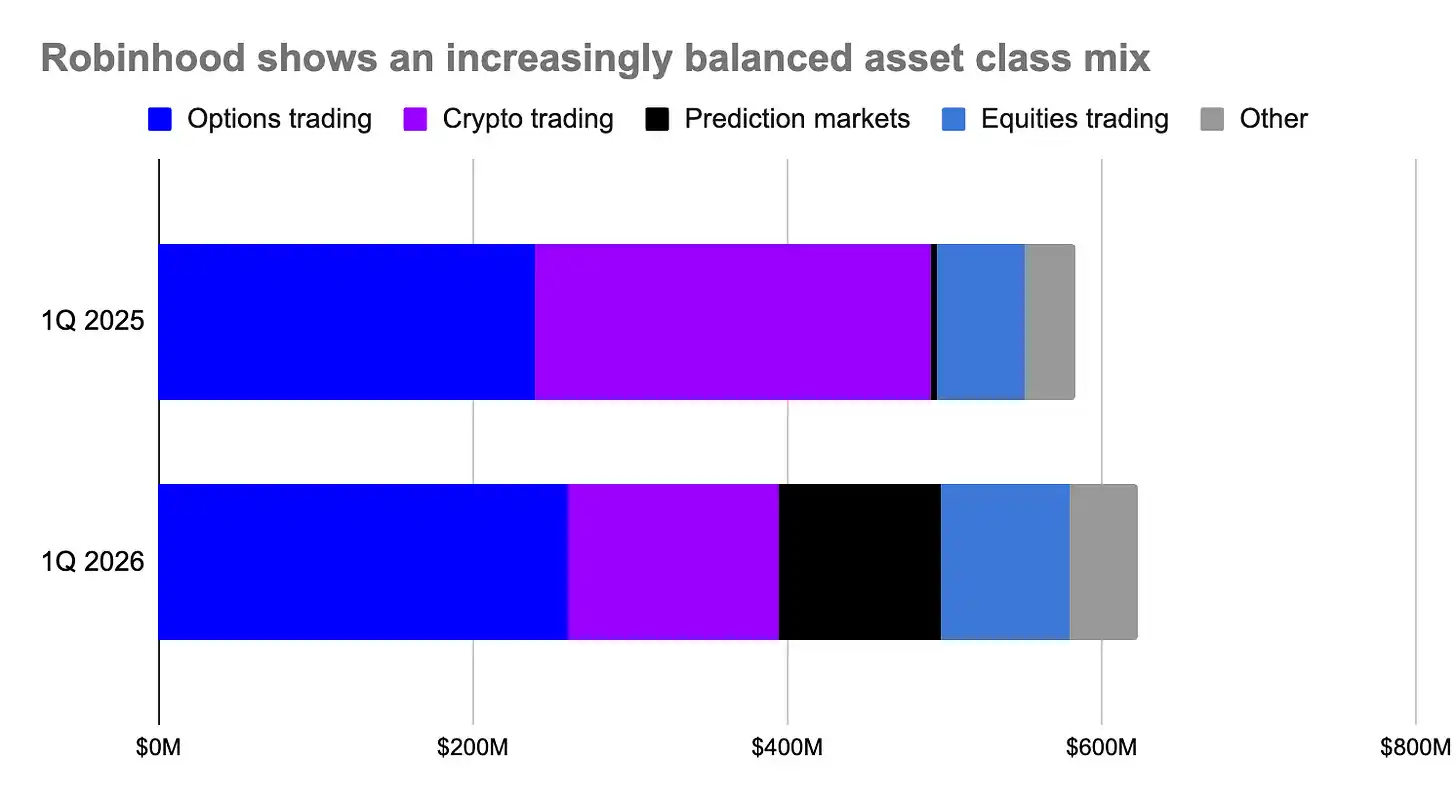
Derivatives like prediction markets and perpetual contracts have shown more resilience during downturns. Kalshi raised $1 billion last week at a $22 billion valuation, doubling its valuation in just 6 months and tripling its annualized trading volume to $178 billion.

Event-driven trading, like predictions, often focuses on sports, elections, and economic data, making it less sensitive to the broader market. But growth also stems from institutions starting to use it as a hedging tool during market volatility. There is an organic adoption tailwind masking the cyclicality.
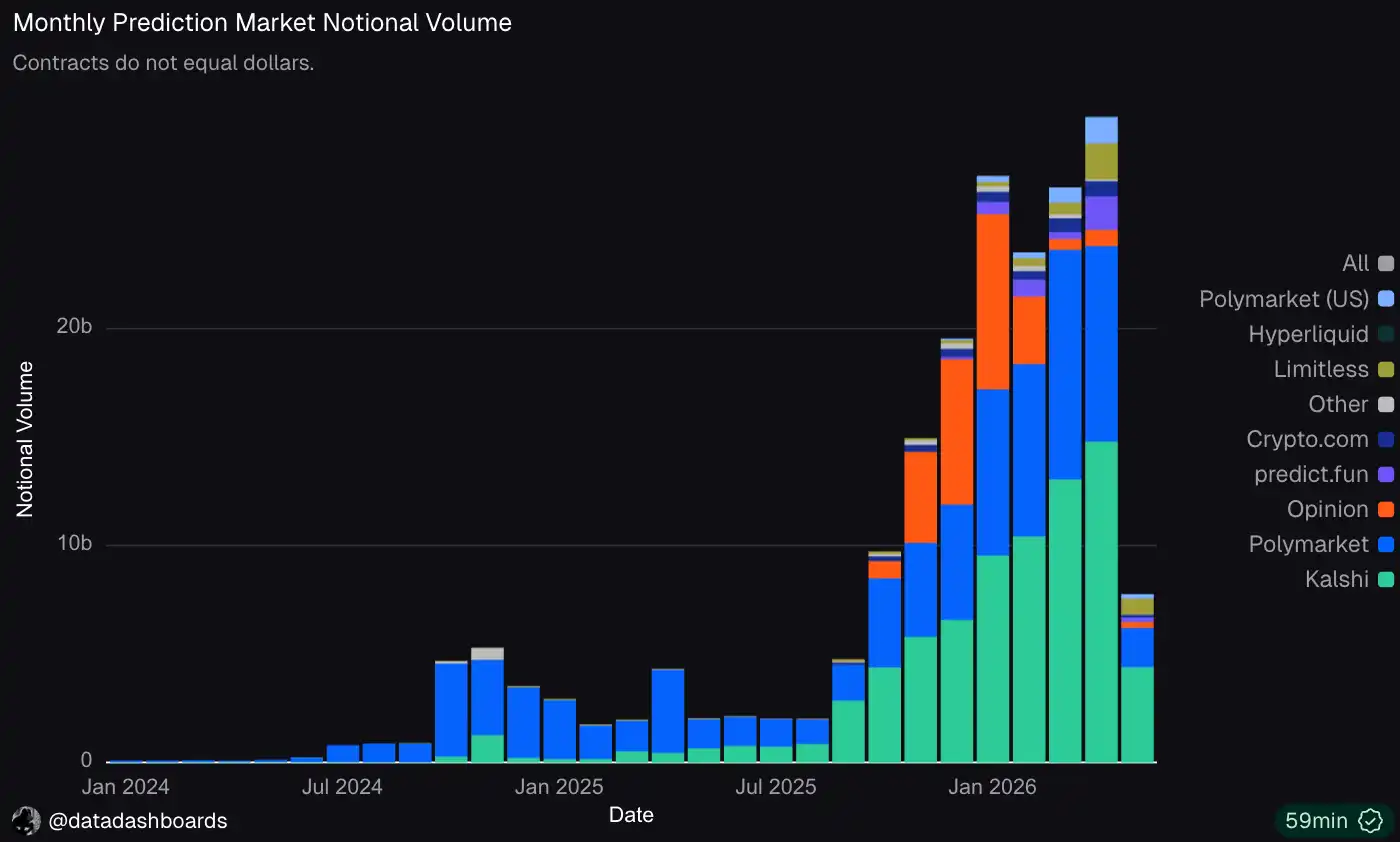
Perpetual contracts show a similar pattern. As of the end of April, the total value of leveraged positions by traders on Hyperliquid (measured as "open interest") was $4.3 billion, having grown 9% over the past two months despite the general collapse in spot markets. While this metric is still down from the October peak, it is clearly performing better.

This is significant for trading platforms that have these features.

Prediction markets now account for 17% of Robinhood's total transaction revenue!

While it doesn't directly offer perpetual contracts, it does offer similar margin trading on stocks and crypto, and earns interest from it. In Q1 2026, margin interest revenue grew 75% year-over-year to $193 million, accounting for 18% of total revenue.

Coinbase is a latecomer to this shift. While it launched prediction markets and perpetual contracts for retail customers in January 2026, it hasn't yet had a material impact on its P&L. Consequently, the exchange has greater exposure to spot trading.

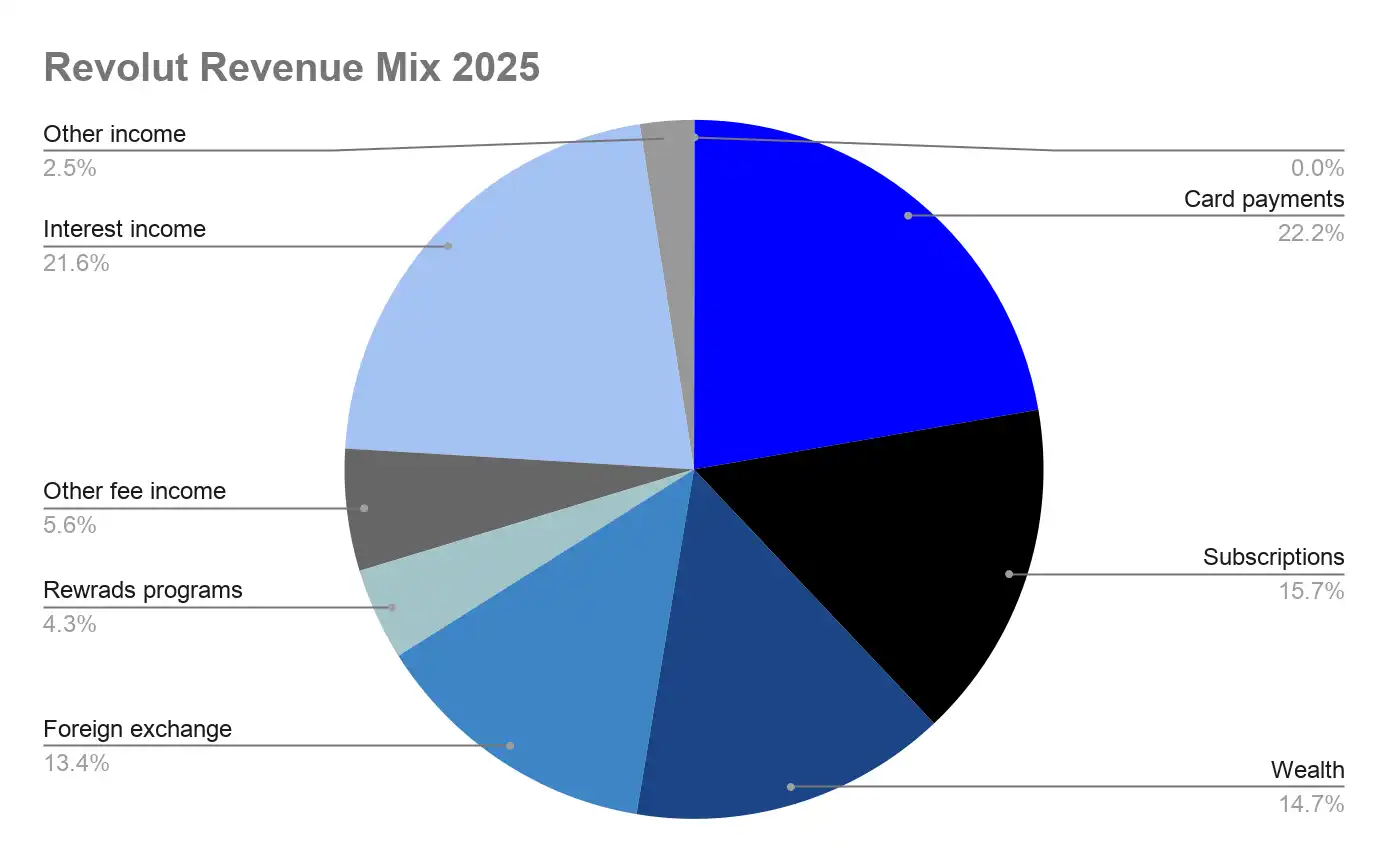
Fintech platforms centered on payments and banking, but with significant trading activity like Revolut, are much less affected. Revenue grew strongly by 45% to $6.1 billion in 2025, with a balanced distribution across major revenue streams, each accounting for 13-22% of total revenue.

Card interchange fees and interest income are the two largest items, each around $1.3 billion. Crypto trading, along with stocks and CFDs, falls under the Wealth segment, accounting for 15% of total revenue—a fraction of Robinhood's exposure and a sliver of Coinbase's.
Notably, Revolut's interest income is similar to Coinbase's stablecoin revenue, both monetizing idle customer balances. As of year-end, Revolut held 90% of its $68 billion customer balance in cash and treasury investments. But the behavior driving these balances is fundamentally different. Revolut's deposits grow with primary banking relationships and direct deposit growth (up 45% year-over-year), while Coinbase's USDC balances grow as willingness to trade declines. If the crypto market turns more bullish, Coinbase is more likely to see balances decline.

The challenge for trading-first platforms like Coinbase and Robinhood is whether they can meaningfully expand into adjacent financial products while being tightly linked to market cycles. Robinhood has shown that diversity in tradable asset classes, especially prediction markets and derivatives, can act as a hedge.

Coinbase is moving in a similar direction. The risk is that a prolonged bear market hinders their growth ability, while fintech competitors like Revolut, Nubank, and Cash App take a greater share of customer deposits.


Domande pertinenti

QAccording to the article, why did Coinbase's revenue decline in the last quarter, and what was the main driver?

ACoinbase's revenue declined 31% year-over-year to $1.41 billion, primarily driven by a 40% drop in transaction revenue. This was due to decreased trading activity in the crypto bear market, with consumer transaction revenue specifically falling 48%.

QHow did Robinhood's performance in the recent quarter differ from Coinbase's, especially regarding revenue sources?

ARobinhood's revenue grew 15% year-over-year to $1.07 billion, while Coinbase's fell. A key difference was the diversity of Robinhood's revenue streams. Although its crypto transaction revenue dropped 47%, this was offset by significant growth in prediction markets (up 320%), stock trading (up 46%), and options trading (up 8%).

QWhat is the fundamental business model challenge highlighted for trading-first platforms like Coinbase and Robinhood during a bear market?

AThe fundamental challenge is their heavy reliance on transaction fees, which are highly cyclical and tied directly to market trading volumes. During a prolonged bear market with low activity, their core revenue stream suffers significantly, raising questions about sustainability and growth.

QWhy is a platform like Revolut less affected by the crypto bear market compared to Coinbase or Robinhood, based on the article?

ARevolut is less affected because its business model is centered on payments and banking, not trading. Crypto trading is part of its 'Wealth' segment, which constitutes only about 15% of its total revenue. Its largest revenue streams are card interchange fees and interest income, which are more stable and less tied to crypto market cycles.

QWhat new product areas does the article suggest are more resilient during market downturns, and which company has benefited from this?

AThe article suggests that derivatives and event-driven trading products like prediction markets are more resilient during downturns. Robinhood has significantly benefited from this through its partnership with Kalshi (prediction markets), which now represents 17% of its total transaction revenue and saw a 320% year-over-year increase.

Letture associate

Ten-Thousand-Word Analysis: From $10 to $290, MRVL Wins the Entire AI Era by 'Not Making GPUs'

Marvell Technology's stock price surged from under $10 in 2016 to a record $290 in June 2026, fueled not by making GPUs, but by dominating AI infrastructure connectivity. This analysis argues the market misvalues MRVL as merely a smaller Broadcom in custom AI chips, overlooking its true, unique position. Marvell's core strength lies in enabling high-speed data flow for AI clusters through three interconnected businesses. First, it holds a commanding ~70% market share in high-speed optical DSPs (essential for data center light modules), a deep-moat business with accelerating growth. Second, its custom AI chip design business serves hyperscalers like AWS, Microsoft, and Google, with a significant revenue pipeline despite lower margins. Third, stable cash flows come from Ethernet switch chips and enterprise storage controllers. Together, they form a full-stack "AI data movement" platform. CEO Matt Murphy's transformative leadership since 2016, involving strategic divestments, key acquisitions (like Inphi for optical DSPs), and securing long-term agreements with major cloud providers, repositioned the company. A pivotal $2 billion strategic investment from NVIDIA in 2026 underscored Marvell's critical role in the AI ecosystem, particularly through collaborations like NVLink Fusion. While Marvell faces risks—including client concentration (losing the Amazon Trainium3 design), lower-margin business mix, competitive threats, insider selling, and complex supply chains—its fundamentals remain strong. The optical interconnect moat is widening with the acquisition of Celestial AI (photonics fabric), and financial metrics show accelerating revenue growth and operating leverage. With a PEG ratio suggesting undervaluation relative to its growth, the thesis is that the market undervalues Marvell's monopolistic position in AI "plumbing" while overemphasizing its competitive custom chip segment. The story transcends investing, symbolizing how in any complex system—from the internet to AI—the value of "connection" ultimately surpasses that of individual "nodes."

marsbit22 min fa

Ten-Thousand-Word Analysis: From $10 to $290, MRVL Wins the Entire AI Era by 'Not Making GPUs'

marsbit22 min fa

AI Relay Stations Spark Heated Debate on Zhihu: Behind Cheap Tokens, What Are Users Really Worried About?

A discussion on Zhihu about "AI relay stations" shifted the niche developer topic of "cheap tokens" into broader user awareness. Users moved beyond simply questioning the legitimacy of these services to focus on practical concerns: Where do cheap tokens truly come from? Is the model being accessed the real one? Can relay stations see prompts, code, and API keys? For occasional users, are the risks worth it? The core debate centered less on price and more on trust. A primary worry is model authenticity—the risk of "model swapping," where users paying for a premium model might be routed to a cheaper one, creating an information asymmetry. Others argued that cost comparisons matter; while cheaper than official pay-as-you-go APIs, relay stations may not be the lowest-cost option versus subscriptions, domestic models, or free tiers, making user needs assessment crucial. Speculation about token sources ranged from legitimate bulk discounts to gray-area methods like account sharing or exploiting regional pricing. This opacity makes risk assessment difficult for users. Data security emerged as a critical concern, especially for enterprise use. When processing sensitive information like code, contracts, or client data, the inability to verify a relay station's data handling, retention, or access policies poses significant compliance and confidentiality risks. The evolving consensus suggests relay stations can be used cautiously for low-sensitivity, disposable tasks (e.g., summarizing public info, simple translation). However, they should not be the default for sensitive, professional, or production workflows involving proprietary data, Agents, or automated systems. Recommendations include avoiding large prepayments, not relying on a single service, using test prompts to monitor quality, anonymizing data where possible, and keeping official channels as backups. Ultimately, the discussion framed tokens not just as a billing unit but as a measure of real cost encompassing price, model integrity, data security, and service stability. The popularity of relay stations highlights user demand for affordable access, but the debate underscores a key trade-off: the savings from cheap tokens may come at the price of trust, transparency, and control over one's data and AI experience.

marsbit52 min fa

AI Relay Stations Spark Heated Debate on Zhihu: Behind Cheap Tokens, What Are Users Really Worried About?

marsbit52 min fa

In-Depth Research Report on TradFi: The Convergence Wave of Crypto and Traditional Finance

In 2026, the crypto industry is undergoing a profound infrastructure-level transformation—TradFi assets are migrating on-chain at an unprecedented pace. According to CoinGecko's Q1 2026 report, the total value locked (TVL) of tokenized real-world assets (RWA) has surpassed $31 billion, a nearly 4x increase from $7.8 billion at the beginning of 2025, with the sector’s aggregate market capitalization reaching $19.3 billion. Among these, the market cap of tokenized stocks surged from $2 million to $486 million, with Q1 spot trading volume reaching $15.1 billion—a single quarter already surpassing the entire second half of 2025. RWA perpetual contract Q1 trading volume reached a staggering $524.8 billion, far exceeding the $313 billion for all of 2025. Meanwhile, BlackRock's BUIDL fund has reached $2.3 billion in scale and has filed for two new tokenized funds, signaling that the world's largest asset manager's tokenization strategy is evolving from pilot to product suite expansion. HTX, as a core participant in the crypto exchange sector, officially launched TradFi perpetual futures products including NVDA, AAPL, MSFT, META, and SPY in 2026, enabling crypto users to gain 24/7 trading access to core U.S. equities. Boston Consulting Group predicts that global tokenized asset scale could reach $16 trillion by 2030, while McKinsey offers a conservative estimate of approximately $2 trillion. The on-chain migration of TradFi assets is no longer a "future narrative" but a structural transformation unfolding in real time, as crypto exchanges evolve from single crypto asset trading platforms toward "multi-asset-class trading infrastructure."

HTX Learn54 min fa

In-Depth Research Report on TradFi: The Convergence Wave of Crypto and Traditional Finance

HTX Learn54 min fa

Trading

Spot
Futures
活动图片




