Base's Growth Dilemma: Why Did Everything Go Right, But Users Still Leave?

marsbitPubblicato 2026-04-02Pubblicato ultima volta 2026-04-02

Introduzione

Based on the Japanese philosophical concept of "basho" (a field or place that shapes its inhabitants), this analysis explores why Base blockchain, despite initial explosive growth, is now facing a significant user exodus. Launched by Coinbase in 2023, Base quickly became the fastest-growing Layer 2 (L2) solution, reaching a peak of 1.72 million daily active addresses and $5.6 billion in TVL by late 2025. Its immense distribution power from Coinbase's 100 million users created strong belief it would solve Ethereum's user adoption problem. However, after confirming a token launch in September 2025, active addresses plummeted by 73% to 458,000 by March 2026. The analysis attributes this to Base building a mere "location" for transactions rather than a "basho"—a meaningful context where users form identities and relationships. Its bet on a tokenized creator economy via Zora also failed; 99.7% of created tokens became inactive. The core issue is that financial incentives can attract users but cannot fabricate a genuine reason to stay. Unlike a "third place" (e.g., a community square), which people return to for non-transactional reasons, Base was designed for extraction, leading users to leave once incentives dried up. The piece contrasts Base with chains like Arbitrum and Hyperliquid, which, despite also seeing declines, retained users through unique community identity and experiences rather than mere speculation. The conclusion is that the entire L2 model is cooling, and s...

A few days ago, I came across a concept in Japanese philosophy: basho. Roughly translated as "place," but the philosopher Kitaro Nishida endowed it with a meaning far beyond a geographical location, more like a situation: a field where all things can become themselves. In other words: people do not appear in a place by accident, but are shaped by where they are. Today, I will use this theory to interpret Base.

Last month, its number of active addresses fell to an 18-month low. Reflecting on this phenomenon, I realized: Base built only a location, but never created the conditions for things to grow and take shape.

When Coinbase launched Base in 2023, the crypto-native community surprisingly developed a kind of faith. Everyone believed that it could finally solve Ethereum's oldest problem: infrastructure everywhere, but no real users. And Coinbase, with 100 million users and unparalleled distribution capabilities, had a unique advantage. The door opened, and users were already waiting outside.

For a while, this confidence seemed to be validated. Base's growth rate surpassed all previous Layer2s. In October 2025, its Total Value Locked (TVL) reached $5.6 billion, and its fee income was unmatched in the entire L2 field. So, in September 2025, Base confirmed the issuance of a token, seemingly heralding an inevitably successful experiment. Yes, a place was becoming a basho.

Then, the users left.

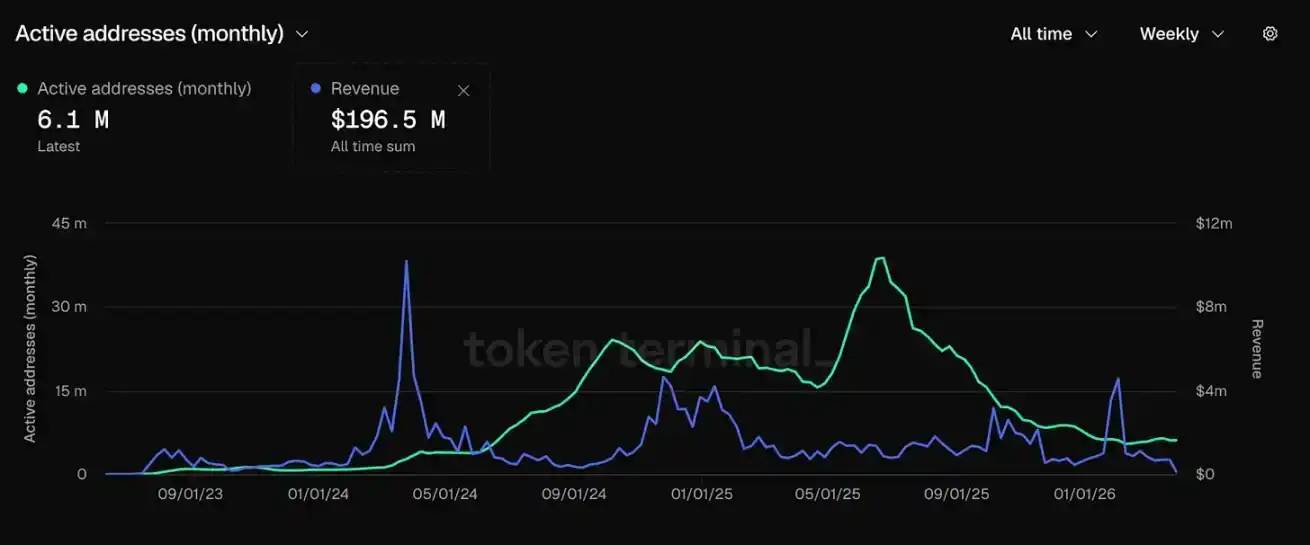
Look at the data for a clearer picture: Base's active addresses returned to the level of July 2024. The token issuance expectation恰好满足了空投党的需求:拿到最后一笔报酬,然后走人.
Base's bet on the creator economy in 2025 also did not work. Its core was the Zora protocol, which tokenizes content by default. By the end of the year, 6.52 million creator and content tokens were issued on Base through Zora, of which only 17,800 remained consistently active throughout the year, accounting for 0.3%. The remaining 99.7% were already neglected.

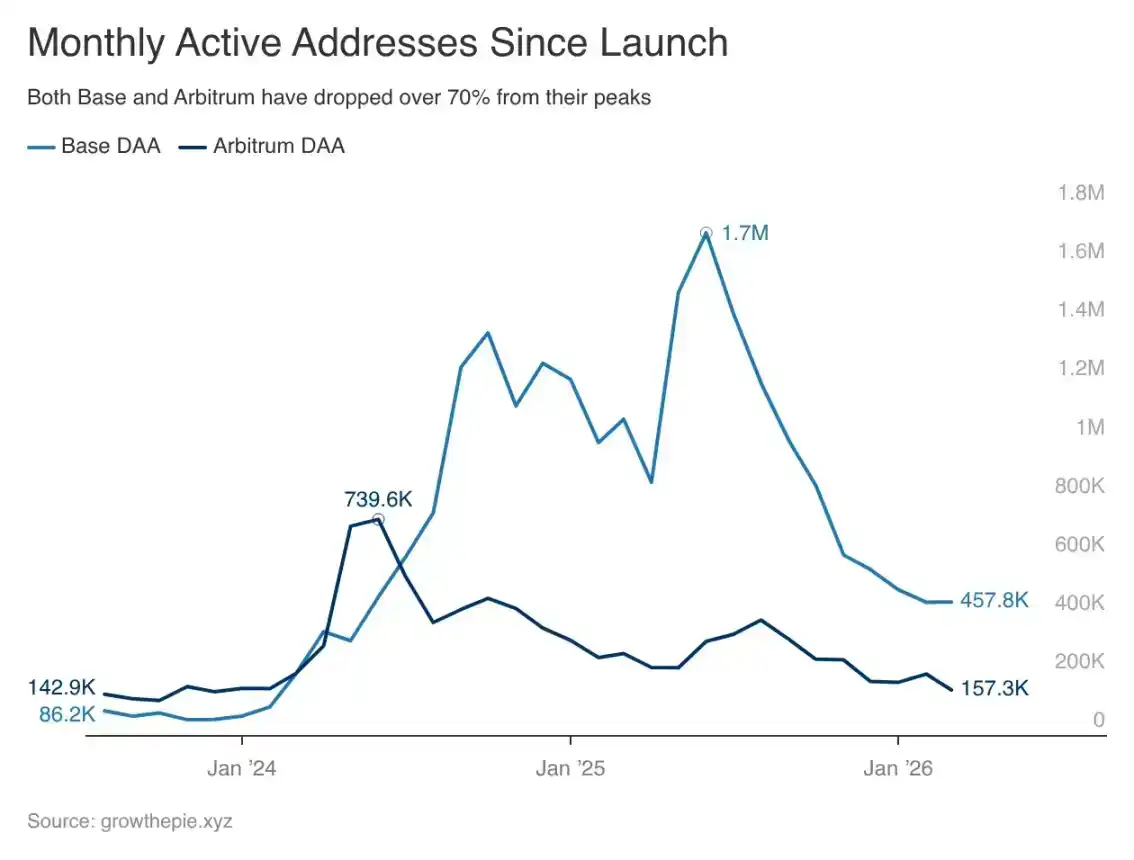
Base's daily active addresses peaked at 1.72 million in June 2025. By March 2026, only 458,000 remained, a sharp drop of 73% from the peak. After Armstrong announced in September 2025 that Base was considering issuing a token, active addresses decreased by 54% in just six months, meaning speculative capital has completely left the market.
Sociologist Ray Oldenburg once studied: what makes people return to a place repeatedly without compensation. He called it the third place, such as bars, barbershops, city squares. They are not efficient production spaces, but they give people a reason to return unrelated to incentives. The core is: the desire to come back cannot be artificially manufactured; it can only grow naturally from the possibilities provided by the place over time. The cryptocurrency industry designs places for the purpose of extracting value from users, and then wonders why no one stays.

This is a location without basho: people pass by, take what they need, and leave, because leaving costs nothing. No identity is formed here, no capabilities that cannot be replicated elsewhere within three weeks, nothing that makes leaving a loss. Do unique relationships exist on this chain? We have never built things with this mindset, have we?

You cannot build basho with financial incentives. Incentives can certainly pull people in the door, but they cannot make people *want* to stay. The desire to stay must come from the possibilities nurtured by the place over the long term. Kitaro Nishida called this "basho logic," referring to how the relational field shapes the things that emerge within it. The crypto industry designed fields for extraction, and was finally surprised to find that only extraction was born.

Brian Armstrong has publicly stated that the Base App now focuses on becoming a self-custody, trading version of Coinbase.

The former social and creator vision aimed at building social stickiness and allowing users to establish identities worth protecting on-chain has disappeared. Judging from the data, this is a rational decision, but it also admits: this vision never truly formed. Base has a location, and it now only focuses on serving past users, because that is all it can provide.

One Chain, One Track

Base is the most visible epitome of the entire L2 model.

Since June 2025, the usage of small and medium-sized L2s has overall declined by 61%. Most chains outside the top three have become zombie chains: active enough not to shut down, but deserted enough to be insignificant. The ratio of L2 to L1 daily active users has dropped from 15 times in mid-2024 to 10-11 times today. Most new L2s see usage collapse directly after the incentive cycle ends. The entire L2 ecosystem is cooling down, not just Base.

The Rollup-centric roadmap was once a theory about user adoption: reduce participation costs → users flood in → ecosystem forms → compound growth. The Ethereum Foundation released a 38-page vision document this year outlining Ethereum's future direction. The largest L2 by scale hit bottom in activity and left the OP Stack, while the second largest L2 has stagnant growth.

Reducing the cost of entry is not equal to creating the conditions for things to take shape. The industry solved the "entry" problem, but took it for granted that a "sense of belonging" would follow. It doesn't appear automatically, because a sense of belonging is not a feature that can be launched.

Farcaster is the product closest to building a basho in the crypto world. Because a specific group of people built a specific culture on it: developers sharing work, discussing Ethereum, forming opinions about each other over months. This takes time, and competitors cannot replicate it with higher rewards. Friend.tech tried to do the same thing with incentive mechanisms, topped the charts in a week, and died in a month. The same mechanism, but no culture was formed. The difference is not in the product, but in whether people stay long enough for something to truly take shape.

What Can Make People Stay?

The chains that retain users in the winter do not rely on more generous incentives.

Arbitrum's daily active addresses peaked at 740,000 in June 2024, and now stand at 157,000, also a sharp drop of 79%. Both chains are declining, but the underlying logic is completely different.
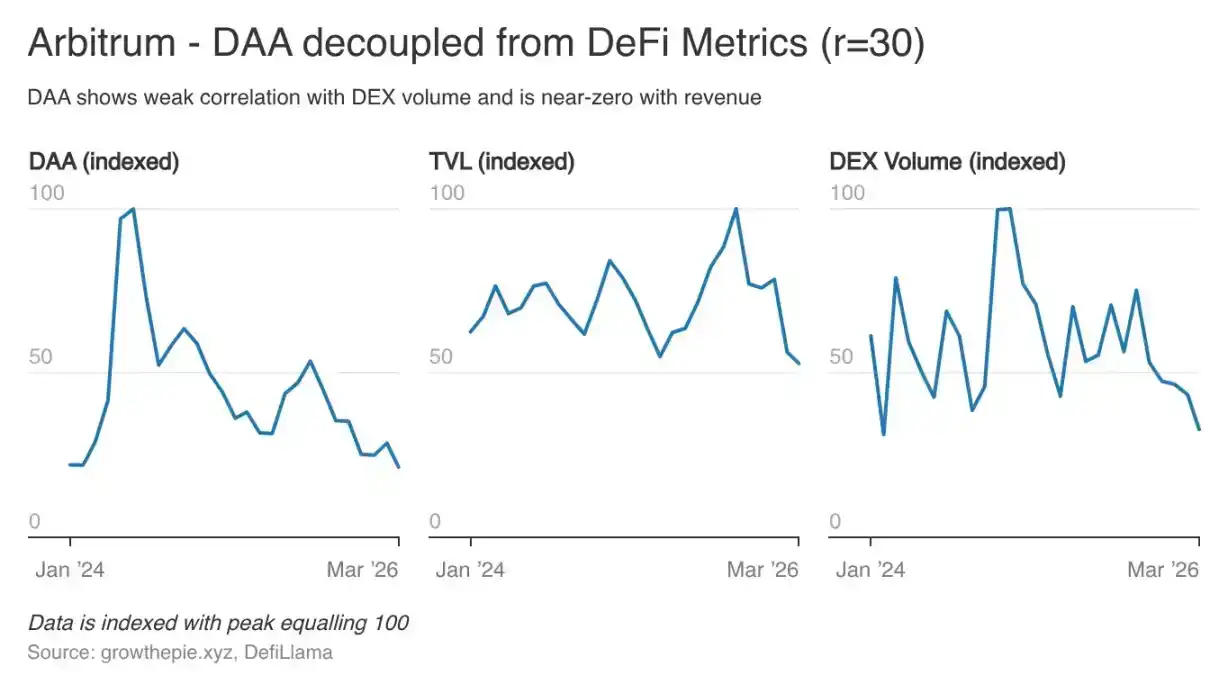
Base's users go online to trade, and they leave when trading volume decreases. Arbitrum's users, however, are unaffected by the level of transaction fees; the correlation between user numbers and fee income is almost zero. Base attracts tourists, while Arbitrum has somehow retained users.

Hyperliquid can stand firm because its trading experience is unique, and the community has formed an identity found nowhere else. Token incentives are almost irrelevant; being part of it has become part of their behavior and identity. Things shape users, and users in turn shape things.

The crypto industry is still optimizing "how to get people to come," while the question of "how to create a situation" is only remembered after the data crashes, never considered at the beginning of chain design.

I believe that Base, with the strongest distribution capability in history, could have solved this problem better than any other chain.

Now it is a trading app. This is a reasonable product direction, but it is also something that over 40 products are already doing. Trading apps cannot generate basho; they can only generate sessions: users come in when they have a trading need and leave when finished.

To truly become a successful application, a continuous connection needs to be established. Users need to build a relationship between each visit, making the next visit feel like a return, not just an arrival.

Armstrong's pivot is largely based on the lessons Base learned from the data. The social layer, creator economy, on-chain identity—these things that should have turned Base from "being used" to "being inhabited"—require patience, and the system does not reward patience.

The Ethereum ecosystem needs Base to be more than just a trading venue. The foundation of the entire L2 narrative is that chains can become infrastructure around which people build their lives. If the L2 with the strongest distribution capability in crypto history ultimately settles for being a faster Coinbase, then this narrative itself is untenable.

Kitaro Nishida believed that the deepest basho is where the boundary between the self and the place begins to dissolve. You cannot completely separate "who you are" from "where you are shaped." This sounds abstract, but applied to a public chain it means: a user cannot imagine their financial life after leaving a certain chain; a developer's entire toolkit is based on a certain ecosystem; their identity can hardly exist elsewhere.

As far as I know, such a thing has never been built on any L2. It might not be possible to build it under an incentive program at all.

Even if you have 100 million potential users, as long as there is nothing worth staying for, you will eventually end up with an empty building. Base understands this now.


Domande pertinenti

QWhat is the core concept of 'basho' as introduced by Japanese philosopher Kitaro Nishida, and how does it relate to Base's situation?

AThe concept of 'basho' refers to a place or situation that shapes and allows things to become themselves, rather than just a physical location. It relates to Base because the article argues that Base built a location for transactions but failed to create a 'basho'—a nurturing environment where users form identities and relationships, leading to their departure despite initial growth.

QWhat was the primary reason for the sharp decline in Base's active addresses after the token launch announcement?

AThe primary reason was that the token launch attracted speculative users (airdrop farmers) who left immediately after claiming rewards, as there was no deeper engagement or reason to stay, resulting in a 73% drop in active addresses from the peak.

QHow did Base's focus on the creator economy, particularly through Zora protocol, perform according to the data?

AIt performed poorly: only 0.3% of the 6.52 million creator and content tokens issued remained consistently active throughout the year, indicating that 99.7% were abandoned, failing to create sustainable engagement.

QWhat key difference does the article highlight between Base and Arbitrum in terms of user retention during the market downturn?

ABase users were primarily transactional and left when activity declined, whereas Arbitrum retained users independent of fee incentives, suggesting a stronger community or identity formation that kept users engaged beyond mere financial transactions.

QWhy does the article argue that financial incentives alone cannot create a 'basho' or lasting user engagement in crypto ecosystems?

AFinancial incentives can attract users initially but cannot foster the voluntary, long-term desire to stay. Lasting engagement requires a nurturing environment where relationships, culture, and identity develop over time, which cannot be artificially manufactured through short-term rewards.

Letture associate

Day 6 of the rsETH Incident: DeFi United Secures Approximately $100 Million in Intentional Commitments, but a $50 Million Gap Remains

On April 18, Kelp DAO’s rsETH LayerZero bridge was exploited, resulting in the unauthorized minting of 116.5k rsETH (approx. $292M). The attacker borrowed around $190M on Aave V3. The Arbitrum Security Council froze 30,766 ETH linked to the incident. DeFi United, a cross-protocol rescue initiative led by Awe, was formed to cover a total shortfall of 112.2k rsETH ($258M). As of April 24, several protocols have pledged around $100M in support, though most commitments are still under DAO voting or discussion. Key pledges include: - Golem: 1,000 ETH ($2.3M) - Aave founder Stani Kulechov: 5,000 ETH ($11.5M) - EtherFi: up to 5,000 ETH ($11.5M) - Lido: up to 2,500 stETH ($5.75M), contingent on full coverage - Mantle: proposed a $69M loan to Aave DAO under specific terms The remaining shortfall is estimated at $50M. Aave’s treasury and safety module (~$236M combined) can cover the worst-case bad debt scenario ($230M). Three potential loss distribution paths were outlined by DefiLlama’s 0xngmi: 1. Uniform 18.5% haircut for all rsETH holders: Aave bad debt ~$216M 2. Only protect Mainnet, abandon L2: bad debt up to $341M 3. Repay only pre-attack holders: technically difficult, ~$91M net loss KelpDAO has not yet announced a specific plan. The success of DeFi United depends heavily on KelpDAO’s final decision on loss allocation.

marsbit23 min fa

Day 6 of the rsETH Incident: DeFi United Secures Approximately $100 Million in Intentional Commitments, but a $50 Million Gap Remains

marsbit23 min fa

Kicked Out of PayPal, Musk Aims for a Comeback in the Crypto Market

Elon Musk's X (formerly Twitter) has launched its "Smart Cashtags" feature, generating approximately $1 billion in trading volume within days of its April 2026 pilot launch. The feature allows users to click on stock or crypto tickers (or even full Solana token contract addresses) in posts to view real-time price charts and discussions without leaving the app. Initially available to iPhone users in the US and Canada, with a partnership in Canada enabling direct trading via the Wealthsimple app. This move is part of Musk's broader "Everything App" vision, spearheaded by the upcoming X Money platform. Analysts, such as Mizuho's Dan Dolev, see this as a potential disruptor to the US payments market, even prompting a downgrade of PayPal's stock. X Money's beta offers services like 6% APY on deposits, cashback, and P2P transfers, with speculation it may later incorporate crypto trading and stablecoin settlements for faster transactions. However, the ambitious plan faces significant regulatory scrutiny. Senator Elizabeth Warren has questioned the sustainability of the high 6% yield and raised concerns over X's banking partner, Cross River Bank, which has a history of regulatory violations. Additional risks involve the "GENIUS Act," which may create loopholes for stablecoin issuance without full FDIC insurance coverage, potentially leaving users unprotected. The integration of social trading on a platform with over 500 million users could inject new liquidity and retail interest into the crypto market. Yet, it also amplifies risks like herd mentality and the blurring of lines between entertainment and financial speculation. Musk's return to finance, after his ouster from PayPal, hinges on balancing innovation with regulatory compliance.

marsbit2 h fa

Kicked Out of PayPal, Musk Aims for a Comeback in the Crypto Market

marsbit2 h fa

Trading

Spot
Futures

Articoli Popolari

Cosa è $S$

Comprendere SPERO: Una Panoramica Completa Introduzione a SPERO Mentre il panorama dell'innovazione continua a evolversi, l'emergere delle tecnologie web3 e dei progetti di criptovaluta gioca un ruolo fondamentale nel plasmare il futuro digitale. Un progetto che ha attirato l'attenzione in questo campo dinamico è SPERO, denotato come SPERO,$$s$. Questo articolo mira a raccogliere e presentare informazioni dettagliate su SPERO, per aiutare gli appassionati e gli investitori a comprendere le sue basi, obiettivi e innovazioni nei domini web3 e crypto. Che cos'è SPERO,$$s$? SPERO,$$s$ è un progetto unico all'interno dello spazio crypto che cerca di sfruttare i principi della decentralizzazione e della tecnologia blockchain per creare un ecosistema che promuove l'impegno, l'utilità e l'inclusione finanziaria. Il progetto è progettato per facilitare interazioni peer-to-peer in modi nuovi, fornendo agli utenti soluzioni e servizi finanziari innovativi. Al suo interno, SPERO,$$s$ mira a responsabilizzare gli individui fornendo strumenti e piattaforme che migliorano l'esperienza dell'utente nello spazio delle criptovalute. Questo include la possibilità di metodi di transazione più flessibili, la promozione di iniziative guidate dalla comunità e la creazione di percorsi per opportunità finanziarie attraverso applicazioni decentralizzate (dApps). La visione sottostante di SPERO,$$s$ ruota attorno all'inclusività, cercando di colmare le lacune all'interno della finanza tradizionale mentre sfrutta i vantaggi della tecnologia blockchain. Chi è il Creatore di SPERO,$$s$? L'identità del creatore di SPERO,$$s$ rimane piuttosto oscura, poiché ci sono risorse pubblicamente disponibili limitate che forniscono informazioni dettagliate sul suo fondatore o fondatori. Questa mancanza di trasparenza può derivare dall'impegno del progetto per la decentralizzazione—un ethos che molti progetti web3 condividono, dando priorità ai contributi collettivi rispetto al riconoscimento individuale. Centrando le discussioni attorno alla comunità e ai suoi obiettivi collettivi, SPERO,$$s$ incarna l'essenza dell'empowerment senza mettere in evidenza individui specifici. Pertanto, comprendere l'etica e la missione di SPERO rimane più importante che identificare un creatore singolo. Chi sono gli Investitori di SPERO,$$s$? SPERO,$$s$ è supportato da una varietà di investitori che vanno dai capitalisti di rischio agli investitori angelici dedicati a promuovere l'innovazione nel settore crypto. Il focus di questi investitori generalmente si allinea con la missione di SPERO—dando priorità a progetti che promettono avanzamenti tecnologici sociali, inclusività finanziaria e governance decentralizzata. Queste fondazioni di investitori sono tipicamente interessate a progetti che non solo offrono prodotti innovativi, ma contribuiscono anche positivamente alla comunità blockchain e ai suoi ecosistemi. Il supporto di questi investitori rafforza SPERO,$$s$ come un concorrente degno di nota nel dominio in rapida evoluzione dei progetti crypto. Come Funziona SPERO,$$s$? SPERO,$$s$ impiega un framework multifunzionale che lo distingue dai progetti di criptovaluta convenzionali. Ecco alcune delle caratteristiche chiave che sottolineano la sua unicità e innovazione: Governance Decentralizzata: SPERO,$$s$ integra modelli di governance decentralizzati, responsabilizzando gli utenti a partecipare attivamente ai processi decisionali riguardanti il futuro del progetto. Questo approccio favorisce un senso di proprietà e responsabilità tra i membri della comunità. Utilità del Token: SPERO,$$s$ utilizza il proprio token di criptovaluta, progettato per servire varie funzioni all'interno dell'ecosistema. Questi token abilitano transazioni, premi e la facilitazione dei servizi offerti sulla piattaforma, migliorando l'impegno e l'utilità complessivi. Architettura Stratificata: L'architettura tecnica di SPERO,$$s$ supporta la modularità e la scalabilità, consentendo un'integrazione fluida di funzionalità e applicazioni aggiuntive man mano che il progetto evolve. Questa adattabilità è fondamentale per mantenere la rilevanza nel panorama crypto in continua evoluzione. Coinvolgimento della Comunità: Il progetto enfatizza iniziative guidate dalla comunità, impiegando meccanismi che incentivano la collaborazione e il feedback. Nutrendo una comunità forte, SPERO,$$s$ può affrontare meglio le esigenze degli utenti e adattarsi alle tendenze di mercato. Focus sull'Inclusione: Offrendo basse commissioni di transazione e interfacce user-friendly, SPERO,$$s$ mira ad attrarre una base utenti diversificata, inclusi individui che potrebbero non aver precedentemente interagito nello spazio crypto. Questo impegno per l'inclusione si allinea con la sua missione generale di empowerment attraverso l'accessibilità. Cronologia di SPERO,$$s$ Comprendere la storia di un progetto fornisce preziose intuizioni sulla sua traiettoria di sviluppo e sui traguardi. Di seguito è riportata una cronologia suggerita che mappa eventi significativi nell'evoluzione di SPERO,$$s$: Fase di Concettualizzazione e Ideazione: Le idee iniziali che formano la base di SPERO,$$s$ sono state concepite, allineandosi strettamente con i principi di decentralizzazione e focus sulla comunità all'interno dell'industria blockchain. Lancio del Whitepaper del Progetto: Dopo la fase concettuale, è stato rilasciato un whitepaper completo che dettaglia la visione, gli obiettivi e l'infrastruttura tecnologica di SPERO,$$s$ per suscitare interesse e feedback dalla comunità. Costruzione della Comunità e Prime Interazioni: Sono stati effettuati sforzi attivi di outreach per costruire una comunità di early adopters e potenziali investitori, facilitando discussioni attorno agli obiettivi del progetto e ottenendo supporto. Evento di Generazione del Token: SPERO,$$s$ ha condotto un evento di generazione del token (TGE) per distribuire i propri token nativi ai primi sostenitori e stabilire una liquidità iniziale all'interno dell'ecosistema. Lancio della Prima dApp: La prima applicazione decentralizzata (dApp) associata a SPERO,$$s$ è stata attivata, consentendo agli utenti di interagire con le funzionalità principali della piattaforma. Sviluppo Continuo e Partnership: Aggiornamenti e miglioramenti continui alle offerte del progetto, inclusi partnership strategiche con altri attori nello spazio blockchain, hanno plasmato SPERO,$$s$ in un concorrente competitivo e in evoluzione nel mercato crypto. Conclusione SPERO,$$s$ rappresenta una testimonianza del potenziale del web3 e delle criptovalute di rivoluzionare i sistemi finanziari e responsabilizzare gli individui. Con un impegno per la governance decentralizzata, il coinvolgimento della comunità e funzionalità progettate in modo innovativo, apre la strada verso un panorama finanziario più inclusivo. Come per qualsiasi investimento nello spazio crypto in rapida evoluzione, si incoraggiano potenziali investitori e utenti a ricercare approfonditamente e a impegnarsi in modo riflessivo con gli sviluppi in corso all'interno di SPERO,$$s$. Il progetto mostra lo spirito innovativo dell'industria crypto, invitando a ulteriori esplorazioni delle sue innumerevoli possibilità. Mentre il percorso di SPERO,$$s$ è ancora in fase di sviluppo, i suoi principi fondamentali potrebbero effettivamente influenzare il futuro di come interagiamo con la tecnologia, la finanza e tra di noi in ecosistemi digitali interconnessi.

75 Totale visualizzazioniPubblicato il 2024.12.17Aggiornato il 2024.12.17

Cosa è $S$

Cosa è AGENT S

Agent S: Il Futuro dell'Interazione Autonoma in Web3 Introduzione Nel panorama in continua evoluzione di Web3 e criptovalute, le innovazioni stanno costantemente ridefinendo il modo in cui gli individui interagiscono con le piattaforme digitali. Uno di questi progetti pionieristici, Agent S, promette di rivoluzionare l'interazione uomo-computer attraverso il suo framework agentico aperto. Aprendo la strada a interazioni autonome, Agent S mira a semplificare compiti complessi, offrendo applicazioni trasformative nell'intelligenza artificiale (AI). Questa esplorazione dettagliata approfondirà le complessità del progetto, le sue caratteristiche uniche e le implicazioni per il dominio delle criptovalute. Cos'è Agent S? Agent S si presenta come un innovativo framework agentico aperto, progettato specificamente per affrontare tre sfide fondamentali nell'automazione dei compiti informatici: Acquisizione di Conoscenze Specifiche del Dominio: Il framework apprende in modo intelligente da varie fonti di conoscenza esterne ed esperienze interne. Questo approccio duale gli consente di costruire un ricco repository di conoscenze specifiche del dominio, migliorando le sue prestazioni nell'esecuzione dei compiti. Pianificazione su Lungo Orizzonte di Compiti: Agent S impiega una pianificazione gerarchica potenziata dall'esperienza, un approccio strategico che facilita la suddivisione e l'esecuzione efficiente di compiti complessi. Questa caratteristica migliora significativamente la sua capacità di gestire più sottocompiti in modo efficiente ed efficace. Gestione di Interfacce Dinamiche e Non Uniformi: Il progetto introduce l'Interfaccia Agente-Computer (ACI), una soluzione innovativa che migliora l'interazione tra agenti e utenti. Utilizzando Modelli Linguistici Multimodali di Grandi Dimensioni (MLLM), Agent S può navigare e manipolare senza sforzo diverse interfacce grafiche utente. Attraverso queste caratteristiche pionieristiche, Agent S fornisce un framework robusto che affronta le complessità coinvolte nell'automazione dell'interazione umana con le macchine, preparando il terreno per innumerevoli applicazioni nell'AI e oltre. Chi è il Creatore di Agent S? Sebbene il concetto di Agent S sia fondamentalmente innovativo, informazioni specifiche sul suo creatore rimangono elusive. Il creatore è attualmente sconosciuto, il che evidenzia sia la fase embrionale del progetto sia la scelta strategica di mantenere i membri fondatori sotto anonimato. Indipendentemente dall'anonimato, l'attenzione rimane sulle capacità e sul potenziale del framework. Chi sono gli Investitori di Agent S? Poiché Agent S è relativamente nuovo nell'ecosistema crittografico, informazioni dettagliate riguardanti i suoi investitori e sostenitori finanziari non sono documentate esplicitamente. La mancanza di approfondimenti pubblicamente disponibili sulle fondazioni di investimento o sulle organizzazioni che supportano il progetto solleva interrogativi sulla sua struttura di finanziamento e sulla roadmap di sviluppo. Comprendere il supporto è cruciale per valutare la sostenibilità del progetto e il suo potenziale impatto sul mercato. Come Funziona Agent S? Al centro di Agent S si trova una tecnologia all'avanguardia che gli consente di funzionare efficacemente in contesti diversi. Il suo modello operativo è costruito attorno a diverse caratteristiche chiave: Interazione Uomo-Computer Simile a Quella Umana: Il framework offre una pianificazione AI avanzata, cercando di rendere le interazioni con i computer più intuitive. Mimando il comportamento umano nell'esecuzione dei compiti, promette di elevare le esperienze degli utenti. Memoria Narrativa: Utilizzata per sfruttare esperienze di alto livello, Agent S utilizza la memoria narrativa per tenere traccia delle storie dei compiti, migliorando così i suoi processi decisionali. Memoria Episodica: Questa caratteristica fornisce agli utenti una guida passo-passo, consentendo al framework di offrire supporto contestuale mentre i compiti si sviluppano. Supporto per OpenACI: Con la capacità di funzionare localmente, Agent S consente agli utenti di mantenere il controllo sulle proprie interazioni e flussi di lavoro, allineandosi con l'etica decentralizzata di Web3. Facile Integrazione con API Esterne: La sua versatilità e compatibilità con varie piattaforme AI garantiscono che Agent S possa adattarsi senza problemi agli ecosistemi tecnologici esistenti, rendendolo una scelta attraente per sviluppatori e organizzazioni. Queste funzionalità contribuiscono collettivamente alla posizione unica di Agent S all'interno dello spazio crittografico, poiché automatizza compiti complessi e multi-fase con un intervento umano minimo. Man mano che il progetto evolve, le sue potenziali applicazioni in Web3 potrebbero ridefinire il modo in cui si svolgono le interazioni digitali. Cronologia di Agent S Lo sviluppo e le tappe di Agent S possono essere riassunti in una cronologia che evidenzia i suoi eventi significativi: 27 Settembre 2024: Il concetto di Agent S è stato lanciato in un documento di ricerca completo intitolato “Un Framework Agentico Aperto che Usa i Computer Come un Umano”, mostrando le basi per il progetto. 10 Ottobre 2024: Il documento di ricerca è stato reso pubblicamente disponibile su arXiv, offrendo un'esplorazione approfondita del framework e della sua valutazione delle prestazioni basata sul benchmark OSWorld. 12 Ottobre 2024: È stata rilasciata una presentazione video, fornendo un'idea visiva delle capacità e delle caratteristiche di Agent S, coinvolgendo ulteriormente potenziali utenti e investitori. Questi indicatori nella cronologia non solo illustrano i progressi di Agent S, ma indicano anche il suo impegno per la trasparenza e il coinvolgimento della comunità. Punti Chiave su Agent S Man mano che il framework Agent S continua a evolversi, diversi attributi chiave si distinguono, sottolineando la sua natura innovativa e il potenziale: Framework Innovativo: Progettato per fornire un uso intuitivo dei computer simile all'interazione umana, Agent S porta un approccio nuovo all'automazione dei compiti. Interazione Autonoma: La capacità di interagire autonomamente con i computer attraverso GUI segna un passo avanti verso soluzioni informatiche più intelligenti ed efficienti. Automazione di Compiti Complessi: Con la sua metodologia robusta, può automatizzare compiti complessi e multi-fase, rendendo i processi più veloci e meno soggetti a errori. Miglioramento Continuo: I meccanismi di apprendimento consentono ad Agent S di migliorare dalle esperienze passate, migliorando continuamente le sue prestazioni e la sua efficacia. Versatilità: La sua adattabilità attraverso diversi ambienti operativi come OSWorld e WindowsAgentArena garantisce che possa servire un'ampia gamma di applicazioni. Man mano che Agent S si posiziona nel panorama di Web3 e delle criptovalute, il suo potenziale per migliorare le capacità di interazione e automatizzare i processi segna un significativo avanzamento nelle tecnologie AI. Attraverso il suo framework innovativo, Agent S esemplifica il futuro delle interazioni digitali, promettendo un'esperienza più fluida ed efficiente per gli utenti in vari settori. Conclusione Agent S rappresenta un audace passo avanti nell'unione tra AI e Web3, con la capacità di ridefinire il modo in cui interagiamo con la tecnologia. Sebbene sia ancora nelle sue fasi iniziali, le possibilità per la sua applicazione sono vaste e coinvolgenti. Attraverso il suo framework completo che affronta sfide critiche, Agent S mira a portare le interazioni autonome al centro dell'esperienza digitale. Man mano che ci addentriamo nei regni delle criptovalute e della decentralizzazione, progetti come Agent S giocheranno senza dubbio un ruolo cruciale nel plasmare il futuro della tecnologia e della collaborazione uomo-computer.

417 Totale visualizzazioniPubblicato il 2025.01.14Aggiornato il 2025.01.14

Cosa è AGENT S

Come comprare S

Benvenuto in HTX.com! Abbiamo reso l'acquisto di Sonic (S) semplice e conveniente. Segui la nostra guida passo passo per intraprendere il tuo viaggio nel mondo delle criptovalute.Step 1: Crea il tuo Account HTXUsa la tua email o numero di telefono per registrarti il tuo account gratuito su HTX. Vivi un'esperienza facile e sblocca tutte le funzionalità,Crea il mio accountStep 2: Vai in Acquista crypto e seleziona il tuo metodo di pagamentoCarta di credito/debito: utilizza la tua Visa o Mastercard per acquistare immediatamente SonicS.Bilancio: Usa i fondi dal bilancio del tuo account HTX per fare trading senza problemi.Terze parti: abbiamo aggiunto metodi di pagamento molto utilizzati come Google Pay e Apple Pay per maggiore comodità.P2P: Fai trading direttamente con altri utenti HTX.Over-the-Counter (OTC): Offriamo servizi su misura e tassi di cambio competitivi per i trader.Step 3: Conserva Sonic (S)Dopo aver acquistato Sonic (S), conserva nel tuo account HTX. In alternativa, puoi inviare tramite trasferimento blockchain o scambiare per altre criptovalute.Step 4: Scambia Sonic (S)Scambia facilmente Sonic (S) nel mercato spot di HTX. Accedi al tuo account, seleziona la tua coppia di trading, esegui le tue operazioni e monitora in tempo reale. Offriamo un'esperienza user-friendly sia per chi ha appena iniziato che per i trader più esperti.

834 Totale visualizzazioniPubblicato il 2025.01.15Aggiornato il 2025.03.21

Come comprare S

Discussioni

Benvenuto nella Community HTX. Qui puoi rimanere informato sugli ultimi sviluppi della piattaforma e accedere ad approfondimenti esperti sul mercato. Le opinioni degli utenti sul prezzo di S S sono presentate come di seguito.

活动图片













