Source:Kyle Crypto Hunt
Compiled by | Odaily Planet Daily (@OdailyChina); Translator | Azuma (@azuma_eth)
Editor's Note: The big shot who loves predicting the market the most, the industry's dark legend, and BitMEX co-founder Arthur Hayes is out again forecasting market trends. In the latest episode of the Kyle Crypto Hunt podcast updated today, Arthur Hayes gave his answers on topics such as macro liquidity changes, future market direction, personal positions, and operations.
Below is the full content of Arthur Hayes' podcast discussion, compiled by Odaily Planet Daily. For the sake of reading fluency, the content has been slightly edited.
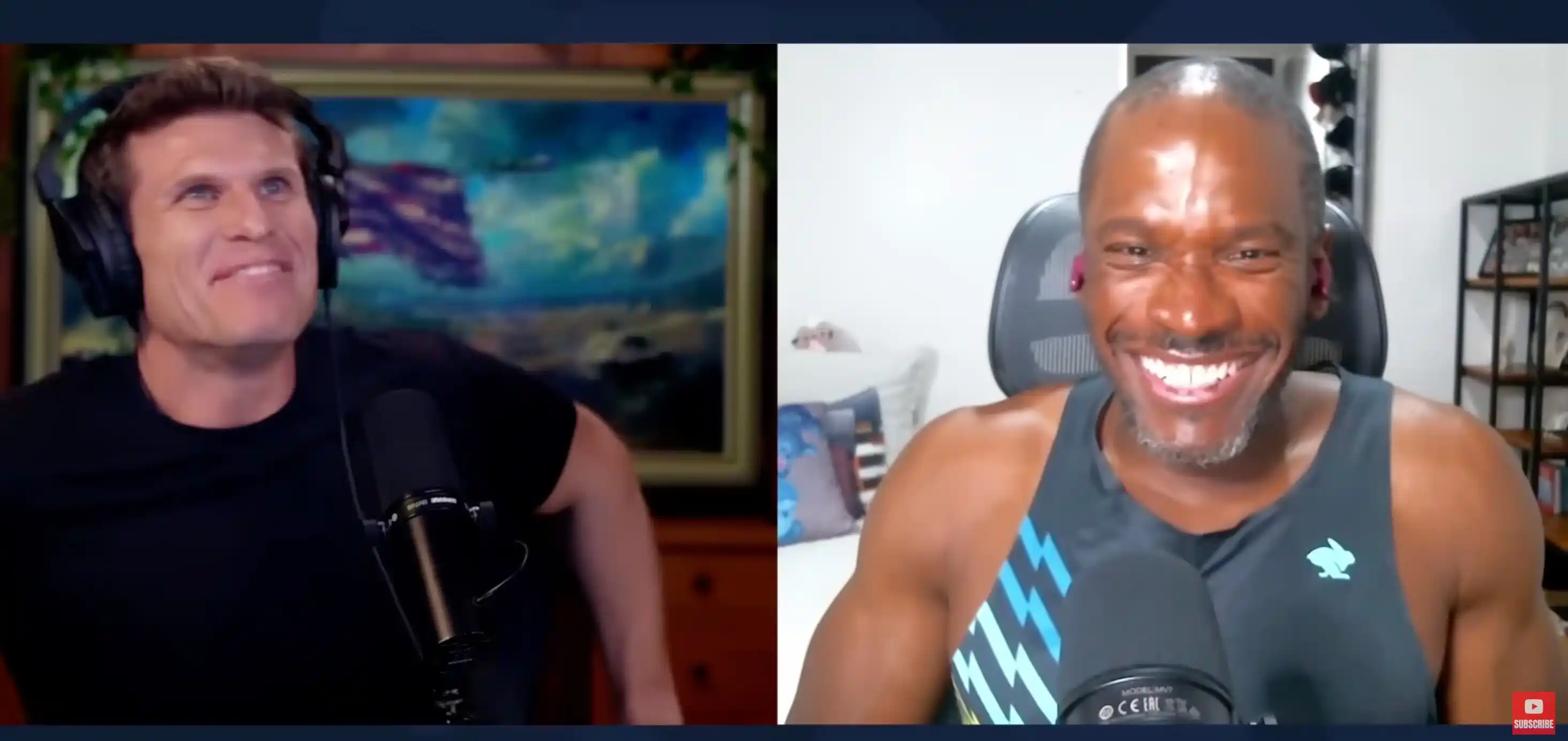
Opening Remarks
Everyone is waiting for the Federal Reserve to utter that "mantra," as if once those words are spoken, the positions in everyone's accounts will instantly take off — "Quantitative Easing (QE) is here." But if you're still waiting for the Fed to announce it directly like before, you're like watching a foreign film without subtitles.
Today's guest is Arthur Hayes. He is the co-founder of the cryptocurrency exchange BitMEX. Before entering the cryptocurrency field, he worked in trading at Citigroup and Deutsche Bank and is proficient in macro analysis. For this episode, you'd better watch with a magnifying glass and take notes, because he says: "The headline you're waiting for won't appear."
Part 1: The Latest Development — Bank of Japan Rate Hike
- Host (Kyle Chasse): Arthur, great to have you on the show. Before we officially start, the most recent macro event is the Bank of Japan (BOJ) decision. By the time the audience sees this episode, the decision should have been announced (Odaily Note: It has now been confirmed as a 25 basis point hike). Do you think the rate hike will really happen? If it does, what does it mean for the market?
Arthur Hayes: Yes, after [Kazuo] Ueda's (Odaily Note: BOJ Governor) speech a few weeks ago, he basically made it clear that a hike was "on the table," and subsequently, market probabilities for a hike quickly rose.
From what I understand from people more familiar with the BOJ's internal situation, the USD/JPY range between 155 and 160 is their "red line," so they will definitely take necessary measures — either raise rates or tacitly approve some form of FX intervention — to prevent the yen from depreciating further and breaking 160.
I think this rate hike is probably just an adjustment from 0.5% to 0.25% or something of that magnitude (Odaily Note: The final result was exactly in line with Arthur's prediction). Against an official inflation rate of about 3%, this is almost no substantive significance on a macro level. It might make the market a bit tighter in the short term, but it won't change the underlying trend.
Part 2: The World's Focus — The Fed Successor
- Host (Kyle Chasse): The question people care most about right now is who will succeed as Fed Chair. They are all inclined to cut rates, but the paths are completely different. Do you think if Kevin Warsh takes over, it would pose some kind of threat to the environment for risk assets?
Arthur Hayes: I always say one thing — The US President will ultimately always get the monetary policy he wants.
If you look back at the history since the Fed was established in 1913, the game between the President and the Fed Chair has never been new. This struggle has always been public, fierce, and even ugly. Lyndon Johnson once physically confronted then-Fed Chair William Martin on his Texas ranch just to force him to cut rates... So everyone thinking Trump's harsh attitude towards Powell is actually nothing.
The key isn't what that person "believed in" before becoming Chair, but after he sits in that position, he will understand — he works for Trump. Trump wants lower interest rates, a larger money supply, a hotter market, while also seriously denying that these are related to inflation; otherwise, he and the Republicans will be out in the next election.
So no matter who becomes Chair, the result is the same. They will, according to the situation, roll out any necessary tools to get the job done. Who ultimately sits in that position is not important, and I don't care.
Part 3: The Lifeblood of the Stock Market — Can the AI Bubble Continue?
- Host (Kyle Chasse): How do you see the game between inflation and liquidity? If we start "printing money" on a large scale as Kevin Hassett expects, the liquidity environment would obviously be very bullish, but usually, the more you print, the higher inflation gets, and ordinary retail investors will still suffer because of it.
Arthur Hayes: In my view, the "game rules" for the Fed and the Treasury are actually very simple — The US economy is essentially a highly financialized economy, and the stock market is the US economy itself.
So ultimately, the authorities must ensure the stock market rises at all costs. Extending from this, it also means the AI wave must continue. I know some people are starting to question the AI bubble now, saying there has been a pullback, but I think they are completely looking in the wrong direction. If you are a stock investor, you should be long, while accepting some volatility. Going short the Nasdaq, shorting companies like Nvidia now is very rash, because this bubble is far from bursting yet, and the authorities need it to continue existing.
Trump has bet the entire US economy on AI's success. And the only way for AI to succeed is through more debt-driven, lower cost of capital, larger money supply. He will keep doing this until it can't be done anymore.
The problem is, doing this will bring inflation. How can politicians seriously tell voters "these policies will not cause inflation"? The answer is to rename it. Everyone knows that Quantitative Easing (QE) = printing money = inflation. So the term QE can no longer be used, it will never appear again in the future, because the average person on the street knows it means inflation, people hate inflation, and this will cause them to switch their support to the Democrats in the next election.
Part 4: QE's New Clothes
- Host (Kyle Chasse): You're right just now, QE-like policies just keep changing names. Looking back later, you'll find it's still easing, it just looked different at the time. What should it be called this time?
Arthur Hayes: The new name this time is "Reserve Management Purchases" (RMP).
When this term first appeared, I spent a decent amount of money consulting researchers in the macroeconomics field. I asked them "Is this QE?", most technical monetary market experts said: No, strictly speaking it's not QE. I asked some bond trader friends, they also said it's not QE, it's something else. But when you ask more cynical macro analysts like me, we say:
Technically no, but in substance yes — it will achieve the same effect.
The current market attitude is (represented by Bitcoin, because it is most sensitive to USD liquidity), this is not QE, but I think the market hasn't truly understood what this is. Looking back at 2008-2009, when Ben Bernanke launched the US version of QE, the market completely didn't believe it at first either. The S&P index continued to fall until it truly bottomed in March 2009.
At that time, Bernanke kept emphasizing that this was just a "temporary expansion of the balance sheet" that would eventually be withdrawn in the future. But later, QE came round after round, only truly ending in 2021, and it was precisely then that the market peaked and corrected sharply. So the key is, the market didn't believe QE was printing money at first either, only later realizing: "Oh, this is printing money, charge!"
Today's RMP is going through the same process. The Fed is buying short-term Treasury bills (T-bills), not MBS or 10-year Treasuries. From a duration perspective, T-bills indeed have a smaller impact. If you assume the banking system is the main channel affected by this plan, then RMP is indeed not QE, but that's not the case. The Fed is doing this to induce money market funds to provide more loans in the repo markets, which can directly fund the US Treasury. So this is a way for the Fed to directly use money market funds and the repo market as intermediaries to finance the US Treasury at the short end of the Treasury curve.
Over time, people will see the deficit not falling, short-term T-bill issuance continuing to rise, repo market usage growing. By then, asset prices will bottom and rebound, and the market will realize: "This is actually QE."
Part 5: When Will the Market Bottom?
- Host (Kyle Chasse): What is your timeline for the market recognizing this? You mentioned asset prices might bottom during this period, specifically what time?
Arthur Hayes: I think starting from January next year, (asset) price performance will significantly improve; but around March, the market will start to worry about whether this "temporary program" will end, and then there will be a round of turbulence; then they will confirm that RMP will continue, and then the rally will restart.
Part 6: Arthur Hayes' Personal Moves
- Host (Kyle Chasse): How would you operate now? How are you personally positioned currently? Leaning towards risk-off or risk-on?
Arthur Hayes: We have probably fired about 90% of our bullets, leaving a little cash to deal with volatility. Maelstrom (Odaily Note: Arthur's family office) doesn't use leverage, so we're not afraid of Bitcoin briefly falling below $80,000.
What we are more concerned about now is, what is the next dominant altcoin narrative? Putting Bitcoin aside, our most successful altcoin position this round is Ethena (ENA), we got in very early because we were financing advisors for that project.
Next round I think it will be privacy, ZK-related directions. We have some Zcash (ZEC) exposure now, but I think there will be some related projects in this field that truly explode and could become the best performing altcoins in the next two to three years. I think 2026 is the time to find that project, we don't know what it is yet, but our job as investors is to look for opportunities.
Part 7: The Value and Risk of the Privacy Narrative
- Host (Kyle Chasse): To be honest, having all transactions exposed on-chain for everyone to see is really annoying, right?
Arthur Hayes: Actually, what people don't understand is, they only see what I want them to see. If I want you to see it, you can see it; if I don't want you to see it, you will never see it.
So, when you see those "wallet tracking tools" on X or other social platforms, please take everything you see with a grain of salt. That isn't necessarily what's really happening.
But in my opinion, for Zcash and other ZK projects, the core value of the privacy narrative is — if I really need to ensure that no government, no opposing company, no one is monitoring what I'm doing, do I really have such a tool now? Obviously, there is a underlying fear psychology here, and what you need to do is leverage that fear. Even if three years later, it turns out that the hottest "altcoin" of 2026 is complete shit, that's fine, you can still make a lot of money before that.
- Host (Kyle Chasse): Do you think it's possible — I know it's impossible to completely shut down or outright ban it — but if the government really tried to say "using this stuff is illegal," that would definitely scare a lot of people away, right?
Arthur Hayes: I think in the current information age, governments have become much smarter. If you tell people "you can't do something," but you don't have the complete means to truly enforce this ban, then people will not only continue to do it, but will want to do it even more.
Therefore, governments now no longer ban things head-on, but choose to restrict intermediary services, such as restricting exchanges from listing privacy coins. The moment I was truly "brainwashed" by Zcash, I first picked up my phone and bought a little, then contacted 8 brokers I knew, asking them to quote me for a trade of a few million dollars. Only 2 were willing to quote, the other 6 were prohibited by regulators from trading privacy coins.
Now most exchanges are simply not allowed to trade Zcash or other privacy coins. This is how the government stops you from holding it. They won't ban it directly, but make it extremely difficult for you to obtain.
Part 8: What If the Prediction Is Wrong?
- Host (Kyle Chasse): Based on your previous explanation, your overall judgment for 2026 is bullish. So is there any key indicator, chart, or event that could overturn this judgment and make you very bearish in 2026-2027?
Arthur Hayes: Some might say that Bitcoin's pullback from $125,000 to $80,000 is just the beginning, and it could fall to whatever level later, and refute me by saying: "Arthur, you keep saying money will be printed, but Bitcoin is still falling, obviously the market doesn't believe what you're saying."
My answer to that is: "You are absolutely right."
I'm talking about a future state. I'm saying the market is currently digesting a new "money printing" term, at least in the US. But perceptions can change, this is the risk I'm taking in this judgment. The market will verify the answer. If I'm wrong, then I'm wrong, but I'm putting real money behind this judgment. We will witness the result together.
Part 9: Will Altseason Come Again?
- Host (Kyle Chasse): Will we see another altseason in the next year or two?
Arthur Hayes: I think people have serious selective memory about "altseason," which is full of many "could have," "if only," "had I known" assumptions.
You say you want altseason? Then think back to 2016-2017, it was basically some guy posting a bullshit PDF online and then posting an address for you to send money. Did you send it? Most people wouldn't, but indeed many people did and made huge amounts of money. Then think about the NFT frenzy of 2020-2021, everyone was trading some ugly apes, penguins on the blockchain, but you were taught since childhood that Rembrandt, Picasso and other European masters were the pinnacle of art. Were you疯狂 flipping NFTs then? Many people weren't.
So don't talk to me about altseason. In 2017 you didn't dare take risks, in 2020 you didn't dare either, in 2024-2025 with Hyperliquid you still didn't dare. Altseason is always there, you're just too timid to participate. You want that familiar altseason because only then do you feel like you know what to do, but cycles only refresh, what goes up are always new things. Either you adjust your cognitive framework, or you forever live in the past, then complain that altseason doesn't exist, but it's just because you didn't buy the one that went up.
Part 10: The Big Opportunity in Arthur Hayes' Eyes
- Host (Kyle Chasse): Is there anything right now that you yourself are excited about but haven't talked about much publicly? Not the well-known blue chips, but something further out on the risk curve.
Arthur Hayes: I might write an article around New Year's to talk about this. Maelstrom has a bunch of investment professionals, and I also have a directional trading account, I just do whatever I want to trade.
I reviewed this year's trades, overall it was profitable, but if you look at the statistics, you'll find that only about one-fifth were profitable, I lost money on most trades. I threw quite a bit of money at some of the shittiest shitcoins or Meme coins, but I shouldn't have touched this garbage at all. At the time I just thought it was "fun," but that's not my style, I shouldn't have messed around in that crap.
The coins I made the most on were Hyperliquid (HYPE) and Ethena (ENA), just catching those big moves is enough. Luckily we have ample capital and can place heavy bets on those coins.
One trade I like is ENA — you can check those on-chain records that I allow you to see. I think ENA is in the early stages of a huge rally because it's an interest rate game. As the Fed lowers short-term rates, if the narrative about RMP is correct, then Bitcoin will rise, and people will also want to add leverage using it. They will be willing to pay a higher basis, and Ethena is the tool to capture this on-chain. Currently we are seeing USDe experiencing large-scale redemptions, but I think this trend will reverse. Just like in September 2024, we will see ENA experience a very rapid rise. Among the blue-chip coins we hold, this is probably one of the trades I am most confident in. It fits my overall macro monetary thesis.
Part 11: Some Quick Q&A
- Host (Kyle Chasse): Now for the quick Q&A session. By the end of 2026, will Bitcoin be higher, lower, or flat? Roughly what price?
Arthur Hayes: Higher. I previously said $250,000 by 2025, obviously this likely won't happen. I'll repeat the same target, reach $250,000 by 2026.
- Host (Kyle Chasse): Name one trade everyone likes but you think is a trap.
Arthur Hayes: Shorting Nvidia.
- Host (Kyle Chasse): What is the most dangerous macro narrative in the cryptocurrency space currently?
Arthur Hayes: Central banks will tighten monetary policy.
- Host (Kyle Chasse): What is the best signal for the return of liquidity?
Arthur Hayes: You have to dig deep into central bank balance sheets and the banking system. The signal will never be straightforward, because they want to trick you.
- Host (Kyle Chasse): What is your positioning on ETH?
Arthur Hayes: King of settlement.
- Host (Kyle Chasse): What is the most underestimated risk in the market?
Arthur Hayes: Leverage.
- Host (Kyle Chasse): If you could, what one thing would you ban from the collective sentiment of the crypto market?
Arthur Hayes: Stop thinking market makers are manipulating the price against you every day.
- Host (Kyle Chasse): If someone wants to see those wallets you "don't want them to see," what should they do?
Arthur Hayes: Use your imagination, my friend.