Artemis Crypto Payment Card Report: $18 Billion Market Size, The Silent Explosion of Crypto Payments

marsbitPubblicato 2026-01-21Pubblicato ultima volta 2026-01-21

Introduzione

Artemis Research reveals that the crypto payments card market has grown into a $18 billion industry, with monthly transaction volumes increasing 15-fold since early 2023. The report breaks down the crypto card stack into three layers: Networks (Visa and Mastercard), Issuers & Program Managers (e.g., Baanx, Bridge), and Consumer Apps (wallets and exchanges like MetaMask and Phantom). Visa dominates with over 90% of on-chain card transaction volume, largely due to early infrastructure partnerships. A key structural shift is the rise of full-stack issuers like Rain and Reap, which now issue cards and settle directly as Visa Principal Members—bypassing sponsor banks for greater control and better economics. Geographic usage varies: In India, crypto cards serve as collateralized credit solutions, while in Argentina, they function as inflation-hedged stablecoin debit cards. In developed markets, crypto cards target high-value users who hold significant stablecoin balances and seek to spend them. The report concludes that as stablecoin adoption grows, crypto cards will scale accordingly, acting as essential infrastructure for bringing digital dollars into the real economy.

Author: Artemis

Compiled by: Deep Tide TechFlow

Deep Tide Guide:

Crypto payments are undergoing a silent "great power shift." The latest research from Artemis shows that the crypto card market has surged from the fringes in early 2023 to a massive $18 billion annualized size, with monthly transaction volume increasing 15-fold in just two years.

This article deconstructs the three layers of the crypto payment stack and reveals a surprising figure: Visa accounts for over 90% of on-chain card transaction volume. More importantly, the industry is experiencing a structural shift towards "full-stack issuance." Companies like Rain and Reap are bypassing traditional banks by connecting directly to Visa, completely rewriting the economic model. From crypto-collateralized credit in India to daily stablecoin payments in Argentina, crypto cards are becoming key infrastructure for bringing digital dollars into the real world.

Full text as follows:

Big news: We just released the industry's most detailed research report on Crypto Cards.

Not because it's a niche market, but because it has quietly grown into an $18 billion market. In early 2023, monthly transaction volume for crypto cards was only around $100 million. Today, that number has exceeded $1.5 billion.

To do this, we spent weeks digging deep into the data, the infrastructure, and the companies actually building this stack. Here are our key findings:
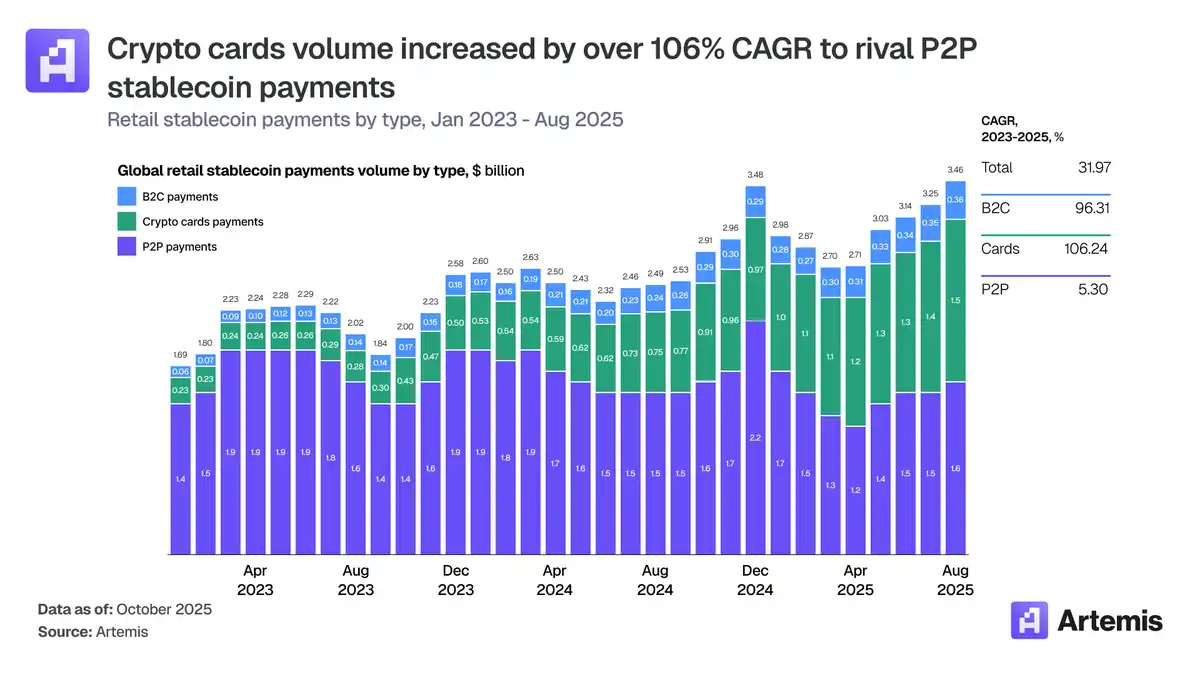
First, let's look at what's actually happening. Crypto cards aren't about replacing Visa or Mastercard; they're about leveraging them.

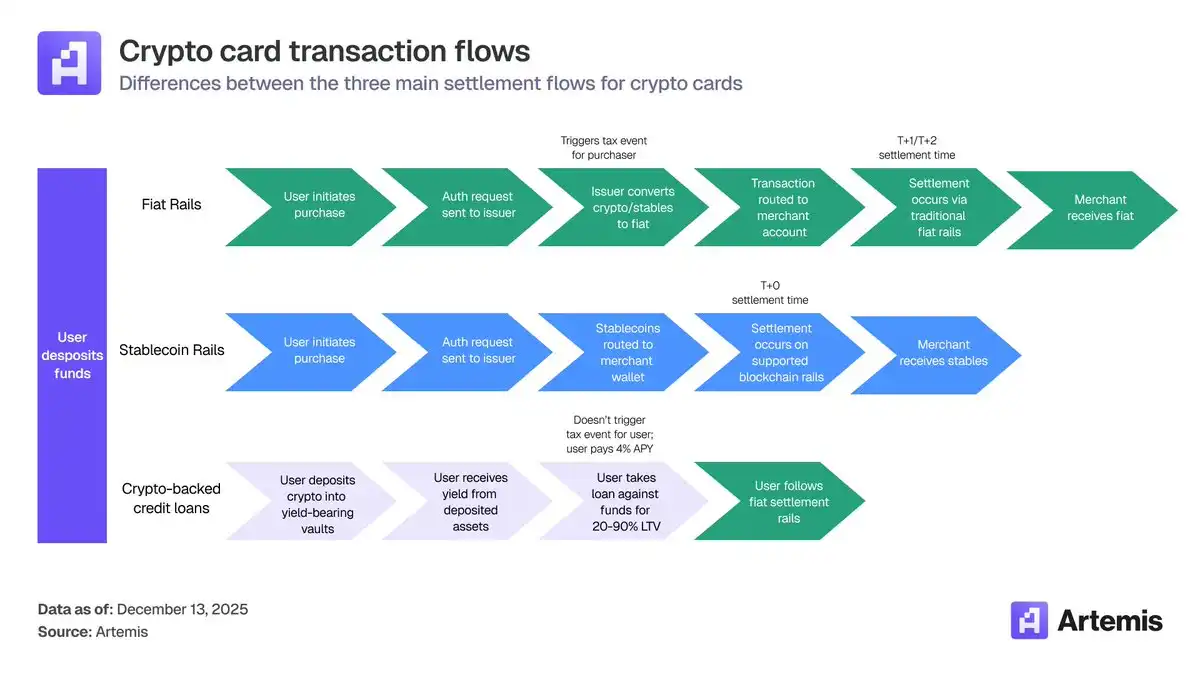
Stablecoins fund the transactions, and Cards provide the merchant acceptance environment.
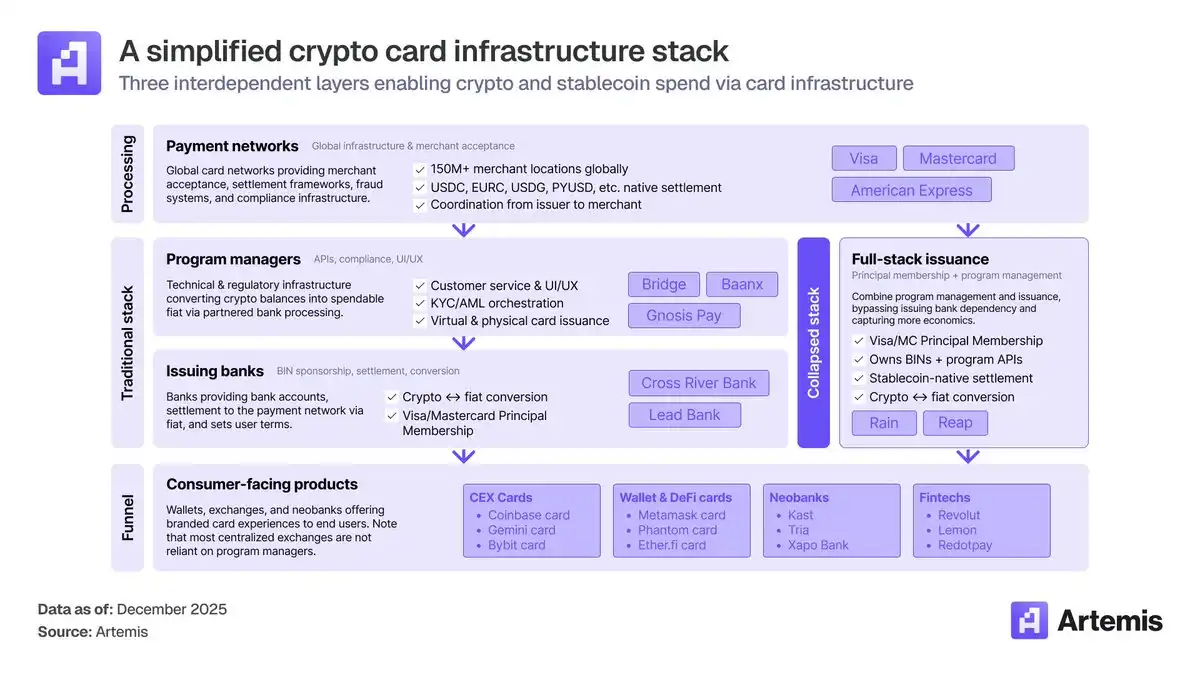
The stack is divided into 3 layers:

  • Network Layer: Visa, Mastercard
  • Issuers & Program Managers Layer: Baanx, Bridge, etc.
  • Consumer Apps Layer: Wallets, Exchanges (e.g., MetaMask, Phantom)

This is precisely where the power struggle is most intense.
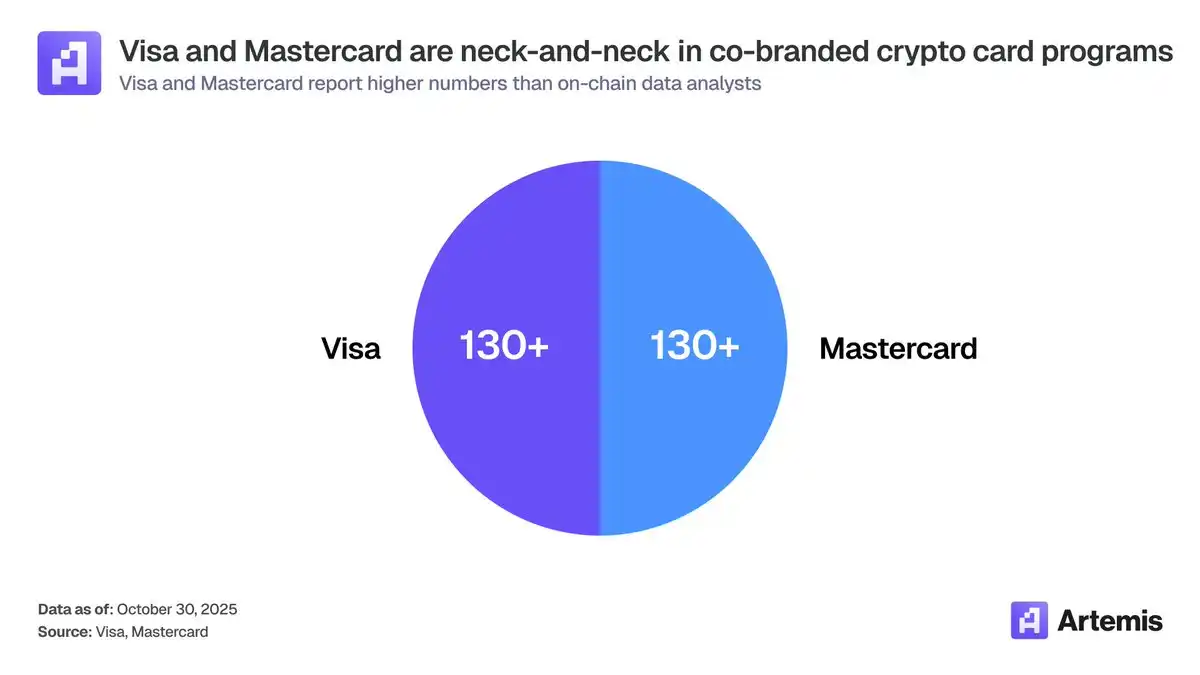
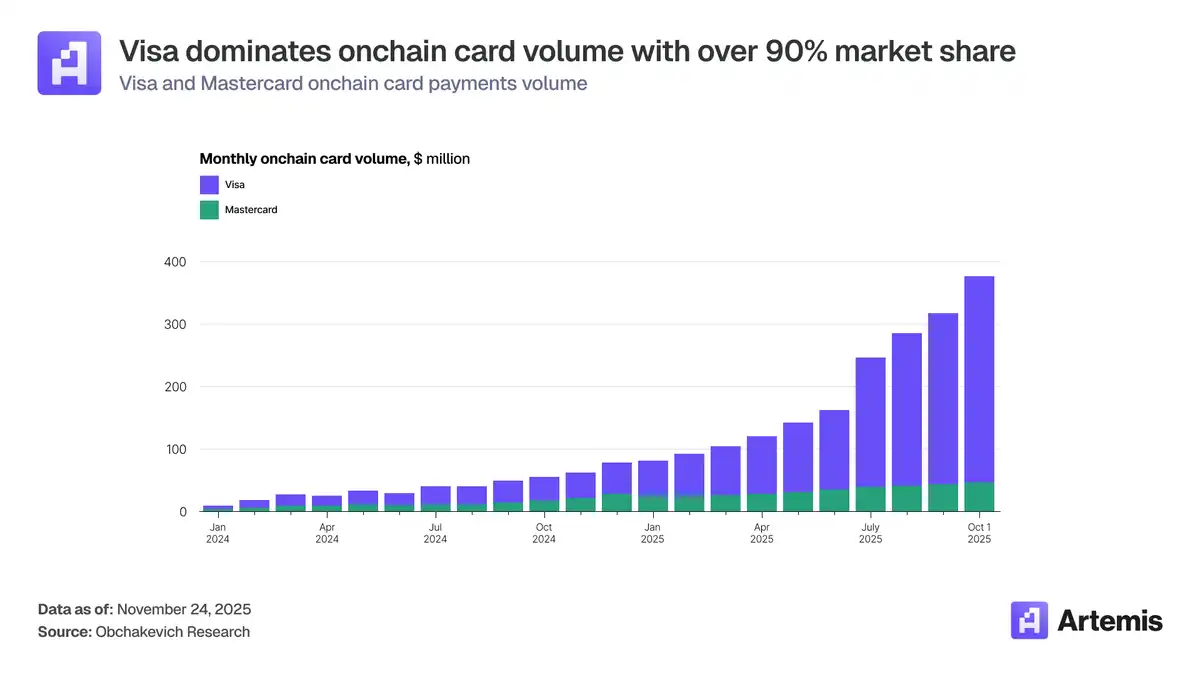
Although both Visa and Mastercard each have over 130 crypto partnerships...

Visa accounts for over 90% of on-chain card transaction volume. The reason lies in its early and deep partnerships with the Infrastructure Layer.
The biggest structural shift: Full-stack issuers.

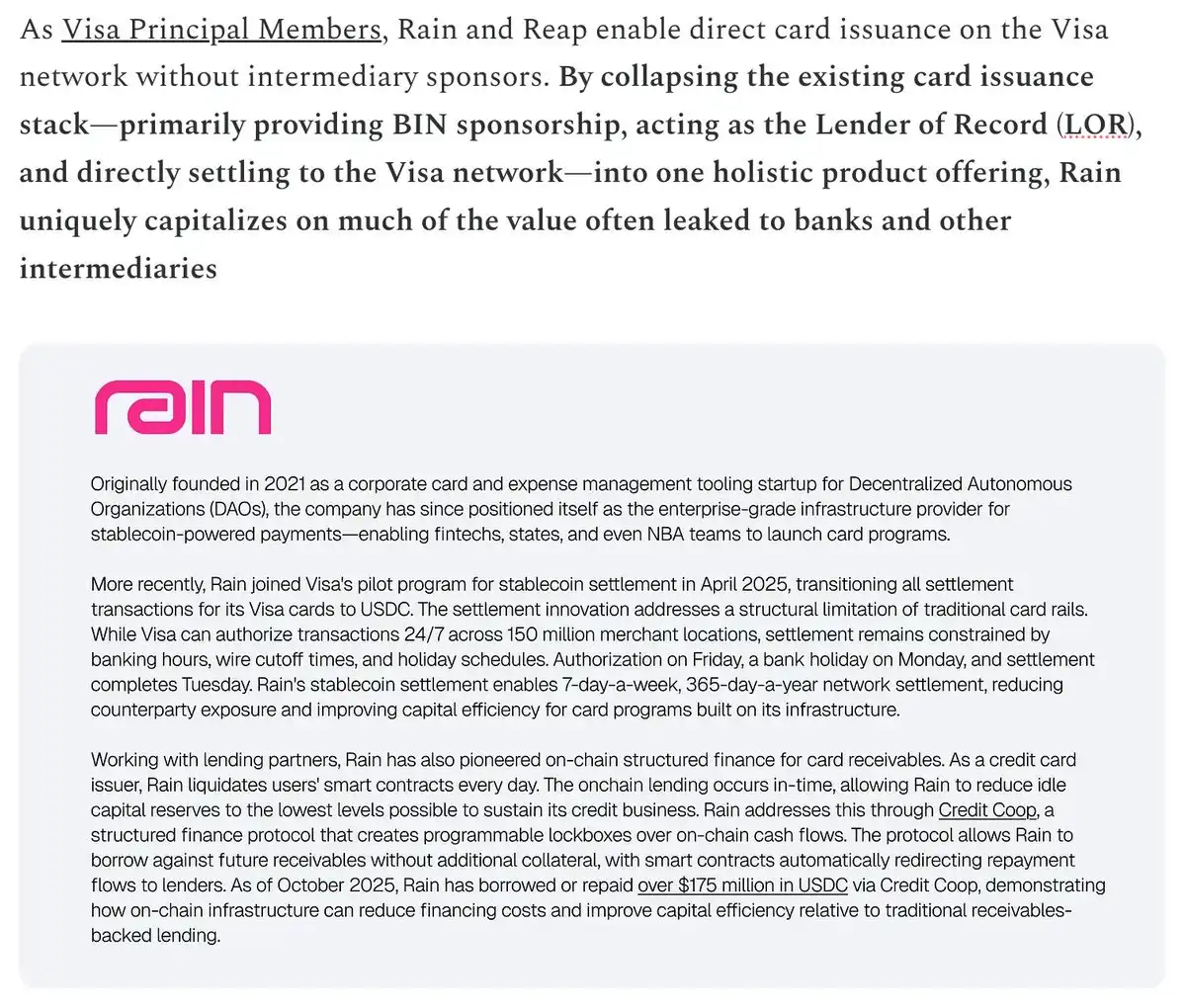
Companies like Rain and Reap can now issue cards and settle directly as Visa Principal Members.

No sponsor bank needed. More control. Better economics.
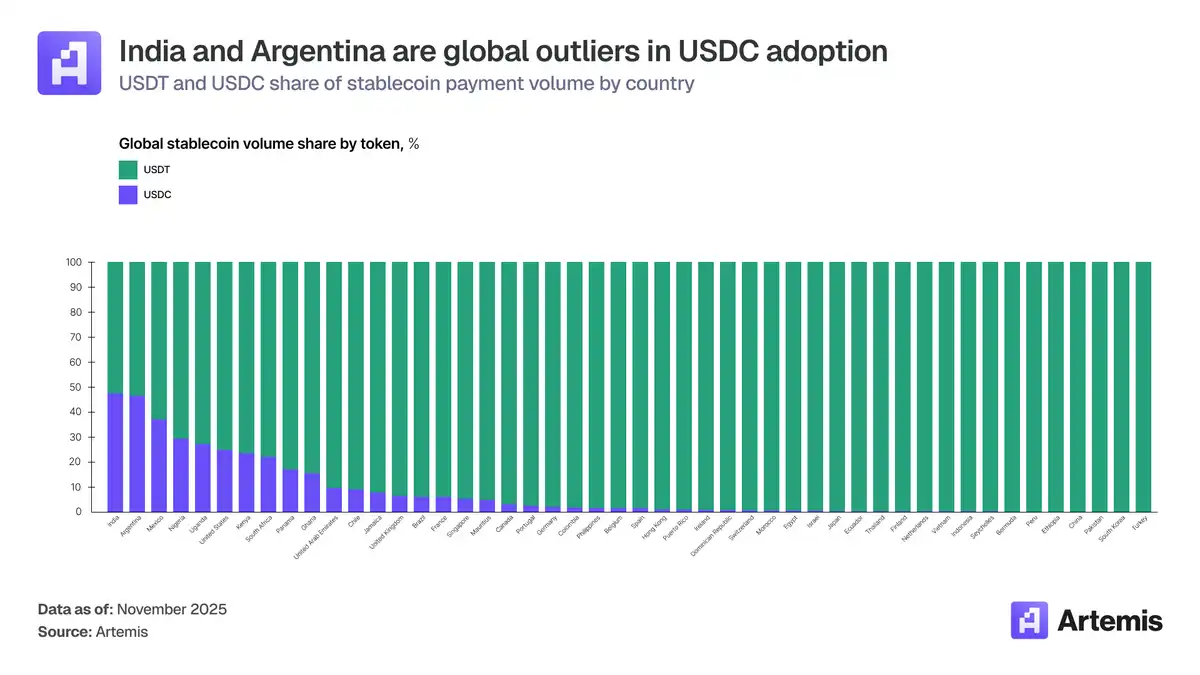
Geographic distribution reveals the real use cases. India: With $338 billion in cryptocurrency inflows. The opportunity here is crypto-collateralized credit (because UPI has already won in debit payments). Argentina: The practical application is stablecoin debit cards as an inflation hedge.
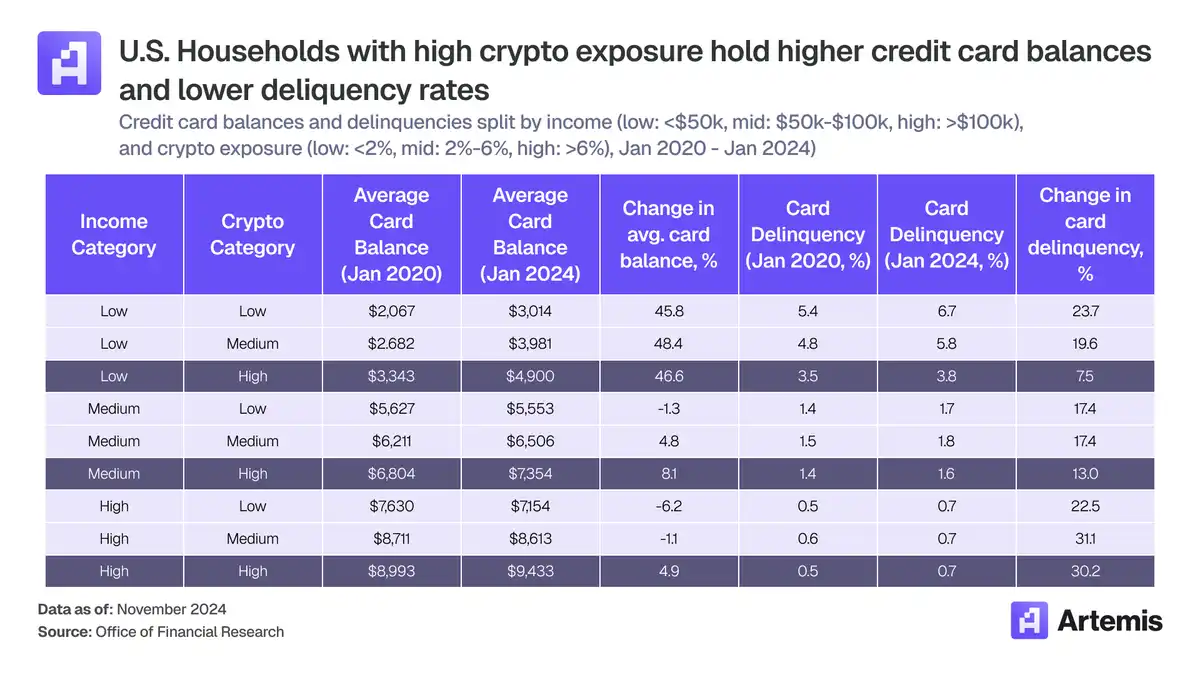
In developed markets, crypto cards don't solve a "critical need."

They target a new, high-value user base: those who already hold significant stablecoin balances and want to spend them.
Our view is simple: Stablecoins will continue to grow, and crypto cards will scale accordingly.

They are the infrastructure for bringing digital dollars into the real world.

This post is just the key highlights. Read the full report for the complete deep dive.
Letture associate

The Verdict in Choi Tae-won's Divorce Case: Revealing the Inheritance Undercurrent Behind SK Hynix's Trillion-Won Empire

SK Group Chairman Chey Tae-won's high-profile divorce case, involving a record 1.38 trillion won settlement, has drawn attention to the succession plans for Korea's second-largest conglomerate, especially its crown jewel, SK hynix. Unlike traditional chaebol scripts centered on the eldest son, Chey's three children from his marriage to former President Roh Tae-woo's daughter, Roh Soh-yeong, are carving distinct, non-traditional paths. Eldest daughter Chey Yun-jung (b. 1989) is seen as the most evident successor. With a scientific and consulting background, she holds executive roles at SK bioscience and SK Inc.'s growth support department, focusing on future strategy and biopharma. Her marriage is to an AI infrastructure entrepreneur, not a traditional business alliance. Second daughter Chey Min-jung (b. 1991) took a unique route, voluntarily serving as a South Korean naval officer, including an anti-piracy deployment. She later worked on policy and strategy for SK hynix in Washington D.C. before co-founding an AI-driven healthcare startup. She married a former U.S. Marine Corps officer, connecting her to U.S. defense and policy circles—networks crucial for a global semiconductor giant. The only son, Chey In-geun (b. 1995), who studied physics like his father, worked briefly at SK E&S before joining McKinsey. Despite fitting the traditional "heir" profile as the eldest son, he remains silent and holds no public position or shares in SK, suggesting the old succession playbook is obsolete. As SK hynix's valuation soars, becoming a geopolitical asset in the AI era, the heirs' legitimacy is no longer automatic. They must prove themselves in fields like AI biotech, global policy, and strategic consulting. Their marriages also reflect new elite networks in tech and defense, not old political alliances. Their inheritance is the complex challenge of navigating a globalized, tech-driven world, not just a corporate throne.

marsbit11 h fa

The Verdict in Choi Tae-won's Divorce Case: Revealing the Inheritance Undercurrent Behind SK Hynix's Trillion-Won Empire

marsbit11 h fa

From OpenSea to OpenRouter: Is Alex Atallah Repeating His 'Exit at the Peak' Playbook?

From OpenSea to OpenRouter: Is Alex Atallah Repeating His "Exit at the Peak" Playbook? According to the Wall Street Journal, payments giant Stripe is in talks to acquire the AI model aggregation platform OpenRouter in a potential deal valuing the company near $100 billion. This would mark founder Alex Atallah's second creation of a company reaching a $100 billion valuation, following his co-founding of NFT marketplace OpenSea. OpenRouter, founded just over three years ago, has grown rapidly by acting as a unified gateway for developers to access over 400 AI models. It currently has about 10 million users and processes over 200 trillion tokens monthly. While the platform's annualized revenue is around $50 million, its valuation has skyrocketed from $1.3 billion in March 2026. The potential acquisition by Stripe, a company OpenRouter's founder once likened it to, represents a major expansion into AI infrastructure for the payments leader. This move echoes Atallah's previous timing with OpenSea, where he departed before the NFT market's significant downturn. For OpenRouter, selling now may be strategic. Despite its scale, its business model—charging a 5-5.5% fee on AI inference calls—faces pressure from competition, open-source models, and potential price wars among model providers, limiting its profitability narrative for an IPO. A key asset for potential acquirers like Stripe is OpenRouter's vast repository of real-world AI usage data, which offers unique insights into model performance and developer preferences that are difficult to replicate. Whether this potential deal signifies a new valuation benchmark for AI infrastructure or another market peak signal remains to be seen.

链捕手11 h fa

From OpenSea to OpenRouter: Is Alex Atallah Repeating His 'Exit at the Peak' Playbook?

链捕手11 h fa

Trading

Spot
活动图片





