Artemis Crypto Payment Card Report: $18 Billion Market Size, The Silent Explosion of Crypto Payments

marsbitPubblicato 2026-01-21Pubblicato ultima volta 2026-01-21

Introduzione

Artemis Research reveals that the crypto payments card market has grown into a $18 billion industry, with monthly transaction volumes increasing 15-fold since early 2023. The report breaks down the crypto card stack into three layers: Networks (Visa and Mastercard), Issuers & Program Managers (e.g., Baanx, Bridge), and Consumer Apps (wallets and exchanges like MetaMask and Phantom). Visa dominates with over 90% of on-chain card transaction volume, largely due to early infrastructure partnerships. A key structural shift is the rise of full-stack issuers like Rain and Reap, which now issue cards and settle directly as Visa Principal Members—bypassing sponsor banks for greater control and better economics. Geographic usage varies: In India, crypto cards serve as collateralized credit solutions, while in Argentina, they function as inflation-hedged stablecoin debit cards. In developed markets, crypto cards target high-value users who hold significant stablecoin balances and seek to spend them. The report concludes that as stablecoin adoption grows, crypto cards will scale accordingly, acting as essential infrastructure for bringing digital dollars into the real economy.

Author: Artemis

Compiled by: Deep Tide TechFlow

Deep Tide Guide:

Crypto payments are undergoing a silent "great power shift." The latest research from Artemis shows that the crypto card market has surged from the fringes in early 2023 to a massive $18 billion annualized size, with monthly transaction volume increasing 15-fold in just two years.

This article deconstructs the three layers of the crypto payment stack and reveals a surprising figure: Visa accounts for over 90% of on-chain card transaction volume. More importantly, the industry is experiencing a structural shift towards "full-stack issuance." Companies like Rain and Reap are bypassing traditional banks by connecting directly to Visa, completely rewriting the economic model. From crypto-collateralized credit in India to daily stablecoin payments in Argentina, crypto cards are becoming key infrastructure for bringing digital dollars into the real world.

Full text as follows:

Big news: We just released the industry's most detailed research report on Crypto Cards.

Not because it's a niche market, but because it has quietly grown into an $18 billion market. In early 2023, monthly transaction volume for crypto cards was only around $100 million. Today, that number has exceeded $1.5 billion.

To do this, we spent weeks digging deep into the data, the infrastructure, and the companies actually building this stack. Here are our key findings:
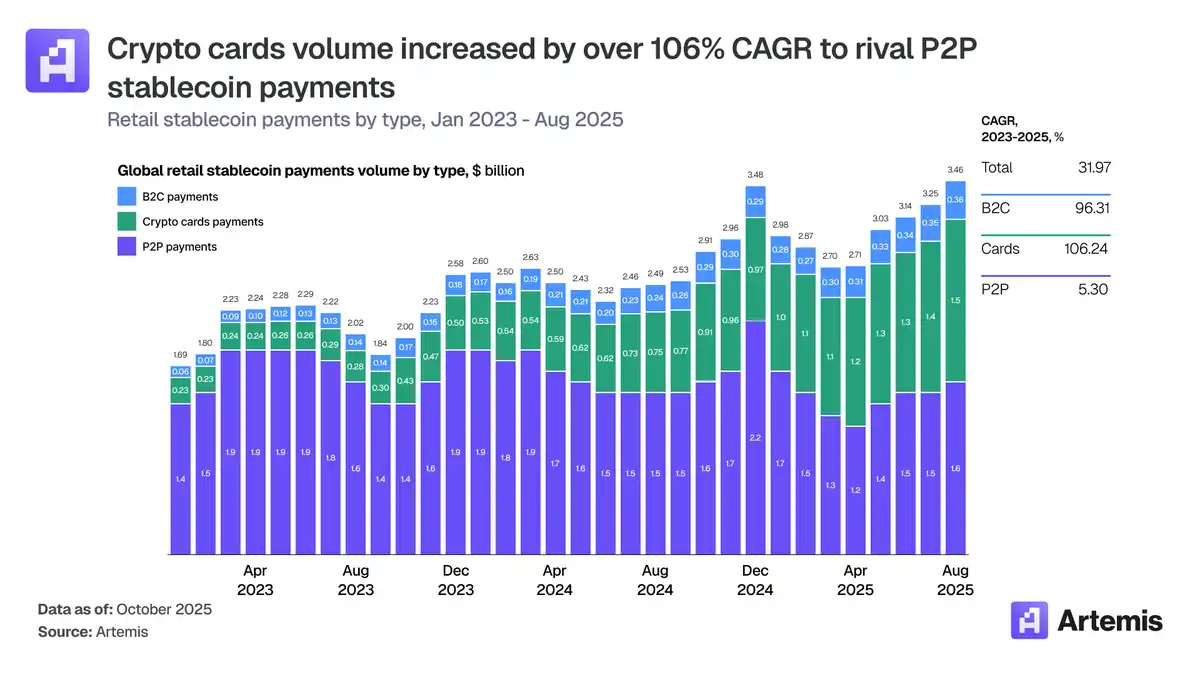
First, let's look at what's actually happening. Crypto cards aren't about replacing Visa or Mastercard; they're about leveraging them.

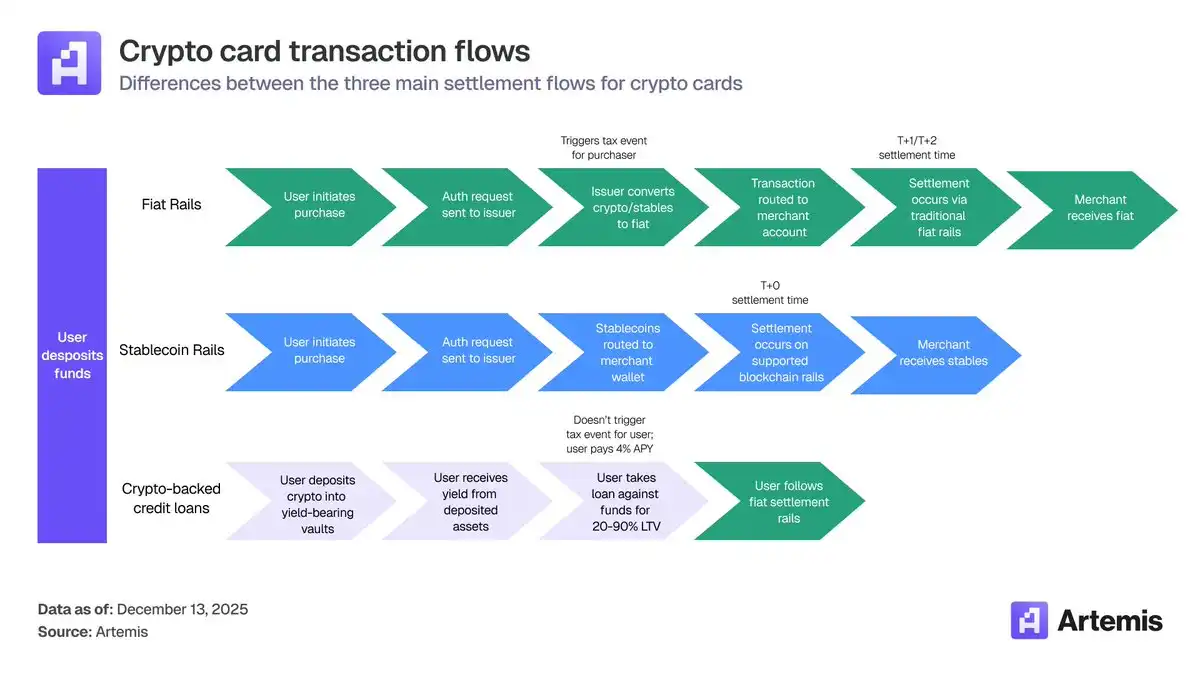
Stablecoins fund the transactions, and Cards provide the merchant acceptance environment.
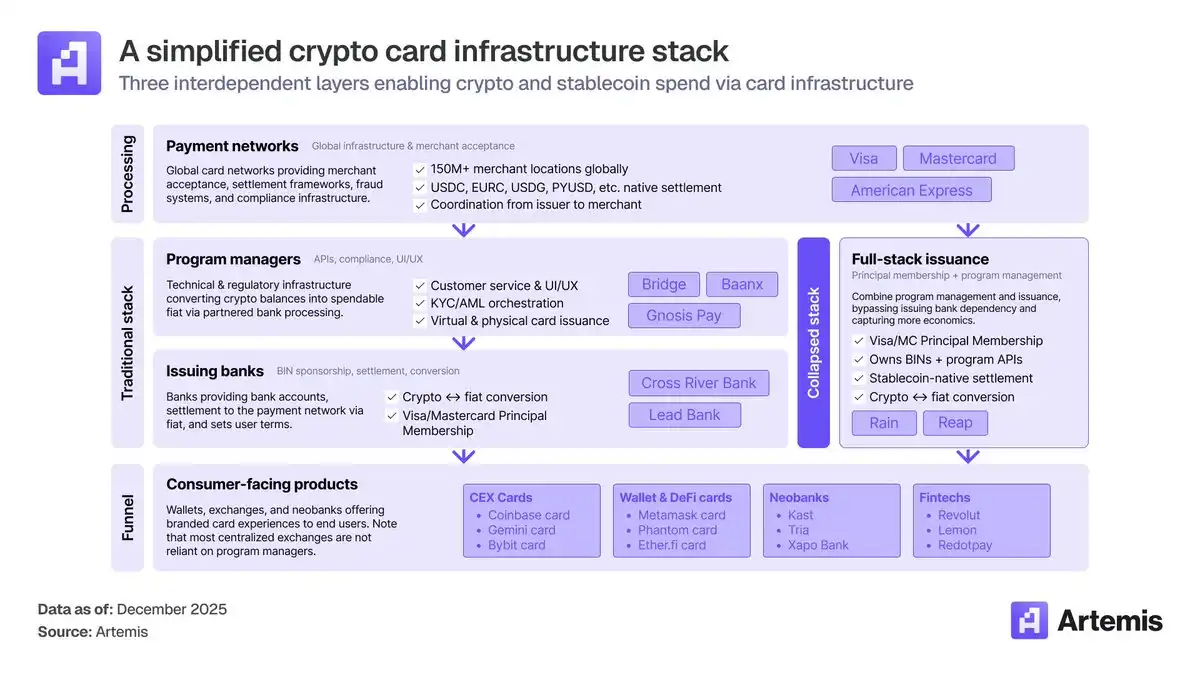
The stack is divided into 3 layers:

  • Network Layer: Visa, Mastercard
  • Issuers & Program Managers Layer: Baanx, Bridge, etc.
  • Consumer Apps Layer: Wallets, Exchanges (e.g., MetaMask, Phantom)

This is precisely where the power struggle is most intense.
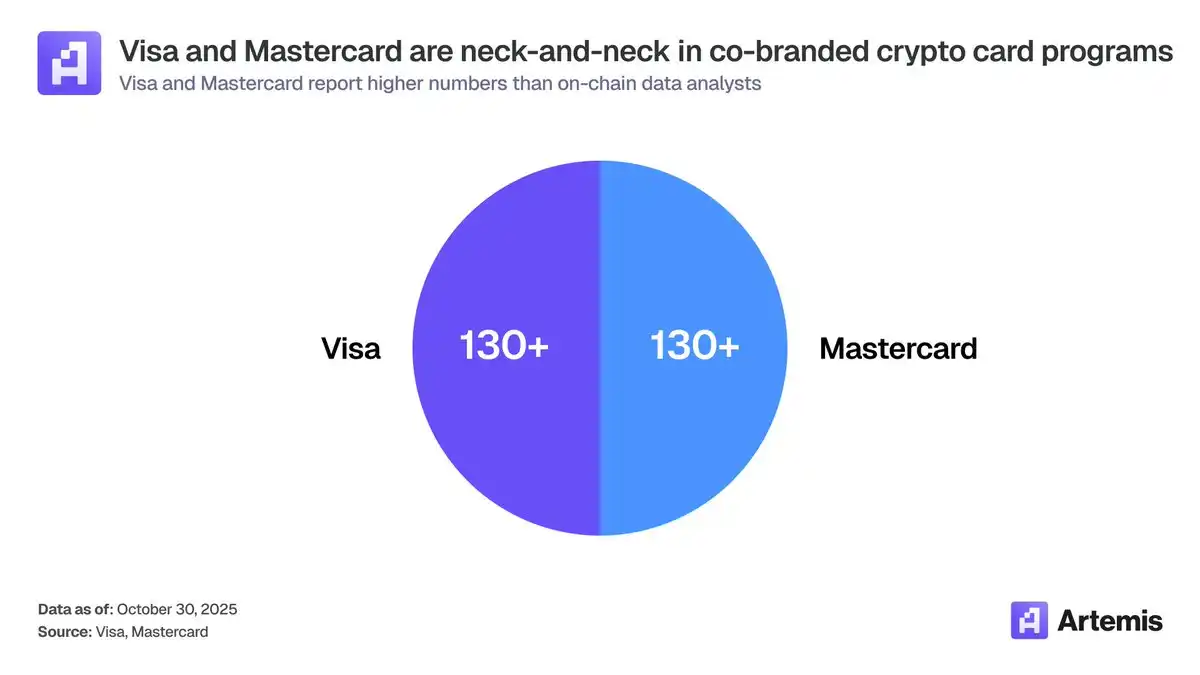
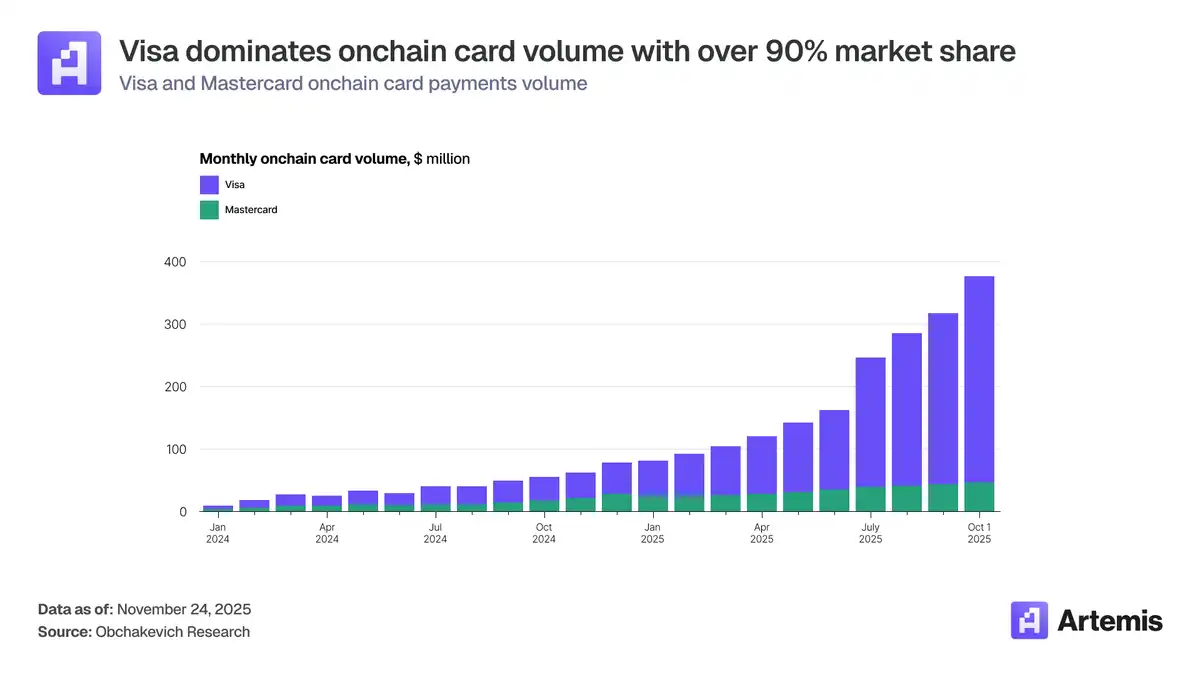
Although both Visa and Mastercard each have over 130 crypto partnerships...

Visa accounts for over 90% of on-chain card transaction volume. The reason lies in its early and deep partnerships with the Infrastructure Layer.
The biggest structural shift: Full-stack issuers.

Companies like Rain and Reap can now issue cards and settle directly as Visa Principal Members.

No sponsor bank needed. More control. Better economics.

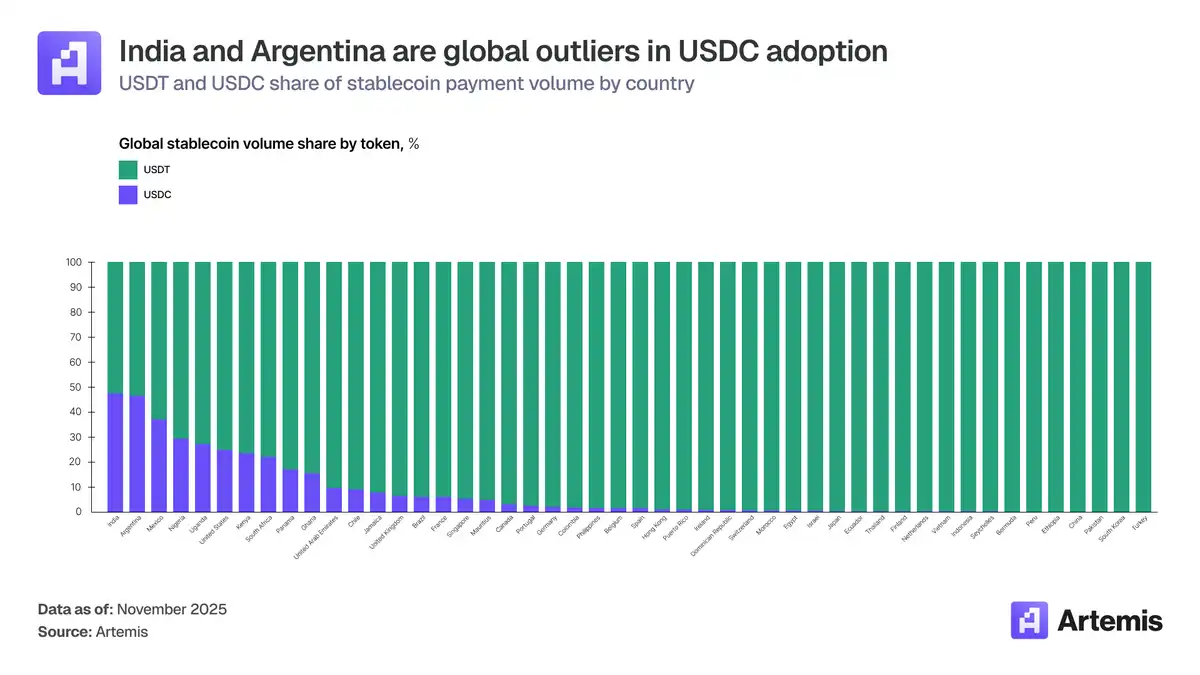
Geographic distribution reveals the real use cases. India: With $338 billion in cryptocurrency inflows. The opportunity here is crypto-collateralized credit (because UPI has already won in debit payments). Argentina: The practical application is stablecoin debit cards as an inflation hedge.
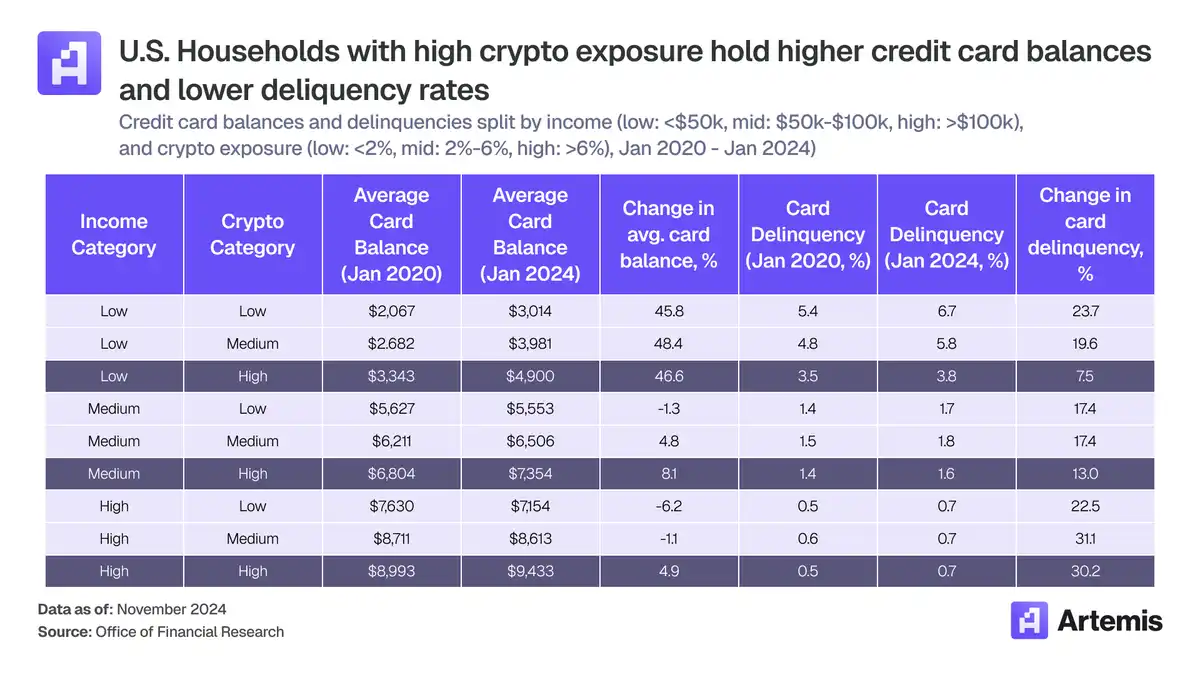
In developed markets, crypto cards don't solve a "critical need."

They target a new, high-value user base: those who already hold significant stablecoin balances and want to spend them.
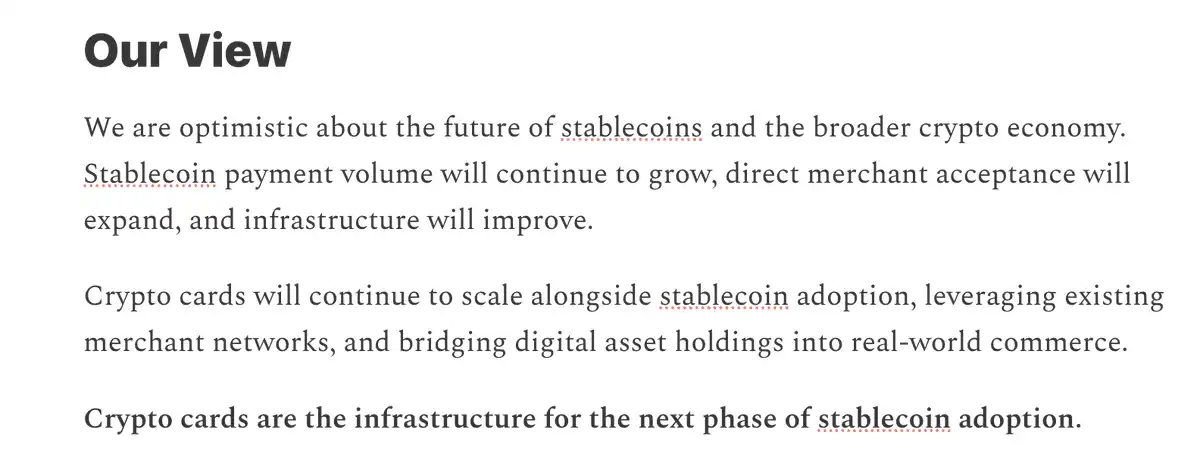
Our view is simple: Stablecoins will continue to grow, and crypto cards will scale accordingly.

They are the infrastructure for bringing digital dollars into the real world.

This post is just the key highlights. Read the full report for the complete deep dive.
Letture associate

Will the Next Crypto Bull Run Start with On-Chain Trading of SpaceX?

This article presents a scenario-based forecast for the crypto industry from 2026 to 2029, arguing that the next major cycle will be driven not by technological narratives but by legal access to real-world assets. The author predicts that by mid-2026, pre-IPO perpetual contracts for top private companies like SpaceX, OpenAI, and Anthropic on platforms like Hyperliquid will become the primary gateway for accessing quality assets, as most crypto-native tokens fail to capture real value. The much-hyped AI x Crypto intersection largely fails except for prediction markets, which thrive on betting on AI model supremacy. By 2027, public blockchain foundations are forced to choose between catering to retail speculation or building compliant infrastructure for institutions, with many opting for the latter. Growth in stablecoins and tokenized private credit/equity hits a "triple ceiling" due to regulatory and political uncertainty rather than market demand. The pivotal shift is forecast for 2028. A major liquidation event in pre-IPO perpetuals exposes the structural flaw of synthetic markets lacking a real underlying asset anchor. In response, regulatory changes finally allow the public solicitation of private securities resales to verified accredited investors. This creates a legitimate secondary market for real company equity, which then becomes the core asset class of the new bull market, relegating synthetic perps to a niche role. By 2029, the industry becomes "boring" but foundational. Tokens without claims on real cash flows or assets cease trading. Stablecoin growth is steady but politically capped. Crypto infrastructure fades from view as it gets absorbed into traditional finance backends. The article's central thesis is that the key bottleneck for crypto's next phase is legal and regulatory channels for real asset ownership, not technology.

marsbit1 h fa

Will the Next Crypto Bull Run Start with On-Chain Trading of SpaceX?

marsbit1 h fa

The Value Distribution of Stablecoins

**Summary: The Value Distribution of Stablecoins** The article argues that stablecoins are evolving from mere trading tools into broader channels for dollar access. It divides the stablecoin ecosystem into four layers to analyze how value is distributed: 1. **Issuance Layer:** Mints stablecoins, holds reserve assets, and captures the spread between reserve yield and user costs (e.g., Tether, Circle). This layer currently earns the largest profit margin. 2. **Infrastructure Layer:** Connects stablecoins to the traditional financial system, handling fiat on/off-ramps, banking integration, compliance (KYC/AML), and asset management (e.g., Bridge, BVNK). This is the "unglamorous" but critical work, building the essential bridges between crypto and real-world finance. 3. **Acquiring/Distribution Layer:** Integrates stablecoins into merchant systems, manages payment flows, and provides enterprise financial software (e.g., Stripe, Coinbase). They act as the access point for businesses. 4. **Application Layer:** The end-users and businesses that ultimately use stablecoins for payments, settlements, or as a store of value. They benefit from convenience but have little pricing power. The core thesis is that while the issuance layer currently dominates profits, the often-overlooked **infrastructure layer holds significant long-term potential**. The real challenge and barrier to mass adoption is not the on-chain transfer of stablecoins (which is simple), but the complex "last mile" integration into existing business workflows, banking systems, and regulatory frameworks across different countries. Companies in this layer are currently in a "land grab" phase, investing heavily to build networks, secure bank partnerships, and establish compliance pathways. While their position is currently pressured by the profitable issuers above and distribution platforms below, the article suggests that if stablecoins become a default financial rail for businesses, the infrastructure providers who have done the hard work of integration will ultimately gain strong pricing power and become entrenched, essential players.

marsbit7 h fa

The Value Distribution of Stablecoins

marsbit7 h fa

The Value Distribution of Stablecoins

The Value Distribution of Stablecoins The article argues that stablecoins are evolving from a mere trading tool into a broad "dollar channel." It analyzes the industry's value chain through four layers: 1. **Issuance Layer (e.g., Tether, Circle):** The top layer that mints stablecoins, holds reserve assets, and captures the thickest interest rate spread. 2. **Infrastructure Layer (e.g., Bridge, BVNK):** Connects stablecoins to the traditional financial system, handling critical but complex "dirty work" like fiat on/off-ramps, banking integration, compliance (KYC/AML), and cross-border settlement. 3. **Acquiring/Distribution Layer (e.g., Stripe, Coinbase):** Embeds stablecoins into merchant systems, manages payment flows, and integrates with enterprise software. 4. **Application Layer:** End-users and businesses that ultimately use stablecoins for payments, settlement, or storing value. The author posits that while the issuance layer currently captures the most profit, the most overlooked and potentially critical layer is infrastructure. The core challenge for stablecoin adoption isn't the on-chain transfer (which is simple), but bridging the gap between blockchain and the real-world financial system. This involves solving practical problems for businesses: fiat conversion, reconciliation, tax handling, and user onboarding. Infrastructure companies are currently in a difficult "land-grab" phase—building networks, securing banking relationships, and achieving compliance country-by-country. They face pressure from both the profitable issuance layer above and distribution platforms below. However, the author suggests this layer is building a crucial moat. Once stablecoins become a default business rail, the infrastructure players who have done the hard work of integration may gain significant, durable value and pricing power.

链捕手7 h fa

The Value Distribution of Stablecoins

链捕手7 h fa

Trading

Spot
Futures
活动图片