ARM's Stock Price Soars 30% Against the Trend, Is ARM, Now Making AI Chips, Winning Big?

marsbitPubblicato 2026-05-22Pubblicato ultima volta 2026-05-22

Introduzione

ARM's stock surged over 15% on May 21, 2026, reaching a record high of $259, driven by its strategic pivot beyond its traditional IP licensing business. For over three decades, ARM has profited by licensing chip designs to companies like Apple and Qualcomm, earning mere cents per chip. However, with the mobile market maturing, growth stalled. In March 2026, ARM announced a historic shift: it would design and sell its own finished chips for the first time. Its "AGI CPU," built for AI data centers, targets the growing computational needs of AI Agents—tasks like workflow orchestration and data preprocessing where CPUs are crucial. This move positions ARM directly in the high-value server CPU market, competing with some of its own licensees. Analysts believe the rise of Agentic AI will dramatically increase demand for data center CPUs. Bernstein set a $300 price target, forecasting ARM's annual revenue could reach $26 billion by 2030 as the server CPU market expands. Major customers like Meta and OpenAI have already signed on for the AGI CPU, with committed demand reportedly doubling to over $2 billion within six weeks of launch. While this transformation offers massive upside, risks remain. ARM's valuation is extremely high (P/E ~300), pricing in future success. The company must also navigate potential conflicts with existing partners and execute flawless chip manufacturing. Nevertheless, Wall Street is betting that ARM's move from a "tax collector" to an AI infrastructure pr...

When AI Agents need more than just GPUs, ARM is welcoming its own era.

In September 2023, ARM went public on Nasdaq at $51 per share. SoftBank sold less than 10% of its stake, cashing out approximately $4.9 billion. It was the largest tech IPO of that year, but many secretly harbored a question—how could a company that doesn't manufacture chips but only sells design blueprints justify a $54.5 billion valuation?

In less than three years, ARM has provided an answer no one anticipated.

On May 21, 2026, ARM's stock price surged over 15% in a single day, hitting a record high of $259. From around $201 at the end of April, it climbed 27% in just three weeks. By the intraday session on May 22, the stock price briefly touched $285.

From the IPO price of $51 to now, it has more than quintupled in less than three years.

This isn't a simple earnings report rally or analyst hype. ARM is undergoing the most profound identity transformation in its 35-year history. Can it completely reinvent itself?

AGI CPU: For the First Time in 35 Years, ARM is Manufacturing Its Own Chips

To understand ARM's current rally, one must first grasp how it made money in the past.

ARM's business model is unique in the semiconductor industry. It doesn't produce any chips itself. Instead, it licenses the underlying chip designs to other companies—Apple, Qualcomm, MediaTek, Samsung, and even Nvidia. Clients pay an upfront licensing fee to get the design blueprints, and then pay ARM a royalty for every chip produced based on ARM's architecture.

According to ARM's disclosures at IPO, the average royalty per chip is about 5 cents.

With this model, ARM's architecture found its way into 99% of the world's smartphones. By the time of its IPO, cumulative shipments of chips based on ARM designs exceeded 160 billion. But the problem was clear—the global smartphone market had essentially stopped growing.

ARM's revenue for fiscal year 2023 was $2.68 billion, even showing a slight year-over-year decline. A company that dominated the mobile computing era saw its revenue stagnating. The 5-cents-per-chip royalty model, in an era of plateauing phone markets, was destined to deliver only linear growth.

To break through the ceiling, ARM had to find a new growth engine.
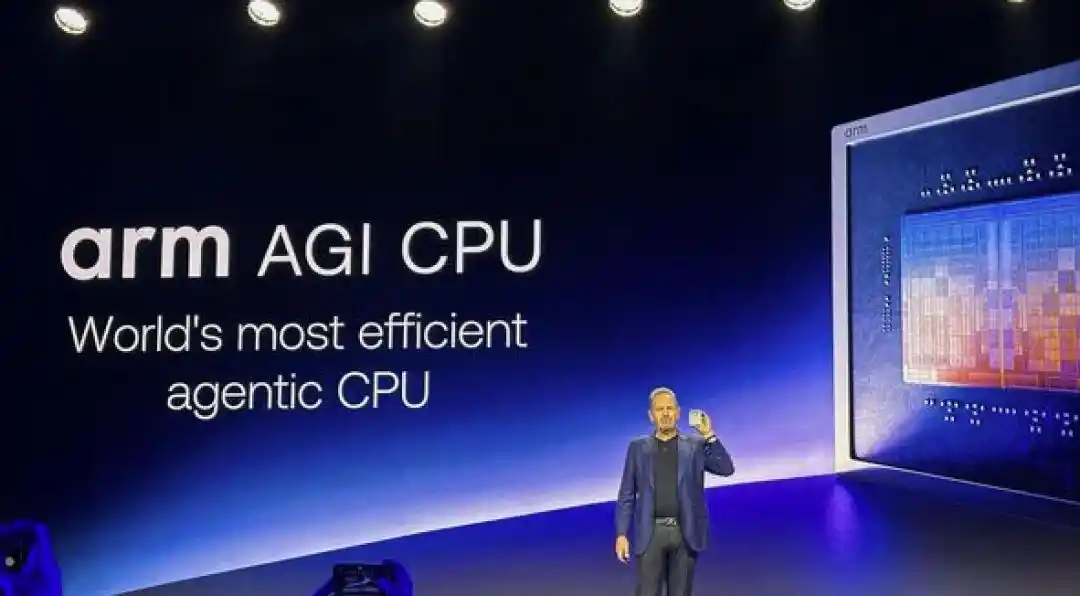
The AGI CPU launched by ARM|Image source: Livemint

On March 24, 2026, ARM held a launch event in San Francisco, announcing something the company had never done in its history—releasing and selling a finished chip of its own design.

This chip is named "AGI CPU," based on ARM's latest Neoverse V3 architecture, featuring up to 136 cores, manufactured using TSMC's 3nm process, with a TDP of 300 watts. It's not for training large models (that's the GPU's job), but specifically designed for "CPU-side" work in AI data centers—data preprocessing, model inference scheduling, network management, and most crucially, the orchestration of AI Agent workflows.

CEO Rene Haas said one sentence at the launch: "This is a pivotal turning point for the company."

This statement carries more weight than it appears on the surface. For 35 years, ARM adhered to one principle—we only sell designs, we don't compete with our customers. Apple uses ARM's architecture for its M-series chips, Qualcomm for Snapdragon, Nvidia for Grace. Everyone takes what they need, staying in their own lanes. Now, by stepping into chip manufacturing itself, ARM is essentially competing with its own customers for the same market.

But ARM's confidence stems from finding a new battlefield its customers haven't yet occupied.

The Underlying Logic of Data Centers is Being Rewritten

Over the past few years, everyone talked about GPUs. Nvidia's H100 and B200 are the hard currency of the AI era, with data center construction logic revolving around GPUs. CPUs? Just supporting actors, matched alongside GPUs at ratios like 1:4 to 1:8.

But Agentic AI is changing this equation.

Unlike traditional chatbots, AI Agents need to autonomously call tools, manage multi-step tasks, and coordinate multiple subsystems. These tasks are inherently serial and logic-intensive, precisely what CPUs excel at, not GPUs. When an Agent is busy calling APIs, waiting for external responses, or performing security checks, the expensive GPU next to it is essentially idling.

ARM's assessment is that, in the AI Agent era, the demand for CPU cores per gigawatt of data center power will surge from 30 million to 120 million—a fourfold increase. TrendForce research also points out that the CPU-to-GPU ratio in Agentic AI deployments will shift from the current 1:4 to 1:8, to 1:1 to 1:2.

Morgan Stanley further predicts that by 2030, Agentic AI could bring $32.5 to $60 billion in new demand to the data center CPU market, pushing the total server CPU market size beyond $100 billion.

Simply put, GPUs are the "engines" of the AI era, but the Agent era also needs a "dispatch center," and that's the CPU. This is precisely the position ARM's AGI CPU is targeting.
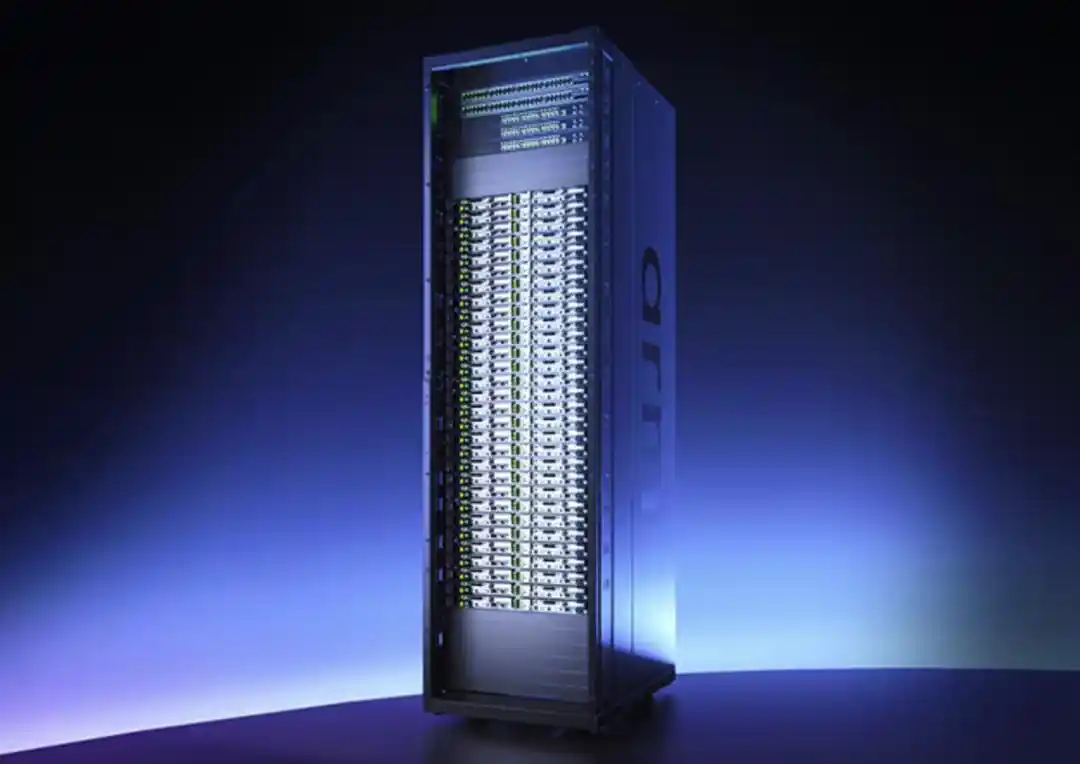
ARM's data center product lineup including the AGI CPU|Image source: ARM

ARM's AGI CPU is not a mere concept. Its initial customer list reads like the AI industry's "Hall of Fame"—Meta is a co-development partner and launch customer, with commercial contracts signed with OpenAI, Cerebras, Cloudflare, SAP, and SK Telecom. Server manufacturers like Lenovo, Supermicro, and Quanta have already begun offering integrated systems equipped with AGI CPUs.

Santosh Janardhan, Meta's Head of Infrastructure, stated that Meta co-developed this chip with ARM and will deploy it alongside Meta's in-house MTIA accelerators to optimize computational density in its "gigawatt-scale" AI data centers. Sachin Katti, Head of Industrial Computing at OpenAI, said the AGI CPU will become an integral part of OpenAI's infrastructure, responsible for the orchestration layer coordinating large-scale AI workloads.

What excites Wall Street even more is the speed of growth.

ARM revealed during its early-May earnings call that committed customer demand for the AGI CPU for FY2027-2028 already exceeds $2 billion—and this figure was only $1 billion six weeks ago when the product was just launched. Doubling in six weeks, this pace of demand acceleration is extremely rare in the hardware industry.

Meanwhile, ARM's traditional business is also accelerating. Q4 FY2026 revenue reached $1.49 billion, a 20% year-over-year increase, with licensing revenue soaring 29% to $819 million, setting a historical record for the best single-quarter performance.

ARM Repriced

The real catalyst for this rally was a heavyweight research report released by Bernstein analyst David Dai on May 19.

Dai initiated coverage on ARM with an Outperform rating, directly setting a $300 price target. His core logic was clear—AI is transitioning from chatbots to Agentic AI, which will drive structural growth in CPU demand, and ARM, with its power efficiency advantage, will be the biggest winner. He estimates that by 2030, the server CPU market will quadruple to $137 billion, with ARM's annual revenue surpassing $26 billion and earnings per share reaching $9.83.

Bernstein isn't alone. Jefferies raised its target price from $210 to $290, TD Cowen from $165 to $265, and Bank of America gave a $300 target. Citi also confirmed management's 2031 targets—$25 billion total revenue and $9 earnings per share.

This isn't optimism from a single firm; it's Wall Street collectively reframing ARM's valuation model. The market is no longer pricing ARM as a "chip IP licensing company" but starting to value it as an "AI infrastructure platform."

Interestingly, in the same month ARM launched its AGI CPU, Nvidia also announced it would sell its ARM-based Vera CPU as a standalone product. On May 19, Nvidia VP Ian Buck personally delivered the first Vera CPU systems to Anthropic, OpenAI, Oracle, and SpaceXAI. A GPU giant and an IP licensing giant simultaneously entering the CPU market in the same month—this in itself is the most powerful endorsement of the judgment that "Agentic AI is reshaping CPU demand."

Returning to ARM's business logic. In the past, selling blueprints earned 5 cents to $2 per chip in royalties. Now, manufacturing and selling its own chips means a data center CPU sells for thousands of dollars. It has jumped from the bottom to the mid-to-upper end of the value chain, boosting unit revenue by a factor of a thousand.

Of course, the risks are equally enormous. ARM's current P/E ratio is nearly 300, and its P/S ratio is close to 167. This valuation isn't pricing ARM of 2026, but ARM of 2030 or beyond. If the adoption pace of Agentic AI lags expectations, if execution missteps occur in the journey from IP design to mass chip production, if self-manufacturing chips alienate existing licensing customers and damage relationships—a problem in any single link could trigger a sharp correction.

Notably, ARM insiders have sold approximately $31.9 million worth of shares over the past three months. Management is signaling through action that they, too, find the current price not cheap.

But the market is clearly willing to buy into this story. Because what ARM is doing is transitioning from a "tax collector" to an "infrastructure supplier." If Agentic AI truly explodes as everyone expects, and CPU demand really quadruples, then today's ARM might just be getting started.

For the first time in 35 years, what ARM holds in its hand isn't just a blueprint, but an actual chip. Whether this chip can support a completely new ARM might not be revealed until after mass production ramps up post-2028.

But at least for now, Wall Street has already cast its vote of confidence in advance.

This article is from the WeChat public account "GeekPark" (ID: geekpark), author: Hualin Wuwang, editor: Jingyu


Domande pertinenti

QWhat is ARM's new chip called, and why is its launch considered a significant shift in the company's strategy?

AARM's new chip is called the 'AGI CPU'. Its launch is a significant strategic shift because for the first time in its 35-year history, ARM is not just licensing chip designs but also manufacturing and selling its own finished chip product. This moves the company up the value chain into direct competition with some of its own customers for a new market segment.

QAccording to the article, what is the key factor driving the predicted surge in demand for CPUs in data centers?

AThe key factor driving the predicted surge in CPU demand is the rise of Agentic AI. Unlike traditional chatbots, AI Agents perform complex, multi-step tasks requiring orchestration, tool calling, and sequential logic—operations that are better suited for CPUs rather than GPUs. This changes the typical CPU-to-GPU ratio in data centers, leading to a forecasted fourfold increase in CPU core demand per gigawatt of data center power.

QWhat financial impact does the article suggest ARM's move into selling its own chips could have compared to its traditional licensing model?

AThe article suggests the financial impact is massive. Under the traditional licensing model, ARM earns roughly 5 cents in royalty per chip. By selling its own AGI CPU data center chip, which costs thousands of dollars per unit, ARM's revenue per unit could increase by a factor of over a thousand, moving the company up the value chain from the bottom (IP licensing) to the mid-upper tier (finished product sales).

QWhich major companies are listed as early commercial customers or partners for ARM's AGI CPU?

AThe article lists several major companies as early partners or customers for the AGI CPU. Meta is named as a co-development partner and launch customer. Other commercial customers include OpenAI, Cerebras, Cloudflare, SAP, and SK Telecom. Server manufacturers like Lenovo, Supermicro, and Quanta are also providing systems equipped with the new chip.

QWhat are some of the key risks highlighted for ARM's new strategy and its current high valuation?

AKey risks highlighted include: 1) The high valuation (nearly 300x P/E, 167x P/S) depends on the future success of Agentic AI, which may develop slower than expected. 2) Execution risks in moving from IP design to large-scale chip manufacturing. 3) Potential for deteriorating relationships with existing licensing customers who may see ARM as a new competitor. 4) The article also notes significant insider stock sales, suggesting management may believe the current price is high.

Letture associate

Deconstructing the U.S. Stock Quantum Computing Sector: IonQ, Rigetti, D-Wave, Which of These Concept Stocks is Worth Betting On?

**Title:** Analyzing the US Quantum Computing Race: IonQ, Rigetti, D-Wave – Which Concept Stock is Worth Betting On? **Summary:** The podcast discusses the resurgence of quantum computing as a national priority for both the US and China, driven by its potential to break current encryption, revolutionize drug discovery, finance, and logistics. The core challenge is commercializing the technology, which is hampered by high error rates in quantum bits (qubits). Quantum error correction, requiring thousands of physical qubits per reliable logical qubit, is key but years away. The analysis compares three main publicly traded US quantum computing firms: * **IonQ (Ion Trap):** Considered the most financially stable with the fastest commercial progress (2025 revenue: $130M, +202%) and high-quality clients. Its valuation is very high, pricing in significant future growth. * **Rigetti (Superconducting):** Seen as the highest-risk, highest-potential-reward bet. It has the smallest revenue but recently launched a 108-qubit system. Its valuation multiples are extreme, making it highly sensitive to news. * **D-Wave (Quantum Annealing):** Has the most unique positioning with real-world enterprise clients today (e.g., Mastercard, Volkswagen) solving optimization problems. Its recent acquisition moves it into general-purpose quantum computing ("dual-platform"), adding execution risk. Major tech giants like Google, IBM, and Microsoft are also heavily invested, pursuing various technical approaches. Nvidia is positioning itself as the essential bridge between classical and quantum computing. The investment phase is likened to AI in 2018-2020: promising underlying technology with accelerating breakthroughs but a commercial inflection point still 3-7 years away, suggesting potential for a market correction ("bubble washout"). For investors, suggested approaches include gaining exposure through tech giants with quantum divisions (e.g., Google, IBM) or using niche ETFs like WQTM for pure-play quantum exposure, rather than direct stock picks in the highly volatile pure-play companies at this early stage.

marsbit11 min fa

Deconstructing the U.S. Stock Quantum Computing Sector: IonQ, Rigetti, D-Wave, Which of These Concept Stocks is Worth Betting On?

marsbit11 min fa

From Parallel Finance to Mainstream Finance: The On-Chain Securities Era Ushers in a Historic Window

From Parallel Finance to Mainstream: The Dawn of On-Chain Securities For over a decade, the crypto industry has operated as a parallel financial system with its own currencies, markets, and assets—from Bitcoin and ICOs to DeFi, NFTs, and memecoins. Despite building a robust internal ecosystem, a wall has separated it from the traditional financial world. That barrier is now crumbling. The industry's first act was one of internal evolution: ICOs streamlined fundraising, DeFi recreated financial services on-chain, and layer-2 networks competed for scalability—all within the crypto bubble. While innovative, this cycle remained closed, with capital and users circulating internally, leading to volatile boom-bust cycles. Even Bitcoin ETFs, while attracting Wall Street capital, merely provided a channel to buy crypto assets without bridging the systems. The next, larger narrative is Real-World Assets (RWA) moving on-chain. This involves tokenizing stocks, bonds, funds, and future cash flows. Blockchain can compress the complex traditional processes of trading, settlement, clearing, and custody into a seamless, automated network operating in seconds. This shift is creating a new financial gateway: the native crypto securities broker. This entity will combine functions of an exchange, broker, bank, and custodian into a unified global financial operating system. Consequently, the next major battleground won't be the "public chain wars" focused on speed and cost, but the competition to build the financial infrastructure capable of hosting high-quality, liquid real-world assets. Access to global equities, index funds, or stakes in companies like SpaceX could erase the boundary between crypto and traditional finance, unlocking a market orders of magnitude larger than crypto's current valuation. In summary, after years of creating a separate financial world, crypto's next decade will be defined by its integration into the existing global financial system, marking the true beginning of its largest growth story.

marsbit33 min fa

From Parallel Finance to Mainstream Finance: The On-Chain Securities Era Ushers in a Historic Window

marsbit33 min fa

Wang Chuan: When the Neighbor Old Wang Made 30x on Memory Stocks, How to Avoid Anxiety (Part Six) - The Trap of Commoditized Goods

Wang Chuan: When the Neighbor Lao Wang Made 30x on Storage Stocks, How to Stay Anxiety-Free (Part 6) - The Trap of Commoditized Goods. This essay uses historical and current examples to analyze the cyclical and high-risk nature of the data storage industry. It begins with the 1990s rise and dramatic fall of Iomega, whose stock soared over 160x in 18 months before collapsing 97% from its peak, illustrating the fleeting success of storage "meme stocks." The core problem is that storage products, like DRAM and flash memory, are highly commoditized. This leads to extreme volatility: prices have plummeted over 80% multiple times, and company stocks often crash 95% or go bankrupt. The industry's dynamic is defined by "elastic demand facing heavy-asset, long-cycle, rigid supply." When demand spikes and supply is fixed, prices skyrocket, as seen recently with AI-driven demand for High Bandwidth Memory (HBM). Companies like Sandisk and Micron have reported massive revenue and gross margin jumps (e.g., Sandisk's gross margin rising from 22.5% to 78.3%) despite minimal increases in production volume. However, these high margins are self-defeating. They incentivize massive new capacity investments (hundreds of billions planned from 2026), with supply expected to surge by late 2027. Once new supply meets demand, prices and profits will crash, potentially leading to a scenario where "selling more results in earning less." The article debunks the safety of long-term supply agreements, comparing them to fragile non-aggression pacts easily broken when market conditions shift. It warns that when an industry is highly profitable but trades at low P/E ratios, the risk is greatest, as plummeting prices quickly erase those earnings. Multiple asymmetric risks loom, including economic recession, reduced AI spending, faster-than-expected capacity expansion (especially from Chinese firms), and technological innovations that reduce memory requirements. In conclusion, the storage sector is a cyclical trap where periods of euphoric profits are often precursors to devastating downturns, luring unprepared investors into a "wealth incinerator."

marsbit42 min fa

Wang Chuan: When the Neighbor Old Wang Made 30x on Memory Stocks, How to Avoid Anxiety (Part Six) - The Trap of Commoditized Goods

marsbit42 min fa

Wang Chuan: When the neighbor Lao Wang earned thirty times from investing in memory storage stocks, how can you still avoid anxiety (6) - The trap of homogeneous products

The article, "Wang Chuan: How to Remain Unanxious After Neighbor Lao Wang's Thirty-Fold Gain on Storage Stocks (Part 6) - The Trap of Commoditized Goods," analyzes the cyclical and perilous nature of the data storage industry through historical and current case studies. It begins with the example of Iomega, whose Zip drives led to a stock surge of over 160x in the mid-1990s before collapsing over 97% from its peak due to competition from cheaper CD-R technology. This pattern is characteristic of storage, where products like DRAM are highly commoditized, leading to extreme price volatility. The sector has seen prices crash over 80% multiple times, with companies often facing bankruptcy. The core dynamic is "elastic demand facing heavy-asset, long-cycle, rigid supply." High prices attract new capacity, but the long lead time means supply eventually overshoots, causing sharp price corrections. The current AI-driven boom, exemplified by surging demand for High-Bandwidth Memory (HBM), has led to skyrocketing prices and profit margins for companies like SanDisk and Micron, despite relatively flat production volumes. However, the author warns this high-margin environment is self-defeating. The high profits are already triggering massive new capacity investments (hundreds of billions starting 2026), with supply expected to ramp up by late 2027. When supply catches up, total revenue and profits may fall even as more units are sold. Long-term supply agreements offer little protection, as buyers can find ways to renegotiate if market prices drop, similar to fragile political treaties. Key risks include economic downturns, cuts in AI spending, faster-than-expected capacity expansion (especially from Chinese firms), and innovations in chip/algorithm design that reduce memory needs. A critical trap is that at the cycle's peak, storage stocks often appear cheap with low P/E ratios, luring value investors just before an impending downturn where profits evaporate. The conclusion cautions that for commoditized goods like storage, high margins inevitably destroy themselves, and the current asymmetry favors downside risk over further upside. The neighbor's dream of easy wealth from storage stocks is portrayed as a precarious illusion.

链捕手1 h fa

Wang Chuan: When the neighbor Lao Wang earned thirty times from investing in memory storage stocks, how can you still avoid anxiety (6) - The trap of homogeneous products

链捕手1 h fa

Trading

Spot
Futures

Articoli Popolari

Cosa è $S$

Comprendere SPERO: Una Panoramica Completa Introduzione a SPERO Mentre il panorama dell'innovazione continua a evolversi, l'emergere delle tecnologie web3 e dei progetti di criptovaluta gioca un ruolo fondamentale nel plasmare il futuro digitale. Un progetto che ha attirato l'attenzione in questo campo dinamico è SPERO, denotato come SPERO,$$s$. Questo articolo mira a raccogliere e presentare informazioni dettagliate su SPERO, per aiutare gli appassionati e gli investitori a comprendere le sue basi, obiettivi e innovazioni nei domini web3 e crypto. Che cos'è SPERO,$$s$? SPERO,$$s$ è un progetto unico all'interno dello spazio crypto che cerca di sfruttare i principi della decentralizzazione e della tecnologia blockchain per creare un ecosistema che promuove l'impegno, l'utilità e l'inclusione finanziaria. Il progetto è progettato per facilitare interazioni peer-to-peer in modi nuovi, fornendo agli utenti soluzioni e servizi finanziari innovativi. Al suo interno, SPERO,$$s$ mira a responsabilizzare gli individui fornendo strumenti e piattaforme che migliorano l'esperienza dell'utente nello spazio delle criptovalute. Questo include la possibilità di metodi di transazione più flessibili, la promozione di iniziative guidate dalla comunità e la creazione di percorsi per opportunità finanziarie attraverso applicazioni decentralizzate (dApps). La visione sottostante di SPERO,$$s$ ruota attorno all'inclusività, cercando di colmare le lacune all'interno della finanza tradizionale mentre sfrutta i vantaggi della tecnologia blockchain. Chi è il Creatore di SPERO,$$s$? L'identità del creatore di SPERO,$$s$ rimane piuttosto oscura, poiché ci sono risorse pubblicamente disponibili limitate che forniscono informazioni dettagliate sul suo fondatore o fondatori. Questa mancanza di trasparenza può derivare dall'impegno del progetto per la decentralizzazione—un ethos che molti progetti web3 condividono, dando priorità ai contributi collettivi rispetto al riconoscimento individuale. Centrando le discussioni attorno alla comunità e ai suoi obiettivi collettivi, SPERO,$$s$ incarna l'essenza dell'empowerment senza mettere in evidenza individui specifici. Pertanto, comprendere l'etica e la missione di SPERO rimane più importante che identificare un creatore singolo. Chi sono gli Investitori di SPERO,$$s$? SPERO,$$s$ è supportato da una varietà di investitori che vanno dai capitalisti di rischio agli investitori angelici dedicati a promuovere l'innovazione nel settore crypto. Il focus di questi investitori generalmente si allinea con la missione di SPERO—dando priorità a progetti che promettono avanzamenti tecnologici sociali, inclusività finanziaria e governance decentralizzata. Queste fondazioni di investitori sono tipicamente interessate a progetti che non solo offrono prodotti innovativi, ma contribuiscono anche positivamente alla comunità blockchain e ai suoi ecosistemi. Il supporto di questi investitori rafforza SPERO,$$s$ come un concorrente degno di nota nel dominio in rapida evoluzione dei progetti crypto. Come Funziona SPERO,$$s$? SPERO,$$s$ impiega un framework multifunzionale che lo distingue dai progetti di criptovaluta convenzionali. Ecco alcune delle caratteristiche chiave che sottolineano la sua unicità e innovazione: Governance Decentralizzata: SPERO,$$s$ integra modelli di governance decentralizzati, responsabilizzando gli utenti a partecipare attivamente ai processi decisionali riguardanti il futuro del progetto. Questo approccio favorisce un senso di proprietà e responsabilità tra i membri della comunità. Utilità del Token: SPERO,$$s$ utilizza il proprio token di criptovaluta, progettato per servire varie funzioni all'interno dell'ecosistema. Questi token abilitano transazioni, premi e la facilitazione dei servizi offerti sulla piattaforma, migliorando l'impegno e l'utilità complessivi. Architettura Stratificata: L'architettura tecnica di SPERO,$$s$ supporta la modularità e la scalabilità, consentendo un'integrazione fluida di funzionalità e applicazioni aggiuntive man mano che il progetto evolve. Questa adattabilità è fondamentale per mantenere la rilevanza nel panorama crypto in continua evoluzione. Coinvolgimento della Comunità: Il progetto enfatizza iniziative guidate dalla comunità, impiegando meccanismi che incentivano la collaborazione e il feedback. Nutrendo una comunità forte, SPERO,$$s$ può affrontare meglio le esigenze degli utenti e adattarsi alle tendenze di mercato. Focus sull'Inclusione: Offrendo basse commissioni di transazione e interfacce user-friendly, SPERO,$$s$ mira ad attrarre una base utenti diversificata, inclusi individui che potrebbero non aver precedentemente interagito nello spazio crypto. Questo impegno per l'inclusione si allinea con la sua missione generale di empowerment attraverso l'accessibilità. Cronologia di SPERO,$$s$ Comprendere la storia di un progetto fornisce preziose intuizioni sulla sua traiettoria di sviluppo e sui traguardi. Di seguito è riportata una cronologia suggerita che mappa eventi significativi nell'evoluzione di SPERO,$$s$: Fase di Concettualizzazione e Ideazione: Le idee iniziali che formano la base di SPERO,$$s$ sono state concepite, allineandosi strettamente con i principi di decentralizzazione e focus sulla comunità all'interno dell'industria blockchain. Lancio del Whitepaper del Progetto: Dopo la fase concettuale, è stato rilasciato un whitepaper completo che dettaglia la visione, gli obiettivi e l'infrastruttura tecnologica di SPERO,$$s$ per suscitare interesse e feedback dalla comunità. Costruzione della Comunità e Prime Interazioni: Sono stati effettuati sforzi attivi di outreach per costruire una comunità di early adopters e potenziali investitori, facilitando discussioni attorno agli obiettivi del progetto e ottenendo supporto. Evento di Generazione del Token: SPERO,$$s$ ha condotto un evento di generazione del token (TGE) per distribuire i propri token nativi ai primi sostenitori e stabilire una liquidità iniziale all'interno dell'ecosistema. Lancio della Prima dApp: La prima applicazione decentralizzata (dApp) associata a SPERO,$$s$ è stata attivata, consentendo agli utenti di interagire con le funzionalità principali della piattaforma. Sviluppo Continuo e Partnership: Aggiornamenti e miglioramenti continui alle offerte del progetto, inclusi partnership strategiche con altri attori nello spazio blockchain, hanno plasmato SPERO,$$s$ in un concorrente competitivo e in evoluzione nel mercato crypto. Conclusione SPERO,$$s$ rappresenta una testimonianza del potenziale del web3 e delle criptovalute di rivoluzionare i sistemi finanziari e responsabilizzare gli individui. Con un impegno per la governance decentralizzata, il coinvolgimento della comunità e funzionalità progettate in modo innovativo, apre la strada verso un panorama finanziario più inclusivo. Come per qualsiasi investimento nello spazio crypto in rapida evoluzione, si incoraggiano potenziali investitori e utenti a ricercare approfonditamente e a impegnarsi in modo riflessivo con gli sviluppi in corso all'interno di SPERO,$$s$. Il progetto mostra lo spirito innovativo dell'industria crypto, invitando a ulteriori esplorazioni delle sue innumerevoli possibilità. Mentre il percorso di SPERO,$$s$ è ancora in fase di sviluppo, i suoi principi fondamentali potrebbero effettivamente influenzare il futuro di come interagiamo con la tecnologia, la finanza e tra di noi in ecosistemi digitali interconnessi.

75 Totale visualizzazioniPubblicato il 2024.12.17Aggiornato il 2024.12.17

Cosa è $S$

Cosa è AGENT S

Agent S: Il Futuro dell'Interazione Autonoma in Web3 Introduzione Nel panorama in continua evoluzione di Web3 e criptovalute, le innovazioni stanno costantemente ridefinendo il modo in cui gli individui interagiscono con le piattaforme digitali. Uno di questi progetti pionieristici, Agent S, promette di rivoluzionare l'interazione uomo-computer attraverso il suo framework agentico aperto. Aprendo la strada a interazioni autonome, Agent S mira a semplificare compiti complessi, offrendo applicazioni trasformative nell'intelligenza artificiale (AI). Questa esplorazione dettagliata approfondirà le complessità del progetto, le sue caratteristiche uniche e le implicazioni per il dominio delle criptovalute. Cos'è Agent S? Agent S si presenta come un innovativo framework agentico aperto, progettato specificamente per affrontare tre sfide fondamentali nell'automazione dei compiti informatici: Acquisizione di Conoscenze Specifiche del Dominio: Il framework apprende in modo intelligente da varie fonti di conoscenza esterne ed esperienze interne. Questo approccio duale gli consente di costruire un ricco repository di conoscenze specifiche del dominio, migliorando le sue prestazioni nell'esecuzione dei compiti. Pianificazione su Lungo Orizzonte di Compiti: Agent S impiega una pianificazione gerarchica potenziata dall'esperienza, un approccio strategico che facilita la suddivisione e l'esecuzione efficiente di compiti complessi. Questa caratteristica migliora significativamente la sua capacità di gestire più sottocompiti in modo efficiente ed efficace. Gestione di Interfacce Dinamiche e Non Uniformi: Il progetto introduce l'Interfaccia Agente-Computer (ACI), una soluzione innovativa che migliora l'interazione tra agenti e utenti. Utilizzando Modelli Linguistici Multimodali di Grandi Dimensioni (MLLM), Agent S può navigare e manipolare senza sforzo diverse interfacce grafiche utente. Attraverso queste caratteristiche pionieristiche, Agent S fornisce un framework robusto che affronta le complessità coinvolte nell'automazione dell'interazione umana con le macchine, preparando il terreno per innumerevoli applicazioni nell'AI e oltre. Chi è il Creatore di Agent S? Sebbene il concetto di Agent S sia fondamentalmente innovativo, informazioni specifiche sul suo creatore rimangono elusive. Il creatore è attualmente sconosciuto, il che evidenzia sia la fase embrionale del progetto sia la scelta strategica di mantenere i membri fondatori sotto anonimato. Indipendentemente dall'anonimato, l'attenzione rimane sulle capacità e sul potenziale del framework. Chi sono gli Investitori di Agent S? Poiché Agent S è relativamente nuovo nell'ecosistema crittografico, informazioni dettagliate riguardanti i suoi investitori e sostenitori finanziari non sono documentate esplicitamente. La mancanza di approfondimenti pubblicamente disponibili sulle fondazioni di investimento o sulle organizzazioni che supportano il progetto solleva interrogativi sulla sua struttura di finanziamento e sulla roadmap di sviluppo. Comprendere il supporto è cruciale per valutare la sostenibilità del progetto e il suo potenziale impatto sul mercato. Come Funziona Agent S? Al centro di Agent S si trova una tecnologia all'avanguardia che gli consente di funzionare efficacemente in contesti diversi. Il suo modello operativo è costruito attorno a diverse caratteristiche chiave: Interazione Uomo-Computer Simile a Quella Umana: Il framework offre una pianificazione AI avanzata, cercando di rendere le interazioni con i computer più intuitive. Mimando il comportamento umano nell'esecuzione dei compiti, promette di elevare le esperienze degli utenti. Memoria Narrativa: Utilizzata per sfruttare esperienze di alto livello, Agent S utilizza la memoria narrativa per tenere traccia delle storie dei compiti, migliorando così i suoi processi decisionali. Memoria Episodica: Questa caratteristica fornisce agli utenti una guida passo-passo, consentendo al framework di offrire supporto contestuale mentre i compiti si sviluppano. Supporto per OpenACI: Con la capacità di funzionare localmente, Agent S consente agli utenti di mantenere il controllo sulle proprie interazioni e flussi di lavoro, allineandosi con l'etica decentralizzata di Web3. Facile Integrazione con API Esterne: La sua versatilità e compatibilità con varie piattaforme AI garantiscono che Agent S possa adattarsi senza problemi agli ecosistemi tecnologici esistenti, rendendolo una scelta attraente per sviluppatori e organizzazioni. Queste funzionalità contribuiscono collettivamente alla posizione unica di Agent S all'interno dello spazio crittografico, poiché automatizza compiti complessi e multi-fase con un intervento umano minimo. Man mano che il progetto evolve, le sue potenziali applicazioni in Web3 potrebbero ridefinire il modo in cui si svolgono le interazioni digitali. Cronologia di Agent S Lo sviluppo e le tappe di Agent S possono essere riassunti in una cronologia che evidenzia i suoi eventi significativi: 27 Settembre 2024: Il concetto di Agent S è stato lanciato in un documento di ricerca completo intitolato “Un Framework Agentico Aperto che Usa i Computer Come un Umano”, mostrando le basi per il progetto. 10 Ottobre 2024: Il documento di ricerca è stato reso pubblicamente disponibile su arXiv, offrendo un'esplorazione approfondita del framework e della sua valutazione delle prestazioni basata sul benchmark OSWorld. 12 Ottobre 2024: È stata rilasciata una presentazione video, fornendo un'idea visiva delle capacità e delle caratteristiche di Agent S, coinvolgendo ulteriormente potenziali utenti e investitori. Questi indicatori nella cronologia non solo illustrano i progressi di Agent S, ma indicano anche il suo impegno per la trasparenza e il coinvolgimento della comunità. Punti Chiave su Agent S Man mano che il framework Agent S continua a evolversi, diversi attributi chiave si distinguono, sottolineando la sua natura innovativa e il potenziale: Framework Innovativo: Progettato per fornire un uso intuitivo dei computer simile all'interazione umana, Agent S porta un approccio nuovo all'automazione dei compiti. Interazione Autonoma: La capacità di interagire autonomamente con i computer attraverso GUI segna un passo avanti verso soluzioni informatiche più intelligenti ed efficienti. Automazione di Compiti Complessi: Con la sua metodologia robusta, può automatizzare compiti complessi e multi-fase, rendendo i processi più veloci e meno soggetti a errori. Miglioramento Continuo: I meccanismi di apprendimento consentono ad Agent S di migliorare dalle esperienze passate, migliorando continuamente le sue prestazioni e la sua efficacia. Versatilità: La sua adattabilità attraverso diversi ambienti operativi come OSWorld e WindowsAgentArena garantisce che possa servire un'ampia gamma di applicazioni. Man mano che Agent S si posiziona nel panorama di Web3 e delle criptovalute, il suo potenziale per migliorare le capacità di interazione e automatizzare i processi segna un significativo avanzamento nelle tecnologie AI. Attraverso il suo framework innovativo, Agent S esemplifica il futuro delle interazioni digitali, promettendo un'esperienza più fluida ed efficiente per gli utenti in vari settori. Conclusione Agent S rappresenta un audace passo avanti nell'unione tra AI e Web3, con la capacità di ridefinire il modo in cui interagiamo con la tecnologia. Sebbene sia ancora nelle sue fasi iniziali, le possibilità per la sua applicazione sono vaste e coinvolgenti. Attraverso il suo framework completo che affronta sfide critiche, Agent S mira a portare le interazioni autonome al centro dell'esperienza digitale. Man mano che ci addentriamo nei regni delle criptovalute e della decentralizzazione, progetti come Agent S giocheranno senza dubbio un ruolo cruciale nel plasmare il futuro della tecnologia e della collaborazione uomo-computer.

528 Totale visualizzazioniPubblicato il 2025.01.14Aggiornato il 2025.01.14

Cosa è AGENT S

Come comprare S

Benvenuto in HTX.com! Abbiamo reso l'acquisto di Sonic (S) semplice e conveniente. Segui la nostra guida passo passo per intraprendere il tuo viaggio nel mondo delle criptovalute.Step 1: Crea il tuo Account HTXUsa la tua email o numero di telefono per registrarti il tuo account gratuito su HTX. Vivi un'esperienza facile e sblocca tutte le funzionalità,Crea il mio accountStep 2: Vai in Acquista crypto e seleziona il tuo metodo di pagamentoCarta di credito/debito: utilizza la tua Visa o Mastercard per acquistare immediatamente SonicS.Bilancio: Usa i fondi dal bilancio del tuo account HTX per fare trading senza problemi.Terze parti: abbiamo aggiunto metodi di pagamento molto utilizzati come Google Pay e Apple Pay per maggiore comodità.P2P: Fai trading direttamente con altri utenti HTX.Over-the-Counter (OTC): Offriamo servizi su misura e tassi di cambio competitivi per i trader.Step 3: Conserva Sonic (S)Dopo aver acquistato Sonic (S), conserva nel tuo account HTX. In alternativa, puoi inviare tramite trasferimento blockchain o scambiare per altre criptovalute.Step 4: Scambia Sonic (S)Scambia facilmente Sonic (S) nel mercato spot di HTX. Accedi al tuo account, seleziona la tua coppia di trading, esegui le tue operazioni e monitora in tempo reale. Offriamo un'esperienza user-friendly sia per chi ha appena iniziato che per i trader più esperti.

942 Totale visualizzazioniPubblicato il 2025.01.15Aggiornato il 2025.03.21

Come comprare S

Discussioni

Benvenuto nella Community HTX. Qui puoi rimanere informato sugli ultimi sviluppi della piattaforma e accedere ad approfondimenti esperti sul mercato. Le opinioni degli utenti sul prezzo di S S sono presentate come di seguito.

活动图片













