Arm Steps Into Chip Manufacturing Itself | Rewire Morning News

marsbitPubblicato 2026-03-25Pubblicato ultima volta 2026-03-25

Introduzione

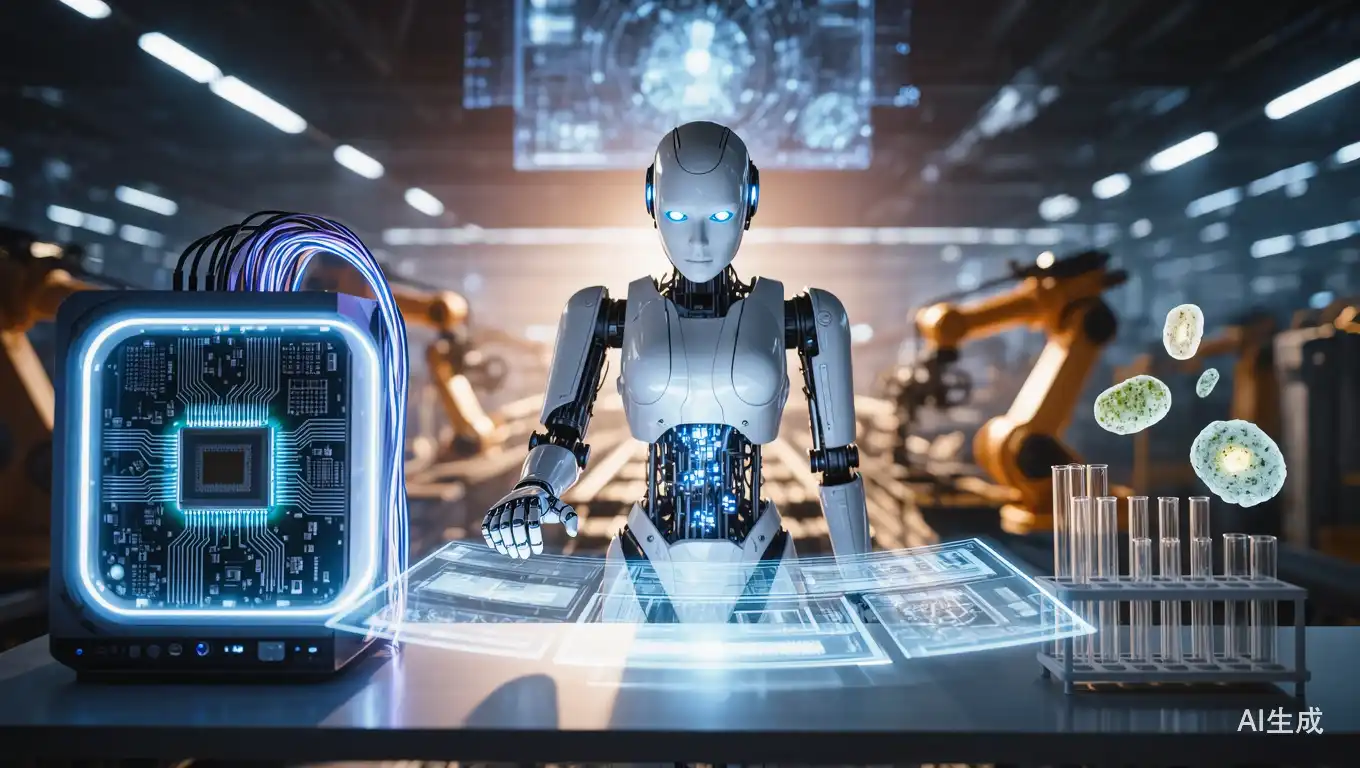
Arm, after 35 years of only licensing its architecture, has begun manufacturing its own data center CPU, the 136-core Neoverse V3, with Meta as its first major client. This strategic shift aims to capture a larger market share and achieve significant revenue growth. In a separate legal battle, Anthropic is challenging the Pentagon's decision to ban federal agencies from using its AI, a move the presiding judge called "disturbing." Conversely, Palantir's military AI platform received a massive $13.4 billion funding commitment from the Pentagon, highlighting a stark divergence in the U.S. government's approach to AI militarization. Four tech billionaires presented conflicting visions on AI's impact. Perplexity's CEO and Palantir's CEO suggested AI-induced job loss is beneficial, while an OpenAI investor predicted 80% of jobs could be replaced by 2030. In contrast, BlackRock's CEO warned the greater threat is AI exacerbating wealth concentration. Circle's stock plummeted 18% due to proposed legislation threatening its business model, while Tether announced its first full audit by a Big Four firm, signaling a push for legitimacy amidst tightening regulations. OpenAI shut down its Sora video app, leading Disney to withdraw a $1 billion investment. An investor filing also revealed OpenAI now lists its major shareholder, Microsoft, as a top risk factor, indicating a strategic cleanup ahead of a potential IPO. Other notable news includes SK Hynix's record $8 billion order for EU...

For the first time in 35 years, Arm is making its own chips, while four billionaires presented four different prophecies about AI and employment on the same day.

1| Arm No Longer Just Draws Blueprints; The Landlord Is Building the House Itself

Arm has always only drawn blueprints and collected licensing fees. For 35 years, companies like Qualcomm, Apple, and Nvidia have used the Arm architecture to design chips, with Arm collecting a royalty for each processor sold. This business model made Arm the safest "rent collector" in the chip industry. Now, the landlord is building the house itself.

On March 24, Arm released its first self-developed data center CPU, the 136-core Neoverse V3 architecture, with a thermal design power of 300 watts, targeting AI inference and training workloads. Meta is the first customer, with OpenAI, Cerebras, and Cloudflare also signed on. CEO Rene Haas set a clear financial goal: by 2031, this chip is expected to bring in $15 billion in annual revenue, with Arm's total revenue reaching $25 billion.

This is not a hardware "trial" by a design company. Arm's data center CPU market share has risen from about 15% in 2024 to 21% currently, with a target of reaching 50% by the end of the year. When Amazon's Graviton, Google's Axion, and Microsoft's Cobalt are all using Arm architecture to develop their own chips, Arm's choice is: rather than waiting for super customers to bypass you, become their supplier directly. For Intel and AMD, another segment of the x86 moat has been lost.

(Source: CNBC / TechCrunch / Reuters / Tom's Hardware)

2| Anthropic Takes the Pentagon to Court, While Palantir Secures $13.4 Billion on the Same Day

Anthropic refuses to relax AI safety guardrails for the military. The Pentagon's response is to list Anthropic as a "national security supply chain risk," prohibiting all federal agencies from using its technology. This is the first time in U.S. history that this procurement regulation, originally targeting foreign spies, has been used against a domestic company.

On March 24, Anthropic filed for an emergency injunction in federal court in San Francisco. Presiding Judge Rita Lin said something in court that quieted the gallery: "I'm not sure if this is murder, but it looks like an attempt to paralyze Anthropic." She described the Pentagon's actions as "disturbing," noting a lack of reasonable connection between the restrictions and the alleged national security reasons. Judge Lin is expected to rule within the next few days.

On the same day, Palantir's Maven AI platform was officially confirmed by the Pentagon as a core military system, receiving a multi-year funding commitment. The budget soared from $480 million in 2024 to $13.4 billion. Those who refused to cooperate were blacklisted; those who fully cooperated received a 28-fold budget increase. This is not just a divergence in the fate of two companies; it is an institutional split in the path of AI militarization, and the Pentagon has voted with its money.

(Source: CNBC / Al Jazeera / Axios / Tom's Hardware)

3| Four Billionaires, One Day, Four Prophecies About AI and Jobs

In a single day, four people controlling the direction of the AI industry gave four contradictory prophecies.

Perplexity CEO Srinivas said on the All-In podcast that AI-induced unemployment is a good thing: "Most people already hate their jobs." Palantir CEO Karp was more direct: in the AI era, only two types of people will survive—blue-collar workers with skills, or the neurodiverse.

OpenAI investor Khosla gave a number at a Washington forum: 80% of jobs will be replaced by AI before 2030. He predicted that "fear of AI" will be the top issue in the 2028 election.

BlackRock CEO Fink expressed a different concern in his annual letter to shareholders. The real threat of AI is not unemployment but wealth concentration. Since 1989, the median wage increase in the U.S. has lagged behind stock market returns by 15 times, with the top 1% holding 31.7% of U.S. wealth. Four narratives, one conclusion: the existing social contract is breaking down.

(Source: Fortune / BlackRock Annual Letter to Shareholders / Axios)

4| Circle Crashes 18%, Tether Hires a "Big Four" Firm; Crypto Institutionalization and Being Institutionalized Happen Simultaneously

Circle's stock price plummeted 18% in a single day. The trigger was a clause in a new draft of the Clarity Act that prohibits stablecoin issuers from distributing "economically equivalent to interest" yields to holders. This directly strikes at the core of Circle's business model. USDC's growth relies on a profit-sharing mechanism in partnership with Coinbase, and reserve interest income is key to user retention. If this path is blocked, the competitive advantage of stablecoins relative to money market funds is significantly reduced. Circle had risen 170% over the previous two months, and the vulnerability of a high pullback was exposed by this legislative draft.

On the same day, Tether announced it had hired a "Big Four" accounting firm to conduct the first comprehensive audit of USDT reserves. The specific firm was not disclosed. Tether had previously relied only on periodic attestations from BDO Italia for years, never undergoing a full audit. Also on the same day, the NYSE partnered with Securitize to develop a 24/7 tokenized securities platform. Regulation is tightening, institutions are laying pipelines—both happened on the same day.

(Source: CoinDesk / Bankless / WSJ)

5| OpenAI Shuts Down Sora, Loses Disney's $1 Billion, and Lists Microsoft as Top IPO Risk on the Same Day

OpenAI announced the shutdown of its AI video application Sora. This TikTok-style short video product, launched last October, received good technical reviews but failed to maintain user retention. The shutdown directly led Disney to withdraw a $1 billion investment plan. The original agreement was a three-year license allowing the use of over 200 characters from Marvel, Pixar, and Star Wars to generate videos. OpenAI stated the team would shift to "world simulation and robotics research."

In investor documents exposed on the same day, OpenAI listed Microsoft as its top risk. Microsoft invested $13 billion for a 27% stake and is the exclusive training cloud supplier, but OpenAI has signed a $50 billion exclusivity agreement with AWS. Microsoft believes this violates exclusive terms. Shutting down loss-making products, cutting licensing burdens, and listing the largest shareholder as a risk factor—these are not isolated decisions but a systematic narrative cleanup ahead of an IPO.

(Source: TechCrunch / Variety / CNBC / 24/7 Wall St.)

Also Worth Knowing ↓

SK Hynix placed an $8 billion order with ASML for EUV lithography machines, about 30 units, setting a record for ASML's largest single order. The equipment will be delivered by the end of 2027, deployed at the new Yongin factory and the Cheongju M15X factory, serving HBM and advanced DRAM production. AI demand for memory chips is pushing equipment manufacturers' order books to the limit. (Source: Tom's Hardware / TrendForce)

Huawei released the Atlas 350 AI accelerator, with FP4 computing power of 1.56 PFLOPS, equipped with up to 112GB HBM, claiming performance is 2.8 times that of Nvidia's H20. On the same day, U.S. senators from both parties sent a joint letter to the Commerce Department, stating that Jensen Huang's claim that "chips were not transferred to China" "contradicts existing reports" and demanding a suspension of Nvidia's export licenses to China. Blockade on one side, accelerated substitution on the other. (Source: Tom's Hardware)

The President of the Philippines declared a national energy emergency for one year. The Middle East war has led to an "imminent energy supply danger," and the government has established an emergency committee to manage the distribution of fuel, food, and medicine. (Source: Fortune)

Qatar Energy declared force majeure on LNG contracts with South Korea, China, Italy, and Belgium. 17% of production capacity was destroyed by Iranian strikes, with repairs taking 3 to 5 years. The Strait of Hormuz has been effectively closed for nearly a month, blocking about one-fifth of global oil and LNG transportation. (Source: Al Jazeera)

Tenpoached several core members from ByteDance's Seed team, including visual AI platform head Xiao Xuefeng and Infra team member Zhang Chi, reporting to chief AI scientist Yao Shunyu. Since the end of 2025, Tencent has continuously absorbed large model infrastructure talent from ByteDance, with core members in the AI Infra Department and Large Language Model Department having ByteDance backgrounds. (Source: 36Kr)

Epic Games laid off over 1,000 people, with CEO Tim Sweeney stating that Fortnite engagement has been declining since last year. This is the second round of large-scale cuts after laying off 800 people in 2023, along with a $500 million reduction in contracts and marketing expenses. (Source: TechCrunch / The Verge)

Broadcom warned that TSMC's capacity has become a bottleneck for AI chip supply. AI accelerator demand continues to exceed wafer foundry capacity expansion, and supply constraints are difficult to alleviate in the short term. (Source: Reuters)


Domande pertinenti

QWhy is Arm's decision to build its own data center CPU chips a significant shift from its traditional business model?

AArm has historically only licensed its architecture to other companies, earning royalties per chip sold. By building its own data center CPU, Arm is directly entering the hardware market, aiming to capture more value and compete with major clients who are designing their own Arm-based chips, rather than risk being bypassed.

QWhat was the legal and financial outcome for Anthropic and Palantir in their dealings with the Pentagon on the same day?

AAnthropic was labeled a 'national security supply chain risk' and banned from federal use after refusing to relax AI safety measures for the military, leading to a court challenge. Conversely, Palantir's Maven AI platform was confirmed as a core military system and received a multi-year funding commitment, with its budget soaring from $480 million to $13.4 billion.

QWhat were the four contrasting predictions about AI and employment made by billionaires on the same day?

APerplexity's CEO said AI unemployment is good as many people hate their jobs; Palantir's CEO claimed only skilled blue-collar workers or neurodiverse individuals will thrive; OpenAI's investor predicted 80% of jobs will be replaced by AI by 2030; and BlackRock's CEO warned the real threat is wealth concentration, not job loss.

QWhat regulatory and institutional developments affected Circle and Tether in the crypto space on the same day?

ACircle's stock fell 18% due to a draft clause in the Clarity Act that could prohibit stablecoin issuers from distributing interest-like收益, threatening its business model. Meanwhile, Tether hired a Big Four firm for its first full audit of USDT reserves, and the NYSE partnered with Securitize to develop a 24/7 tokenized securities platform, showing regulatory tightening and institutional adoption happening simultaneously.

QWhat strategic moves did OpenAI make regarding Sora and its relationship with Microsoft, and what were the implications?

AOpenAI shut down its Sora AI video app, leading Disney to withdraw a $1 billion investment plan, and listed Microsoft as its top risk factor in investor documents due to conflicts over an exclusive cloud agreement with AWS. These actions are seen as part of a systematic narrative cleanup ahead of a potential IPO, involving discontinuing unprofitable products and addressing shareholder risks.

Letture associate

NVIDIA CPU Advances, China's RISC-V Responds: Semiconductor Deep Dive - Part Four

NVIDIA is set to launch its new Vera AI data center CPU in China as early as August, with high pricing. While this move offers a new option, it highlights China's continued dependence on foreign-controlled Arm architecture. In response, the Chinese semiconductor industry is increasingly turning to RISC-V as a strategic alternative for achieving high-performance computing autonomy. The article explores the concept of the "impossible triangle" in CPU development—balancing prosperity, control, and autonomy—and posits that RISC-V's open-source, modular nature offers a unique path to achieving all three. While RISC-V is already dominant in embedded systems, the focus is now shifting to data centers and AI workloads. China has become a global hotspot for RISC-V development, driven by AI-driven compute demand, supply chain concerns from export controls, cost benefits of open-source, and strong policy support. Multiple Chinese companies have reportedly crossed the key performance threshold of 15 SPECint per GHz, a benchmark for entering the high-performance CPU club. Progress extends beyond single-core benchmarks. Companies are developing complete computing subsystems, including commercial-grade coherent network-on-chip (NoC) technology and server processors with up to 40 cores that strictly adhere to the RVA23 standard to ensure software compatibility. Real-world applications are emerging in areas like video transcoding and edge AI. However, significant challenges remain. The RISC-V ecosystem faces fragmentation, immature toolchains and verification processes, and gaps in single-core performance and energy efficiency compared to mature x86 and Arm architectures. The formidable software moat, epitomized by NVIDIA's CUDA, is a long-term hurdle. In conclusion, while RISC-V cannot immediately replace offerings like NVIDIA's Vera, it represents a viable long-term path for China to develop a self-sufficient, high-performance CPU ecosystem. The journey is acknowledged to be long and arduous, requiring sustained effort to overcome technical and ecosystem challenges.

marsbit5 h fa

NVIDIA CPU Advances, China's RISC-V Responds: Semiconductor Deep Dive - Part Four

marsbit5 h fa

My Coding Betting Dashboard is Profiting, but Polymarket is Truly Not a Good Place for 'Arbitrage'

The author built a custom monitoring dashboard for Polymarket, a prediction market platform, and tested it with $1,600, achieving over 30% returns. However, the core argument is that Polymarket is not a good venue for traditional arbitrage. The dashboard has two main sections: a "Portfolio Dashboard" for tracking active positions with key metrics like total capital, P&L, and a risk-control module using a tier system (T1, T2, T3), and an "Opportunity Watchlist" for monitoring markets. The article details a critical structural trap in binary markets: a bet with a high perceived probability of success still carries a 100% loss risk if wrong. The author's T1/T2/T3 system is designed to manage this by limiting position sizes based on conviction and time horizon, emphasizing that high confidence should not equal high concentration. A key insight is the danger of "pseudo-diversification"—betting on different markets driven by the same underlying variable. The author concludes that Polymarket offers few true low-risk, arbitrage opportunities. It is instead a high-risk environment where wins can create a false sense of mastery, leading to large losses. The platform is better viewed as a training ground for honing judgment through disciplined, framework-driven betting rather than a reliable income source. The tools help transform intuition into structured, rule-based decisions to mitigate the risk of catastrophic errors.

marsbit8 h fa

My Coding Betting Dashboard is Profiting, but Polymarket is Truly Not a Good Place for 'Arbitrage'

marsbit8 h fa

WeChat AI Card Hands-On Guide: Has the AI Shopping Era Arrived?

**"WeChat AI Card" Practical Test Guide: Has the Era of AI Shopping Arrived?** WeChat has officially launched the "AI Exclusive Card," a feature integrated into its Workbuddy AI assistant. This card is designed to handle payments for AI-initiated purchases. Our hands-on test reveals it's not yet a tool for fully autonomous AI shopping, but rather a controlled payment layer for AI agents. The AI Card functions as an isolated sub-wallet within WeChat Pay. Users must bind the card and transfer funds into it from their main wallet. Crucially, every transaction requires explicit user confirmation via smartphone scan; AI cannot spend autonomously. Currently accessible through the Workbuddy agent, the card targets specific digital consumption scenarios: purchasing paid content (reports, data), calling paid APIs/tools, and subscribing to services. Its design prioritizes security and control by separating funds and mandating approval for each payment. We tested a real-world scenario: ordering bubble tea via Workbuddy using a "Meituan Life Assistant" skill. The process encountered multiple hurdles: high "skill" usage costs (exceeding daily free credits), and most importantly, while a payment was successfully initiated, the AI purchased an incorrect product (a mismatched group-buy coupon instead of the desired drink). This highlights the current limitation: the **AI Card only solves the payment step**. The broader challenge lies in the **AI agent's execution chain**—accurately understanding intent, navigating third-party platforms, selecting the right product, and ensuring proper fulfillment. The payment succeeded, but the purchase failed to meet the user's need. In conclusion, the WeChat AI Exclusive Card is a cautious, early-step experiment in AI commerce. It provides a secure, user-controlled payment method for agent interactions but is not yet capable of reliable, end-to-end complex purchases. For now, it's best used for low-value, low-risk digital services with careful user verification at each step. The vision of AI handling complete shopping tasks remains a work in progress.

marsbit11 h fa

WeChat AI Card Hands-On Guide: Has the AI Shopping Era Arrived?

marsbit11 h fa

Trading

Spot
Futures
活动图片