Another GIGGLE bounce coming? History says yes, but only IF…

ambcryptoPubblicato 2025-12-12Pubblicato ultima volta 2025-12-12

Introduzione

GIGGLE token has extended its decline, with a 71% drawdown since November, and is now trading near the bottom of a falling wedge pattern. Oversold conditions and compressed momentum suggest a potential turning point, though market sentiment remains fragile as liquidity shifts to larger-cap assets. Key support lies near $70, with a break below potentially leading to a test of the $47.30 zone. Despite heavy selling, the token is at a historical bounce area, with RSI indicating extremely oversold conditions that often precede recovery attempts. However, any rebound is likely corrective unless resistance between $160-$172 is broken. Macro headwinds, including a defensive risk sentiment and rising Bitcoin dominance, continue to pressure memecoins, limiting upside potential even if technical structures appear bullish.

Giggle Fund [GIGGLE] extended its decline this month, deepening a drawdown that reached 71% since November. The token now traded near the wedge bottom, where oversold conditions and compressed momentum set up a possible turning point.

Market sentiment stayed fragile across memecoins as liquidity rotated into larger caps. Rising volume accelerated GIGGLE’s downside momentum as traders cut exposure to higher-risk tokens.

Pressure builds near key supports

At press time, volume rose while price fell, showing strong bearish control. GIGGLE continued testing the upper boundary of its falling wedge but failed to reclaim any momentum.

The key downside area sat near $70.

Losing this level exposed support around $47.30, a zone aligned with earlier liquidity absorption and the wedge’s historical reaction line. A sustained break below that level could pull GIGGLE into deeper declines.

The lack of strong support between these price levels and the $47 zone increased the risk of volatility spikes before stabilization.

Despite heavy selling, GIGGLE tapped the lower boundary of the falling wedge again, the same region that triggered sharp bounces in past cycles.

RSI dropped to extremely oversold levels, showing washed-out momentum. This combination often preceded recovery attempts if buyers stepped in.

Resistance between $160 and $172 remained the zone GIGGLE must break to reclaim higher ranges.

Until then, any rebound looked corrective rather than a full trend reversal. GIGGLE also needed to hold its daily ascending support, as a breakdown would mirror wedge failure patterns and extend the downside.

Macro headwinds weigh on memecoins

Bitcoin [BTC] and Ethereum [ETH] slipped ahead of the recent Fed decision, pulling the broader market lower. Risk sentiment turned defensive, with the Fear & Greed Index at 29/100.

Memecoins like GIGGLE typically weaken during such rotations as traders shift toward Bitcoin dominance and stable assets.

BTC dominance rising to 58.6% reinforced that preference for lower-risk exposure.

Sector-wide weakness also showed a steady rotation out of meme tokens as Funding Rates compressed and liquidity thinned.

GIGGLE’s volume spikes during down-moves indicated forced unwinds rather than accumulation.

Until sentiment improves across the meme sector, upside momentum may stay limited even with bullish technical structures forming.


Final Thoughts

  • GIGGLE’s decline pushed the token into an oversold wedge retest, a setup that often precedes relief moves.
  • With support tightening, traders might watch how GIGGLE behaves near this zone over the coming sessions.


Crypto di tendenza

Letture associate

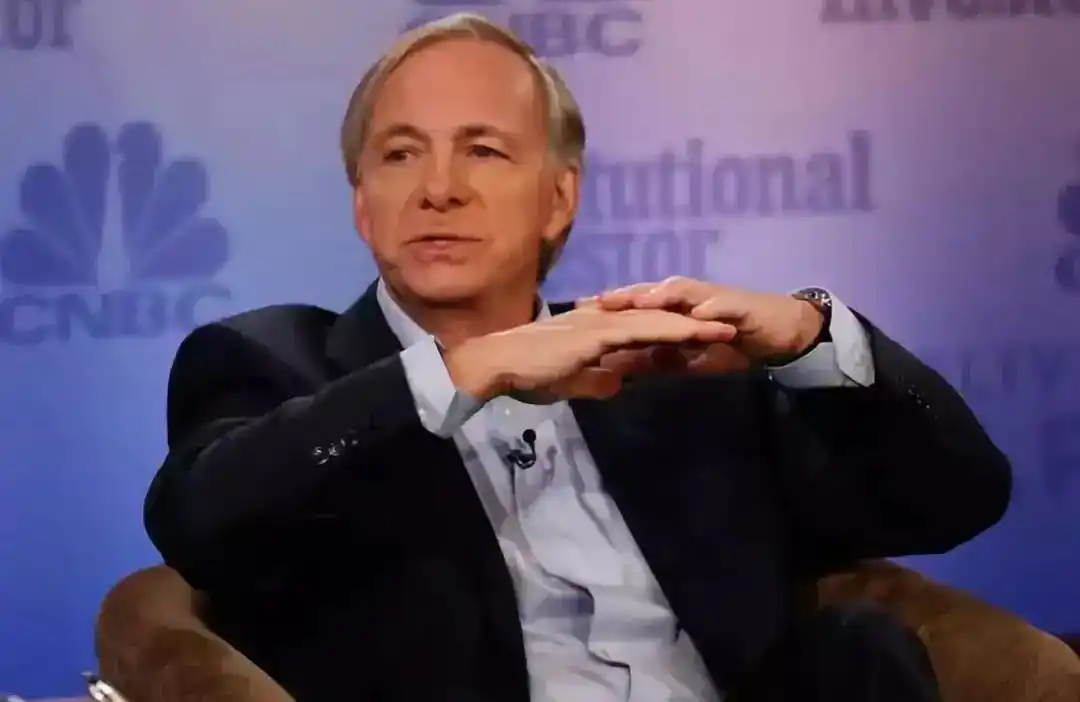
Ray Dalio's Latest Macro Analysis Full Text: Buy More Gold, Add Some Bitcoin

In his latest macro analysis, Ray Dalio applies his framework from "How Countries Go Broke: The Big Cycle" to the current global debt environment. He highlights recent events like Japan selling U.S. Treasuries and rising U.S. long-term yields as signs of an unsustainable debt dynamic. Dalio explains that excessive government debt leads to either unacceptably high interest rates, severe economic downturns, or significant currency debasement through central bank money printing. He summarizes the U.S. fiscal situation: with $5.5 trillion in revenue, $7.5 trillion in spending, a $2 trillion deficit, and total debt at six times annual revenue, debt servicing costs are immense. Without correction, U.S. debt could reach $55-$60 trillion in a decade. Dalio proposes a "3% Three-Way" solution: reducing the budget deficit to 3% of GDP through balanced spending cuts, tax increases, and interest rate reductions to avoid a traumatic adjustment. In response to FAQs, he argues that the risk of a U.S. debt crisis is high and could materialize within a few years if the current path continues. He dismisses the notion that the dollar's reserve status makes the U.S. immune, citing historical precedents of reserve currency declines. He is also unconvinced by Japan's high-debt stability, noting poor returns for yen-denominated assets. For investors, Dalio recommends diversifying globally, underweighting bonds, and overweighting assets like gold and a small allocation to Bitcoin (around 10-15% to gold) to hedge against currency debasement and poor debt returns.

marsbit29 min fa

Ray Dalio's Latest Macro Analysis Full Text: Buy More Gold, Add Some Bitcoin

marsbit29 min fa

Stripe’s 16-Year Chronicle: From 7 Lines of Code to a $100 Billion Valuation

Stripe's 16-year journey began with a simple promise: "7 lines of code to accept payments." Founded by Patrick and John Collison, the company started by hiding the complexity of bank integrations and merchant accounts behind a clean API, initially targeting developers at startups. This early focus on user experience and technical simplicity fueled rapid adoption. A key early milestone was establishing vital bank partnerships, a challenge overcome by hiring Billy Alvarado, who brought crucial institutional relationship skills. From this foundation, Stripe systematically expanded its product boundaries. It launched Connect for platform payments, Atlas for company formation, Radar for fraud prevention, and Billing for subscriptions. This transformed Stripe from a payment processor into a broader financial infrastructure suite for internet businesses. The COVID-19 pandemic accelerated growth but also led to over-hiring. A 14% layoff in 2022 marked a period of organizational correction. Subsequently, Stripe shifted its growth strategy towards strategic acquisitions to enter new domains quickly. It acquired Bridge (stablecoin infrastructure), Privy (wallet infrastructure), Metronome (usage-based billing), and agreed to buy OpenRouter (AI model routing). These moves signal Stripe's ambition to build a "programmable money system" for the emerging AI and agent-based economy, managing not just currency flows but also the measurement and pricing of computational resources like AI tokens. Internally, Stripe leverages AI agents (like "Minions") to boost engineering productivity. Despite scaling to nearly 8,000 employees and processing $1.9 trillion in payment volume annually, the company remains private. A recent employee tender offer valued it at $159 billion. The core question for Stripe's future is whether it can successfully integrate its expanding product matrix—spanning payments, crypto, and AI infrastructure—into a cohesive platform, positioning itself as the foundational economic layer for autonomous software agents.

marsbit58 min fa

Stripe’s 16-Year Chronicle: From 7 Lines of Code to a $100 Billion Valuation

marsbit58 min fa

Treasury Secretary's Move to Suppress Treasury Yields Ignites 'Currency Debasement Trade'! Gold Hits Three-Month High, Bitcoin Surges Over 25% in a Single Week

US Treasury Secretary Besant's efforts to lower long-term Treasury yields by announcing expanded buybacks had only a brief market impact. However, this move fueled a "currency devaluation trade," weakening the US dollar while boosting both gold (to a three-month high) and Bitcoin (up over 25% for the week). Analysts attribute this reaction to deepening market concerns over the massive US fiscal deficit and structural pressures keeping long-term rates elevated, including fierce competition for capital from global government borrowing and massive AI sector financing. Despite the Treasury's actions, fundamental forces like growth, inflation, and capital demand are seen as limiting its ability to sustainably suppress yields. Bitcoin's strong positive correlation with gold has reinforced its narrative as a hedge against devaluation. While equity markets have shown resilience, some strategists warn that Treasury yields nearing 5% increase pressure on the dollar and high-leverage assets. Figures like Ray Dalio have advised reducing bond exposure in favor of gold and some Bitcoin, citing US debt risks. Market opinions are divided on the sustainability of the devaluation trade, with some noting the lack of a near-term catalyst for its next leg higher. The underlying tension between the Treasury's desire for lower borrowing costs and the Federal Reserve's focus on inflation and reducing market intervention remains a key theme. Upcoming events like Nvidia's earnings and the Jackson Hole symposium will test whether AI profits can continue supporting stocks and if the Fed aligns more with Washington's preference for easier financial conditions.

华尔街日报3 h fa

Treasury Secretary's Move to Suppress Treasury Yields Ignites 'Currency Debasement Trade'! Gold Hits Three-Month High, Bitcoin Surges Over 25% in a Single Week

华尔街日报3 h fa

Alexander Shokhin: Business Needs an Interest Rate Below 10% and the Dollar at 90-95 Rubles

Alexander Shokhin, head of the Russian Union of Industrialists and Entrepreneurs (RSPP), has advocated for potentially using "non-market" tools to keep the ruble within a target exchange rate corridor. This, he argues on August 21, would help avoid excessive volatility, though he called the topic a separate discussion. Shokhin had previously raised the idea of a currency corridor in late May, noting the ruble's current exchange rate is not fully market-driven due to a limited currency segment and reduced foreign currency demand. He stated that many business community colleagues propose fixing a corridor, even through non-market methods, to ensure predictability. The business community's key targets, as outlined by Shokhin in late December 2025, are a Central Bank key rate of 12%, inflation of 4–5%, and a US dollar exchange rate of 90–95 rubles by the end of 2026. A turning point for investment, he said, would be lowering the rate to 12% with 6% inflation, though truly comfortable business conditions would require a rate below 10%. He stressed the critical importance of currency predictability for corporate investment decisions. From a data analysis perspective, the idea of a ruble corridor is not new. A similar mechanism was used in Russia from 1995 to 1998, where the central bank held the dollar within fixed boundaries through regular interventions. This regime lasted three years before ending abruptly during the 1998 default, illustrating the fragility of rigid targets under external shocks. The macro-economic link is clear: stricter corridors require more reserves to defend against currency pressure. The key unresolved technical aspect is the specific sources and volume of such interventions given the current market's limited liquidity. Whether this discussion remains theoretical or leads to concrete corridor parameters will be seen in the coming months.

cryptonews.ru4 h fa

Alexander Shokhin: Business Needs an Interest Rate Below 10% and the Dollar at 90-95 Rubles

cryptonews.ru4 h fa

Trading

Spot

Articoli Popolari

Come comprare GIGGLE

Benvenuto in HTX.com! Abbiamo reso l'acquisto di Giggle Fund (GIGGLE) semplice e conveniente. Segui la nostra guida passo passo per intraprendere il tuo viaggio nel mondo delle criptovalute.Step 1: Crea il tuo Account HTXUsa la tua email o numero di telefono per registrarti il tuo account gratuito su HTX. Vivi un'esperienza facile e sblocca tutte le funzionalità,Crea il mio accountStep 2: Vai in Acquista crypto e seleziona il tuo metodo di pagamentoCarta di credito/debito: utilizza la tua Visa o Mastercard per acquistare immediatamente Giggle FundGIGGLE.Bilancio: Usa i fondi dal bilancio del tuo account HTX per fare trading senza problemi.Terze parti: abbiamo aggiunto metodi di pagamento molto utilizzati come Google Pay e Apple Pay per maggiore comodità.P2P: Fai trading direttamente con altri utenti HTX.Over-the-Counter (OTC): Offriamo servizi su misura e tassi di cambio competitivi per i trader.Step 3: Conserva Giggle Fund (GIGGLE)Dopo aver acquistato Giggle Fund (GIGGLE), conserva nel tuo account HTX. In alternativa, puoi inviare tramite trasferimento blockchain o scambiare per altre criptovalute.Step 4: Scambia Giggle Fund (GIGGLE)Scambia facilmente Giggle Fund (GIGGLE) nel mercato spot di HTX. Accedi al tuo account, seleziona la tua coppia di trading, esegui le tue operazioni e monitora in tempo reale. Offriamo un'esperienza user-friendly sia per chi ha appena iniziato che per i trader più esperti.

417 Totale visualizzazioniPubblicato il 2025.10.16Aggiornato il 2026.06.02

Come comprare GIGGLE

Discussioni

Benvenuto nella Community HTX. Qui puoi rimanere informato sugli ultimi sviluppi della piattaforma e accedere ad approfondimenti esperti sul mercato. Le opinioni degli utenti sul prezzo di GIGGLE GIGGLE sono presentate come di seguito.

活动图片