Analyzing Noise's New Beta Version: How to 'Trade Hype' On-Chain?

marsbitPubblicato 2026-04-13Pubblicato ultima volta 2026-04-13

Introduzione

Noise, a "relevance prediction market," has launched its Beta version, allowing users to trade on the perceived importance of events and cultural trends. The platform generates a "Relevance Index" by algorithmically analyzing data from social platforms like X, Reddit, and YouTube, as well as prediction markets such as Polymarket. Users can speculate on whether the热度 of a topic will rise or fall, using up to 5x leverage. Transactions in Beta are conducted with credits purchased via fiat or crypto (USDC on Ethereum/Solana), though cash-out functionality is not yet available. Founded by a young team from USC and backed by Paradigm, Noise aims to move beyond traditional prediction markets by quantifying and trading cultural relevance rather than just event outcomes. Potential use cases include hedging marketing campaigns or investment strategies. The platform plans to launch on Base with real-money trading in the coming months.

On April 1, 2026, Beijing time, the "hype prediction market" Noise launched its Beta version, officially opening for trading. Users are required to pay $5 to trade on the Beta version DApp to prevent malicious activities.

Noise announced in January of this year that it had raised $7.1 million in a seed round led by Paradigm, with participation from Figment Capital, Anagram, GSR, and JPEG Trading. KaitoAI, a representative of the attention economy previously cut off from X's API, also participated in the investment.

The term "trading hype" has always referred to deliberately creating topics and sparking attention through various means to increase the exposure and discussion of an event. However, Noise quantifies hype into numbers, allowing users to trade the rise and fall of these numbers. In Noise's own words, prediction markets focus on "whether something will happen," while Noise focuses on "how important something is right now."

Hype Index Trading Platform

Noise's mechanism is actually quite simple to explain: Through Noise's algorithm, a hype index for a specific event or cultural symbol is generated. Users can predict whether the hype will rise or fall in the future and perform long or short operations.

Only two things need clarification: first, how to trade; second, how this index is calculated.

Perhaps because it is in the testing phase, trading on the Noise platform does not directly use fiat currency or cryptocurrency. Instead, users need to purchase "credits" on the platform and use these credits for trading.
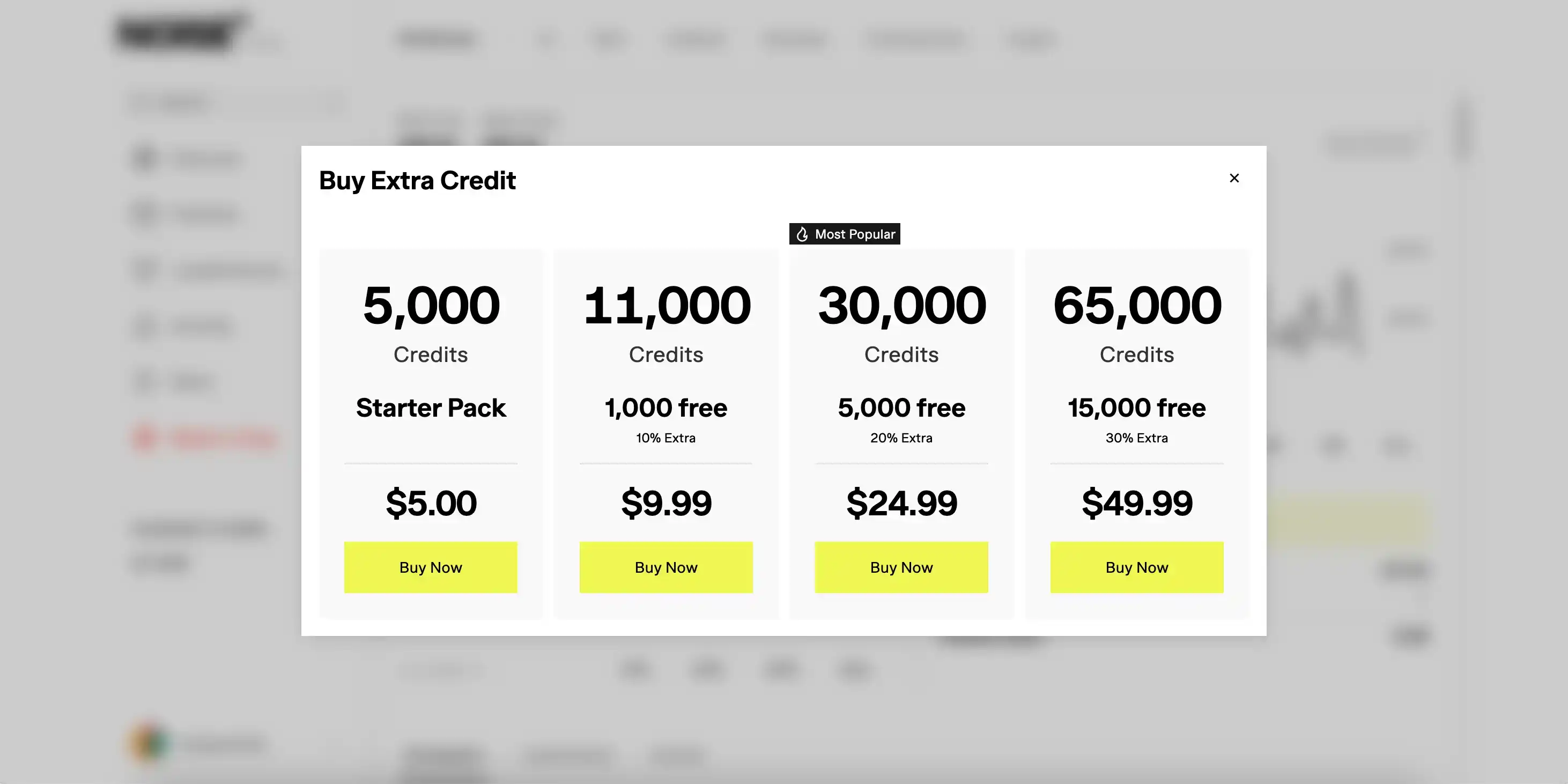
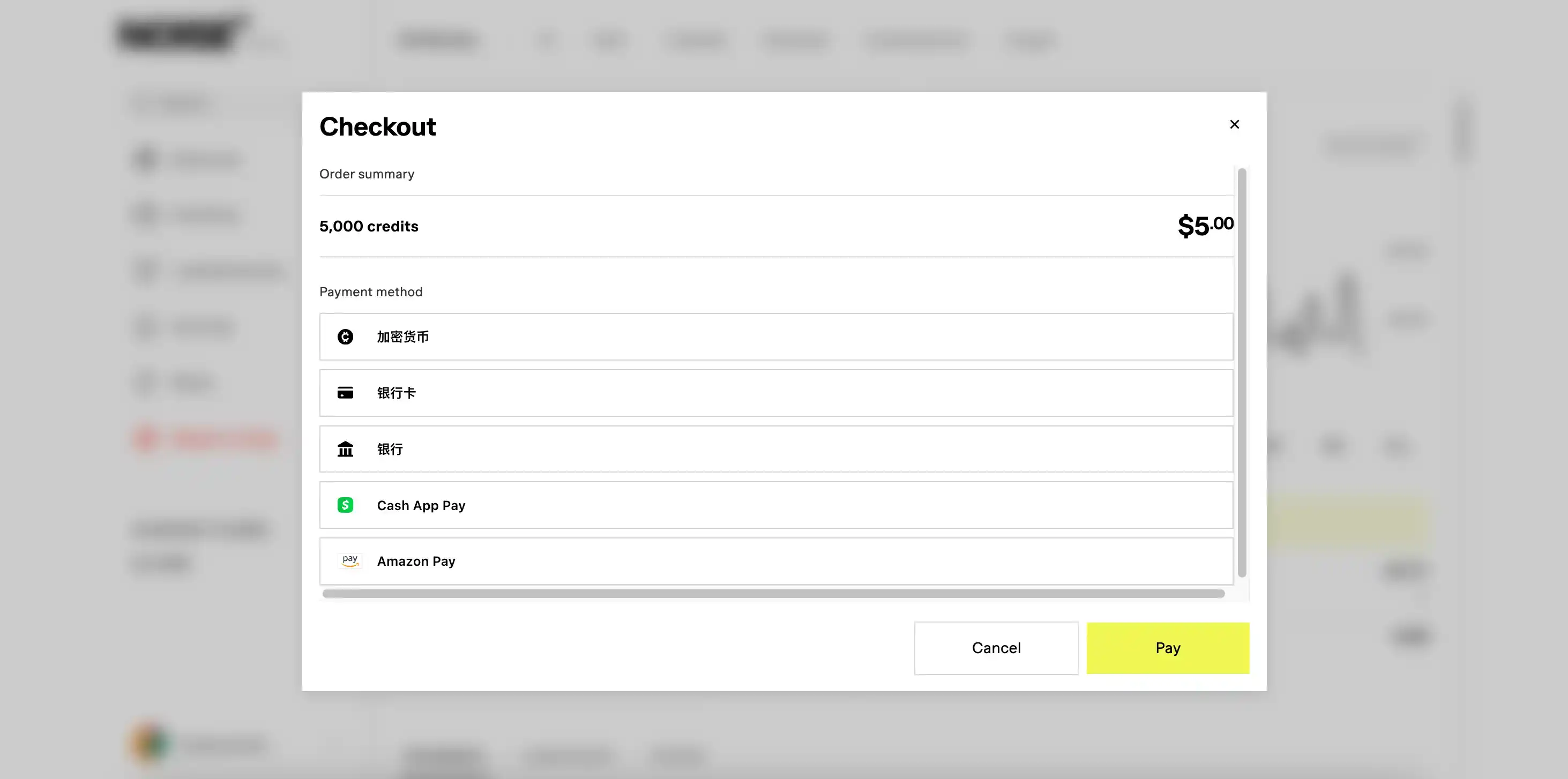
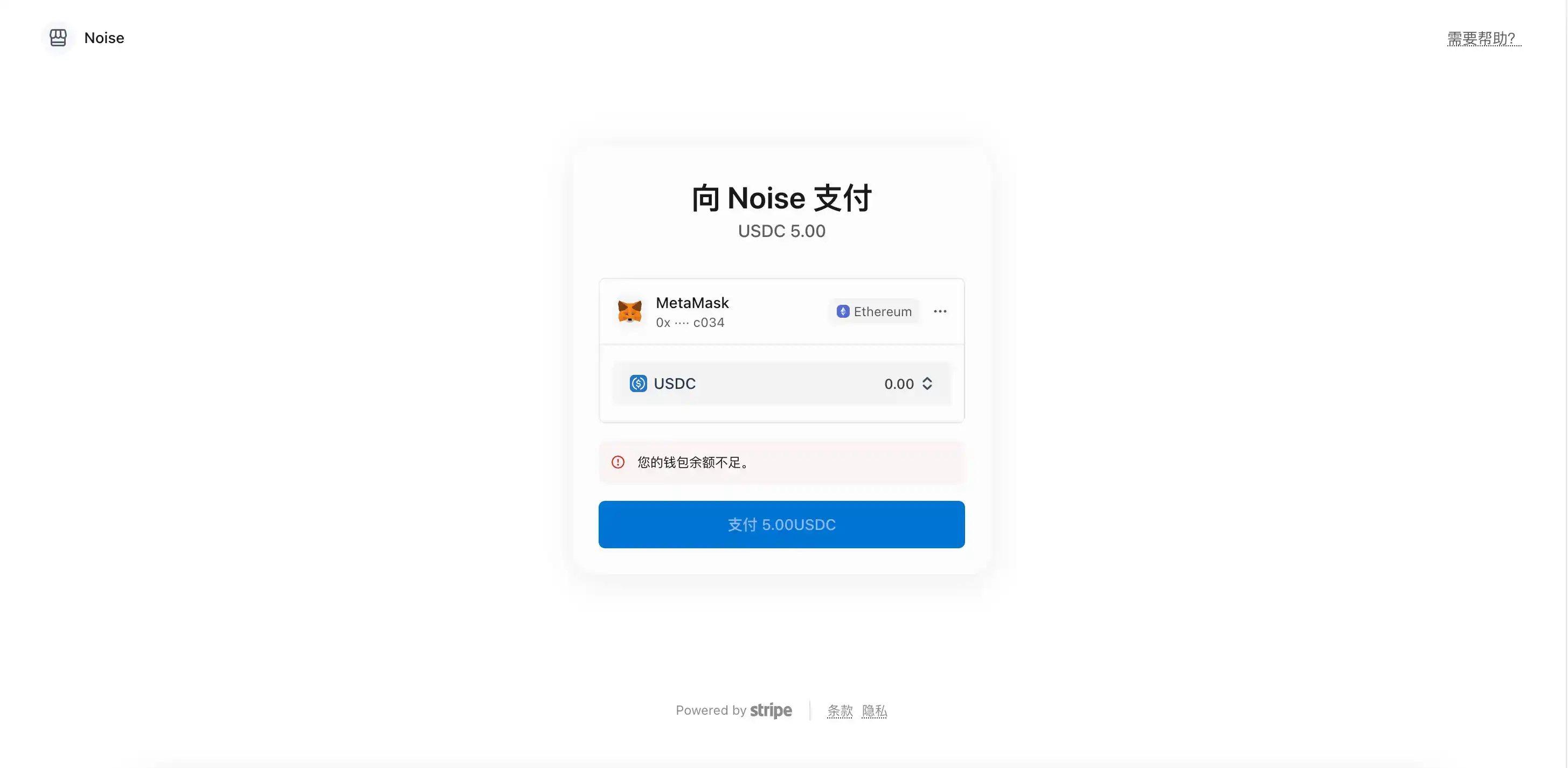
Fiat purchases are supported through banking channels, Cash App, and Amazon Pay. For cryptocurrency channels, transfers need to be made via MetaMask and Phantom, currently supporting USDC on Ethereum and Solana. The author did not find an entry to exchange credits back to fiat or stablecoins, possibly because the Beta version is only testing the trading engine and does not yet have a settlement function.

Taking "crude oil," a recent market focus with high attention, as an example, you can choose leverage from 1x to 5x for long or short trading. Currently, this market is one of the hottest in the Noise Beta version, but its 24-hour trading volume is only over 200,000, with an open interest value of about 2 million, which translates to less than $20 million in USD.

Although not displayed on the front end, Noise also uses an order book model. Unlike prediction markets, Noise's trading market is more like cryptocurrency perpetual contracts. The index provided by the oracle is the "mark price," and the market automatically adjusts the balance between the market price and the mark price through funding rates.
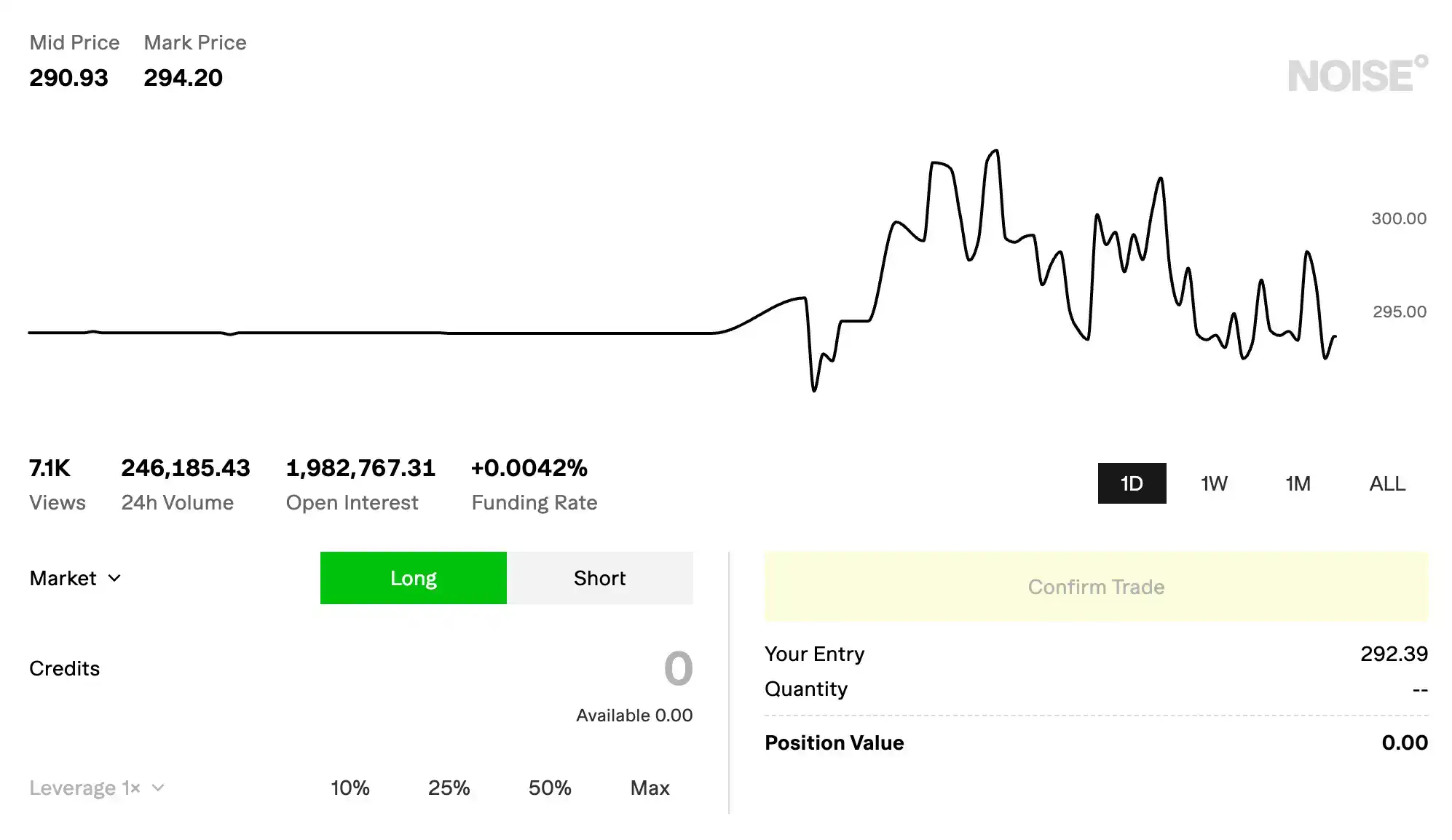
As for the hype index we are trading, Noise calls it the "Relevance Index." Data calculation is based on two sources: content and signals.

In terms of content, Noise tracks interactions, post counts, and unique author counts related to topics on platforms including X, Reddit, YouTube, Instagram, Substack, and RSS news feeds. Signals come from trading volume and market counts of related topics on Polymarket and Kalshi.

The smoothed values (to prevent short-term noise effects) of all sources and indicators are aggregated into a comprehensive value through weighting, which is the index users trade. However, Noise has not fully disclosed the specific algorithm, most likely to prevent someone from exploiting the algorithm's mechanism to artificially inflate the hype of an event or weaken the hype of a hot event with a large amount of irrelevant information.

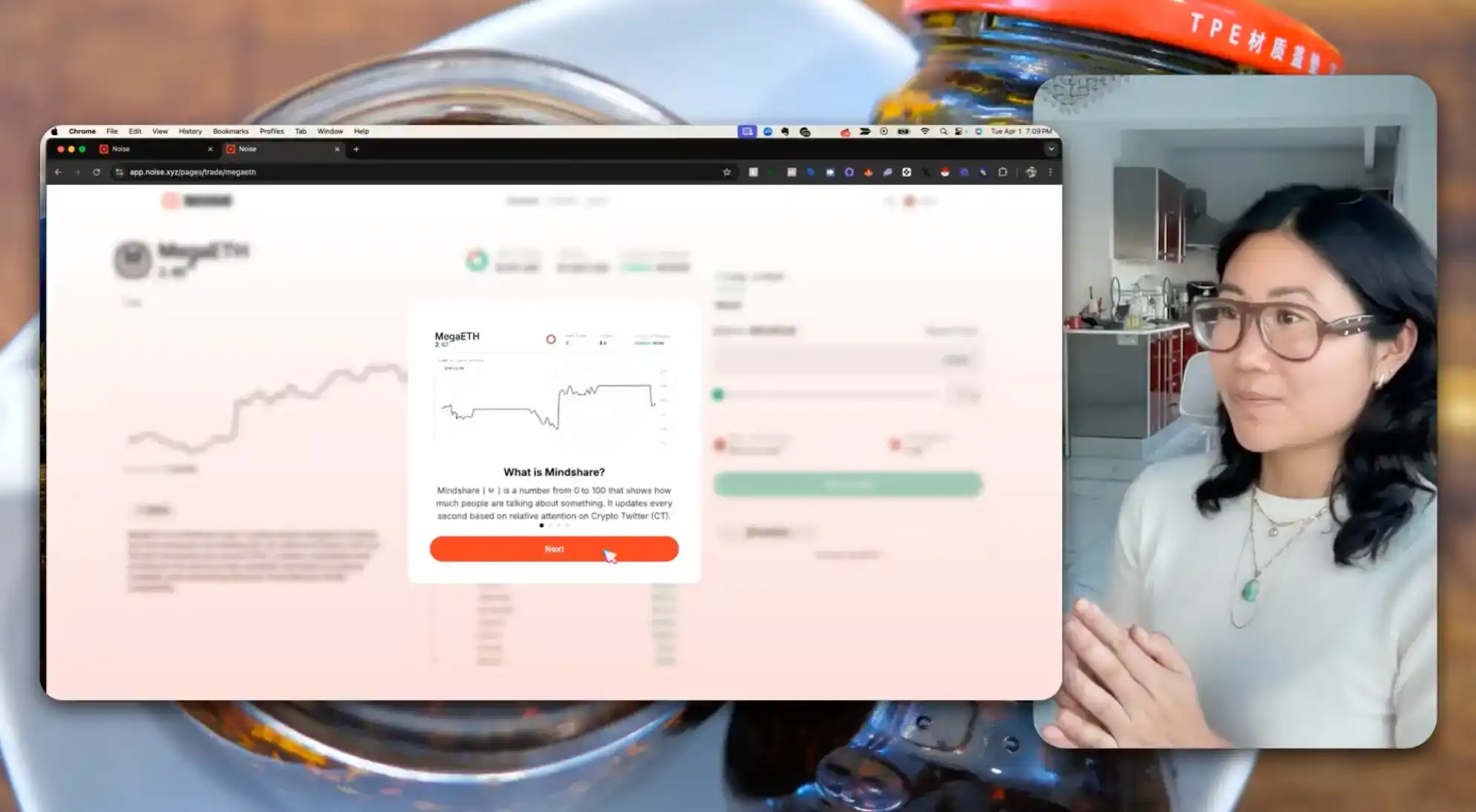
Interestingly, the author found a testnet experience video of Noise on YouTube from a year ago. In April 2025, Noise's index was still a "Mindshare" data between 0 and 100. Even in February of this year, Forbes' report on prediction markets still used this term.
The Founder Who Just Graduated from University

Noise's core founding team consists of three people, all from the University of Southern California: 22-year-old Luca Cordova Stuart, 26-year-old David Zhou, and 24-year-old Gabriel Perez Carafa.

Among them, Gabriel Perez Carafa had no work experience before Noise. Luca Cordova Stuart had an internship in BD at LayerZero Labs, and almost no public information can be found about David Zhou.

None of Noise's three co-founders have particularly impressive backgrounds, similar to Kalshi in its early days. The difference is, although Forbes categorizes Noise as a prediction market, these three young people do not agree. They wrote in the blog post announcing the Beta version launch, "You may have seen people compare Noise to prediction markets. We understand the reason for this comparison, but we do not agree with it. Speculation is just one of many factors. Our goal is to build a platform that helps people understand and spread deeper stories about modern culture, lifestyle, politics, and technological changes."

From multiple articles published in the past, Noise has always wanted to express: eliminate noise and gain true insight. Prediction markets provide the probability of an event happening, backed by real money. What Noise wants to discuss is "whether it is necessary to discuss whether this event will happen."

Besides Speculation, What Are the Application Scenarios?

Trading markets inevitably involve speculation, which is undeniable. The key is what practical use cases Noise has beyond speculation.

Previously, Kalshi's co-founder Lara shared at a conference that recently, there have been many multi-million dollar orders on Kalshi's inflation prediction market, and the source of these orders is large companies using them to hedge against potential wage increases due to a rebound in inflation. Noise provides a similar scenario here: companies can use a portion of their marketing budget to short the topics they plan to market, thereby hedging against the failure of marketing strategies.

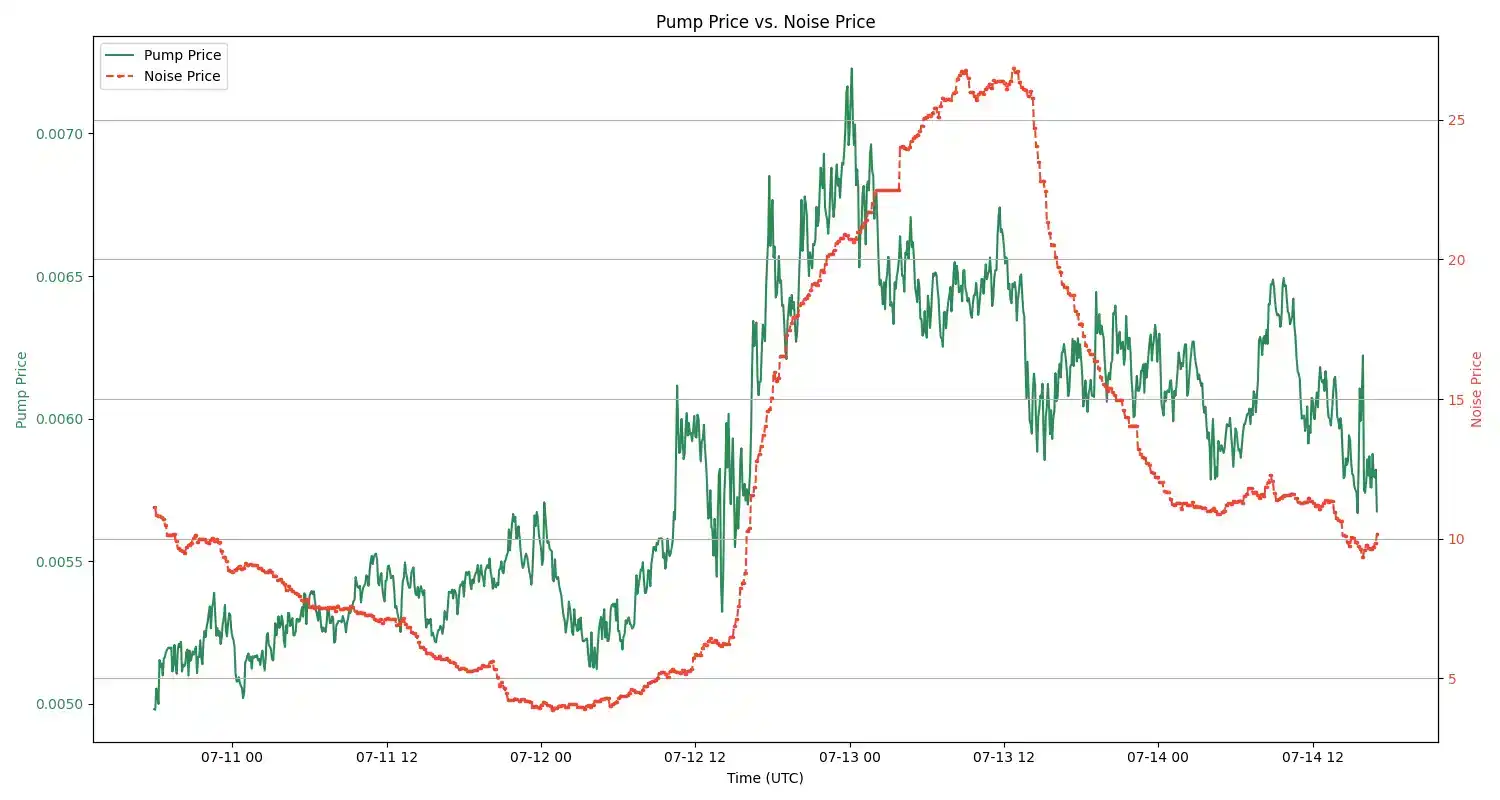
Additionally, "hype" has unique uses in trading such as cryptocurrencies and stocks. In Noise's market regarding the hype of the PUMP topic, the peak hype coincided with the rebound high point after PUMP's first wave of decline. For investors who believe in "buy when no one is interested, sell when everyone is talking," Noise's related markets might be a good reference and hedging channel.
Noise plans to launch its mainnet on Base in the coming months, at which time the platform will be open to everyone and support real money trading. From the author's perspective, Noise's idea is indeed relatively novel and has real application scenarios. However, like prediction markets over a decade ago, trading "hype" and "trends" might still be slightly ahead of its time. But at least in the recent market dominated by stablecoins and payment applications, Noise is a target for airdrop farming.


Crypto di tendenza

Domande pertinenti

QWhat is Noise and what does its Beta version allow users to do?

ANoise is a 'relevance prediction market' that launched its Beta version, allowing users to trade on the rise and fall of a 'Relevance Index' for various events or cultural symbols. Users can take long or short positions using leverage.

QHow does Noise generate the 'Relevance Index' that users trade on?

AThe 'Relevance Index' is calculated based on content (interactions, post counts, unique authors from platforms like X, Reddit, YouTube, etc.) and signals (trading volume and market count from prediction markets like Polymarket and Kalshi). These are weighted and smoothed to create a composite value.

QWhat is the purpose of using 'credits' for trading on the Noise Beta platform?

AIn the Beta version, users must purchase 'credits' with fiat currency or cryptocurrency to trade. This is primarily a measure to prevent malicious behavior and test the trading engine, as the platform does not yet support cashing out credits for real money.

QWho are the founders of Noise and what is their background?

ANoise was founded by three graduates from the University of Southern California: 22-year-old Luca Cordova Stuart, 26-year-old David Zhou, and 24-year-old Gabriel Perez Carafa. They have limited prior professional experience, with Stuart having a BD internship at LayerZero Labs.

QWhat are some potential real-world use cases for Noise beyond speculation?

ABeyond speculation, Noise can be used by companies to hedge marketing campaigns by shorting the topic they are promoting, thus hedging against campaign failure. It can also serve as a reference or hedging tool for investors in crypto or stocks by providing a measure of public interest or 'hype' around an asset.

Letture associate

Must-Watch Events Next Week|CLARITY Act Could Face Senate Vote; SpaceX, Circle to Report Earnings (8.3-8.9)

**Summary: Key Events and Developments to Watch (August 3-9)** The upcoming week is marked by significant financial disclosures, key legislative deadlines, and notable product updates. **Major Financial Events:** Several companies are scheduled to release their Q2 2026 earnings. American Bitcoin (ABTC) will report on August 3, followed by SpaceX and Hut 8 Mining Corp. on August 4, and Circle on August 5. Notably, a significant portion of SpaceX shares (up to 12% of total shares) will be unlocked on August 6 following their earnings release. **Key Legislative Deadline:** The U.S. Senate faces an August 7 deadline to secure 60 votes for the CLARITY Act, a bipartisan bill aiming to establish a federal regulatory framework for cryptocurrencies. The Senate may hold a full vote on the bill during the week. **Economic Data:** The U.S. July Non-Farm Payrolls report will be released on August 7, providing crucial labor market data. **Technology & Product Updates:** * **Shutdowns:** DeFi portfolio tracker Zapper and wallet app Ctrl Wallet will cease operations on August 3. * **Upgrades:** LayerZero will deprecate its v1 relayers on August 3. XRP Ledger's new version 3.3.0, featuring five new functions, is expected next week. * **AI:** Elon Musk announced that the advanced Grok 4.6 AI model is set for release around August 7. * **Bitcoin:** The BIP-110 forced signaling for a potential Bitcoin network change is scheduled to begin around August 8. **Other Notable Events:** Chinese robotics firm Unitree Tech has set its preliminary price inquiry for its IPO for August 5. South Korean exchange Upbit will delist AQT and AERGO tokens on August 3.

marsbit22 min fa

Must-Watch Events Next Week|CLARITY Act Could Face Senate Vote; SpaceX, Circle to Report Earnings (8.3-8.9)

marsbit22 min fa

Stocks Are Plummeting More Sharply Than Cryptocurrencies. Where Has the Money Gone?

Stock Markets Plunge Deeper Than Cryptocurrencies: Where Did the Money Go? In late July, Seoul's Kospi index triggered circuit breakers for two consecutive days, plummeting over 40% from its June high. The collapse was led by heavyweight stocks like SK Hynix, whose record profits still disappointed investors, and devastating leveraged ETFs, with one major product losing over 83% of its value. This signaled a global, forced deleveraging targeting the most crowded trades. Interestingly, while stocks exhibited extreme volatility akin to crypto markets, Bitcoin rose nearly 15% in July after a prior steep drop. Analysis shows the money fleeing equities did not flow into Bitcoin. Instead, Bitcoin had already absorbed its sell-off in May-June, when U.S. spot Bitcoin ETFs saw historic outflows. The true safe-haven beneficiary was gold, whose price rose over 20% year-on-year, highlighting a decoupling between Bitcoin and gold as "digital gold." The sell-off was a targeted unwinding of leveraged positions in tech and semiconductors, accelerated by broker-dealer risk management and shifts in the AI narrative, including new competition from Chinese memory chipmakers. The retreat path was clear: from high-valuation tech stocks to cash and U.S. Treasuries, then to gold. For Bitcoin to attract sustained institutional inflows, conditions like eased global liquidity pressure, a "soft-landing" Fed rate cut, and U.S. regulatory clarity via legislation like the stalled CLARITY Act are needed. Currently, Bitcoin is not a safe haven but an already-cleared asset. Its low correlation with tech stocks, however, makes it a potential diversification play for institutional portfolios once the storm passes. The money isn't here yet, but the positioning is underway.

marsbit22 min fa

Stocks Are Plummeting More Sharply Than Cryptocurrencies. Where Has the Money Gone?

marsbit22 min fa

In Conversation with Ray Dalio: We Are Currently in an AI Bubble, with 1% of My Portfolio in Bitcoin

Ray Dalio, founder of Bridgewater Associates, warns in an interview that the current AI boom shows classic bubble characteristics, which could lead to significant economic downturns as seen in past cycles like 1929 or 2000. He explains that speculative enthusiasm, fueled by debt and overvaluation, often precedes a crash when rising rates or taxation force asset sales, causing widespread losses and recession. Dalio also outlines his "Big Cycle" theory, describing an approximate 80-year pattern where widening wealth gaps, massive government deficits, and shifting geopolitical power (like China's rise) create internal conflict and global instability. He emphasizes that we are in a late-cycle, transitional phase where traditional powers like the US and UK face decline. For personal wealth protection, Dalio advises diversification beyond cash into assets like stocks, bonds, real estate, and particularly gold, which he prefers over Bitcoin. While he holds about 1% of his portfolio in Bitcoin as a non-printable hard asset, he views gold as more secure from technological or governmental threats. Regarding AI's impact, Dalio believes it will disproportionately benefit capital owners, worsening inequality by replacing both physical and cognitive labor. He suggests that human intuition and emotional intelligence, combined with AI, will be key for future workers. On taxation, Dalio argues that wealth taxes are impractical and risk triggering asset sell-offs, reducing productive investment. He points to the UK as a cautionary example of debt, low productivity, and political strife. Geopolitically, Dalio foresees a more regionalized world, with the US showing weakness in prolonged conflicts like with Iran, akin to past imperial declines. The ideal outcome, he suggests, is coexisting powerful blocs (e.g., Americas, China-Asia Pacific) without major war.

marsbit4 h fa

In Conversation with Ray Dalio: We Are Currently in an AI Bubble, with 1% of My Portfolio in Bitcoin

marsbit4 h fa

Daily 7.2 Trillion KRW: Foreign Capital's Record Net Buying on Friday! Wall Street Says Headwinds for Korean Stock Fund Flows Have Subsided

South Korean stock market sees a dramatic shift in fund flows. On July 31, foreign investors made a record net purchase of approximately KRW 7.2 trillion in KOSPI stocks, marking a fundamental reversal from the persistent large-scale net outflows seen in previous months. This contributed to a significant narrowing of foreign net selling in July to KRW 9.8 trillion, down sharply from KRW 48.4 trillion in June and KRW 44.5 trillion in May. Simultaneously, domestic institutional pressure eased. South Korean pension funds and asset managers turned to a net buying position in July, purchasing KRW 1.0 trillion worth of KOSPI shares, contrasting with net sales in May and June. Market volatility is expected to be dampened by new financial regulations. Effective July 31, the Financial Services Commission tightened access for retail investors to single-stock leveraged ETFs by raising the minimum cash deposit requirement. Trading volumes for these products subsequently dropped to about 50% of their monthly average. Citigroup Research maintains its year-end KOSPI target of 10,000 points. The firm cites several supportive factors: the substantial easing of headwinds from capital outflows, a robust fundamental outlook for the semiconductor sector, historically low market valuations, strong economic fundamentals, and the potential for policy support from financial authorities if needed.

marsbit4 h fa

Daily 7.2 Trillion KRW: Foreign Capital's Record Net Buying on Friday! Wall Street Says Headwinds for Korean Stock Fund Flows Have Subsided

marsbit4 h fa

Trading

Spot

Articoli Popolari

Come comprare HYPE

Benvenuto in HTX.com! Abbiamo reso l'acquisto di Hyperliquid (HYPE) semplice e conveniente. Segui la nostra guida passo passo per intraprendere il tuo viaggio nel mondo delle criptovalute.Step 1: Crea il tuo Account HTXUsa la tua email o numero di telefono per registrarti il tuo account gratuito su HTX. Vivi un'esperienza facile e sblocca tutte le funzionalità,Crea il mio accountStep 2: Vai in Acquista crypto e seleziona il tuo metodo di pagamentoCarta di credito/debito: utilizza la tua Visa o Mastercard per acquistare immediatamente HyperliquidHYPE.Bilancio: Usa i fondi dal bilancio del tuo account HTX per fare trading senza problemi.Terze parti: abbiamo aggiunto metodi di pagamento molto utilizzati come Google Pay e Apple Pay per maggiore comodità.P2P: Fai trading direttamente con altri utenti HTX.Over-the-Counter (OTC): Offriamo servizi su misura e tassi di cambio competitivi per i trader.Step 3: Conserva Hyperliquid (HYPE)Dopo aver acquistato Hyperliquid (HYPE), conserva nel tuo account HTX. In alternativa, puoi inviare tramite trasferimento blockchain o scambiare per altre criptovalute.Step 4: Scambia Hyperliquid (HYPE)Scambia facilmente Hyperliquid (HYPE) nel mercato spot di HTX. Accedi al tuo account, seleziona la tua coppia di trading, esegui le tue operazioni e monitora in tempo reale. Offriamo un'esperienza user-friendly sia per chi ha appena iniziato che per i trader più esperti.

359 Totale visualizzazioniPubblicato il 2024.12.11Aggiornato il 2026.06.02

Come comprare HYPE

Discussioni

Benvenuto nella Community HTX. Qui puoi rimanere informato sugli ultimi sviluppi della piattaforma e accedere ad approfondimenti esperti sul mercato. Le opinioni degli utenti sul prezzo di HYPE HYPE sono presentate come di seguito.

活动图片