On April 1, 2026, Beijing time, the "hype prediction market" Noise launched its Beta version, officially opening for trading. Users are required to pay $5 to trade on the Beta version DApp to prevent malicious activities.
Noise announced in January of this year that it had raised $7.1 million in a seed round led by Paradigm, with participation from Figment Capital, Anagram, GSR, and JPEG Trading. KaitoAI, a representative of the attention economy previously cut off from X's API, also participated in the investment.
The term "trading hype" has always referred to deliberately creating topics and sparking attention through various means to increase the exposure and discussion of an event. However, Noise quantifies hype into numbers, allowing users to trade the rise and fall of these numbers. In Noise's own words, prediction markets focus on "whether something will happen," while Noise focuses on "how important something is right now."
Hype Index Trading Platform
Noise's mechanism is actually quite simple to explain: Through Noise's algorithm, a hype index for a specific event or cultural symbol is generated. Users can predict whether the hype will rise or fall in the future and perform long or short operations.
Only two things need clarification: first, how to trade; second, how this index is calculated.
Perhaps because it is in the testing phase, trading on the Noise platform does not directly use fiat currency or cryptocurrency. Instead, users need to purchase "credits" on the platform and use these credits for trading.
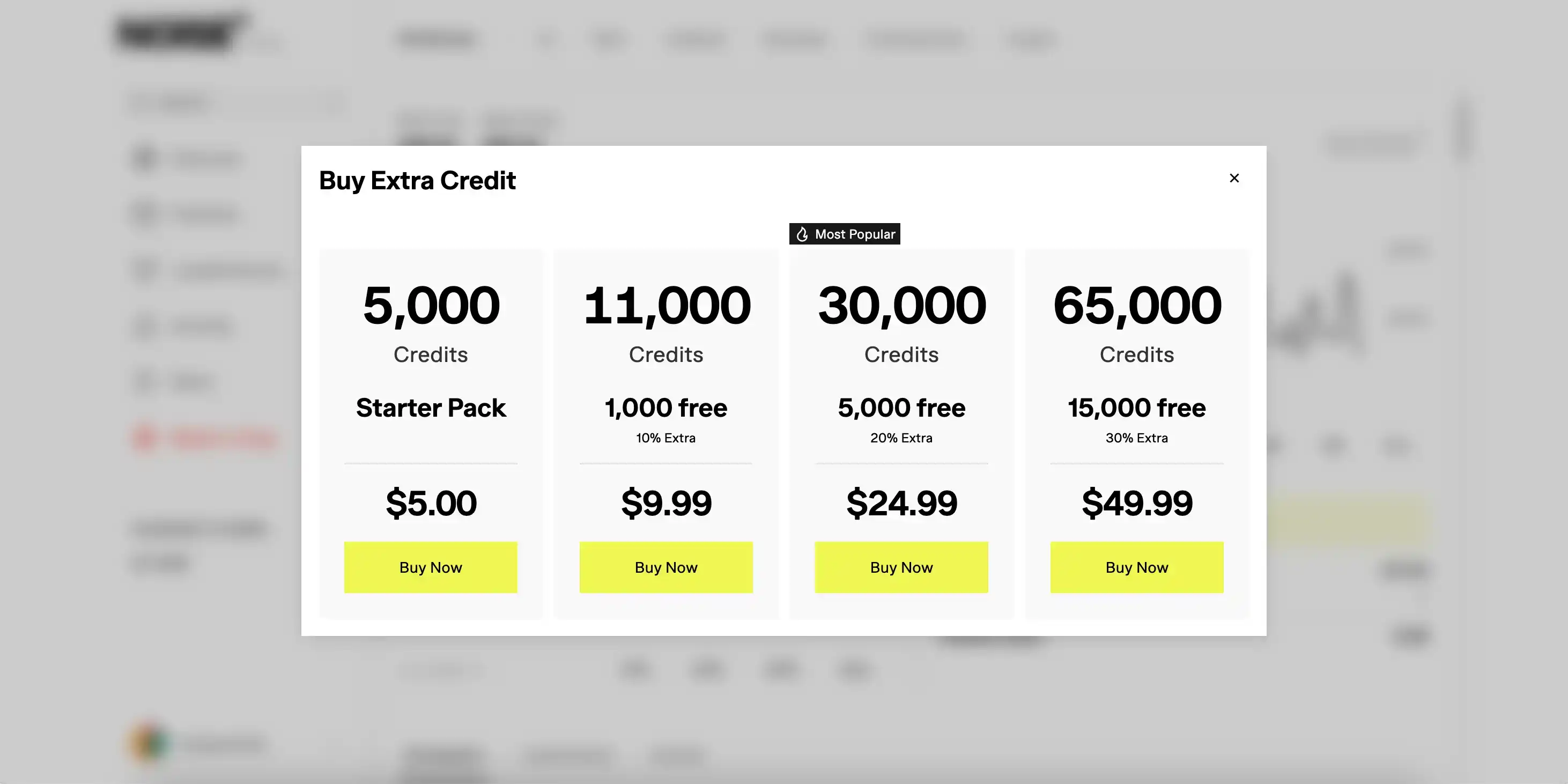
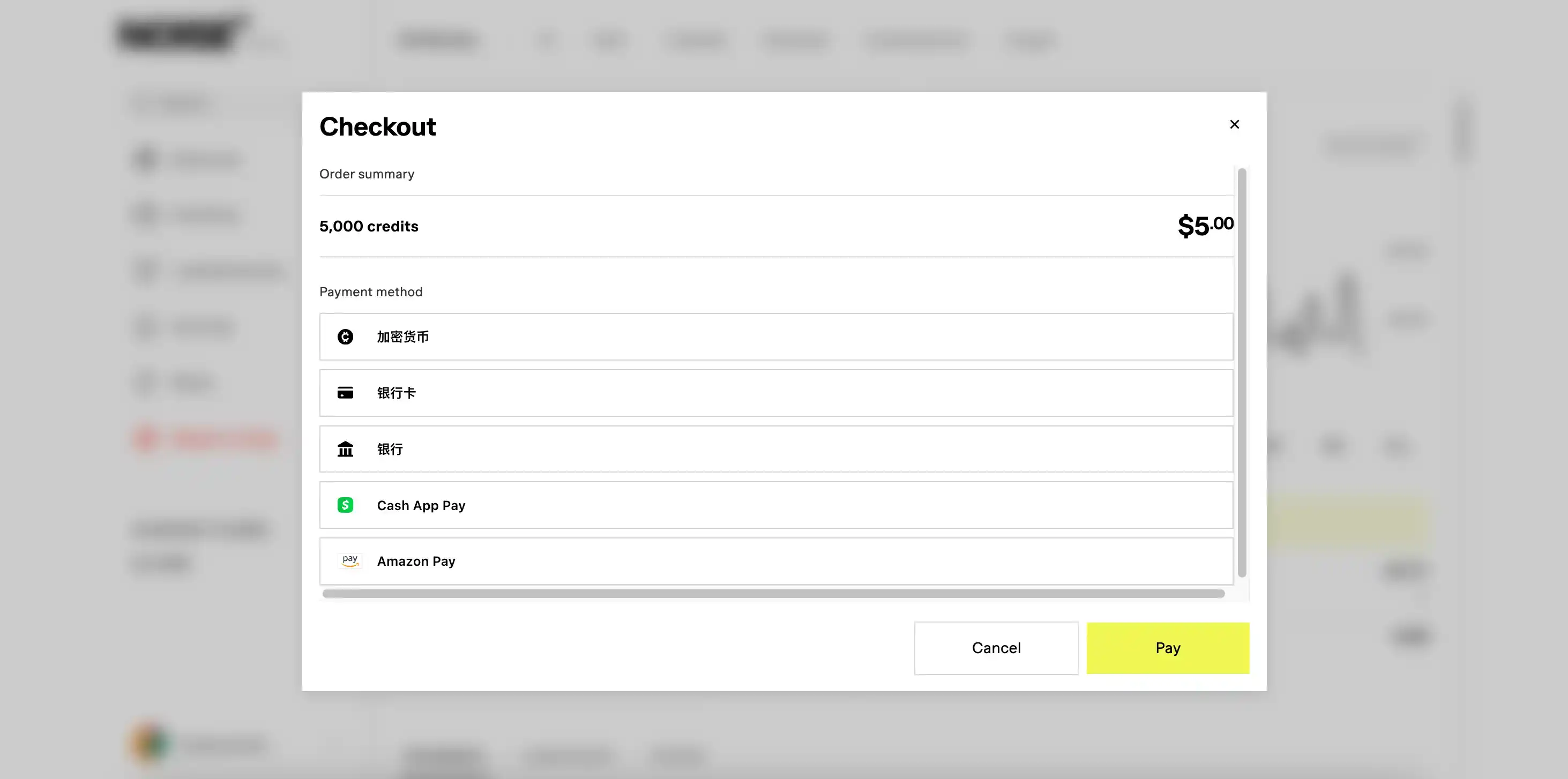
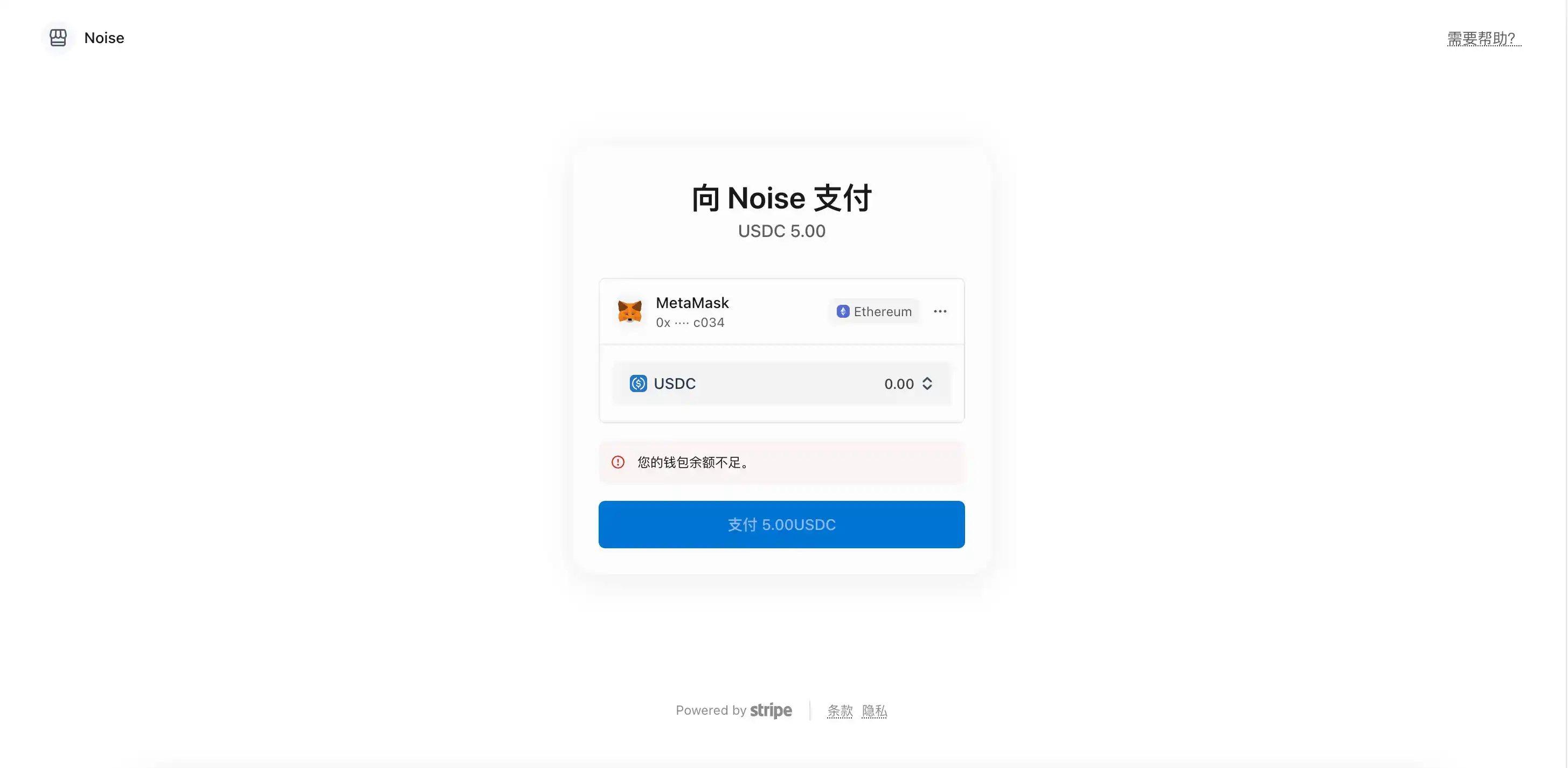
Fiat purchases are supported through banking channels, Cash App, and Amazon Pay. For cryptocurrency channels, transfers need to be made via MetaMask and Phantom, currently supporting USDC on Ethereum and Solana. The author did not find an entry to exchange credits back to fiat or stablecoins, possibly because the Beta version is only testing the trading engine and does not yet have a settlement function.
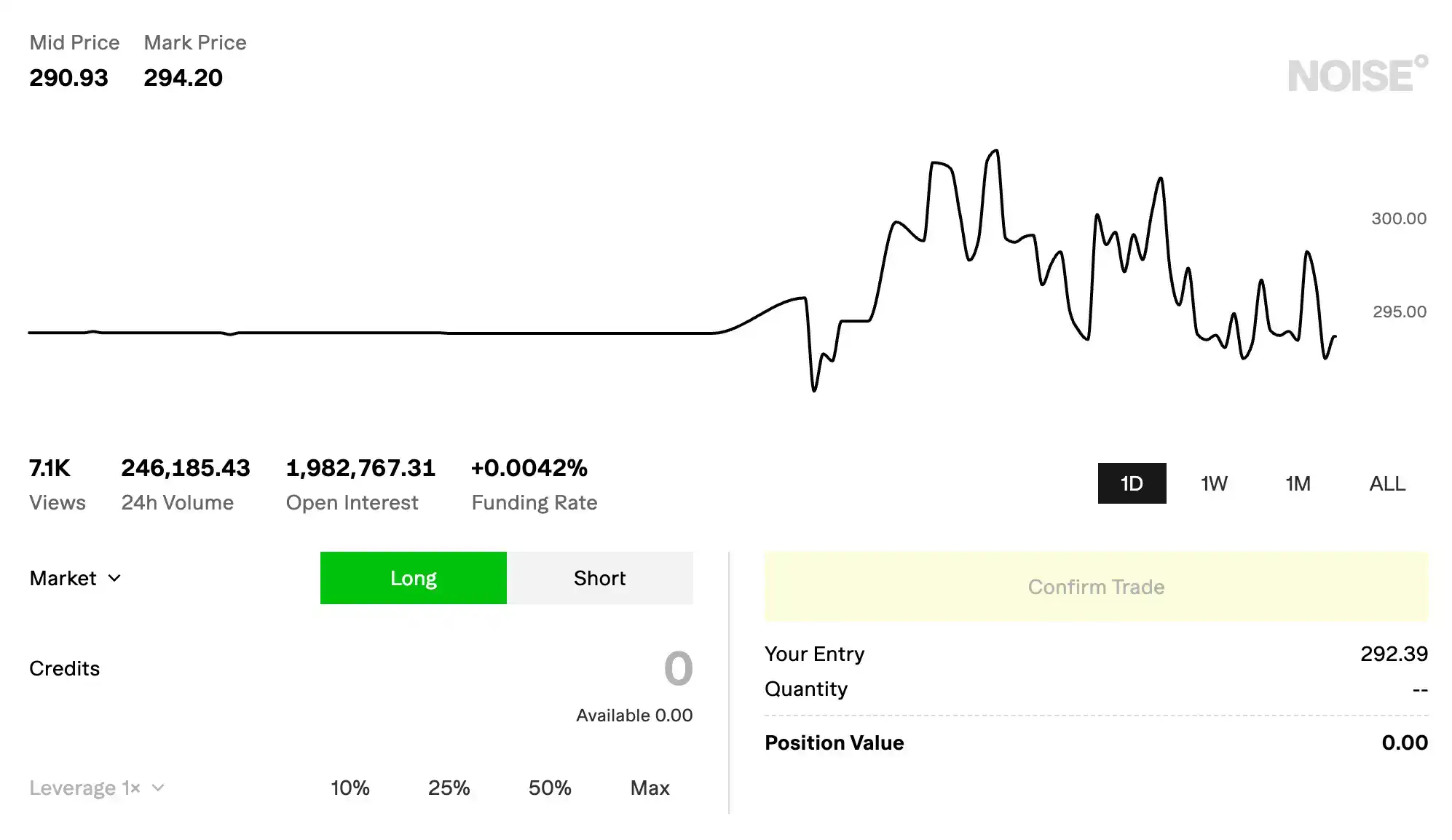
Taking "crude oil," a recent market focus with high attention, as an example, you can choose leverage from 1x to 5x for long or short trading. Currently, this market is one of the hottest in the Noise Beta version, but its 24-hour trading volume is only over 200,000, with an open interest value of about 2 million, which translates to less than $20 million in USD.
Although not displayed on the front end, Noise also uses an order book model. Unlike prediction markets, Noise's trading market is more like cryptocurrency perpetual contracts. The index provided by the oracle is the "mark price," and the market automatically adjusts the balance between the market price and the mark price through funding rates.
As for the hype index we are trading, Noise calls it the "Relevance Index." Data calculation is based on two sources: content and signals.
In terms of content, Noise tracks interactions, post counts, and unique author counts related to topics on platforms including X, Reddit, YouTube, Instagram, Substack, and RSS news feeds. Signals come from trading volume and market counts of related topics on Polymarket and Kalshi.
The smoothed values (to prevent short-term noise effects) of all sources and indicators are aggregated into a comprehensive value through weighting, which is the index users trade. However, Noise has not fully disclosed the specific algorithm, most likely to prevent someone from exploiting the algorithm's mechanism to artificially inflate the hype of an event or weaken the hype of a hot event with a large amount of irrelevant information.
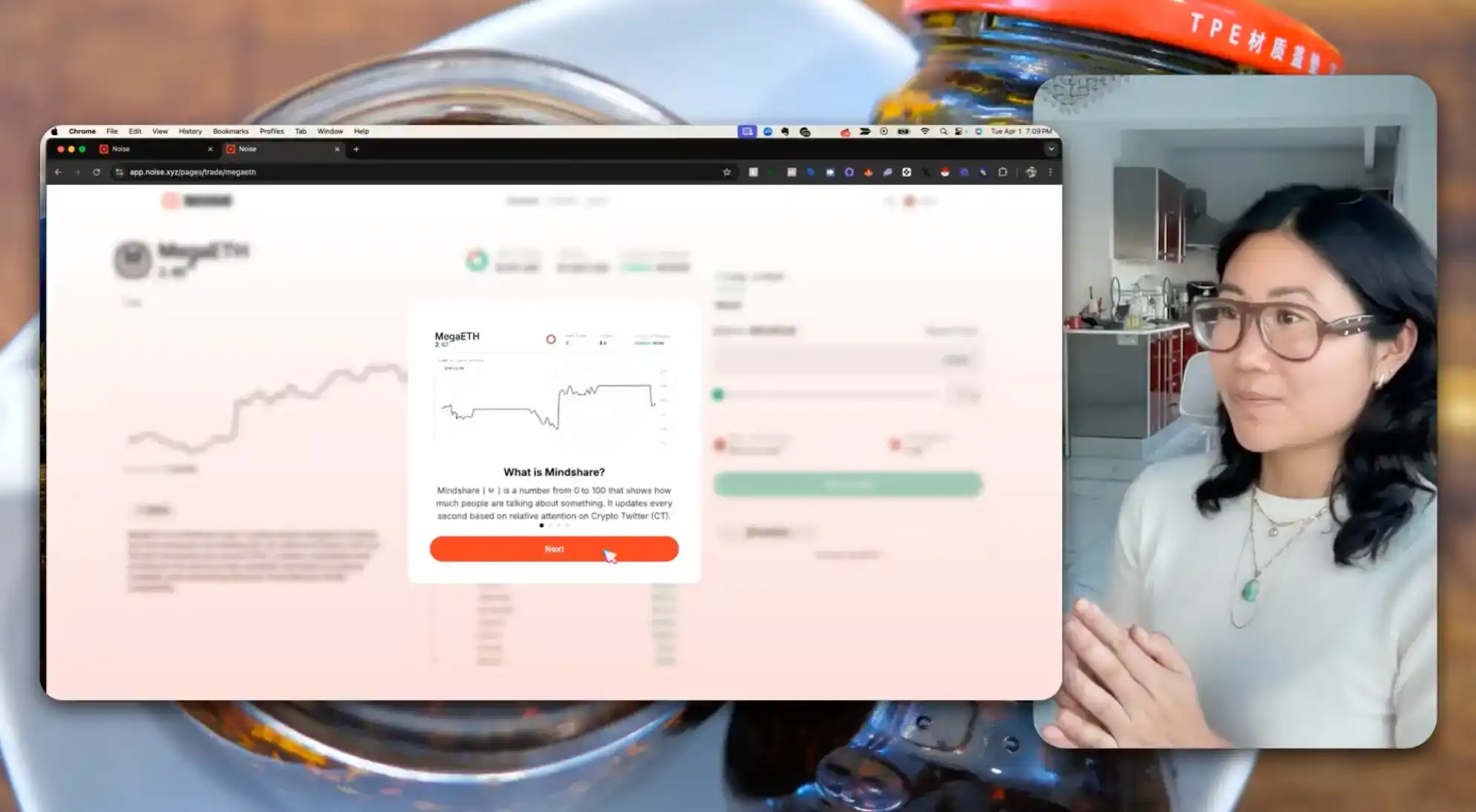
Interestingly, the author found a testnet experience video of Noise on YouTube from a year ago. In April 2025, Noise's index was still a "Mindshare" data between 0 and 100. Even in February of this year, Forbes' report on prediction markets still used this term.
The Founder Who Just Graduated from University
Noise's core founding team consists of three people, all from the University of Southern California: 22-year-old Luca Cordova Stuart, 26-year-old David Zhou, and 24-year-old Gabriel Perez Carafa.

Among them, Gabriel Perez Carafa had no work experience before Noise. Luca Cordova Stuart had an internship in BD at LayerZero Labs, and almost no public information can be found about David Zhou.
None of Noise's three co-founders have particularly impressive backgrounds, similar to Kalshi in its early days. The difference is, although Forbes categorizes Noise as a prediction market, these three young people do not agree. They wrote in the blog post announcing the Beta version launch, "You may have seen people compare Noise to prediction markets. We understand the reason for this comparison, but we do not agree with it. Speculation is just one of many factors. Our goal is to build a platform that helps people understand and spread deeper stories about modern culture, lifestyle, politics, and technological changes."
From multiple articles published in the past, Noise has always wanted to express: eliminate noise and gain true insight. Prediction markets provide the probability of an event happening, backed by real money. What Noise wants to discuss is "whether it is necessary to discuss whether this event will happen."
Besides Speculation, What Are the Application Scenarios?
Trading markets inevitably involve speculation, which is undeniable. The key is what practical use cases Noise has beyond speculation.
Previously, Kalshi's co-founder Lara shared at a conference that recently, there have been many multi-million dollar orders on Kalshi's inflation prediction market, and the source of these orders is large companies using them to hedge against potential wage increases due to a rebound in inflation. Noise provides a similar scenario here: companies can use a portion of their marketing budget to short the topics they plan to market, thereby hedging against the failure of marketing strategies.
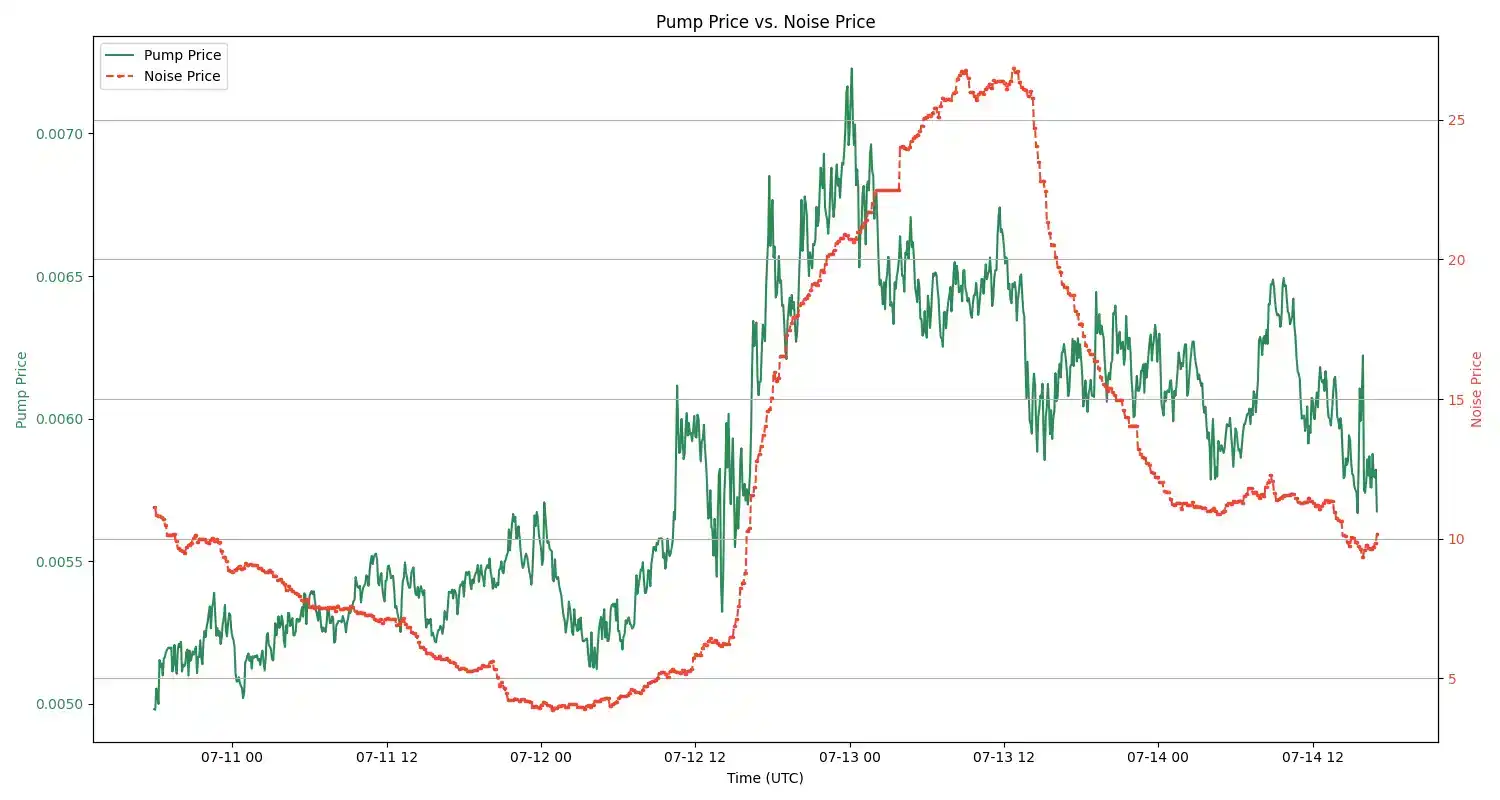
Additionally, "hype" has unique uses in trading such as cryptocurrencies and stocks. In Noise's market regarding the hype of the PUMP topic, the peak hype coincided with the rebound high point after PUMP's first wave of decline. For investors who believe in "buy when no one is interested, sell when everyone is talking," Noise's related markets might be a good reference and hedging channel.
Noise plans to launch its mainnet on Base in the coming months, at which time the platform will be open to everyone and support real money trading. From the author's perspective, Noise's idea is indeed relatively novel and has real application scenarios. However, like prediction markets over a decade ago, trading "hype" and "trends" might still be slightly ahead of its time. But at least in the recent market dominated by stablecoins and payment applications, Noise is a target for airdrop farming.