Author: DCo (@Decentralisedco)
Compiled by: Deep Tide TechFlow
Deep Tide Guide: Hyperliquid's 2025 revenue is 15% of CME's, but its market cap is only 10% of CME's—behind this valuation discount, the market has completely failed to price in the trillion-dollar TAM opened up by HIP-3. The Iran war weekend was a stress test for this thesis: when CME was closed, on-chain oil futures alone supported global real-time pricing. This article uses a four-scenario DCF model to illustrate that HYPE's current price of $37 has already fallen below the bear market target price of $60, meaning that even if HIP-3 makes almost no progress, this pricing itself is already undervaluing the basic exchange business.
HYPE's Valuation Framework
CME's 2025 revenue was $6.5 billion, with an average daily trading volume of 28.1 million contracts, and a market cap of $114 billion. Hyperliquid recorded $960 million in revenue in 2025 on approximately $3 trillion in trading volume, with a market cap of $12.5 billion. Hyperliquid's current revenue is about 15% of CME's, but its market cap is only 10% of CME's. The key opportunity lies in: to what extent can traditional financial trading volume migrate to decentralized platforms like Hyperliquid?
From Crypto DEX to Global Derivatives Exchange
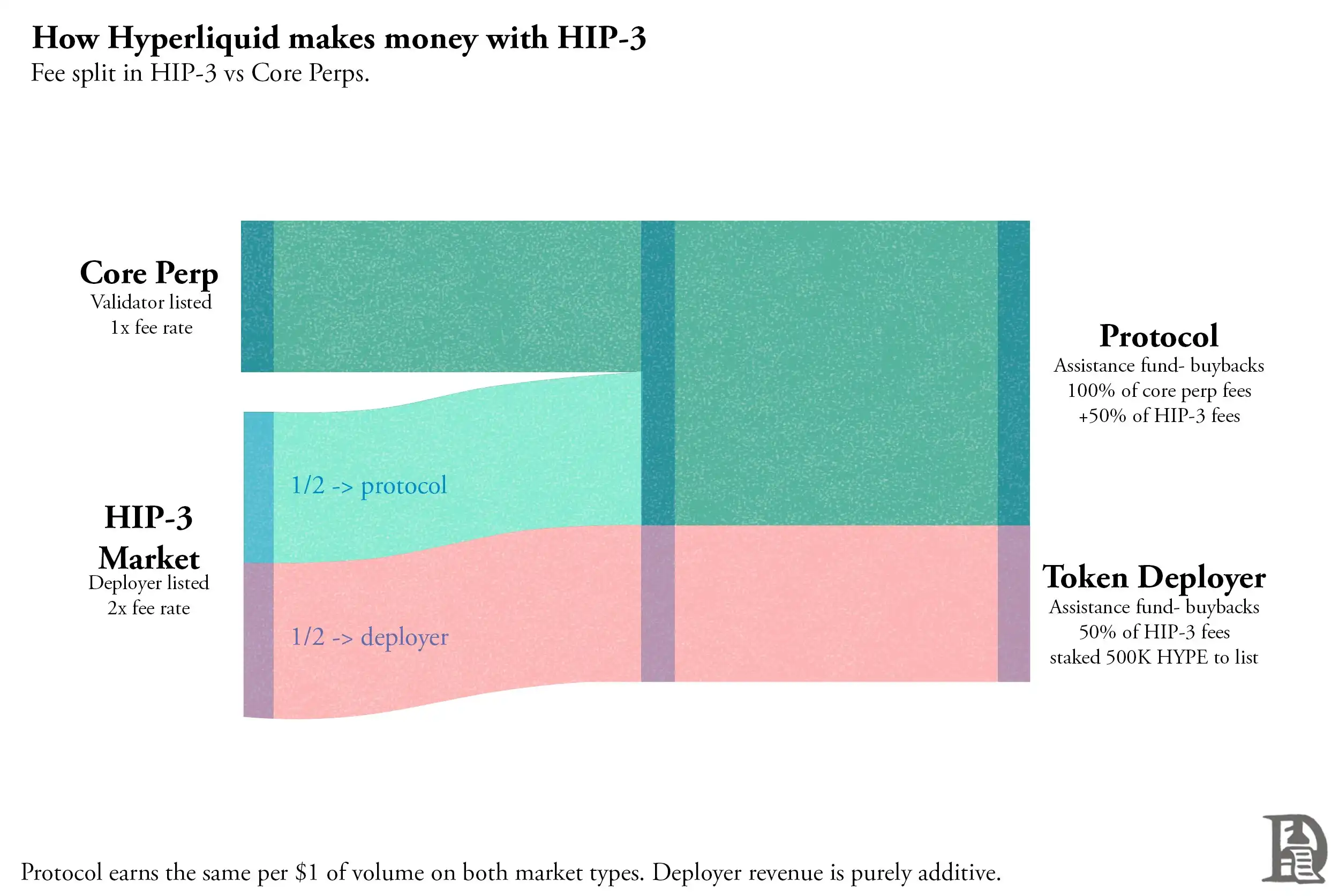
HIP-3 launched in October 2025, supporting permissionless listing of perpetual contracts. Deployment parties staking 500,000 HYPE (approximately $18.5 million at $37 per token) can launch custom markets on HyperCore. The fees for these markets are twice those of Hyperliquid's core listed perpetual contracts, with half going to the deployment party and the other half to the Hyperliquid protocol for buybacks. Therefore, the protocol's revenue per dollar of trading volume is the same as for the core markets, with the deployment party additionally receiving an equal amount of profit as an incentive for listing and maintaining the markets.
Within five months, HIP-3 trading volume reached $100 billion, and open interest hit a record $1.2 billion on March 10, significantly up from $260 million the previous month.
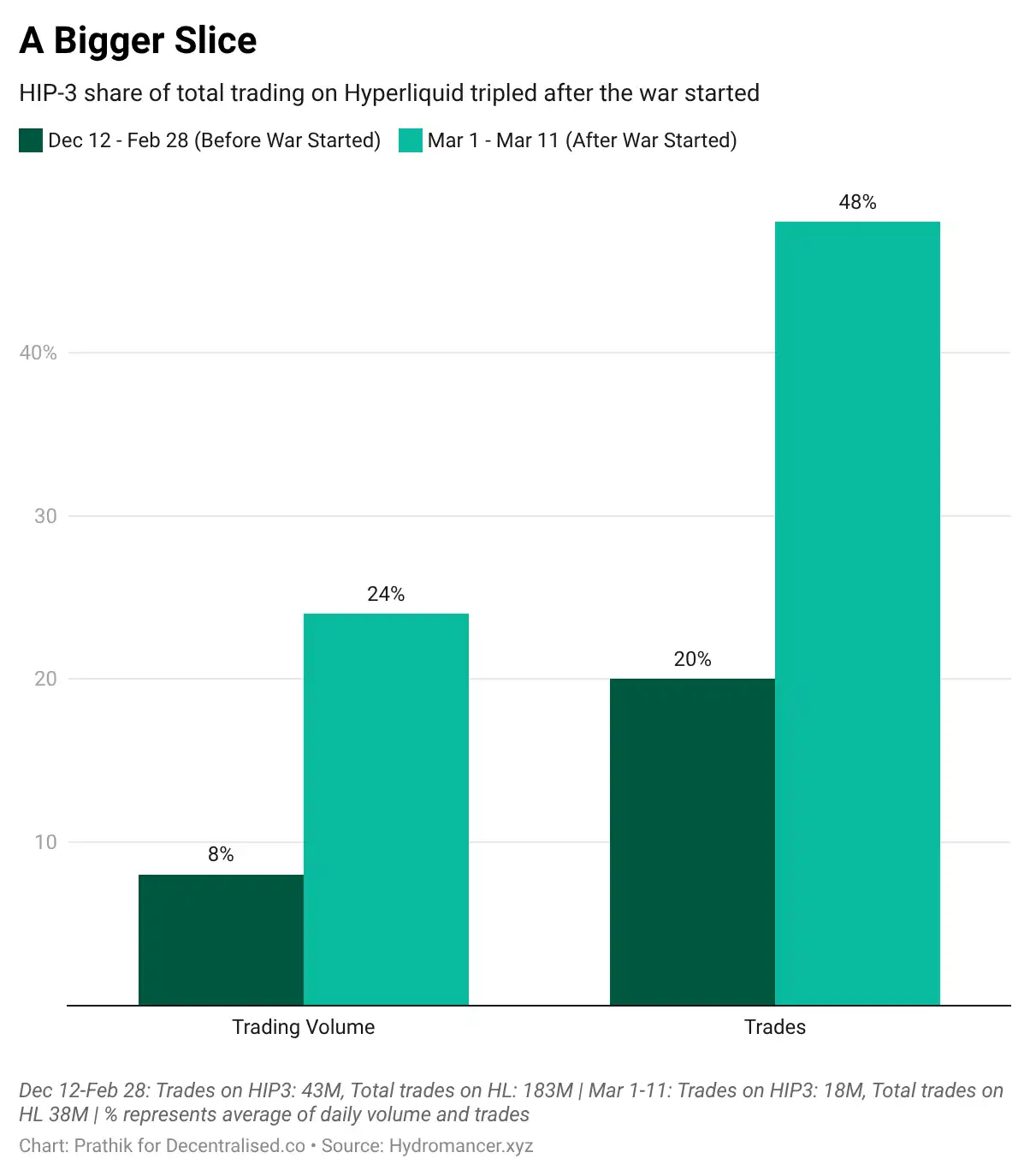
HIP-3 can list any asset: commodities, stock indices, forex pairs, pre-IPO tokens, etc. In the past two weeks, HIP-3's share of Hyperliquid's total trading volume increased from 8% to 23%, with nearly half of all trading now occurring on HIP-3 markets.
Iran War as Proof of Concept
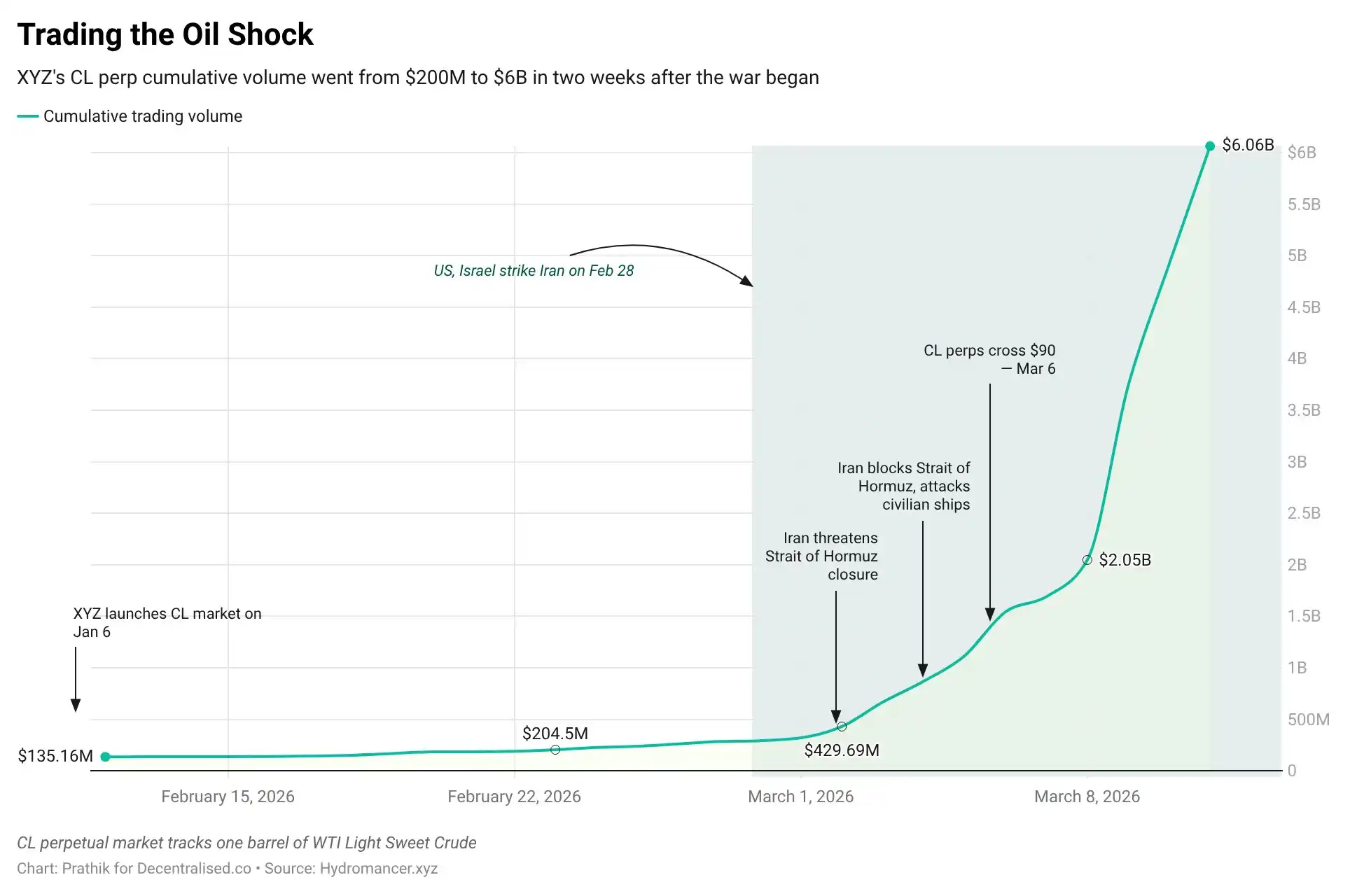
On February 28, the US and Israel launched strikes against Iran during traditional market closing hours. Within hours, oil-pegged perpetual contracts on Hyperliquid surged 5%, with traders pricing the impact in real-time. The following week, after WTI recorded its largest weekly gain since 1983, the 24-hour trading volume of oil perpetual contracts on Hyperliquid exceeded $1.2 billion, with liquidations reaching $40 million. The cumulative trading volume of CL perpetual contracts rose from $200 million to $6 billion over two weeks. Bitcoin hovered around $68,000. The main battlefield for macro trading was on Hyperliquid, not the spot crypto market.
When CME reopened on Monday, it confirmed the pricing direction that Hyperliquid had established over the entire weekend. If tokenized oil perpetual contracts can handle such volume with an effective price discovery mechanism, the same can be done for gold, SPX, and forex perpetual contracts.
CME + 0DTE Options as TAM for HIP-3
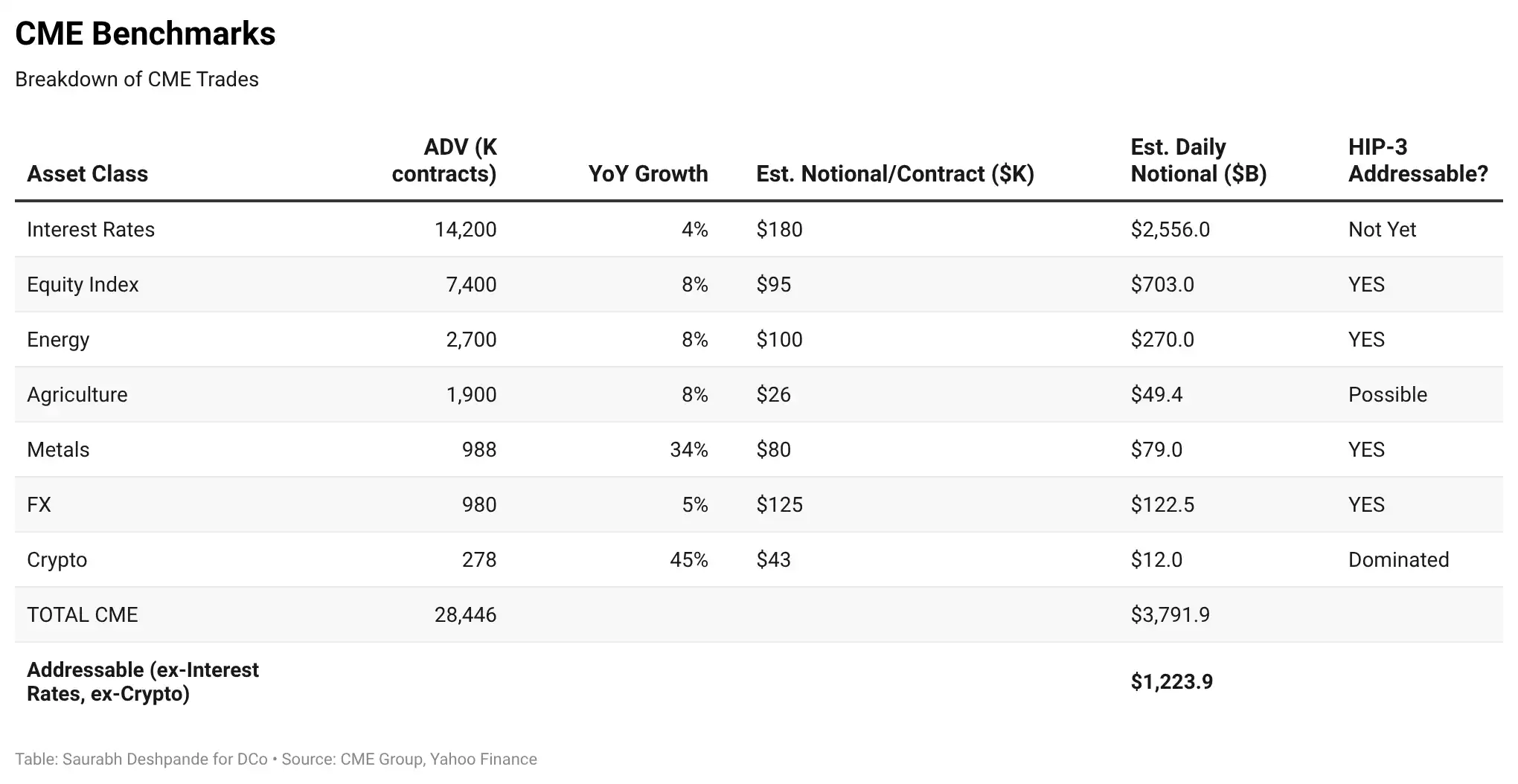
CME's average daily trading volume across all asset classes is $3.8 trillion. Excluding structurally complex interest rate products that are difficult to migrate in the short term, and crypto products already dominated by Hyperliquid, the addressable average daily trading volume in stock indices, energy, metals, agriculture, and forex on CME is approximately $1.2 trillion.
Additionally, we factor in the 0DTE (zero days to expiration) options market. Just the SPX 0DTE options had an average daily notional value of over $1.2 trillion in May 2025. Considering that SPY 0DTE accounts for 45% of all SPY options volume, FalconX estimates the total notional value of 0DTE at $1.5 to $2 trillion daily. From a behavioral perspective, these are perpetual contract traders using options infrastructure—because stock perpetual contracts do not currently exist in regulated markets. Perpetual contracts eliminate the complexity and cost of 0DTE options.
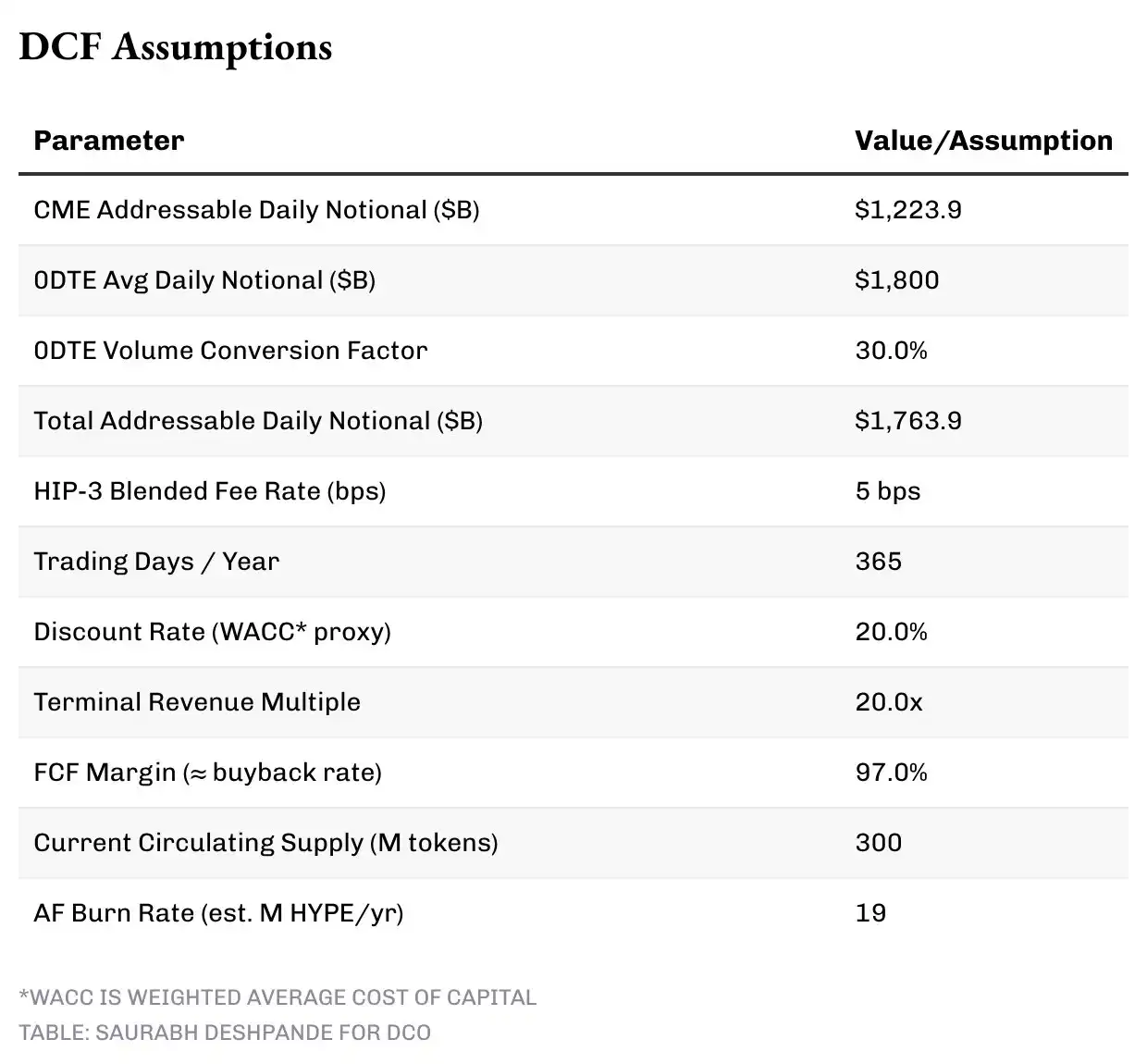
A key adjustment: The notional value of 0DTE options overestimates the equivalent volume for perpetual contracts. We apply a 30% conversion factor to the 0DTE notional value to estimate the actual perpetual contract equivalent volume that might migrate. The total addressable market for HIP-3 is therefore approximately $1.74 trillion daily: $1.2 trillion from CME's addressable volume, plus about $540 billion from converted 0DTE volume.
Scenario Analysis
We constructed four scenarios based on the percentage of the $1.74 trillion daily TAM that Hyperliquid captures through HIP-3, modeled using a three-year discounted cash flow framework.
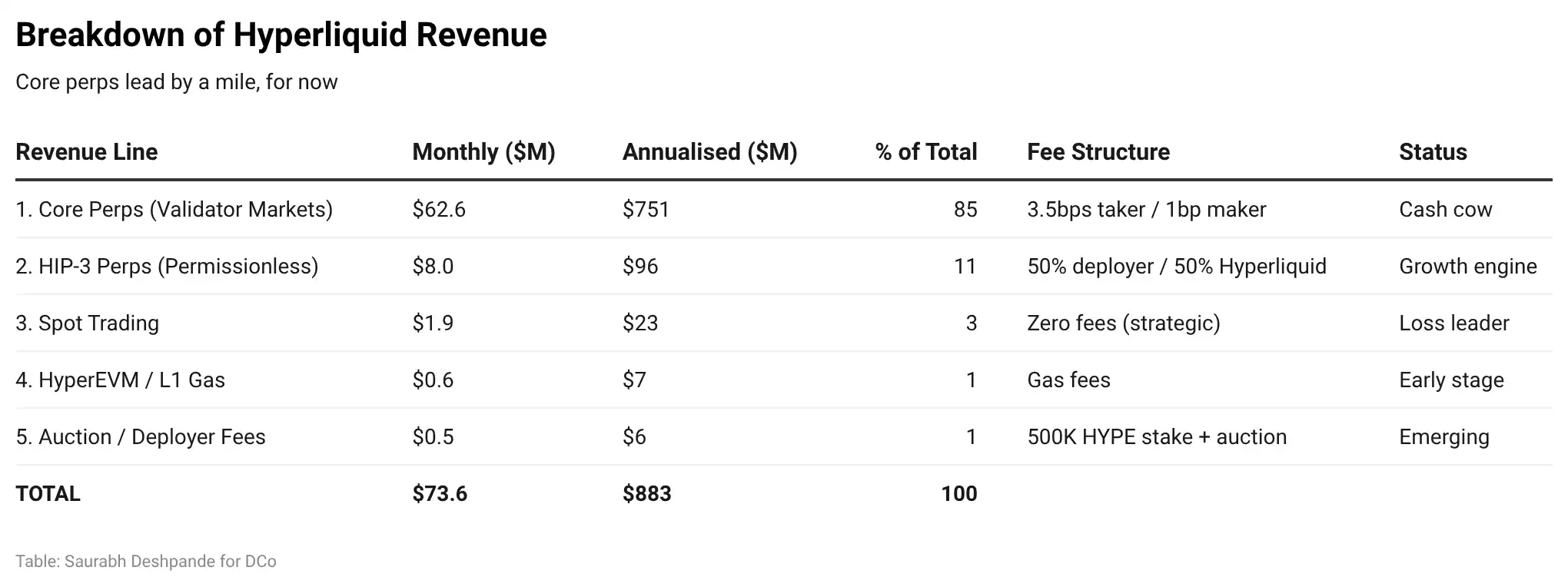
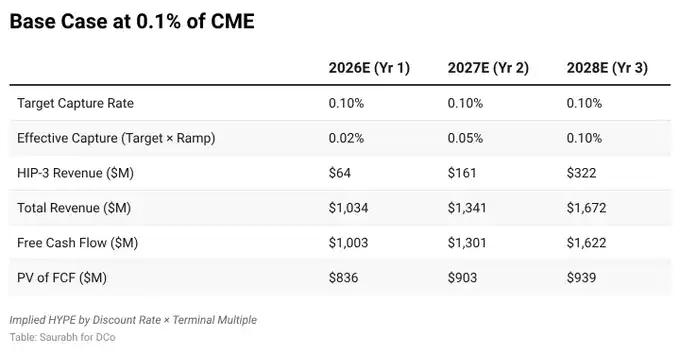
Each scenario assumes a gradual ramp-up in penetration: Year 1 (2026) reaches 20% of the target, Year 2 (2027) reaches 50%, Year 3 (2028) reaches 100%, to realistically reflect the gradual accumulation of market share. Baseline revenue from core crypto perpetuals, spot, EVM Gas, and auction fees is forecasted separately from the revenue waterfall model, growing from $970 million in 2026 to $1.35 billion in 2028.
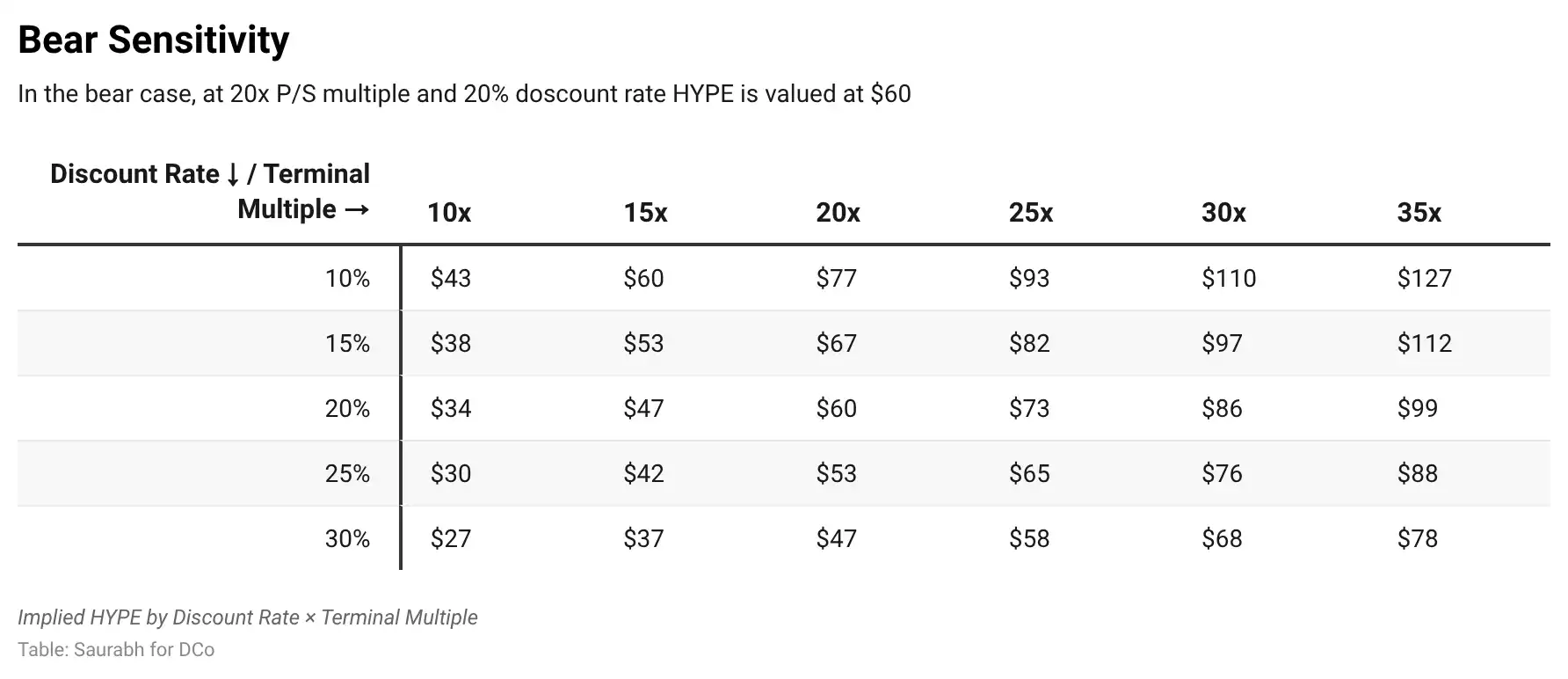
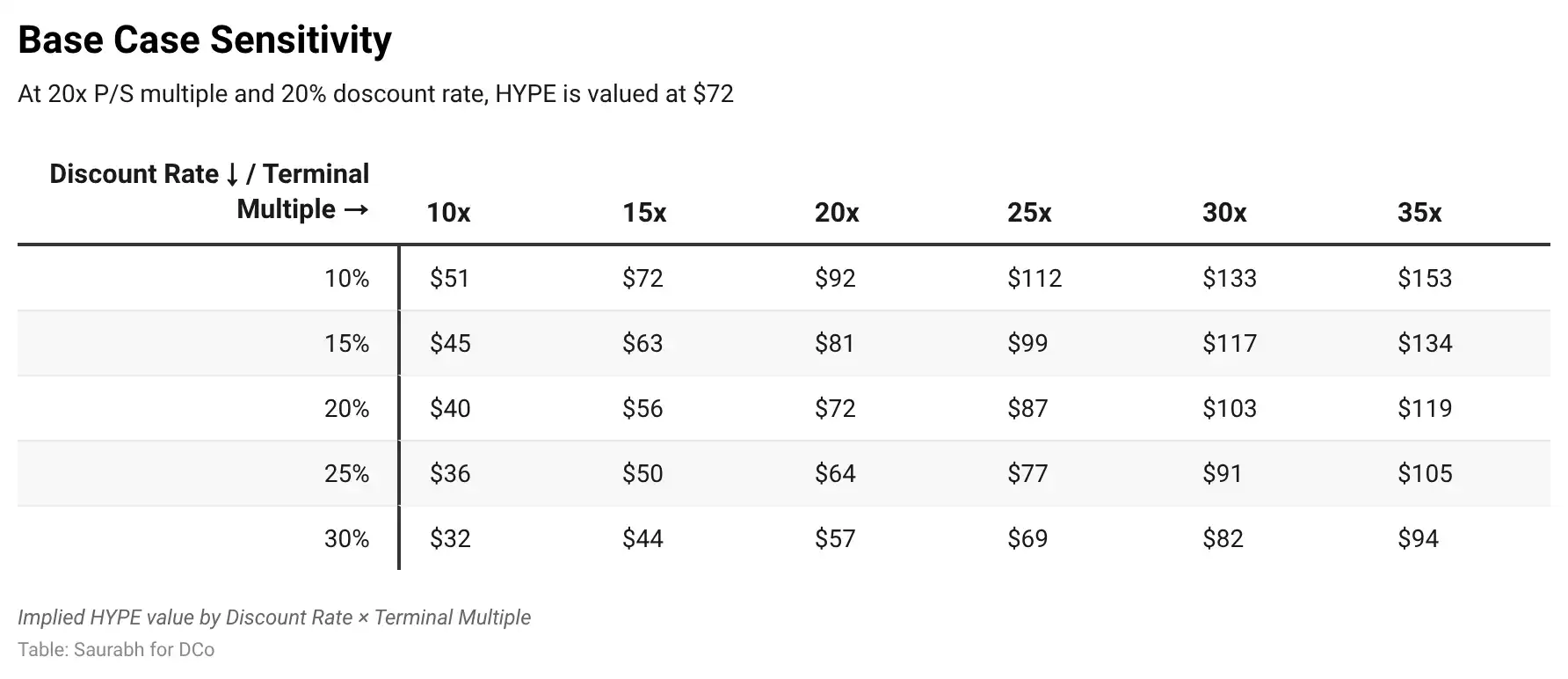
We use a 20% discount rate and a terminal multiple of 20 times Year 3 revenue—a modest premium to CME's current 17.5x EV/Revenue, reflecting Hyperliquid's higher growth trajectory. The 20% discount rate embodies crypto protocol risk but also acknowledges that Hyperliquid is a profitable enterprise with auditable on-chain cash flows, not a pre-product stage token. A sensitivity table allows for stress testing at discount rates as high as 30%.
The model also considers expected changes in circulating supply. On the supply side, approximately 23.8% of the total HYPE supply is allocated to core contributors, locked for one year followed by a 24-month linear unlock. Co-founder Iliensinc confirmed that distributions (if any) occur on the 6th of each month, adding that "unlocks are not linear." The actual pace varies significantly: about 2.6 million in December (with 850,000 re-locked), 1.2 million in January, and the team slashed the February unlock by 90% to just 1,400 tokens. As Arthur Hayes pointed out, 66.6% of contributor tokens remain locked until 2027-2028, with no investor unlocks at all.
We don't anchor to peaks or troughs but use the monthly average since distributions began—about 1 million HYPE, or 12 million annually—as the baseline assumption. Validator staking emissions, at the current ~400 million staked tokens and a 2.37% reward rate, contribute an additional ~10 million annually.
On the other hand, the Aid Fund (AF) has cumulatively burned 42.8 million HYPE over about 16 months since genesis (November 2024), with an observed annualized burn rate of about 32 million. The AF receives about 97% of trading fees through an automated buyback mechanism, and its wallet additionally holds 42.1 million HYPE awaiting burn. The historical burn rate includes periods when HYPE was in a lower price range (mostly $10-25 throughout 2025), meaning more tokens could be retired per dollar of fees.
At the current price of $37 and approximately $2 million in daily trading fees, the forward-looking annualized burn rate is closer to 19 million HYPE. We use this 19 million forward-looking estimate as the forecast baseline in the model, although the historical 32 million figure illustrates the AF's aggressive operation in low-price environments. Importantly, AF burns are endogenously linked to revenue: in good markets, higher fee income means significantly more tokens are bought back and burned. This creates a reflexive dynamic that static supply forecasts cannot fully capture.
The net effect is only a slight increase in circulating supply. Starting from today's ~300 million, team unlocks average ~1 million monthly, plus ~10 million annual validator emissions, totaling ~22 million new tokens annually; while ~19 million are retired annually via AF burns. We forecast ~302 million at end-2026, ~305 million at end-2027, and ~308 million at end-2028—a net increase of ~3 million annually. The buyback engine almost completely offsets new issuance, with an annual dilution rate of about 1%. The implied HYPE price is calculated based on the Year 3 forecasted supply.
In the Bear scenario (0.01% capture), HIP-3 generates $32 million in annual fees at full run-rate on the conversion-adjusted TAM. Combined with the $1.35 billion baseline revenue, the DCF yields an enterprise value of approximately $18 billion based on the terminal value of total Year 3 revenue.
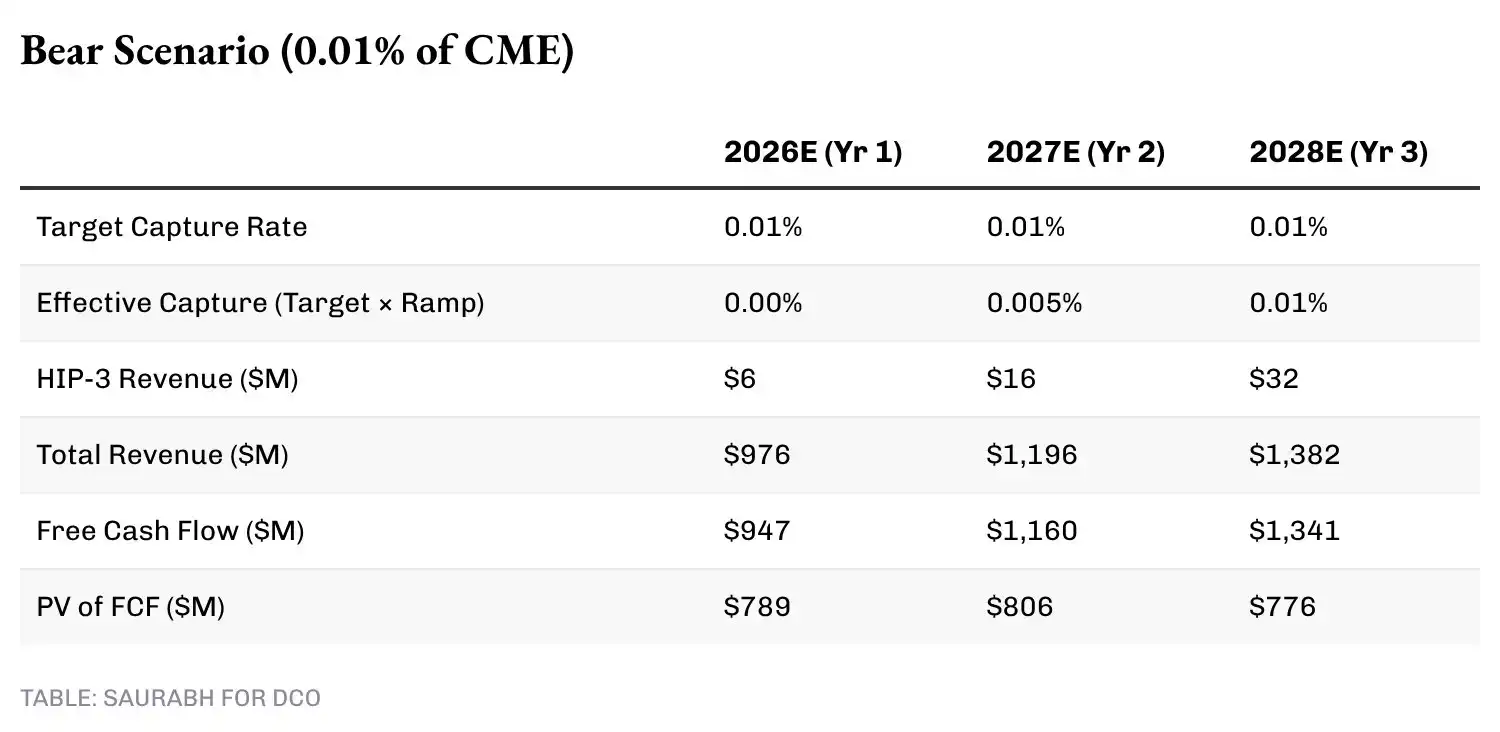
Corresponding to the forecasted Year 3 supply of 308 million (slightly increased from today's 300 million), the implied HYPE price is about $60—still a significant premium to the current $37, meaning that even with extremely limited HIP-3 progress, the basic exchange economics alone justify a higher price.
In the Base scenario (0.10% capture), Year 3 HIP-3 revenue reaches $322 million, total revenue is about $1.7 billion, corresponding to an enterprise value of approximately $22 billion, and an implied HYPE price of about $72.
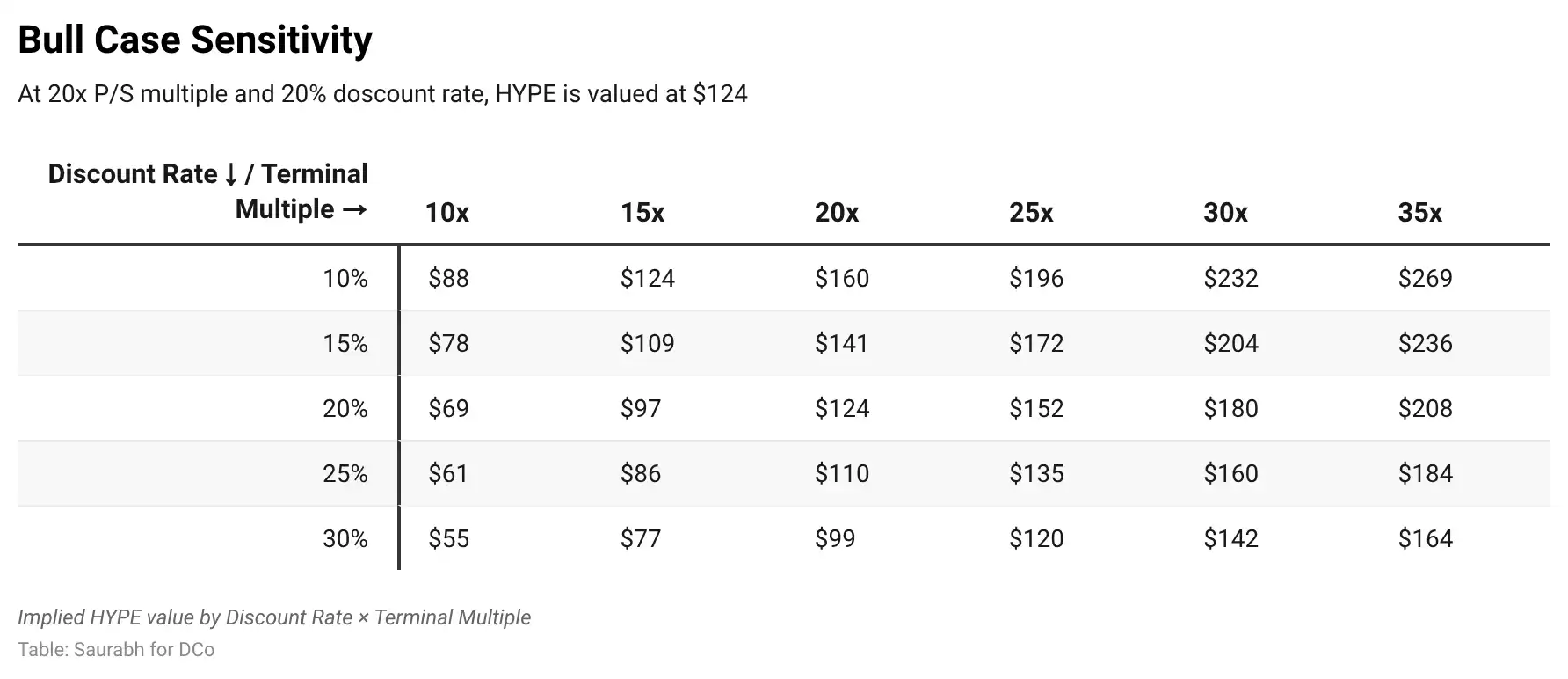
In the Bull scenario (0.50% capture), Year 3 HIP-3 fees reach $1.6 billion, total revenue is $3.0 billion, enterprise value is $38 billion, implied price is about $124, and fully diluted valuation is approximately $124 billion.
In the Extreme scenario (1.00% capture), Year 3 total revenue reaches $4.6 billion, enterprise value is $59 billion, HYPE approaches $190, and FDV is in the ~$190 billion range.
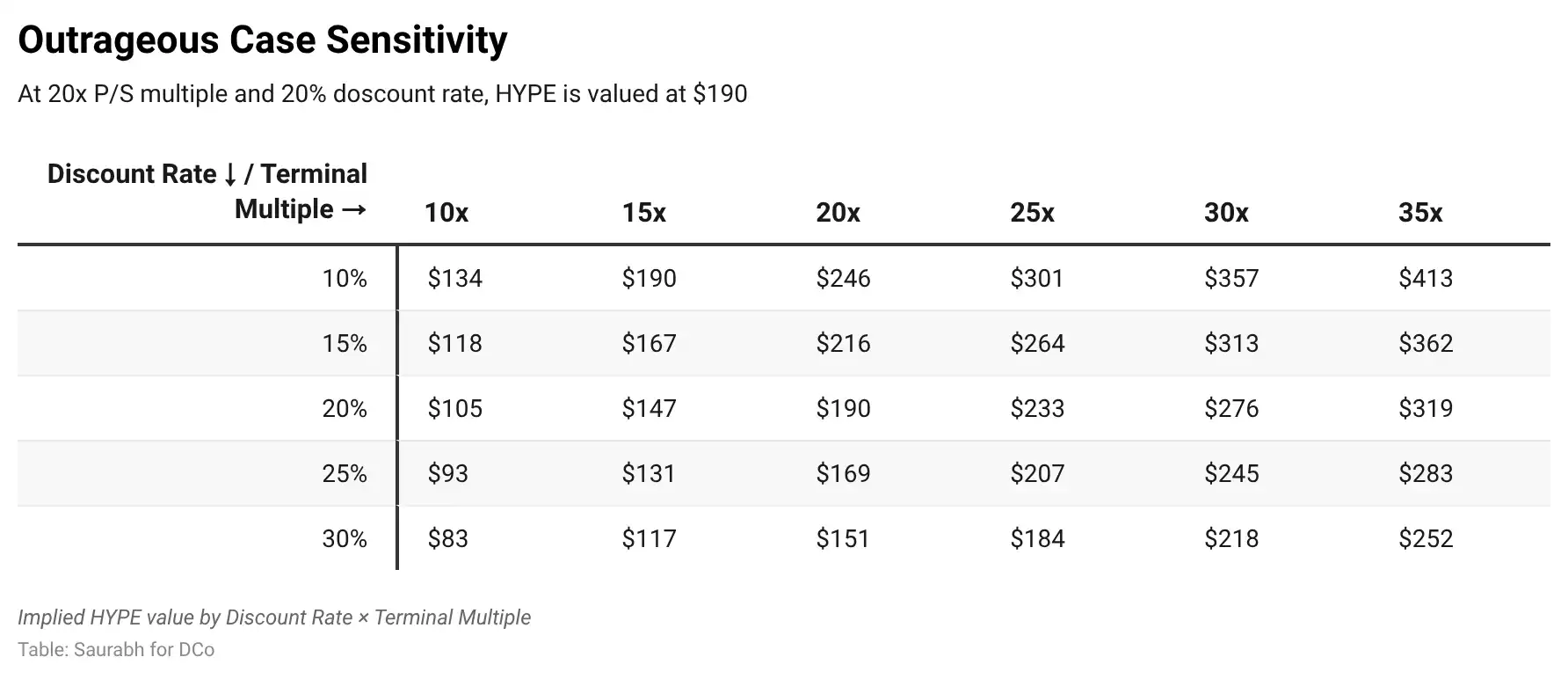
At this level, Hyperliquid's P/S ratio would be about 13x, still below CME's current 17.5x—indicating that the terminal multiple assumption is conservative for a business growing this fast.
At the default 20% discount rate and 20x multiple, the current price of $37 is far below the bear market target of $60, suggesting the market has not priced in any meaningful HIP-3 contribution and can be considered to undervalue the basic crypto exchange business itself. The base scenario target of $72 implies about 93% upside from current levels, requiring only a 0.10% capture of the addressable volume. Hayes' $150 target falls between our Bull ($124) and Extreme ($190) scenarios, requiring a 0.50% to 1.00% capture rate. Considering HIP-3 has only been live for five months and already accounts for ~10% of fee revenue, these three-year capture targets are ambitious but not unfounded.
Why Hyperliquid, Not Other Platforms
A natural skepticism of the HIP-3 thesis is: if traditional derivatives volume migrates on-chain, it could go anywhere. We believe this underestimates the inertia of liquidity concentration.
First, look at the competitive landscape. At the end of 2025, Lighter briefly surpassed Hyperliquid in 30-day perpetual volume while operating with zero fees and running one of the most aggressive incentive campaigns in the market. Then the $LIT airdrop landed on December 30; $250 million was withdrawn within 24 hours, and within three weeks Lighter's volume collapsed, compressing its market share to 8.1%. Despite Lighter still charging no fees, volume flowed back to Hyperliquid. The moat is in liquidity depth and execution quality, not price. The open interest to volume ratio confirms this: Hyperliquid at 0.64 (capital retention), Aster at 0.18, Lighter at 0.12.
Next, consider centralized alternatives. Coinbase is preparing to launch compliant perpetuals, but think about the users: if you want to trade stock index or commodity exposure, you already have Robinhood, Schwab, and Interactive Brokers. Coinbase launching SPX perpetuals doesn't solve a pain point for its users. Hyperliquid solves a different problem: 24/7 settlement, no market hour restrictions, cross-margin with crypto assets, permissionless listing. It is a complement to the existing system, not an inferior version of what traditional institutions already offer.
HYPE is Undervalued
Hyperliquid faces risks. HIP-3 needs stock index and commodity perpetuals to sustain volume after the novelty wears off. The 0DTE crowd needs a compelling reason to switch from options to perpetuals, not just lower fees. The matching engine must perform as well at $50 billion daily volume as it did at $8 billion. These are not existential risks. The core product works. The Iran war weekend proved the demand for 24/7 commodity price discovery is real.
US regulatory clarity on tokenized perpetuals is not a prerequisite for this thesis to work. Hyperliquid's volume is likely largely non-US. But US recognition or approval would only accelerate the category's growth. Every dollar migrating from traditional derivatives to permissionless infrastructure expands the total addressable market, and Hyperliquid, with its liquidity depth, execution quality, and market maker infrastructure, is positioned to capture a disproportionate share. HIP-4, introducing prediction markets and option-style contracts, opens yet another new dimension of volume.
HYPE currently trades at 10-13x P/S, while CME is at 25x, ICE at 23x, CBOE at 22x. Those are mature single-digit growth businesses. Hyperliquid did $960 million revenue in its first full year, is debt-free, has no personnel baggage, and has a buyback mechanism returning almost all fees to token holders. No traditional exchange does this. We expect HYPE to be re-rated as exchange equity, with a hybrid multiple reflecting dual crypto and traditional derivatives revenue. This implies the current $37 HYPE is below its potential fair value.
This article was inspired by published analysis from @FalconXGlobal.
Disclaimer: DCo holds a HYPE position. This article does not constitute investment advice.