TL;DR
· Against the backdrop of escalating geopolitical tensions, Bitcoin has shown resilience, rising approximately 7% since the sudden shock on February 28.
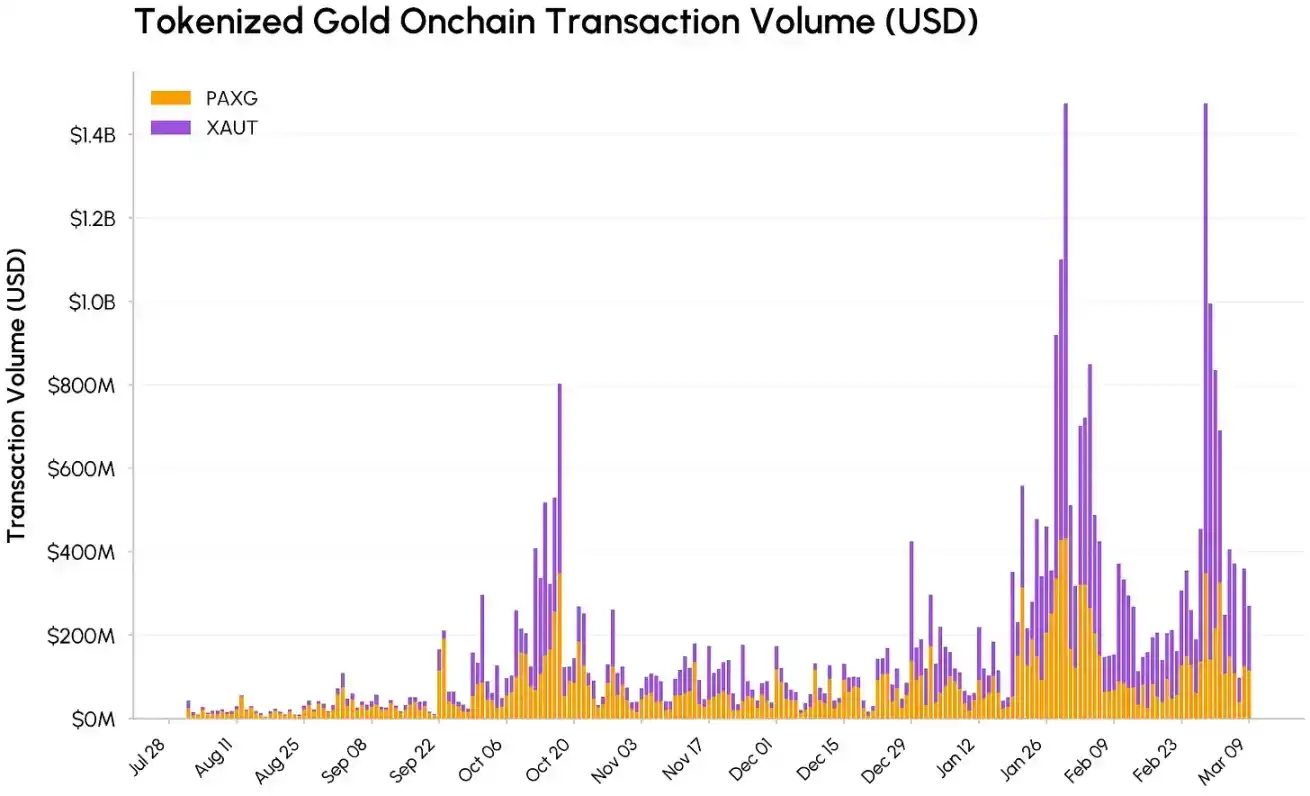
· Usage of tokenized gold products like PAXG and XAUT has increased significantly, with investors allocating gold exposure through on-chain and exchange channels.
· Hyperliquid's HIP-3 perpetual futures have become a 24/7 macro risk barometer, with precious metals, energy, and stock perpetuals accounting for a significant share of total trading volume and open interest.
· Crude oil futures on Hyperliquid underwent rapid price revaluation in response to supply shocks, demonstrating how on-chain channels can lead price discovery when traditional markets are closed.
On February 28, news of a joint U.S. and Israeli strike on Iran spread globally. That day happened to be a Saturday, with traditional stock and commodity markets all closed, leaving investors unable to react to this major geopolitical shock, a conflict that has now entered its second week.
However, from tokenized gold to oil perpetual futures, traditional macro assets and digital assets continued to trade in real-time on the blockchain. At a time when macro assets are in focus, on-chain markets are the only trading venues open 24/7.
In this article, we will analyze the on-chain activity of tokenized gold products like PAXG and XAUT, as well as commodity and stock perpetual futures contracts based on HIP-3 on Hyperliquid, to understand how the 24/7 market absorbs and reflects geopolitical pressure.
Market Reaction Under Geopolitical Pressure
Following the news of the US-Iran conflict, the price of gold quickly approached its historical high, while Bitcoin fell. This is a typical initial shock response: gold as a safe-haven asset, Bitcoin as a risk asset.
As the conflict evolved from a sudden surprise to a known risk, gold retreated slightly, while Bitcoin stabilized and rebounded, reclaiming $70,000 in a high-volatility environment, showing relative strength.
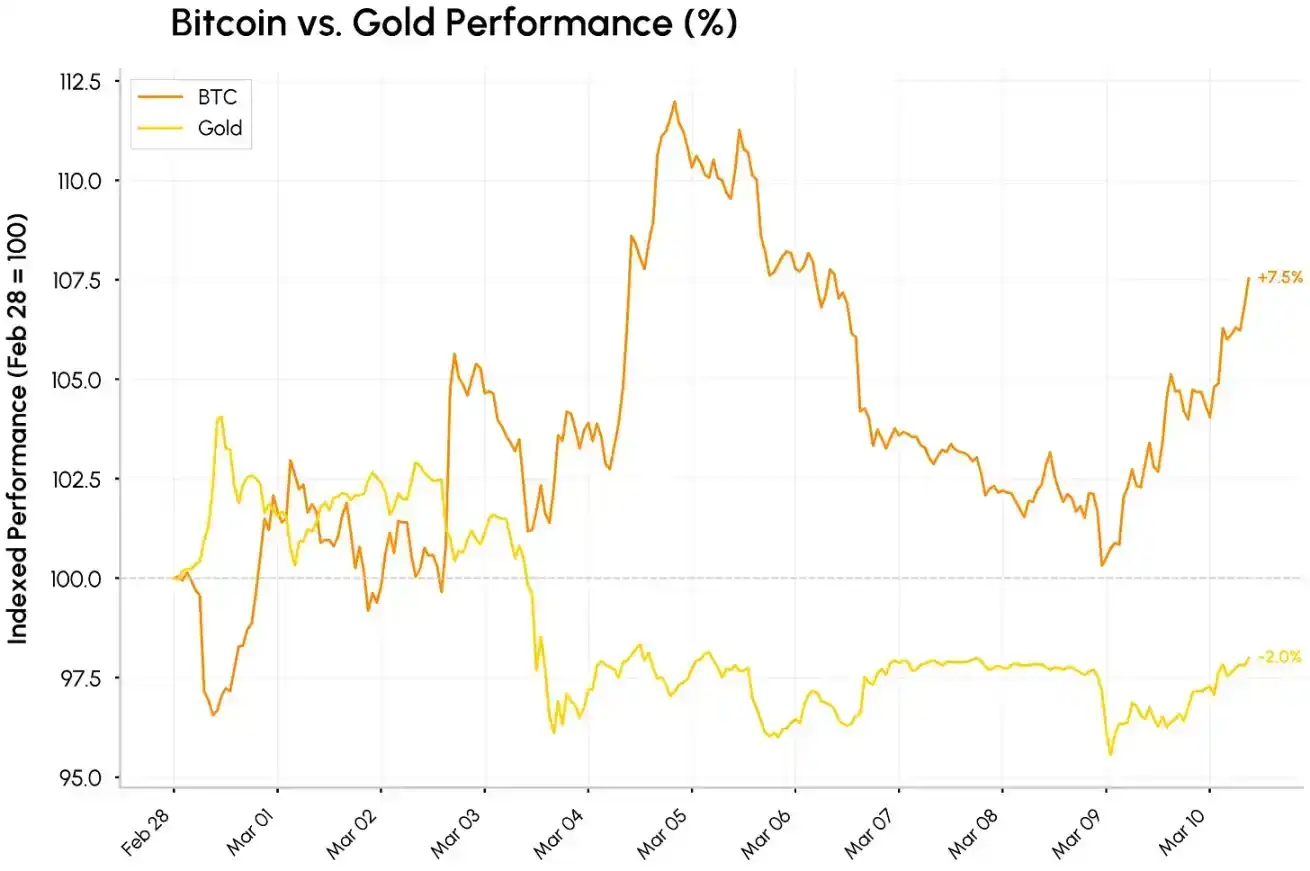
From March 2 to 4, Bitcoin spot ETFs continued to see net inflows, which also supported the Bitcoin price. This indicates that the market sentiment is not simply risk-off, but a more complex dynamic: Bitcoin's strength may reflect oversold recovery, technical positioning, and investors' willingness to hold high Beta assets even when geopolitical risks are high.
Tokenized Gold
While spot and futures gold markets were closed, PAXG and XAUT continued to trade throughout the weekend, becoming channels for investors to gain real-time gold exposure on-chain.
Paxos Gold (PAXG) and Tether Gold (XAUT) are tokenized gold products, with each token corresponding to one troy ounce of gold, issued and settled as ERC-20 tokens on Ethereum. Together they account for the majority share of the tokenized gold market ($6.1 billion), allowing investors to enter and exit gold exposure without waiting for traditional markets to open.
In 2026, geopolitical and macro risks have intensified: the arrest of Venezuelan President Maduro, tariff uncertainties, escalating Middle East conflicts, etc., have driven a significant surge in gold demand.
In early February, the total spot trading volume for tokenized gold on major centralized exchanges exceeded $1.8 billion; when tensions escalated between Iran, Israel, and the US, trading volume again surpassed $1 billion. On-chain trading volume on Ethereum also twice exceeded $1.4 billion, with Tether's XAUT accounting for the majority of the activity.
The number of active addresses and transactions grew simultaneously, indicating rising demand for on-chain gold, used for hedging, wealth preservation, DeFi collateral, and DEX liquidity trading pairs.
HIP-3 Perpetual Futures on Hyperliquid
Similarly, on-chain perpetual futures on Hyperliquid have also become a key trading channel. This is thanks to Hyperliquid's HIP-3 markets: the protocol allows anyone to permissionlessly create perpetual futures for any asset (by staking 500,000 HYPE) and provides reliable price feeds, including crude oil, gold, silver, stock indices, etc., operating 24/7/365 with no expiration dates.
The largest deployers include Trade [XYZ] (offering US stock and commodity perps) and Ventuals (offering pre-IPO equity and alternative assets, like Anthropic, SpaceX).
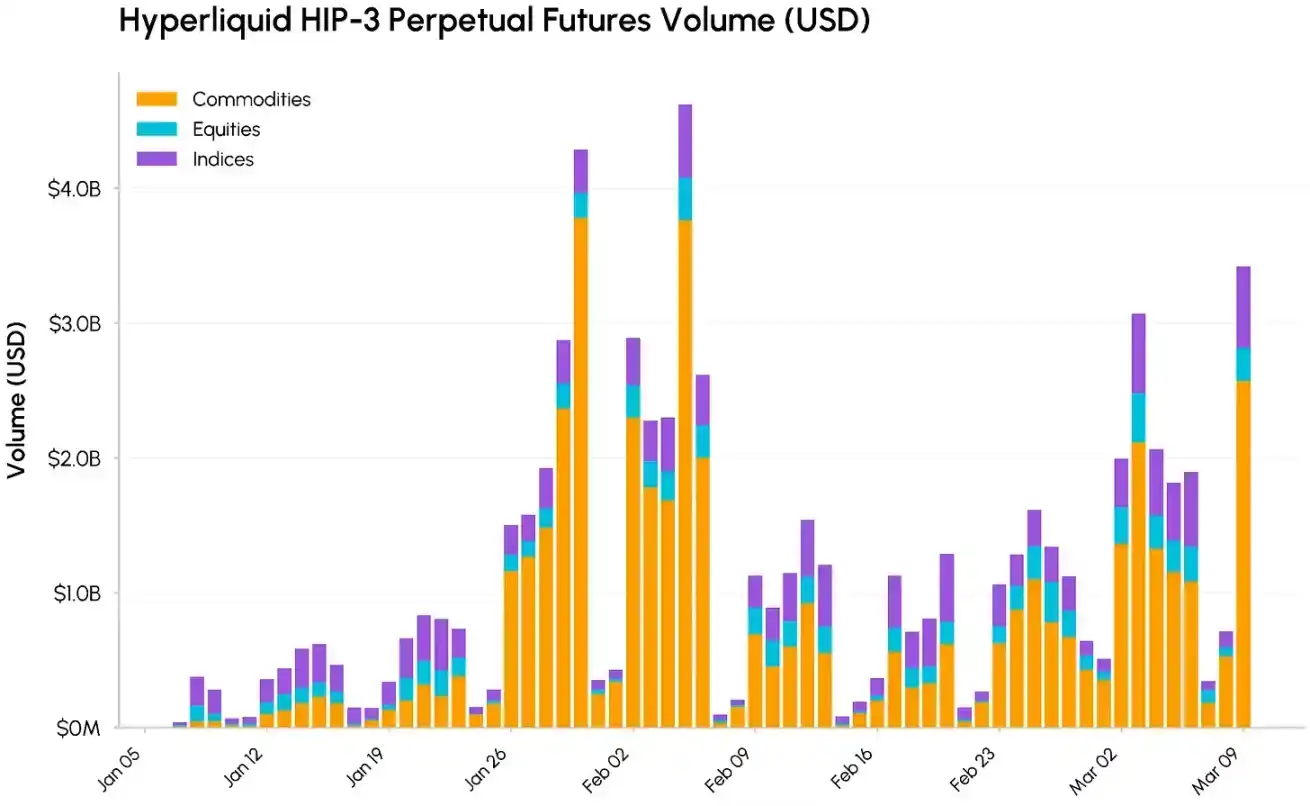
Total trading volume for HIP-3 markets has surpassed $95 billion, and open interest recently hit a new all-time high of $1.2 billion, accounting for about 20% of Hyperliquid's total open interest. Non-crypto assets like crude oil, gold, silver, and stocks hold a significant share. Precious metals and energy perpetuals recently contributed billions in daily trading volume, and their share of open interest continues to rise.
This growth marks the platform's evolution from a niche DeFi venue to a 24/7 trading platform for traditional markets, generating increasing protocol fee revenue from non-crypto markets.
The Commodity Boom
Within HIP-3, by cumulative trading volume in 2026, the largest markets are increasingly concentrated in commodities. Silver and gold perpetual contracts lead by a wide margin among all Real World Asset (RWA) contracts, followed by crude oil (CL-USDC). As Middle East conflict raised concerns about supply disruptions, the ranking of crude oil contracts has continued to climb.
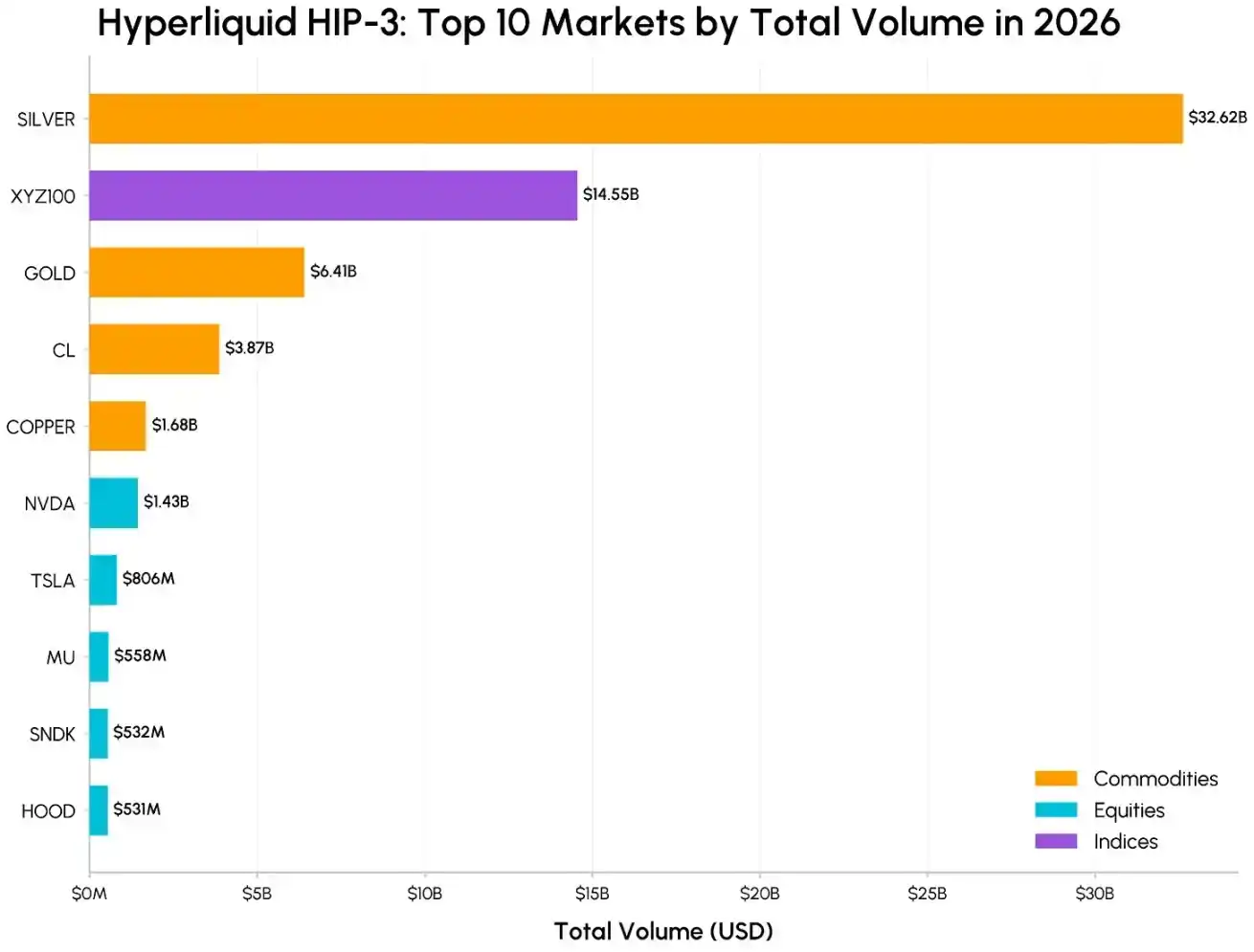
The average trade sizes in these markets remain small compared to institutional futures, but are considerable for a primarily retail-oriented on-chain platform:
· Gold Perp ~$2,700
· Silver Perp ~$3,400
· Crude Oil CL ~$2,800
· XYZ100 (Nasdaq 100) ~$1,100
How is Crude Oil Priced When Traditional Markets Are Closed?
Hyperliquid lists multiple perpetual futures linked to crude oil, including WTI Crude (CL), Brent Crude (BRENTOIL), US Oil Index (USOIL), etc., tracking different benchmark oil prices. These contracts trade 24/7 on an on-chain order book, using stablecoins (USDC/USDH) as margin and settlement assets.
Each crude variety is an independent market with its own liquidity, funding rate, and index source, so even though they all reference oil, slight price discrepancies can occur.
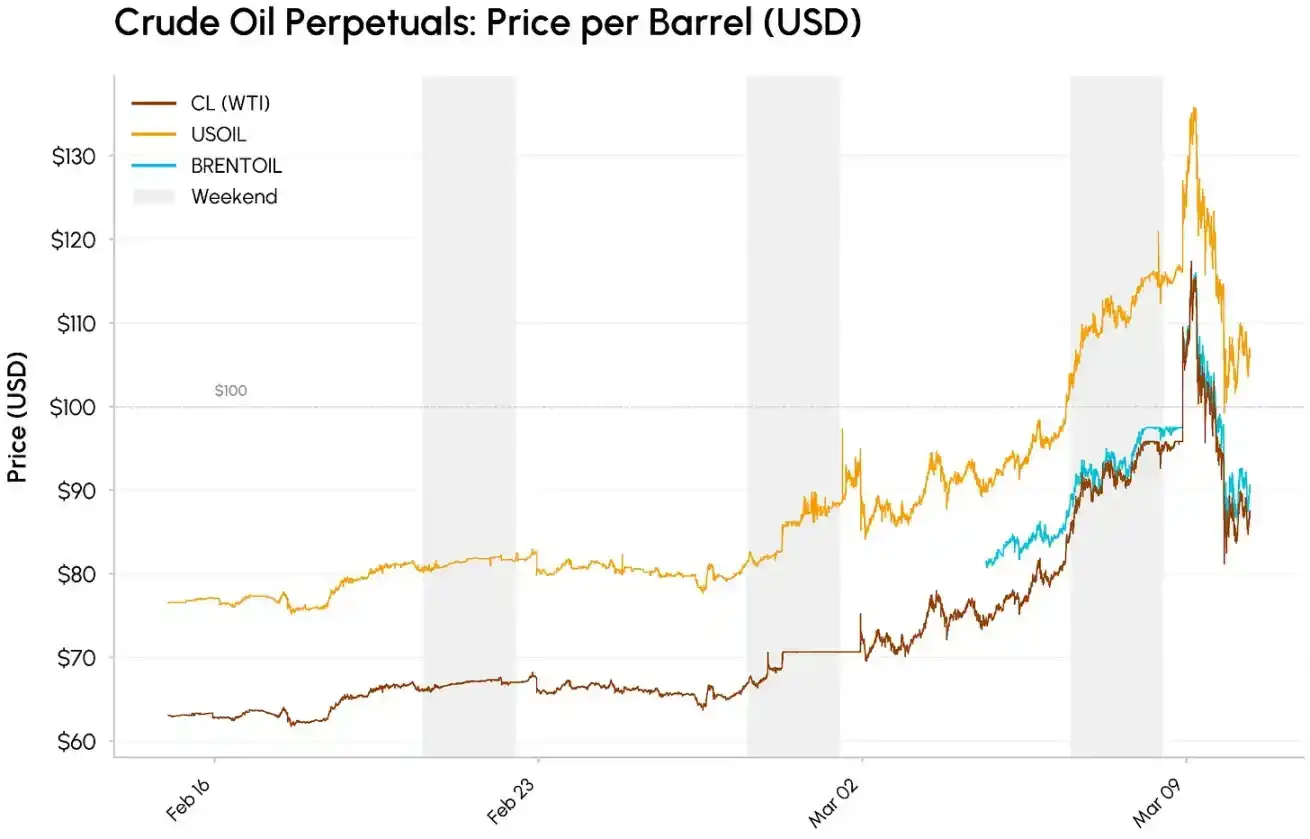
When the US-Israeli strike hit Iranian facilities, disrupting supply routes and raising concerns about the Strait of Hormuz, traditional futures were closed, while on-chain crude oil perpetual contracts revalued prices within minutes.
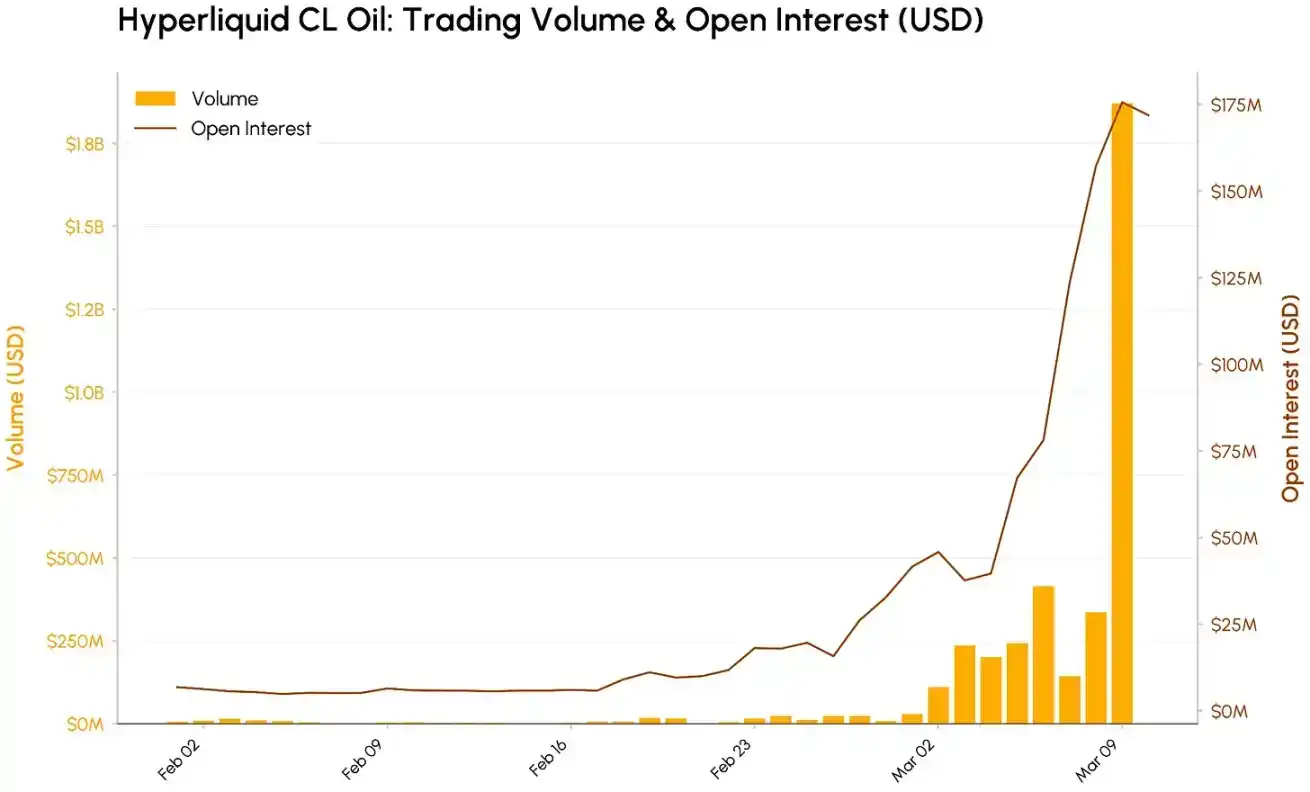
From the 1-minute candlestick chart, we can see that Hyperliquid's CL-USDC contract reflected oil prices in real-time over the weekend, spiking to $109 at one point, until traditional markets reopened. During the same period, open interest and trading volume in this market climbed to approximately $175 million and $1.9 billion respectively, making it the second-largest market by volume on the platform, surpassing Ethereum perpetuals. Traders used it to express their views on the supply shock.
Equity Exposure
Although funds primarily flowed into commodities during this period, HIP-3 also offers perpetual contracts linked to stock indices and individual stocks, allowing traders to go long or short on equities 24/7.
Trading volume in these markets remains lower than for crude oil and precious metals, but they complete HIP-3's positioning:
· Gold & Crude Oil for direct macro hedging
· Equity contracts for risk-on/risk-off allocation independent of crypto price movements
Including Kraken, several exchanges are also moving in a similar direction, offering tokenized stocks and perpetual futures based on these tokens to enable 24-hour equity exposure.
Conclusion
The recent geopolitical conflict provided a glimpse, albeit limited, into the practical application of 24/7 on-chain finance, and it was quite instructive. During periods when traditional markets were closed, crypto infrastructure supported trading in tokenized gold and perpetual futures, proving that blockchain, even in its early stages, relatively small in scale, and constrained by liquidity and regulatory uncertainty, can function as 24/7 market infrastructure.
Platforms like Hyperliquid and various tokenized asset products indicate that this infrastructure is expanding from pure crypto exposure to areas like precious metals, energy, and stocks, pointing towards a future where a core feature of global markets will be the on-chain, 24/7 trading of macro assets.