All about first-ever stablecoin insurance premium – USDC, PYUSD & what’s next!

ambcryptoPubblicato 2026-03-10Pubblicato ultima volta 2026-03-10

Introduzione

Major insurance broker Aon has executed what is believed to be the first stablecoin-based insurance premium payments, utilizing USDC on Ethereum and PYUSD on Solana. This move, completed within minutes instead of days, demonstrates real-world adoption of stablecoins for institutional transactions. It comes amid ongoing U.S. regulatory debates, including the failed CLARITY Act compromise and the framework provided by the GENIUS Act of 2025. The stablecoin market has surged to nearly $270 billion, with transaction volumes exceeding $1.7 trillion. While this signals a shift towards faster, scalable blockchain networks, global regulatory approaches vary significantly, as seen in South Korea's potential ban on dollar-based stablecoins. The success of stablecoins hinges on both technological adoption and cohesive global regulation.

While policymakers in Washington continue to debate the future of digital asset yields, major companies are already moving forward.

Insurance broker Aon recently executed what may be the first stablecoin-based insurance premium payments by a large global broker.

Instead of relying on traditional bank transfers that can take several days to settle, Aon used USDC on Ethereum and PYUSD on Solana, completing the payments within minutes.

Aon carried out the transactions in partnership with Coinbase and Paxos, following the framework introduced under the GENIUS Act of 2025.

Interesting timing...

It came just a week after the 1st of March deadline to reach a compromise on the CLARITY Act compromise failed, leaving banks and crypto firms divided on how stablecoin rewards should be regulated.

By moving insurance premium payments on-chain now, Aon is showing that real-world stablecoin adoption is already underway.

Even as lawmakers continue debating policy, stablecoins are beginning to change how financial transactions take place in industries like insurance.

Aon’s move is also part of a larger trend in the financial system. Stablecoins are growing quickly as a way to move money digitally.

Stablecoin market dynamics

According to the Cambridge Digital Money Dashboard, the total supply of stablecoins reached nearly $270 billion by the 10th of March.

This is a huge jump compared to 2019, when stablecoins were still small and not widely used.

While USDT still holds the largest share of the stablecoin market, USDC is also putting pressure on USDT’s market dominance.

This coincided with the monthly Stablecoin Transaction Volume by Stablecoin, crossing $1.7 trillion as per Visa on-chain analytics data.

Therefore, for institutions like Aon, the decision between stablecoins comes down to transaction speed and network scalability.

Execs weighing in

Remarking on the same, Tim Fletcher, CEO of Aon’s financial services group, said,

“By building real-world understanding of stablecoins early, we are strengthening our ability to advise on risk, governance and resilience as digital finance evolves.”

Echoing similar sentiments, Brett Tejpaul, Co-CEO of Coinbase Institutional, added,

“By settling insurance premiums using stablecoins, including USDC, we are helping Aon scale their financial operations with speed, transparency, and scalable institutional-grade infrastructure.”

Aon’s experiment is important because it shows how stablecoin payments can work across different blockchains.

The transactions using USDC on Ethereum [ETH] and PayPal USD (PYUSD) on Solana [SOL] highlight that institutions are becoming more comfortable using faster and scalable blockchain networks.

Did the GENIUS Act play a role here?

Needless to say, the GENIUS Act of 2025 has made this flexibility increasingly important by introducing clearer federal rules for using stablecoins in financial operations.

With greater regulatory clarity, large brokers like Aon can now link their advisory services directly with blockchain-based payment systems.

However, while Western institutions are beginning to adopt stablecoins, the situation looks very different in parts of Asia.

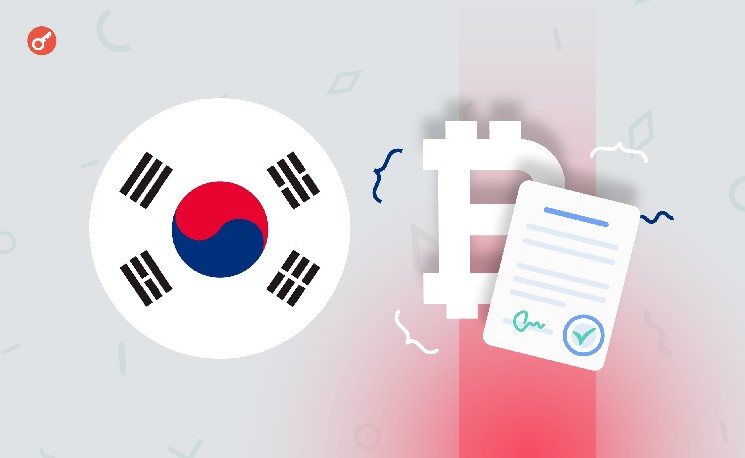
In South Korea, the Financial Services Commission (FSC) is reportedly considering a ban on U.S. dollar–based stablecoins such as USDT and USDC in its upcoming corporate trading rules.

Therefore, as stablecoins continue to grow in 2026, their success depends not only on technology but also on whether regulators globally can agree on how to define and regulate digital money.


Final Summary

  • Settling insurance premiums in minutes instead of days shows how blockchain can make financial transactions faster and more efficient.
  • Laws such as the GENIUS Act and debates around the CLARITY Act will determine how widely stablecoins are used in financial services.


Crypto di tendenza

Domande pertinenti

QWhat significant milestone did insurance broker Aon recently achieve with stablecoins?

AAon recently executed what may be the first stablecoin-based insurance premium payments by a large global broker, using USDC on Ethereum and PYUSD on Solana.

QWhich two stablecoins and their respective blockchains did Aon use for the transactions, and what was the key benefit?

AAon used USDC on the Ethereum blockchain and PYUSD on the Solana blockchain. The key benefit was that the payments were completed within minutes instead of the several days it can take for traditional bank transfers to settle.

QHow does the GENIUS Act of 2025 relate to Aon's use of stablecoins?

AThe GENIUS Act of 2025 introduced clearer federal rules for using stablecoins in financial operations, providing the regulatory framework that allowed Aon to link its advisory services directly with blockchain-based payment systems.

QAccording to the article, what is a major regulatory challenge facing stablecoins in a key Asian market?

AIn South Korea, the Financial Services Commission (FSC) is reportedly considering a ban on U.S. dollar–based stablecoins such as USDT and USDC in its upcoming corporate trading rules.

QWhat two factors do institutions like Aon consider when choosing between different stablecoins?

AFor institutions like Aon, the decision between stablecoins comes down to transaction speed and network scalability.

Letture associate

Soaring 20% Then Dropping 5%: When Will the Bottom of the Korean Stock Market Be?

"South Korean stocks face a turbulent period as the KOSPI index, after a 20% surge, fell 5% to 6257 points. The market is grappling with severe issues: over 500,000 leveraged retail accounts have been liquidated, and more than 24 trillion won has flowed from stocks into bank deposits for safety. This reflects a significant loss of market liquidity and shaken investor confidence. In response, Korean financial regulators are taking action. They have tripled the minimum保证金 (margin) requirement for single-stock leveraged ETF trades to 30 million won and are considering granting themselves "emergency intervention" powers. These could include capping leverage ratios and setting investment limits on these ETFs, seen by many as amplifying market volatility. Initial results show a 75% drop in these products' trading volume post-regulation. The market downturn has political repercussions, pushing President Yoon Suk-yeol's approval rating to a new low. Meanwhile, foreign investors made a record net purchase of 7.18 trillion won during a recent rebound, while domestic retail investors sold off massively. Morgan Stanley has upgraded South Korean stocks to "overweight," citing the ongoing "leverage unwinding" and potential for a 36% upside, with giants like Samsung Electronics and SK Hynix providing valuation support. However, analysts caution that the market's structure remains vulnerable to foreign capital flows, and the current low may not be the bottom."

marsbit8 min fa

Soaring 20% Then Dropping 5%: When Will the Bottom of the Korean Stock Market Be?

marsbit8 min fa

Goldman Sachs Stakes a Clear Position: This Is the Largest Capital Demand Cycle in Human History, and the Fed Is Just an Observer

Goldman Sachs argues that the world is entering the most capital-intensive investment cycle in history, driven by concurrent massive demands from AI infrastructure, reindustrialization, defense reinvestment, power grid rebuilding, supply chain realignment, and sovereign debt financing. This structural competition for capital is pushing its cost higher, fundamentally altering investment paradigms. Goldman's Mark Wilson states that the Federal Reserve is merely a "passenger, not the driver" in this shift, with rising yields rooted in these real economy demands rather than just monetary policy. While major indices appeared calm in July, underlying market movements were historic, featuring extreme stock dispersion and a severe momentum factor crash, leading to significant de-risking by fund managers. Wilson cautions against expecting a quick reversal in August, citing ongoing digestion of higher rates, disrupted risk models, and typically muted market performance ahead of US midterm elections. Corporate fundamentals remain robust with strong earnings, though growth rates are peaking in the US while accelerating in Europe. Notably, hyperscale cloud companies like Amazon and Microsoft are announcing staggering capital expenditure projections for 2027-2028, justified by explosive AI-related revenue growth and high returns. Amazon revealed its AI revenue run-rate exceeds $25 billion, growing triple-digits annually, and expressed confidence that AWS could become a trillion-dollar revenue business. The report concludes that a transitional period is underway, marked by a growing tension between aggressively investing private tech giants and increasingly capital-constrained sovereign governments. The AI super-cycle continues, with August likely being a consolidation phase.

marsbit14 min fa

Goldman Sachs Stakes a Clear Position: This Is the Largest Capital Demand Cycle in Human History, and the Fed Is Just an Observer

marsbit14 min fa

Outflow of Stablecoins from South Korea Continues for 18 Consecutive Months, Exceeding $360 Million in June

In June 2026, South Korea experienced a net outflow of stablecoins to overseas crypto exchanges, amounting to 560.3 billion won ($367 million). This represents approximately 78% of the net value of foreign stocks purchased by Korean investors in the same period. According to the Financial Supervisory Service (FSS), this marks the 18th consecutive month of net outflows, a trend ongoing since January 2025. The FSS reported that 2.76 trillion won ($1.8+ billion) in stablecoins were withdrawn from the country's five major exchanges to foreign platforms in June, while 2.2 trillion won ($1.4 billion) flowed back in. The second quarter of 2026 saw a significant net outflow of 1.69 trillion won (~$1.1 billion), surpassing net sales of foreign stocks in the same period. Analysts cite access to unavailable domestic financial instruments as a primary driver. Foreign platforms offer crypto derivatives, spot and futures products tied to major Korean stocks like Samsung and Hyundai, along with RWA tokenization, DeFi, staking, and leveraged products. Lawmaker Lee Jong-wook warned that the stablecoin outflows constitute capital flight, exposing investors to risks on unregulated foreign platforms. He called for accelerated regulatory reform and enhanced investor protection measures. The government is reportedly working on a digital assets law to foster the blockchain sector.

cryptonews.ru18 min fa

Outflow of Stablecoins from South Korea Continues for 18 Consecutive Months, Exceeding $360 Million in June

cryptonews.ru18 min fa

Trading

Spot

Articoli Popolari

Come comprare PYUSD

Benvenuto in HTX.com! Abbiamo reso l'acquisto di Paypal USD (PYUSD) semplice e conveniente. Segui la nostra guida passo passo per intraprendere il tuo viaggio nel mondo delle criptovalute.Step 1: Crea il tuo Account HTXUsa la tua email o numero di telefono per registrarti il tuo account gratuito su HTX. Vivi un'esperienza facile e sblocca tutte le funzionalità,Crea il mio accountStep 2: Vai in Acquista crypto e seleziona il tuo metodo di pagamentoCarta di credito/debito: utilizza la tua Visa o Mastercard per acquistare immediatamente Paypal USDPYUSD.Bilancio: Usa i fondi dal bilancio del tuo account HTX per fare trading senza problemi.Terze parti: abbiamo aggiunto metodi di pagamento molto utilizzati come Google Pay e Apple Pay per maggiore comodità.P2P: Fai trading direttamente con altri utenti HTX.Over-the-Counter (OTC): Offriamo servizi su misura e tassi di cambio competitivi per i trader.Step 3: Conserva Paypal USD (PYUSD)Dopo aver acquistato Paypal USD (PYUSD), conserva nel tuo account HTX. In alternativa, puoi inviare tramite trasferimento blockchain o scambiare per altre criptovalute.Step 4: Scambia Paypal USD (PYUSD)Scambia facilmente Paypal USD (PYUSD) nel mercato spot di HTX. Accedi al tuo account, seleziona la tua coppia di trading, esegui le tue operazioni e monitora in tempo reale. Offriamo un'esperienza user-friendly sia per chi ha appena iniziato che per i trader più esperti.

272 Totale visualizzazioniPubblicato il 2024.12.10Aggiornato il 2026.06.02

Come comprare PYUSD

Discussioni

Benvenuto nella Community HTX. Qui puoi rimanere informato sugli ultimi sviluppi della piattaforma e accedere ad approfondimenti esperti sul mercato. Le opinioni degli utenti sul prezzo di PYUSD PYUSD sono presentate come di seguito.

活动图片