AI's Deceptive Perfection: How Can Crypto Users Defend Against New Scams?

Foresight NewsPubblicato 2026-06-08Pubblicato ultima volta 2026-06-08

Introduzione

AI-generated content is making cryptocurrency scams more sophisticated and harder to detect. Previously, users could spot phishing attempts through poor grammar and spelling errors. Now, AI tools allow scammers to produce flawless, professional-looking emails, websites, and social media posts, often personalized using stolen user data. This shift poses unique risks in crypto, where transactions are irreversible and self-custody wallets can be compromised by a single malicious authorization. The article advises a shift from relying on visual cues to adopting rigorous verification as the primary defense. Key recommendations include: manually checking website URLs against official sources, scrutinizing wallet permissions before approving transactions, verifying smart contract addresses directly from project websites or block explorers, and being wary of unsolicited "urgent" messages from impersonated customer support. The core message is that in the AI era, a polished appearance is no guarantee of safety; every link, request, and interaction must be independently verified before any action is taken.


Author: Dilip Kumar Patairya

Compiled by: Chopper, Foresight News


In the past, cybersecurity education often taught simple methods to identify scams: watch for spelling errors, awkward phrasing, and abnormal formatting. In early phishing attacks, this approach was indeed effective. Scam emails were often hastily written, poorly translated, and full of obvious flaws. Over time, people began to view clumsy writing as a red flag.


The emergence of artificial intelligence has completely changed this landscape.


Using advanced AI tools, fraudsters can quickly produce fluent emails, realistic customer service chats, professional-looking websites, and highly deceptive social media content. Scammers no longer need strong writing skills to create convincing traps. In the crypto space, where a single click to authorize a transaction can lead to instant asset loss, this shift presents entirely new security risks.


Today, the threat no longer comes from information riddled with errors. Instead, well-written, seemingly legitimate scam content is more likely to lower people's guard.


As AI technology continues to evolve, the mindset of crypto users regarding security must also change. Rather than obsessing over whether information itself seems suspicious, it's better to verify each operational request through independent channels.
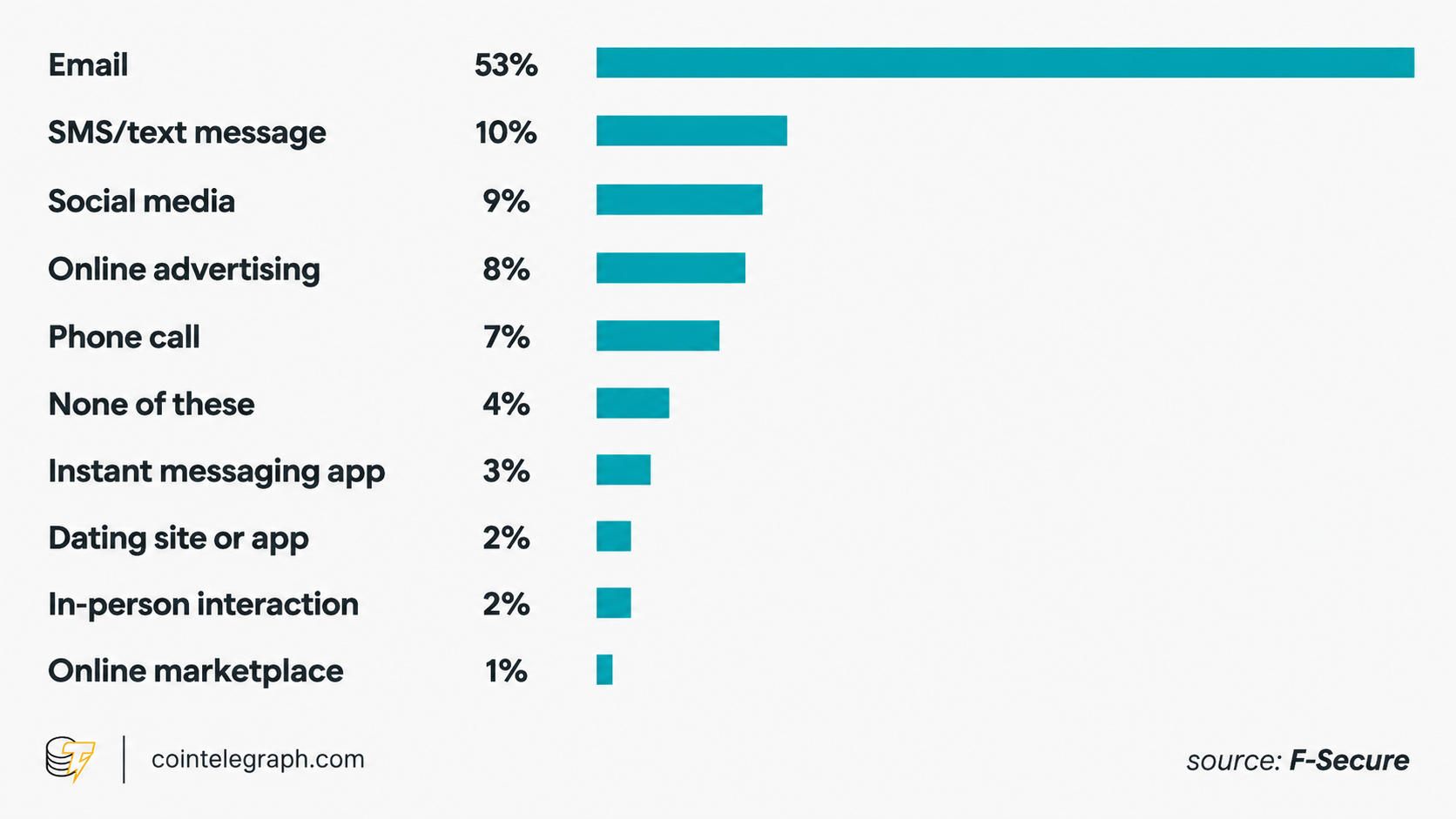

Common Scam Channels


Why Text Authentication Used to Work


Early phishing scams focused on casting a wide net, prioritizing quantity over content quality. Scammers sent out mass messages, hoping just a few people would bite.


Since most scam operations were based overseas or used simple translation tools, the sent information often contained grammatical errors, awkward expressions, and messy formatting. Users gradually learned to treat these details as warning signs.


Various cybersecurity awareness campaigns also popularized a series of basic identification techniques:


  • Check if the text contains spelling mistakes.
  • Avoid messages with poor grammar.
  • Be wary of strange or unusual phrasing.
  • Watch for abnormal formatting.


These small tricks could quickly filter out crudely made scam content.


However, this was never a foolproof defense method, serving only as a reminder. But over time, many people began to assume that professional, fluent writing equated to trustworthy content. The widespread adoption of AI has completely shattered this ingrained perception.


AI tools can generate well-formatted and eloquently phrased phishing content in bulk. Relying on spotting textual errors to prevent scams is becoming increasingly unreliable.


How AI Upgrades Scam Tactics


Large language models can generate natural, fluent text in multiple languages, allowing fraudsters to fabricate various types of false content:


  • Falsify customer service chat logs
  • Produce sophisticated phishing emails
  • Impersonate legitimate exchange notifications
  • Write highly enticing investment pitches
  • Post realistic Telegram group announcements
  • Create customized fake wallet recovery guides


Simultaneously, AI also assists in implementing precise targeted attacks. Scammers use data breach information and user data from platforms like LinkedIn, X, Discord, and Telegram to tailor scam narratives.


Information received by users might mention these details:


  • Tokens you recently purchased
  • Your exchange account information
  • The wallet service provider you are using
  • Decentralized Finance (DeFi) platforms you've interacted with
  • Customer service questions you've asked in public channels


Highly customized content significantly increases the credibility of scams.


Furthermore, AI image generation and voice cloning technologies make identity impersonation much easier. Forging executive videos, simulating customer service voices, and replicating brand visual elements can now be achieved effortlessly.


Unique Risks Faced by Crypto Users


The security logic of crypto assets is fundamentally different from traditional banking. In traditional finance, if you encounter a mistaken transfer or scam, you can usually contact your bank, payment institution, or risk control team to recover the funds. However, once a crypto transaction is confirmed on the blockchain, it is essentially irreversible.


Self-custody wallets also expand the attack surface. Scammers may not need to steal passwords or private keys; often, simply tricking users into authorizing malicious transactions or granting high-risk wallet permissions is enough to succeed.


This means that even if users never leak their seed phrase, well-crafted scam interfaces still pose a significant risk.


Common scam forms in the crypto space include:


  • Fake airdrop claim websites
  • Counterfeit NFT minting events
  • Impersonated exchange login pages
  • Inducement to connect to malicious wallets
  • Pop-ups prompting authorization of malicious tokens
  • Fake staking or mining interfaces
  • Impersonation of official customer support
  • High-imitation accounts registered on platforms like Telegram and Discord


With the help of AI, such scams can be produced in bulk while maintaining high fidelity in content and interface design.


Core Verification Methods Users Should Master


Facing increasingly realistic scams, crypto users can no longer rely on superficial judgment; verification must become the primary rule.


1) Scrutinize the Domain Name Carefully


A website's appearance can be copied, but the URL is difficult to replicate perfectly. Fraudulent domains commonly use these tricks: adding extra characters, inserting random hyphens, using look-alike symbols, tampering with subdomains, choosing obscure top-level domains.


Even if the page looks identical to a legitimate platform, do not trust it based solely on logos and visual effects. Recommended practices include:


  • Manually type the URLs of commonly used platforms.
  • For wallets and exchanges, prioritize using saved bookmarks.
  • Always verify the domain name before connecting a wallet.
  • Avoid clicking links in unfamiliar messages or promotional content.


A beautiful page does not equate to a legitimate website.


2) Prioritize Links from Official Channels


Fake announcements, impersonated influencer accounts, and scam accounts are common vectors for spreading scams. Fraudulent links primarily spread through: Telegram groups, Discord channels, X (formerly Twitter) comment sections, paid search ads, fake customer service messages.


Always confirm that links originate from the project's official website or officially announced channels. Cross-referencing information across multiple official accounts can further reduce risk.


Be highly vigilant when receiving unsolicited private messages claiming your account has an urgent issue.
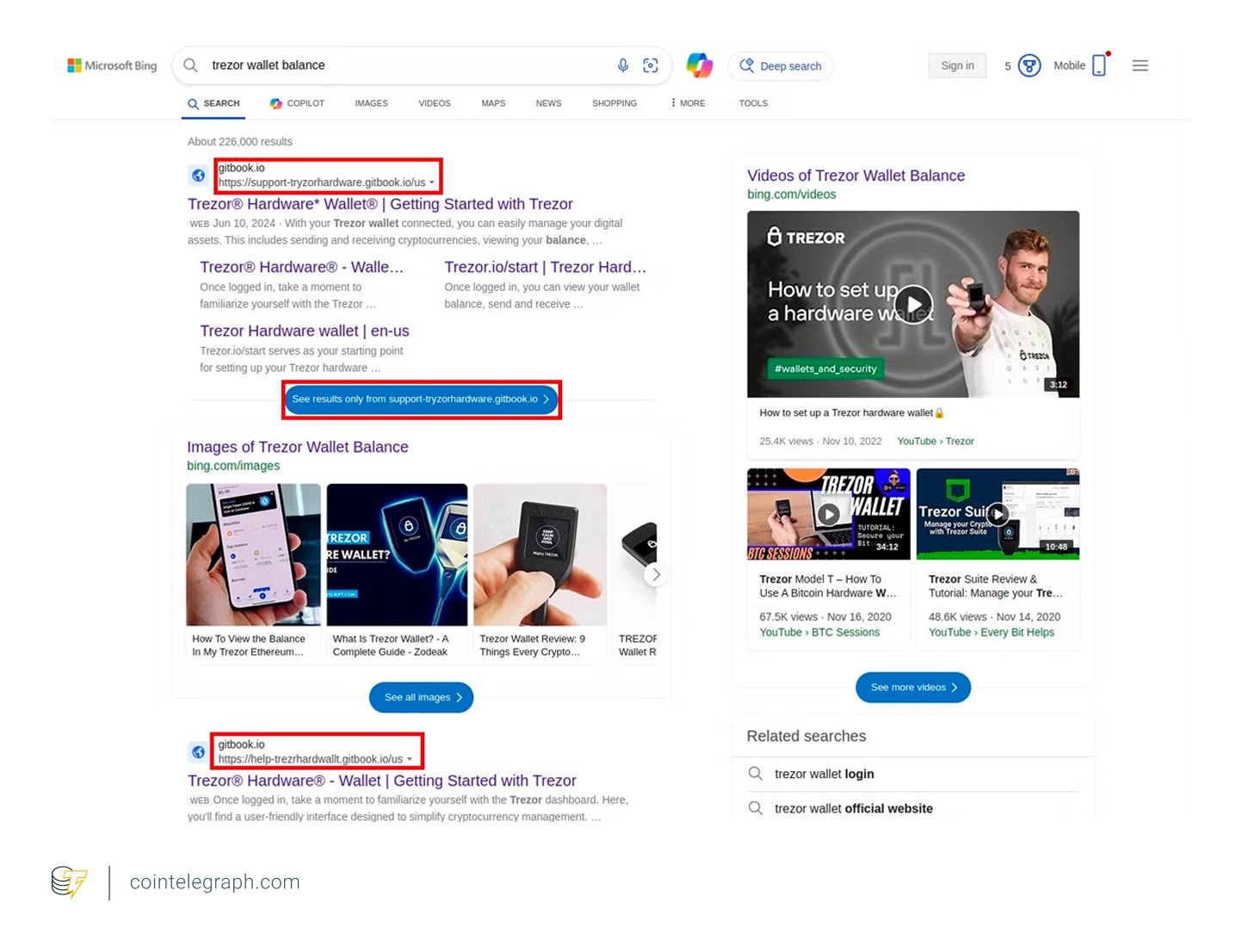

Malicious Trezor Balance Check Link Found in Bing Search


3) Understand Wallet Permissions Before Authorizing


Many users have the misconception that any request popping up from their wallet must be safe. Especially when faced with professional-looking websites, people often casually click confirm, overlooking permission details.


Wallet interactions involve various operation types: connecting a wallet, signing messages, authorizing token transfers, granting general permissions, triggering smart contract interactions, etc.


Among these, unlimited approvals carry the highest risk, allowing malicious contracts to transfer your assets arbitrarily in the future. Before approving, always verify that the token types, allowed transfer amounts, the requesting contract address, and the operation details match your expectations.


Even if a website looks flawless, it might trigger high-risk wallet operations.


4) Verify All Details Before Signing a Transaction


AI scams often exploit a sense of urgency to rush users into quick confirmation. Before signing any transaction, meticulously check the recipient address, token amount, selected blockchain, contract interaction information, fee structure, and approval scope.


If a page is labeled "Claim Reward" but requests unlimited token permissions, or labeled "Wallet Verification" but initiates an asset transfer, stop immediately and investigate the risk.


Once transaction details deviate from expectations, do not proceed.


Many wallet scams begin when users publicly complain about account issues on social media. Scammers monitor such posts and then impersonate customer support via private messages.


5) Verify Contract Addresses, Don't Blindly Trust Token Names


Scammers can copy token names and icons to create high-imitation fake tokens. A token that appears to be named "USDT" or "ETH Earnings" might be issued by a completely unrelated entity.


Verification method: Confirm the token's corresponding contract address through the project's official website, legitimate blockchain explorers, officially published materials, or mainstream exchange information. As AI scams become more convincing, relying solely on token names and icons to judge authenticity is increasingly risky.


6) Be Wary of Unsolicited Customer Service Private Messages


Impersonating official customer support remains a prevalent scam method in the crypto space. Scammers monitor users' help-seeking comments on social platforms, then send private messages posing as staff. They may induce users to perform wallet "verification," ask for seed phrases, send malicious links, recommend remote control tools, or guide users to complete dangerous authorizations.


Legitimate official customer support almost never initiates private contact first. Platforms will also never ask for private keys or seed phrases. If you encounter a problem, proactively contact support through official channels. Do not respond to unsolicited private messages.


7) Urgent Pressure is Often a Sign of a Scam


Even the most professionally crafted scams often use psychological pressure to create urgency. Common narratives include: "Your wallet has been hacked," "Tokens are about to expire, claim now," "Account will be suspended soon," "KYC failed," "Security update required immediately."


Such tactics can cloud judgment. The more someone pressures you to act immediately, the more you should slow down and verify carefully.


A simple rule for crypto security: Whenever you're asked to act on your wallet immediately, pause and calmly verify first.


Polished Appearance No Longer Equals Security


Today's scam websites can accurately replicate brand logos, color schemes, page layouts, and writing styles. AI can also help create high-fidelity FAQ pages, fake customer service replies, impersonated news articles, and complete new user onboarding flows and promotional copy.


Judging a platform's trustworthiness based on visual appeal alone is no longer possible. Attackers only need to catch a user off guard for a moment to execute irreversible asset theft.


The core of security protection remains verification: check the domain name, inspect the contract, review wallet requests, confirm support identities, clarify transaction purposes. A beautifully designed interface does not equate to trustworthiness.


Crypto Security Has Evolved into a Battle of Verification


AI hasn't created entirely new scam models; it has simply significantly upgraded the presentation and disguise of traditional scam techniques. In the past, people relied on surface characteristics to identify risks but neglected the act of verification itself. This mindset can lead to massive losses in the crypto industry.


Behind a perfectly phrased paragraph, a malicious link might lurk. Within a seemingly professional customer service reply, instructions to authorize asset transfers could be hidden. A convincingly realistic website might also request high-risk permissions.


The core takeaway is simple: fluent copy, exquisite interfaces, and familiar brand imagery cannot serve as security credentials. Faced with every link, every wallet pop-up, every customer service message: verify first, then act.


Crypto di tendenza

Domande pertinenti

QHow has the use of AI by scammers fundamentally changed the nature of phishing attacks in the cryptocurrency space?

AAI has shifted phishing attacks from relying on easily identifiable signs like poor grammar, spelling errors, and awkward phrasing to generating highly polished, fluent, and contextually convincing content. This makes scams appear legitimate and professional, breaking users' long-held association of sloppy text with danger.

QWhat are some of the unique risks cryptocurrency users face compared to traditional banking users, especially in the context of AI-enhanced scams?

ACryptocurrency transactions are irreversible once confirmed on the blockchain, unlike traditional banking where chargebacks are often possible. AI can create convincing fake websites and interfaces that trick users into signing malicious transactions or granting unlimited token approvals, leading to instant asset loss even if seed phrases are never shared.

QAccording to the article, what is the most critical principle for crypto users to adopt for security in the age of AI scams?

AThe core principle is 'verification before action.' Users must move beyond judging content by its polished appearance and instead rigorously verify every request through independent channels. This includes checking domains, contract addresses, wallet permissions, and the identity of support personnel.

QWhat are three specific verification methods the article recommends for crypto users to protect themselves?

A1) Carefully verify website URLs and domain names, avoiding links from unknown sources. 2) Always check the details of any wallet transaction or signature request before approving, especially the token permissions and recipient addresses. 3) Verify token authenticity by checking the official contract address, not just the name or logo, and be wary of unsolicited private messages from 'support staff.'

QWhy is a sense of urgency often a red flag in potential crypto scams, even if the communication looks professional?

AScammers use urgency (e.g., claims of a hacked wallet, expiring tokens, or account suspension) to create psychological pressure and short-circuit a user's normal verification process. The article advises that the more a message pressures you to act immediately, the more you should slow down and perform thorough checks.

Letture associate

Misjudged A-Shares: Resilience, Expectations, and Confidence

China's A-share market recently faced selling pressure, especially in tech sectors, initially triggered by a global tech sell-off that began in South Korea. However, the article argues this is a case of "mistaken injury" and highlights the market's underlying resilience. This resilience stems from three main pillars: **1) Tech Sector Fundamentals:** Unlike Korea's market dominated by a few memory chip stocks, China's tech sector is diversified across computing, communications, electronics, and semiconductors, supported by dual narratives of global AI supply chains and domestic substitution. Core areas like optical modules and fiber optics continue to show strong earnings growth. **2) "National Team" Support:** State-backed institutions and large corporations have made significant market purchases and announced buybacks, providing liquidity and signaling confidence. This is seen as a stabilizing policy signal, often associated with market bottoms. **3) Broader Market Pillars:** Other major sectors are showing endogenous recovery momentum. Consumer stocks benefit from stabilizing CPI and signs of sector recovery (e.g., liquor price hikes). Cyclical sectors like aluminum have high earnings, potential price increases due to tight supply, and low valuations. The financial sector offers stable dividends and low valuations. The conclusion is that the sell-off was driven by external contagion, not a collapse in fundamentals. With strong policy support and recovering momentum across key sectors, the A-share market possesses the toughness to regain stability.

marsbit7 min fa

Misjudged A-Shares: Resilience, Expectations, and Confidence

marsbit7 min fa

The Clarity Act's Journey Through Congress: The Thorny Path of Bipartisan Compromise in the U.S.

The U.S. Congress is struggling to advance the crypto market structure bill known as the Clarity Act, with bipartisan compromise proving difficult. Key hurdles include unresolved disputes over "yield" products and, more critically, the inclusion of strong ethics provisions for elected officials—a non-negotiable demand for many Democrats. While a compromise on yield was reached in May, securing only limited Democratic support in committee, the separate Senate Agriculture Committee version later passed with no Democratic votes due to the ethics impasse. As Republicans push for a full Senate vote in July, demands for ethics rules have expanded, and other contentious issues like developer protections and concerns from law enforcement and large banks further complicate negotiations. Despite consensus on the need for legislation, the path forward is unclear. Recent discussions between senators and White House officials aim to find acceptable ethics language. Some lawmakers question whether a compromise text can garner enough bipartisan support, with one Democrat stating the current proposal lacks the strong ethics provisions required for their vote. Potential short-term goals for the crypto community include symbolic Senate action before the August recess, a longer-term aim for passage by 2026, or establishing a detailed framework that addresses ethics and other compromises. The process remains arduous, relying on the traditional, vote-by-vote effort to build bipartisan support.

marsbit26 min fa

The Clarity Act's Journey Through Congress: The Thorny Path of Bipartisan Compromise in the U.S.

marsbit26 min fa

Are Kalshi and Polymarket Founders at Odds? This Business Rivalry Is More Brutal Than You Think

"The Rivalry Between Kalshi and Polymarket Founders Turns Bitter and Litigious" The intense feud between Tarek Mansour, CEO of Kalshi, and Shayne Coplan, founder of Polymarket, has escalated far beyond typical business competition into personal animosity and regulatory battles. Both lead billion-dollar prediction market platforms, but their approaches differ sharply. Kalshi positions itself as the compliant operator, securing U.S. regulatory approval before launching. In contrast, Polymarket initially operated offshore, allowing U.S. users to access its platform via VPN, which drew regulatory scrutiny. The conflict reached a peak in November 2024 when FBI agents raided Coplan's New York apartment. While Coplan publicly blamed political motives, his team privately suspected Kalshi was involved. According to sources, Kalshi's lawyers had previously reported Polymarket's operations to federal prosecutors, highlighting its accessibility to U.S. users despite a ban. This incident fueled mutual accusations and underhanded tactics, including social media smear campaigns and attempts to sabotage each other's major business deals. Their rivalry also played out in Washington, influencing regulatory debates. Kalshi actively lobbied against Polymarket's practices, framing them as illegal and unethical. Polymarket, after facing a CFTC fine and investigation, later acquired a licensed U.S. firm to launch a domestic app, regaining a foothold. Despite the hostility, both companies have seen massive growth, with combined trading volumes soaring. However, increased regulatory scrutiny, particularly around insider trading on Polymarket's platform, continues to pose challenges. The founders' deep-seated mutual disdain ensures their battle for market dominance remains as much a personal vendetta as a commercial one.

marsbit35 min fa

Are Kalshi and Polymarket Founders at Odds? This Business Rivalry Is More Brutal Than You Think

marsbit35 min fa

Trading

Spot

Articoli Popolari

Cosa è $S$

Comprendere SPERO: Una Panoramica Completa Introduzione a SPERO Mentre il panorama dell'innovazione continua a evolversi, l'emergere delle tecnologie web3 e dei progetti di criptovaluta gioca un ruolo fondamentale nel plasmare il futuro digitale. Un progetto che ha attirato l'attenzione in questo campo dinamico è SPERO, denotato come SPERO,$$s$. Questo articolo mira a raccogliere e presentare informazioni dettagliate su SPERO, per aiutare gli appassionati e gli investitori a comprendere le sue basi, obiettivi e innovazioni nei domini web3 e crypto. Che cos'è SPERO,$$s$? SPERO,$$s$ è un progetto unico all'interno dello spazio crypto che cerca di sfruttare i principi della decentralizzazione e della tecnologia blockchain per creare un ecosistema che promuove l'impegno, l'utilità e l'inclusione finanziaria. Il progetto è progettato per facilitare interazioni peer-to-peer in modi nuovi, fornendo agli utenti soluzioni e servizi finanziari innovativi. Al suo interno, SPERO,$$s$ mira a responsabilizzare gli individui fornendo strumenti e piattaforme che migliorano l'esperienza dell'utente nello spazio delle criptovalute. Questo include la possibilità di metodi di transazione più flessibili, la promozione di iniziative guidate dalla comunità e la creazione di percorsi per opportunità finanziarie attraverso applicazioni decentralizzate (dApps). La visione sottostante di SPERO,$$s$ ruota attorno all'inclusività, cercando di colmare le lacune all'interno della finanza tradizionale mentre sfrutta i vantaggi della tecnologia blockchain. Chi è il Creatore di SPERO,$$s$? L'identità del creatore di SPERO,$$s$ rimane piuttosto oscura, poiché ci sono risorse pubblicamente disponibili limitate che forniscono informazioni dettagliate sul suo fondatore o fondatori. Questa mancanza di trasparenza può derivare dall'impegno del progetto per la decentralizzazione—un ethos che molti progetti web3 condividono, dando priorità ai contributi collettivi rispetto al riconoscimento individuale. Centrando le discussioni attorno alla comunità e ai suoi obiettivi collettivi, SPERO,$$s$ incarna l'essenza dell'empowerment senza mettere in evidenza individui specifici. Pertanto, comprendere l'etica e la missione di SPERO rimane più importante che identificare un creatore singolo. Chi sono gli Investitori di SPERO,$$s$? SPERO,$$s$ è supportato da una varietà di investitori che vanno dai capitalisti di rischio agli investitori angelici dedicati a promuovere l'innovazione nel settore crypto. Il focus di questi investitori generalmente si allinea con la missione di SPERO—dando priorità a progetti che promettono avanzamenti tecnologici sociali, inclusività finanziaria e governance decentralizzata. Queste fondazioni di investitori sono tipicamente interessate a progetti che non solo offrono prodotti innovativi, ma contribuiscono anche positivamente alla comunità blockchain e ai suoi ecosistemi. Il supporto di questi investitori rafforza SPERO,$$s$ come un concorrente degno di nota nel dominio in rapida evoluzione dei progetti crypto. Come Funziona SPERO,$$s$? SPERO,$$s$ impiega un framework multifunzionale che lo distingue dai progetti di criptovaluta convenzionali. Ecco alcune delle caratteristiche chiave che sottolineano la sua unicità e innovazione: Governance Decentralizzata: SPERO,$$s$ integra modelli di governance decentralizzati, responsabilizzando gli utenti a partecipare attivamente ai processi decisionali riguardanti il futuro del progetto. Questo approccio favorisce un senso di proprietà e responsabilità tra i membri della comunità. Utilità del Token: SPERO,$$s$ utilizza il proprio token di criptovaluta, progettato per servire varie funzioni all'interno dell'ecosistema. Questi token abilitano transazioni, premi e la facilitazione dei servizi offerti sulla piattaforma, migliorando l'impegno e l'utilità complessivi. Architettura Stratificata: L'architettura tecnica di SPERO,$$s$ supporta la modularità e la scalabilità, consentendo un'integrazione fluida di funzionalità e applicazioni aggiuntive man mano che il progetto evolve. Questa adattabilità è fondamentale per mantenere la rilevanza nel panorama crypto in continua evoluzione. Coinvolgimento della Comunità: Il progetto enfatizza iniziative guidate dalla comunità, impiegando meccanismi che incentivano la collaborazione e il feedback. Nutrendo una comunità forte, SPERO,$$s$ può affrontare meglio le esigenze degli utenti e adattarsi alle tendenze di mercato. Focus sull'Inclusione: Offrendo basse commissioni di transazione e interfacce user-friendly, SPERO,$$s$ mira ad attrarre una base utenti diversificata, inclusi individui che potrebbero non aver precedentemente interagito nello spazio crypto. Questo impegno per l'inclusione si allinea con la sua missione generale di empowerment attraverso l'accessibilità. Cronologia di SPERO,$$s$ Comprendere la storia di un progetto fornisce preziose intuizioni sulla sua traiettoria di sviluppo e sui traguardi. Di seguito è riportata una cronologia suggerita che mappa eventi significativi nell'evoluzione di SPERO,$$s$: Fase di Concettualizzazione e Ideazione: Le idee iniziali che formano la base di SPERO,$$s$ sono state concepite, allineandosi strettamente con i principi di decentralizzazione e focus sulla comunità all'interno dell'industria blockchain. Lancio del Whitepaper del Progetto: Dopo la fase concettuale, è stato rilasciato un whitepaper completo che dettaglia la visione, gli obiettivi e l'infrastruttura tecnologica di SPERO,$$s$ per suscitare interesse e feedback dalla comunità. Costruzione della Comunità e Prime Interazioni: Sono stati effettuati sforzi attivi di outreach per costruire una comunità di early adopters e potenziali investitori, facilitando discussioni attorno agli obiettivi del progetto e ottenendo supporto. Evento di Generazione del Token: SPERO,$$s$ ha condotto un evento di generazione del token (TGE) per distribuire i propri token nativi ai primi sostenitori e stabilire una liquidità iniziale all'interno dell'ecosistema. Lancio della Prima dApp: La prima applicazione decentralizzata (dApp) associata a SPERO,$$s$ è stata attivata, consentendo agli utenti di interagire con le funzionalità principali della piattaforma. Sviluppo Continuo e Partnership: Aggiornamenti e miglioramenti continui alle offerte del progetto, inclusi partnership strategiche con altri attori nello spazio blockchain, hanno plasmato SPERO,$$s$ in un concorrente competitivo e in evoluzione nel mercato crypto. Conclusione SPERO,$$s$ rappresenta una testimonianza del potenziale del web3 e delle criptovalute di rivoluzionare i sistemi finanziari e responsabilizzare gli individui. Con un impegno per la governance decentralizzata, il coinvolgimento della comunità e funzionalità progettate in modo innovativo, apre la strada verso un panorama finanziario più inclusivo. Come per qualsiasi investimento nello spazio crypto in rapida evoluzione, si incoraggiano potenziali investitori e utenti a ricercare approfonditamente e a impegnarsi in modo riflessivo con gli sviluppi in corso all'interno di SPERO,$$s$. Il progetto mostra lo spirito innovativo dell'industria crypto, invitando a ulteriori esplorazioni delle sue innumerevoli possibilità. Mentre il percorso di SPERO,$$s$ è ancora in fase di sviluppo, i suoi principi fondamentali potrebbero effettivamente influenzare il futuro di come interagiamo con la tecnologia, la finanza e tra di noi in ecosistemi digitali interconnessi.

130 Totale visualizzazioniPubblicato il 2024.12.17Aggiornato il 2024.12.17

Cosa è $S$

Cosa è AGENT S

Agent S: Il Futuro dell'Interazione Autonoma in Web3 Introduzione Nel panorama in continua evoluzione di Web3 e criptovalute, le innovazioni stanno costantemente ridefinendo il modo in cui gli individui interagiscono con le piattaforme digitali. Uno di questi progetti pionieristici, Agent S, promette di rivoluzionare l'interazione uomo-computer attraverso il suo framework agentico aperto. Aprendo la strada a interazioni autonome, Agent S mira a semplificare compiti complessi, offrendo applicazioni trasformative nell'intelligenza artificiale (AI). Questa esplorazione dettagliata approfondirà le complessità del progetto, le sue caratteristiche uniche e le implicazioni per il dominio delle criptovalute. Cos'è Agent S? Agent S si presenta come un innovativo framework agentico aperto, progettato specificamente per affrontare tre sfide fondamentali nell'automazione dei compiti informatici: Acquisizione di Conoscenze Specifiche del Dominio: Il framework apprende in modo intelligente da varie fonti di conoscenza esterne ed esperienze interne. Questo approccio duale gli consente di costruire un ricco repository di conoscenze specifiche del dominio, migliorando le sue prestazioni nell'esecuzione dei compiti. Pianificazione su Lungo Orizzonte di Compiti: Agent S impiega una pianificazione gerarchica potenziata dall'esperienza, un approccio strategico che facilita la suddivisione e l'esecuzione efficiente di compiti complessi. Questa caratteristica migliora significativamente la sua capacità di gestire più sottocompiti in modo efficiente ed efficace. Gestione di Interfacce Dinamiche e Non Uniformi: Il progetto introduce l'Interfaccia Agente-Computer (ACI), una soluzione innovativa che migliora l'interazione tra agenti e utenti. Utilizzando Modelli Linguistici Multimodali di Grandi Dimensioni (MLLM), Agent S può navigare e manipolare senza sforzo diverse interfacce grafiche utente. Attraverso queste caratteristiche pionieristiche, Agent S fornisce un framework robusto che affronta le complessità coinvolte nell'automazione dell'interazione umana con le macchine, preparando il terreno per innumerevoli applicazioni nell'AI e oltre. Chi è il Creatore di Agent S? Sebbene il concetto di Agent S sia fondamentalmente innovativo, informazioni specifiche sul suo creatore rimangono elusive. Il creatore è attualmente sconosciuto, il che evidenzia sia la fase embrionale del progetto sia la scelta strategica di mantenere i membri fondatori sotto anonimato. Indipendentemente dall'anonimato, l'attenzione rimane sulle capacità e sul potenziale del framework. Chi sono gli Investitori di Agent S? Poiché Agent S è relativamente nuovo nell'ecosistema crittografico, informazioni dettagliate riguardanti i suoi investitori e sostenitori finanziari non sono documentate esplicitamente. La mancanza di approfondimenti pubblicamente disponibili sulle fondazioni di investimento o sulle organizzazioni che supportano il progetto solleva interrogativi sulla sua struttura di finanziamento e sulla roadmap di sviluppo. Comprendere il supporto è cruciale per valutare la sostenibilità del progetto e il suo potenziale impatto sul mercato. Come Funziona Agent S? Al centro di Agent S si trova una tecnologia all'avanguardia che gli consente di funzionare efficacemente in contesti diversi. Il suo modello operativo è costruito attorno a diverse caratteristiche chiave: Interazione Uomo-Computer Simile a Quella Umana: Il framework offre una pianificazione AI avanzata, cercando di rendere le interazioni con i computer più intuitive. Mimando il comportamento umano nell'esecuzione dei compiti, promette di elevare le esperienze degli utenti. Memoria Narrativa: Utilizzata per sfruttare esperienze di alto livello, Agent S utilizza la memoria narrativa per tenere traccia delle storie dei compiti, migliorando così i suoi processi decisionali. Memoria Episodica: Questa caratteristica fornisce agli utenti una guida passo-passo, consentendo al framework di offrire supporto contestuale mentre i compiti si sviluppano. Supporto per OpenACI: Con la capacità di funzionare localmente, Agent S consente agli utenti di mantenere il controllo sulle proprie interazioni e flussi di lavoro, allineandosi con l'etica decentralizzata di Web3. Facile Integrazione con API Esterne: La sua versatilità e compatibilità con varie piattaforme AI garantiscono che Agent S possa adattarsi senza problemi agli ecosistemi tecnologici esistenti, rendendolo una scelta attraente per sviluppatori e organizzazioni. Queste funzionalità contribuiscono collettivamente alla posizione unica di Agent S all'interno dello spazio crittografico, poiché automatizza compiti complessi e multi-fase con un intervento umano minimo. Man mano che il progetto evolve, le sue potenziali applicazioni in Web3 potrebbero ridefinire il modo in cui si svolgono le interazioni digitali. Cronologia di Agent S Lo sviluppo e le tappe di Agent S possono essere riassunti in una cronologia che evidenzia i suoi eventi significativi: 27 Settembre 2024: Il concetto di Agent S è stato lanciato in un documento di ricerca completo intitolato “Un Framework Agentico Aperto che Usa i Computer Come un Umano”, mostrando le basi per il progetto. 10 Ottobre 2024: Il documento di ricerca è stato reso pubblicamente disponibile su arXiv, offrendo un'esplorazione approfondita del framework e della sua valutazione delle prestazioni basata sul benchmark OSWorld. 12 Ottobre 2024: È stata rilasciata una presentazione video, fornendo un'idea visiva delle capacità e delle caratteristiche di Agent S, coinvolgendo ulteriormente potenziali utenti e investitori. Questi indicatori nella cronologia non solo illustrano i progressi di Agent S, ma indicano anche il suo impegno per la trasparenza e il coinvolgimento della comunità. Punti Chiave su Agent S Man mano che il framework Agent S continua a evolversi, diversi attributi chiave si distinguono, sottolineando la sua natura innovativa e il potenziale: Framework Innovativo: Progettato per fornire un uso intuitivo dei computer simile all'interazione umana, Agent S porta un approccio nuovo all'automazione dei compiti. Interazione Autonoma: La capacità di interagire autonomamente con i computer attraverso GUI segna un passo avanti verso soluzioni informatiche più intelligenti ed efficienti. Automazione di Compiti Complessi: Con la sua metodologia robusta, può automatizzare compiti complessi e multi-fase, rendendo i processi più veloci e meno soggetti a errori. Miglioramento Continuo: I meccanismi di apprendimento consentono ad Agent S di migliorare dalle esperienze passate, migliorando continuamente le sue prestazioni e la sua efficacia. Versatilità: La sua adattabilità attraverso diversi ambienti operativi come OSWorld e WindowsAgentArena garantisce che possa servire un'ampia gamma di applicazioni. Man mano che Agent S si posiziona nel panorama di Web3 e delle criptovalute, il suo potenziale per migliorare le capacità di interazione e automatizzare i processi segna un significativo avanzamento nelle tecnologie AI. Attraverso il suo framework innovativo, Agent S esemplifica il futuro delle interazioni digitali, promettendo un'esperienza più fluida ed efficiente per gli utenti in vari settori. Conclusione Agent S rappresenta un audace passo avanti nell'unione tra AI e Web3, con la capacità di ridefinire il modo in cui interagiamo con la tecnologia. Sebbene sia ancora nelle sue fasi iniziali, le possibilità per la sua applicazione sono vaste e coinvolgenti. Attraverso il suo framework completo che affronta sfide critiche, Agent S mira a portare le interazioni autonome al centro dell'esperienza digitale. Man mano che ci addentriamo nei regni delle criptovalute e della decentralizzazione, progetti come Agent S giocheranno senza dubbio un ruolo cruciale nel plasmare il futuro della tecnologia e della collaborazione uomo-computer.

584 Totale visualizzazioniPubblicato il 2025.01.14Aggiornato il 2025.01.14

Cosa è AGENT S

Come comprare S

Benvenuto in HTX.com! Abbiamo reso l'acquisto di Sonic (S) semplice e conveniente. Segui la nostra guida passo passo per intraprendere il tuo viaggio nel mondo delle criptovalute.Step 1: Crea il tuo Account HTXUsa la tua email o numero di telefono per registrarti il tuo account gratuito su HTX. Vivi un'esperienza facile e sblocca tutte le funzionalità,Crea il mio accountStep 2: Vai in Acquista crypto e seleziona il tuo metodo di pagamentoCarta di credito/debito: utilizza la tua Visa o Mastercard per acquistare immediatamente SonicS.Bilancio: Usa i fondi dal bilancio del tuo account HTX per fare trading senza problemi.Terze parti: abbiamo aggiunto metodi di pagamento molto utilizzati come Google Pay e Apple Pay per maggiore comodità.P2P: Fai trading direttamente con altri utenti HTX.Over-the-Counter (OTC): Offriamo servizi su misura e tassi di cambio competitivi per i trader.Step 3: Conserva Sonic (S)Dopo aver acquistato Sonic (S), conserva nel tuo account HTX. In alternativa, puoi inviare tramite trasferimento blockchain o scambiare per altre criptovalute.Step 4: Scambia Sonic (S)Scambia facilmente Sonic (S) nel mercato spot di HTX. Accedi al tuo account, seleziona la tua coppia di trading, esegui le tue operazioni e monitora in tempo reale. Offriamo un'esperienza user-friendly sia per chi ha appena iniziato che per i trader più esperti.

1.2k Totale visualizzazioniPubblicato il 2025.01.15Aggiornato il 2026.06.02

Come comprare S

Discussioni

Benvenuto nella Community HTX. Qui puoi rimanere informato sugli ultimi sviluppi della piattaforma e accedere ad approfondimenti esperti sul mercato. Le opinioni degli utenti sul prezzo di S S sono presentate come di seguito.

活动图片













