AI Leads to Layoffs? Research Shows AI Is More Expensive Than the People It Replaces

marsbitPubblicato 2026-06-09Pubblicato ultima volta 2026-06-09

Introduzione

Title: AI Layoffs? Research Shows AI is More Expensive Than the Workers It Replaces. This year, nearly 50,000 employees have been laid off due to AI, with companies initially believing AI could replace human jobs. However, recent findings indicate that the actual operational costs of AI often exceed the expense of the human labor it was meant to replace. Examples include Uber exhausting its annual AI budget in just four months, Microsoft cutting Claude Code licenses due to high costs, and an Anthropic employee incurring $150,000 in API usage in a single month. A CloudZero survey reveals that 45% of enterprises spend over $100,000 monthly on AI, yet only 8% of S&P 500 companies report any AI-related revenue, and half struggle to measure ROI. Analyst Scott Galloway predicts a shift toward cheaper Chinese AI models, which are 10 to 30 times more affordable than American counterparts. Data shows Chinese models' usage among developers surged from 1% in 2024 to over 60% by mid-2026, with 80% of U.S. AI startups adopting them. This trend may prompt regulatory responses, such as potential restrictions from the Trump administration.

Authors: Scott Galloway / Ed Elson / Mia Silverio

Translation: TechFlow

TechFlow Introduction: Nearly 50,000 people have been laid off this year due to AI, but more and more companies are finding that the cost of using AI is higher than human labor. Uber burned through its entire 2026 AI budget in four months, Microsoft is cutting Claude Code licenses in multiple departments, and an Anthropic employee used up $150,000 in API credits in a single month. Scott Galloway believes companies will ultimately turn to Chinese large language models that are 10-30 times cheaper, which will force Trump to impose restrictions.

Is AI More Expensive Than the People It Replaces?

Nearly 50,000 employees have been laid off this year, citing AI as the reason. This figure nearly equals the total for all of 2025. For companies adopting AI, the logic is simple: AI can do the jobs people do.

But in recent weeks, this logic has hit a wall. More and more companies are discovering that the actual cost of using AI is higher than the human labor it is intended to replace.
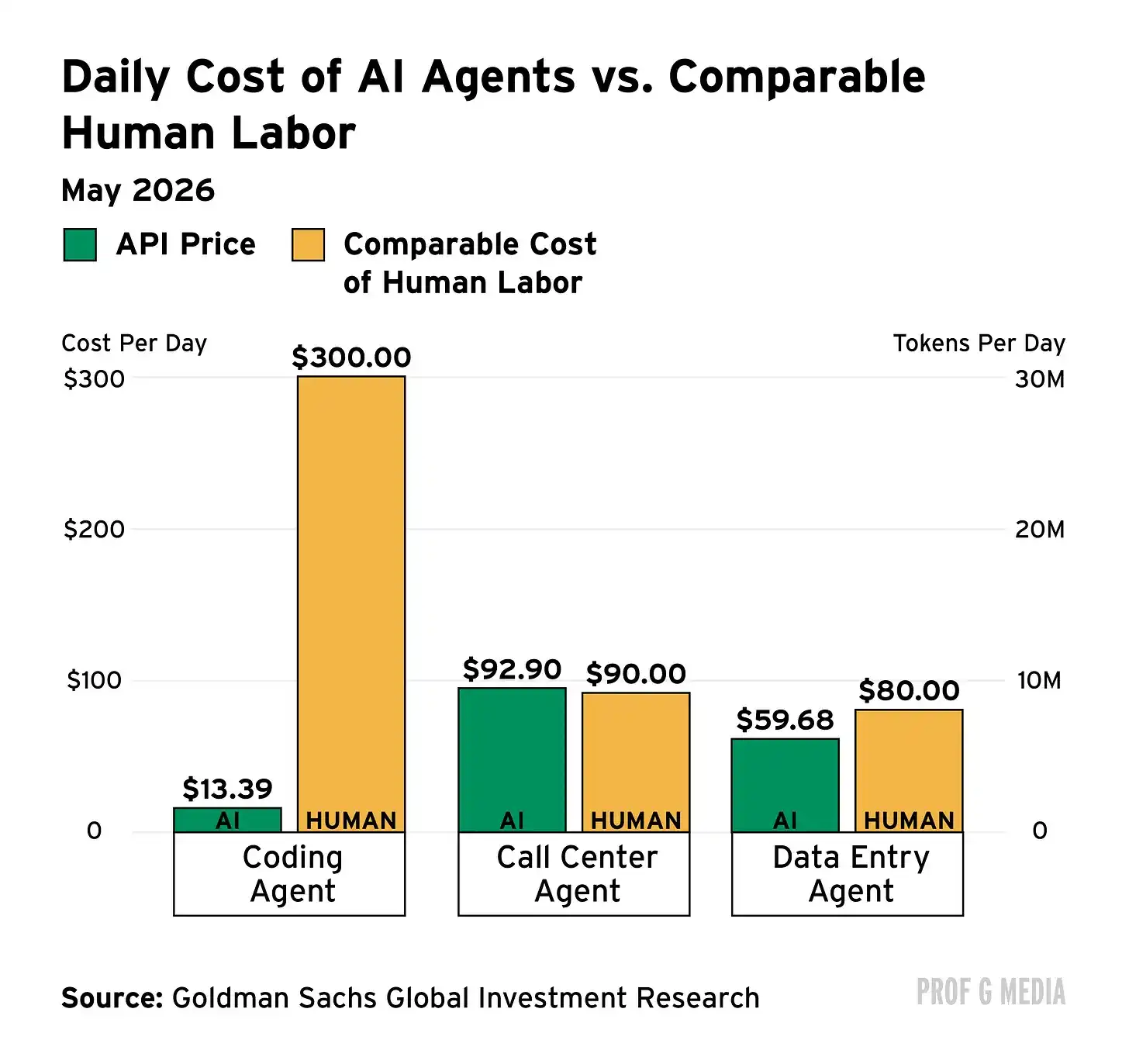
Figure: The AI Cost Shock for Businesses – AI spending and cost feedback from companies like Uber, Microsoft, Nvidia, Meta

Uber burned through its entire 2026 AI budget in just four months. The COO said it's becoming increasingly difficult to justify AI expenditures internally. Microsoft is cutting Claude Code licenses in multiple departments for one simple reason: cost.

A Nvidia executive stated that compute costs now "far exceed employee costs." Meta, Pinterest, and Spotify all cited rising inference costs as a drag on margins in their Q1 earnings reports.

How big are corporate AI budgets? A survey by cloud cost management company CloudZero shows that in 2025, 45% of businesses spent over $100,000 per month on AI, up from only 20% the previous year.

An even more extreme case within Anthropic: one employee spent $150,000 on Claude Code in a single month. For that to be financially justifiable, this engineer would need to do the work of 11 average engineers.

In the current market, the performative value of the word "efficiency" has been consistently rewarded, to the point where companies don't even need to actually calculate efficiency. 79% of S&P 500 companies mentioned AI in their recent earnings calls, but only 8% disclosed any AI-related revenue.
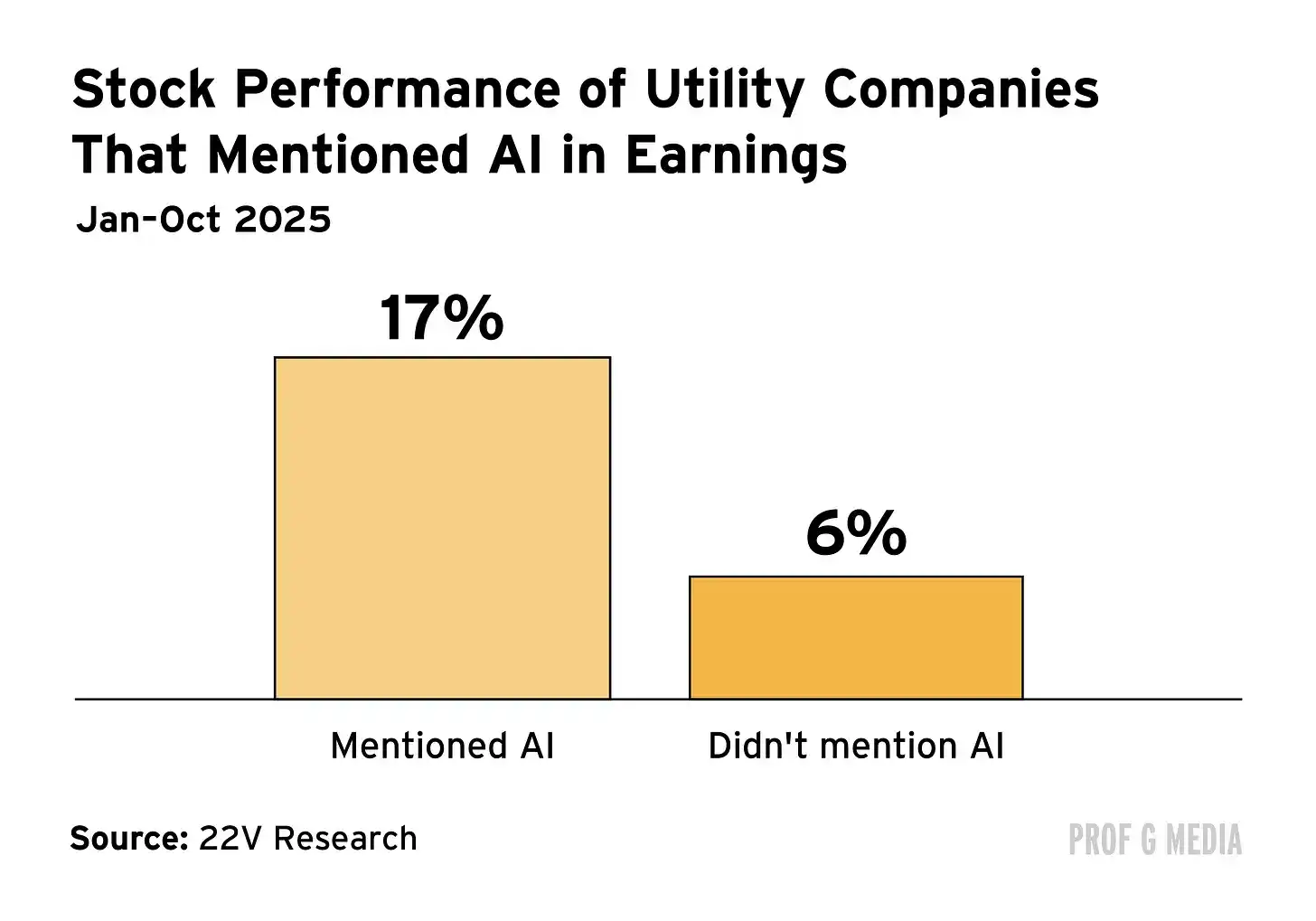
Figure: S&P 500 Companies' AI Rhetoric vs. Actual Revenue Disclosure

The same CloudZero report also found that only half</strong of the surveyed companies expressed confidence in their ability to assess the return on their AI investments. Match Group CEO Spencer Rascoff said AI costs the company $5 to $10 million annually. When asked about ROI, he said, "I think we benefit from it, but it's hard to feel."

Chinese Large Models Will Be the Biggest Winners

Scott Galloway's judgment is: companies will ultimately turn to the cheapest models, which are Chinese large language models. Chinese models are 10 to 30 times cheaper than American models.

Data is already validating this trend: the share of Chinese models in developer usage surged from about 1% in 2024 to over 60% in May of this year, and 80% of US AI startups are using Chinese open-source AI models.
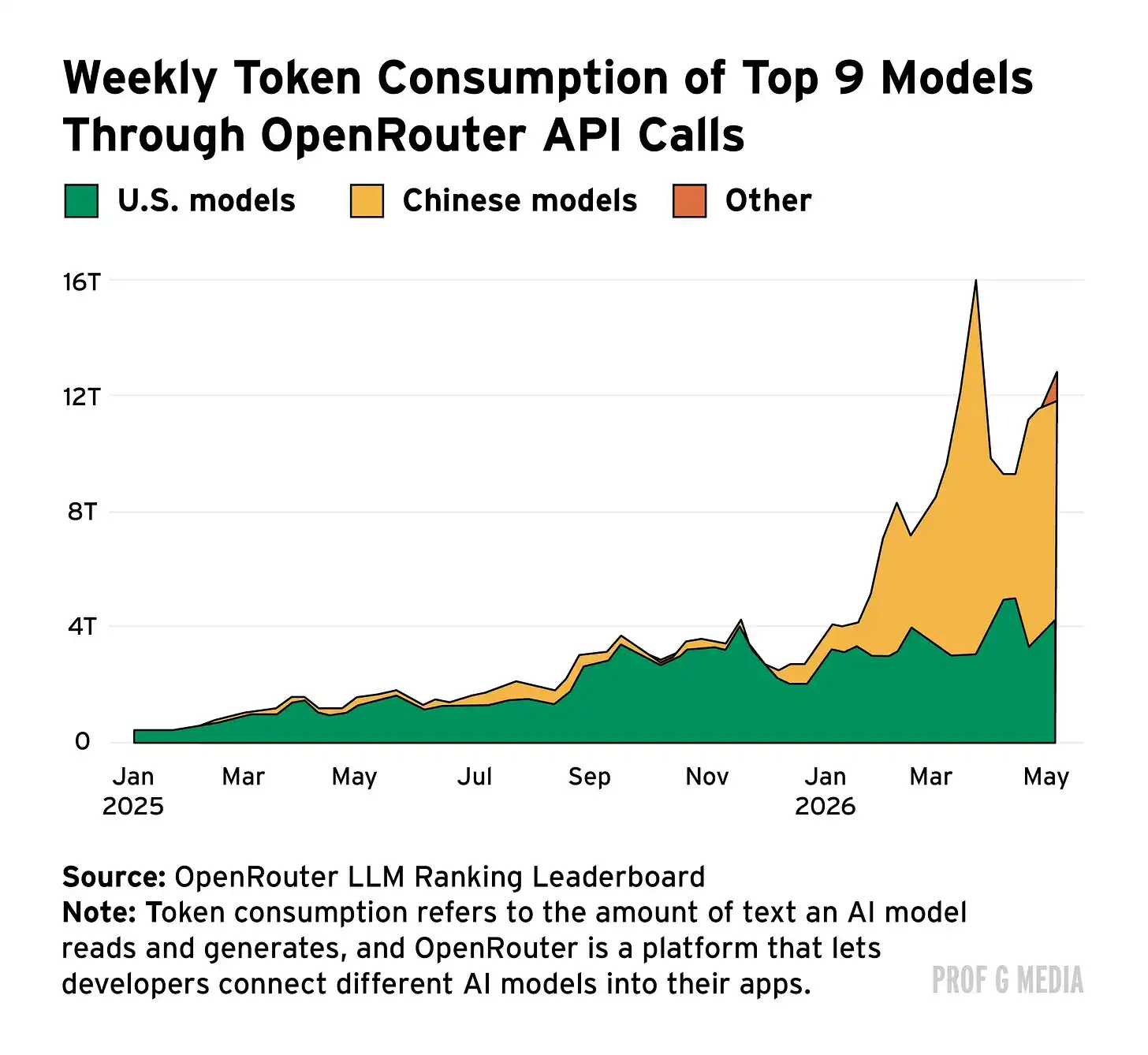
Figure: Changes in Share of Chinese Large Models in Developer Usage & Usage by US AI Startups


Crypto di tendenza

Domande pertinenti

QWhat is the main finding about AI's cost compared to human labor based on the article?

AThe article finds that an increasing number of companies are discovering that the actual operational cost of AI is higher than the cost of the human labor it is intended to replace.

QWhich companies are mentioned as facing significant AI cost challenges?

AUber, Microsoft, Nvidia, Meta, Pinterest, Spotify, and Anthropic are mentioned as companies facing high AI costs or budgetary issues.

QAccording to the article, what percentage of S&P 500 companies disclosed AI-related revenue in their recent earnings calls?

AOnly 8% of S&P 500 companies disclosed any AI-related revenue in their recent earnings calls, despite 79% mentioning AI.

QWhat does Scott Galloway predict will be the solution for companies struggling with high AI costs?

AScott Galloway predicts that companies will eventually turn to cheaper Chinese large language models, which are 10 to 30 times less expensive than American models.

QWhat dramatic increase in usage of Chinese AI models is highlighted in the data presented?

AThe data shows that the share of Chinese models among developers soared from about 1% in 2024 to over 60% by May of the article's year, with 80% of U.S. AI startups using Chinese open-source AI models.

Letture associate

In Jinjiang, Fujian, a Storage Super Unicorn Lies Quiet

In Fujian's Jinjiang, a city known for sportswear, lies a quiet semiconductor giant: Fujian Jinhua Integrated Circuit Co. (JHICC). Once a promising domestic DRAM manufacturer alongside Yangtze Memory and ChangXin Memory Technologies (CXMT), its journey was derailed in 2018 when the U.S. placed it on an Entity List and filed criminal charges for alleged trade secret theft. This halted production for years. A turning point came in February 2024 when a U.S. federal court found JHICC not guilty. However, it had lost crucial time. While CXMT soared to become a top-valued A-share company in 2024, JHICC, with an estimated valuation of 80 billion RMB, was just restarting. Its current output is primarily customized DDR4 chips, not the advanced DDR5/HBM demanded for AI, but it still benefits from the broader memory chip upcycle. JHICC's story is tied to Chen Zhengkun, a veteran engineer who left Micron to lead the venture. Founded in 2016 with state-backed funding, JHICC partnered with Taiwan's UMC to develop DRAM technology. Rapid progress was cut short by the U.S. actions, which Micron initiated, partly due to its heavy reliance on the Chinese market. Post-sanctions, Chen's team worked to rebuild the production line with reduced reliance on U.S. technology. According to its records, JHICC achieved small-scale production and revenue growth under immense pressure. It now focuses on the stable "niche" DRAM market (e.g., TVs, routers) with a monthly capacity of ~40,000 wafers, aiming for 60,000 by 2026. It holds over 1,000 patents but remains on the Entity List. For Jinjiang, investing in JHICC was a bold industrial leap. The local government provided unwavering financial and logistical support during the crisis, helping the company survive. JHICC has become the anchor for a growing local semiconductor cluster. Though its scale lags behind domestic peers, JHICC's persistence symbolizes a hard-won foothold in a global market long dominated by Samsung, SK Hynix, and Micron. Having missed one boom, it seeks a place in the new AI-driven memory supercycle.

marsbit2 h fa

In Jinjiang, Fujian, a Storage Super Unicorn Lies Quiet

marsbit2 h fa

Trading

Spot

Articoli Popolari

Come comprare PEOPLE

Benvenuto in HTX.com! Abbiamo reso l'acquisto di ConstitutionDAO (PEOPLE) semplice e conveniente. Segui la nostra guida passo passo per intraprendere il tuo viaggio nel mondo delle criptovalute.Step 1: Crea il tuo Account HTXUsa la tua email o numero di telefono per registrarti il tuo account gratuito su HTX. Vivi un'esperienza facile e sblocca tutte le funzionalità,Crea il mio accountStep 2: Vai in Acquista crypto e seleziona il tuo metodo di pagamentoCarta di credito/debito: utilizza la tua Visa o Mastercard per acquistare immediatamente ConstitutionDAOPEOPLE.Bilancio: Usa i fondi dal bilancio del tuo account HTX per fare trading senza problemi.Terze parti: abbiamo aggiunto metodi di pagamento molto utilizzati come Google Pay e Apple Pay per maggiore comodità.P2P: Fai trading direttamente con altri utenti HTX.Over-the-Counter (OTC): Offriamo servizi su misura e tassi di cambio competitivi per i trader.Step 3: Conserva ConstitutionDAO (PEOPLE)Dopo aver acquistato ConstitutionDAO (PEOPLE), conserva nel tuo account HTX. In alternativa, puoi inviare tramite trasferimento blockchain o scambiare per altre criptovalute.Step 4: Scambia ConstitutionDAO (PEOPLE)Scambia facilmente ConstitutionDAO (PEOPLE) nel mercato spot di HTX. Accedi al tuo account, seleziona la tua coppia di trading, esegui le tue operazioni e monitora in tempo reale. Offriamo un'esperienza user-friendly sia per chi ha appena iniziato che per i trader più esperti.

574 Totale visualizzazioniPubblicato il 2024.12.12Aggiornato il 2026.06.02

Come comprare PEOPLE

Discussioni

Benvenuto nella Community HTX. Qui puoi rimanere informato sugli ultimi sviluppi della piattaforma e accedere ad approfondimenti esperti sul mercato. Le opinioni degli utenti sul prezzo di PEOPLE PEOPLE sono presentate come di seguito.

活动图片












