After the Elevated Status of Stablecoins, Old Partners Circle and Stripe Compete for Each Other's Turf

marsbitPubblicato 2026-03-09Pubblicato ultima volta 2026-03-09

Introduzione

Circle and Stripe, once complementary partners in the stablecoin ecosystem, are increasingly competing as their strategic expansions converge. Circle, the issuer of USDC, is moving beyond its role as a stablecoin provider by developing its own payment infrastructure, including the Arc blockchain and the Circle Payments Network (CPN), to capture more value from transaction flows. Meanwhile, Stripe, a global payment processor, is expanding downward into stablecoin infrastructure by acquiring Bridge (which recently received conditional approval for a trust bank charter) and investing in blockchain initiatives like Tempo. This shift reflects a broader trend where stablecoin players are integrating vertically to control more of the financial stack, transforming from asset issuers to infrastructure builders. As stablecoins evolve into a foundational financial technology, competition is shifting from scale to control over the networks that move digital dollars.

Original | Odaily Planet Daily (@OdailyChina)

Author | DingDang (@XiaMiPP)

In the stablecoin industry chain, Circle and Stripe used to be a pair of partners with a very clear division of labor.

Circle was responsible for mapping US dollars from the real world onto the blockchain, minting them into the stablecoin USDC; Stripe, through its global internet payment network, enabled these digital dollars to flow in real commercial scenarios. One was responsible for producing the money, the other for making it circulate. This alliance was almost naturally complementary in the past few years.

But two recent events, when viewed together, create a subtle feeling: these two companies seem to be slowly moving towards the same place.

On February 11th, Stripe announced the launch of x402 payment functionality on Base. This feature enables developers to charge AI agents directly using USDC. Stablecoins are no longer just pricing tools on exchanges; in the wave of AI Agents, they will become the payment medium for transactions between machines.

In the same week, Bridge, a stablecoin infrastructure company under Stripe, received preliminary approval for a trust bank charter from the U.S. Office of the Comptroller of the Currency (OCC). This means Bridge could potentially, as a regulated financial institution, begin advancing businesses such as stablecoin issuance, custody, and reserve management.

On one side, Stripe is building new payment scenarios using USDC; on the other side, it is building its own stablecoin financial infrastructure.

The Stablecoin Industry Chain of the Old Era

If you break down the stablecoin world, the industry chain is not actually complicated.

The bottom layer is the issuance layer. Institutions like Circle are responsible for mapping real-world dollar reserves onto the blockchain, minting them into stablecoins, such as USDC. The layer above is the settlement layer, handled by blockchain networks which take on the role of fund accounting and clearing. Moving up further is the payment layer. Internet payment infrastructure like Stripe embeds stablecoins into real commercial transactions, allowing on-chain funds to enter scenarios like e-commerce, SaaS, or cross-border trade. At the top is the application layer. Various specific financial activities happen here, from DeFi to AI Agent payments.

When stablecoins were just tools for the crypto market, participants in this industry chain always had their own distinct roles: issuers were responsible for "minting coins," payment platforms were responsible for "collecting money," blockchains handled settlement, and developers focused on application scenarios.

As early as 2014, Stripe was one of the first mainstream payment processors to support Bitcoin payments. However, due to issues like excessive Bitcoin price volatility, long transaction confirmation times, and unpredictable fees, this business attempt was eventually scaled back in 2018. Bitcoin was more like a speculative asset than a currency suitable for internet payments.

The emergence of stablecoins恰好 filled this gap. The price stability, programmability, and on-chain settlement capabilities of USDC made it closer to Stripe's ideal "internet-native currency." In 2022, Stripe re-entered the crypto space and chose to support USDC payments. This step not only brought stablecoins back into the mainstream payment system but also objectively drove the rapid growth of USDC's circulation scale, with its circulating market capitalization once exceeding $55 billion.

Under this synergistic relationship, Circle provided stable digital dollars, and Stripe provided the global payment network. Together, they pushed USDC to grow from a crypto trading tool to a market approaching $70 billion.

On-chain data also confirms the scale effect brought by this synergy. According to Artemis data, the scale of on-chain USDC transactions in January exceeded 8.4 trillion, while the total scale of on-chain transactions for the entire stablecoin market was 10 trillion. That is, in terms of transaction count, USDC accounts for 84% of the total market share.

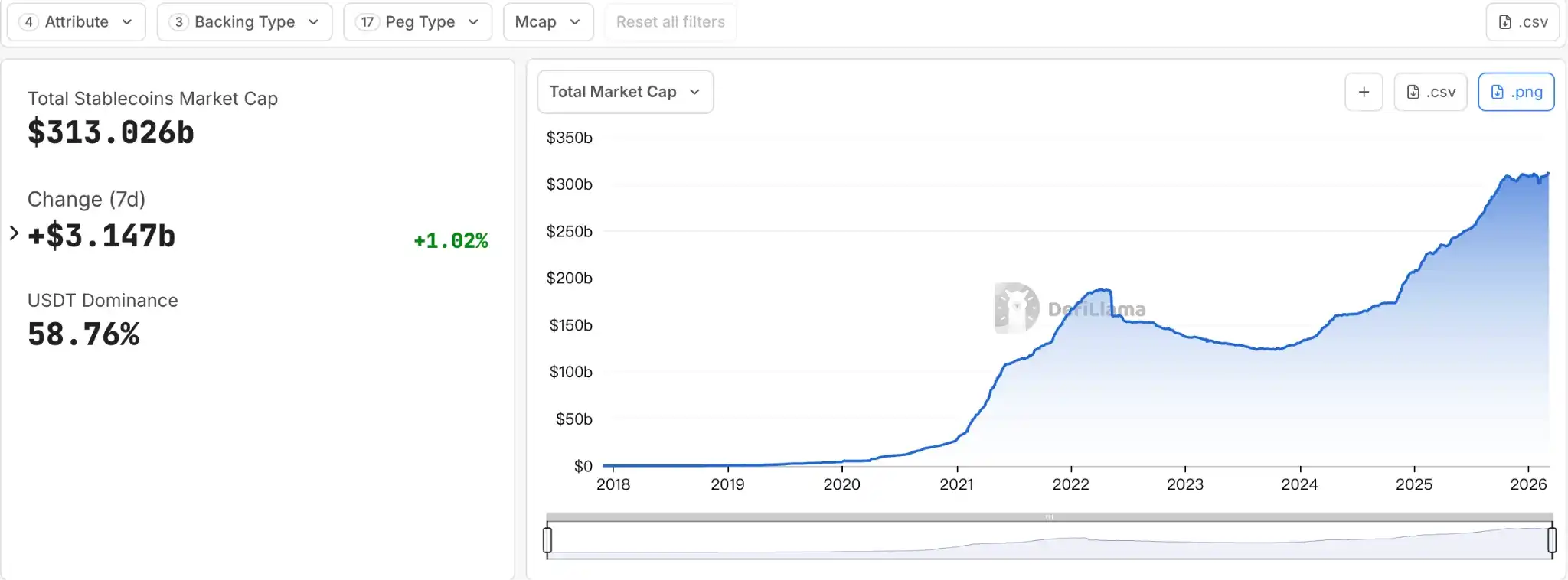
At the same time, the external regulatory environment has also undergone significant changes. With the formal landing of the "GENIUS Act," stablecoins—once a financial experiment operating in a regulatory gray area—are gradually being incorporated into the legal financial system. Today, the stablecoin market size exceeds $300 billion. In the future, the scale carried by this market could be a trillion-dollar-level financial network.

Stablecoins are no longer just internal tools for the crypto market but are beginning to be seen as part of the next generation of financial infrastructure. When a market grows from a crypto tool into financial infrastructure, the industrial logic often changes accordingly.
When Stablecoins Become Infrastructure

In any financial system, truly stable profits often do not come from a single link but from the control of key nodes. Whoever can control the轨道 (track) of fund flow can define the rules.

If stablecoins are only the underlying asset, while payment gateways, developer tools, and commercial scenarios are all controlled by other platforms, then the profits the issuer can ultimately obtain are actually very limited. Conversely, if one controls the payment network or settlement system, then one can continuously capture value at every step of the fund flow.

Therefore, as stablecoins begin to evolve from a crypto asset into financial infrastructure, an almost inevitable trend begins to emerge: industry roles originally分散 (scattered) across different layers begin to try to extend upstream and downstream, bringing more links into their own systems.

This process is not unfamiliar in financial history. From banking systems to credit card networks, to internet payment platforms, mature financial systems often eventually go through similar stages—from role dispersion to structural integration.

Now, this wind of industrial integration is also beginning to blow into the world of stablecoins.

If the stablecoin industry chain is viewed as a vertical structure, then over the past few years, Circle and Stripe have stood at opposite ends of this chain. But now, they are both moving towards the middle.

Circle: Not Wanting to Be Just a "Money Printer"

In the on-chain ecosystem, the circulation efficiency and usage frequency of USDC have long been impossible to ignore. In the latest stablecoin flow report, the velocity of USDC circulation is almost 5 times that of USDT.

However, relying solely on issuing stablecoins is not a particularly imaginative business model in itself.

The main revenue sources for stablecoin issuers are roughly divided into two parts: first, the interest income generated by the reserve assets, and second, the related fees generated during the issuance and redemption of stablecoins. But as the scale of stablecoins continues to grow, this portion of profits often still needs to be shared with ecosystem partners. For example, as one of the most important distribution channels for USDC, Coinbase receives nearly $1 billion in profit sharing from the USDC system annually. This means that even though the issuer undertakes the core "minting" role in the stablecoin system, its actual disposable profit space is still constrained by the ecosystem structure.

This also explains why, over the past two years, Circle's strategy has clearly extended to the application layer: it is no longer satisfied with仅仅 issuing stablecoins but is trying to build a complete stablecoin payment network.

Judging from currently public information, Circle's layout at the application layer is roughly a three-step process.

Step one, the L1 blockchain Arc designed for enterprises. It plays a "coordination layer" role at the application level, helping developers build payment, settlement, and other applications. Arc launched its testnet in October 2025 and has attracted 100+ companies to participate, processing over 166 million transactions. The mainnet is planned to launch within 2026.

Step two, with USDC as the core, use the Cross-Chain Transfer Protocol (CCTP) and gateway tools to solve liquidity fragmentation. At the application layer, help enterprises unify USDC from multiple chains onto Arc and CPN, achieving seamless distribution and application building.

Step three, and Circle's core application layer product, CPN (Circle Payments Network). Launched in May 2025, it is an "open standard" payment coordination network specifically designed for programmable, compliant, and auditable payments. So far, 55 financial institutions have registered, with another 74 financial institutions undergoing资格审查 (qualification review).

This layout shows that Circle is gradually evolving from a mere stablecoin issuer to building a整套 (complete set) of application infrastructure capable of carrying fund flows.

Stripe: The "Checkout Counter" Also Wants to Control the轨道 (Track)

Stripe is at the other end of the stablecoin system. As one of the world's most important internet payment infrastructures, Stripe controls huge merchant gateways. In 2025, the total payment volume processed on the Stripe platform reached $1.9 trillion, a year-on-year increase of 34%, equivalent to about 1.6% of global GDP. From Shopify to Amazon, the payment systems of a large number of internet merchants are built on Stripe's infrastructure. In a sense, Stripe does not produce currency, but it controls the entrance to currency flow.

But if in the future stablecoin issuers and blockchain networks jointly control the settlement layer, then payment platforms might be compressed into mere technical service providers.

This is also why Stripe has begun to systematically布局 (layout) across the industry chain's upstream and downstream in recent years.

In February 2025, Stripe completed the acquisition of the stablecoin infrastructure platform Bridge for $1.1 billion. Finally, on February 12th of this year, Bridge received conditional approval from the OCC. This is the most critical piece for Stripe's infrastructure ambitions.

At the same time, Stripe is also jointly incubating the L1 public chain Tempo with Paradigm, hoping to build a settlement chain specifically for internet finance. The public testnet went live in December 2025, and the mainnet is planned to launch within 2026.

Additionally, in 2025, Stripe acquired wallet infrastructure company Privy, providing users with embedded wallets and identity systems, thereby lowering the barrier for users to enter the on-chain financial system.

If you look at these actions together, a very clear trend emerges: Stripe is extending downward from the payment gateway, trying to master the underlying轨道 (track) on which stablecoins run.

Two Companies Meet in the Middle of the Industry Chain

Circle is extending from the issuance layer to the application layer, while Stripe is descending from the payment layer to the infrastructure. When both paths move towards the center of the industry chain simultaneously, the originally clear boundaries inevitably begin to overlap.

Against the backdrop of the reshaping stablecoin industry structure, it serves more as a reminder: the stablecoin competition is no longer just about "who issues more tokens." The truly important question in the future might be—who controls the轨道 (track) of stablecoin flow.

As issuance, settlement, payment, and application are重新整合 (re-integrated), the competition in the stablecoin world will also shift from "asset scale" to "financial network." And on this new track, Circle and Stripe, this pair of once highly complementary allies, have already begun to meet in the middle of the industry chain.

The story of stablecoins is also evolving from a crypto industry experiment to a reconstruction of financial networks.

Recommended Reading

《Latest Stablecoin Report: Real Distribution and Flow Are Far More Worth Attention Than Supply》

《Behind Circle's Strong Stock Rebound: AI, Prediction Markets, and Institutional Adoption》

Domande pertinenti

QWhat was the traditional division of labor between Circle and Stripe in the stablecoin industry?

ACircle was responsible for minting the stablecoin USDC by mapping real-world dollars onto the blockchain, while Stripe provided the global payment network to facilitate the flow of these digital dollars in real commercial scenarios.

QWhat recent developments suggest that Circle and Stripe are now competing in the same space?

AStripe announced a payment function on Base that allows developers to charge AI agents directly using USDC, and its subsidiary Bridge received preliminary approval for a trust bank charter from the OCC, indicating its move into stablecoin issuance and infrastructure. Meanwhile, Circle is expanding from issuance to application-layer infrastructure with products like its Arc blockchain and CPN payment network.

QAccording to the article, what is driving the consolidation of roles in the stablecoin industry?

AAs stablecoins evolve from crypto assets into financial infrastructure, there is a trend for companies to extend their control vertically across the industry chain. The potential for controlling the key nodes of capital flow and defining the rules of the financial network is a major driver, as stable profits in finance often come from controlling these critical points rather than a single环节.

QWhat specific steps is Circle taking to move beyond being just a stablecoin issuer?

ACircle is building a complete stablecoin payment network through a three-step strategy: 1) Developing the Arc blockchain for enterprises, 2) Using its cross-chain transfer protocol (CCTP) to solve liquidity fragmentation, and 3) Launching the Circle Payments Network (CPN), an open-standard payment coordination network for programmable, compliant, and auditable payments.

QHow is Stripe expanding its role from a payment layer company into stablecoin infrastructure?

AStripe is expanding by acquiring stablecoin infrastructure platform Bridge (which received OCC approval), co-incubating the Tempo blockchain with Paradigm for internet finance settlement, and acquiring wallet infrastructure company Privy to lower the barrier for users to enter the on-chain financial system.

Letture associate

Arbitrum Pretends to Be the Hacker, 'Steals' Back the Money Lost by KelpDAO

Title: Arbitrum Poses as Hacker to Recover Stolen Funds from KelpDAO Last week, KelpDAO suffered a hack resulting in nearly $300 million in losses, marking the largest DeFi security incident this year. Approximately 30,765 ETH (worth over $70 million) remained on an Arbitrum address controlled by the attacker. In an unprecedented move, Arbitrum’s Security Council utilized its emergency authority to upgrade the Inbox bridge contract, adding a function that allowed them to impersonate the hacker’s address and initiate a transfer without access to its private key. The council’s action, approved by 9 of its 12 members, moved the stolen ETH to a frozen address in a single transaction before reverting the contract to its original state. The operation was coordinated with law enforcement, which attributed the attack to North Korea’s Lazarus Group. Community reactions are divided: some praise the recovery of funds, while others question the centralization of power, as the council can upgrade core contracts without governance votes. However, such emergency mechanisms are common among major L2s. Despite the partial recovery, over $292 million was stolen in total, with more than $100 million in bad debt on Aave and remaining funds scattered across other chains. The incident highlights escalating security challenges in DeFi, with state-sponsored hackers employing advanced tactics and L2s responding with elevated countermeasures.

marsbit9 min fa

Arbitrum Pretends to Be the Hacker, 'Steals' Back the Money Lost by KelpDAO

marsbit9 min fa

iQiyi Is Too Impatient

The article "iQiyi Is Too Impatient" discusses the controversy surrounding the Chinese streaming platform IQiyi's recent announcement of an "AI Actor Library" during its 2026 World Conference. IQiyi claimed over 100 actors, including well-known names like Zhang Ruoyun and Yu Hewei, had joined the initiative. CEO Gong Yu suggested AI could enable actors to "star in 14 dramas a year instead of 4" and that "live-action filming might become a world cultural heritage." The announcement quickly sparked backlash. Multiple actors named in the list issued urgent statements denying they had signed any AI-related authorization agreements. This forced IQiyi to clarify that inclusion in the library only indicated a willingness to *consider* AI projects, with separate negotiations required for any specific role. The incident, which trended on social media with hashtags like "IQiyi is crazy," is presented as a sign of the company's growing desperation. Facing intense competition from short-video platforms like Douyin and Kuaishou, as well as Bilibili and Xiaohongshu, IQiyi's financial performance has weakened, with revenues declining for two consecutive years. The author argues that IQiyi is "too impatient" to tell a compelling AI story to reassure the market, especially as it pursues a listing on the Hong Kong stock exchange. The piece concludes by outlining three key "AI questions" IQiyi must answer: defining its role as a tool provider versus a content creator, balancing the "coldness" of AI with the human element audiences desire, and properly managing the interests of platforms, actors, and viewers. The core dilemma is that while AI can reduce costs and increase efficiency, it risks creating homogenized, formulaic content and devaluing human performers.

marsbit1 h fa

iQiyi Is Too Impatient

marsbit1 h fa

Trading

Spot
Futures

Articoli Popolari

Cosa è $S$

Comprendere SPERO: Una Panoramica Completa Introduzione a SPERO Mentre il panorama dell'innovazione continua a evolversi, l'emergere delle tecnologie web3 e dei progetti di criptovaluta gioca un ruolo fondamentale nel plasmare il futuro digitale. Un progetto che ha attirato l'attenzione in questo campo dinamico è SPERO, denotato come SPERO,$$s$. Questo articolo mira a raccogliere e presentare informazioni dettagliate su SPERO, per aiutare gli appassionati e gli investitori a comprendere le sue basi, obiettivi e innovazioni nei domini web3 e crypto. Che cos'è SPERO,$$s$? SPERO,$$s$ è un progetto unico all'interno dello spazio crypto che cerca di sfruttare i principi della decentralizzazione e della tecnologia blockchain per creare un ecosistema che promuove l'impegno, l'utilità e l'inclusione finanziaria. Il progetto è progettato per facilitare interazioni peer-to-peer in modi nuovi, fornendo agli utenti soluzioni e servizi finanziari innovativi. Al suo interno, SPERO,$$s$ mira a responsabilizzare gli individui fornendo strumenti e piattaforme che migliorano l'esperienza dell'utente nello spazio delle criptovalute. Questo include la possibilità di metodi di transazione più flessibili, la promozione di iniziative guidate dalla comunità e la creazione di percorsi per opportunità finanziarie attraverso applicazioni decentralizzate (dApps). La visione sottostante di SPERO,$$s$ ruota attorno all'inclusività, cercando di colmare le lacune all'interno della finanza tradizionale mentre sfrutta i vantaggi della tecnologia blockchain. Chi è il Creatore di SPERO,$$s$? L'identità del creatore di SPERO,$$s$ rimane piuttosto oscura, poiché ci sono risorse pubblicamente disponibili limitate che forniscono informazioni dettagliate sul suo fondatore o fondatori. Questa mancanza di trasparenza può derivare dall'impegno del progetto per la decentralizzazione—un ethos che molti progetti web3 condividono, dando priorità ai contributi collettivi rispetto al riconoscimento individuale. Centrando le discussioni attorno alla comunità e ai suoi obiettivi collettivi, SPERO,$$s$ incarna l'essenza dell'empowerment senza mettere in evidenza individui specifici. Pertanto, comprendere l'etica e la missione di SPERO rimane più importante che identificare un creatore singolo. Chi sono gli Investitori di SPERO,$$s$? SPERO,$$s$ è supportato da una varietà di investitori che vanno dai capitalisti di rischio agli investitori angelici dedicati a promuovere l'innovazione nel settore crypto. Il focus di questi investitori generalmente si allinea con la missione di SPERO—dando priorità a progetti che promettono avanzamenti tecnologici sociali, inclusività finanziaria e governance decentralizzata. Queste fondazioni di investitori sono tipicamente interessate a progetti che non solo offrono prodotti innovativi, ma contribuiscono anche positivamente alla comunità blockchain e ai suoi ecosistemi. Il supporto di questi investitori rafforza SPERO,$$s$ come un concorrente degno di nota nel dominio in rapida evoluzione dei progetti crypto. Come Funziona SPERO,$$s$? SPERO,$$s$ impiega un framework multifunzionale che lo distingue dai progetti di criptovaluta convenzionali. Ecco alcune delle caratteristiche chiave che sottolineano la sua unicità e innovazione: Governance Decentralizzata: SPERO,$$s$ integra modelli di governance decentralizzati, responsabilizzando gli utenti a partecipare attivamente ai processi decisionali riguardanti il futuro del progetto. Questo approccio favorisce un senso di proprietà e responsabilità tra i membri della comunità. Utilità del Token: SPERO,$$s$ utilizza il proprio token di criptovaluta, progettato per servire varie funzioni all'interno dell'ecosistema. Questi token abilitano transazioni, premi e la facilitazione dei servizi offerti sulla piattaforma, migliorando l'impegno e l'utilità complessivi. Architettura Stratificata: L'architettura tecnica di SPERO,$$s$ supporta la modularità e la scalabilità, consentendo un'integrazione fluida di funzionalità e applicazioni aggiuntive man mano che il progetto evolve. Questa adattabilità è fondamentale per mantenere la rilevanza nel panorama crypto in continua evoluzione. Coinvolgimento della Comunità: Il progetto enfatizza iniziative guidate dalla comunità, impiegando meccanismi che incentivano la collaborazione e il feedback. Nutrendo una comunità forte, SPERO,$$s$ può affrontare meglio le esigenze degli utenti e adattarsi alle tendenze di mercato. Focus sull'Inclusione: Offrendo basse commissioni di transazione e interfacce user-friendly, SPERO,$$s$ mira ad attrarre una base utenti diversificata, inclusi individui che potrebbero non aver precedentemente interagito nello spazio crypto. Questo impegno per l'inclusione si allinea con la sua missione generale di empowerment attraverso l'accessibilità. Cronologia di SPERO,$$s$ Comprendere la storia di un progetto fornisce preziose intuizioni sulla sua traiettoria di sviluppo e sui traguardi. Di seguito è riportata una cronologia suggerita che mappa eventi significativi nell'evoluzione di SPERO,$$s$: Fase di Concettualizzazione e Ideazione: Le idee iniziali che formano la base di SPERO,$$s$ sono state concepite, allineandosi strettamente con i principi di decentralizzazione e focus sulla comunità all'interno dell'industria blockchain. Lancio del Whitepaper del Progetto: Dopo la fase concettuale, è stato rilasciato un whitepaper completo che dettaglia la visione, gli obiettivi e l'infrastruttura tecnologica di SPERO,$$s$ per suscitare interesse e feedback dalla comunità. Costruzione della Comunità e Prime Interazioni: Sono stati effettuati sforzi attivi di outreach per costruire una comunità di early adopters e potenziali investitori, facilitando discussioni attorno agli obiettivi del progetto e ottenendo supporto. Evento di Generazione del Token: SPERO,$$s$ ha condotto un evento di generazione del token (TGE) per distribuire i propri token nativi ai primi sostenitori e stabilire una liquidità iniziale all'interno dell'ecosistema. Lancio della Prima dApp: La prima applicazione decentralizzata (dApp) associata a SPERO,$$s$ è stata attivata, consentendo agli utenti di interagire con le funzionalità principali della piattaforma. Sviluppo Continuo e Partnership: Aggiornamenti e miglioramenti continui alle offerte del progetto, inclusi partnership strategiche con altri attori nello spazio blockchain, hanno plasmato SPERO,$$s$ in un concorrente competitivo e in evoluzione nel mercato crypto. Conclusione SPERO,$$s$ rappresenta una testimonianza del potenziale del web3 e delle criptovalute di rivoluzionare i sistemi finanziari e responsabilizzare gli individui. Con un impegno per la governance decentralizzata, il coinvolgimento della comunità e funzionalità progettate in modo innovativo, apre la strada verso un panorama finanziario più inclusivo. Come per qualsiasi investimento nello spazio crypto in rapida evoluzione, si incoraggiano potenziali investitori e utenti a ricercare approfonditamente e a impegnarsi in modo riflessivo con gli sviluppi in corso all'interno di SPERO,$$s$. Il progetto mostra lo spirito innovativo dell'industria crypto, invitando a ulteriori esplorazioni delle sue innumerevoli possibilità. Mentre il percorso di SPERO,$$s$ è ancora in fase di sviluppo, i suoi principi fondamentali potrebbero effettivamente influenzare il futuro di come interagiamo con la tecnologia, la finanza e tra di noi in ecosistemi digitali interconnessi.

75 Totale visualizzazioniPubblicato il 2024.12.17Aggiornato il 2024.12.17

Cosa è $S$

Cosa è AGENT S

Agent S: Il Futuro dell'Interazione Autonoma in Web3 Introduzione Nel panorama in continua evoluzione di Web3 e criptovalute, le innovazioni stanno costantemente ridefinendo il modo in cui gli individui interagiscono con le piattaforme digitali. Uno di questi progetti pionieristici, Agent S, promette di rivoluzionare l'interazione uomo-computer attraverso il suo framework agentico aperto. Aprendo la strada a interazioni autonome, Agent S mira a semplificare compiti complessi, offrendo applicazioni trasformative nell'intelligenza artificiale (AI). Questa esplorazione dettagliata approfondirà le complessità del progetto, le sue caratteristiche uniche e le implicazioni per il dominio delle criptovalute. Cos'è Agent S? Agent S si presenta come un innovativo framework agentico aperto, progettato specificamente per affrontare tre sfide fondamentali nell'automazione dei compiti informatici: Acquisizione di Conoscenze Specifiche del Dominio: Il framework apprende in modo intelligente da varie fonti di conoscenza esterne ed esperienze interne. Questo approccio duale gli consente di costruire un ricco repository di conoscenze specifiche del dominio, migliorando le sue prestazioni nell'esecuzione dei compiti. Pianificazione su Lungo Orizzonte di Compiti: Agent S impiega una pianificazione gerarchica potenziata dall'esperienza, un approccio strategico che facilita la suddivisione e l'esecuzione efficiente di compiti complessi. Questa caratteristica migliora significativamente la sua capacità di gestire più sottocompiti in modo efficiente ed efficace. Gestione di Interfacce Dinamiche e Non Uniformi: Il progetto introduce l'Interfaccia Agente-Computer (ACI), una soluzione innovativa che migliora l'interazione tra agenti e utenti. Utilizzando Modelli Linguistici Multimodali di Grandi Dimensioni (MLLM), Agent S può navigare e manipolare senza sforzo diverse interfacce grafiche utente. Attraverso queste caratteristiche pionieristiche, Agent S fornisce un framework robusto che affronta le complessità coinvolte nell'automazione dell'interazione umana con le macchine, preparando il terreno per innumerevoli applicazioni nell'AI e oltre. Chi è il Creatore di Agent S? Sebbene il concetto di Agent S sia fondamentalmente innovativo, informazioni specifiche sul suo creatore rimangono elusive. Il creatore è attualmente sconosciuto, il che evidenzia sia la fase embrionale del progetto sia la scelta strategica di mantenere i membri fondatori sotto anonimato. Indipendentemente dall'anonimato, l'attenzione rimane sulle capacità e sul potenziale del framework. Chi sono gli Investitori di Agent S? Poiché Agent S è relativamente nuovo nell'ecosistema crittografico, informazioni dettagliate riguardanti i suoi investitori e sostenitori finanziari non sono documentate esplicitamente. La mancanza di approfondimenti pubblicamente disponibili sulle fondazioni di investimento o sulle organizzazioni che supportano il progetto solleva interrogativi sulla sua struttura di finanziamento e sulla roadmap di sviluppo. Comprendere il supporto è cruciale per valutare la sostenibilità del progetto e il suo potenziale impatto sul mercato. Come Funziona Agent S? Al centro di Agent S si trova una tecnologia all'avanguardia che gli consente di funzionare efficacemente in contesti diversi. Il suo modello operativo è costruito attorno a diverse caratteristiche chiave: Interazione Uomo-Computer Simile a Quella Umana: Il framework offre una pianificazione AI avanzata, cercando di rendere le interazioni con i computer più intuitive. Mimando il comportamento umano nell'esecuzione dei compiti, promette di elevare le esperienze degli utenti. Memoria Narrativa: Utilizzata per sfruttare esperienze di alto livello, Agent S utilizza la memoria narrativa per tenere traccia delle storie dei compiti, migliorando così i suoi processi decisionali. Memoria Episodica: Questa caratteristica fornisce agli utenti una guida passo-passo, consentendo al framework di offrire supporto contestuale mentre i compiti si sviluppano. Supporto per OpenACI: Con la capacità di funzionare localmente, Agent S consente agli utenti di mantenere il controllo sulle proprie interazioni e flussi di lavoro, allineandosi con l'etica decentralizzata di Web3. Facile Integrazione con API Esterne: La sua versatilità e compatibilità con varie piattaforme AI garantiscono che Agent S possa adattarsi senza problemi agli ecosistemi tecnologici esistenti, rendendolo una scelta attraente per sviluppatori e organizzazioni. Queste funzionalità contribuiscono collettivamente alla posizione unica di Agent S all'interno dello spazio crittografico, poiché automatizza compiti complessi e multi-fase con un intervento umano minimo. Man mano che il progetto evolve, le sue potenziali applicazioni in Web3 potrebbero ridefinire il modo in cui si svolgono le interazioni digitali. Cronologia di Agent S Lo sviluppo e le tappe di Agent S possono essere riassunti in una cronologia che evidenzia i suoi eventi significativi: 27 Settembre 2024: Il concetto di Agent S è stato lanciato in un documento di ricerca completo intitolato “Un Framework Agentico Aperto che Usa i Computer Come un Umano”, mostrando le basi per il progetto. 10 Ottobre 2024: Il documento di ricerca è stato reso pubblicamente disponibile su arXiv, offrendo un'esplorazione approfondita del framework e della sua valutazione delle prestazioni basata sul benchmark OSWorld. 12 Ottobre 2024: È stata rilasciata una presentazione video, fornendo un'idea visiva delle capacità e delle caratteristiche di Agent S, coinvolgendo ulteriormente potenziali utenti e investitori. Questi indicatori nella cronologia non solo illustrano i progressi di Agent S, ma indicano anche il suo impegno per la trasparenza e il coinvolgimento della comunità. Punti Chiave su Agent S Man mano che il framework Agent S continua a evolversi, diversi attributi chiave si distinguono, sottolineando la sua natura innovativa e il potenziale: Framework Innovativo: Progettato per fornire un uso intuitivo dei computer simile all'interazione umana, Agent S porta un approccio nuovo all'automazione dei compiti. Interazione Autonoma: La capacità di interagire autonomamente con i computer attraverso GUI segna un passo avanti verso soluzioni informatiche più intelligenti ed efficienti. Automazione di Compiti Complessi: Con la sua metodologia robusta, può automatizzare compiti complessi e multi-fase, rendendo i processi più veloci e meno soggetti a errori. Miglioramento Continuo: I meccanismi di apprendimento consentono ad Agent S di migliorare dalle esperienze passate, migliorando continuamente le sue prestazioni e la sua efficacia. Versatilità: La sua adattabilità attraverso diversi ambienti operativi come OSWorld e WindowsAgentArena garantisce che possa servire un'ampia gamma di applicazioni. Man mano che Agent S si posiziona nel panorama di Web3 e delle criptovalute, il suo potenziale per migliorare le capacità di interazione e automatizzare i processi segna un significativo avanzamento nelle tecnologie AI. Attraverso il suo framework innovativo, Agent S esemplifica il futuro delle interazioni digitali, promettendo un'esperienza più fluida ed efficiente per gli utenti in vari settori. Conclusione Agent S rappresenta un audace passo avanti nell'unione tra AI e Web3, con la capacità di ridefinire il modo in cui interagiamo con la tecnologia. Sebbene sia ancora nelle sue fasi iniziali, le possibilità per la sua applicazione sono vaste e coinvolgenti. Attraverso il suo framework completo che affronta sfide critiche, Agent S mira a portare le interazioni autonome al centro dell'esperienza digitale. Man mano che ci addentriamo nei regni delle criptovalute e della decentralizzazione, progetti come Agent S giocheranno senza dubbio un ruolo cruciale nel plasmare il futuro della tecnologia e della collaborazione uomo-computer.

399 Totale visualizzazioniPubblicato il 2025.01.14Aggiornato il 2025.01.14

Cosa è AGENT S

Come comprare S

Benvenuto in HTX.com! Abbiamo reso l'acquisto di Sonic (S) semplice e conveniente. Segui la nostra guida passo passo per intraprendere il tuo viaggio nel mondo delle criptovalute.Step 1: Crea il tuo Account HTXUsa la tua email o numero di telefono per registrarti il tuo account gratuito su HTX. Vivi un'esperienza facile e sblocca tutte le funzionalità,Crea il mio accountStep 2: Vai in Acquista crypto e seleziona il tuo metodo di pagamentoCarta di credito/debito: utilizza la tua Visa o Mastercard per acquistare immediatamente SonicS.Bilancio: Usa i fondi dal bilancio del tuo account HTX per fare trading senza problemi.Terze parti: abbiamo aggiunto metodi di pagamento molto utilizzati come Google Pay e Apple Pay per maggiore comodità.P2P: Fai trading direttamente con altri utenti HTX.Over-the-Counter (OTC): Offriamo servizi su misura e tassi di cambio competitivi per i trader.Step 3: Conserva Sonic (S)Dopo aver acquistato Sonic (S), conserva nel tuo account HTX. In alternativa, puoi inviare tramite trasferimento blockchain o scambiare per altre criptovalute.Step 4: Scambia Sonic (S)Scambia facilmente Sonic (S) nel mercato spot di HTX. Accedi al tuo account, seleziona la tua coppia di trading, esegui le tue operazioni e monitora in tempo reale. Offriamo un'esperienza user-friendly sia per chi ha appena iniziato che per i trader più esperti.

786 Totale visualizzazioniPubblicato il 2025.01.15Aggiornato il 2025.03.21

Come comprare S

Discussioni

Benvenuto nella Community HTX. Qui puoi rimanere informato sugli ultimi sviluppi della piattaforma e accedere ad approfondimenti esperti sul mercato. Le opinioni degli utenti sul prezzo di S S sono presentate come di seguito.

活动图片