ABA Challenges White House Report On Stablecoins, Flags Major Concerns

bitcoinistPubblicato 2026-04-15Pubblicato ultima volta 2026-04-15

Introduzione

The American Bankers Association (ABA) is challenging a White House Council of Economic Advisers (CEA) report on stablecoins, arguing it misrepresents the core policy risks. The ABA contends the report focuses incorrectly on the minor near-term lending effects of prohibiting yield on payment stablecoins, which it deems a "rounding error." Instead, the ABA emphasizes the real concern is the potential consequence of allowing yield, which could accelerate deposit flight—especially from community banks—as the stablecoin market grows from $300 billion to a projected $1–$2 trillion. This migration could raise banks' funding costs and significantly reduce local lending, with state-level impacts potentially reaching billions of dollars. The association warns policymakers against complacency, urging them to address the risks of an expanding yield-paying stablecoin ecosystem.

The American Bankers Association (ABA) is pushing back against the White House Council of Economic Advisers (CEA) stablecoin report tied to the long-awaited CLARITY Act, arguing that the debate is being framed in a way that misses the real policy risk.

The ABA’s objection centers on the CEA’s analysis of stablecoin rewards—specifically, the idea that prohibiting yield on certain stablecoins would have little effect on bank lending or the broader credit market.

ABA Pushes Back On CLARITY Act Analysis

According to the American Bankers Association’s statement released on Monday, April 13, the “live” question for policymakers is not whether banning yield on payment stablecoins would change lending in the near term.

Instead, the ABA says the central concern is what happens if yield on payment stablecoins is allowed—particularly whether it would encourage deposit flight, with the potential for deposit outflows to accelerate from community banks.

The ABA argues that by concentrating on the effects of a prohibition, the CEA paper creates a “misleading sense of reassurance” while sidestepping the more consequential outcome: yield-paying payment stablecoins growing quickly.

In its critique, the country’s oldest national trade association pointed to the CEA’s headline conclusion, which it characterized as an estimate that prohibiting yield would increase bank lending by about $1.2 billion.

The ABA responded that even if the direction of the estimates were correct, the figure is essentially a “rounding error” compared with typical quarterly shifts in bank lending.

The association argued that even a directionally correct result still does not answer the key question policymakers need answered: what would be the lending and funding-cost impact of allowing yield as stablecoins expand from today’s market to a much larger one.

Stablecoin Sector To Surpass $1 Trillion?

The ABA emphasized why the size of the market matters. It said the baseline used in the CEA paper—described as an immature stablecoin market of roughly $300 billion—does not match the likely future scale.

The ABA argued that when the stablecoin market grows to a projected range of $1–$2 trillion, yield would not be a minor feature. Instead, it would be the “mechanism” that could speed up migration out of bank deposits.

In that larger-market context, the ABA said the credit effects could become economically meaningful even at the level of individual states. It cited its own analysis suggesting a $4–$8 billion reduction in lending in, for example, a single state like Iowa.

The Association concluded by warning policymakers not to take comfort from a study showing that prohibiting stablecoin yield might have a small near-term effect on aggregate lending. The association said that it is not the contested scenario.

The contested scenario, according to the ABA, is whether allowing yield on payment stablecoins would accelerate deposit migration—again, especially from community banks—ultimately raising banks’ funding costs and reducing local credit availability.

The daily chart shows the total crypto market cap at $2.4 trillion to kick off the week. Source: TOTAL on TradingView.com

Featured image from OpenArt, chart from TradingView.com

Domande pertinenti

QWhat is the main concern of the American Bankers Association (ABA) regarding the White House CEA's stablecoin report?

AThe ABA's main concern is that the CEA report focuses on the effects of prohibiting stablecoin yield, creating a misleading sense of reassurance, while sidestepping the more consequential risk of allowing yield, which could encourage deposit flight from banks, particularly community banks.

QAccording to the ABA, why is the CEA's estimated $1.2 billion increase in bank lending from a yield prohibition considered insignificant?

AThe ABA argues that the $1.2 billion figure is essentially a 'rounding error' compared to typical quarterly shifts in bank lending and does not address the key policy question about the impact of allowing yield in a much larger stablecoin market.

QWhat future market size does the ABA use to argue that stablecoin yield would become a significant mechanism?

AThe ABA argues that when the stablecoin market grows to a projected range of $1 to $2 trillion, yield would become the mechanism that could accelerate migration out of bank deposits.

QWhat potential impact on lending at the state level does the ABA's own analysis suggest?

AThe ABA's analysis suggests that in a larger market, the credit effects could be economically meaningful even at the state level, citing a potential $4 to $8 billion reduction in lending in a single state like Iowa.

QWhat does the ABA identify as the 'contested scenario' that policymakers should focus on?

AThe contested scenario is whether allowing yield on payment stablecoins would accelerate deposit migration, especially from community banks, ultimately raising banks’ funding costs and reducing local credit availability.

Letture associate

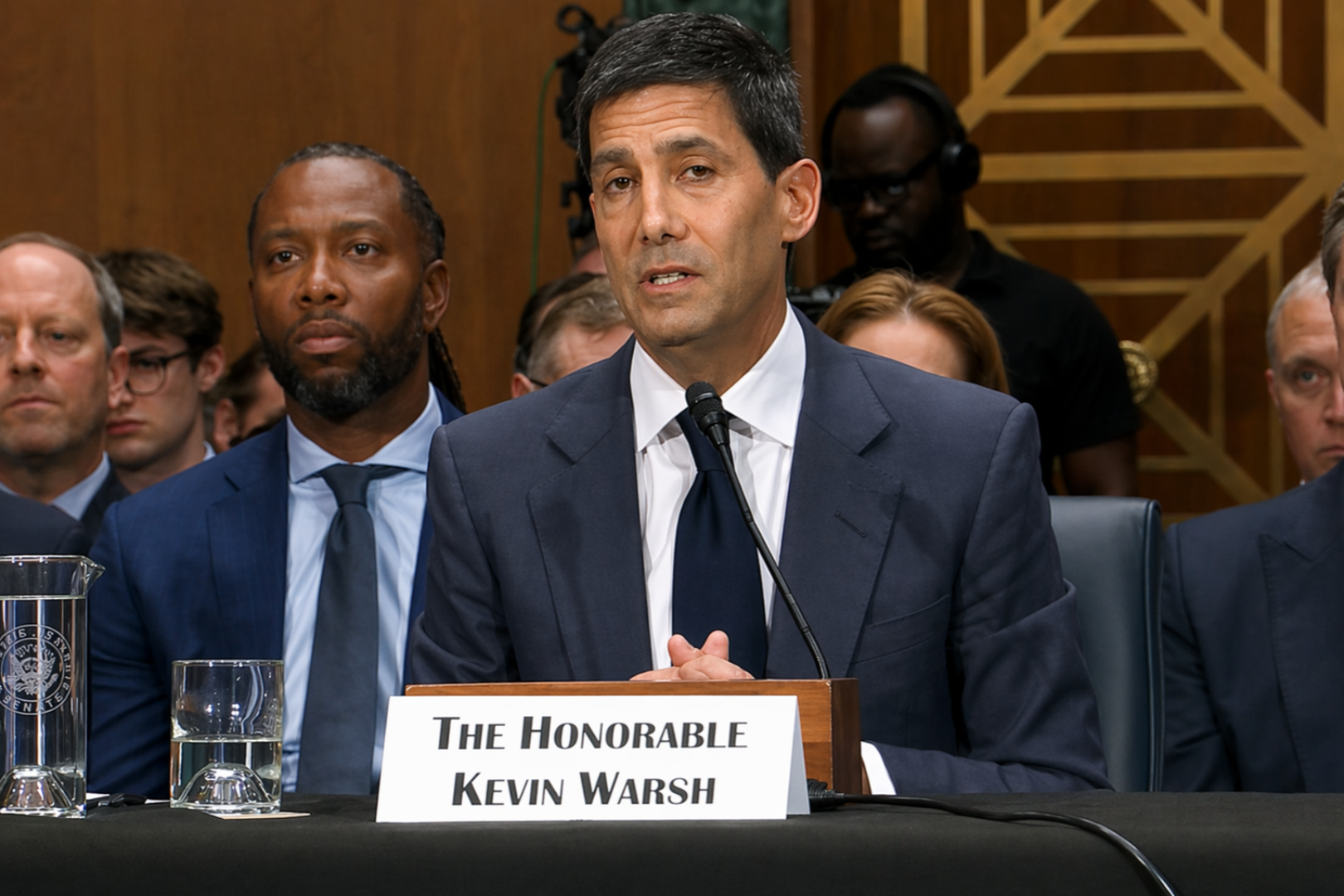
Warsh Hearing Concludes: What Are the Notable Signals for the Crypto Industry?

The Senate Banking Committee held a confirmation hearing for Judy Shelton, a Federal Reserve nominee, who faced intense questioning regarding her ability to maintain the central bank's independence amid pressure from President Trump to lower interest rates. Shelton denied any pre-arranged commitments on rate cuts and emphasized her independence, though Democrats remained skeptical, citing contradictions with Trump's public statements. Shelton characterized post-pandemic inflation as a major policy failure and called for a "regime change" in the Fed’s approach, including reforms to inflation measurement and communication strategies. She criticized the current practice of Fed officials frequently signaling future rate moves and did not commit to maintaining post-meeting press conferences, suggesting potential reductions in transparency. Regarding crypto markets, Shelton’s extensive investments in digital asset companies—including Solana, DeFi, and blockchain infrastructure—were noted, though she has pledged to divest these holdings due to ethics rules. Her familiarity with the crypto industry and deregulatory leanings may signal a more open, though cautious, stance toward digital assets. However, concerns were raised about potential conflicts of interest, especially given Trump family involvement in crypto-financial ventures. The timing of her confirmation remains uncertain, pending a Justice Department investigation into current Chair Powell. Shelton’s potential leadership could lead to a more hawkish, productivity-focused Fed with tighter policy communication—factors that may significantly influence liquidity conditions and macro narratives for crypto markets.

marsbit3 h fa

Warsh Hearing Concludes: What Are the Notable Signals for the Crypto Industry?

marsbit3 h fa

Trading

Spot
Futures

Articoli Popolari

Come comprare HOUSE

Benvenuto in HTX.com! Abbiamo reso l'acquisto di Housecoin (HOUSE) semplice e conveniente. Segui la nostra guida passo passo per intraprendere il tuo viaggio nel mondo delle criptovalute.Step 1: Crea il tuo Account HTXUsa la tua email o numero di telefono per registrarti il tuo account gratuito su HTX. Vivi un'esperienza facile e sblocca tutte le funzionalità,Crea il mio accountStep 2: Vai in Acquista crypto e seleziona il tuo metodo di pagamentoCarta di credito/debito: utilizza la tua Visa o Mastercard per acquistare immediatamente HousecoinHOUSE.Bilancio: Usa i fondi dal bilancio del tuo account HTX per fare trading senza problemi.Terze parti: abbiamo aggiunto metodi di pagamento molto utilizzati come Google Pay e Apple Pay per maggiore comodità.P2P: Fai trading direttamente con altri utenti HTX.Over-the-Counter (OTC): Offriamo servizi su misura e tassi di cambio competitivi per i trader.Step 3: Conserva Housecoin (HOUSE)Dopo aver acquistato Housecoin (HOUSE), conserva nel tuo account HTX. In alternativa, puoi inviare tramite trasferimento blockchain o scambiare per altre criptovalute.Step 4: Scambia Housecoin (HOUSE)Scambia facilmente Housecoin (HOUSE) nel mercato spot di HTX. Accedi al tuo account, seleziona la tua coppia di trading, esegui le tue operazioni e monitora in tempo reale. Offriamo un'esperienza user-friendly sia per chi ha appena iniziato che per i trader più esperti.

243 Totale visualizzazioniPubblicato il 2025.04.27Aggiornato il 2025.04.27

Come comprare HOUSE

Discussioni

Benvenuto nella Community HTX. Qui puoi rimanere informato sugli ultimi sviluppi della piattaforma e accedere ad approfondimenti esperti sul mercato. Le opinioni degli utenti sul prezzo di HOUSE HOUSE sono presentate come di seguito.

活动图片