Aave's Internal Conflict Escalates, Morpho Quietly Doubles: Is the Lending Throne About to Change Hands?

marsbitPubblicato 2026-03-01Pubblicato ultima volta 2026-03-01

Introduzione

The article discusses the escalating internal conflicts within Aave and the rising prominence of Morpho in the decentralized lending space. Aave, the current market leader, is facing significant governance disputes, including a controversial $51 million funding proposal and accusations of financial mismanagement, leading to internal friction and potential delays in decision-making. In contrast, Morpho has transitioned to Morpho Blue, a modular, permissionless lending protocol that allows isolated markets with risk parameters set by independent curators rather than global DAO votes. This design reduces governance friction and enables faster adjustments. Morpho has demonstrated strong growth, with TVL surpassing $9.5 billion, active loans exceeding $3.5 billion, and quarterly revenue around $50 million. User growth has also been robust, expanding from 30,000 to 400,000 active addresses. A significant catalyst for Morpho is the involvement of Apollo Global Management, which plans to acquire 90 million MORPHO tokens (9% of supply) over 48 months, valued at approximately $162 million. This partnership may signal Apollo’s strategic move to leverage Morpho’s infrastructure for enhancing yields on its tokenized real-world assets (RWA), addressing liquidity challenges in the RWA market. While Aave’s governance issues may hinder its progress, Morpho’s innovative structure and institutional backing position it as a potential challenger for the lending throne. However, risks remain, i...

Original | Odaily Planet Daily (@OdailyChina)

Author | DingDong (@XiaMiPP)

Altcoins are dead—this is a consensus that crypto users have been reluctant to admit but have had to face over the past year. Even former blue-chip tokens have fallen into prolonged sideways movement or gradual decline amid the continuous market weakness, showing little sign of recovery.

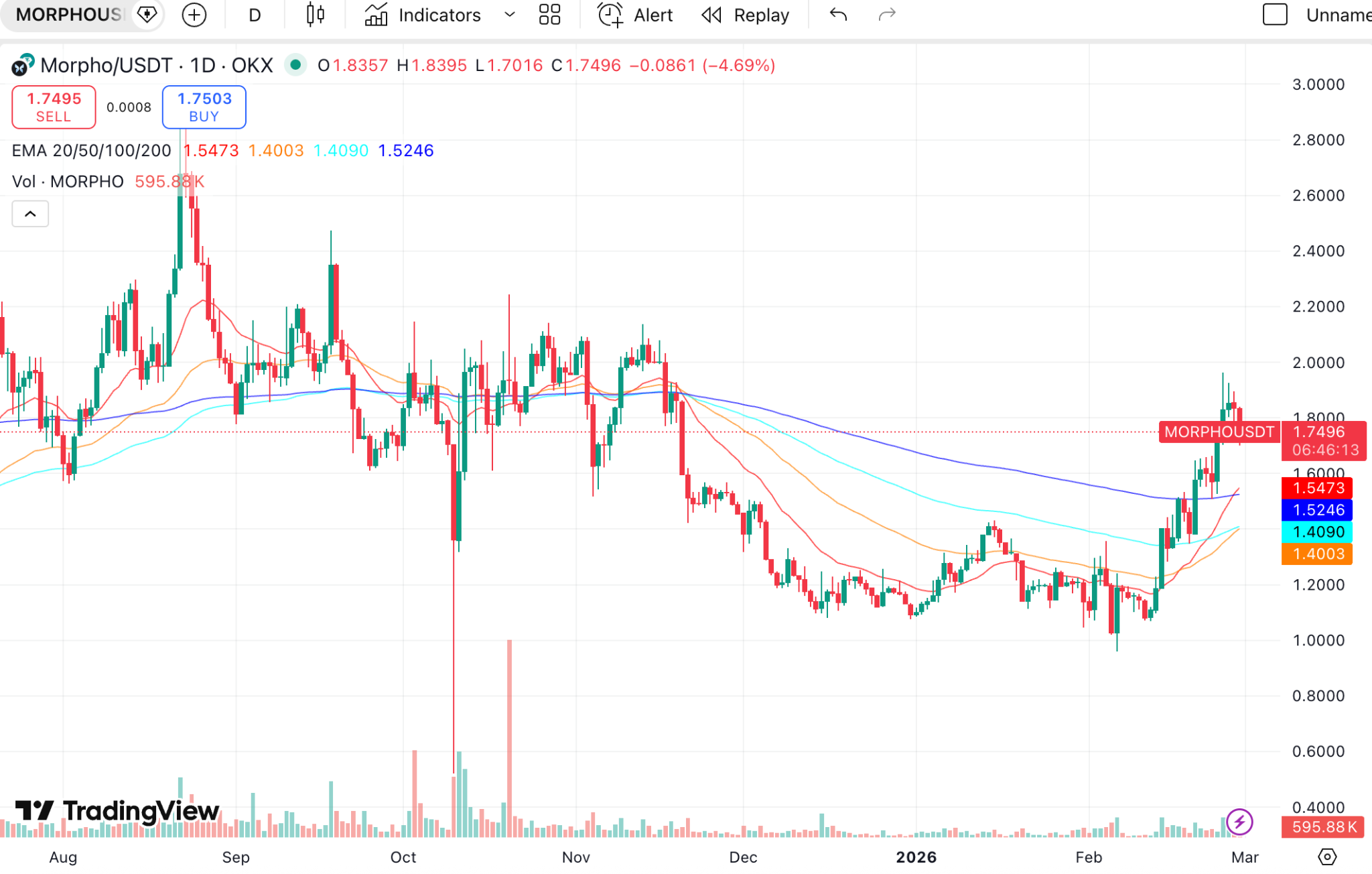
However, amidst this overall slump, the MORPHO token has rebounded from a low of $0.96 in early February to the range of $1.8-$1.9, doubling against the trend. From the daily chart perspective, this rebound has largely formed a rounded bottom pattern, potentially signaling a bottom reversal. Is this surge merely driven by short-term market sentiment, or is it the start of a trend fueled by the resonance of fundamental and structural variables?
When the Old Dynasty Begins to Consume Itself

Morpho is a lending protocol launched in 2021. Initially, its mechanism was similar to lending protocols like Aave and Compound. However, in 2023, Morpho began rolling out Morpho Blue (the current main version), completely transforming into an independent, permissionless lending base layer, steadily ranking among the top lending ecosystems on Ethereum.

Nevertheless, in the lending sector, Aave remains the largest in scale and the strongest in brand—an undeniable fact. But recently, Aave has once again plunged into serious governance controversy due to a $51 million "Aave Will Win" funding framework proposed by its founder, Stani.

This fund was originally planned to support new product development, and the proposal explicitly stated that future related brand revenue would be 100% returned to the DAO treasury—a move that seemed like an ideal operation of "surrendering control and benefiting the community" but unexpectedly ignited long-simmering internal conflicts within the DAO.

The reason is that DAO governance representative and ACI founder Marc Zeller publicly released an "audit" report on February 25, accusing Labs of low fund utilization, having taken approximately $86 million from the DAO over the past few years without transparent disclosure. Meanwhile, core DAO developer BGD Labs announced it would exit in April 2026 due to governance friction. The founder's high voting power once again dominated the controversial proposal, further pushing the entire DAO into an open tug-of-war over power and fund distribution. As early as December last year, cracks had already appeared within the Aave community. For details, refer to Will AAVE Still Be Worth Buying After the Second-Biggest Holder Dumped Their Bag Amid Deep Divisions?

Now, while Aave is slowing down due to governance friction, the "simplicity" of Morpho's governance model is beginning to attract attention. Aave can be considered the first-generation lending governance paradigm of "DAO-led, global parameter adjustment," where all risk parameters (such as collateral factors, liquidation thresholds) are determined by global DAO voting. While this design ensures overall robustness, it easily falls into a governance bottleneck—any minor parameter adjustment requires broad community consensus, and any disagreement can lead to delays, especially during contentious periods, potentially paralyzing decision-making.

In contrast, Morpho follows a second-generation path of modularity and market-driven mechanisms: the protocol itself is highly permissionless, allowing anyone to create isolated markets at any time. The risk parameters for each market (such as LTV, interest rate curves, liquidation incentives) are set by independent professional risk managers (curators), rather than relying on全网 DAO voting. This means risks are strictly localized within individual markets, with responsibility分散到 specific curators, significantly speeding up decision-making. Curators can quickly iterate parameters based on actual market conditions without waiting for global consensus. The advantage of this design is that it greatly reduces governance friction and decision-making delays.

When the old dynasty begins to consume itself internally, it might be the opportunity for new forces to overtake on the curve.

Data Verification: Does It Deserve This Window of Opportunity?

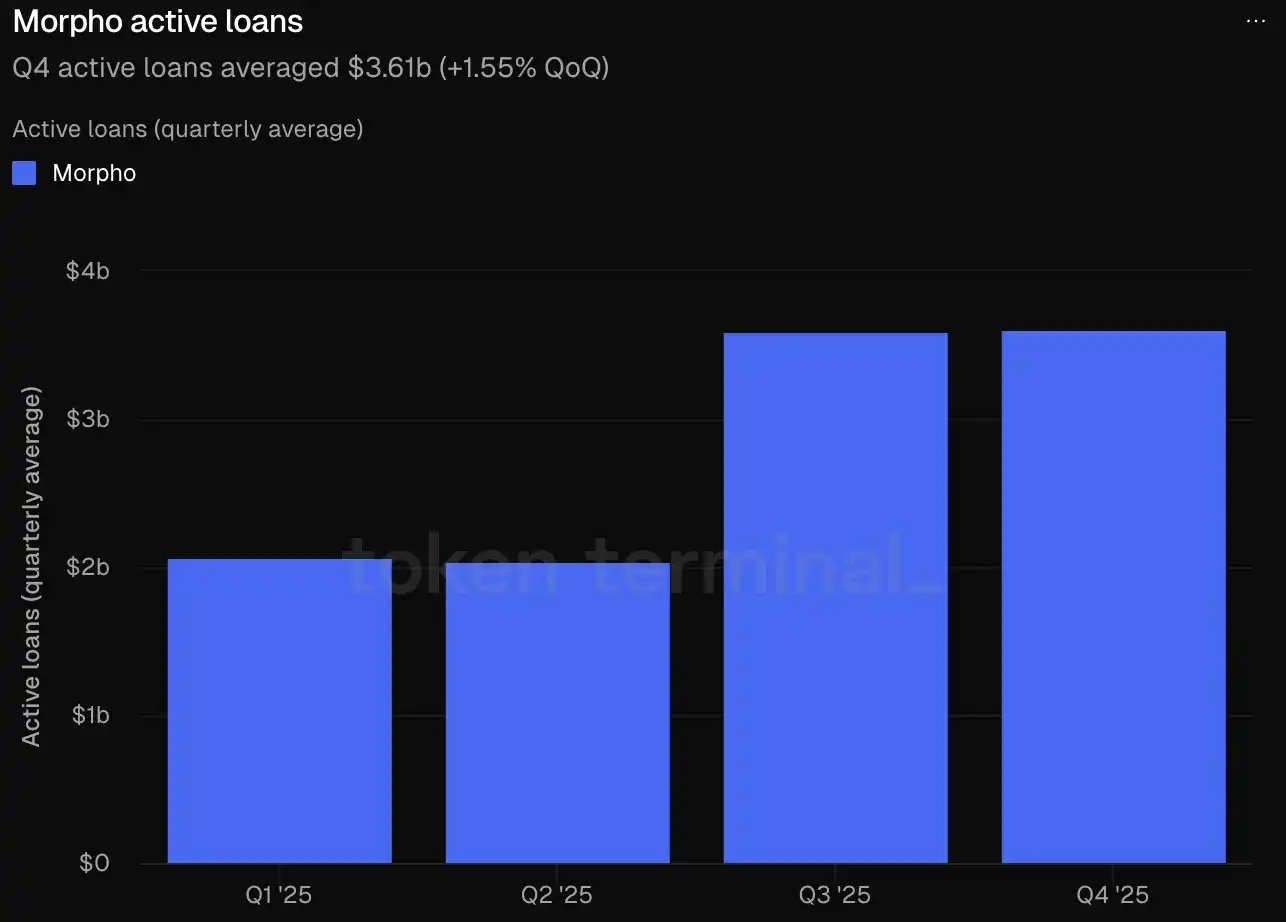
Let's look at Morpho's fundamentals to see if it has the potential to challenge Aave's lending throne. According to Tokenterminal data, in Q3 and Q4 of 2025, Morpho protocol's TVL remained above $9.5 billion, an increase of about 80% compared to the first half of the year;
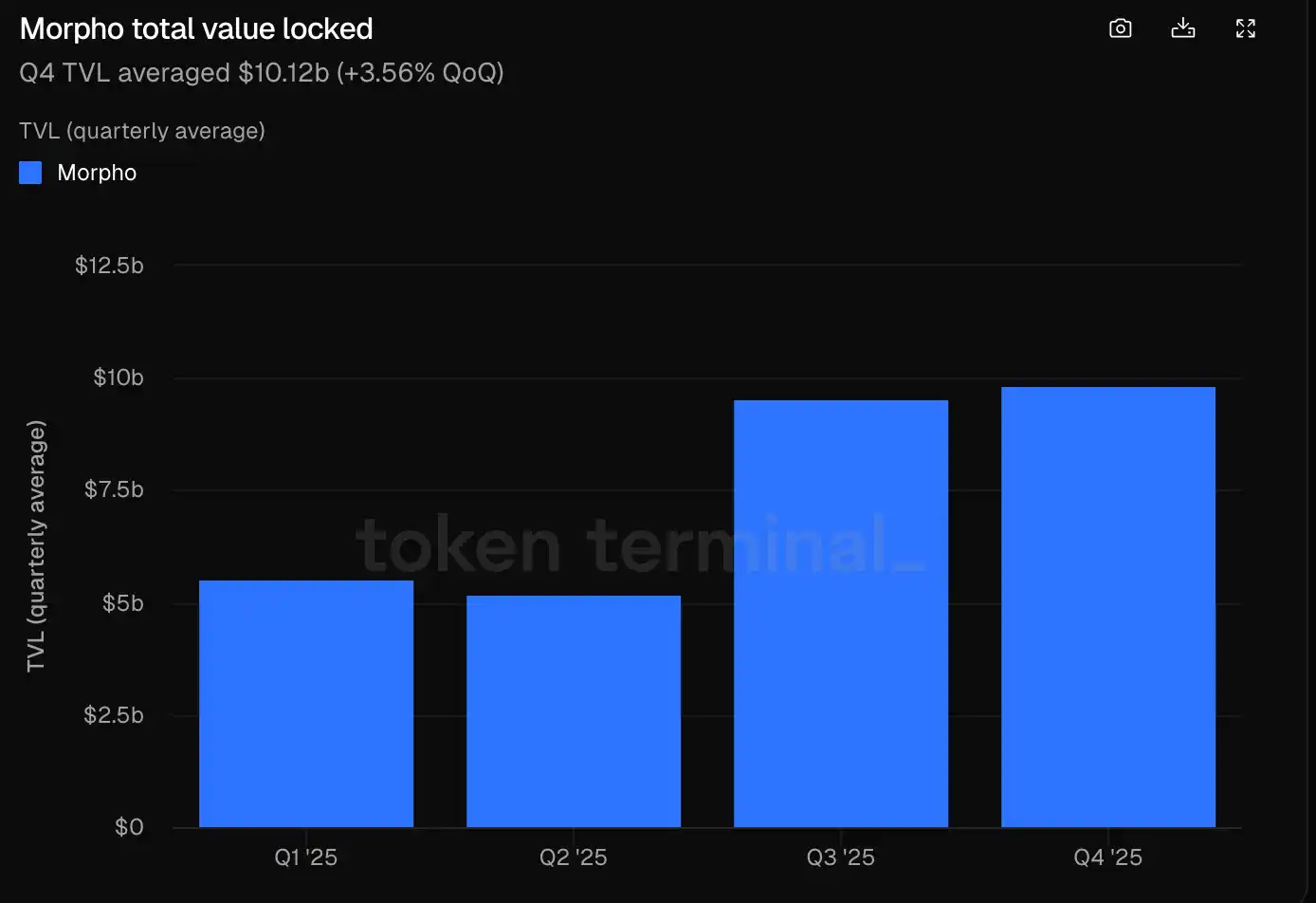
The active loan size within the protocol also stayed above $3.5 billion in both Q3 and Q4, a year-on-year increase of about 80%.
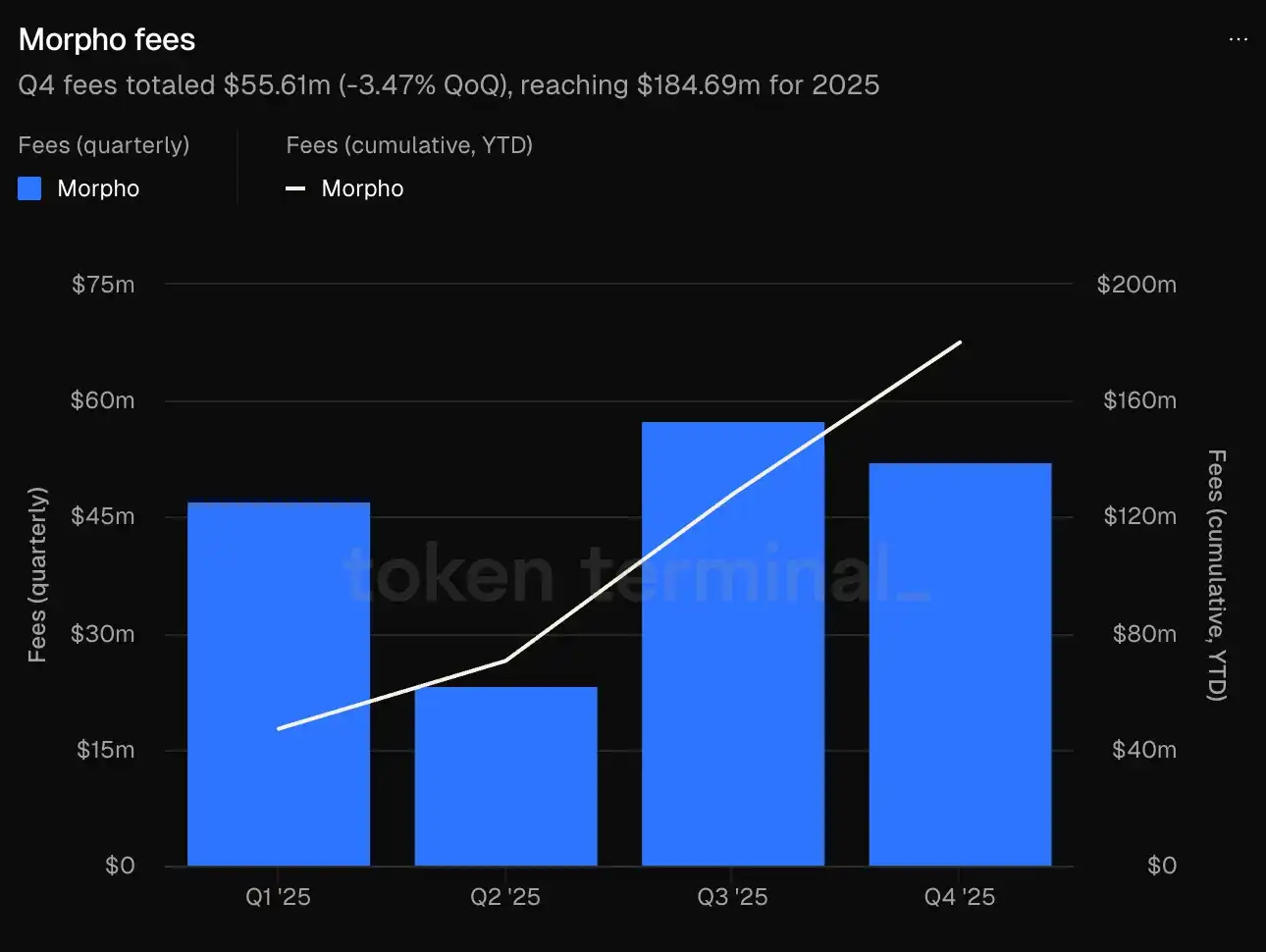
Regarding one of the core metrics for DeFi protocols—protocol revenue—aside from a relatively weak performance in Q2, it remained stable at around $50 million in other quarters.
User growth is even more直观, with its quarterly active addresses rapidly expanding from about 30,000 in Q1 to the 400,000 level, showing strong organic growth momentum.
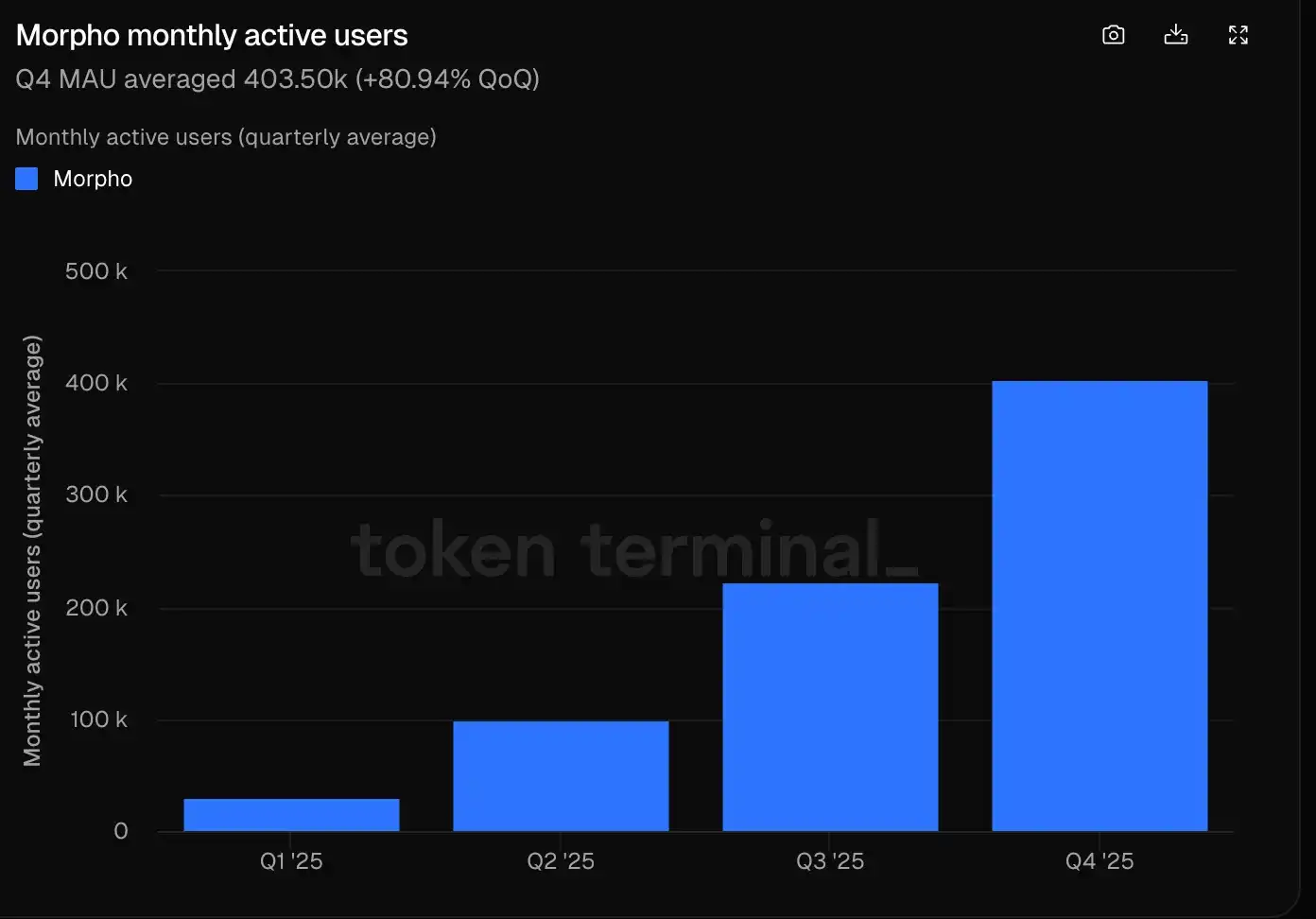
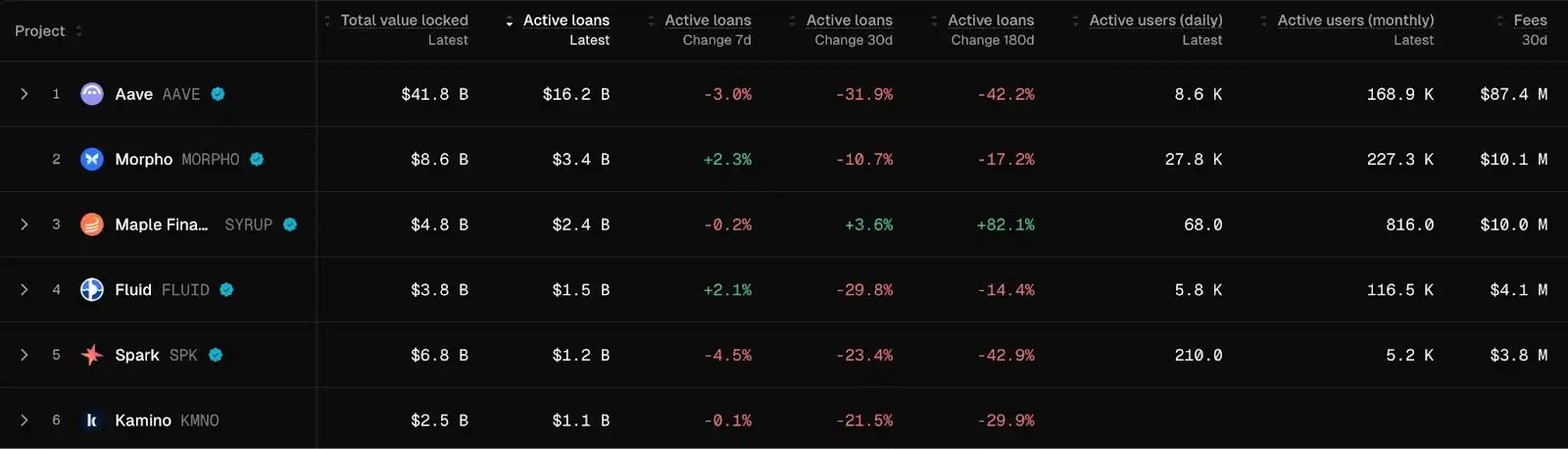
Although Morpho's current TVL and active loan size still lag behind Aave's, its user growth rate has made it one of the most aggressive "dark horses" in the lending赛道. Especially against the backdrop of the entire DeFi sector generally facing pressure and experiencing阵痛 in 2025, Morpho's performance can be considered achieving counter-trend high growth,足以证明 its product model has withstood the market test. Protocols that can continuously attract capital and users during a bear market often possess stronger爆发力 in the next cycle.
Institutional Variable: When Traditional Capital Starts Betting

Good fundamental data performance only proves that the protocol has a solid foundation, but the bigger catalyst that truly changes the market cap curve is the entry of traditional financial giants.

On February 13, Wall Street asset management giant Apollo Global Management signed a重磅 cooperation agreement with the Morpho Association, the non-profit organization behind Morpho. Specifically, Apollo plans to gradually acquire up to 90 million MORPHO tokens over the next 48 months, equivalent to approximately 9% of Morpho's total supply. At the current price of $1.8, this is worth about $162 million.

From a purely trading perspective, this will bring sustained buying demand for MORPHO. But if you know Apollo, you'll understand that this is more like its strategic penetration into DeFi.

Apollo manages assets接近 $940 billion, and its private credit business is known for pursuing high yields. The on-chain world can provide opportunities for leverage amplification and global instant liquidity. It began dipping its toes into the crypto industry in 2024, with RWA as its main battlefield, partnering with Securitize to tokenize its diversified credit strategy into ACRED, which has now reached a scale of $130 million.
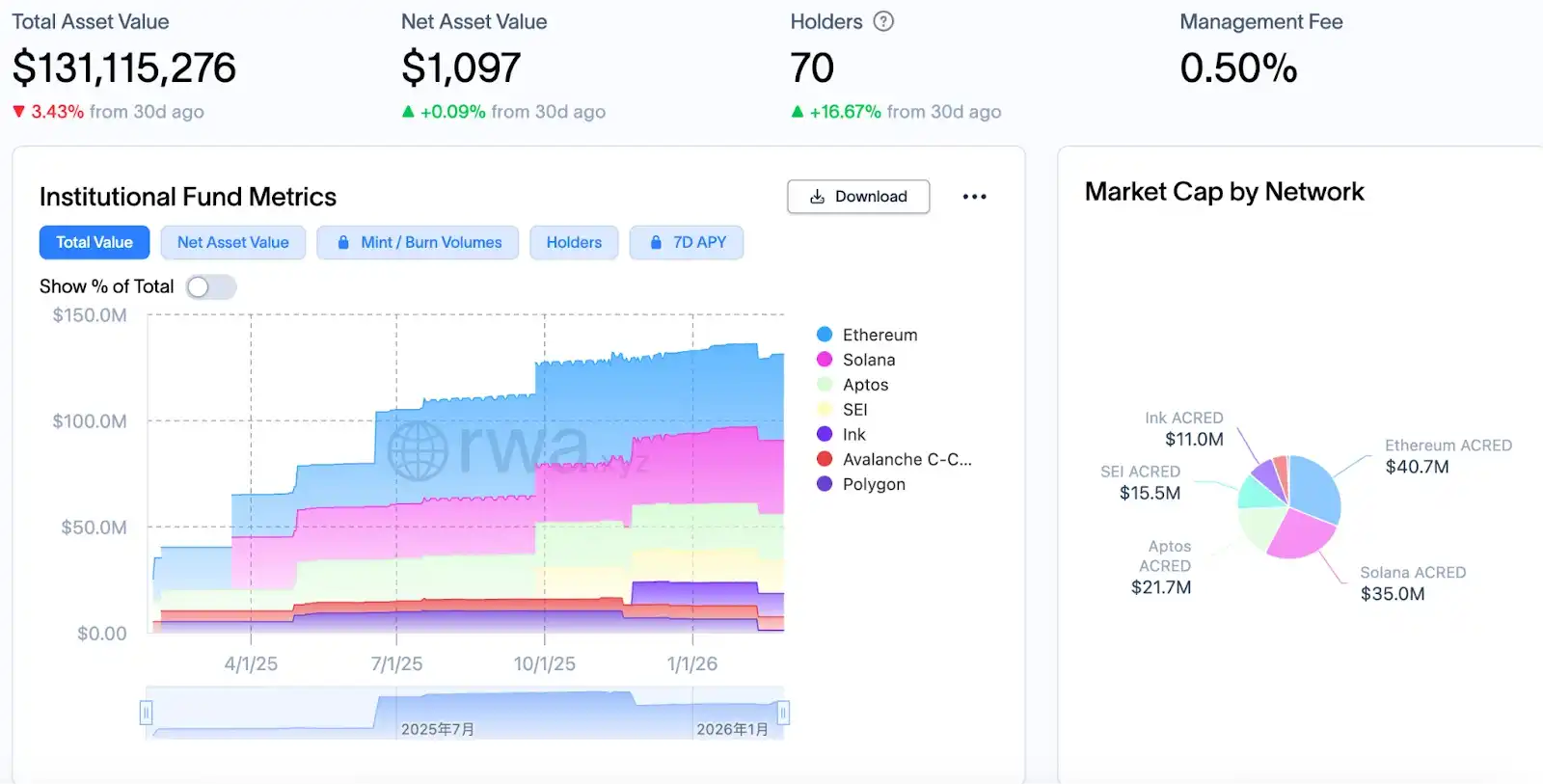
However, the core challenge after bringing RWA on-chain has never been issuance, but liquidity release. Assets can be tokenized, but without efficient lending markets and leverage environments, their yield potential is difficult to unleash. Looking at Apollo's布局, it's not unreasonable to speculate that it likely intends to use Morpho's lending markets to amplify the yield of its credit products. Because Morpho's modular lending structure provides a天然适配场景 for RWA—isolated markets, independent risk parameters, customizable leverage environments. These mechanisms are far more attractive to institutions than parameter games under unified governance.

This conjecture is not without basis, because although Morpho is highly permissionless, key parameter options still need to be expanded through Morpho DAO governance. If Apollo holds a significant amount of MORPHO tokens, it will gain corresponding voting power and could promote the addition of RWA-friendly parameters. If Apollo's intentions materialize as推测, Morpho's modular design could attract accelerated inflows of more institutional capital, making it key infrastructure for the on-chain amplification of institutional credit products. This institutional-level endorsement would not only strengthen Morpho's competitive advantage but also narrow the gap with Aave—especially while Aave is deeply mired in internal governance issues.

Conclusion

Aave's governance crisis may continue to drag down its market cap and liquidity in the short term, while Morpho, leveraging its product structural advantages and institutional catalysts, is quietly rewriting the competitive landscape of the lending赛道. However, whether Morpho can truly shake Aave's throne still depends on observing its continued TVL追赶 and the follow-up of more TradFi players. But至少 for now, the power transition for the "second-generation lending leader" has already begun.

Risk提示: MORPHO tokens will undergo a large unlock in March, belonging to the Morpho DAO, Morpho Association treasury, and core contributors. Short-term liquidity impact requires attention.


Domande pertinenti

QWhat is the main reason for the recent governance controversy within Aave?

AThe controversy stems from founder Stani's proposal for a $51 million 'Aave Will Win' funding framework, which, despite intending to support new product development and return 100% of future brand revenue to the DAO treasury, ignited internal conflicts. This was exacerbated by an audit report from ACI founder Marc Zeller accusing Labs of low fund utilization and lack of transparency, alongside governance friction leading to core developer BGD Labs announcing their departure.

QHow does Morpho's governance model differ from Aave's, and what advantage does it offer?

AMorpho employs a modular, market-driven governance model where independent risk managers (curators) set parameters for isolated markets, reducing reliance on global DAO votes. This allows for faster decision-making, minimized governance friction, and localized risk, unlike Aave's DAO-led model which requires broad consensus for any parameter adjustments, often leading to delays and paralysis during disputes.

QWhat significant partnership did Morpho recently secure, and what are its potential impacts?

AMorpho partnered with Apollo Global Management, which plans to acquire up to 90 million MORPHO tokens (about 9% of total supply) over 48 months, valued at approximately $162 million at current prices. This partnership is strategic, potentially enabling Apollo to leverage Morpho's lending markets to amplify yields for its tokenized credit products (RWA), attracting more institutional capital and enhancing Morpho's competitive position.

QWhat key metrics demonstrate Morpho's growth and resilience in the DeFi lending sector?

AMorpho's TVL remained above $9.5 billion in Q3 and Q4 2025, an 80% increase from the first half of the year. Active loans exceeded $3.5 billion in those quarters, also up 80% year-over-year. Protocol revenue stabilized around $50 million per quarter, and active addresses grew from about 30,000 in Q1 to 400,000, indicating strong organic growth despite overall DeFi pressures.

QWhat risk should investors be aware of regarding MORPHO token in the near term?

AInvestors should note that MORPHO token will undergo significant unlocking in March, with releases to the Morpho DAO, Morpho Association reserves, and core contributors, which could cause short-term liquidity shocks and price volatility.

Letture associate

How Difficult is Chip Making? A Division Error Costs 475 Million Dollars

How Hard Is It to Make a Chip? A Division Error Cost $475 Million Chip expert Shi Kan, a researcher at the Chinese Academy of Sciences and a popular tech creator, explains the immense challenges of chip development. Chips are foundational to modern technology, but their creation is extraordinarily difficult. The journey from sand to a functional chip involves complex design and manufacturing, but a critical bottleneck is verification—ensuring the design works flawlessly before costly production. A single, undetected bug can have catastrophic consequences, as illustrated by the infamous 1994 Intel Pentium FDIV bug. A flaw in the floating-point division unit forced a recall costing $475 million. Unlike software, chips cannot be easily patched after manufacture, making "first-time success" paramount. However, industry surveys show only 24% of chip projects achieve this; over three-quarters require at least one costly re-spin due to design flaws. Verification has thus become the dominant phase, consuming up to 70% of the design cycle. The core challenge is a "verification impossible triangle" between high performance, good debuggability, and low cost. Exhaustively verifying a modern CPU core could take 15,000 years with software simulation, or 30 years with advanced hardware emulation—timeframes utterly impractical for development. Despite being essential, verification is often seen as unglamorous "dirty work," receiving less academic attention than fields like AI. Shi and his team are tackling this by developing an agile verification research framework called ENCORE, based on FPGA technology, to improve verification efficiency and debug capability. Beyond research, Shi engages in public science communication through long-form video content, aiming to demystify chip technology, AI, and computer science. He argues for the value of pursuing "hard and long-term" endeavors, whether in the meticulous world of chip verification or in creating substantive educational content, believing such sustained effort is likely the right path forward.

marsbit12 min fa

How Difficult is Chip Making? A Division Error Costs 475 Million Dollars

marsbit12 min fa

Blockchain Has Finally Started to Sail into the Mainstream After 18 Years

Blockchain Finds Its True Path After 18 Years: Becoming the Financial Backbone for AI Agents and Autonomy This analysis explores a pivotal shift in the blockchain and crypto investment landscape, driven by the dominance of AI. Major venture capital firms, including Variant, Paradigm, Haun Ventures, and YZi Labs, are moving beyond pure "crypto" investment theses. They are expanding their focus to AI, robotics, and frontier tech, signaling that blockchain is no longer seen as a standalone sector but as an underlying infrastructure layer. The core argument is that blockchain's killer application may not be user-facing apps, but rather providing the economic rails for the coming wave of AI agents, autonomous robots, and automated systems. Key capabilities like self-custody wallets, programmable stablecoins for micropayments, on-chain identity, and verifiable smart contracts are positioned as essential for a future where machines conduct economic activity. The recent $1.4 billion investment by Tether (via its venture arm) in German robotics company NEURA Robotics exemplifies this, aiming to embed Tether's wallet tools directly into robots for autonomous transactions. While many "AI + Crypto" projects remain superficial, the article concludes that true value lies where crypto is a necessary component—enabling machine-to-machine payments, agent autonomy, verifiable data provenance, and open financial settlement for the AI era. For crypto venture capital, this convergence with AI represents both an adaptation to shifting capital flows and a potential path to unlocking the large-scale, non-speculative utility the industry has long sought.

marsbit32 min fa

Blockchain Has Finally Started to Sail into the Mainstream After 18 Years

marsbit32 min fa

Blockchain has finally begun sailing toward the main channel after 18 years

After 18 years of development, blockchain technology is beginning to move from a specialized niche into mainstream adoption, according to a recent industry analysis. The shift is reflected in the changing strategies of major crypto venture capital firms, which are expanding their focus beyond pure "digital ownership" towards broader themes like "autonomy." The report highlights that leading VC firms like Variant, Paradigm, Haun Ventures, and YZi Labs are broadening their investment mandates to include not only crypto but also artificial intelligence (AI), robotics, biotech, and other frontier technologies. This reflects a recognition that the isolated "crypto investment" narrative is losing appeal to limited partners (LPs) as capital and attention increasingly flow toward AI and other high-growth tech sectors. A key emerging thesis is that blockchain's most significant future application may not be as a consumer-facing product, but as the underlying economic and settlement infrastructure for the AI era. As AI agents and autonomous systems become more prevalent, they will require programmable, global, and low-cost payment networks (like stablecoins), verifiable digital identities, and secure wallets to manage transactions and assets on behalf of users. The investment by stablecoin issuer Tether into robotics company NEURA, with plans to integrate its wallet technology, is cited as a prime example of this convergence. However, the article cautions that simply labeling projects as "AI + Crypto" is insufficient. True value lies in integrations where blockchain technology is essential—such as enabling machine-to-machine micropayments, verifiable data provenance for AI, or transparent governance for autonomous organizations—rather than being a superficial marketing add-on. In conclusion, while AI currently dominates the tech narrative and capital flows, it may ultimately create the real-world, high-frequency demand that the crypto industry has long sought. For crypto VCs and projects, the path forward is to position blockchain not as a competing sector, but as a critical foundational layer powering autonomy and economic activity in an AI-driven future.

链捕手39 min fa

Blockchain has finally begun sailing toward the main channel after 18 years

链捕手39 min fa

Y Combinator Co-founder: How to Make a Billion Dollars?

The Y Combinator co-founder argues that becoming a billionaire by founding a successful startup is not only possible but demonstrably achievable without unfair or unethical practices. He disputes a politician's claim to the contrary, using the example of a founder whose company grew at 93% monthly solely through creating a product users loved and recommended. The core mechanism is exponential growth. A conservative 15% monthly growth rate compounds to a 4384x increase over five years, which can easily lead to billion-dollar valuations and founder wealth. The process depends on two key variables: the growth rate and the duration it can be sustained. A high growth rate stems from a great product that users naturally promote, while a long duration requires a large enough market. For aspiring founders, especially young ones, the simplest path is to build something they and their friends genuinely need. Young people's current needs often predict future mass-market trends. He advises against actively "searching" for ideas, as this tends to filter out unconventional but promising ones. Instead, inspiration should come from working on interesting projects with friends, as many iconic companies (e.g., Apple, Facebook) started this way. Ultimately, building a massively valuable startup is not about exploitation but empathy: deeply understanding a user group and building a product that significantly improves their lives. This, powered by exponential growth in a large market, is the legitimate path to immense wealth creation.

Foresight News41 min fa

Y Combinator Co-founder: How to Make a Billion Dollars?

Foresight News41 min fa

Trading

Spot
Futures
活动图片