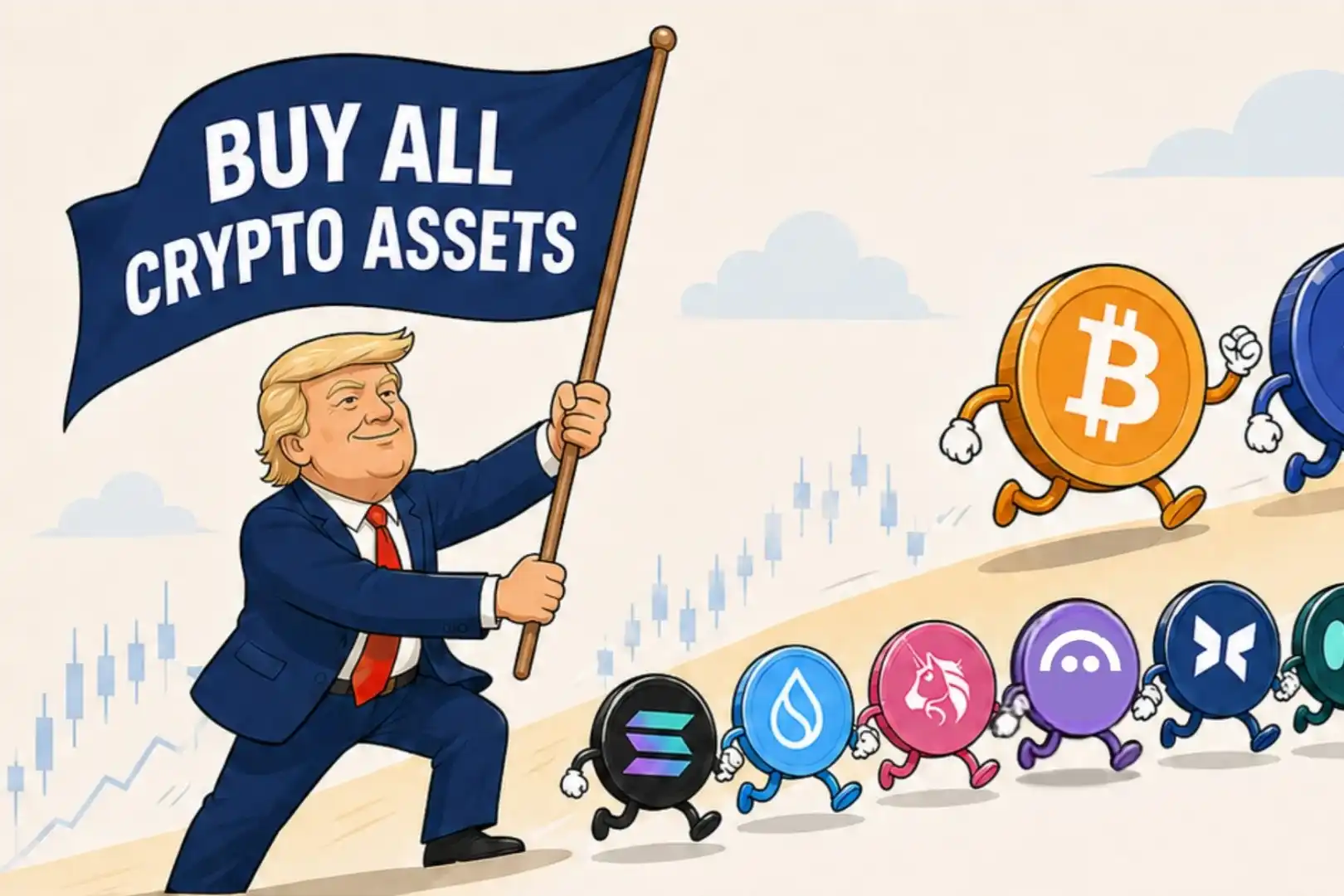
AAVE jumps 9% after Fed cut – Can V4 upgrade fuel more upside?

ambcryptoPubblicato 2025-12-13Pubblicato ultima volta 2025-12-13

Introduzione

AAVE surged approximately 9% to around $205 following the Federal Reserve's interest rate cut, with increased attention on its upcoming V4 upgrade. The upgrade introduces a redesigned liquidation engine aimed at improving capital efficiency and risk controls. Market response was swift, with Open Interest rising by $34 million, indicating renewed leveraged trading interest. On-chain activity also strengthened, with receiving addresses nearly doubling to 1.2K, suggesting broader participation. Weekly protocol fees increased by $0.3 million, reaching $15.47 million. However, a significant liquidity cluster near $223 may act as a resistance level. While the upgrade has fueled momentum, high leverage could make the token sensitive to market volatility.

AAVE emerged as a key beneficiary of the recent Federal Reserve interest rate cuts.

The token gained roughly 9% on the day, trading near $205 at press time. That move unfolded as attention turned toward Aave’s [AAVE] upcoming V4 upgrade.

The upgrade introduced a redesigned liquidation engine, aimed at improving capital efficiency and strengthening risk controls across the protocol.

That shift appeared to resonate quickly with market participants, as both price action and derivatives data reflected renewed interest.

Liquidation engine sparked leverage rebound

Traders responded swiftly following the V4 announcement. Derivatives positioning, which had remained muted earlier, began to expand.

Open Interest climbed by approximately $34 million over the last 24 hours, according to CoinGlass data. That rise marked a clear reversal from the relatively flat positioning seen earlier in the week.

The increase suggested growing leveraged participation, particularly from larger traders willing to deploy capital alongside the upgrade narrative.

Even so, elevated Open Interest also raised sensitivity to sharp price swings, keeping volatility risks in focus.

Network activity picked up alongside price

On-chain activity strengthened in parallel with Derivatives expansion. Active Receiving Addresses increased sharply during the same period.

CryptoQuant data showed receiving addresses nearly doubled after the 7th of December. At press time, the metric stood near 1.2K.

That rise pointed to broader token movement across wallets, signaling increased participation rather than isolated whale transfers.

At the same time, Aave’s protocol revenue improved. Token Terminal data showed weekly network fees increased by roughly $0.3 million.

Total fees reached $15.47 million, reflecting income from lending interest and liquidation-related activity across the protocol.

That revenue growth aligned with higher loan usage, reinforcing the link between network fundamentals and price momentum.

Liquidity cluster defined upside focus

Despite the rally, Derivatives Heatmaps highlighted a clear liquidity barrier above current prices.

CoinGlass’ Liquidation Heatmap showed a $1.99 million liquidity cluster around the $223 level.

That zone stood out as a near-term price magnet if bullish momentum persisted and broader market conditions remained stable.

However, failure to sustain leverage support could expose AAVE to sharper pullbacks, given the recent build-up in derivatives positioning.


Final Thoughts

  • Aave’s recent move highlighted how protocol upgrades can quickly reshape trader behavior across derivatives and on-chain activity.
  • While leverage and fees supported momentum, elevated positioning suggested price action may remain sensitive to market conditions.


Crypto di tendenza

Letture associate

Li Fei-Fei's Latest Long-Form Article: When Video Generation, Robotics, and NVIDIA All Call Themselves World Models, We Need a Taxonomy

In a new article, Dr. Fei-Fei Li addresses the widespread and often inconsistent use of the term "world model" in AI. She proposes a clear, functional taxonomy rooted in the classic Partially Observable Markov Decision Process (POMDP) loop (agent → action → state → observation → agent). According to this framework, current systems called "world models" are different projections of this loop, categorized by their primary output: 1. **Renderers**: Output observations (pixels). Their goal is visual fidelity for human consumption (e.g., video generation models like Sora). They are the most commercially mature but are limited by a focus on appearance over physical accuracy. 2. **Simulators**: Output states (geometric, physical, dynamic representations). They provide a structurally accurate world for both human professionals (e.g., architects) and computational agents (e.g., robots for training). Li argues simulators are the crucial, underappreciated bridge, as they can underpin both rendering and planning. 3. **Planners**: Output actions. Given an observation and a goal, they decide what an agent should do next (e.g., robotic action models). This area is highly promising but remains the least mature for real-world deployment. Li highlights a key trend: the boundaries between these three categories are beginning to blur, as they all rely on a shared underlying understanding of geometry, physics, and dynamics. The logical endpoint is a unified world foundation model capable of switching between rendering, simulation, and planning based on downstream needs. This convergence, she concludes, is central to advancing spatial intelligence—enabling machines not just to talk about the world, but to truly understand, imagine, and interact with it.

marsbit1 h fa

Li Fei-Fei's Latest Long-Form Article: When Video Generation, Robotics, and NVIDIA All Call Themselves World Models, We Need a Taxonomy

marsbit1 h fa

Forbes Feature: Stablecoin Cross-Border Payments Are Faster, But Not Yet Cheaper

A Forbes feature delves into the state of stablecoin-based cross-border payments, noting rapid growth but a key shortfall: while faster and more accessible, they are not yet cheaper. At a recent industry conference in Mexico City, optimism about technology, regulation, and volume was tempered by discussions with practitioners. The core issue is liquidity. Traditional FX brokers charge 60-70 basis points, and stablecoins promise to slash this to 2-5 basis points. However, this theoretical cost advantage cannot be realized until deep liquidity pools are established at scale, requiring significant institutional capital inflow. A major adoption barrier is trust. Businesses often rely on long-standing relationships with traditional brokers, valuing reliability over marginal cost savings. This shift will be gradual. Furthermore, successful companies in the space are not positioning themselves as replacements for legacy systems like SWIFT, but as complements. They leverage stablecoins for speed while using traditional rails for their standardization and reliability in ensuring accurate payment details—a critical factor for supplier payments to avoid customs issues. Companies like Caliza, experiencing high monthly growth, exemplify this hybrid approach. The industry anticipates consolidation, as long-term viability will depend on securing the essential trifecta: proper licensing, robust fiat on/off-ramps, and deep liquidity. Without these, firms risk being mere intermediaries rather than building sustainable businesses.

marsbit1 h fa

Forbes Feature: Stablecoin Cross-Border Payments Are Faster, But Not Yet Cheaper

marsbit1 h fa

Li Feifei's Latest Article: When Video Generation, Robotics, and NVIDIA All Claim to Have 'World Models,' We Need a Taxonomy

"World Model" has become a widely used yet ambiguous term in AI. Drawing from the classic POMDP framework (agent → action → state → observation), this article proposes a functional taxonomy to clarify the concept. It identifies three distinct types, categorized by their output in the perception-action loop: 1. **Renderers**: Output visual observations (pixels). These models, like advanced video generators, prioritize visual fidelity but often lack underlying physical accuracy. 2. **Simulators**: Output the state of the world (geometry, physics, dynamics). They provide a structurally accurate representation for professionals (e.g., architects) and serve as training environments for robots and AI agents. 3. **Planners**: Output actions. Given an observation and a goal, they determine what an agent should do next, closing the perception-action loop (e.g., vision-language-action models). While renderers are currently the most commercially mature and planners are the most aspirational, the article argues that **simulators are the crucial, underappreciated hub**. By working at the level of geometry and physics, a simulator can project upwards to create visuals for humans and downwards to predict action consequences for agents. The future lies in the convergence of these three functions. Emerging research and products, like World Labs' Marble model which outputs both visual splats and physical collision meshes, are beginning to blur these boundaries. The logical endpoint is a unified world foundation model capable of rendering, simulating, and planning based on a shared understanding of spatial and temporal structures—ultimately enabling machines to understand, imagine, and interact with the physical world.

链捕手1 h fa

Li Feifei's Latest Article: When Video Generation, Robotics, and NVIDIA All Claim to Have 'World Models,' We Need a Taxonomy

链捕手1 h fa

Trading

Spot

Articoli Popolari

Come comprare AAVE

Benvenuto in HTX.com! Abbiamo reso l'acquisto di Aave Protocol (AAVE) semplice e conveniente. Segui la nostra guida passo passo per intraprendere il tuo viaggio nel mondo delle criptovalute.Step 1: Crea il tuo Account HTXUsa la tua email o numero di telefono per registrarti il tuo account gratuito su HTX. Vivi un'esperienza facile e sblocca tutte le funzionalità,Crea il mio accountStep 2: Vai in Acquista crypto e seleziona il tuo metodo di pagamentoCarta di credito/debito: utilizza la tua Visa o Mastercard per acquistare immediatamente Aave ProtocolAAVE.Bilancio: Usa i fondi dal bilancio del tuo account HTX per fare trading senza problemi.Terze parti: abbiamo aggiunto metodi di pagamento molto utilizzati come Google Pay e Apple Pay per maggiore comodità.P2P: Fai trading direttamente con altri utenti HTX.Over-the-Counter (OTC): Offriamo servizi su misura e tassi di cambio competitivi per i trader.Step 3: Conserva Aave Protocol (AAVE)Dopo aver acquistato Aave Protocol (AAVE), conserva nel tuo account HTX. In alternativa, puoi inviare tramite trasferimento blockchain o scambiare per altre criptovalute.Step 4: Scambia Aave Protocol (AAVE)Scambia facilmente Aave Protocol (AAVE) nel mercato spot di HTX. Accedi al tuo account, seleziona la tua coppia di trading, esegui le tue operazioni e monitora in tempo reale. Offriamo un'esperienza user-friendly sia per chi ha appena iniziato che per i trader più esperti.

335 Totale visualizzazioniPubblicato il 2024.12.11Aggiornato il 2026.06.02

Come comprare AAVE

Discussioni

Benvenuto nella Community HTX. Qui puoi rimanere informato sugli ultimi sviluppi della piattaforma e accedere ad approfondimenti esperti sul mercato. Le opinioni degli utenti sul prezzo di AAVE AAVE sono presentate come di seguito.

活动图片