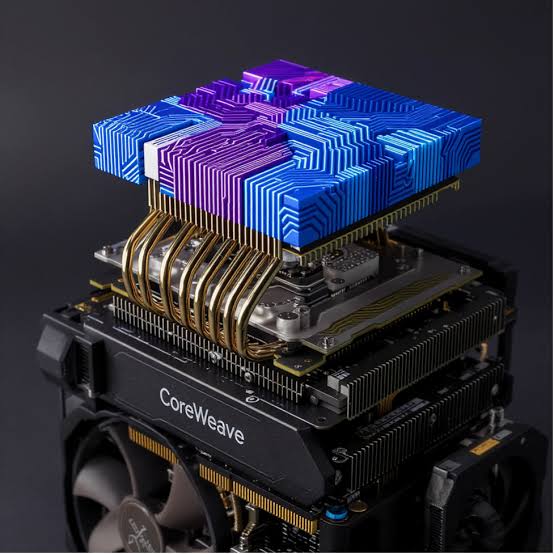
CoreWeave (Nasdaq: CRWV) reported revenue of $2.575 billion for the second quarter of fiscal year 2026, representing a year-over-year increase of approximately 112% (compared to $1.212 billion in the same period last year); diluted net loss per share widened from $0.60 to $1.14. Adjusted EBITDA doubled to $1.510 billion, but the margin decreased, and the GAAP operating margin turned negative. As demand and infrastructure capacity continue to expand, the revenue backlog reached approximately $104 billion.
Key Performance Data
Revenue more than doubled, but total operating expenses increased by approximately 120% to $2.624 billion, growing slightly faster than revenue. Cost of revenue grew by about 181% to $879 million, while technology and infrastructure expenses increased by approximately 125% to $1.507 billion, leading the operating profit to turn from a gain of $19 million to a loss of $49 million.
Adjusted EBITDA grew by about 101%, but its margin declined by 3 percentage points. The significant gap between Adjusted EBITDA and GAAP operating profit partially reflects $1.393 billion in depreciation and amortization, as well as other adjustments such as stock-based compensation.
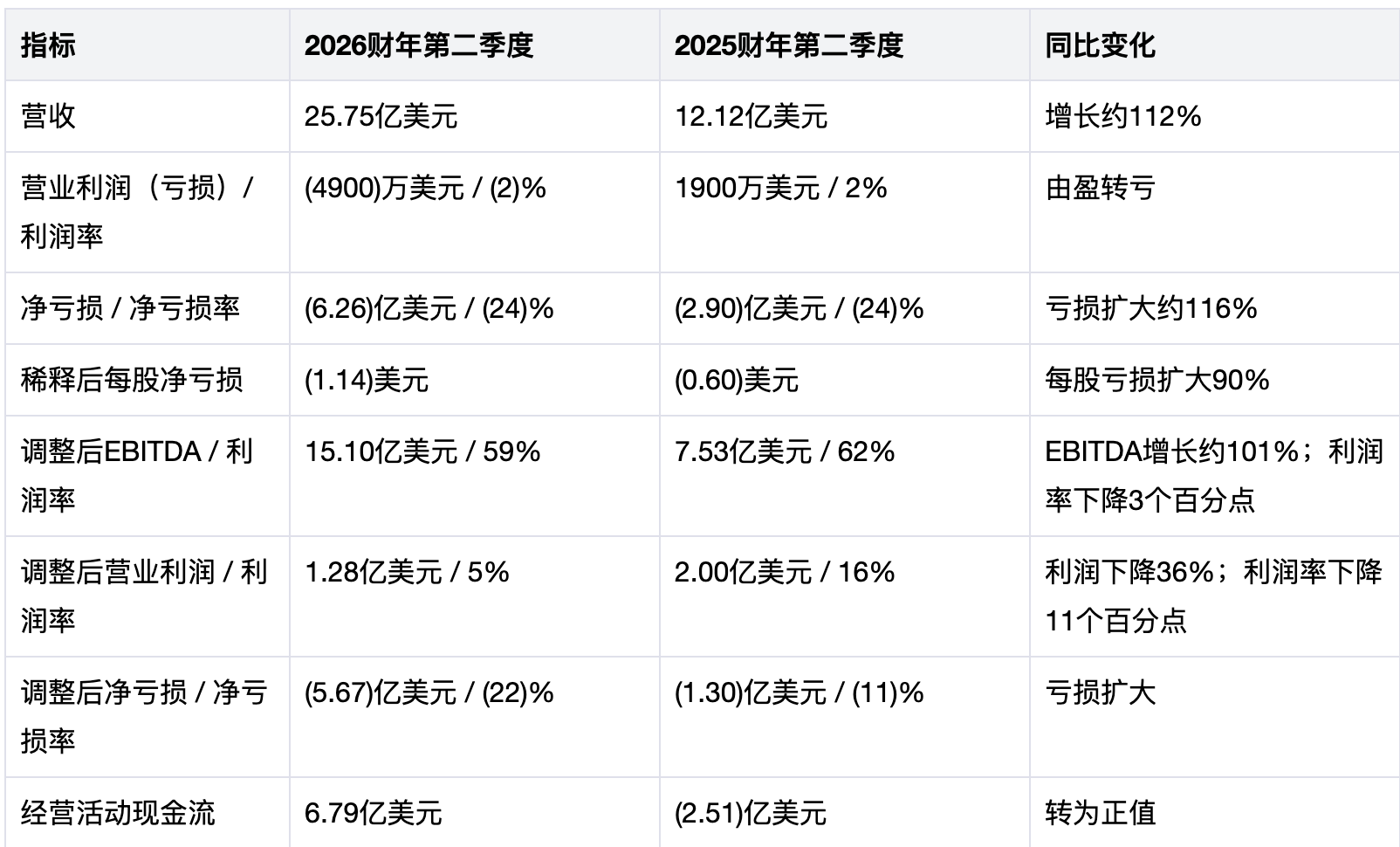
Net interest expense increased from $267 million to $640 million, representing the largest deduction between operating performance and final net income. $125 million in other income provided some offset, but CoreWeave still recorded a net loss of $626 million.
Demand, Backlog, and Infrastructure Expansion
As of June 30, 2026, the revenue backlog was approximately $104 billion. This figure includes remaining performance obligations and other amounts CoreWeave expects to recognize as revenue under signed contracts (subject to delivery and service availability requirements). It does not include over $25 billion in net new customer commitments added in the early third quarter.
During the quarter, CoreWeave expanded its operational power capacity by nearly 500 megawatts to 1.5 gigawatts, while the total contracted power capacity increased to about 3.7 gigawatts. The company also announced winning new enterprise and AI customers, including Bentley Systems, Caterpillar, and Grammarly, and deepened partnerships with existing customers such as Databricks and Runway ML.
These figures indicate simultaneous growth in demand and capacity, but converting the backlog into revenue depends on timely infrastructure deployment.
Rapid capacity expansion boosts revenue but also increases pressure on margins and financing
CoreWeave's growth continues to require massive infrastructure investment. Total expenditures for property and equipment in the second quarter amounted to $6.422 billion, compared to $2.453 billion in the same period last year. Although operating cash flow improved to $679 million, it only covered a small portion of these expenditures; operating cash flow minus property and equipment expenditures resulted in approximately negative $5.743 billion.
The company funds its expansion through external financing. Cash inflow from financing activities in the second quarter was $10.071 billion, including $13.457 billion in net proceeds from debt issuance, partially offset by $3.884 billion in debt repayments. CoreWeave also raised $997 million through a private placement of common stock.
As of June 30, total recourse and non-recourse debt was approximately $35.1 billion, up from about $21.4 billion on December 31, 2025. Cash and cash equivalents increased from $3.127 billion to $5.524 billion over the same period. The higher debt balance supports capacity investment and liquidity, but the increase in quarterly interest expense reflects its impact on profitability.
The trends in operating cash flow and net income also diverged. The positive cash flow was supported by $1.393 billion in depreciation and amortization and a $790 million increase in deferred revenue, while changes related to accounts receivable and accounts payable consumed cash during the quarter.
Management Perspective
Chief Executive Officer Michael Intrator stated that the company has reached an inflection point as scale begins to translate into operating leverage. Management also noted that customer demand is accelerating as enterprise adoption broadens and CoreWeave expands its technology platform.
The financial results confirm the scaling aspect of this assessment through higher revenue and Adjusted EBITDA. However, the year-over-year declines in GAAP operating margin, adjusted operating margin, and Adjusted EBITDA margin make margin improvement a key metric for measuring future operating leverage.
Recent Insider Transactions
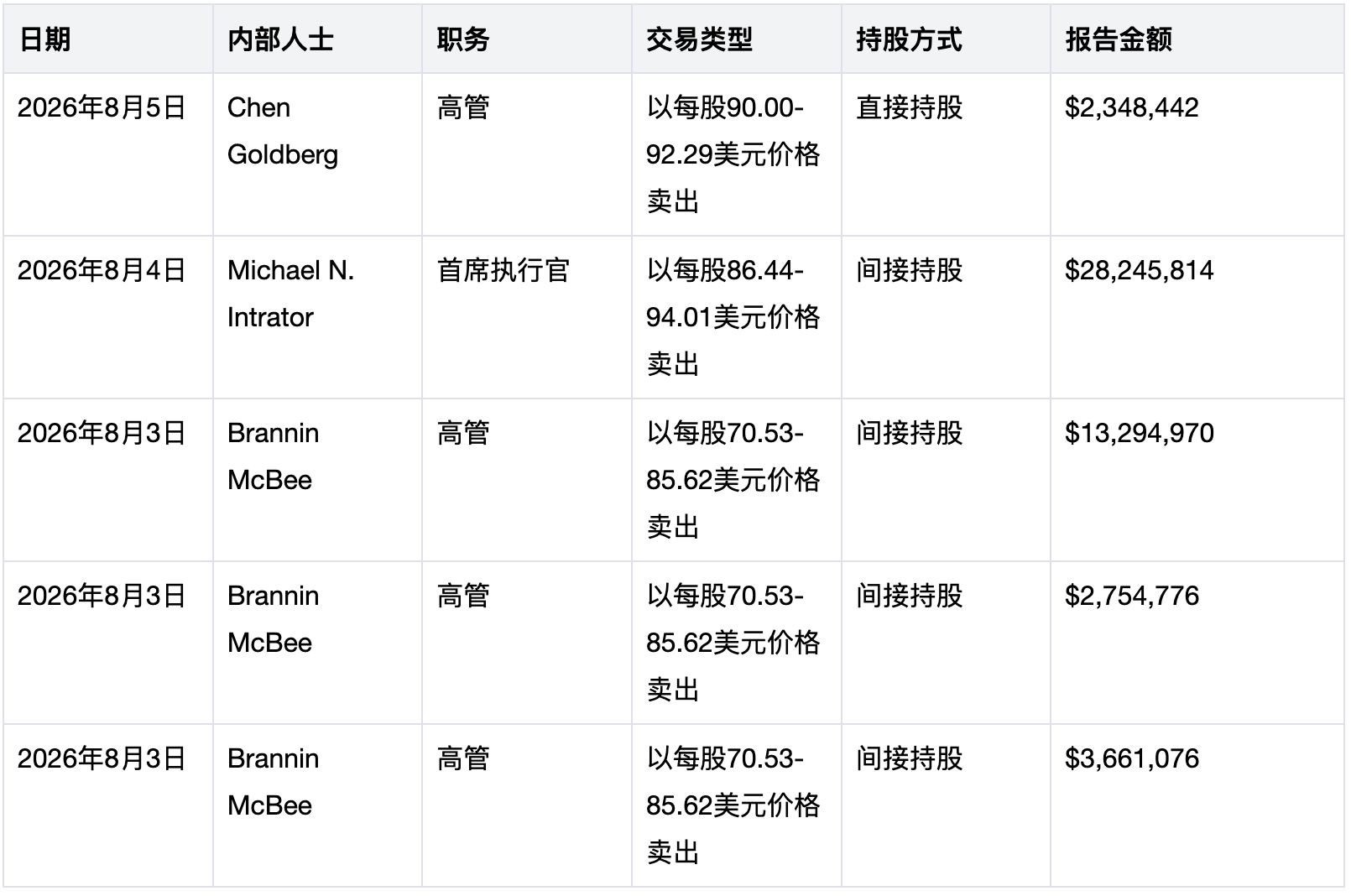
Provided insider transaction data shows that over the past six months, insiders purchased 16.1 million shares and sold 37.4 million shares, resulting in a net sale of approximately 21.3 million shares. The latest records with full transaction details are all sales; the data does not indicate the specific reasons for these transactions.
Risks Investors Should Watch
Operating Margin Execution: The growth rates of cost of revenue and technology & infrastructure expenses outpacing revenue growth pushed the GAAP operating margin below zero and lowered adjusted margins.
Debt and Interest Burden: Total debt increased significantly compared to year-end, and quarterly net interest expense reached $640 million, substantially adding to the net loss.
Capital Requirements: Second-quarter property and equipment expenditures significantly exceeded operating cash flow, meaning business expansion continues to rely on external financing.
Backlog Conversion: The $104 billion backlog depends on infrastructure delivery and service availability. Delays in deploying contracted power capacity could impact the timing of future revenue recognition.
Summary
CoreWeave's performance in the second quarter of fiscal year 2026 showed rapid growth in revenue, backlog, and capacity, but operating margins came under pressure and the net loss widened further. Positive operating cash flow provided some support, but infrastructure spending still far exceeded cash flow, requiring substantial new financing. Key focal points for the future include: whether new capacity can efficiently convert the backlog into revenue, whether operating cost growth will begin to slow and fall below revenue growth, and how the increasing debt burden will affect interest expense and final net performance.