a16z Founder: In the Agent Era, What Truly Matters Has Changed

marsbitPubblicato 2026-04-20Pubblicato ultima volta 2026-04-20

Introduzione

Marc Andreessen, co-founder of a16z, argues that the current AI boom is not an overnight success but the culmination of 80 years of research, now delivering practical results. He emphasizes that this era is defined by the convergence of four key capabilities: large language models (LLMs), reasoning, coding, and agents capable of recursive self-improvement. Andreessen describes the agent architecture—combining an LLM with a shell, file system, markdown, and cron/loop—as a fundamental shift beyond chatbots. This structure leverages existing software components, allowing agents to maintain state, introspect, and extend their own functionality. He predicts a move away from traditional GUI and browser-based interactions toward an "agent-first" world where software is primarily operated by bots, not humans, with people simply stating their goals. He draws parallels to the 2000 internet bubble but notes key differences: current AI infrastructure investments are led by cash-rich giants and quickly monetized. He highlights that scaling constraints involve not just GPUs but the entire chip ecosystem. Open source and edge inference are crucial for democratizing knowledge and enabling low-latency, cost-effective applications on local hardware. Finally, Andreessen identifies significant non-technical challenges: potential short-term cybersecurity crises, the need for "proof of human" identity solutions, financial infrastructure for agents, and institutional resistance from sectors like...

Original Title: Marc Andreessen introspects on Death of the Browser, Pi + OpenClaw, and Why "This Time Is Different"

Original Compilation: FuturePulse

Signal Source: This is the latest interview with a16z founder Marc Andreessen on the Latent Space podcast. He is a renowned American internet entrepreneur and a key figure in the early development of the internet; after founding a16z, he became a representative figure among Silicon Valley's top investors. The entire conversation revolves around the history and latest trends of AI development and is highly worth reading.

I. This Wave of AI Did Not Emerge Out of Nowhere; It Is the First Comprehensive "Start of Work" After an 80-Year Technological Marathon
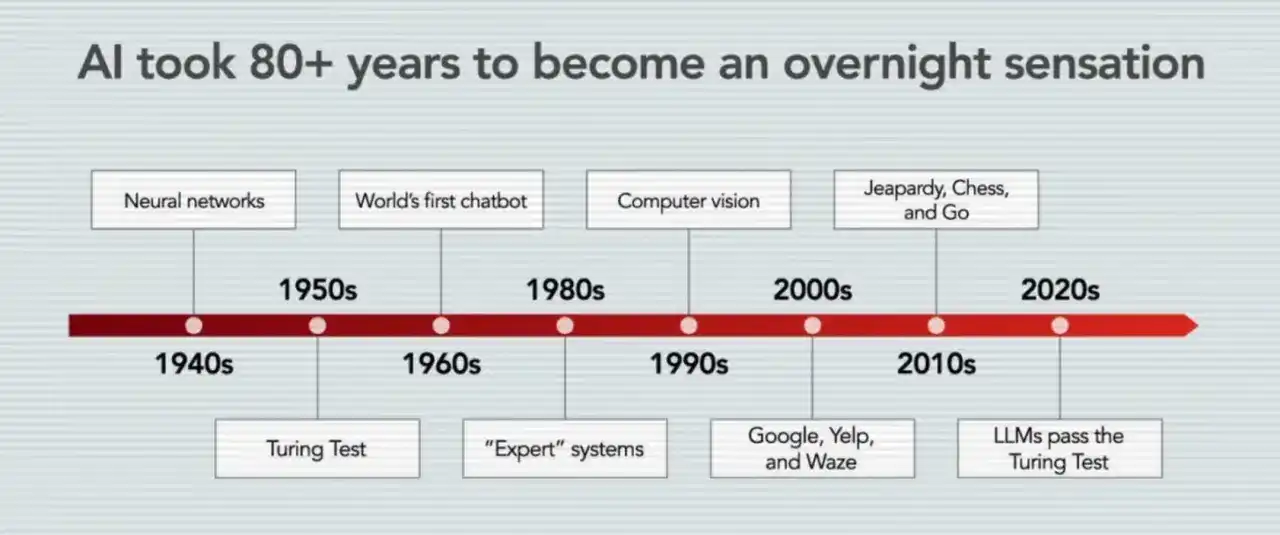
  • This wave of AI did not emerge out of nowhere; it is the result of an 80-year technological marathon.

  • Marc Andreessen directly refers to the present as an "80-year overnight success," meaning that the sudden explosion in the public eye is actually the concentrated release of decades of technological储备.

  • He traces this technological线索 back to early neural network research and emphasizes that the industry has now accepted the judgment that "neural networks are the correct architecture."

  • In his narrative, the key nodes are not single moments but a series of堆叠: AlexNet, Transformer, ChatGPT, reasoning models, and then agents and self-improvement.

  • He particularly emphasizes that this time it's not just text generation that has become stronger; four types of capabilities have emerged simultaneously: LLMs, reasoning, coding, and agents / recursive self-improvement.

  • The reason he believes "this time is different" is not because the narrative is more compelling, but because these capabilities have already begun to work on real-world tasks.

II. The Agent Architecture Represented by Pi and OpenClaw Is a Deeper Change in Software Architecture Than Chatbot
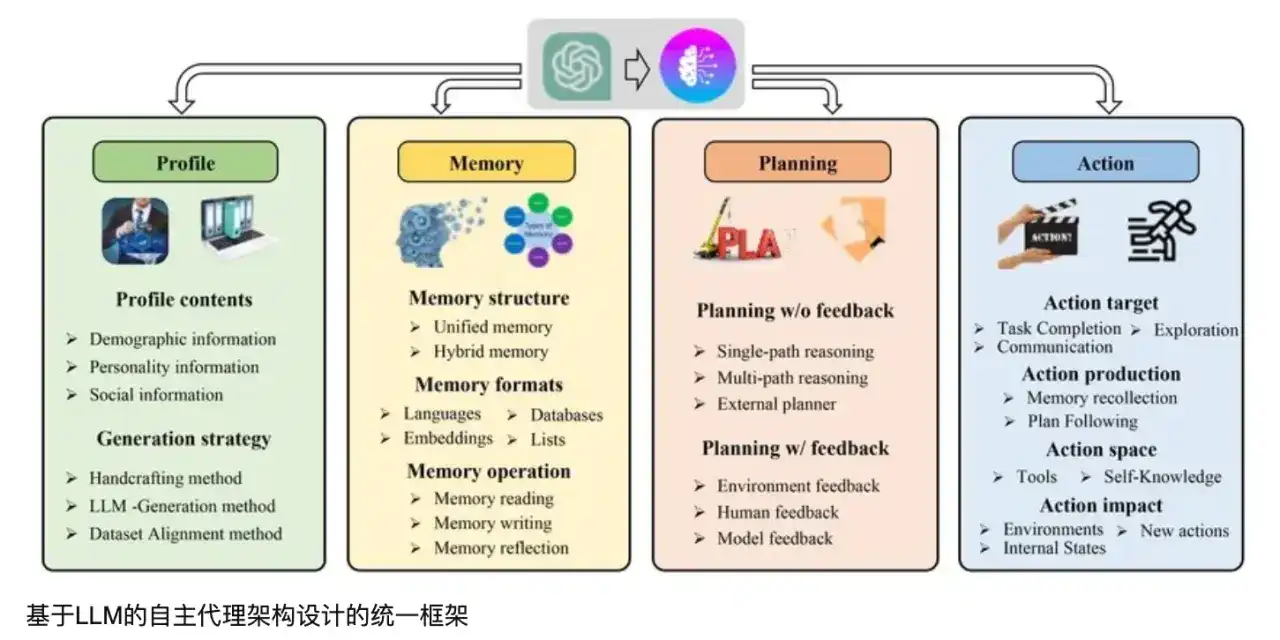
  • He describes agents very concretely: essentially, they are "LLM + shell + file system + markdown + cron/loop." In this structure, the LLM is the core for reasoning and generation, the shell provides the execution environment, the file system saves the state, markdown makes the state readable, and cron/loop provides periodic awakening and task advancement.

  • He believes the importance of this combination lies in the fact that除了 the model itself is new, all other components are mature, understandable, and reusable parts of the software world.

  • The state of the agent is saved in files, so it can migrate across models and runtimes; the underlying model can be replaced, but the memory and state are still retained.

  • He repeatedly emphasizes introspection: the agent knows its own files, can read its own state, and can even rewrite its own files and functions, moving towards "extend yourself."

  • In his view, the real breakthrough is not just that "the model can answer," but that the agent can utilize the existing Unix toolchain to bring in the potential capabilities of the entire computer.

III. The Era of Browsers, Traditional GUIs, and "Manual Clicking on Software" Will Be Gradually Replaced by Agent-First Interaction Methods

  • Marc Andreessen has clearly stated that in the future, "you may no longer need a user interface."

  • He further pointed out that the main users of future software may not be humans, but "other bots."

  • This means that many of the interfaces designed today for human clicking, browsing, and form-filling will degenerate into the execution layer called by agents behind the scenes.

  • In this world, humans are more like goal-setters: telling the system what they want, and then having the agent call services, operate software, and complete processes.

  • He connects this change to the broader future of software: high-quality software will become increasingly "abundant," no longer a scarce product手工 crafted by a few engineers.

  • He also judges that the importance of programming languages will decline; models will write code across languages, translate between them, and in the future, humans will be more concerned with explaining why the AI organized the code in a certain way, rather than clinging to a particular language itself.

  • He even mentioned a more radical direction: conceptually, AI may not only output code but also directly output lower-level binary code or model weights (模型权重).

IV. This AI Investment Cycle Has Similarities to the 2000 Internet Bubble, but the Underlying Supply and Demand Structure Is Different

  • Looking back at 2000, he emphasized that the crash was largely not because "the internet didn't work," but because of overbuilding in telecommunications and bandwidth infrastructure, with fiber optics and data centers being laid超前, followed by a long period of digestion.

  • He believes that today we can indeed see concerns about "overbuilding," but the main investors are cash-rich large companies like Microsoft, Amazon, and Google, not highly leveraged fragile players.

  • He特别指出 that now, as long as an investment in operable GPUs is formed, it can usually be converted into revenue quickly, which is different from the大量闲置 capacity in 2000.

  • He also emphasized that what we are using now is actually a "sandbagged" version of the technology: because of insufficient supply of GPUs, memory, data centers, etc., the potential of the models has not been fully released.

  • In his judgment, the real constraints in the coming years are not only GPUs but also the联动 bottlenecks of CPUs, memory, network, and the entire chip ecosystem.

  • <极速赛车开奖网p style="text-align: justify; font-size: 16px; font-weight: inherit; word-break: break-all; line-height: 2; font-family: PingFang SC,Helvetica Neue,Helvetica,Arial,Hiragino Sans GB,Heiti SC,Microsoft YaHei,WenQuanYi Micro Hei,sans-serif;">He juxtaposes AI scaling laws with the previous Moore's Law, believing that they not only describe规律 but also continuously stimulate capital, engineering, and industry to advance together.

  • He mentioned a very反常 but important phenomenon: as software optimization speeds up, some older-generation chips may even become more economically valuable than when they were first purchased.

V. Open Source, Edge Inference, and Local Operation Are Not Sidelights but Part of the AI Competitive Landscape

  • Marc Andreessen clearly believes that open source is very important, not only because it's free but because it "lets the whole world learn how it's made."

  • He describes open-source releases like DeepSeek as a "gift to the world," because code + paper quickly扩散 knowledge and raise the entire industry's baseline.

  • In his narrative, open source is not just a technical choice; it may also be a geopolitical and market strategy: different countries and companies will adopt different开放 strategies based on their commercial constraints and influence goals.

  • He also emphasizes the importance of edge inference ("Edge inference"): in the coming years, centralized inference costs may not be low enough, and many consumer-level applications cannot bear long-term high cloud inference costs.

  • He mentioned a recurring pattern: models that seem "impossible to run on a PC" today often can indeed run on local machines a few months later.

  • Besides cost, factors promoting local operation include trust, privacy, latency, and usage scenarios: wearable devices, door locks, portable devices, etc., are more suitable for low-latency,就地 inference.

  • His judgment is very direct: almost everything with a chip may have an AI model in the future.

VI. The Real Challenges of AI Lie Not Only in Model Capabilities but Also in Security, Identity, Capital Flow, Organization, and Institutional Resistance

  • On security, his judgment is very sharp: almost all potential security bugs will be easier to find, and there may be a short-term "computer security catastrophe."

  • But he also believes that programming intelligences will scale the ability to patch vulnerabilities; in the future, the way to "protect software" may be to have bots scan and fix it.

  • On the identity issue, he believes "proof of bot" is not feasible because bots will become increasingly powerful; the真正可行的 direction is "proof of human," which is a combination of biometrics, cryptographic verification, and selective disclosure.

  • He also talked about a frequently overlooked problem: if agents are really going to handle affairs in the real world, they will eventually need money, payment capabilities, and even some form of bank account, card, or stablecoin-style infrastructure. At the organizational level, he used the framework of managerial capitalism, believing that AI may重新强化 founder-led companies, because bots are very good at reports, coordination, paperwork, and a lot of "managerial work."

  • But he does not believe that society will quickly and smoothly accept AI: he cited examples like professional licenses, unions, dockworker strikes, government departments, K-12 education, and healthcare to illustrate that the real world has大量制度性减速器.

  • His judgment is that both AI utopians and doomsayers tend to overlook one point: just because something is technologically possible does not mean that 8 billion people will immediately change accordingly.


Domande pertinenti

QAccording to Marc Andreessen, why is the current AI boom considered an '80-year overnight success'?

AHe describes it an '80-year overnight success' because the public sees a sudden explosion, but behind it is the concentrated release of decades of technical reserves, tracing the technological lineage back to early neural network research.

QWhat is the core architecture of an AI agent as described by Marc Andreessen?

AHe describes an agent as essentially 'LLM + shell + file system + markdown + cron/loop', where the LLM is the reasoning core, the shell provides the execution environment, the file system saves state, markdown ensures readability, and cron/loop enables periodic wake-up and task progression.

QHow does Andreessen believe user interaction with software will change in the agent era?

AHe believes the era of browsers and traditional GUIs for manual clicking will be gradually replaced. People will state their goals, and agents will call services, operate software, and complete processes. The primary users of software may become 'other bots', not humans.

QWhat key difference does Andreessen highlight between the current AI investment cycle and the 2000 internet bubble?

AA key difference is that today's investment is led by cash-rich large companies like Microsoft, Amazon, and Google, not highly leveraged, fragile players. Additionally, GPU investments can quickly be converted into revenue, unlike the大量闲置容量 (massive idle capacity) of 2000.

QWhat is Andreessen's view on the importance of open source in AI development?

AHe believes open source is crucial not just because it's free, but because it 'lets the whole world learn how it is made.' He describes open-source releases as a 'gift to the world' that rapidly disseminates knowledge and raises the entire industry's baseline.

Letture associate

Can DeepSeek Save China One Trillion Dollars?

"DeepSeek and the $1 Trillion Infrastructure Question" The article examines whether DeepSeek's AI optimization breakthroughs could potentially save China $1 trillion in future AI infrastructure costs. The analysis begins with Nvidia's upcoming Vera Rubin AI platform, costing ~$7.8 million, where memory (HBM4/LPDDR5X) constitutes $2 million—a 435% cost increase in one year, highlighting how AI hardware spending is shifting toward expensive memory components. DeepSeek's approach works in the opposite direction. Through three key technical innovations showcased in DeepSeek V4, the company dramatically improves hardware efficiency: 1. **Memory Compression (MLA)**: Re-engineers the attention mechanism to compress long-context memory (KV Cache) by over 90%, drastically reducing expensive HBM usage. 2. **Selective Activation (MoE)**: Employs Mixture-of-Experts architecture where only a small fraction of parameters (e.g., 49B out of 1.6T in V4-Pro) are activated per token, allowing most parameters to reside in cheaper memory/SSD. 3. **Computation Caching**: Reuses previously computed results via cache hits, replacing expensive GPU computations with cheap memory reads. Combined, these optimizations allow the same hardware to produce approximately 4x more tokens, effectively reducing required hardware investment by 75%. DeepSeek's pricing reflects this: a 10-billion token workload costs ~$522 monthly versus ~$9,000-$10,000 for competitors. The $1 trillion savings projection stems from McKinsey's estimate that global AI infrastructure will require ~$5.2 trillion investment by 2030. As China's daily token consumption grows toward quadrillions, even marginal efficiency gains scale massively. With a conservative 4x throughput improvement, China could avoid building tens of thousands of AI data centers equivalent to ~7 trillion RMB ($1 trillion) in saved investment. Critically, this strategy shifts dependency from scarce, expensive GPU/HBM—where China lags—toward more accessible storage, caching, and systems engineering where domestic suppliers like CXMT are gaining strength. Rather than "replacing Nvidia," DeepSeek rebalances AI's value chain away from monolithic hardware dependency. Ultimately, DeepSeek's technical breakthroughs could lower the barrier to AI adoption across Chinese industries by making advanced capabilities affordable at scale—transforming who can access next-generation AI.

marsbit46 min fa

Can DeepSeek Save China One Trillion Dollars?

marsbit46 min fa

Overturning the Mainstream Approach to Hallucinations: Metacognition is the New Solution for Large Models to Break the Hallucination Barrier

This paper, "Hallucinations Undermine Trust; Metacognition is a Way Forward," proposes a paradigm shift in combating AI hallucination. It argues that the current mainstream approaches—striving for omniscience by scaling data/models or having AI abstain from uncertain answers—are fundamentally flawed. The former has inevitable knowledge gaps, while the latter imposes a crippling "utility tax," requiring the rejection of many correct answers to achieve high accuracy, due to models' poor "discrimination" (the ability to distinguish correct from incorrect answers internally). The core contribution is redefining hallucination not as "being wrong," but as "expressing false information with unwarranted certainty." The proposed solution is **Faithful Uncertainty** or **Metacognition**: enabling AI to accurately perceive its internal uncertainty and honestly express it in its language (e.g., using hedging phrases when unsure). This creates a more reliable assistant that provides useful information while signaling its confidence, minimizing harm from errors. The paper emphasizes that metacognition is critical for the era of AI Agents. Without it, Agents cannot intelligently decide when to use tools like search engines, leading to inefficiency and misuse. Key implementation challenges are highlighted: the "bootstrapping paradox" of training with static uncertainty data, the "alignment distortion signal" where human preference training suppresses internal uncertainty cues, and the difficulty of causally evaluating true metacognition vs. its superficial imitation. The paper concludes that the goal should not be an infallible AI, but one that is honest about the limits of its knowledge, thereby building user trust through transparent communication of its certainty.

marsbit50 min fa

Overturning the Mainstream Approach to Hallucinations: Metacognition is the New Solution for Large Models to Break the Hallucination Barrier

marsbit50 min fa

Hedge by Buying Gold and Oil, Chase Soaring Returns with AI. ‘Dated’ Bitcoin Enters a Bear Market

Bitcoin has recently declined, hitting a two-month low near $66,123, while Ethereum fell to a three-month low around $1,837. Analysts suggest the drop is not merely due to factors like ETF outflows or MicroStrategy's selling but reflects a deeper issue: Bitcoin is losing a broader asset competition. In a near-zero interest rate environment, Bitcoin previously thrived as an outlet for investor dissatisfaction with inflation and limited options. However, the market landscape has shifted. Bitcoin now occupies an "awkward middle ground," facing competition on three fronts. For inflation hedging, investors prefer gold, energy stocks, and commodity producers—assets with tangible backing and clearer pricing power. For growth exposure, AI-related companies with actual revenues and profits are more attractive. Even within crypto, investors can choose stablecoins, exchanges, or infrastructure firms tied directly to adoption, offering clearer business models and leverage. Thus, Bitcoin is no longer the top choice for hedging, growth, or crypto exposure. This shift is evident in market reactions: despite recent warnings about persistent inflation from a Fed official, Bitcoin did not rally as it might have in the past. Instead, capital flowed to assets with direct commodity or energy exposure. The recent ETF outflows and MicroStrategy sales are symptoms, not causes, of this new reality. Investors are becoming more selective, demanding clearer value propositions beyond mere scarcity. The emerging bear case for Bitcoin is not about it being a bubble or failed technology, but that scarcity alone is no longer sufficient.

华尔街日报53 min fa

Hedge by Buying Gold and Oil, Chase Soaring Returns with AI. ‘Dated’ Bitcoin Enters a Bear Market

华尔街日报53 min fa

Trading

Spot
Futures

Articoli Popolari

Come comprare ERA

Benvenuto in HTX.com! Abbiamo reso l'acquisto di Caldera (ERA) semplice e conveniente. Segui la nostra guida passo passo per intraprendere il tuo viaggio nel mondo delle criptovalute.Step 1: Crea il tuo Account HTXUsa la tua email o numero di telefono per registrarti il tuo account gratuito su HTX. Vivi un'esperienza facile e sblocca tutte le funzionalità,Crea il mio accountStep 2: Vai in Acquista crypto e seleziona il tuo metodo di pagamentoCarta di credito/debito: utilizza la tua Visa o Mastercard per acquistare immediatamente CalderaERA.Bilancio: Usa i fondi dal bilancio del tuo account HTX per fare trading senza problemi.Terze parti: abbiamo aggiunto metodi di pagamento molto utilizzati come Google Pay e Apple Pay per maggiore comodità.P2P: Fai trading direttamente con altri utenti HTX.Over-the-Counter (OTC): Offriamo servizi su misura e tassi di cambio competitivi per i trader.Step 3: Conserva Caldera (ERA)Dopo aver acquistato Caldera (ERA), conserva nel tuo account HTX. In alternativa, puoi inviare tramite trasferimento blockchain o scambiare per altre criptovalute.Step 4: Scambia Caldera (ERA)Scambia facilmente Caldera (ERA) nel mercato spot di HTX. Accedi al tuo account, seleziona la tua coppia di trading, esegui le tue operazioni e monitora in tempo reale. Offriamo un'esperienza user-friendly sia per chi ha appena iniziato che per i trader più esperti.

345 Totale visualizzazioniPubblicato il 2025.07.17Aggiornato il 2026.06.02

Come comprare ERA

Discussioni

Benvenuto nella Community HTX. Qui puoi rimanere informato sugli ultimi sviluppi della piattaforma e accedere ad approfondimenti esperti sul mercato. Le opinioni degli utenti sul prezzo di ERA ERA sono presentate come di seguito.

活动图片












