a16z Founder: In the Agent Era, What Truly Matters Has Changed

marsbitPubblicato 2026-04-20Pubblicato ultima volta 2026-04-20

Introduzione

Marc Andreessen, co-founder of a16z, argues that the current AI boom is not an overnight success but the culmination of 80 years of research, now delivering practical results. He emphasizes that this era is defined by the convergence of four key capabilities: large language models (LLMs), reasoning, coding, and agents capable of recursive self-improvement. Andreessen describes the agent architecture—combining an LLM with a shell, file system, markdown, and cron/loop—as a fundamental shift beyond chatbots. This structure leverages existing software components, allowing agents to maintain state, introspect, and extend their own functionality. He predicts a move away from traditional GUI and browser-based interactions toward an "agent-first" world where software is primarily operated by bots, not humans, with people simply stating their goals. He draws parallels to the 2000 internet bubble but notes key differences: current AI infrastructure investments are led by cash-rich giants and quickly monetized. He highlights that scaling constraints involve not just GPUs but the entire chip ecosystem. Open source and edge inference are crucial for democratizing knowledge and enabling low-latency, cost-effective applications on local hardware. Finally, Andreessen identifies significant non-technical challenges: potential short-term cybersecurity crises, the need for "proof of human" identity solutions, financial infrastructure for agents, and institutional resistance from sectors like...

Original Title: Marc Andreessen introspects on Death of the Browser, Pi + OpenClaw, and Why "This Time Is Different"

Original Compilation: FuturePulse

Signal Source: This is the latest interview with a16z founder Marc Andreessen on the Latent Space podcast. He is a renowned American internet entrepreneur and a key figure in the early development of the internet; after founding a16z, he became a representative figure among Silicon Valley's top investors. The entire conversation revolves around the history and latest trends of AI development and is highly worth reading.

I. This Wave of AI Did Not Emerge Out of Nowhere; It Is the First Comprehensive "Start of Work" After an 80-Year Technological Marathon
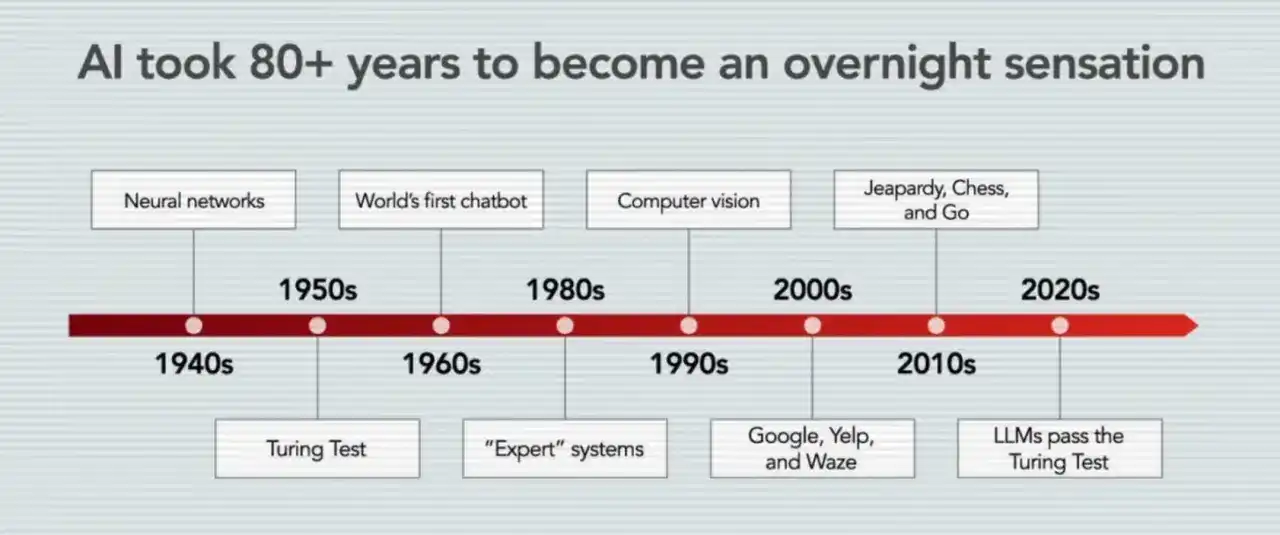
  • This wave of AI did not emerge out of nowhere; it is the result of an 80-year technological marathon.

  • Marc Andreessen directly refers to the present as an "80-year overnight success," meaning that the sudden explosion in the public eye is actually the concentrated release of decades of technological储备.

  • He traces this technological线索 back to early neural network research and emphasizes that the industry has now accepted the judgment that "neural networks are the correct architecture."

  • In his narrative, the key nodes are not single moments but a series of堆叠: AlexNet, Transformer, ChatGPT, reasoning models, and then agents and self-improvement.

  • He particularly emphasizes that this time it's not just text generation that has become stronger; four types of capabilities have emerged simultaneously: LLMs, reasoning, coding, and agents / recursive self-improvement.

  • The reason he believes "this time is different" is not because the narrative is more compelling, but because these capabilities have already begun to work on real-world tasks.

II. The Agent Architecture Represented by Pi and OpenClaw Is a Deeper Change in Software Architecture Than Chatbot
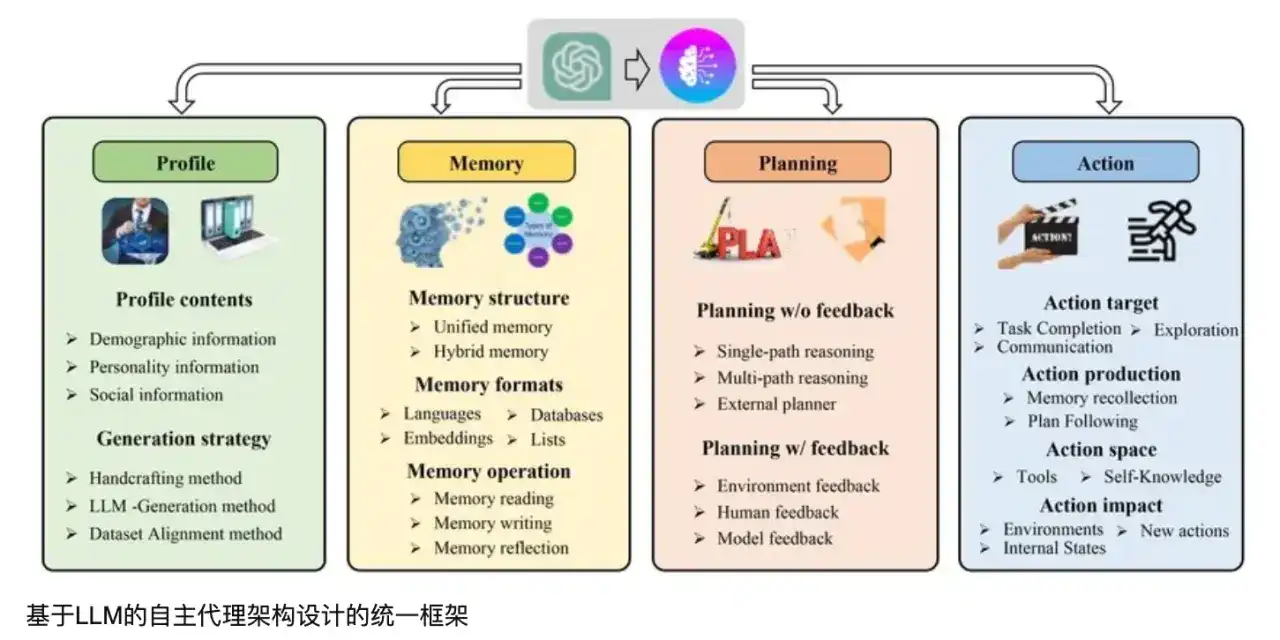
  • He describes agents very concretely: essentially, they are "LLM + shell + file system + markdown + cron/loop." In this structure, the LLM is the core for reasoning and generation, the shell provides the execution environment, the file system saves the state, markdown makes the state readable, and cron/loop provides periodic awakening and task advancement.

  • He believes the importance of this combination lies in the fact that除了 the model itself is new, all other components are mature, understandable, and reusable parts of the software world.

  • The state of the agent is saved in files, so it can migrate across models and runtimes; the underlying model can be replaced, but the memory and state are still retained.

  • He repeatedly emphasizes introspection: the agent knows its own files, can read its own state, and can even rewrite its own files and functions, moving towards "extend yourself."

  • In his view, the real breakthrough is not just that "the model can answer," but that the agent can utilize the existing Unix toolchain to bring in the potential capabilities of the entire computer.

III. The Era of Browsers, Traditional GUIs, and "Manual Clicking on Software" Will Be Gradually Replaced by Agent-First Interaction Methods

  • Marc Andreessen has clearly stated that in the future, "you may no longer need a user interface."

  • He further pointed out that the main users of future software may not be humans, but "other bots."

  • This means that many of the interfaces designed today for human clicking, browsing, and form-filling will degenerate into the execution layer called by agents behind the scenes.

  • In this world, humans are more like goal-setters: telling the system what they want, and then having the agent call services, operate software, and complete processes.

  • He connects this change to the broader future of software: high-quality software will become increasingly "abundant," no longer a scarce product手工 crafted by a few engineers.

  • He also judges that the importance of programming languages will decline; models will write code across languages, translate between them, and in the future, humans will be more concerned with explaining why the AI organized the code in a certain way, rather than clinging to a particular language itself.

  • He even mentioned a more radical direction: conceptually, AI may not only output code but also directly output lower-level binary code or model weights (模型权重).

IV. This AI Investment Cycle Has Similarities to the 2000 Internet Bubble, but the Underlying Supply and Demand Structure Is Different

  • Looking back at 2000, he emphasized that the crash was largely not because "the internet didn't work," but because of overbuilding in telecommunications and bandwidth infrastructure, with fiber optics and data centers being laid超前, followed by a long period of digestion.

  • He believes that today we can indeed see concerns about "overbuilding," but the main investors are cash-rich large companies like Microsoft, Amazon, and Google, not highly leveraged fragile players.

  • He特别指出 that now, as long as an investment in operable GPUs is formed, it can usually be converted into revenue quickly, which is different from the大量闲置 capacity in 2000.

  • He also emphasized that what we are using now is actually a "sandbagged" version of the technology: because of insufficient supply of GPUs, memory, data centers, etc., the potential of the models has not been fully released.

  • In his judgment, the real constraints in the coming years are not only GPUs but also the联动 bottlenecks of CPUs, memory, network, and the entire chip ecosystem.

  • <极速赛车开奖网p style="text-align: justify; font-size: 16px; font-weight: inherit; word-break: break-all; line-height: 2; font-family: PingFang SC,Helvetica Neue,Helvetica,Arial,Hiragino Sans GB,Heiti SC,Microsoft YaHei,WenQuanYi Micro Hei,sans-serif;">He juxtaposes AI scaling laws with the previous Moore's Law, believing that they not only describe规律 but also continuously stimulate capital, engineering, and industry to advance together.

  • He mentioned a very反常 but important phenomenon: as software optimization speeds up, some older-generation chips may even become more economically valuable than when they were first purchased.

V. Open Source, Edge Inference, and Local Operation Are Not Sidelights but Part of the AI Competitive Landscape

  • Marc Andreessen clearly believes that open source is very important, not only because it's free but because it "lets the whole world learn how it's made."

  • He describes open-source releases like DeepSeek as a "gift to the world," because code + paper quickly扩散 knowledge and raise the entire industry's baseline.

  • In his narrative, open source is not just a technical choice; it may also be a geopolitical and market strategy: different countries and companies will adopt different开放 strategies based on their commercial constraints and influence goals.

  • He also emphasizes the importance of edge inference ("Edge inference"): in the coming years, centralized inference costs may not be low enough, and many consumer-level applications cannot bear long-term high cloud inference costs.

  • He mentioned a recurring pattern: models that seem "impossible to run on a PC" today often can indeed run on local machines a few months later.

  • Besides cost, factors promoting local operation include trust, privacy, latency, and usage scenarios: wearable devices, door locks, portable devices, etc., are more suitable for low-latency,就地 inference.

  • His judgment is very direct: almost everything with a chip may have an AI model in the future.

VI. The Real Challenges of AI Lie Not Only in Model Capabilities but Also in Security, Identity, Capital Flow, Organization, and Institutional Resistance

  • On security, his judgment is very sharp: almost all potential security bugs will be easier to find, and there may be a short-term "computer security catastrophe."

  • But he also believes that programming intelligences will scale the ability to patch vulnerabilities; in the future, the way to "protect software" may be to have bots scan and fix it.

  • On the identity issue, he believes "proof of bot" is not feasible because bots will become increasingly powerful; the真正可行的 direction is "proof of human," which is a combination of biometrics, cryptographic verification, and selective disclosure.

  • He also talked about a frequently overlooked problem: if agents are really going to handle affairs in the real world, they will eventually need money, payment capabilities, and even some form of bank account, card, or stablecoin-style infrastructure. At the organizational level, he used the framework of managerial capitalism, believing that AI may重新强化 founder-led companies, because bots are very good at reports, coordination, paperwork, and a lot of "managerial work."

  • But he does not believe that society will quickly and smoothly accept AI: he cited examples like professional licenses, unions, dockworker strikes, government departments, K-12 education, and healthcare to illustrate that the real world has大量制度性减速器.

  • His judgment is that both AI utopians and doomsayers tend to overlook one point: just because something is technologically possible does not mean that 8 billion people will immediately change accordingly.


Domande pertinenti

QAccording to Marc Andreessen, why is the current AI boom considered an '80-year overnight success'?

AHe describes it an '80-year overnight success' because the public sees a sudden explosion, but behind it is the concentrated release of decades of technical reserves, tracing the technological lineage back to early neural network research.

QWhat is the core architecture of an AI agent as described by Marc Andreessen?

AHe describes an agent as essentially 'LLM + shell + file system + markdown + cron/loop', where the LLM is the reasoning core, the shell provides the execution environment, the file system saves state, markdown ensures readability, and cron/loop enables periodic wake-up and task progression.

QHow does Andreessen believe user interaction with software will change in the agent era?

AHe believes the era of browsers and traditional GUIs for manual clicking will be gradually replaced. People will state their goals, and agents will call services, operate software, and complete processes. The primary users of software may become 'other bots', not humans.

QWhat key difference does Andreessen highlight between the current AI investment cycle and the 2000 internet bubble?

AA key difference is that today's investment is led by cash-rich large companies like Microsoft, Amazon, and Google, not highly leveraged, fragile players. Additionally, GPU investments can quickly be converted into revenue, unlike the大量闲置容量 (massive idle capacity) of 2000.

QWhat is Andreessen's view on the importance of open source in AI development?

AHe believes open source is crucial not just because it's free, but because it 'lets the whole world learn how it is made.' He describes open-source releases as a 'gift to the world' that rapidly disseminates knowledge and raises the entire industry's baseline.

Letture associate

Three Years Later: Looking Back at My Predictions About ChatGPT in 2023

Three Years Later: Revisiting My 2023 Predictions on ChatGPT In March 2023, shortly after ChatGPT's launch, I made 20 predictions about its future. Now, in mid-2026, I've used AI agents to fact-check each one against the latest data. Overall, most major directional forecasts were correct, with only one outright error (incorrectly stating GPT-4 had 100 trillion parameters). Key successes included predicting that RAG and retrieval architectures would become the standard for handling knowledge and hallucinations, that natural language interfaces (LUI) would create a massive new industry layer beyond the models themselves, and that China would develop viable large language models, significantly closing the performance gap with Western counterparts within about three years. Predictions about the absence of mass unemployment, the rise of a new "robot network" for agent communication, and ChatGPT not possessing consciousness also held true in their core arguments. However, the "devil was in the details." Errors frequently involved specific numbers, timelines, or overlooking distributional effects. I tended to overestimate the speed of adoption (e.g., for agent networks) while underestimating the ultimate scale of capabilities or costs (e.g., AI winning IMO gold without tools, or the extreme capital required for frontier models). Other misjudgments included: underestimating how AI would reinforce, not dissolve, information filter bubbles; incorrectly assuming AI-generated content would easily circumvent copyright (it has instead triggered record-breaking settlements); and misidentifying where value would be captured (it accrued overwhelmingly to the compute layer, like Nvidia, not just the application or model layers). Key lessons from reviewing these predictions are: 1) Directional and mechanistic insights are far more reliable than precise numbers or absolute statements. 2) There's a consistent bias to overestimate short-term speed but underestimate long-term magnitude. 3) Errors often lie in missing distributional impacts within a generally correct aggregate trend. 4) Predictions phrased with nuance and caveats aged the best. 5) Some fundamental debates (e.g., on machine consciousness or the ultimate value chain) remain unresolved even after three years. This exercise is less about scoring the past and more about establishing rules for clearer thinking about the next three years of AI.

marsbit4 h fa

Three Years Later: Looking Back at My Predictions About ChatGPT in 2023

marsbit4 h fa

Three Years Later: Looking Back on My 2023 Predictions for ChatGPT

Looking Back After Three Years: Revisiting My 2023 Predictions on ChatGPT In March 2023, shortly after ChatGPT's debut and before GPT-4's release, I made over twenty predictions about AI's future based on limited information and intuition. Now, in May 2026, I revisited those forecasts using an AI-driven analysis with 41 Opus 4.8 agents to cross-reference them with the latest data. The assessment used symbols: ✅ Correct, 🟢 Mostly Correct, 🟡 Partially Correct, ❌ Incorrect. Overall, the directional judgments held up well, with only one major factual error regarding GPT-4's rumored parameter size (incorrectly cited as 100T). However, nuances and degrees of accuracy revealed more. **What Was Largely Correct:** Predictions about mechanisms and directions proved accurate. The rise of RAG (Retrieval-Augmented Generation) as the standard architecture for combating AI hallucination was confirmed, as was the transformative potential of LUI (Language User Interface) in creating a new industry layer atop GUIs. The emergence of "robot networks" (agent-to-agent communication protocols) and China's rapid catch-up in developing capable large models (closing the performance gap with top models to ~2.7%) were also on point. The analysis affirmed that LLMs lack consciousness and that the Turing Test merely measures perceived intelligence. **What Was Off Target:** Errors often involved specific numbers, over-optimistic timelines, or misjudged distributions. The prediction that value would primarily accrue to the application layer was half-right but missed NVIDIA's dominance as the profitable infrastructure layer. Forecasts about AI circumventing copyright issues and fostering a "global common ground" by averaging human viewpoints were incorrect; instead, major copyright settlements occurred and AI personalization is increasing. Estimates for model training costs ("$5-10 billion cap") were significantly off, underestimating frontier costs and overestimating replication costs. The notion that LLMs could never do complex math without tools was disproven by later models winning IMO gold. **Key Patterns from the Review:** 1. **Direction over precision:** Judgments about mechanisms and trends were more reliable than specific numbers or definitive statements. 2. **Timing bias:** There was a tendency to overestimate short-term speed but underestimate long-term magnitude and transformation. 3. **The distribution blind spot:** Aggregate-level correctness often masked uneven impacts (e.g., on young professionals' employment). 4. **The value of qualifiers:** Predictions framed with caution (e.g., "reportedly," "for now," "prototype in 2-3 years") aged better. 5. **Some debates continue:** Issues like the nature of "emergent abilities" or machine consciousness remain unresolved. This three-year review highlights that while seeing the big picture is crucial, humility regarding specifics, timelines, and disparate impacts is essential for future forecasting.

链捕手6 h fa

Three Years Later: Looking Back on My 2023 Predictions for ChatGPT

链捕手6 h fa

AI Bubble Warning: AI Investments Are Negative Returns for Most Tech Giants

The article issues a stark warning about a potential AI investment bubble. It notes that while the AI boom shares similarities with the TMT bubble of the late 1990s, its scale is vastly larger, currently driving 93% of U.S. GDP growth. Major hyperscale cloud providers like Microsoft, Alphabet, Amazon, Meta, and Oracle are planning to invest trillions in AI data centers over the coming years. However, calculations based on analyst projections for 2025-2030 reveal a concerning math problem: expected capital expenditure growth far outpaces projected revenue growth. Even under an extremely optimistic scenario of zero costs, the implied return on investment for most of these tech giants (except Amazon) is deeply negative. This suggests that the current trajectory could lead to one of history's largest shareholder value destruction events. The piece outlines two potential escapes: AI generating vastly more revenue than currently anticipated—a near-impossible task—or a significant cutback in the planned investment splurge. The latter scenario could trigger a domino effect, severely impacting the entire tech supply chain (from Nvidia to TSMC), potentially pushing the U.S. economy into recession, and causing a major stock market downturn. The author suggests upcoming high-profile IPOs by companies like OpenAI and Anthropic might represent a transfer of risk from early investors to public market participants. While the peak of the hype cycle might sustain investment through 2026, the fundamental financial dilemma remains unresolved, setting the stage for a potential market correction in 2027 or 2028, similar to the years following Alan Greenspan's "irrational exuberance" warning.

marsbit7 h fa

AI Bubble Warning: AI Investments Are Negative Returns for Most Tech Giants

marsbit7 h fa

From Tokens to Machine Labor: AI is Shifting from Tool to "Worker"

The article "From Token to Machine Labor: AI is Evolving from Tool to 'Worker'" argues that the business model for AI is shifting beyond simply selling computational resources (tokens, GPU hours) or model access. Instead, a new "machine labor market" is emerging, where the core economic transaction is the purchase of economically useful work directly performed by software. The central thesis is that AI pricing will evolve through four stages: 1) raw tokens, 2) standardized LLM capabilities (e.g., text generation), 3) industry-specific labor markets (e.g., legal review, radiology), and finally 4) a programmable results market where tasks like resolving a support ticket are bid on and priced based on outcome. In this future, buyers will care less about *which* model or GPU completes a task and more about whether the work meets specified standards for accuracy, latency, and cost. This transition reframes the impact of AI on human labor. Rather than simple replacement, it suggests a re-coordination where machines handle standardized, verifiable work, freeing humans for roles involving oversight, context management, responsibility, and final judgment. In some cases, this "last 1%" of human input becomes more valuable as it enables the other 99% to be automated. Furthermore, as AI reduces the cost of work, demand may expand, creating larger markets (e.g., 24/7 customer service) rather than just cheaper versions of existing ones. The article concludes that while infrastructure (GPUs, models, tokens) remains crucial upstream, the market is converging on a simpler, tradeable unit: machine labor that can be defined, measured, priced, and procured based on contractible specifications.

marsbit7 h fa

From Tokens to Machine Labor: AI is Shifting from Tool to "Worker"

marsbit7 h fa

Xiaomi MiMo's 99% Price Cut is Not Marketing! Luo Fuli Posts on X to Refute Critics

The price of Xiaomi's MiMo-V2.5 series API has been permanently reduced by up to 99%, specifically for the "Input (Cache Hit)" cost, which covers users re-reading historical context in long conversations. MiMo's head, Luo Fuli, published a detailed technical blog to clarify that this drastic price cut stems from genuine engineering breakthroughs, not a marketing stunt or a simple price war. The core of the achievement lies in six key engineering optimizations. First, the model architecture adopts a Hybrid Sliding Window Attention (SWA), reducing the memory footprint (KVCache) to 1/7th of a traditional model. Second, a dual-pool memory management system actually utilizes these savings, allowing a single GPU to handle over 5 times more concurrent users. Third, an upgraded prefix caching mechanism achieves a cache hit rate of 93-95% for repeated reads, meaning most such requests bypass GPU computation entirely. Fourth, a self-developed distributed cache (GCache) utilizes idle SSD space on existing GPU servers, eliminating additional storage costs. Fifth, an intelligent scheduling system (LLM-Router) efficiently routes requests to maximize cache reuse and performance. Sixth, Multi-Token Prediction (MTP) accelerates the model's text generation ("output") side. Together, these systemic optimizations dramatically lower the real computational cost per request, enabling the 99% price reduction for cached inputs while reportedly maintaining positive gross margins. Luo Fuli's disclosure aims to shift the narrative from "price war" to a demonstration of substantive AI engineering progress.

marsbit9 h fa

Xiaomi MiMo's 99% Price Cut is Not Marketing! Luo Fuli Posts on X to Refute Critics

marsbit9 h fa

Trading

Spot
Futures

Articoli Popolari

Come comprare ERA

Benvenuto in HTX.com! Abbiamo reso l'acquisto di Caldera (ERA) semplice e conveniente. Segui la nostra guida passo passo per intraprendere il tuo viaggio nel mondo delle criptovalute.Step 1: Crea il tuo Account HTXUsa la tua email o numero di telefono per registrarti il tuo account gratuito su HTX. Vivi un'esperienza facile e sblocca tutte le funzionalità,Crea il mio accountStep 2: Vai in Acquista crypto e seleziona il tuo metodo di pagamentoCarta di credito/debito: utilizza la tua Visa o Mastercard per acquistare immediatamente CalderaERA.Bilancio: Usa i fondi dal bilancio del tuo account HTX per fare trading senza problemi.Terze parti: abbiamo aggiunto metodi di pagamento molto utilizzati come Google Pay e Apple Pay per maggiore comodità.P2P: Fai trading direttamente con altri utenti HTX.Over-the-Counter (OTC): Offriamo servizi su misura e tassi di cambio competitivi per i trader.Step 3: Conserva Caldera (ERA)Dopo aver acquistato Caldera (ERA), conserva nel tuo account HTX. In alternativa, puoi inviare tramite trasferimento blockchain o scambiare per altre criptovalute.Step 4: Scambia Caldera (ERA)Scambia facilmente Caldera (ERA) nel mercato spot di HTX. Accedi al tuo account, seleziona la tua coppia di trading, esegui le tue operazioni e monitora in tempo reale. Offriamo un'esperienza user-friendly sia per chi ha appena iniziato che per i trader più esperti.

343 Totale visualizzazioniPubblicato il 2025.07.17Aggiornato il 2025.07.17

Come comprare ERA

Discussioni

Benvenuto nella Community HTX. Qui puoi rimanere informato sugli ultimi sviluppi della piattaforma e accedere ad approfondimenti esperti sul mercato. Le opinioni degli utenti sul prezzo di ERA ERA sono presentate come di seguito.

活动图片












