A New Red Line for Crypto? Washington Targets On‑Chain “Death Bets” In Prediction Markets

bitcoinistPubblicato 2026-03-11Pubblicato ultima volta 2026-03-11

Introduzione

A new U.S. bill called the DEATH BETS Act, introduced by Senator Adam Schiff and Representative Mike Levin, aims to explicitly ban prediction market contracts related to terrorism, assassination, war, or an individual’s death on CFTC-regulated platforms. The legislation responds to concerns over platforms like Kalshi and Polymarket offering contracts tied to events such as assassinations, military actions, or political removals. Critics argue these markets allow unethical profiting from real-world violence and human suffering. If passed, the law would push such trading to unregulated offshore platforms while allowing conventional prediction markets (e.g., elections or economic data) to continue. The move signals broader regulatory scrutiny over what crypto-based prediction markets can offer.

A Democratic U.S. Senator from California is introducing new legislation targeting crypto‐driven prediction markets

An Act Against Death

On March 10, Democrat U.S. Senator Adam Schiff (California) and Representative Mike Levin (CA-49) introduced the DEATH BETS Act, a bill aimed explicitly at banning prediction market contracts tied to terrorism, assassination, war or an individual’s death on any platform registered in the Commodity Futures Trading Commission (CTFC). This includes regulated venues like Kalshi or Polymarket’s newly U.S. licensed arm, plus other designated contract markets (DCM) that list event contracts via brokers.

The current law, the Commodity Exchange Act, gives authority to the CFTC to bar contracts tied to terrorism, war or assassination if they are deemed to be “contrary to the public interest”. Schiff’s proposed bill would revoke such flexibility: the senator argues that the agency has too much discretion as it rewrites prediction‐market rules under Chair Mike Selig:

At a time when CFTC Chair Selig has indicated that he will rewrite the rules on prediction markets, the CFTC can no longer be granted this discretion. The DEATH BETS Act will unequivocally ban these contracts.

The DEATH BETS Act And The Crypto World

The proposed bill follows the Senate Democrats pressure to the CFTC to “halt prediction contracts that involve betting on physical injury, death or war”, as stated on a letter sent to Chair Michael Selig in February 23. The letter specifically quotes Polymarket’s on-chain “dangerous prediction contracts” on whether the Artemis II would explode, if Venezuela’s former regime head Nicolás Maduro would be removed from power and if Ukraine’s Myrnohad would be captured by Russian forces.

“The Wild West”

In Senator Schiff’s words, the prediction markets have turned into “the Wild West”:

There is no justification for gambling on lives, or public benefit to be derived by such a market. With regulators turning a blind eye, prediction markets have rapidly become the Wild West.

Now, the Iran war episode takes the spotlight, as the Senator’s office highlights that a bet on whether Iran’s Ali Khamenei would be “out as Supreme Leader” had $54 million in trading volume on Kalshi before it was paused. There are hundreds of millions in Iran‐related bets, with a reported 10 wallets making over $1.2–1.4 million in profit right before U.S. strikes.

Rep. Levin stressed the importance of not letting “someone make money off the outbreak of war or the deaths of American service members”.

We already saw what that looks like: over half a billion dollars was wagered on the timing of U.S. military strikes on Iran alone. That is unacceptable, and this legislation puts a stop to it.

What The DEATH BET Act Means For Traders

Under the DEATH BET Act, CFTC‐supervised platforms will likely become safer but more limited, while riskier war/death flows are pushed further into offshore or permissionless crypto venues, where legal and reputational risks spike. Bets on elections, inflation points and macro data will continue to be safe game, but Washington aims to draw the line on banally “gambling” with the lives of real people.

The DEATH BET Act isn’t a ban on crypto prediction markets, but it is a signal that the next regulatory battles in crypto won’t just be over Bitcoin or ETFs: they’ll be over what the industry considers acceptable to let people bet on.
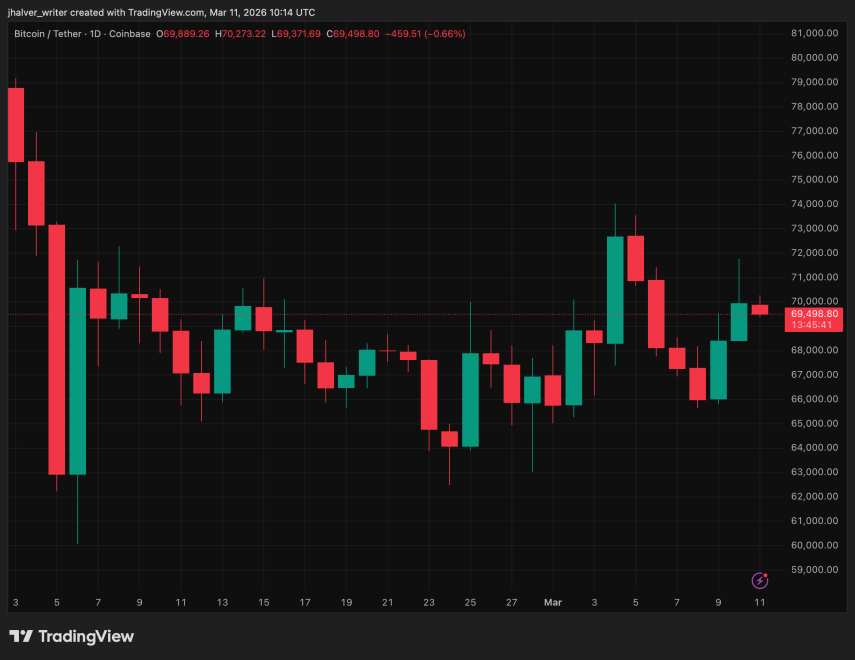
BTC’s price trends to the downside on the daily chart. Source: BTCUSDT on Tradingview

Cover image from Perplexity, BTCUSDT chart from Tradingview

Domande pertinenti

QWhat is the main purpose of the DEATH BETS Act introduced by Senator Schiff?

AThe DEATH BETS Act aims to explicitly ban prediction market contracts tied to terrorism, assassination, war, or an individual's death on any platform registered with the CFTC.

QWhich specific examples of prediction contracts did Senate Democrats cite in their letter to CFTC Chair Michael Selig?

AThe letter cited Polymarket's on-chain contracts on whether the Artemis II would explode, if Venezuela's Nicolás Maduro would be removed from power, and if Ukraine's Myrnohad would be captured by Russian forces.

QHow does Senator Schiff characterize the current state of prediction markets in his statement?

ASenator Schiff characterized prediction markets as 'the Wild West' where regulators have been turning a blind eye to gambling on lives.

QWhat significant trading activity was mentioned regarding Iran-related prediction markets?

AA bet on whether Iran's Ali Khamenei would be 'out as Supreme Leader' had $54 million in trading volume on Kalshi before being paused, with reported profits of $1.2-1.4 million for some traders before U.S. strikes.

QWhat will be the practical effect of the DEATH BET Act on trading platforms according to the article?

ACFTC-supervised platforms will become safer but more limited, while riskier war/death betting will be pushed to offshore or permissionless crypto venues, increasing legal and reputational risks there.

Letture associate

The Entire Internet Hails Noam's Joining, But OpenAI's Loss Bill Just Got Thicker

While the AI community celebrates Noam Shazeer, co-author of the "Attention Is All You Need" paper, joining OpenAI as Head of Architectural Research, the company's audited financials reveal a starkly different reality. In 2025, OpenAI reported $13.07 billion in revenue but a massive $20.92 billion operating loss. Even excluding a one-time accounting charge, the cash burn is severe, with $3.7 billion consumed in Q1 2026 alone. This high-profile hiring occurs against a backdrop of significant internal research talent drain, with key founders and researchers departing as the company's focus shifts from exploratory research to product iteration. Meanwhile, OpenAI's fundamental business model faces a deep crisis. It paid Microsoft $10.59 billion for compute in 2025, while its vast user base of 9 billion weekly actives includes only 50 million paying customers, making growth a direct driver of escalating costs. The article argues Shazeer's recruitment is less about technical necessity and more about crafting a compelling narrative for OpenAI's upcoming IPO, aiming to justify a rumored $1 trillion valuation to future public market investors. It contrasts OpenAI's strategy with Anthropic's reported path to profitability, which relies on a strong enterprise customer base and cost control, rather than star-powered narratives. Ultimately, the piece concludes that while Shazeer's architectural work may take 1-2 years to materialize, OpenAI's financial clock is ticking much faster, with its massive losses undercutting the celebratory headlines.

marsbit1 h fa

The Entire Internet Hails Noam's Joining, But OpenAI's Loss Bill Just Got Thicker

marsbit1 h fa

Market Trend (June 19): US-Iran Deal Drives Out Geopolitical Premium; Chip Stocks Soar to New Highs; Energy Sector Leads Declines

U.S. Market Trends (June 19): U.S.-Iran Deal Eases Tensions, Chip Stocks Soar, Energy Sector Leads Declines. U.S. stocks rallied on Thursday as the signing of a temporary U.S.-Iran deal in Geneva de-escalated Middle East tensions, with Saudi oil tankers transiting the Strait of Hormuz. This geopolitical relief helped markets recover from recent Fed-driven volatility. The S&P 500 rose over 1%, the Nasdaq gained nearly 2%, and the Dow Jones Industrial Average closed at another record high. The Philadelphia Semiconductor Index surged over 6% to a historic peak. Chip stocks were the standout performers. Reports of an Apple-Intel design and foundry deal for certain products, alongside mentions of potential Nvidia and SpaceX collaborations with Intel, propelled the sector. Intel surged ~10.5%, while memory chip makers like Micron also saw significant gains, highlighting sustained confidence in long-term AI capital expenditure. In contrast, the energy sector was the day's sole loser, with the S&P 500 energy sub-index declining as WTI crude fell ~2% to around $74.29/barrel. The reopening of key shipping routes erased prior geopolitical risk premiums. SpaceX extended losses for a second day on news of a potential large bond offering. Market volatility (VIX) dropped sharply, indicating a swift reversal of post-Fed jitters. Treasury yields dipped slightly but remained elevated. The focus now shifts to upcoming economic data, including next week's PCE inflation report and Micron's earnings, which will serve as a key test for the AI trade's durability.

marsbit2 h fa

Market Trend (June 19): US-Iran Deal Drives Out Geopolitical Premium; Chip Stocks Soar to New Highs; Energy Sector Leads Declines

marsbit2 h fa

Trading

Spot
Futures
活动图片