A History of Technological Evolution Powered by Electricity: Aluminum, Bitcoin, and AI

marsbitPubblicato 2026-05-26Pubblicato ultima volta 2026-05-26

Introduzione

The journey from the Rockdale aluminum smelter in Texas to space-based data centers illustrates a core economic principle: whoever controls the cheapest electricity dictates the use of computing power. The evolution is clear. Old industrial sites with pre-existing, high-capacity power grids are being repurposed. In Rockdale, a former Alcoa plant now houses vast Bitcoin mining rigs, which are increasingly being replaced by AMD chips for AI training. The logic is purely financial: while smelting aluminum yields $0.17–0.27 per kWh and Bitcoin mining $0.05–0.11, AI inference on H100 GPUs generates $1.27–3.67 per kWh. Recent deals confirm the rush for power infrastructure. Riot Platforms leases space to AMD; TeraWulf bought an old Kentucky aluminum plant for its grid; NYDIG secured a New York site for its cheap hydropower to mine Bitcoin. As AI giants like Anthropic, Microsoft, Google, and Amazon aggressively expand, they now directly compete with crypto miners for the same industrial power resources, often outbidding them. This has led to a decline in Bitcoin's global hash rate and a wave of miner conversions to AI data centers. This "digital resource curse" extends globally. Gulf nations, long offering subsidized power to attract heavy industry like aluminum, are now pivoting to become AI and cloud computing hubs—exporting computational power instead of physical commodities. Similarly, Bhutan halted its sovereign Bitcoin mining to sell hydropower directly to India for a stead...

Written by: Thejaswini M A

Compiled by: Luffy, Foresight News

Drive about an hour northeast from Austin, Texas, past barbecue joints and barren scrubland, and you'll arrive in Rockdale, Texas. If you roll down the window before the town's outline comes into view, you'll hear a steady roar, like the rumble of a jet engine idling on the tarmac.

Rockdale, built around an old aluminum smelter, now hosts North America's largest concentration of Bitcoin mining operations, with industry leaders like Riot Platforms and Bitdeer having set up shop there. Investigations by The New York Times and Al Jazeera have long documented this soundscape: tens of thousands of mining rigs paired with industrial fans running at full throttle to prevent equipment from overheating and shutting down in the Texas heat.

Follow the roar into the former plant of Alcoa, a symbol of 20th-century heavy industry. No trace of aluminum production remains in the vast industrial yard. Inside a massive metal warehouse, countless thick copper cables and industrial server racks are arranged in grids. Computer equipment is fully submerged in churning synthetic coolant.

Originally used for Bitcoin mining, the equipment here is now being gradually replaced with AMD chips, transitioning to handle artificial intelligence model training workloads.

Forget debating whether AI is a bubble or Bitcoin is in terminal decline. This industrial succession is just a surface manifestation. The companies securing leases for these sites see it clearly: the true core asset is the electrical infrastructure. This is now an industry-wide consensus.

If you're still wondering why, the underlying logic stems from the disparity in revenue per kilowatt-hour of electricity (calculated at real-time London Metal Exchange prices):

  • Aluminum Smelting: Each kWh can generate $0.17–$0.27 in gross revenue.
  • Bitcoin Mining: At current rates, each kWh yields only $0.05–$0.11.
  • Running AI Inference Tasks on H100 GPUs: Each kWh yields a whopping $1.27–$3.67.
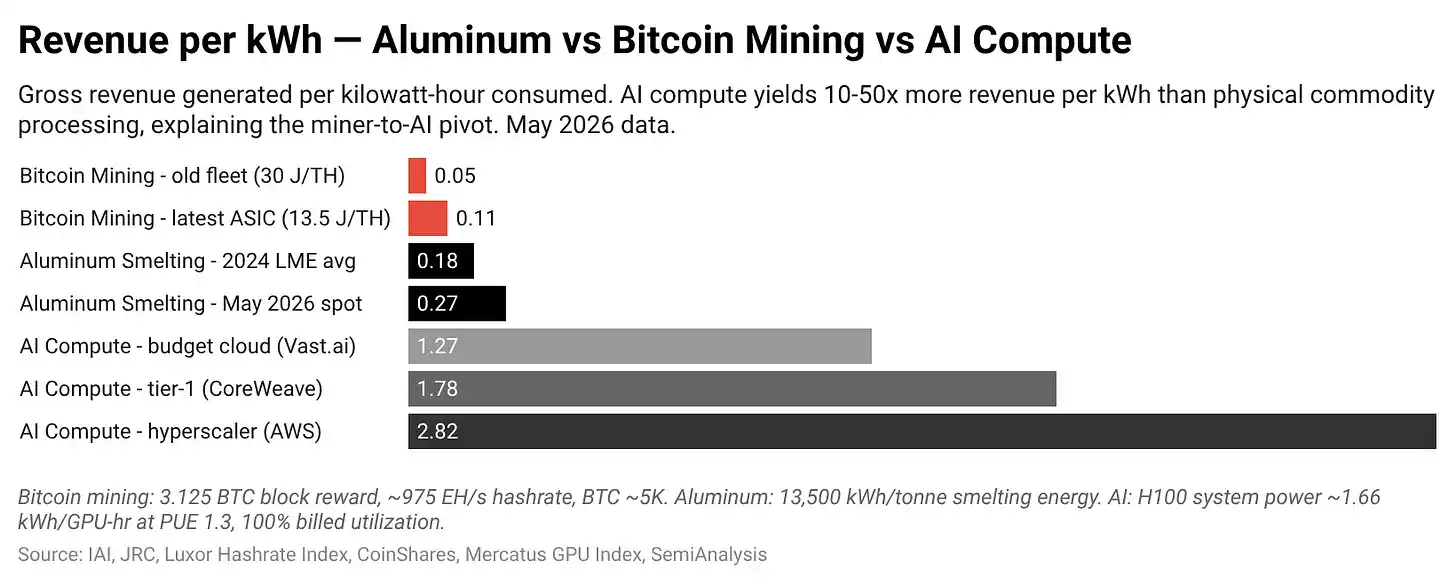
When electricity was cheap, producing aluminum made sense. As margins in the aluminum industry were squeezed, Bitcoin mining became the new use case for low-cost power. By 2026, with Bitcoin prices depressed, AI workloads have become the unequivocally better choice.

Three recent transactions vividly illustrate the industry-wide scramble for power resources, whether for cryptocurrency mining or AI compute.

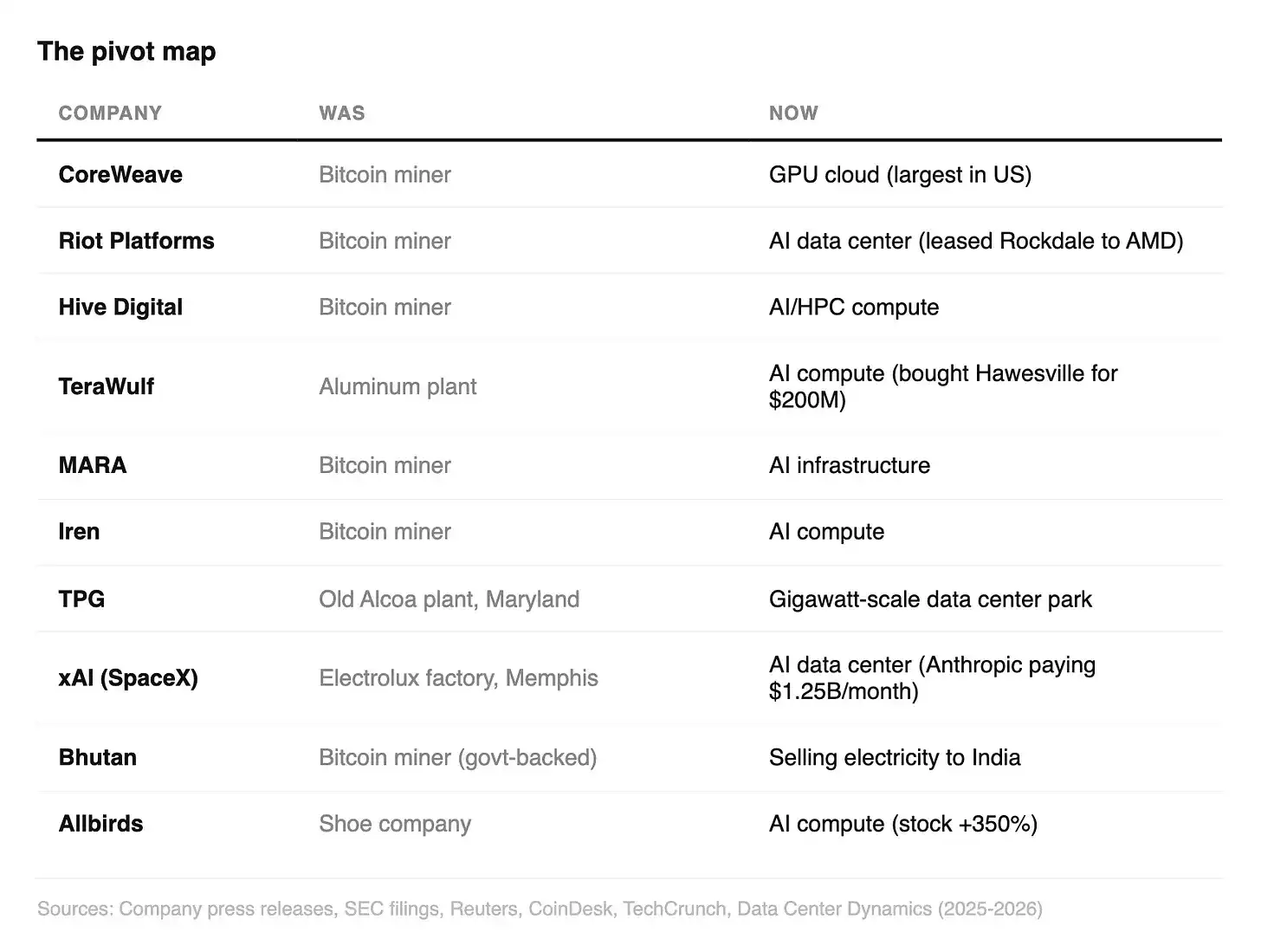
Riot, with its large site in Rockdale, hasn't limited itself to Bitcoin mining. It has leased part of its space and power to chip giant AMD for building an AI data center. Simply by subleasing electricity and space, the company stands to earn hundreds of millions of dollars.

TeraWulf has embarked on a major expansion, spending $200 million to acquire the century-old Century Aluminum plant in Hawesville, Kentucky. The core reason for choosing this location is the plant's existing, robust high-capacity electrical infrastructure. The company plans to dismantle the old production equipment and build a large-scale data center campus leveraging the ready-made power grid.

NYDIG set its sights on the former Massena East industrial site in New York State. The site had been idle for years but offers direct access to 435 megawatts of cheap hydroelectric power from the St. Lawrence River. While peers pivot to AI, NYDIG secured this location solely to lock in low-cost hydropower to continue its Bitcoin mining operations. The industry has long since stopped building sites from scratch; it now competes for existing power hubs.

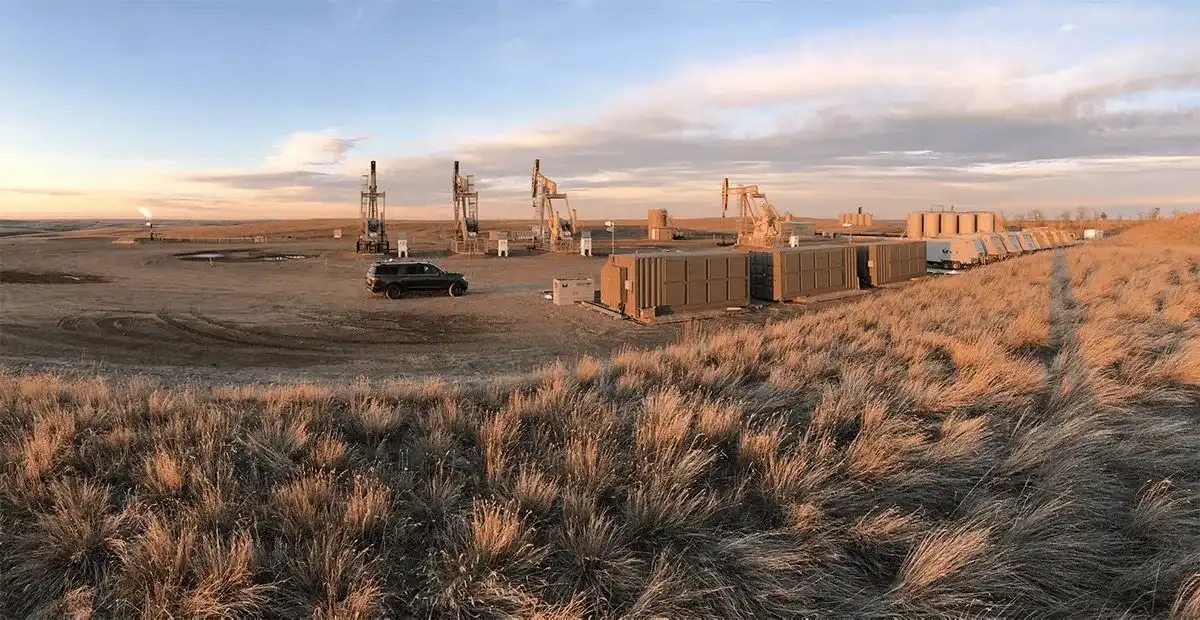
Over the past two decades, Bitcoin miners have roamed the globe in search of cheap power: at remote hydroelectric dams in Washington state, at flare gas sites in North Dakota's oil fields, in clusters of old industrial grids in upstate New York. The industry has honed a mature set of supporting capabilities: 24/7 high-load power management, industrial-grade cooling solutions, long-term, low-cost power contracts.

The rising AI firms happen to need these ready-made resources and have deeper pockets.
Anthropic is aggressively locking down power resources. Microsoft, Google, and Amazon are also on a data center construction spree, with power infrastructure buildout struggling to keep pace with new facility deployment. The three tech giants are now directly competing with Bitcoin miners for the same pool of industrial power resources. Where miners once competed against each other for power, they now find themselves at a disadvantage against the tech titans.

Data from early 2026 confirms the industry's predicament. Bitcoin's global network hash rate declined for the first time in six years. While the current cost to mine a single Bitcoin is around $88,000, for most of May this year, the price has hovered around $77,000. Miners operating at standard electricity rates are losing money on every coin they produce.

A collective pivot has followed. Companies like Hive, Hut 8, TeraWulf, and Iren are dismantling mining rigs and converting facilities into AI server rooms. CoreWeave has completely exited crypto mining, fully transitioning to AI cloud services. MARA acquired a French tech company to shift its business focus. Those positioned as "power operators," holding valuable electricity resources, are surviving. Miners solely focused on the crypto space are in crisis.
Energy analysts have dubbed this phenomenon the "digital resource curse": nations and companies are increasingly realizing that simply controlling cheap electricity yields higher returns than developing new technologies themselves.

The Gulf States grasped this logic early. For the past six decades, they have maintained ultra-low electricity tariffs: Kuwait has kept residential rates stable at $0.007 per kWh since 1966; in Abu Dhabi, the combined cost of production and delivery is about $0.087 per kWh, but it's sold to residents for just $0.014. Low-cost power was originally a tool for industrial policy, attracting energy-intensive industries like aluminum smelting, petrochemicals, and steel to the desert.
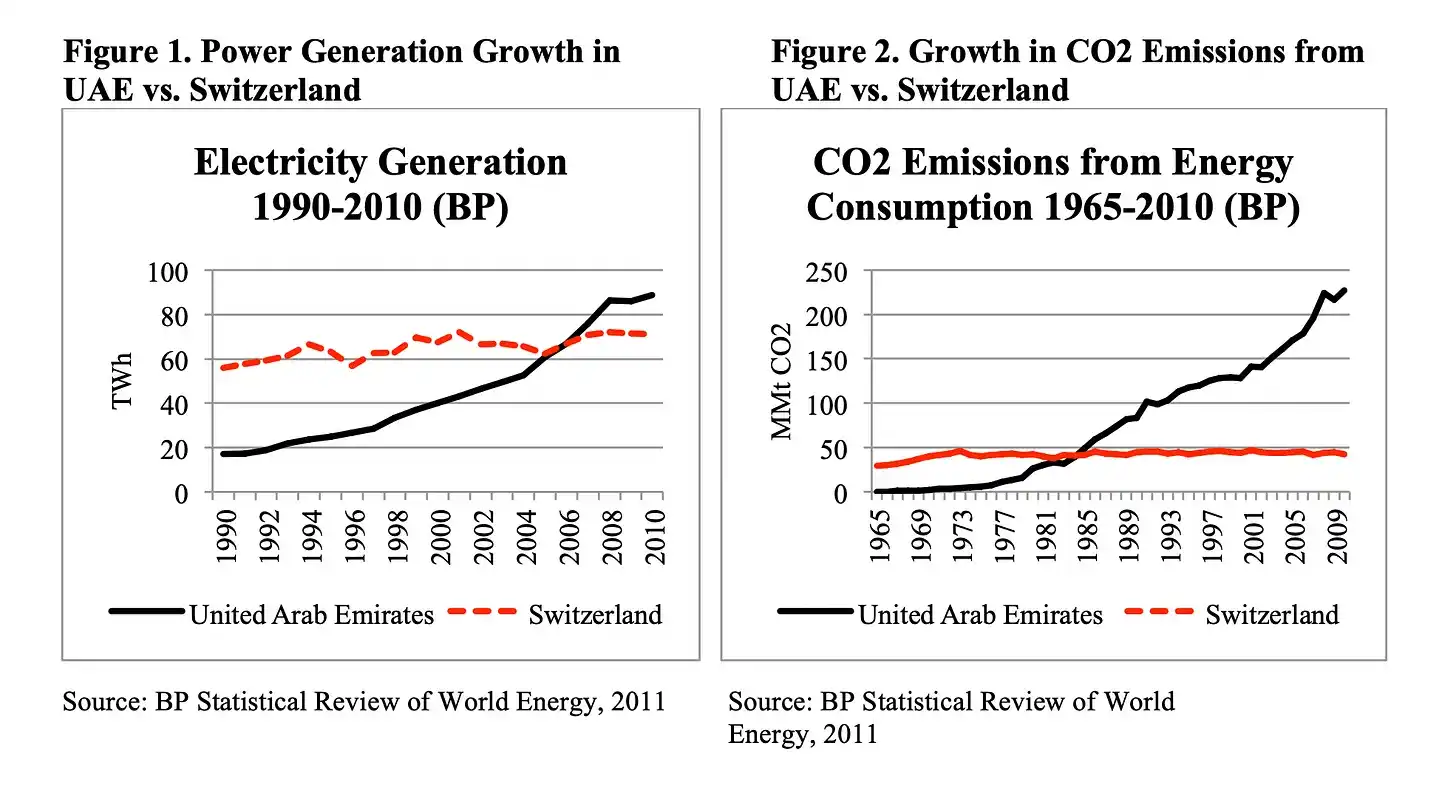
Today, that same cheap power that once supported heavy industry has found a new user: the data center. Saudi Arabia has established a sovereign AI investment agency, HUMAIN, investing tens of billions in tech infrastructure. The UAE is building a 5-gigawatt AI park, attracting companies like OpenAI, Oracle, and Nvidia. The grid that once powered aluminum smelters now powers AI compute. The planned NEOM Oxagon, originally conceived as a floating industrial city, has been repurposed into a $5 billion AI data center cluster powered by wind and solar.

The Carnegie Endowment for International Peace noted: Cloud computing has become the Gulf's "new aluminum." Instead of exporting physical commodities, the region is now converting fossil fuels and solar energy into compute power and exporting it via the internet.

It's not just the Middle East. Bhutan's case is equally telling.

Bhutan once possessed some of the world's cheapest hydropower. Its state-backed Bitcoin mining project was once hailed as a model of sovereign mining, holding a peak of 13,000 BTC. That has now dwindled to 3,100 BTC, and mining operations ceased over a year ago. The country's hydropower is now sold directly to the Indian grid.

The calculus mirrors that of the old American aluminum plant: Is Bitcoin mining still the best use of our electricity? When the answer was yes, Bhutan mined. When selling power to India offered a more stable return without the volatility risk of cryptocurrency, the power flowed to its neighbor.

Similarly, Starcloud raised $200 million to plan an orbital solar-powered data center. They recently trained the first AI model in space using H100 GPUs and are seeking approval to launch 88,000 satellites. While the project retains a Bitcoin mining operation, it is only a secondary component: the in-orbit solar panels generate continuous power, and when the AI compute queue is idle, the surplus electricity is used for crypto mining.

Low Earth orbit offers unique advantages for power generation: constant sunlight, no land use, and the cold of space negates the need for extensive cooling equipment. Over the past two decades, launch costs have fallen by 95%.

SpaceX is also deeply involved in the power-and-compute calculus. According to its latest IPO filing, the company's Colossus 1 data center in Memphis, Tennessee, has its entire compute capacity exclusively leased by Anthropic under a contract running until May 2029, valued at over $40 billion. This single deal alone brings SpaceX $1.25 billion in monthly revenue. This data center was also converted from an old appliance factory, mirroring the transformation model seen in Rockdale's aluminum plant.

Amidst all this industrial churn, perhaps the most unexpected pivot is that of Allbirds. The sustainable shoe brand, once valued at $4 billion, saw its stock price plummet 98% as the consumer brand bubble burst. With its core business struggling, the company, armed with cash and a public listing, decisively pivoted entirely to operating AI compute infrastructure. Its stock price subsequently surged 350%. The market voted: operating servers and trading in power/compute is far more profitable today than the traditional consumer sector.

Meanwhile, crypto projects like Bittensor, Render, and Akash are charting a different path: not building large, centralized facilities, but aggregating the world's distributed, idle compute.

Bittensor has built a compute marketplace where, underpinned by a fixed-supply token system, various AI models compete to provide answers; the project also halved its daily token issuance in December 2025. Render incentivizes users to share idle GPU resources for AI tasks. Akash rents out cloud compute, claiming prices up to 85% lower than Amazon Web Services.

This distributed compute model is gaining attention. At Nvidia's GTC conference in 2026, CEO Jensen Huang compared Bittensor to the classic internet project Folding@home. The latter was born from the idea of leveraging idle home computers worldwide, making dormant devices productive; Bittensor uses crypto tokens as an incentive to aggregate the compute of idle gaming PCs and old mining rigs.

Looking at the big picture, from the roar of industrial fans in Rockdale to sun-chasing satellites in orbit, a massive reconfiguration around physical assets is underway. For the companies involved, the only rule is to chase profit margins. I predict that a decade from now, these compute facilities may once again be emptied and repurposed for the next generation of emerging industries. The underground electrical transmission lines, however, will remain unchanged from beginning to end.

Whoever controls the cheapest electricity decides what the compute is used for. This logic has already played out in Texas, Bhutan, and Abu Dhabi. And 250 miles above the Earth's surface, it will hold true as well.


Domande pertinenti

QWhat is the core reason behind the industrial transformation from aluminum smelting to Bitcoin mining and then to AI data centers at sites like the one in Rockdale, Texas?

AThe core reason is the pursuit of maximizing revenue per kilowatt-hour of electricity consumed. The decision is driven by comparing the gross revenue each activity generates from the same unit of power: aluminum smelting ($0.17–0.27/kWh), Bitcoin mining ($0.05–0.11/kWh), and AI inference tasks using H100 GPUs ($1.27–3.67/kWh). As profitability shifts, businesses repurpose infrastructure to host the most lucrative power-consuming operation.

QHow are Bitcoin miners being outcompeted in the race for cheap electricity resources according to the article?

ABitcoin miners are being outcompeted by well-funded AI companies and tech giants like Microsoft, Google, and Amazon. These AI-focused firms have stronger capital and are aggressively securing the same industrial-scale, low-cost power resources and data center sites that miners previously relied on. This competition has contributed to a decline in Bitcoin's global hash rate as miners struggle with profitability against higher electricity bidders.

QWhat is the 'digital resource curse' mentioned in the article, and how is it exemplified by Gulf states?

AThe 'digital resource curse' refers to the phenomenon where countries or companies find that simply controlling cheap electricity resources yields higher returns than developing new technologies. Gulf states like Kuwait and Abu Dhabi exemplify this by using long-standing, heavily subsidized low electricity prices—initially to attract energy-intensive industries like aluminum and chemicals—to now pivot and attract massive AI data center investments, effectively exporting compute power instead of physical commodities.

QWhat alternative, decentralized model for providing AI compute is highlighted in the article, and which projects represent it?

AThe article highlights a decentralized model that aggregates globally distributed, idle computing power instead of building large centralized data centers. This model is represented by crypto projects like Bittensor (which creates a marketplace for AI models to compete), Render (which shares idle GPU resources for AI tasks), and Akash (which offers decentralized cloud computing at lower costs). Nvidia's CEO compared Bittensor to the classic distributed computing project Folding@home.

QWhat broader principle does the article conclude governs the evolution of power-intensive industries from aluminum to AI?

AThe article concludes that the fundamental principle is that whoever controls the cheapest electricity determines the use of compute power. Industries—whether aluminum smelting, Bitcoin mining, or AI training—will continuously migrate to and repurpose infrastructure based on where they can achieve the highest profit per unit of electricity. The physical power grid remains constant, while the operations it supports evolve to follow the highest monetary return.

Letture associate

Bankless Co-founder: Why I Sold All My ETH

Author David Hoffman, founder of Bankless, explains his decision to sell all his ETH, despite being a prominent figure in the Ethereum ecosystem. He clarifies that his move is not a bearish take on Ethereum itself, which he remains highly optimistic about as a network. His core argument is that the "ETH is money" thesis, which he helped popularize, has largely played out. Hoffman argues that ETH has achieved the market valuation it deserves based on Ethereum's current success and competitive position. He details several reasons for this view. First, the path for ETH to become global money required nearly flawless execution and sustained dominance across Ethereum's entire technical and social stack—a coordination challenge he now believes had a narrower window for success than anticipated. Second, market data shows a strong correlation between L1 chain activity/fees and the price of its native asset; Ethereum's fee dominance has been challenged by competitors like Solana. Third, the "strong version" of crypto (decentralized, native crypto economies) that ETH's monetary thesis relied upon has struggled to maintain a positive mainstream narrative and stable adoption beyond a brief period. Finally, Ethereum's architecture as a "giver"—providing secure block space and tokenization capabilities at cost to L2s and applications—means it doesn't capture premium value directly. Its rollup-centric roadmap further directs most profits to L2s and applications ("fat app theory"). In conclusion, Hoffman believes the opportunity for ETH to be revalued significantly upward as money has diminished. He sold not because ETH will fail, but because its monetary thesis has matured, and he seeks to allocate capital to other opportunities he finds more compelling.

链捕手1 h fa

Bankless Co-founder: Why I Sold All My ETH

链捕手1 h fa

From Issuer to Infrastructure Owner: Circle's Arc Strategy and the Fatal Gap in the GENIUS Act

Circle raised $222 million for its proprietary Layer-1 blockchain, Arc, positioning itself not just as a stablecoin issuer but as the owner of the settlement infrastructure USDC relies on. This move, backed by investors like BlackRock and Apollo, highlights a significant structural conflict unaddressed by the GENIUS Act of 2025. While the act focuses on stablecoin reserves and issuer oversight, it remains silent on the market structure implications of an issuer controlling the underlying network—a scenario akin to a currency issuer also owning the payment rails. Traditionally, financial regulations separate issuers from settlement infrastructure to ensure neutrality. With Arc, Circle gains control over transaction ordering, fees, and network rules, potentially favoring USDC over competitors. The article argues that this creates a permanent structural temptation, even if no abuse occurs. The solution lies in applying established market infrastructure principles: mandating neutral transaction ordering, transparent fee schedules, and governance separated from Circle’s commercial interests. The current pre-mainnet phase offers a critical window for regulators to establish these rules before Arc becomes entrenched. Once operational, enforcing changes would be costly and disruptive. The core question remains: should a regulated stablecoin issuer be allowed to own the settlement network its competitors must use? The GENIUS Act doesn’t answer this, but Circle’s Arc strategy makes it urgent.

marsbit1 h fa

From Issuer to Infrastructure Owner: Circle's Arc Strategy and the Fatal Gap in the GENIUS Act

marsbit1 h fa

What Are the Key Variables Determining the AI Bull Market?

Title: What Determines the AI Bull Market? Key Variables Revealed Despite rising oil prices above $100/barrel, persistent inflation, and fragile Fed rate cut expectations—a traditionally hostile environment for high-valuation tech stocks—the AI sector continues to drive the market to new highs. According to analysts, the current AI boom is in a phase of "rational fervor": while bubbles exist, they are not yet out of control. The crucial shift is the emergence of Agentic AI, which is evolving from an assisting tool (Copilot) to an autonomous execution tool (Autopilot), creating a clearer commercial path from investment to revenue. This shift accelerates Token consumption and inference computing demand while boosting revenue forecasts for leading firms. The market is now rewarding capital expenditure as it transforms from a burden into a competitive moat, supporting hardware chains like GPUs, optical modules, and storage. However, valuations have already priced in growth expectations for 2027-2028. The forward P/E ratio for the "Magnificent Seven" tech giants is about 35x, compared to 25x for the rest of the S&P 500. This premium implies AI adoption must occur 5 to 8 times faster than past technological revolutions—a scenario with little room for error. The sustainability of the AI bull market hinges on three key variables: 1. **Short-term liquidity shocks**: Risks include sustained high oil prices, resurgent inflation, rising interest rates, and potential unwinding of the yen carry trade. The critical question is whether the upward revision speed of Annual Recurring Revenue (ARR) can outpace the rise in interest rates. 2. **Mid-term industry realization**: Can the actual pace of AI adoption and commercialization match the current lofty valuations? Historically, general-purpose technology revolutions follow a non-linear path with periods of acceleration and deceleration. 3. **Long-term structural constraints**: These include energy and power grid limitations, employment displacement and consumer purchasing power, social acceptance and potential backlash, and potential hardware technology breakthroughs that could disrupt current supply chains. While the long-term prospects for AI remain optimistic with potential for significant productivity gains, the stock market's pricing depends not just on the vision but on the actual speed of realization amid these growing constraints. The direction is clear, but the pace of execution will determine whether the bubble remains controlled or spirals out of control.

marsbit1 h fa

What Are the Key Variables Determining the AI Bull Market?

marsbit1 h fa

Trading

Spot
Futures

Articoli Popolari

Cosa è BITCOIN

Comprendere HarryPotterObamaSonic10Inu (ERC-20) e la sua posizione nel mondo delle criptovalute Negli ultimi anni, il mercato delle criptovalute ha assistito a un aumento della popolarità delle meme coin, catturando l'interesse non solo dei trader, ma anche di coloro che cercano coinvolgimento comunitario e valore di intrattenimento. Tra questi token unici c'è HarryPotterObamaSonic10Inu (ERC-20), un progetto intrigante che mescola riferimenti culturali nel tessuto delle criptovalute. Questo articolo esplora gli aspetti chiave di HarryPotterObamaSonic10Inu, analizzando i suoi meccanismi, l'etica guidata dalla comunità e il suo coinvolgimento con il panorama crittografico più ampio. Che cos'è HarryPotterObamaSonic10Inu (ERC-20)? Come suggerisce il suo nome, HarryPotterObamaSonic10Inu è una meme coin costruita sulla blockchain di Ethereum, classificata secondo lo standard ERC-20. A differenza delle criptovalute tradizionali che possono enfatizzare l'utilità pratica o il potenziale investimento, questo token prospera grazie al valore di intrattenimento e alla forza della sua comunità. Il progetto mira a creare un ambiente in cui gli utenti coinvolti possono riunirsi, condividere idee e partecipare ad attività ispirate a diversi fenomeni culturali. Una caratteristica notevole di HarryPotterObamaSonic10Inu è la zero tassa sulle transazioni. Questo elemento allettante tende a incoraggiare il trading e il coinvolgimento della comunità, privo di costi aggiuntivi che possono scoraggiare i trader di piccole dimensioni. L'offerta totale della moneta è fissata a un miliardo di token, un numero che segna la sua intenzione di mantenere una circolazione sostanziale all'interno della comunità. Creatore di HarryPotterObamaSonic10Inu (ERC-20) Le origini di HarryPotterObamaSonic10Inu sono avvolte in un certo mistero; i dettagli sul creatore rimangono sconosciuti. Lo sviluppo di questo token non presenta un team identificabile o un piano esplicito, cosa non rara nel settore delle meme coin. Invece, il progetto è emerso organicamente, con il suo progresso fortemente dipendente dall'entusiasmo e dalla partecipazione della sua comunità. Investitori di HarryPotterObamaSonic10Inu (ERC-20) Per quanto riguarda investimenti esterni e finanziamenti, HarryPotterObamaSonic10Inu rimane ambiguo. Il token non elenca alcuna fondazione di investimento conosciuta o un sostegno organizzativo significativo. Invece, la linfa vitale del progetto è la sua comunità di base, che informa la sua crescita e sostenibilità attraverso azioni collettive e coinvolgimento nello spazio crittografico. Come funziona HarryPotterObamaSonic10Inu (ERC-20)? In quanto meme coin, HarryPotterObamaSonic10Inu opera principalmente al di fuori delle strutture tradizionali che governano spesso il valore degli asset. Ci sono diversi aspetti distintivi che definiscono il funzionamento del progetto: Transazioni senza tasse: Senza costi fiscali sulle transazioni, gli utenti possono comprare e vendere liberamente il token senza preoccuparsi di costi nascosti. Coinvolgimento della comunità: Il progetto prospera sull'interazione della comunità, sfruttando le piattaforme social per creare entusiasmo e facilitare il coinvolgimento. Discussioni, condivisione di contenuti e coinvolgimento sono elementi cruciali che aiutano ad espandere la sua portata e a favorire la lealtà tra i sostenitori. Nessuna utilità pratica: Va notato che HarryPotterObamaSonic10Inu non offre un'utilità concreta all'interno dell'ecosistema finanziario. Piuttosto, è classificato come un token principalmente per attività di intrattenimento e comunitarie. Riferimento culturale: Il token incorpora astutamente elementi della cultura pop per attirare interesse, collegandosi a appassionati di meme e seguaci delle criptovalute. HarryPotterObamaSonic10Inu esemplifica come le meme coin operino in modo diverso rispetto ai progetti di criptovalute più tradizionali, entrando nel mercato come costrutti sociali innovativi piuttosto che come asset utilitari. Cronologia di HarryPotterObamaSonic10Inu (ERC-20) La storia di HarryPotterObamaSonic10Inu è segnata da diversi traguardi notevoli: Creazione: Il token è emerso da un meme virale, catturando l'immaginazione di molti appassionati di criptovalute. Le date di creazione specifiche non sono disponibili, sottolineando la sua crescita organica. Inserimento negli scambi: HarryPotterObamaSonic10Inu ha fatto il suo ingresso in vari scambi, consentendo un accesso e un trading più facili da parte della comunità. Iniziative di coinvolgimento della comunità: Attività in corso volte a migliorare l'interazione della comunità, comprese gare, campagne sui social media e generazione di contenuti da parte di fan e sostenitori. Piani di espansione futura: La tabella di marcia del progetto include il lancio di una collezione NFT, merchandising e un sito di eCommerce relativo ai suoi temi culturali, coinvolgendo ulteriormente la comunità e cercando di aggiungere più dimensioni al suo ecosistema. Punti chiave su HarryPotterObamaSonic10Inu (ERC-20) Natura guidata dalla comunità: Il progetto dà priorità al contributo collettivo e alla creatività, garantendo che il coinvolgimento degli utenti sia al centro del suo sviluppo. Classificazione come meme coin: Rappresenta l'epitome delle criptovalute basate sull'intrattenimento, distinguendosi dai veicoli d'investimento tradizionali. Nessuna affiliazione diretta con Bitcoin: Nonostante la somiglianza nel nome del ticker, HarryPotterObamaSonic10Inu è distintivo e non ha alcuna relazione con Bitcoin o altre criptovalute consolidate. Focus sulla collaborazione: HarryPotterObamaSonic10Inu è progettato per creare uno spazio per la collaborazione e la condivisione di storie tra i suoi detentori, fornendo un canale per la creatività e il legame comunitario. Prospettive future: L'ambizione di espandersi oltre il suo presupposto iniziale verso NFT e merchandising delinea un percorso per il progetto per potenzialmente entrare in strade più mainstream all'interno della cultura digitale. Poiché le meme coin continuano a catturare l'immaginazione della comunità crittografica, HarryPotterObamaSonic10Inu (ERC-20) si distingue per i suoi legami culturali e il suo approccio centrato sulla comunità. Anche se potrebbe non adattarsi al modello tipico di un token orientato all'utilità, la sua essenza risiede nella gioia e nella camaraderia coltivate tra i suoi sostenitori, evidenziando la natura in evoluzione delle criptovalute in un'epoca sempre più digitale. Con la continuazione dello sviluppo del progetto, sarà importante osservare come le dinamiche della comunità influenzano la sua traiettoria nel panorama in continuo cambiamento della tecnologia blockchain.

1.5k Totale visualizzazioniPubblicato il 2024.04.01Aggiornato il 2024.12.03

Cosa è BITCOIN

Come comprare BTC

Benvenuto in HTX.com! Abbiamo reso l'acquisto di Bitcoin (BTC) semplice e conveniente. Segui la nostra guida passo passo per intraprendere il tuo viaggio nel mondo delle criptovalute.Step 1: Crea il tuo Account HTXUsa la tua email o numero di telefono per registrarti il tuo account gratuito su HTX. Vivi un'esperienza facile e sblocca tutte le funzionalità,Crea il mio accountStep 2: Vai in Acquista crypto e seleziona il tuo metodo di pagamentoCarta di credito/debito: utilizza la tua Visa o Mastercard per acquistare immediatamente BitcoinBTC.Bilancio: Usa i fondi dal bilancio del tuo account HTX per fare trading senza problemi.Terze parti: abbiamo aggiunto metodi di pagamento molto utilizzati come Google Pay e Apple Pay per maggiore comodità.P2P: Fai trading direttamente con altri utenti HTX.Over-the-Counter (OTC): Offriamo servizi su misura e tassi di cambio competitivi per i trader.Step 3: Conserva Bitcoin (BTC)Dopo aver acquistato Bitcoin (BTC), conserva nel tuo account HTX. In alternativa, puoi inviare tramite trasferimento blockchain o scambiare per altre criptovalute.Step 4: Scambia Bitcoin (BTC)Scambia facilmente Bitcoin (BTC) nel mercato spot di HTX. Accedi al tuo account, seleziona la tua coppia di trading, esegui le tue operazioni e monitora in tempo reale. Offriamo un'esperienza user-friendly sia per chi ha appena iniziato che per i trader più esperti.

3.8k Totale visualizzazioniPubblicato il 2024.12.12Aggiornato il 2025.03.21

Come comprare BTC

Cosa è $BITCOIN

ORO DIGITALE ($BITCOIN): Un'Analisi Completa Introduzione all'ORO DIGITALE ($BITCOIN) L'ORO DIGITALE ($BITCOIN) è un progetto basato su blockchain che opera sulla rete Solana, con l'obiettivo di combinare le caratteristiche dei metalli preziosi tradizionali con l'innovazione delle tecnologie decentralizzate. Sebbene condivida un nome con Bitcoin, spesso definito “oro digitale” a causa della sua percezione come riserva di valore, l'ORO DIGITALE è un token separato progettato per creare un ecosistema unico all'interno del panorama Web3. Il suo obiettivo è posizionarsi come un asset digitale alternativo valido, anche se i dettagli riguardanti le sue applicazioni e funzionalità sono ancora in fase di sviluppo. Cos'è l'ORO DIGITALE ($BITCOIN)? L'ORO DIGITALE ($BITCOIN) è un token di criptovaluta esplicitamente progettato per l'uso sulla blockchain di Solana. A differenza di Bitcoin, che fornisce un ruolo di stoccaggio di valore ampiamente riconosciuto, questo token sembra concentrarsi su applicazioni e caratteristiche più ampie. Aspetti notevoli includono: Infrastruttura Blockchain: Il token è costruito sulla blockchain di Solana, nota per la sua capacità di gestire transazioni ad alta velocità e a basso costo. Dinamiche di Offerta: L'ORO DIGITALE ha un'offerta massima fissata a 100 quadrilioni di token (100P $BITCOIN), sebbene i dettagli riguardanti la sua offerta circolante siano attualmente non divulgati. Utilità: Sebbene le funzionalità precise non siano esplicitamente delineate, ci sono indicazioni che il token potrebbe essere utilizzato per varie applicazioni, potenzialmente coinvolgendo applicazioni decentralizzate (dApp) o strategie di tokenizzazione degli asset. Chi è il Creatore dell'ORO DIGITALE ($BITCOIN)? Attualmente, l'identità dei creatori e del team di sviluppo dietro l'ORO DIGITALE ($BITCOIN) rimane sconosciuta. Questa situazione è tipica tra molti progetti innovativi nel settore blockchain, in particolare quelli allineati con la finanza decentralizzata e i fenomeni delle meme coin. Sebbene tale anonimato possa favorire una cultura guidata dalla comunità, intensifica le preoccupazioni riguardo alla governance e alla responsabilità. Chi sono gli Investitori dell'ORO DIGITALE ($BITCOIN)? Le informazioni disponibili indicano che l'ORO DIGITALE ($BITCOIN) non ha alcun sostenitore istituzionale noto o investimenti di venture capital prominenti. Il progetto sembra operare su un modello peer-to-peer incentrato sul supporto e sull'adozione della comunità piuttosto che su percorsi di finanziamento tradizionali. La sua attività e liquidità si trovano principalmente su exchange decentralizzati (DEX), come PumpSwap, piuttosto che su piattaforme di trading centralizzate consolidate, evidenziando ulteriormente il suo approccio di base. Come Funziona l'ORO DIGITALE ($BITCOIN) Le meccaniche operative dell'ORO DIGITALE ($BITCOIN) possono essere elaborate in base al suo design blockchain e alle caratteristiche della rete: Meccanismo di Consenso: Sfruttando il proof-of-history (PoH) unico di Solana combinato con un modello di proof-of-stake (PoS), il progetto garantisce una validazione efficiente delle transazioni contribuendo all'alta performance della rete. Tokenomics: Sebbene meccanismi deflazionistici specifici non siano stati dettagliati ampiamente, l'ampia offerta massima di token implica che potrebbe soddisfare microtransazioni o casi d'uso di nicchia che devono ancora essere definiti. Interoperabilità: Esiste il potenziale per l'integrazione con l'ecosistema più ampio di Solana, inclusi vari piattaforme di finanza decentralizzata (DeFi). Tuttavia, i dettagli riguardanti integrazioni specifiche rimangono non specificati. Cronologia degli Eventi Chiave Ecco una cronologia che evidenzia traguardi significativi riguardanti l'ORO DIGITALE ($BITCOIN): 2023: Il dispiegamento iniziale del token avviene sulla blockchain di Solana, contrassegnato dal suo indirizzo di contratto. 2024: L'ORO DIGITALE guadagna visibilità poiché diventa disponibile per il trading su exchange decentralizzati come PumpSwap, consentendo agli utenti di scambiarlo contro SOL. 2025: Il progetto assiste a un'attività di trading sporadica e a un potenziale interesse per impegni guidati dalla comunità, sebbene non siano state documentate partnership significative o avanzamenti tecnici fino ad ora. Analisi Critica Punti di Forza Scalabilità: L'infrastruttura sottostante di Solana supporta alti volumi di transazioni, il che potrebbe migliorare l'utilità di $BITCOIN in vari scenari di transazione. Accessibilità: Il potenziale basso prezzo di trading per token potrebbe attrarre investitori al dettaglio, facilitando una partecipazione più ampia grazie a opportunità di proprietà frazionata. Rischi Mancanza di Trasparenza: L'assenza di sostenitori, sviluppatori o di un processo di audit pubblicamente noti potrebbe generare scetticismo riguardo alla sostenibilità e all'affidabilità del progetto. Volatilità del Mercato: L'attività di trading è fortemente dipendente dal comportamento speculativo, il che può comportare una significativa volatilità dei prezzi e incertezze per gli investitori. Conclusione L'ORO DIGITALE ($BITCOIN) emerge come un progetto intrigante ma ambiguo all'interno dell'evolvente ecosistema di Solana. Sebbene tenti di sfruttare la narrativa dell'“oro digitale”, la sua partenza dal ruolo consolidato di Bitcoin come riserva di valore sottolinea la necessità di una chiara differenziazione della sua utilità e struttura di governance. L'accettazione e l'adozione future dipenderanno probabilmente dall'affrontare l'attuale opacità e dalla definizione più esplicita delle sue strategie operative ed economiche. Nota: Questo rapporto comprende informazioni sintetizzate disponibili a ottobre 2023, e potrebbero essersi verificati sviluppi oltre il periodo di ricerca.

99 Totale visualizzazioniPubblicato il 2025.05.13Aggiornato il 2025.05.13

Cosa è $BITCOIN

Discussioni

Benvenuto nella Community HTX. Qui puoi rimanere informato sugli ultimi sviluppi della piattaforma e accedere ad approfondimenti esperti sul mercato. Le opinioni degli utenti sul prezzo di BTC BTC sono presentate come di seguito.

活动图片