A Hidden Financial War? Iran Collects Strait Passage Fees with Stablecoins

marsbitPubblicato 2026-04-07Pubblicato ultima volta 2026-04-07

Introduzione

Iran has officially institutionalized a mandatory toll system for all large tankers passing through the Strait of Hormuz, rejecting dollar-denominated payments. Instead, fees must be paid either via yuan-denominated wire transfers or in USD-pegged stablecoins via decentralized networks. The move is designed to bypass U.S. financial sanctions and traditional banking channels like SWIFT system. The Islamic Revolutionary Guard Corps (IRGC) is implementing a tiered pricing model based on geopolitical alignment: allies like China and Russia pay the lowest rates, while U.S. allies and Israel are barred entirely. Vessels must display approved flags and are escorted through the strait after payment. This marks the first time a nation has integrated cryptocurrency into strategic-level payment infrastructure at commercial scale. The mechanism could channel over $20 billion annually in stablecoins through Iranian-controlled wallets, creating a grey liquidity pool shielded by sovereign power. However, risks remain. Compliance with sanctions from the EU and UK may void insurance coverage for vessels paying the IRGC, forcing shipowners to choose between longer routes or potential financial penalties. Russia is considering a similar model for the Northern Sea Route, signaling a broader shift toward using geographic chokepoints as financial leverage in a reordered global trade system.

On April 2, Iranian Deputy Foreign Minister Gharibabadi publicly confirmed at a routine press conference in Tehran that all very large crude carriers (VLCCs) passing through the Strait of Hormuz must pay a passage fee to the Islamic Revolutionary Guard Corps (IRGC), explicitly excluding the U.S. dollar as a settlement channel. This statement formalizes rumors previously circulating in shipping circles—Iran is no longer satisfied with traditional tools of geopolitical games but is transforming its control of the strait into a financial experiment targeting dollar hegemony.

The implementation speed of the fee mechanism has exceeded market expectations.

Citing internal documents from the IRGC Navy, Bloomberg reported that the system had completed technical deployment by the end of March. This time, Iran has chosen only two methods to receive passage fees: RMB wire transfers or settlements via decentralized networks using dollar-denominated stablecoins.
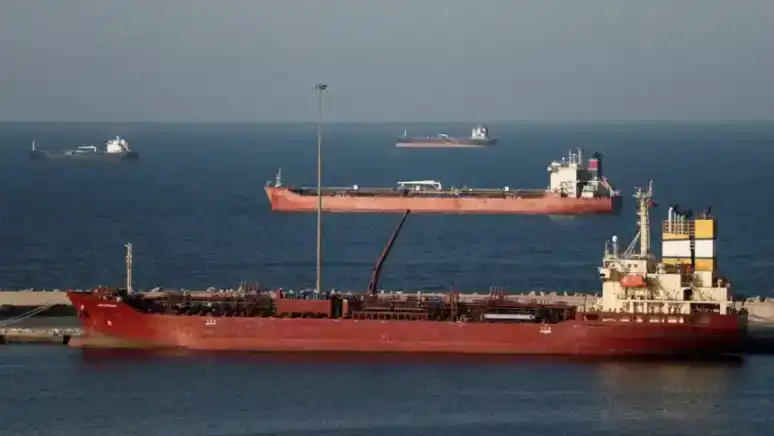
The Iranian customs department has set up a dedicated cryptocurrency exchange window on Qeshm Island to ensure funds are quickly converted into rials or transferred to overseas accounts after receipt.

This arrangement is meticulously designed.

Traditional international shipping settlements rely on the SWIFT network and correspondent banking system; any transaction involving Iran would trigger secondary sanctions from the U.S. Treasury. The combination of the RMB Cross-Border Payment System and public blockchain networks, however, constructs a parallel channel bypassing dollar surveillance.

According to statistics from London-based shipping brokerage Braemar, at least two VLCCs flying unspecified flags of convenience completed RMB payments and safely passed through the strait in late March. The Hormuz Strait Passage Management Act, passed by the Iranian Parliament's National Security Committee on March 30, further provides domestic legal backing for this mechanism.

It is worth noting that Iran has also implemented differentiated fee pricing for vessels based on their geopolitical affiliations.

Citing insider information, Bloomberg reported the oil fee standards for the Strait of Hormuz, starting at $0.5 per barrel, categorized into five tiers based on relationships with different countries.

The first tier is ally preferential rates: China and Russia, $0.5-$0.7 per barrel, with dedicated green channels; regular reporting allows free passage.

The second tier is friendly partners: countries like India and Pakistan, $0.8-$0.9 per barrel.

The third tier is neutral countries: African nations, Southeast Asia, Latin America, $1 per barrel, requiring declaration and inspection to ensure no hostile assets before release.

The fourth tier is high-risk countries: those with close ties to the U.S. but no hostile actions against Iran, such as Japan, South Korea, and many EU countries, $1.2-$1.5 per barrel, subject to full monitoring by Iran and potentially long approval queues.

The fifth tier is the U.S., Israel, and their allies: prohibited from passage.

Once a VLCC pays the toll, the IRGC issues a license code and route instructions. The vessel must fly the flag of a country that has a negotiated passage agreement; in some cases, it must also formally change its registration to that country. As the vessel approaches the Strait of Hormuz, it must broadcast its passage code via VHF radio. A patrol boat will then escort it, navigating close to the coastline through a group of islands now referred to by industry insiders as the "Iranian toll station," to ensure safe passage through the strait.

This is the first time a sovereign state has incorporated stablecoins into strategic-level payment infrastructure.

Unlike El Salvador's symbolic move to adopt Bitcoin as legal tender, Iran's choice involves mandatory commercial scale. The strait handles 21% of global seaborne crude oil traffic, with dozens of vessels passing through daily.

If this mechanism continues to operate, it is estimated that over $20 billion in stablecoins will flow through Iran-controlled digital wallets annually, forming a grey liquidity pool protected by sovereign power.
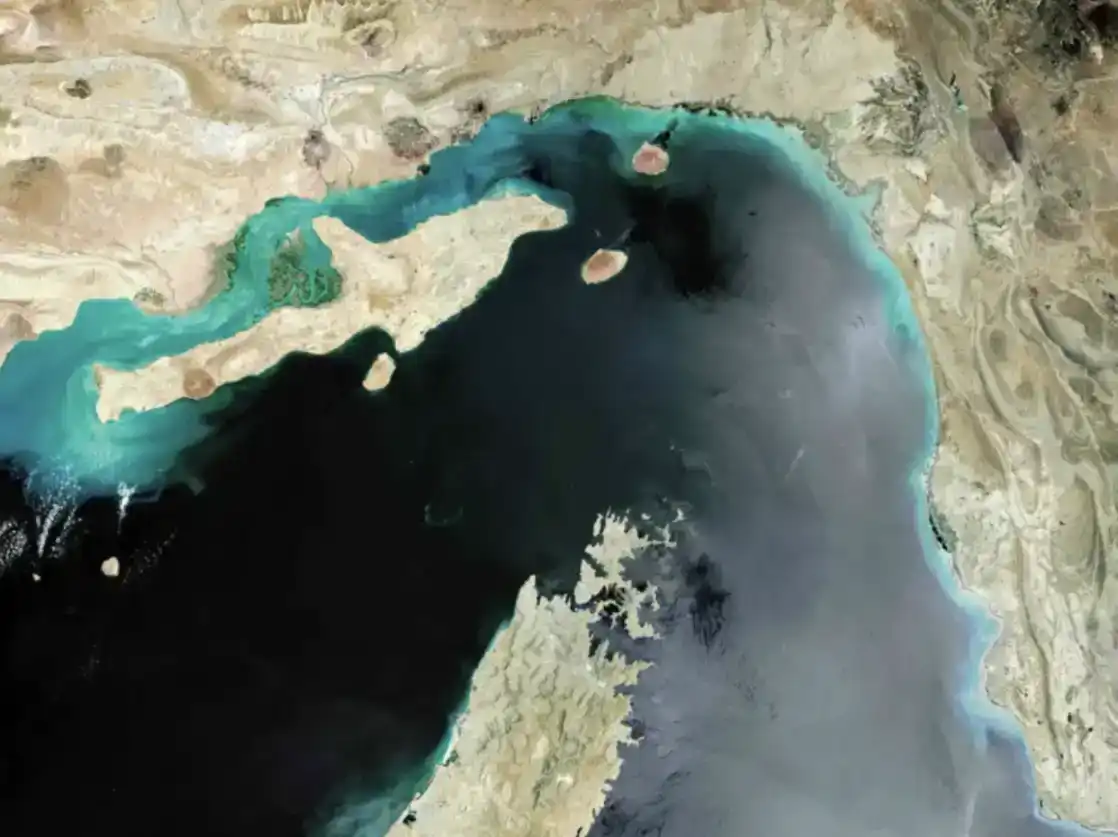
The deeper impact lies in the chain reaction for shipping insurance and trade finance. The International Group of P&I Clubs (IG) has issued an internal warning, noting that payments to the IRGC may trigger compliance risks under EU and UK sanctions, potentially voiding insurance policies. This forces shipowners into a brutal trade-off between shipping economics and legal risks: diverting via the Cape of Good Hope adds 15 days of voyage and tens of thousands in fuel costs, while paying the cryptocurrency toll risks account freezes. Some commodity traders have begun attempting to reroute through Pakistani intermediaries. Islamabad recently announced permission for 20 international tankers to fly the Pakistani flag, essentially providing an offshore outsourcing channel for Iran's system.

Iran is not the only country doing this. Russia previously announced a similar fee policy for the Northern Sea Route and has publicly considered accepting cryptocurrency settlements. This digital financial logic of turning geographical hubs into 'nodes' is reshaping the payment infrastructure of global energy trade.

When merchant ships complete USDT settlements via on-chain protocols in the anchorage of Qeshm Island, it is not merely the payment of a toll but a systematic dismantling of the remnants of the Bretton Woods system.

The fragility of this experiment is equally evident. Since USDT/USDC are essentially dollar-pegged and subject to OFAC tracking, how the shadow public entity established by the IRGC can 'decentralize' and convert large-scale funds into physical assets or fiat currency (rials) is a risk point. However, as long as Iran maintains its geographical monopoly over the Strait of Hormuz, this financial war mediated by cryptocurrency will continue to rewrite the rulebook of global trade.


Domande pertinenti

QWhat are the two payment methods Iran accepts for the Strait of Hormuz transit fee?

AIran accepts payment via RMB wire transfer or in USD stablecoins through a decentralized network.

QHow does Iran categorize countries for its tiered pricing system for the transit fee?

AIran uses a five-tier system: Tier 1 (allies like China and Russia), Tier 2 (friendly partners like India and Pakistan), Tier 3 (neutral countries), Tier 4 (high-risk countries with close US ties), and Tier 5 (US, Israel, and allies, which are banned).

QWhat is the estimated annual value of stablecoins that could flow through Iran's system if the mechanism continues?

AIt is estimated that over $20 billion worth of stablecoins could flow through Iran-controlled digital wallets annually.

QWhat major risk do shipowners face when paying the fee in cryptocurrency according to the International Group of P&I Clubs?

AThe International Group of P&I Clubs warned that paying the fee to the IRGC could trigger EU and UK sanctions compliance risks, potentially leading to the invalidation of their insurance policies.

QBesides Iran, which other country has announced a similar toll system for a strategic waterway and considered crypto payments?

ARussia has announced a similar toll system for the Northern Sea Route and has publicly considered accepting cryptocurrency payments.

Letture associate

U.S. Government Bans Foreign Nationals from Using Fable 5, Anthropic Issues Rebuttal

U.S. Government Bans Foreign Access to Fable 5, Anthropic Issues Rebuttal On June 12th, the U.S. government ordered AI company Anthropic to immediately suspend all foreign access—including foreign nationals within the U.S. and Anthropic's own foreign employees—to its newly released Fable 5 and Mythos 5 AI models, citing national security concerns. This forced Anthropic to temporarily disable access to both models for all users globally, as it cannot technically differentiate user nationality at scale. The models, released just three days prior, represent Anthropic's highest public capability tier. Fable 5 is the first publicly available model from the advanced "Mythos" family, while Mythos 5 is a less-restricted version for approved cybersecurity and critical infrastructure partners. The government's directive was reportedly triggered by claims from another company that it could "jailbreak" Mythos 5, raising alarm within the Trump administration. Anthropic, in a detailed public statement, strongly challenged this rationale. The company argues the demonstrated "jailbreak" is a narrow, non-generalized technique that merely involves identifying minor, known software vulnerabilities—a capability common to other publicly available models like OpenAI's GPT-5.5 and routinely used by cybersecurity defenders. Anthropic stated it has complied with the order but disagrees with the government's standard, warning that applying it industry-wide would halt all new frontier model deployments. The company criticized the lack of a transparent, fact-based legal process and expressed confidence the situation stems from a misunderstanding. It is working to restore access and will release more technical details within 24 hours. Other Anthropic models remain unaffected.

链捕手14 min fa

U.S. Government Bans Foreign Nationals from Using Fable 5, Anthropic Issues Rebuttal

链捕手14 min fa

The Revelation from the Raydium Theft Incident: New DeFi Vulnerabilities Lurking in Forgotten Old Contracts

**Raydium Exploit Reveals DeFi's Hidden Risk: Forgotten "Zombie" Contracts** A recent attack on Raydium's deprecated V3 AMM pools resulted in a loss of approximately $1.34 million. The hacker exploited pools that were no longer supported by Raydium's current UI or SDK but remained fully functional and accessible on-chain. This incident highlights a critical, often overlooked category of risk in DeFi: inactive or legacy smart contracts that projects fail to properly decommission. Since March 2025, there have been at least 8 publicly reported attacks targeting such abandoned contracts, with total losses around $10.8 million. Including older pools and deprecated features, the count rises to 10 incidents with roughly $22.5 million in losses. These "zombie contracts" represent a lifecycle management failure rather than a code vulnerability, yet they are typically misclassified under general "code bug" categories in security reports, masking the true scale of the problem. The root cause is that projects often merely document a contract as "deprecated" without taking essential technical steps to secure it: withdrawing remaining assets, disabling external call functions, and implementing ongoing monitoring. These forgotten, under-monitored components become prime targets for attackers. To address this, the industry needs to recognize "zombie contracts" as a distinct risk category and establish standardized decommissioning protocols. Essential steps should include: 1) a formal retirement announcement, 2) removal of all front-end integrations, 3) withdrawal of locked assets, 4) disabling key contract functions, 5) ongoing security monitoring, 6) clear user communication, and 7) a post-mortem analysis. The value of a DeFi project lies not only in its current TVL but also in the security of its historical codebase, which has now become a new attack surface.

Foresight News2 h fa

The Revelation from the Raydium Theft Incident: New DeFi Vulnerabilities Lurking in Forgotten Old Contracts

Foresight News2 h fa

Robots Begin to 'Consume Data': The Hidden Production Chain from Indian Data Factories to Billion-Dollar Humanoid Robots

Robots have started to 'consume data,' driving the formation of a new industrial supply chain focused on producing training data for embodied AI. Unlike large language models, which are trained on vast internet text corpora, embodied AI models face a 'data desert' in the physical world. This has created a massive demand for first-person perspective video data (Ego Data), captured by workers wearing cameras in places like Indian garment factories. Companies like Neocambrian AI are establishing 'data factories' where workers perform standardized tasks (e.g., sorting clothes, kitchen organization) to generate thousands of hours of video. Research, such as NVIDIA's EgoScale, demonstrates that scaling this human demonstration data predictably improves robot performance, particularly for dexterous manipulation. This has validated a training path combining large-scale human data for pre-training with smaller amounts of robot-specific data for fine-tuning. The value of different data types varies significantly, forming a 'data pyramid.' The base consists of low-cost, large-scale internet and Ego Data. Higher layers include more expensive motion-capture data (e.g., from data gloves), simulation/synthetic data, and the most costly and scarce layer: real robot teleoperation data. This demand has spawned a layered ecosystem of data suppliers: low-cost data factories, motion capture and alignment specialists, robot-native teleoperation service providers, simulation data companies, and platforms aiming for data standardization. Robot companies themselves are adopting a 'layered procurement' strategy: outsourcing generic Ego Data while building in-house capabilities for robot-specific adaptation data and the critical deployment/failure data generated in real-world applications. The industry is shifting focus from hardware and basic mobility to the data pipelines required for general-purpose capability. While parallels exist to data labeling companies like Scale AI in the LLM boom, the physical complexity of robot data—involving action success ambiguity and sim-to-real gaps—requires more integrated solutions for data collection, annotation, and a continuous feedback loop. The race is on to build the data engines that will teach robots to operate reliably in the unstructured real world.

marsbit4 h fa

Robots Begin to 'Consume Data': The Hidden Production Chain from Indian Data Factories to Billion-Dollar Humanoid Robots

marsbit4 h fa

Trading

Spot
Futures

Articoli Popolari

Come comprare WAR

Benvenuto in HTX.com! Abbiamo reso l'acquisto di WAR (WAR) semplice e conveniente. Segui la nostra guida passo passo per intraprendere il tuo viaggio nel mondo delle criptovalute.Step 1: Crea il tuo Account HTXUsa la tua email o numero di telefono per registrarti il tuo account gratuito su HTX. Vivi un'esperienza facile e sblocca tutte le funzionalità,Crea il mio accountStep 2: Vai in Acquista crypto e seleziona il tuo metodo di pagamentoCarta di credito/debito: utilizza la tua Visa o Mastercard per acquistare immediatamente WARWAR.Bilancio: Usa i fondi dal bilancio del tuo account HTX per fare trading senza problemi.Terze parti: abbiamo aggiunto metodi di pagamento molto utilizzati come Google Pay e Apple Pay per maggiore comodità.P2P: Fai trading direttamente con altri utenti HTX.Over-the-Counter (OTC): Offriamo servizi su misura e tassi di cambio competitivi per i trader.Step 3: Conserva WAR (WAR)Dopo aver acquistato WAR (WAR), conserva nel tuo account HTX. In alternativa, puoi inviare tramite trasferimento blockchain o scambiare per altre criptovalute.Step 4: Scambia WAR (WAR)Scambia facilmente WAR (WAR) nel mercato spot di HTX. Accedi al tuo account, seleziona la tua coppia di trading, esegui le tue operazioni e monitora in tempo reale. Offriamo un'esperienza user-friendly sia per chi ha appena iniziato che per i trader più esperti.

201 Totale visualizzazioniPubblicato il 2024.12.11Aggiornato il 2026.06.02

Come comprare WAR

Discussioni

Benvenuto nella Community HTX. Qui puoi rimanere informato sugli ultimi sviluppi della piattaforma e accedere ad approfondimenti esperti sul mercato. Le opinioni degli utenti sul prezzo di WAR WAR sono presentate come di seguito.

活动图片












