A Hidden Financial War? Iran Collects Strait Passage Fees with Stablecoins

marsbitPubblicato 2026-04-07Pubblicato ultima volta 2026-04-07

Introduzione

Iran has officially institutionalized a mandatory toll system for all large tankers passing through the Strait of Hormuz, rejecting dollar-denominated payments. Instead, fees must be paid either via yuan-denominated wire transfers or in USD-pegged stablecoins via decentralized networks. The move is designed to bypass U.S. financial sanctions and traditional banking channels like SWIFT system. The Islamic Revolutionary Guard Corps (IRGC) is implementing a tiered pricing model based on geopolitical alignment: allies like China and Russia pay the lowest rates, while U.S. allies and Israel are barred entirely. Vessels must display approved flags and are escorted through the strait after payment. This marks the first time a nation has integrated cryptocurrency into strategic-level payment infrastructure at commercial scale. The mechanism could channel over $20 billion annually in stablecoins through Iranian-controlled wallets, creating a grey liquidity pool shielded by sovereign power. However, risks remain. Compliance with sanctions from the EU and UK may void insurance coverage for vessels paying the IRGC, forcing shipowners to choose between longer routes or potential financial penalties. Russia is considering a similar model for the Northern Sea Route, signaling a broader shift toward using geographic chokepoints as financial leverage in a reordered global trade system.

On April 2, Iranian Deputy Foreign Minister Gharibabadi publicly confirmed at a routine press conference in Tehran that all very large crude carriers (VLCCs) passing through the Strait of Hormuz must pay a passage fee to the Islamic Revolutionary Guard Corps (IRGC), explicitly excluding the U.S. dollar as a settlement channel. This statement formalizes rumors previously circulating in shipping circles—Iran is no longer satisfied with traditional tools of geopolitical games but is transforming its control of the strait into a financial experiment targeting dollar hegemony.

The implementation speed of the fee mechanism has exceeded market expectations.

Citing internal documents from the IRGC Navy, Bloomberg reported that the system had completed technical deployment by the end of March. This time, Iran has chosen only two methods to receive passage fees: RMB wire transfers or settlements via decentralized networks using dollar-denominated stablecoins.
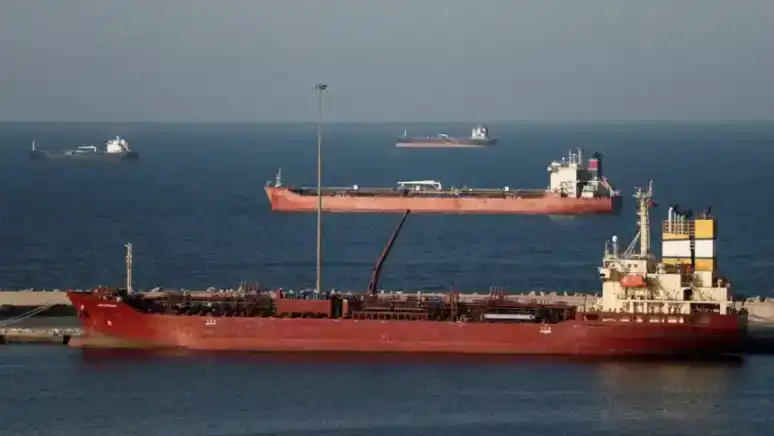
The Iranian customs department has set up a dedicated cryptocurrency exchange window on Qeshm Island to ensure funds are quickly converted into rials or transferred to overseas accounts after receipt.

This arrangement is meticulously designed.

Traditional international shipping settlements rely on the SWIFT network and correspondent banking system; any transaction involving Iran would trigger secondary sanctions from the U.S. Treasury. The combination of the RMB Cross-Border Payment System and public blockchain networks, however, constructs a parallel channel bypassing dollar surveillance.

According to statistics from London-based shipping brokerage Braemar, at least two VLCCs flying unspecified flags of convenience completed RMB payments and safely passed through the strait in late March. The Hormuz Strait Passage Management Act, passed by the Iranian Parliament's National Security Committee on March 30, further provides domestic legal backing for this mechanism.

It is worth noting that Iran has also implemented differentiated fee pricing for vessels based on their geopolitical affiliations.

Citing insider information, Bloomberg reported the oil fee standards for the Strait of Hormuz, starting at $0.5 per barrel, categorized into five tiers based on relationships with different countries.

The first tier is ally preferential rates: China and Russia, $0.5-$0.7 per barrel, with dedicated green channels; regular reporting allows free passage.

The second tier is friendly partners: countries like India and Pakistan, $0.8-$0.9 per barrel.

The third tier is neutral countries: African nations, Southeast Asia, Latin America, $1 per barrel, requiring declaration and inspection to ensure no hostile assets before release.

The fourth tier is high-risk countries: those with close ties to the U.S. but no hostile actions against Iran, such as Japan, South Korea, and many EU countries, $1.2-$1.5 per barrel, subject to full monitoring by Iran and potentially long approval queues.

The fifth tier is the U.S., Israel, and their allies: prohibited from passage.

Once a VLCC pays the toll, the IRGC issues a license code and route instructions. The vessel must fly the flag of a country that has a negotiated passage agreement; in some cases, it must also formally change its registration to that country. As the vessel approaches the Strait of Hormuz, it must broadcast its passage code via VHF radio. A patrol boat will then escort it, navigating close to the coastline through a group of islands now referred to by industry insiders as the "Iranian toll station," to ensure safe passage through the strait.

This is the first time a sovereign state has incorporated stablecoins into strategic-level payment infrastructure.

Unlike El Salvador's symbolic move to adopt Bitcoin as legal tender, Iran's choice involves mandatory commercial scale. The strait handles 21% of global seaborne crude oil traffic, with dozens of vessels passing through daily.

If this mechanism continues to operate, it is estimated that over $20 billion in stablecoins will flow through Iran-controlled digital wallets annually, forming a grey liquidity pool protected by sovereign power.
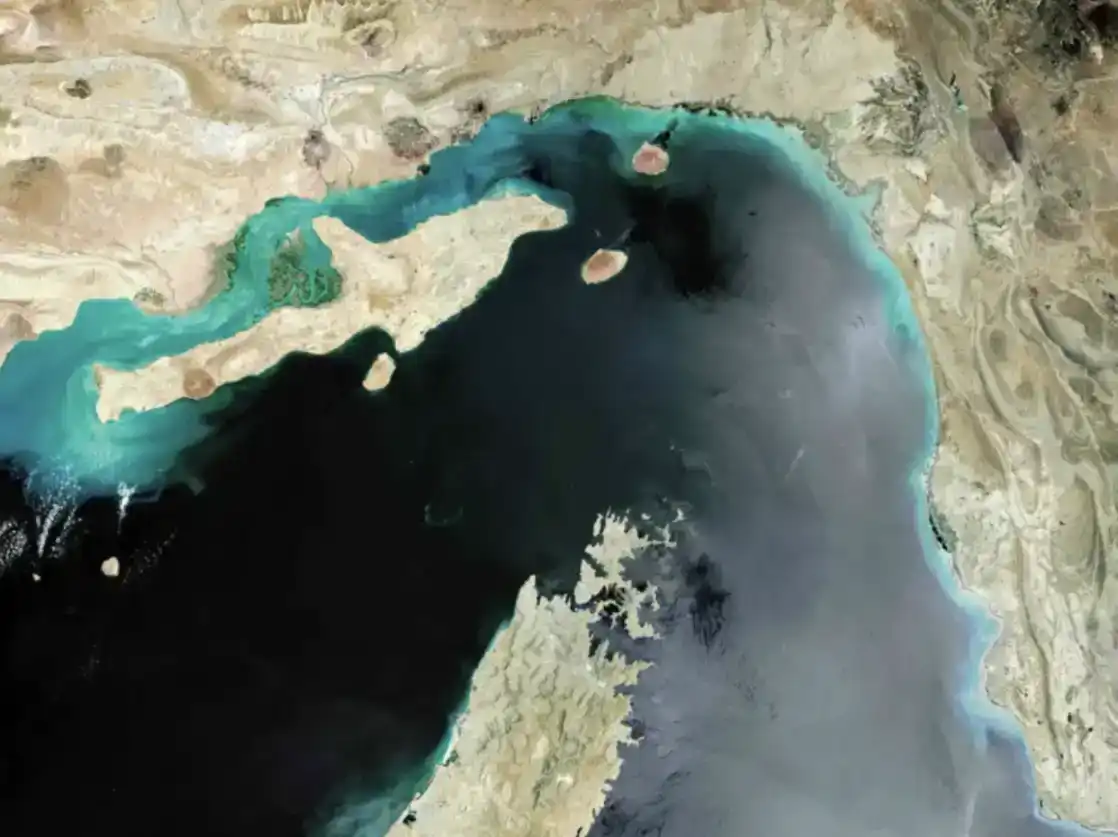
The deeper impact lies in the chain reaction for shipping insurance and trade finance. The International Group of P&I Clubs (IG) has issued an internal warning, noting that payments to the IRGC may trigger compliance risks under EU and UK sanctions, potentially voiding insurance policies. This forces shipowners into a brutal trade-off between shipping economics and legal risks: diverting via the Cape of Good Hope adds 15 days of voyage and tens of thousands in fuel costs, while paying the cryptocurrency toll risks account freezes. Some commodity traders have begun attempting to reroute through Pakistani intermediaries. Islamabad recently announced permission for 20 international tankers to fly the Pakistani flag, essentially providing an offshore outsourcing channel for Iran's system.

Iran is not the only country doing this. Russia previously announced a similar fee policy for the Northern Sea Route and has publicly considered accepting cryptocurrency settlements. This digital financial logic of turning geographical hubs into 'nodes' is reshaping the payment infrastructure of global energy trade.

When merchant ships complete USDT settlements via on-chain protocols in the anchorage of Qeshm Island, it is not merely the payment of a toll but a systematic dismantling of the remnants of the Bretton Woods system.

The fragility of this experiment is equally evident. Since USDT/USDC are essentially dollar-pegged and subject to OFAC tracking, how the shadow public entity established by the IRGC can 'decentralize' and convert large-scale funds into physical assets or fiat currency (rials) is a risk point. However, as long as Iran maintains its geographical monopoly over the Strait of Hormuz, this financial war mediated by cryptocurrency will continue to rewrite the rulebook of global trade.


Domande pertinenti

QWhat are the two payment methods Iran accepts for the Strait of Hormuz transit fee?

AIran accepts payment via RMB wire transfer or in USD stablecoins through a decentralized network.

QHow does Iran categorize countries for its tiered pricing system for the transit fee?

AIran uses a five-tier system: Tier 1 (allies like China and Russia), Tier 2 (friendly partners like India and Pakistan), Tier 3 (neutral countries), Tier 4 (high-risk countries with close US ties), and Tier 5 (US, Israel, and allies, which are banned).

QWhat is the estimated annual value of stablecoins that could flow through Iran's system if the mechanism continues?

AIt is estimated that over $20 billion worth of stablecoins could flow through Iran-controlled digital wallets annually.

QWhat major risk do shipowners face when paying the fee in cryptocurrency according to the International Group of P&I Clubs?

AThe International Group of P&I Clubs warned that paying the fee to the IRGC could trigger EU and UK sanctions compliance risks, potentially leading to the invalidation of their insurance policies.

QBesides Iran, which other country has announced a similar toll system for a strategic waterway and considered crypto payments?

ARussia has announced a similar toll system for the Northern Sea Route and has publicly considered accepting cryptocurrency payments.

Letture associate

From MSTR to STRC+: Where Is the Limit of the Strategy Universe?

From MSTR to STRC+: The Evolution and Limits of the Strategy Universe This article examines the transformation of Strategy (formerly MicroStrategy) from a simple "Bitcoin treasury" company into a complex financial engineering firm building a BTC-backed credit system. **Core Thesis:** Strategy's true significance lies not just in its massive BTC holdings (~844k BTC), but in its attempt to transform this static reserve into a multi-layered credit curve within traditional capital markets and, subsequently, into on-chain yield infrastructure. **The MSTR Flywheel:** The initial model was a reflexive loop: BTC price rises → MSTR stock rises → company raises capital (debt/equity) at a premium → buys more BTC → increases per-share BTC exposure → MSTR premium grows. This "amplified Bitcoin" equity (MSTR) thrives on bullish momentum but is vulnerable to tightening premiums and rising funding costs. **Building the Credit Curve:** Strategy's innovation is slicing its single BTC balance sheet into different risk/return profiles via specialized securities: * **MSTR:** High-volatility equity layer absorbing full BTC upside/downside. * **STRC:** Key product. A perpetual preferred stock designed as "short duration high yield credit," offering ~11.5% floating monthly dividends. It attracts fixed-income investors seeking yield without direct BTC exposure, funding Strategy's operations. * **STRD/STRK/STRF:** Other preferred/share classes with varying durations, conversion rights, and fixed dividends. **Risks of the STRC Model:** STRC's high yield is not risk-free. Its stability depends on: 1) Sufficient BTC asset coverage, 2) Strategy's continued ability to pay dividends, and 3) Market faith in the MSTR/STRC funding flywheel. Stress points include deep BTC price declines eroding the asset buffer, rising dividend costs if STRC trades below par, and a broken flywheel if MSTR's premium (mNAV) falls persistently. **On-Chain Expansion: STRC+:** Projects like **Saturn** and **Apyx** aim to package STRC's (and other DAT preferred stock) cash flows into on-chain stablecoin yield (e.g., sUSDat, apyUSD). They offer DeFi a new yield source distinct from trading fees or incentives—cash dividends from traditional securities. However, this introduces compounded risks: off-chain custody, issuer credit risk, BTC volatility, and protocol execution risk. **Conclusion: The Ultimate Boundary** Strategy's endgame is not infinite BTC accumulation. It is the market's long-term acceptance of a new credit system where BTC serves as collateral for tradable securities whose cash flows can power on-chain financial applications. Its "universe" expands if this BTC-native credit curve gains legitimacy, but contracts if these instruments are repriced purely as high-risk, yield-bearing credit assets without stablecoin mythology.

marsbit17 min fa

From MSTR to STRC+: Where Is the Limit of the Strategy Universe?

marsbit17 min fa

Founder of Baixing.com: My Fourteen Claude Code Usage Experiences

Founder of Baixing.com Shares 14 Personal Tips for Using Claude Code The author outlines his personal, non-universal strategies for maximizing Claude Code. Key points include: focusing deeply on one primary tool (Claude Code) rather than constant comparison; mastering essential shortcuts for the editor and command line; utilizing voice input like HoldSpeak; starting projects with a structured PROJECT.md file; defaulting to Claude agents for most tasks; and leveraging integrations with GitHub and Cloudflare for build, deployment, and infrastructure. He emphasizes a clear separation between human and machine work: manually maintain a core CLAUDE.md file, and understand AI-generated content by asking the AI, not reading its raw code. Efficient communication involves dragging files (screenshots, audio, documents) directly into the interface. For knowledge management, he recommends a centralized, Git-synced memory system based on ~/.claude/CLAUDE.md to ensure permanence and avoid scattered project memories. Other practices include writing and continuously refining "Skills," using the expensive but reliable ultracode for complex dynamic workflows, and employing Git documentation as handoff points between agents. The overarching philosophy is to treat Claude Code like a horse (or a person) with its own pathfinding abilities—setting goals and boundaries rather than micromanaging every turn.

链捕手24 min fa

Founder of Baixing.com: My Fourteen Claude Code Usage Experiences

链捕手24 min fa

Gary Yang: Agent Economy and AI Submicroeconomics

**Title:** Agent Economy and AI Sub-Microeconomics - Gary Yang **Summary:** Following the AI singularity, the pace of evolution has accelerated rapidly, creating new generational disparities in technological advancement globally. While many regions are still grappling with single-agent bottlenecks, Silicon Valley has moved ahead into the next dimension: the Agent Economy and A2A ecosystems. The article outlines six key areas of this emerging paradigm: 1. **AI Payment Competition & H2A Bottlenecks:** A fierce battle for AI Agent payment protocol standards is underway (e.g., MPP, x402). However, most current efforts remain Human-to-Agent (H2A), essentially grafting AI onto traditional human-centric commerce, which creates a non-AI-native bottleneck. The true potential lies in Agent-to-Agent (A2A) autonomous economies. 2. **Agent Economy & the Inevitable A2A Trend:** The Agent Economy is defined by autonomous AI Agents creating, exchanging, and capitalizing value as independent economic actors. The A2A ecosystem describes their interactions. This represents the next major investment frontier, akin to the early days of e-commerce or DeFi, but with faster iteration and an AI-native, efficiency-first perspective that often diverges from human needs. 3. **AI Protocol vs. Crypto Protocol:** AI Protocols are the foundational rules for Agent interaction in an open network (communication, discovery, collaboration), akin to the governance and economic laws of the AI world. Currently, they focus on communication and weak boundaries, unlike Crypto Protocols which emphasize asset rights and clear ownership. While they appear different due to political-economic factors and legacy system constraints, their eventual convergence into a unified Digital Protocol system is seen as inevitable, driven by first principles. 4. **AI Agent Sub-Microeconomics & Biological Analogy:** AI Agent economics differ fundamentally from human economics: higher frequency/lower value transactions, energy/value direct correlation, efficiency-driven (not emotional) decisions, task-oriented (not consumption-oriented) behavior, and near-zero organizational/communication costs. A powerful analogy frames the Agent economy as a biological system: the LLM is the nucleus, the Agent harness is the cytoplasm, the Agent itself is a cell, its communication protocol is the cell membrane, and external tools (Skills, Prompts) are the extracellular environment. 5. **The Inevitability of AIFi & FinChip:** AIFi (AI Finance) represents the financial system where AI-native value within the Agent economy is tokenized and exchanged. Unlike TradFi/DeFi where value resides *in* finance, in AIFi, value originates *in* AI, and finance becomes its form. This shift is enabled by Agents taking over value discovery. FinChip (Financial Chip) is introduced as a key infrastructure—a fusion of AI autonomy and crypto smart contracts—forming intelligent financial assets to power the future A2A economy. 6. **AI-Native as a Paradigm Shift:** Adopting AI is not akin to "Internet+". It requires AI-Native thinking—designing systems based on first principles, the shortest energy-value path, and maximum efficiency. This abstract, counter-intuitive logic poses a significant, ongoing challenge for all practitioners, as effective, generalized upgrade methodologies will be slow to emerge in this rapidly evolving landscape.

链捕手1 h fa

Gary Yang: Agent Economy and AI Submicroeconomics

链捕手1 h fa

Trading

Spot
Futures

Articoli Popolari

Come comprare WAR

Benvenuto in HTX.com! Abbiamo reso l'acquisto di WAR (WAR) semplice e conveniente. Segui la nostra guida passo passo per intraprendere il tuo viaggio nel mondo delle criptovalute.Step 1: Crea il tuo Account HTXUsa la tua email o numero di telefono per registrarti il tuo account gratuito su HTX. Vivi un'esperienza facile e sblocca tutte le funzionalità,Crea il mio accountStep 2: Vai in Acquista crypto e seleziona il tuo metodo di pagamentoCarta di credito/debito: utilizza la tua Visa o Mastercard per acquistare immediatamente WARWAR.Bilancio: Usa i fondi dal bilancio del tuo account HTX per fare trading senza problemi.Terze parti: abbiamo aggiunto metodi di pagamento molto utilizzati come Google Pay e Apple Pay per maggiore comodità.P2P: Fai trading direttamente con altri utenti HTX.Over-the-Counter (OTC): Offriamo servizi su misura e tassi di cambio competitivi per i trader.Step 3: Conserva WAR (WAR)Dopo aver acquistato WAR (WAR), conserva nel tuo account HTX. In alternativa, puoi inviare tramite trasferimento blockchain o scambiare per altre criptovalute.Step 4: Scambia WAR (WAR)Scambia facilmente WAR (WAR) nel mercato spot di HTX. Accedi al tuo account, seleziona la tua coppia di trading, esegui le tue operazioni e monitora in tempo reale. Offriamo un'esperienza user-friendly sia per chi ha appena iniziato che per i trader più esperti.

200 Totale visualizzazioniPubblicato il 2024.12.11Aggiornato il 2026.06.02

Come comprare WAR

Discussioni

Benvenuto nella Community HTX. Qui puoi rimanere informato sugli ultimi sviluppi della piattaforma e accedere ad approfondimenti esperti sul mercato. Le opinioni degli utenti sul prezzo di WAR WAR sono presentate come di seguito.

活动图片












