A Cautious Atmosphere Persists in the Market, the Crypto Fear & Greed Index Remains at 35! Here Are the Details

cryptonews.ruPubblicato 2026-07-30Pubblicato ultima volta 2026-07-30

Introduzione

The Crypto Fear & Greed Index, a key indicator of investor market sentiment, has held steady at 35 points, reflecting a continued cautious market atmosphere. According to data from CoinMarketCap, the unchanged level signifies low investor risk appetite and an ongoing "fear" zone. The index ranges from 0 ("Extreme Fear") to 100 ("Extreme Greed"). The current reading suggests investors remain wary due to market uncertainty and a lack of fully restored confidence. CoinMarketCap calculates the index using multiple metrics beyond price, including the volatility of top cryptocurrencies, put/call ratios, stablecoin supply ratios, and user search trends to capture broader market behavior. Analysts cite global macroeconomic uncertainty, central bank policy expectations, and crypto asset price volatility as key factors restraining risk-taking. The index's stagnation over several days also indicates the market is struggling to find a clear directional trend. While not a standalone tool for investment decisions, the index is considered valuable for understanding market psychology. Historically, periods where the index falls to very low levels have sometimes presented buying opportunities, while excessively high readings increase the risk of profit-taking and corrections.

The Crypto Fear & Greed Index, a key indicator measuring investor sentiment in the cryptocurrency markets, has remained at 35 points, indicating a continuation of cautious market sentiment. Calculated by CoinMarketCap, the index is unchanged from the previous day, pointing to a low level of investor risk appetite.

The index indicates "extreme fear" as it approaches zero, and "extreme greed" as it approaches 100. The current level of 35 points falls within the "fear" zone, suggesting that investors continue to act cautiously due to uncertainty and that confidence in the market has not yet fully recovered.

CoinMarketCap considers a wide range of data related to the crypto market when creating its index. The calculation takes into account indicators such as the price momentum of the top 10 cryptocurrencies by market capitalization, market volatility, the put/call ratio on derivative markets, the Stablecoin Supply Ratio (SSR), and user search query data on the CoinMarketCap platform. This allows the index to reflect not only price changes but also investor behavior and market trends.

Recently, global macroeconomic uncertainty, expectations regarding central bank monetary policy, and the price volatility of crypto assets have been cited as major factors restraining investor risk appetite. The fact that the index has remained at the same level for several days also indicates that the market is struggling to find a new direction.

Analysts note that the Fear & Greed Index alone is not sufficient for making investment decisions, but it is considered an important indicator for understanding market psychology. Historically, periods when the index has fallen to very low levels have sometimes presented buying opportunities, while excessively high levels have increased the risk of profit-taking.

*This is not investment advice.

end-content

Crypto di tendenza

Domande pertinenti

QWhat is the current level of the Cryptocurrency Fear & Greed Index, and what mood does it indicate?

AThe current Cryptocurrency Fear & Greed Index is at 35, which indicates a state of 'Fear' in the market, signifying that investors are acting cautiously.

QWhat does a score of 0 and a score of 100 represent on the Fear & Greed Index?

AA score of 0 represents 'Extreme Fear' on the Fear & Greed Index, while a score of 100 represents 'Extreme Greed'.

QWhat are some of the factors CoinMarketCap uses to calculate its Fear & Greed Index?

ACoinMarketCap uses factors such as price momentum of top cryptocurrencies, market volatility, put/call ratios in derivatives, the Stablecoin Supply Ratio (SSR), and user search query data on its platform.

QAccording to the article, what are the main factors currently limiting investors' risk appetite?

AThe main factors limiting risk appetite are global macroeconomic uncertainty, expectations regarding central bank monetary policy, and the price volatility of crypto assets.

QHow do analysts historically view periods when the Fear & Greed Index falls to very low levels?

AAnalysts note that historically, periods when the index falls to very low levels have sometimes presented buying opportunities, while excessively high levels increase the risk of profit-taking.

Letture associate

Wall Street Begins to Question Tech Giants' AI Narrative

Wall Street Questions the AI Narrative of Tech Giants Wall Street is shifting its focus from the hype surrounding artificial intelligence (AI) to a rigorous financial reality check. Following strong earnings reports from companies like Google and a massive $500 billion financing initiative from Nvidia for AI infrastructure, the market reaction has been mixed and skeptical. The core concern revolves around the massive capital expenditure (CapEx) required for AI development—building data centers and acquiring chips—and whether future cash flows can justify these upfront costs. Investors are now scrutinizing free cash flow (FCF), which measures the cash left after operational expenses and capital investments. A negative FCF, as seen recently with Alphabet (Google's parent company), signals heavy immediate spending, even if profits are growing. The divergent stock reactions highlight this new scrutiny. Microsoft's stock surged after its earnings, supported by strong operating cash flow, growing cloud revenue (Azure), and a large backlog of committed business. In contrast, Alphabet's stock fell despite profit growth because its capital spending caused FCF to turn negative for the first time. Similarly, Nvidia's announcement of a $500 billion financing platform, while potentially expanding its market, raised questions about whether AI build-out has become too expensive for tech companies to fund internally. Analysts are moving beyond simply asking if there is AI demand—which cloud revenue growth confirms—to deeper questions: the speed at which AI investments translate into revenue, profit, and ultimately, cash returns. The market is evaluating the "return on invested capital" (ROIC) over the long term, considering factors like rapid chip obsolescence, energy costs, and future competition. In summary, Wall Street's AI narrative is evolving from grand vision to a detailed financial and operational examination. The key question is no longer if AI is transformative, but whether companies can generate cash returns fast enough to outpace the immense costs of building it. Free cash flow has become a critical first filter in this reassessment.

marsbit38 min fa

Wall Street Begins to Question Tech Giants' AI Narrative

marsbit38 min fa

An Unexpected Player Enters the Lithography Machine Arena

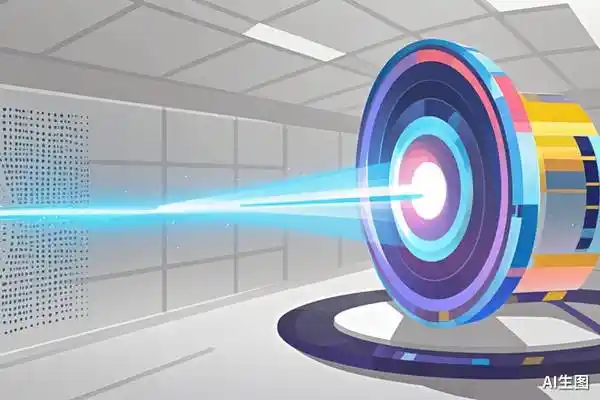
In the spring of 2026, Elon Musk unveiled the TeraFab chip manufacturing plan, aiming to meet the immense computing power needs of SpaceX and Tesla. He subsequently signaled a move into the photolithography machine market, with speculation centering on a Free Electron Laser (FEL) approach to challenge the dominance of traditional EUV technology. Currently, ASML, utilizing Laser-Produced Plasma (LPP) EUV光源, holds a near-monopoly. However, LPP faces bottlenecks in energy conversion efficiency, tin debris contamination, and a power ceiling. In contrast, FEL technology, pursued by companies like xLight (where former Intel CEO Pat Gelsinger serves as executive chairman), offers a different path. It generates EUV light by accelerating electrons, potentially providing higher power without plasma conversion and its associated contamination, targeting the sub-13.5nm "beyond-EUV" wavelength range. The photolithography landscape shows three main trajectories: ASML's incremental evolution (like High-NA EUV),光源革新 like FEL targeting ASML's core component, and non-EUV alternatives like Nanoimprint Lithography (NIL) or Electron Beam Lithography (EBL). While ASML remains the dominant player with strong financials and产能 expansion plans, new entrants are challenging the status quo. xLight claims its FEL could boost productivity by 50-100%. Other paths include Substrate's particle-accelerator-based X-ray lithography and Chinese research into LPP alternatives. Musk's TeraFab is a high-stakes bet that FEL can move from lab to fab, that "plug-and-play"光源 replacement can circumvent ASML's ecosystem, and that massive future compute demand justifies a new supply chain. His public endorsement of FEL signifies that the photolithography business is no longer ASML's game alone.

marsbit38 min fa

An Unexpected Player Enters the Lithography Machine Arena

marsbit38 min fa

Trading

Spot

Articoli Popolari

Come comprare T

Benvenuto in HTX.com! Abbiamo reso l'acquisto di Threshold Network Token (T) semplice e conveniente. Segui la nostra guida passo passo per intraprendere il tuo viaggio nel mondo delle criptovalute.Step 1: Crea il tuo Account HTXUsa la tua email o numero di telefono per registrarti il tuo account gratuito su HTX. Vivi un'esperienza facile e sblocca tutte le funzionalità,Crea il mio accountStep 2: Vai in Acquista crypto e seleziona il tuo metodo di pagamentoCarta di credito/debito: utilizza la tua Visa o Mastercard per acquistare immediatamente Threshold Network TokenT.Bilancio: Usa i fondi dal bilancio del tuo account HTX per fare trading senza problemi.Terze parti: abbiamo aggiunto metodi di pagamento molto utilizzati come Google Pay e Apple Pay per maggiore comodità.P2P: Fai trading direttamente con altri utenti HTX.Over-the-Counter (OTC): Offriamo servizi su misura e tassi di cambio competitivi per i trader.Step 3: Conserva Threshold Network Token (T)Dopo aver acquistato Threshold Network Token (T), conserva nel tuo account HTX. In alternativa, puoi inviare tramite trasferimento blockchain o scambiare per altre criptovalute.Step 4: Scambia Threshold Network Token (T)Scambia facilmente Threshold Network Token (T) nel mercato spot di HTX. Accedi al tuo account, seleziona la tua coppia di trading, esegui le tue operazioni e monitora in tempo reale. Offriamo un'esperienza user-friendly sia per chi ha appena iniziato che per i trader più esperti.

596 Totale visualizzazioniPubblicato il 2024.12.10Aggiornato il 2026.06.02

Come comprare T

Discussioni

Benvenuto nella Community HTX. Qui puoi rimanere informato sugli ultimi sviluppi della piattaforma e accedere ad approfondimenti esperti sul mercato. Le opinioni degli utenti sul prezzo di T T sono presentate come di seguito.

活动图片