Lost 10 Billion, Yet Valued at 46.7 Billion? The True Value Revelation of Japan's Crypto Exchange 'Doomsday License'

marsbitPubblicato 2026-07-03Pubblicato ultima volta 2026-07-03

Introduzione

**Summary: The Priceless "Doomsday License" – Why Japan's SBI Paid $289M for a Losing Exchange** In mid-2026, Japanese financial giant SBI Holdings acquired cryptocurrency exchange Bitbank for ¥46.7 billion (~$289 million). This valuation is puzzling on paper: Bitbank, while a long-established, licensed exchange, reported a ¥970 million loss in 2025 on shrinking revenues. The key lies not in profitability, but in a regulatory "franchise scale." SBI's purchase was for Bitbank's scarce, irreplaceable assets: its Japanese FSA license, 960,000 user accounts, and a fully compliant yen on-ramp. This acquisition came just two weeks after Japan passed a landmark amendment reclassifying crypto assets as "financial instruments" under stricter laws, dramatically raising penalties for unlicensed operations. Analysts predict up to half of Japan's ~30 licensed exchanges may exit, transforming existing licenses into non-renewable strategic resources. The deal's ~8x revenue multiple mirrors a global trend of "compliance arbitrage," where acquiring regulated entities is faster and cheaper than navigating complex, years-long licensing processes. The Japanese narrative is part of a worldwide pattern. In 2026 alone, the crypto sector saw $11.8 billion in M&A, with giants like Mastercard and Bullish acquiring regulated digital asset firms. As jurisdictions like the US, Singapore, and Hong Kong solidify frameworks, regulatory compliance shifts from a cost center to the most durable moat. The c...

EXIO Research Institute | 2026-07-02

The value of some things is never written on the profit and loss statement.

In 2017, when the world was still debating "Is Bitcoin a scam?", Yoshitaka Kitao, the head of Japan's financial giant SBI Holdings, made a bold statement at a small investor meeting: the transformation triggered by blockchain technology will be greater than the internet. Back then, the price of XRP was less than $0.3, and SBI's investment in Ripple was seen by many traditional analysts as "a distraction from their core business". Eight years later, when Kitao spent 46.7 billion yen [1] – equivalent to more than 5 times the profit of SBI's entire crypto business last year [1] – to buy a loss-making cryptocurrency exchange, the market finally began to understand: he was never buying a company, but a ticket into the future of finance.

A 'Non-Profit' Exchange, Why Is It Worth 46.7 Billion?

Let's first look at what is being traded here.

Bitbank, founded in 2014, is one of Japan's oldest licensed exchanges, with a record of zero hacking incidents and ranking high in altcoin liquidity. Sounds good? But the financial statements tell a completely different story: 2025 net sales were 5.82 billion yen [2], down 27% year-on-year [2], while operating profit plummeted to a loss of 970 million yen [2]. A company with declining revenue that turned from profit to loss – why would SBI pay 46.7 billion yen (approx. $289 million) [1] for a full acquisition?

Wall Street investment bank Architect Partners hit the nail on the head: SBI is buying "Franchise Scale", not profitability [7]. This sentence is worth keeping in mind for everyone watching the crypto industry. In Japan, applying for a crypto exchange license from scratch involves facing years of rigorous scrutiny from the Financial Services Agency (FSA), accumulating irreplaceable compliance experience, and investing billions of yen in system security. As of 2026, there are fewer than 30 licensed exchanges in Japan [3], with about 90% of them operating at a loss [3]. What does this mean? It means regulation has raised the barrier so high that the vast majority of players cannot cross it.

SBI's 46.7 billion yen is not buying Bitbank's 5.8 billion yen in annual revenue, but the FSA registration license it took 12 years [4] to obtain, the compliant stock of 960,000 accounts [4], and an established yen fiat gateway. In an increasingly strict regulatory market, licensed scale itself is an independent strategic asset, the value of which cannot be measured by short-term profits.

Under Heavy-Fisted Regulation, Licenses Become Non-Renewable Resources

The timing of this acquisition is no coincidence.

Just 14 days before SBI announced the acquisition [5], on June 11, 2026 [5], Japan's House of Representatives passed an amendment to the Financial Instruments and Exchange Act, moving crypto asset regulation from the Payment Services Act framework to the same level as stocks and bonds under the Financial Instruments and Exchange Act. Crypto assets were formally redefined as "Financial Instruments," with bans on insider trading, issuer disclosure obligations, and significantly strengthened penalties—the maximum prison sentence for unlicensed operation increased directly from 3 years to 10 years [6], and the maximum fine soared from 3 million yen to 10 million yen [6].

Architect Partners predicts that with the implementation of this amendment, up to half of the registered exchanges may eventually exit or merge [7]. In other words, the number of Japanese crypto exchanges may further shrink from less than 30 to around 15 [7]. Existing licenses are transforming from "operational permits" into "non-renewable resources." You can open a new restaurant, but you can no longer open a new, compliant cryptocurrency exchange in Japan—the window of opportunity has closed.

SBI's payment of approximately 8 times revenue multiple [8] may seem expensive, but Coinbase's acquisition of Deribit at a 9.7x revenue multiple [8] is not far off. Global capital is voting with real money: the valuation logic for licensed platforms in clear regulatory markets has fundamentally changed. It's not valued by profit, but by "scarcity."

Global License Rush: 144 M&A Deals Worth $11.8 Billion in 2026

Japan's script is not an isolated case. Globally, the crypto industry has recorded 144 M&A transactions totaling $11.8 billion so far in 2026 [9], as banks, payment giants, and exchanges are frantically acquiring regulated digital asset businesses. Mastercard's $1.8 billion acquisition of stablecoin infrastructure provider BVNK [10], Bullish's $4.2 billion acquisition of Equiniti [11]—each deal illustrates the same thing: *Buying a license is faster, cheaper, and more controllable than building one.*

This is a global "compliance arms race." As the US passes the GENIUS Act to legislate stablecoins, Hong Kong's Securities and Futures Commission deepens its virtual asset trading platform licensing regime, and Singapore's Monetary Authority tightens exchange licensing standards, the words "licensed" are transforming from a cost center into a value moat. For platforms that have already crossed the threshold and built compliance capabilities, regulation is not a constraint but the strongest defensive fortification.

Looking back at the Japanese market, SBI's M&A path is clear: absorbing TaoTao in 2020, taking over DMM Bitcoin client assets in 2024, acquiring BITPoint Japan for 12.75 billion yen in 2022 [12], and now acquiring Bitbank for 46.7 billion yen. Each step is about using capital to buy time—while others are still queuing for licenses, SBI has already brought Japan's top three exchanges under its umbrella. The merged platform will custody approximately 1.1 trillion yen in assets and 2.92 million accounts [13], solidly securing the number one position in Japan.

Other Markets' Today Is Japan's Yesterday

At this point in the story, you might ask: what does this have to do with us?

The connection is this: Japan's market today is other markets' tomorrow.

When Japan formally brings crypto assets under financial instrument regulation, when global traditional financial institutions shift from watching to acquiring, when the number of licenses goes from "limited" to "scarce"—for example, the same logic is playing out in Hong Kong. Since the Hong Kong Securities and Futures Commission launched its virtual asset trading platform licensing regime in 2023, the "franchise value" of licensed platforms has been rapidly becoming evident. The stablecoin issuer licensing regime is already in place, spot crypto ETFs are trading, and more compliant products are on the way.

In an era where regulation is pushing the industry from wild growth to meticulous cultivation, the real moat is not trading volume, not speed of listing coins, but *compliance itself*. Those platforms that have already crossed the threshold and built compliance capabilities have, in turn, gained the strongest moat. This is not a victory of traffic, but a victory of franchise.

In Hong Kong, despite relatively quiet market conditions overall, the operational licensed platforms are in a "Franchise Scale" value window similar to Japan's SBI. Brand recognition, compliance heritage, technical infrastructure, and user base—in the wave of traditional financial institutions entering in force, these are strategic assets that cannot be quickly replicated. When licenses become a resource scarcer than gold, those who got their hands on them early hold the entry ticket to the future of finance.

The answer SBI gave with 46.7 billion yen aligns with the logic of every platform persevering in markets undergoing regulatory clarification: Compliance is not a cost; it is the moat of long-term value.

And when more New Money or Old Money realizes this, the cheapest window to get on board may have already closed.

Domande pertinenti

QWhy did SBI Holdings pay 46.7 billion yen for a cryptocurrency exchange that was reportedly losing money?

ASBI Holdings paid 46.7 billion yen not for Bitbank's profitability, but for its 'Franchise Scale.' This includes the highly scarce and valuable registration license from Japan's Financial Services Agency (FSA), the 960,000 compliant user accounts, and the established JPY fiat gateway. In a tightening regulatory environment, this licensed infrastructure is a strategic asset whose value cannot be measured by short-term profits.

QHow did the 2026 amendment to Japan's Financial Instruments and Exchange Act change the value of crypto exchange licenses?

AThe 2026 amendment reclassified crypto assets as 'financial products' under the Financial Instruments and Exchange Act, imposing stricter regulations like insider trading bans and higher penalties. It raised the barrier to entry so significantly that analysts predict nearly half of the existing ~30 licensed exchanges may exit. This transformed the limited number of licenses from operational permits into a scarce, non-renewable resource, drastically increasing their strategic value.

QWhat does the term 'Franchise Scale' refer to in the context of the article about SBI's acquisition of Bitbank?

AIn the context of this acquisition, 'Franchise Scale' refers to the strategic value derived from a platform's established regulatory standing and infrastructure. For Bitbank, this includes its FSA license, its track record of compliance and security built over 12 years, its 960,000 user accounts, and its operational fiat rails. This scale represents a moat that is extremely difficult and time-consuming for new entrants to replicate, making it a valuable asset independent of current profitability.

QAccording to the article, what global trend is reflected in the 2026 crypto industry M&A data?

AThe 2026 data showing 144 M&A deals worth $11.8 billion reflects a global 'compliance arms race.' Traditional financial institutions like banks, payment giants (e.g., Mastercard), and exchanges are aggressively acquiring regulated digital asset businesses. The trend indicates that buying an existing licensed operation is faster, cheaper, and more reliable than building one from scratch in an increasingly strict regulatory climate worldwide.

QWhat is the core value proposition for licensed cryptocurrency platforms in markets like Japan and Hong Kong, as argued in the article?

AThe article argues that in regulated markets like Japan and Hong Kong, the core value proposition for licensed platforms is no longer just trading volume or speed, but 'compliance itself.' The license, coupled with the accumulated brand trust, compliance experience, technical infrastructure, and user base, forms a powerful 'franchise scale' and a defensive moat. This makes them attractive strategic assets for traditional finance entering the space, as their value lies in providing a scarce, regulated gateway to the future financial system.

Letture associate

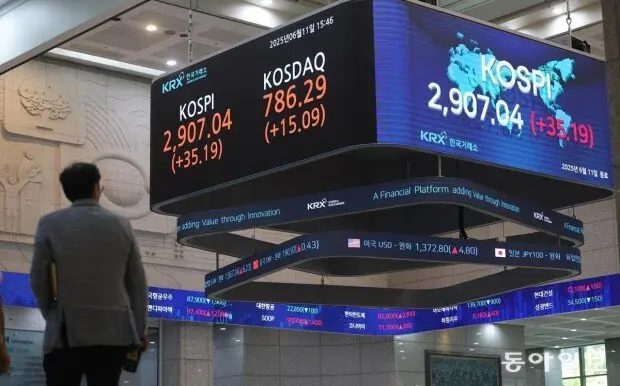
Korean Companies Following Strategy in Accumulating Cryptocurrency: From Bull Market to Delisting?

Title: Korean DAT Companies Following "Strategy" Bitcoin Hoarding Model Face Delisting Amid Bear Market Summary: Several Korean KOSDAQ-listed companies, known as Digital Asset Trusts (DATs), are at risk of being delisted due to a combination of stricter regulatory thresholds and a downturn in crypto markets. These firms, inspired by models like Strategy and Japan's Metaplanet, raised capital to buy Bitcoin, relying on a cycle of rising crypto prices to boost their stock value. However, recent reforms in Korea have raised the minimum market capitalization required to stay listed from 150 billion won to 200 billion won (approx. $1.3M), with a further increase to 300 billion won set for next January. The new rules also close loopholes like reverse stock splits used to artificially inflate share prices. The situation is exacerbated by a significant drop in Bitcoin's price from its 2025 peak and a weak KOSDAQ market. While the main KOSPI index has surged nearly 95% year-to-date, KOSDAQ has fallen about 10%, draining liquidity from smaller companies. Many DATs now hover near or below the new market cap thresholds and must also book substantial valuation losses on their Bitcoin holdings. Analysts suggest that without a sustained recovery in both crypto prices and broader market interest in KOSDAQ stocks, these companies have limited options to avoid delisting, marking a precarious moment for Korea's crypto-linked public companies.

marsbit7 min fa

Korean Companies Following Strategy in Accumulating Cryptocurrency: From Bull Market to Delisting?

marsbit7 min fa

Korean Companies That Learned to Hoard Coins from MicroStrategy: From Bull Market to Delisting?

South Korean companies that adopted the “Digital Asset Treasury” (DAT) strategy—issuing shares to buy and hold Bitcoin, inspired by MicroStrategy—now face delisting risks on the KOSDAQ market. New regulations effective July 1, 2026, tightened listing maintenance rules, notably raising the minimum market capitalization threshold from 150 billion KRW to 200 billion KRW (about $1.3 million), with a further increase to 300 billion KRW scheduled for January 2027. Companies failing to meet both the share price and market cap requirements for specified periods risk being designated for delisting, with fewer options for financial engineering like stock splits to artificially boost prices. The downturn in cryptocurrency prices has severely impacted these firms. Bitcoin, which peaked above $120,000 in mid-2025, has fallen below $60,000, forcing DAT companies to report large valuation losses. Compounding this, the KOSDAQ index has dropped about 10% year-to-date, while the main KOSPI index surged nearly 95%, diverting investor interest away from smaller-cap stocks. Examples like BitPlanet (holding 300 BTC) and Parataxis Ethereum currently hover just above the new market cap limits, but face heightened scrutiny and potential delisting starting in 2027. Industry analysts warn that the combination of weak crypto markets, a struggling KOSDAQ, and stricter regulations creates a significant survival challenge for these companies, highlighting the risks of business models overly reliant on volatile digital asset prices.

链捕手11 min fa

Korean Companies That Learned to Hoard Coins from MicroStrategy: From Bull Market to Delisting?

链捕手11 min fa

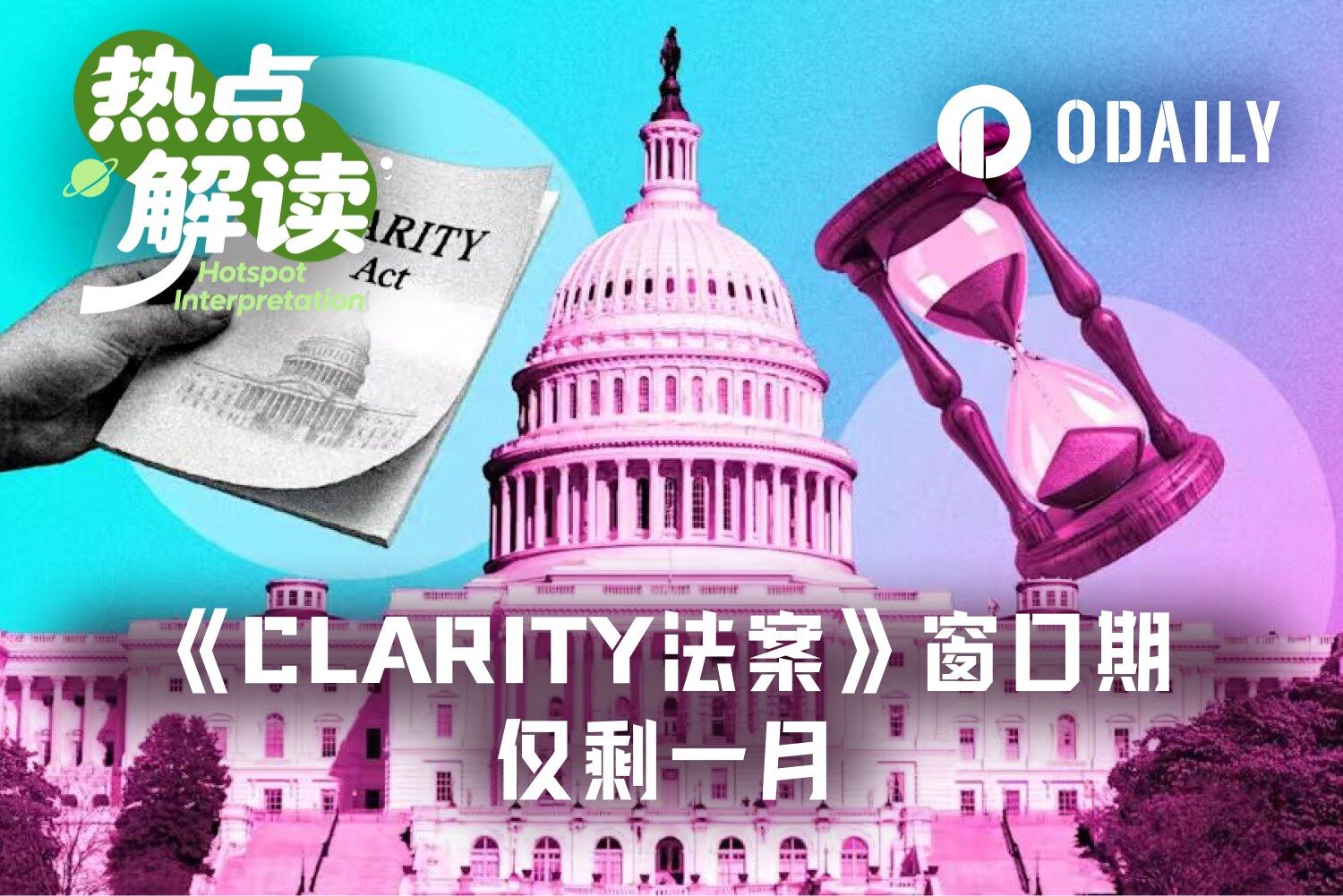
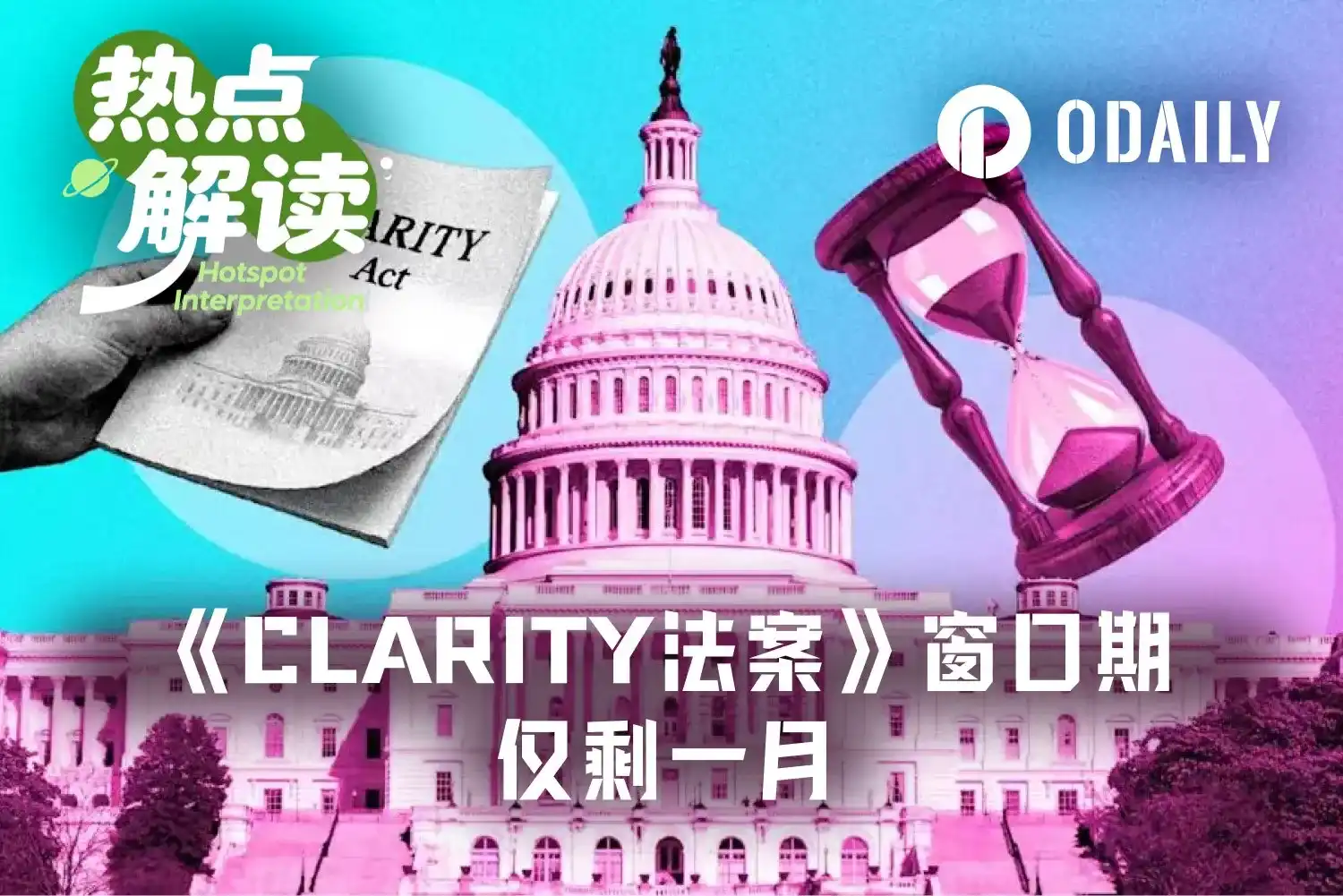
Countdown to the CLARITY Act: 25 Days Left—What Will Happen to the Crypto Market if It Fails to Pass Before the August Recess?

"The CLARITY Act, a key US crypto market structure bill, faces a tight deadline with only 25 working days left before the Senate's August 10 recess. The bill aims to clarify SEC/CFTC jurisdiction and establish a non-security path for decentralized tokens. Despite passing the House in 2025 and a Senate committee in May 2026, final negotiations have stalled over ethics and law enforcement provisions, jeopardizing the 60 Senate votes needed. If the bill fails to pass before the recess, its chances in 2026 drop significantly, with prediction markets giving only a 40% probability. Analyst Galaxy Digital has lowered its 2026 passage odds to 50%. Failure would likely lead to continued 'slow bleeding' in crypto markets, as seen in June's record $4.5 billion net outflow from US Bitcoin ETFs. XRP, which stands to gain permanent commodity status from the bill, could lose its 'regulatory premium.' Bitcoin and Ethereum, already classified as commodities via a joint agency interpretation, would face less direct impact but broader regulatory uncertainty would persist, delaying institutional capital and DeFi innovation. The path forward includes: 1) Passage before August (a major catalyst), 2) Delay to 2027 (extending market uncertainty), or 3) Failure, requiring the bill to be reintroduced in the next Congress. While delay is a setback, the bill's progress indicates the US is closer than ever to resolving crypto regulatory ambiguity."

marsbit46 min fa

Countdown to the CLARITY Act: 25 Days Left—What Will Happen to the Crypto Market if It Fails to Pass Before the August Recess?

marsbit46 min fa

Trading

Spot
活动图片