Bitcoin's Weak Rebound Fails to Conceal Adjustment Trend; HYPE's Top Signals Warn of Short-Term Risks | Guest Analysis

Odaily星球日报Pubblicato 2026-06-01Pubblicato ultima volta 2026-06-01

Introduzione

Bitcoin's Weak Bounce Fails to Mask Correction Trend; HYPE Top Signals Warn of Short-Term Risks | Invited Analysis Core Weekly View: Bitcoin's daily chart structure has weakened. The key question is whether its short-term rebound can effectively break above the upper boundary of the descending channel. Has HYPE's seven-wave advance reached its conclusion? This analysis systematically examines the current market structure across multiple timeframes and outlines operational strategies for the week. **Bitcoin (BTC) Analysis:** The daily chart shows BTC trading within a long-term rising channel (yellow) since February but has recently broken below its midline, indicating structural weakness. It is currently confined within a short-term descending channel (blue) originating from the May 6 high. The ongoing bounce appears to be a weak technical correction targeting the blue channel's upper rail (approx. $75,000-$76,000). The 4-hour chart reveals a complex 10-segment corrective structure from the May high, containing two downward pivot zones (Central D and E). The current rebound (segment 36-37) is expected to face resistance in the $75,000-$76,000 area. A failure to break above could lead to a resumption of the downtrend, testing support at $69,500-$70,500 and potentially $65,000. **BTC Weekly Strategy:** The price is currently below the "Bull-Bear Channel," placing it in a technically weak zone. The core focus is on the test of the $75,000-$76,000 resistance and $69,500-$70,500...

This Week's Core: Bitcoin's daily structure weakens; can the short-term rebound effectively break above the upper rail of the descending channel? Has HYPE's seven-segment rally reached its endpoint? The following analysis systematically reviews the current market structure from multiple timeframes and outlines mid- and short-term trading strategies for this week, for reference.

Summary of This Week's Core Trading Views:

• BTC multi-timeframe trend structure analysis. (Details in Part 1)

• BTC price outlook and mid-/short-term trading strategies for this week. (Details in Part 2)

• HYPE hourly timeframe trend structure analysis. (Details in Part 3)

• HYPE price outlook and short-term trading strategies for this week. (Details in Part 4)

Market Validation of Last Week's Trading Strategies and Core Views:

• BTC short-term trading performance: Bitcoin completed one short-term short trade (1x leverage) last week, successfully achieving a return of approximately 5.07%. (Details in Table 1)

• Market validation of BTC price trend prediction: Last week's article indicated that Bitcoin would continue its consolidation and downward adjustment pattern, with the short-term strategy primarily focused on 'selling on rallies'. The current market movement validates our previous prediction.

I. Bitcoin Multi-Timeframe Trend Structure Analysis

1. BTC Daily Timeframe Trend Structure Analysis

Bitcoin _ Daily K-Line Chart:
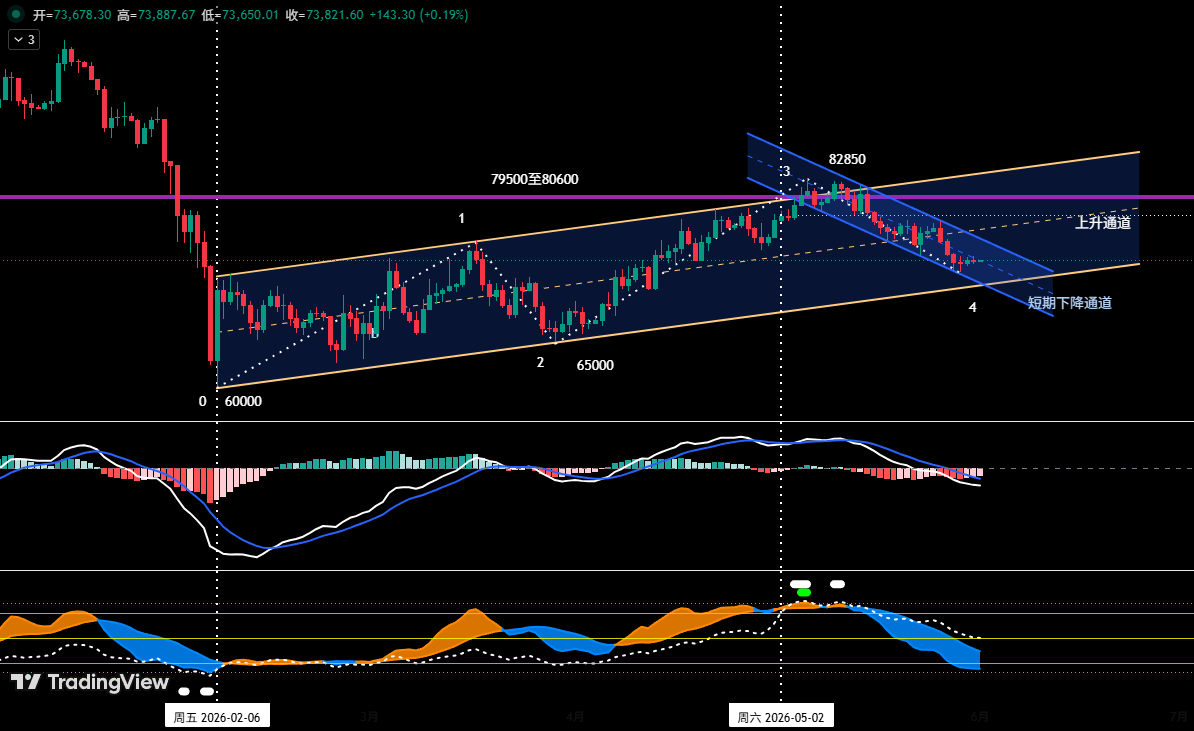
Figure 1

Ascending Channel (Yellow): As shown in (Figure 1), since the low on February 6, 2026, Bitcoin has maintained a consolidation uptrend within an ascending channel. (Lower rail: line connecting the lows of February 6 and March 29; Upper rail: a line parallel to the lower rail drawn through the high of March 17)

Short-term Descending Channel (Blue): Since touching the high of $82,850 on May 6, Bitcoin has entered and is operating within a short-term descending channel. (Upper rail: line connecting the rally highs of May 14 and May 26; Lower rail: line connecting the correction lows of May 7 and May 23)

Based on the Ascending Channel (Yellow) analysis, the price has broken below the channel's midline and is seeking stronger support towards the lower rail.

Based on the Short-term Descending Channel (Blue) analysis, the price found brief support upon reaching the channel's lower rail (approximately $72,500) and is currently in a period of weak rebound towards the channel's upper rail.

Comprehensive Judgment: From a technical structure perspective, Bitcoin is facing the dual influence of long and short-term channels. The current rebound is primarily a correction for short-term oversold conditions, targeting the upper rail of the short-term descending channel (Blue). However, as the price has broken below the midline of the ascending channel (Yellow), the overall technical structure has weakened. It is expected that after the rebound concludes, the price will most likely revert to the previous downtrend and further test the support strength of the ascending channel's lower rail.

2. In-depth Analysis of BTC Hourly Timeframe Trend Structure: (Using the 4-hour chart as the analysis timeframe)

Bitcoin _ 4-hour K-Line Chart
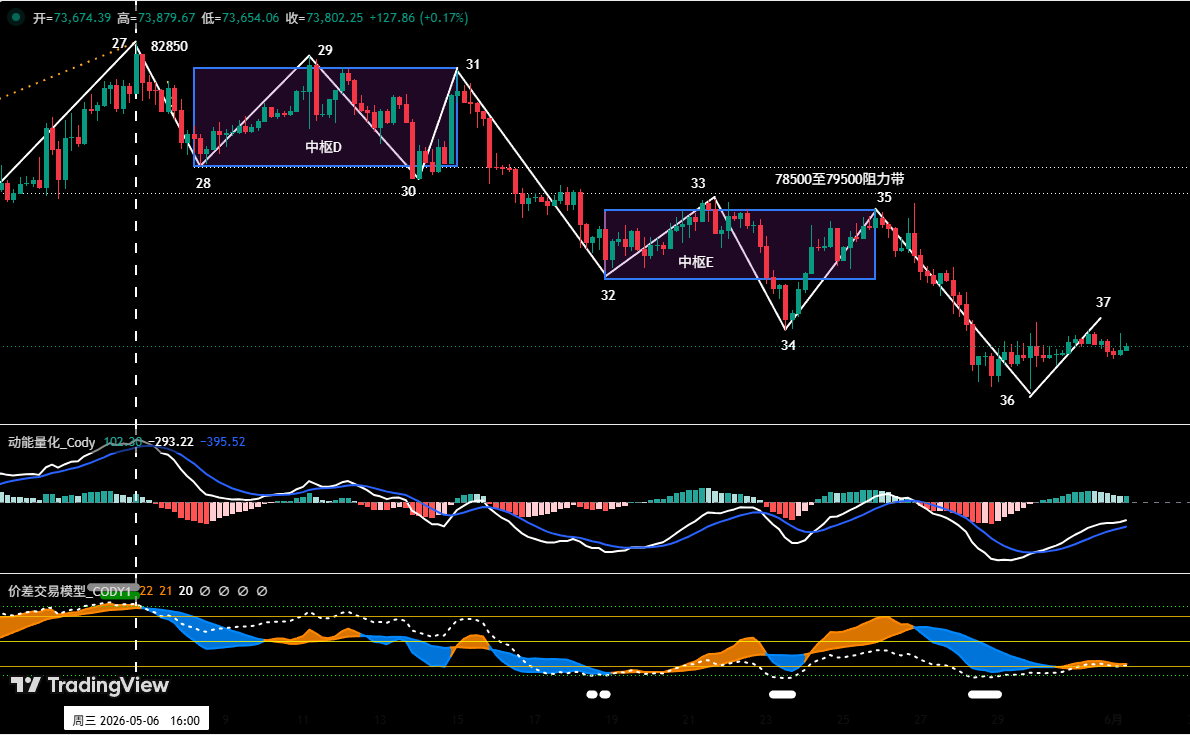
Figure 2

1. As shown in (Figure 2), from the high of $82,850 on May 6 to the ongoing adjustment, the 4-hour chart reveals a detailed subdivision into a total of 10 segments of adjustment structure: from "Segment 27-28" to "Segment 36-37". This includes two descending pivots (zhongshu):

• Pivot D: Formed by the overlapping of segments 28-29, 29-30, and 30-31.

• Pivot E: Formed by the overlapping of segments 32-33, 33-34, and 34-35.

2. From the 4-hour trend structure perspective, the market is currently undergoing the rebound of segment 36-37. If the price faces resistance and falls back after rebounding to the $75,000~$76,000 area, failing to form an effective breakout, the market is highly likely to continue its previous pattern of consolidation and decline, testing the support strength around $69,500~$70,500.

II. Bitcoin Price Outlook and Trading Strategies for This Week

1. BTC Price Trend Outlook for This Week:

This week's core view: Focus on the test results of the resistance area at $75,000~$76,000 and the support area at $69,500~$70,500 by both bulls and bears.

2. Core Resistance Levels:

• First Resistance Area: $75,000~$76,000 region (near the lower rail of Pivot E)

• Second Resistance Area: $78,500~$79,500 region (near the upper/lower rails of the two pivots)

3. Core Support Levels:

• First Support Level: $69,500~$70,500 region (previous important support level)

• Second Support Level: Around $65,000 (previous important support level)

4. Trading Strategies for This Week (Excluding Impact of Unexpected News)

1. Mid-term Strategy:

Bitcoin _ Daily K-Line Chart: (Position Monitoring Model)
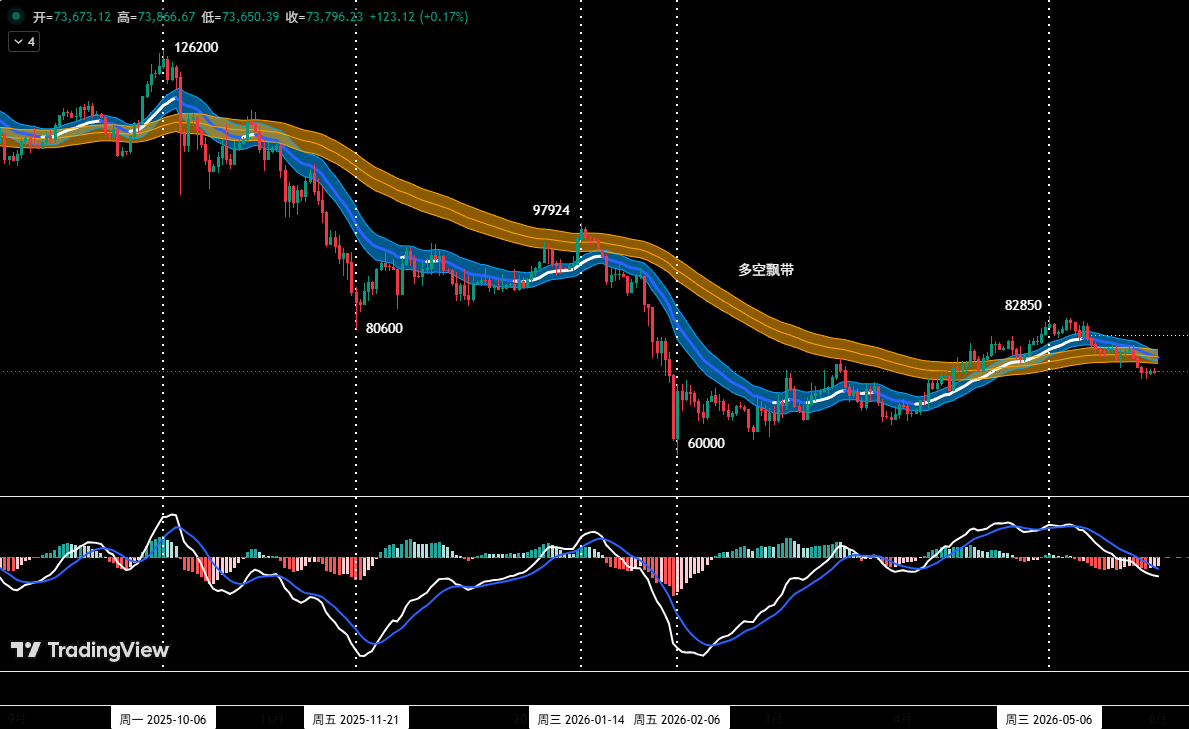
Figure 3

Position Monitoring Model: As shown in (Figure 3), the price has fallen below the "Bull-Bear Channel", entering a technically weak area. This week, focus on its retest of the Bull-Bear Channel (approximately the $75,000~$76,000 region). If the price shows signs of stalling, encountering resistance, and falling back after rebounding to this level, initiating a mid-term short position layout will begin. To control risk, the initial position can be set below 30% of the total capital; subsequently, after the price breaks below the lower rail of the ascending channel (Yellow), the mid-term position can be increased to around 60%.

2. Short-term Strategy: Utilize 30% of capital, set stop-loss points, and look for 'spread' trading opportunities based on support and resistance levels. (Use the 30-minute/60-minute chart as the operational timeframe).

3. In short-term trading, to dynamically respond to the complex evolution of the market, we have pre-formulated two specific operational plans: Plan A/B.

Plan A: Rebound Meets Resistance, Sell High.

• Entry: When the price rebounds to the $75,000~$76,000 area and encounters resistance, combined with a top signal from the quantitative model, a short position of less than 30% can be established.

• Risk Control: Initial stop-loss set above $77,000.

• Exit: Gradually close the position to take profits when the price adjusts near important support levels combined with model signals.

Plan B: Effectively Breaks Support, Follow the Trend Short.

• Entry: When the price effectively breaks below the support area of $69,500~$70,500 combined with a model top signal, a short position of less than 30% can be established.

• Risk Control: Initial stop-loss set above $72,000.

• Exit: Gradually close the position to take profits when the price falls to important support levels combined with model signals.

III. HYPE Hourly Timeframe Trend Structure Analysis:

HYPE_4-hour K-Line Chart
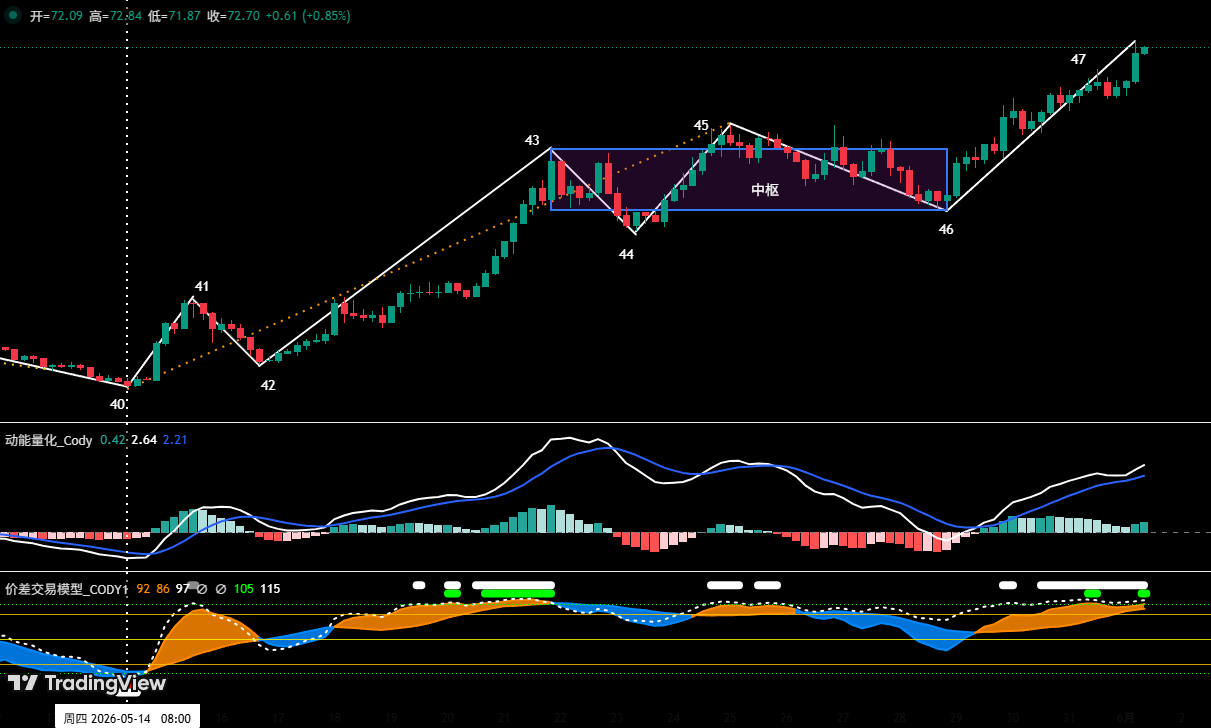
Figure 4

1. As shown in (Figure 4), on the 4-hour timeframe, since the low of $38.14 on May 14, HYPE has clearly constructed a seven-segment structure (i.e., 40-41 to 46-47) including a "rising pivot". Segments 43-44, 44-45, and 45-46 overlap with each other, forming the "rising pivot".

2. Last week's review warned: Due to the momentum top divergence state at "Endpoint 45", coupled with the top warning signal from the "Spread Trading Model", a resonance formed. Therefore, the probability of forming a short-term high here was significant. Market movement confirmed this judgment: the price adjusted from "Endpoint 45" ($64.75) to "Endpoint 46" ($56.30), with a maximum decline of 13.05%.

3. Currently, comparing the pivot exit segment (46-47) with the entry segment (42-43), its upward momentum appears weak, constituting a high probability of potential "momentum divergence".

4. Analysis based on our self-built "Spread Trading Model" shows that "Endpoint 47" has triggered a strong top warning signal (red dot + white dot).

5. In summary, if the price forms a topping signal at "Endpoint 47" while the "momentum divergence" signal remains valid, the probability of this point becoming the phase endpoint of the rally since "Endpoint 40" will significantly increase. Subsequent price action needs to focus on the test results of the key area between $62.5 and $64.57.

IV. HYPE Price Outlook and Short-term Trading Strategies for This Week

1. HYPE Price Trend Outlook for This Week:

This week's core HYPE view:

• Observe whether "momentum divergence" is established when "Endpoint 47" issues a clear topping signal.

• If this phenomenon occurs and the subsequent price effectively breaks below the support area of $62.5 to $64.57, it can be considered that "Endpoint 47" has become the endpoint of the uptrend since the low on May 14.

2. HYPE Short-term Trading Strategies for This Week: (Buy on Support)

This week's HYPE short-term trading should follow the strategy of "buying on dips, avoiding chasing rallies". The core is to observe the test results of the price retracement on the $62.5 to $64.75 area:

Strategy One: Test Long on Support Area Stabilization

If the price retraces to this area, shows signs of stopping the decline and stabilizing, and is combined with bottom signals triggered by both major models, consider a light long position test. The position must be controlled below 30%, with strict stop-loss discipline.

Strategy Two: Support Fails, Transitioning to a Larger Correction

If the price effectively breaks below this area, the short-term correction will upgrade to a larger-scale (e.g., daily timeframe) adjustment, extending its duration and space. The downward target initially looks at the $54 to $56.3 area.

V. Bitcoin Trade Review

1. Short-term Trade Review: (See Table 1)

We strictly followed the operational plan, based on trading signals issued by our self-built "Spread Trading Model" and "Momentum Quantitative Model", and completed one short-term (short) trade last week, achieving a profit of 5.07%.

1. Bitcoin Short-term Trade Details Summary: (Leverage*1x)
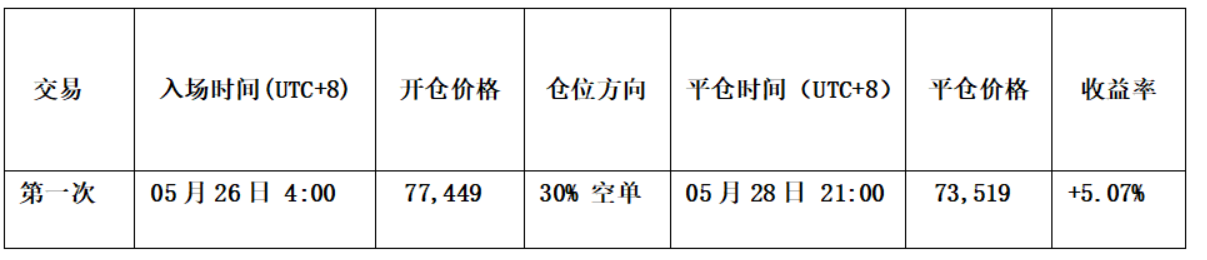
Table 1

2. Short-term Trade Review: (See Figure 5)

• Entry Strategy:

a. When the price rebounded near $78,000 and showed resistance signals, the K-line formed a 'top reversal' bearish pattern;

b. The "Spread Trading Model" triggered a top warning signal (white dot);

c. The "Momentum Quantitative Model" issued a momentum top divergence signal.

Therefore, we established a 30% short position at $77,449.

• Exit Strategy:

a. When the price fell near $73,000 and issued a stopping decline signal, the K-line formed a 'bottom reversal' pattern;

b. The "Spread Trading Model" triggered a strong bottom warning signal (red dot + white dot), forming a bottom resonance signal with the "Momentum Quantitative Model".

Therefore, we closed all positions near $73,519.

• Summary: This trade successfully achieved a profit of approximately 5.07%.

BTC_60-minute K-Line Chart: (Momentum Quantitative Model + Spread Trading Model)
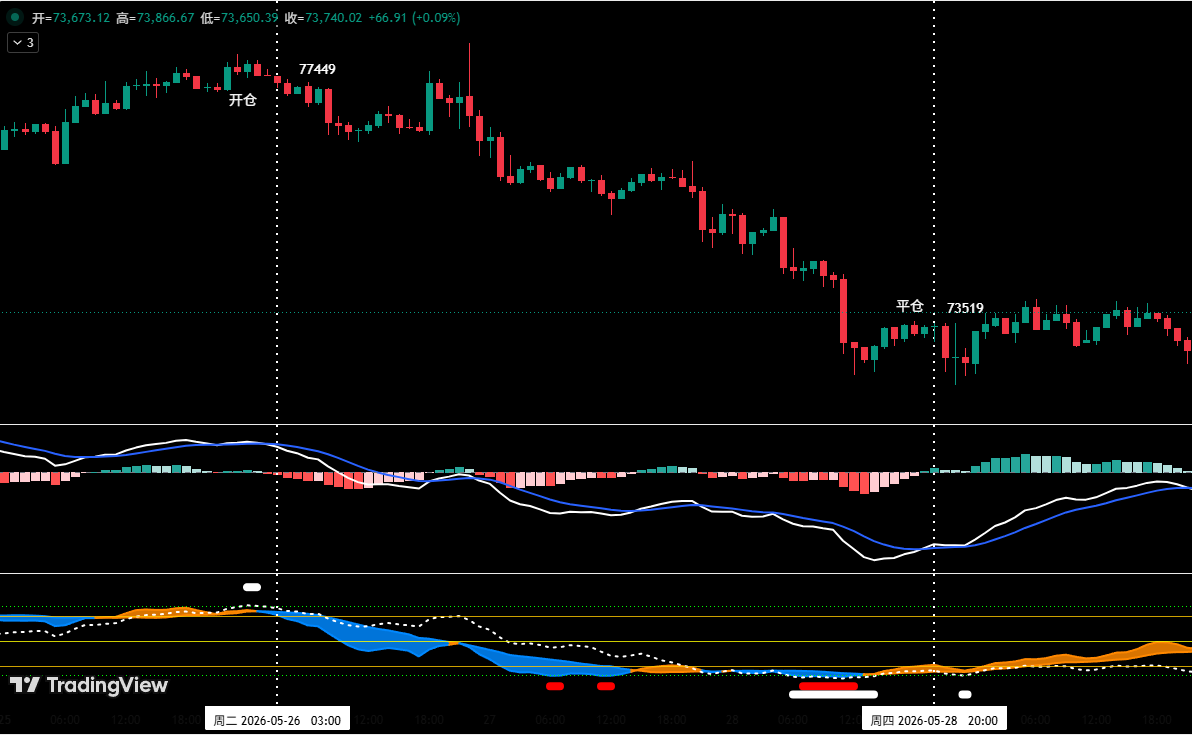
Figure 5 (Short-term Trade Illustration)

VI. Special Notes:​​

1. When opening a position: Immediately set the initial stop-loss level.

2. When profit reaches 1%: Move the stop-loss to the entry cost price (breakeven point) to ensure capital safety.

3. When profit reaches 2%​​: Move the stop-loss to the 1% profit level.

4. Continuous tracking: Thereafter, for every additional 1% profit the price makes, move the stop-loss up by 1% accordingly, dynamically protecting and locking in profits.

Financial markets change rapidly; all market analysis and trading strategies require dynamic adjustment. All views, analytical models, and operational strategies mentioned in this article are derived from personal technical analysis, intended solely for personal trading log purposes, and do not constitute any investment advice or operational basis. The market involves risks; investment requires caution. Please do not make decisions based on this.


Domande pertinenti

QBased on the analysis, what are the key resistance levels for Bitcoin (BTC) this week?

AThe key resistance levels for Bitcoin this week are the first resistance zone at 75,000~76,000 USD (near the lower rail of Central E) and the second resistance zone at 78,500~79,500 USD (near the upper and lower rails of the two central structures).

QWhat technical condition suggests HYPE may be reaching a top in its current uptrend?

AHYPE shows a potential 'momentum divergence' on the 4-hour chart, where the momentum of the central breakout segment (46-47) appears weaker than the initial entry segment (42-43). Furthermore, the proprietary 'Spread Trading Model' has triggered a strong top warning signal (red dot + white dot) at 'endpoint 47', increasing the probability of a significant short-term top.

QWhat are the two main short-term operational plans (A and B) outlined for Bitcoin trading?

APlan A: 'Sell on rallies upon encountering resistance.' Open a short position of less than 30% when the price rebounds and faces resistance in the 75,000~76,000 USD zone, with a stop-loss above 77,000 USD. Plan B: 'Sell on a breakdown of support.' Open a short position of less than 30% when the price effectively breaks below the 69,500~70,500 USD support zone, with a stop-loss above 72,000 USD.

QWhat was the profit from last week's Bitcoin short trade, and what signals triggered the entry and exit?

ALast week's Bitcoin short trade yielded a profit of approximately 5.07%. The entry was triggered at 77,449 USD due to: price resistance near 78,000 USD forming a 'top-fractal' bearish candlestick pattern, the 'Spread Trading Model' giving a top warning (white dot), and the 'Momentum Quantification Model' showing a bearish momentum divergence. The exit at 73,519 USD was triggered by a 'bottom-fractal' pattern near 73,000 USD and a strong bottom resonance signal from both the 'Spread Trading Model' (red+white dots) and the 'Momentum Quantification Model'.

QWhat is the core strategy recommended for HYPE's short-term trading this week, and what is the key support area to watch?

AThe core short-term strategy for HYPE this week is to 'buy on dips and avoid chasing rallies.' Traders should observe the price test of the key support area between 62.5 and 64.75 USD. Strategy 1 is to attempt a light long position (under 30%) if the price finds support and stabilizes in this zone with confirming bottom signals from the models. Strategy 2 warns that an effective break below this support area would likely lead to a larger-scale (e.g., daily chart) correction towards the 54-56.3 USD zone.

Letture associate

24/7 Unstoppable Derivatives Wave: Cryptocurrency Is Forcing Traditional Finance to 'Change Time Zones'

The article discusses how the 24/7 nature of the cryptocurrency market is compelling traditional finance to adapt its operating hours and infrastructure. The key catalyst is the CME Group's planned launch of nearly round-the-clock trading for regulated crypto derivatives, a move driven by strong institutional demand for continuous risk management. This shift highlights a fundamental change: derivatives, not spot trading, now dominate crypto market activity and price discovery. However, integrating continuous trading into traditional finance reveals structural tensions. While execution times can be extended, settlement, clearing, and regulatory reporting largely remain bound to traditional business-day cycles. This creates a lag where weekend price movements can impact risk exposures before traditional control systems are fully active. Furthermore, the article explores new challenges arising from this always-on environment. The inherent transparency of public blockchains, while ensuring auditable settlement, also exposes sensitive corporate information like treasury flows to competitors in real-time. This has elevated privacy from a feature to a core requirement for institutional adoption. The next phase hinges on building systems that balance this necessary privacy with regulatory accountability and compliance. In conclusion, the move towards 24/7 trading signifies more than crypto becoming institutionalized. It represents traditional finance beginning to adopt the temporal structure of crypto-native markets. The future will be defined by how successfully traditional risk, identity, privacy, and settlement frameworks can operate at the continuous speed cryptocurrency markets demand.

marsbit29 min fa

24/7 Unstoppable Derivatives Wave: Cryptocurrency Is Forcing Traditional Finance to 'Change Time Zones'

marsbit29 min fa

Unitree Passes the Hearing, Hangzhou Reaps the Rewards

Unitree Technology, a leading company in Hangzhou's tech scene known as one of the "Hangzhou Six Dragons," has officially passed the review for listing on the Shanghai Stock Exchange's STAR Market (科创板). It plans to raise 4.202 billion yuan for the research and development of intelligent robot models and robot hardware. This milestone will make Unitree the "first humanoid robotics stock." Founded in 2016 by Wang Xingxing, the company started humbly in a small office in Hangzhou's Binjiang district. Initially, the robotics sector was not viewed favorably by the market, with Unitree's products often labeled as "toys" and struggling to secure funding. At its most critical point, with only around 100,000 yuan left, Wang stopped his own salary to keep the company afloat. A crucial turning point came in 2018 when Hangzhou's state-owned capital system provided timely support. A financial platform under the city's state-owned assets completed due diligence in three days and granted a 20-million-yuan loan within a week. This "patient capital" infusion stabilized Unitree, enabling its transition from prototype development to mass production and commercial viability. Subsequently, Hangzhou Capital, through its two major 100-billion-yuan mother funds—the Hangzhou Science and Technology Innovation Fund and the Hangzhou Innovation Fund—participated in four of Unitree's financing rounds (B2, B3, C, and C+). This continuous backing helped the company grow, attract top-tier industrial investors like China Mobile, Tencent, Alibaba, and Geely, and solidify its position as a global leader in legged robotics. By 2025, Unitree achieved significant scale, with revenue reaching 16.99 billion yuan, net profit of 5.91 billion yuan, global leadership in humanoid robot shipments, and over 33,000 quadruped robots sold worldwide. Unitree's journey exemplifies Hangzhou's strategy of nurturing hard-tech startups from "seedlings" to industry leaders. Beyond Unitree, Hangzhou's capital ecosystem has supported other "Six Dragons" like Cloudwalk, BrainCo, and DeepSeek. The city has established a 500-billion-yuan "3+N" industrial fund cluster and specialized early-stage funds like the "Runmiao Fund" with a 20-year term to fill funding gaps for very early-stage projects. This robust "capital + talent" model, coupled with an influx of over 430,000 young professionals in 2025 alone, has fostered a vibrant innovation ecosystem. Hangzhou is now home to 48 unicorns and 413 potential unicorns, building comprehensive industrial chains in AI, robotics, brain-computer interfaces, and more. As Hangzhou experiences a wave of IPOs, it is solidifying its reputation as an ideal city for entrepreneurs.

marsbit54 min fa

Unitree Passes the Hearing, Hangzhou Reaps the Rewards

marsbit54 min fa

Are Rising U.S. Stocks Getting More Dangerous? Goldman Sachs: Downside Protection Mechanisms Have Almost Failed

The US stock market rally is showing signs of becoming increasingly precarious as key downside protection mechanisms fail, according to Goldman Sachs. Derivatives strategist Brian Garrett notes that the S&P 500 options volatility skew has plunged to an 18-month low, indicating the market now prices an 8% probability for both a 10% drop and a 10% rise—a sign of "skew failure." Concurrently, Goldman's Panic Index hit a two-year low, reflecting minimal demand for tail-risk hedging. This complacency emerges amid a relentless market surge, with the S&P 500 setting new records frequently in 2024. Garrett highlights three major concerns: extreme concentration in the top ten stocks (40% of index weight), heavy reliance on AI-themed performance, and a price pattern eerily similar to the 1998-1999 period. Despite pervasive media pessimism, this fear is absent in options pricing. Downside hedge costs are historically low. Goldman suggests tactical trades: buying RSP outperformance options versus the SPX for a broadening rally, purchasing VIX calls for protection, and going long on Bitcoin ETF volatility. Hedge funds have been net buyers for two weeks, with sector rotation into financials and out of industrials. Notably, the global single-stock leveraged/ inverse ETF AUM has doubled to over $60 billion in two months, underscoring growing speculative activity.

marsbit1 h fa

Are Rising U.S. Stocks Getting More Dangerous? Goldman Sachs: Downside Protection Mechanisms Have Almost Failed

marsbit1 h fa

Trading

Spot
Futures

Articoli Popolari

Cosa è $S$

Comprendere SPERO: Una Panoramica Completa Introduzione a SPERO Mentre il panorama dell'innovazione continua a evolversi, l'emergere delle tecnologie web3 e dei progetti di criptovaluta gioca un ruolo fondamentale nel plasmare il futuro digitale. Un progetto che ha attirato l'attenzione in questo campo dinamico è SPERO, denotato come SPERO,$$s$. Questo articolo mira a raccogliere e presentare informazioni dettagliate su SPERO, per aiutare gli appassionati e gli investitori a comprendere le sue basi, obiettivi e innovazioni nei domini web3 e crypto. Che cos'è SPERO,$$s$? SPERO,$$s$ è un progetto unico all'interno dello spazio crypto che cerca di sfruttare i principi della decentralizzazione e della tecnologia blockchain per creare un ecosistema che promuove l'impegno, l'utilità e l'inclusione finanziaria. Il progetto è progettato per facilitare interazioni peer-to-peer in modi nuovi, fornendo agli utenti soluzioni e servizi finanziari innovativi. Al suo interno, SPERO,$$s$ mira a responsabilizzare gli individui fornendo strumenti e piattaforme che migliorano l'esperienza dell'utente nello spazio delle criptovalute. Questo include la possibilità di metodi di transazione più flessibili, la promozione di iniziative guidate dalla comunità e la creazione di percorsi per opportunità finanziarie attraverso applicazioni decentralizzate (dApps). La visione sottostante di SPERO,$$s$ ruota attorno all'inclusività, cercando di colmare le lacune all'interno della finanza tradizionale mentre sfrutta i vantaggi della tecnologia blockchain. Chi è il Creatore di SPERO,$$s$? L'identità del creatore di SPERO,$$s$ rimane piuttosto oscura, poiché ci sono risorse pubblicamente disponibili limitate che forniscono informazioni dettagliate sul suo fondatore o fondatori. Questa mancanza di trasparenza può derivare dall'impegno del progetto per la decentralizzazione—un ethos che molti progetti web3 condividono, dando priorità ai contributi collettivi rispetto al riconoscimento individuale. Centrando le discussioni attorno alla comunità e ai suoi obiettivi collettivi, SPERO,$$s$ incarna l'essenza dell'empowerment senza mettere in evidenza individui specifici. Pertanto, comprendere l'etica e la missione di SPERO rimane più importante che identificare un creatore singolo. Chi sono gli Investitori di SPERO,$$s$? SPERO,$$s$ è supportato da una varietà di investitori che vanno dai capitalisti di rischio agli investitori angelici dedicati a promuovere l'innovazione nel settore crypto. Il focus di questi investitori generalmente si allinea con la missione di SPERO—dando priorità a progetti che promettono avanzamenti tecnologici sociali, inclusività finanziaria e governance decentralizzata. Queste fondazioni di investitori sono tipicamente interessate a progetti che non solo offrono prodotti innovativi, ma contribuiscono anche positivamente alla comunità blockchain e ai suoi ecosistemi. Il supporto di questi investitori rafforza SPERO,$$s$ come un concorrente degno di nota nel dominio in rapida evoluzione dei progetti crypto. Come Funziona SPERO,$$s$? SPERO,$$s$ impiega un framework multifunzionale che lo distingue dai progetti di criptovaluta convenzionali. Ecco alcune delle caratteristiche chiave che sottolineano la sua unicità e innovazione: Governance Decentralizzata: SPERO,$$s$ integra modelli di governance decentralizzati, responsabilizzando gli utenti a partecipare attivamente ai processi decisionali riguardanti il futuro del progetto. Questo approccio favorisce un senso di proprietà e responsabilità tra i membri della comunità. Utilità del Token: SPERO,$$s$ utilizza il proprio token di criptovaluta, progettato per servire varie funzioni all'interno dell'ecosistema. Questi token abilitano transazioni, premi e la facilitazione dei servizi offerti sulla piattaforma, migliorando l'impegno e l'utilità complessivi. Architettura Stratificata: L'architettura tecnica di SPERO,$$s$ supporta la modularità e la scalabilità, consentendo un'integrazione fluida di funzionalità e applicazioni aggiuntive man mano che il progetto evolve. Questa adattabilità è fondamentale per mantenere la rilevanza nel panorama crypto in continua evoluzione. Coinvolgimento della Comunità: Il progetto enfatizza iniziative guidate dalla comunità, impiegando meccanismi che incentivano la collaborazione e il feedback. Nutrendo una comunità forte, SPERO,$$s$ può affrontare meglio le esigenze degli utenti e adattarsi alle tendenze di mercato. Focus sull'Inclusione: Offrendo basse commissioni di transazione e interfacce user-friendly, SPERO,$$s$ mira ad attrarre una base utenti diversificata, inclusi individui che potrebbero non aver precedentemente interagito nello spazio crypto. Questo impegno per l'inclusione si allinea con la sua missione generale di empowerment attraverso l'accessibilità. Cronologia di SPERO,$$s$ Comprendere la storia di un progetto fornisce preziose intuizioni sulla sua traiettoria di sviluppo e sui traguardi. Di seguito è riportata una cronologia suggerita che mappa eventi significativi nell'evoluzione di SPERO,$$s$: Fase di Concettualizzazione e Ideazione: Le idee iniziali che formano la base di SPERO,$$s$ sono state concepite, allineandosi strettamente con i principi di decentralizzazione e focus sulla comunità all'interno dell'industria blockchain. Lancio del Whitepaper del Progetto: Dopo la fase concettuale, è stato rilasciato un whitepaper completo che dettaglia la visione, gli obiettivi e l'infrastruttura tecnologica di SPERO,$$s$ per suscitare interesse e feedback dalla comunità. Costruzione della Comunità e Prime Interazioni: Sono stati effettuati sforzi attivi di outreach per costruire una comunità di early adopters e potenziali investitori, facilitando discussioni attorno agli obiettivi del progetto e ottenendo supporto. Evento di Generazione del Token: SPERO,$$s$ ha condotto un evento di generazione del token (TGE) per distribuire i propri token nativi ai primi sostenitori e stabilire una liquidità iniziale all'interno dell'ecosistema. Lancio della Prima dApp: La prima applicazione decentralizzata (dApp) associata a SPERO,$$s$ è stata attivata, consentendo agli utenti di interagire con le funzionalità principali della piattaforma. Sviluppo Continuo e Partnership: Aggiornamenti e miglioramenti continui alle offerte del progetto, inclusi partnership strategiche con altri attori nello spazio blockchain, hanno plasmato SPERO,$$s$ in un concorrente competitivo e in evoluzione nel mercato crypto. Conclusione SPERO,$$s$ rappresenta una testimonianza del potenziale del web3 e delle criptovalute di rivoluzionare i sistemi finanziari e responsabilizzare gli individui. Con un impegno per la governance decentralizzata, il coinvolgimento della comunità e funzionalità progettate in modo innovativo, apre la strada verso un panorama finanziario più inclusivo. Come per qualsiasi investimento nello spazio crypto in rapida evoluzione, si incoraggiano potenziali investitori e utenti a ricercare approfonditamente e a impegnarsi in modo riflessivo con gli sviluppi in corso all'interno di SPERO,$$s$. Il progetto mostra lo spirito innovativo dell'industria crypto, invitando a ulteriori esplorazioni delle sue innumerevoli possibilità. Mentre il percorso di SPERO,$$s$ è ancora in fase di sviluppo, i suoi principi fondamentali potrebbero effettivamente influenzare il futuro di come interagiamo con la tecnologia, la finanza e tra di noi in ecosistemi digitali interconnessi.

75 Totale visualizzazioniPubblicato il 2024.12.17Aggiornato il 2024.12.17

Cosa è $S$

Cosa è AGENT S

Agent S: Il Futuro dell'Interazione Autonoma in Web3 Introduzione Nel panorama in continua evoluzione di Web3 e criptovalute, le innovazioni stanno costantemente ridefinendo il modo in cui gli individui interagiscono con le piattaforme digitali. Uno di questi progetti pionieristici, Agent S, promette di rivoluzionare l'interazione uomo-computer attraverso il suo framework agentico aperto. Aprendo la strada a interazioni autonome, Agent S mira a semplificare compiti complessi, offrendo applicazioni trasformative nell'intelligenza artificiale (AI). Questa esplorazione dettagliata approfondirà le complessità del progetto, le sue caratteristiche uniche e le implicazioni per il dominio delle criptovalute. Cos'è Agent S? Agent S si presenta come un innovativo framework agentico aperto, progettato specificamente per affrontare tre sfide fondamentali nell'automazione dei compiti informatici: Acquisizione di Conoscenze Specifiche del Dominio: Il framework apprende in modo intelligente da varie fonti di conoscenza esterne ed esperienze interne. Questo approccio duale gli consente di costruire un ricco repository di conoscenze specifiche del dominio, migliorando le sue prestazioni nell'esecuzione dei compiti. Pianificazione su Lungo Orizzonte di Compiti: Agent S impiega una pianificazione gerarchica potenziata dall'esperienza, un approccio strategico che facilita la suddivisione e l'esecuzione efficiente di compiti complessi. Questa caratteristica migliora significativamente la sua capacità di gestire più sottocompiti in modo efficiente ed efficace. Gestione di Interfacce Dinamiche e Non Uniformi: Il progetto introduce l'Interfaccia Agente-Computer (ACI), una soluzione innovativa che migliora l'interazione tra agenti e utenti. Utilizzando Modelli Linguistici Multimodali di Grandi Dimensioni (MLLM), Agent S può navigare e manipolare senza sforzo diverse interfacce grafiche utente. Attraverso queste caratteristiche pionieristiche, Agent S fornisce un framework robusto che affronta le complessità coinvolte nell'automazione dell'interazione umana con le macchine, preparando il terreno per innumerevoli applicazioni nell'AI e oltre. Chi è il Creatore di Agent S? Sebbene il concetto di Agent S sia fondamentalmente innovativo, informazioni specifiche sul suo creatore rimangono elusive. Il creatore è attualmente sconosciuto, il che evidenzia sia la fase embrionale del progetto sia la scelta strategica di mantenere i membri fondatori sotto anonimato. Indipendentemente dall'anonimato, l'attenzione rimane sulle capacità e sul potenziale del framework. Chi sono gli Investitori di Agent S? Poiché Agent S è relativamente nuovo nell'ecosistema crittografico, informazioni dettagliate riguardanti i suoi investitori e sostenitori finanziari non sono documentate esplicitamente. La mancanza di approfondimenti pubblicamente disponibili sulle fondazioni di investimento o sulle organizzazioni che supportano il progetto solleva interrogativi sulla sua struttura di finanziamento e sulla roadmap di sviluppo. Comprendere il supporto è cruciale per valutare la sostenibilità del progetto e il suo potenziale impatto sul mercato. Come Funziona Agent S? Al centro di Agent S si trova una tecnologia all'avanguardia che gli consente di funzionare efficacemente in contesti diversi. Il suo modello operativo è costruito attorno a diverse caratteristiche chiave: Interazione Uomo-Computer Simile a Quella Umana: Il framework offre una pianificazione AI avanzata, cercando di rendere le interazioni con i computer più intuitive. Mimando il comportamento umano nell'esecuzione dei compiti, promette di elevare le esperienze degli utenti. Memoria Narrativa: Utilizzata per sfruttare esperienze di alto livello, Agent S utilizza la memoria narrativa per tenere traccia delle storie dei compiti, migliorando così i suoi processi decisionali. Memoria Episodica: Questa caratteristica fornisce agli utenti una guida passo-passo, consentendo al framework di offrire supporto contestuale mentre i compiti si sviluppano. Supporto per OpenACI: Con la capacità di funzionare localmente, Agent S consente agli utenti di mantenere il controllo sulle proprie interazioni e flussi di lavoro, allineandosi con l'etica decentralizzata di Web3. Facile Integrazione con API Esterne: La sua versatilità e compatibilità con varie piattaforme AI garantiscono che Agent S possa adattarsi senza problemi agli ecosistemi tecnologici esistenti, rendendolo una scelta attraente per sviluppatori e organizzazioni. Queste funzionalità contribuiscono collettivamente alla posizione unica di Agent S all'interno dello spazio crittografico, poiché automatizza compiti complessi e multi-fase con un intervento umano minimo. Man mano che il progetto evolve, le sue potenziali applicazioni in Web3 potrebbero ridefinire il modo in cui si svolgono le interazioni digitali. Cronologia di Agent S Lo sviluppo e le tappe di Agent S possono essere riassunti in una cronologia che evidenzia i suoi eventi significativi: 27 Settembre 2024: Il concetto di Agent S è stato lanciato in un documento di ricerca completo intitolato “Un Framework Agentico Aperto che Usa i Computer Come un Umano”, mostrando le basi per il progetto. 10 Ottobre 2024: Il documento di ricerca è stato reso pubblicamente disponibile su arXiv, offrendo un'esplorazione approfondita del framework e della sua valutazione delle prestazioni basata sul benchmark OSWorld. 12 Ottobre 2024: È stata rilasciata una presentazione video, fornendo un'idea visiva delle capacità e delle caratteristiche di Agent S, coinvolgendo ulteriormente potenziali utenti e investitori. Questi indicatori nella cronologia non solo illustrano i progressi di Agent S, ma indicano anche il suo impegno per la trasparenza e il coinvolgimento della comunità. Punti Chiave su Agent S Man mano che il framework Agent S continua a evolversi, diversi attributi chiave si distinguono, sottolineando la sua natura innovativa e il potenziale: Framework Innovativo: Progettato per fornire un uso intuitivo dei computer simile all'interazione umana, Agent S porta un approccio nuovo all'automazione dei compiti. Interazione Autonoma: La capacità di interagire autonomamente con i computer attraverso GUI segna un passo avanti verso soluzioni informatiche più intelligenti ed efficienti. Automazione di Compiti Complessi: Con la sua metodologia robusta, può automatizzare compiti complessi e multi-fase, rendendo i processi più veloci e meno soggetti a errori. Miglioramento Continuo: I meccanismi di apprendimento consentono ad Agent S di migliorare dalle esperienze passate, migliorando continuamente le sue prestazioni e la sua efficacia. Versatilità: La sua adattabilità attraverso diversi ambienti operativi come OSWorld e WindowsAgentArena garantisce che possa servire un'ampia gamma di applicazioni. Man mano che Agent S si posiziona nel panorama di Web3 e delle criptovalute, il suo potenziale per migliorare le capacità di interazione e automatizzare i processi segna un significativo avanzamento nelle tecnologie AI. Attraverso il suo framework innovativo, Agent S esemplifica il futuro delle interazioni digitali, promettendo un'esperienza più fluida ed efficiente per gli utenti in vari settori. Conclusione Agent S rappresenta un audace passo avanti nell'unione tra AI e Web3, con la capacità di ridefinire il modo in cui interagiamo con la tecnologia. Sebbene sia ancora nelle sue fasi iniziali, le possibilità per la sua applicazione sono vaste e coinvolgenti. Attraverso il suo framework completo che affronta sfide critiche, Agent S mira a portare le interazioni autonome al centro dell'esperienza digitale. Man mano che ci addentriamo nei regni delle criptovalute e della decentralizzazione, progetti come Agent S giocheranno senza dubbio un ruolo cruciale nel plasmare il futuro della tecnologia e della collaborazione uomo-computer.

528 Totale visualizzazioniPubblicato il 2025.01.14Aggiornato il 2025.01.14

Cosa è AGENT S

Come comprare S

Benvenuto in HTX.com! Abbiamo reso l'acquisto di Sonic (S) semplice e conveniente. Segui la nostra guida passo passo per intraprendere il tuo viaggio nel mondo delle criptovalute.Step 1: Crea il tuo Account HTXUsa la tua email o numero di telefono per registrarti il tuo account gratuito su HTX. Vivi un'esperienza facile e sblocca tutte le funzionalità,Crea il mio accountStep 2: Vai in Acquista crypto e seleziona il tuo metodo di pagamentoCarta di credito/debito: utilizza la tua Visa o Mastercard per acquistare immediatamente SonicS.Bilancio: Usa i fondi dal bilancio del tuo account HTX per fare trading senza problemi.Terze parti: abbiamo aggiunto metodi di pagamento molto utilizzati come Google Pay e Apple Pay per maggiore comodità.P2P: Fai trading direttamente con altri utenti HTX.Over-the-Counter (OTC): Offriamo servizi su misura e tassi di cambio competitivi per i trader.Step 3: Conserva Sonic (S)Dopo aver acquistato Sonic (S), conserva nel tuo account HTX. In alternativa, puoi inviare tramite trasferimento blockchain o scambiare per altre criptovalute.Step 4: Scambia Sonic (S)Scambia facilmente Sonic (S) nel mercato spot di HTX. Accedi al tuo account, seleziona la tua coppia di trading, esegui le tue operazioni e monitora in tempo reale. Offriamo un'esperienza user-friendly sia per chi ha appena iniziato che per i trader più esperti.

942 Totale visualizzazioniPubblicato il 2025.01.15Aggiornato il 2026.06.01

Come comprare S

Discussioni

Benvenuto nella Community HTX. Qui puoi rimanere informato sugli ultimi sviluppi della piattaforma e accedere ad approfondimenti esperti sul mercato. Le opinioni degli utenti sul prezzo di S S sono presentate come di seguito.

活动图片