After 6 Months of Stagnation, India Resumes Silver Imports: Can Silver Prices Achieve a Breakthrough?

Pubblicato 2026-08-24Pubblicato ultima volta 2026-08-24

Introduzione

India's resumption of silver imports signals restocking demand. Combined with the approaching peak season and eased foreign exchange pressure, the improvement in physical supply and demand supports silver prices.

Summary: India's resumption of silver imports releases restocking demand. Combined with the approaching peak season and eased foreign exchange pressure, improved physical supply and demand supports silver prices.

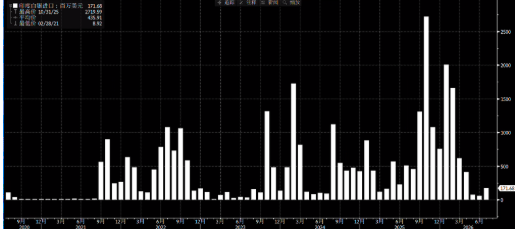
In August, India restarted permitting silver imports, with approximately 89.81 tons of silver entering through the India International Bullion Exchange (IIBX), ending a six-month import standstill. Concurrently, import licenses for about 400 tons of silver have been approved. Although the import volume is still far from a full recovery, the policy direction has shifted from comprehensive tightening to gradual permission, indicating that the most severe administrative restriction phase for Indian silver imports has passed.
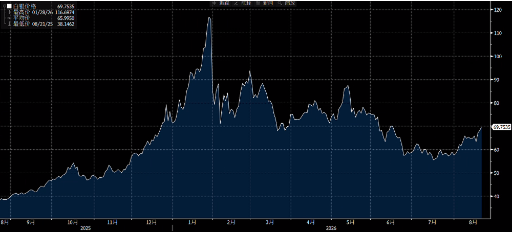
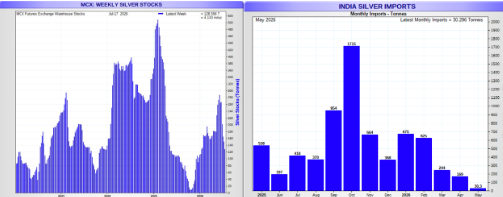
In May this year, due to tight foreign exchange liquidity and the depreciation of the rupee, the Indian government significantly increased the import duty on silver from 6% to 15%, requiring importers to obtain government permits for import. This immediately blocked silver import channels, tightened domestic silver supply, and caused a sharp decline in import volume. India's silver imports fell drastically from 747 tons in January to about 29 tons in June, rapidly depleting domestic inventories and causing the local premium relative to international prices to soar. The 30-day average premium once reached its highest level since at least 2019.
With the marginal easing of import restrictions, India's domestic silver premium has begun to narrow, with the 30-day average premium falling to $4 per ounce (approximately a 7% premium level). However, new licenses still require certificates of origin issued by official agencies, and traders also need to go through transportation, customs, and refining processes. Cumbersome approval procedures and logistics clearance delays continue to constrain the actual arrival pace. In the short term, market supply still relies on existing inventories and depleting replenishments. The domestic physical shortage situation in India has not fundamentally reversed.
Nevertheless, this premium level provides continuous arbitrage incentives for global traders. Although administrative barriers have not been fundamentally removed, traders are actively attempting to ship physical silver to the Indian market through various channels, positioning themselves in advance for further easing of restriction policies.
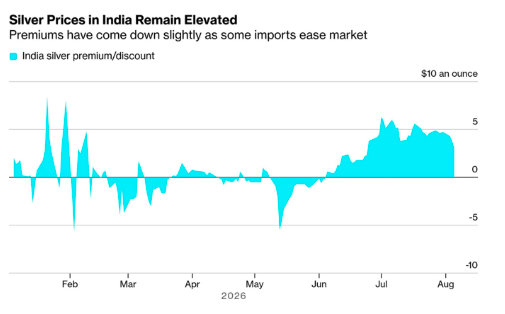
The chart shows India's silver premium surged significantly after May, reaching a historical high, before slightly retreating in August.

Article Conclusion

Indian Physical Demand and Restocking Cycle Initiation Provide a Bottom for Silver Prices

As one of the world's most important silver consumer markets, India accounts for 9% of global silverware demand in all forms (with its silverware demand alone constituting 63% of the global total). However, its domestic silver supply is highly dependent on imports. Therefore, changes in India's import policies are not merely regional adjustments but a crucial variable in the global silver supply and demand equation.

The six-month import standstill severely depleted India's domestic inventories, with the physical shortage situation providing solid bottom support for silver prices. As import restrictions ease marginally and restocking demand gradually releases, coupled with the approaching traditional consumption peak season in the second half of the year, the physical silver supply-demand structure is shifting from "extreme tightness" to "gradual improvement." Silver prices are expected to gain new upward momentum driven by the replenishment of physical demand.
Letture associate

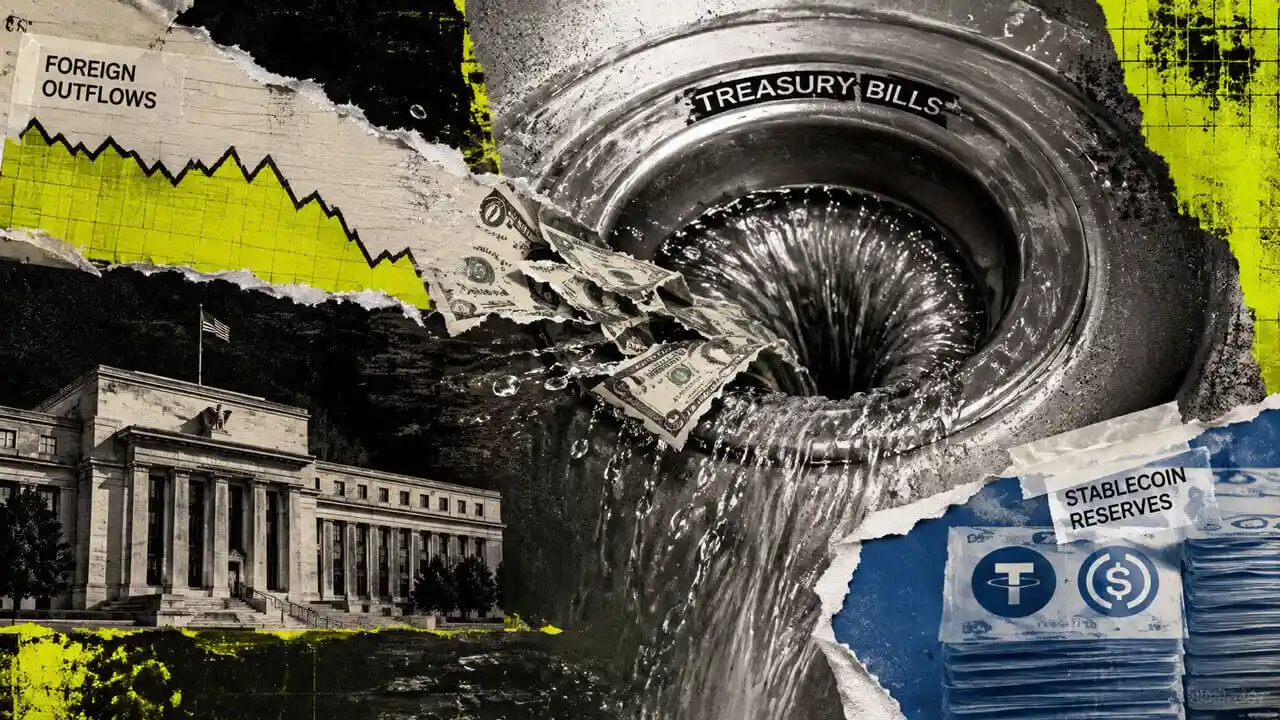
Foreign Capital Sells Off $29 Billion in Short-Term US Treasuries, Why is the US Betting on Stablecoins to "Take Over"?

In June, foreign investors netted $133.5 billion into U.S. financial markets but simultaneously sold $29 billion in short-term U.S. Treasury bills. This divergence highlights a strong preference for U.S. equities over government debt. While overseas buyers purchased $181.4 billion in stocks, demand for Treasuries weakened significantly. This trend explains why the U.S. is looking to stablecoins as a potential new source of demand for its debt. Stablecoin issuers like Tether and Circle back their tokens primarily with highly liquid assets, including short-term Treasuries. As users buy stablecoins, issuers convert that dollar demand into Treasury purchases. Recent U.S. legislative efforts, such as the proposed rules under the *GENIUS Act*, formalize this by mandating stablecoin reserves be held in assets like cash and short-term Treasuries. Currently, stablecoins represent a substantial existing buyer base. For instance, Tether alone held nearly $115 billion in direct T-bill exposure in Q2. However, recent stablecoin supply growth has been minimal and does not account for the $29 billion sell-off by foreign investors in June. For stablecoins to act as a meaningful counterbalance to waning foreign demand, their circulating supply would need to expand significantly. The next TIC report will be crucial to monitor whether foreign selling continues and if stablecoin growth begins to fill the demand gap. Ultimately, the U.S. is strategically positioning the regulated stablecoin sector as a potential new pillar of demand for its government debt.

marsbit1 min fa

Foreign Capital Sells Off $29 Billion in Short-Term US Treasuries, Why is the US Betting on Stablecoins to "Take Over"?

marsbit1 min fa

Unitree Investors Jointly Heavy Bet on an Embodied Team

Unibot's early investors, including Meituan, Sequoia Capital, and Matrix Partners, have jointly invested in MiaoDong Technology, another humanoid robotics startup. Founded by former DJI employees—CEO Gao Jianrong, a 9-year DJI veteran who led multiple core business units, and CTO Yang Shuo, who previously worked in Tesla's Optimus team—MiaoDong is known for its combined expertise in hardware productization and advanced robotics cognition. Their core strategy centers on in-house motor R&D and full-stack software-hardware capabilities. The company recently made headlines with its first product, Beni, a wheel-legged "camera robot" designed for low-angle, ground-level filming and personal companionship. Successfully launched on Kickstarter, Beni set a record for the highest fundraising amount in the platform's robotics category. It received a perfect 10/10 rating from influential tech reviewer Marques Brownlee (MKBHD). Beni features capabilities like autonomous obstacle avoidance, the ability to jump 25cm, and self-righting after a fall. MiaoDong plans to leverage the technological and user data feedback from Beni's consumer launch to inform the development of future home-use humanoid robots. The company emphasizes a product-first, user-centric approach, prioritizing real-world applications and reliability over rapid, demo-focused scaling. With Beni set for global release in October and an internal target to sell millions of units, MiaoDong aims to establish itself as a significant player in the embodied AI space through steady, product-driven growth.

marsbit16 min fa

Unitree Investors Jointly Heavy Bet on an Embodied Team

marsbit16 min fa

Trading

Spot
活动图片