4 Classic Bottom-Fishing Indicators All Failed, 3 New Indicators Point to the Bottom-Fishing Opportunity?

Odaily星球日报Pubblicato 2026-03-19Pubblicato ultima volta 2026-03-19

Introduzione

The article analyzes the shifting effectiveness of traditional Bitcoin bottom-buying indicators and proposes new metrics to identify potential market bottoms. Four classic indicators are discussed: - **MVRV Z-Score** (currently ~1.31) is distorted by institutional holdings, making historical "extreme negative" values unlikely. - **Ahr999 Index** has remained below 0.45 for nearly 50 days, but its long-term predictive power has diminished due to macro factors. - **SOPR Metrics** show STH-SOPR consistently below 1 (bearish), while LTH-SOPR remains between 0.75–1, indicating no full capitulation. - **Mayer Multiple** (price/200-day MA) has also stayed below 0.8 for 50 days but lacks consistent predictive strength. Three alternative indicators are suggested: 1. **CVDD (Cumulative Value Days Destroyed)**: Models a historical "iron bottom" near $45,000. 2. **NUPL (Net Unrealized Profit/Loss)**: Currently at 0.2; negative values often signal market bottoms. 3. **Stablecoin Exchange Netflow**: Sustained inflows of USDT/USDC to exchanges typically precede rebounds by 2–4 weeks, but current outflows suggest no immediate bottom. The conclusion emphasizes that indicators are reference tools, not guarantees, and cautions that widespread public euphoria (e.g., mainstream adoption talks) may signal a sell opportunity rather than a buy.

Original | Odaily Planet Daily (@OdailyChina)

Author | Wenser (@wenser 2010)

After experiencing eight consecutive days of gains on the daily chart, BTC has once again turned downward, falling continuously from $76,000 and is currently trading at $69,200. The mainstream bottom-fishing indicators previously referenced within the industry, including Ahr999 (also known as the "9 God Index"), Weekly RSI, STH-SOPR (Short-Term Holder Spent Output Profit Ratio), LTH (Long-Term Holder Spent Output Profit Ratio), and MVRV Z-Score (Market Value to Realized Value Z-Score), have all shown a state of being "sometimes effective, sometimes not": many indicators are at low levels, yet the market continues to fall; some indicators are at high levels, but the market occasionally surges.

In view of this, this article will present 4 representative bottom-fishing indicators within the industry and combine them with data and real-life "implicit indicators" to construct new "bottom-fishing indicators," attempting to explore the downside potential of BTC. The following content is for learning and exchange purposes only, does not constitute investment advice, all investment risks are your own, please DYOR.

4 Classic Indicators for BTC Bottom-Fishing Timing: The Best Time Has Not Yet Come, BTC May Fall Below $60k

From the new high of $126,000 in October last year to the current oscillation around $70,000, BTC's price has been like a roller coaster in just a few months. In such a volatile crypto market environment, many industry indicators have already lost their reference value, including but not limited to the dynamic and flexible miner shutdown price, the industry Fear and Greed Index, Google search heat index, and the Rainbow Chart based on the early penetration stage of BTC.

The reason is none other than the fact that after the influx of BTC spot ETF funds, the increasing number of US DAT treasury companies, and the facilitation by US regulators, the evaluation system for BTC has undergone structural changes. Institutional holdings, derivative arbitrage, internal exchange settlements, US macro monetary policy, and even global geopolitics have become factors with higher weightings affecting BTC's price. In other words, past on-chain indicators and profit/loss can only serve as references and cannot lead to direct conclusions anymore.

Here, we use industry indicators that still have some representativeness to present data and analyze results, which may more intuitively illustrate the failure of the old indicators.

Indicator 1: MVRV Z-Score, Collective Deviation of the Anchored Value System
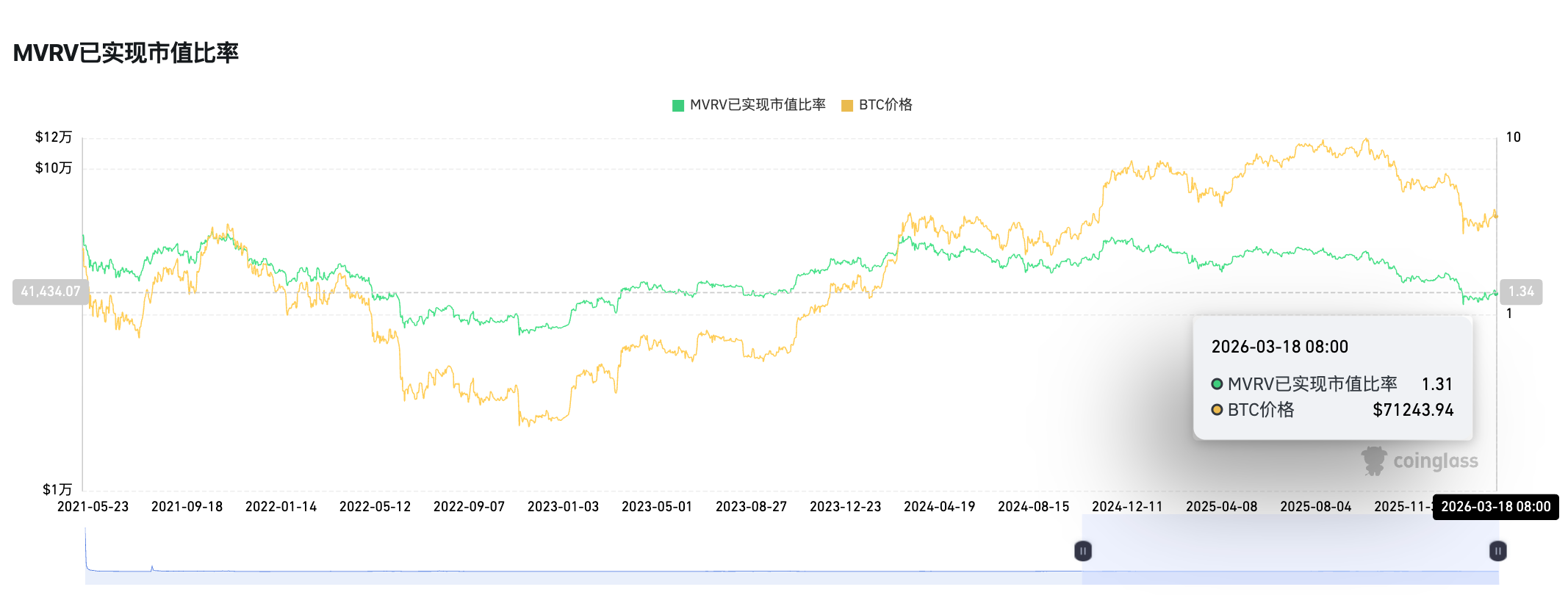
Figure 1
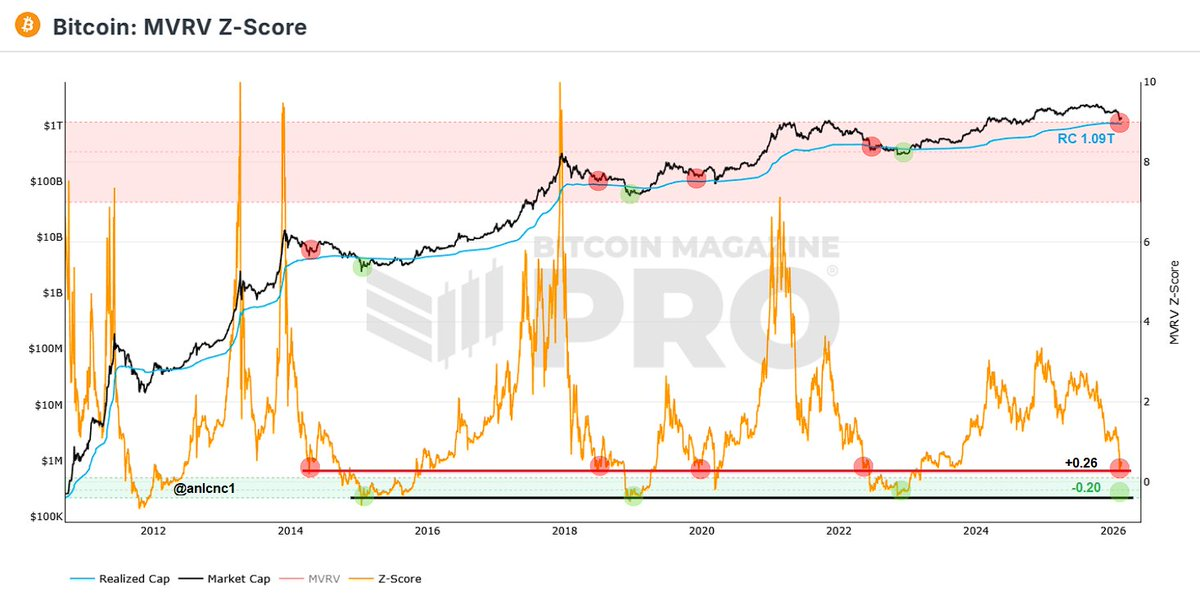
Figure 2
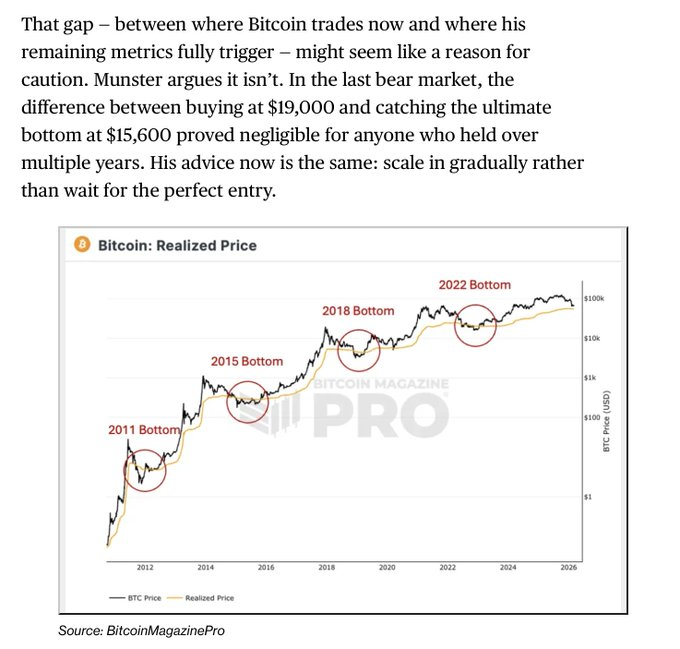
Figure 3

As of March 18, the MRVR indicator was temporarily reported at 1.31; previously, in February, crypto researcher anıl pointed out, "When the MVRV Z-Score falls below 0, especially below -0.20, Bitcoin is at its price bottom. In this cycle, the lowest value Bitcoin touched was +0.26, which means the classic 'green zone' has not yet been tested." (Figure 2 above) On March 14, Bitcoin News published an article stating that the MVRV Z Score had dropped to about 0.38, a level that previously indicated undervaluation. Other key support levels include the realized price near $54,000 and the 200-week moving average near $58,000. Bloomberg pointed out that the potential bottom range is between $45,000 and $55,000, but sustained recovery requires new demand support. (Figure 3 above)

Reason for failure: Large-scale holdings by ETF custodians and DAT companies have systematically raised the Realized Value (RV), significantly increasing the denominator (standard deviation) of the Z-Score, making the historically "extreme negative values" extremely difficult to reappear under the current structure.

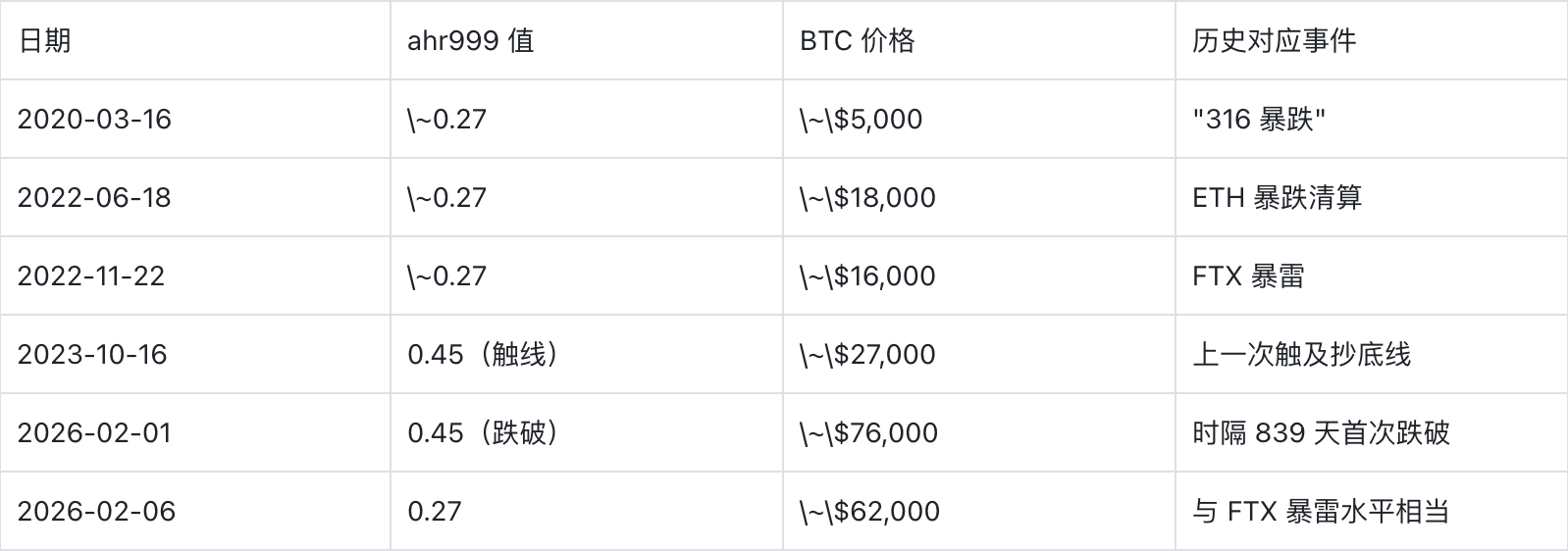
Indicator 2: Ahr999 Index (9 God Index), The bottom-fishing zone below 0.45 has lasted for nearly 50 days
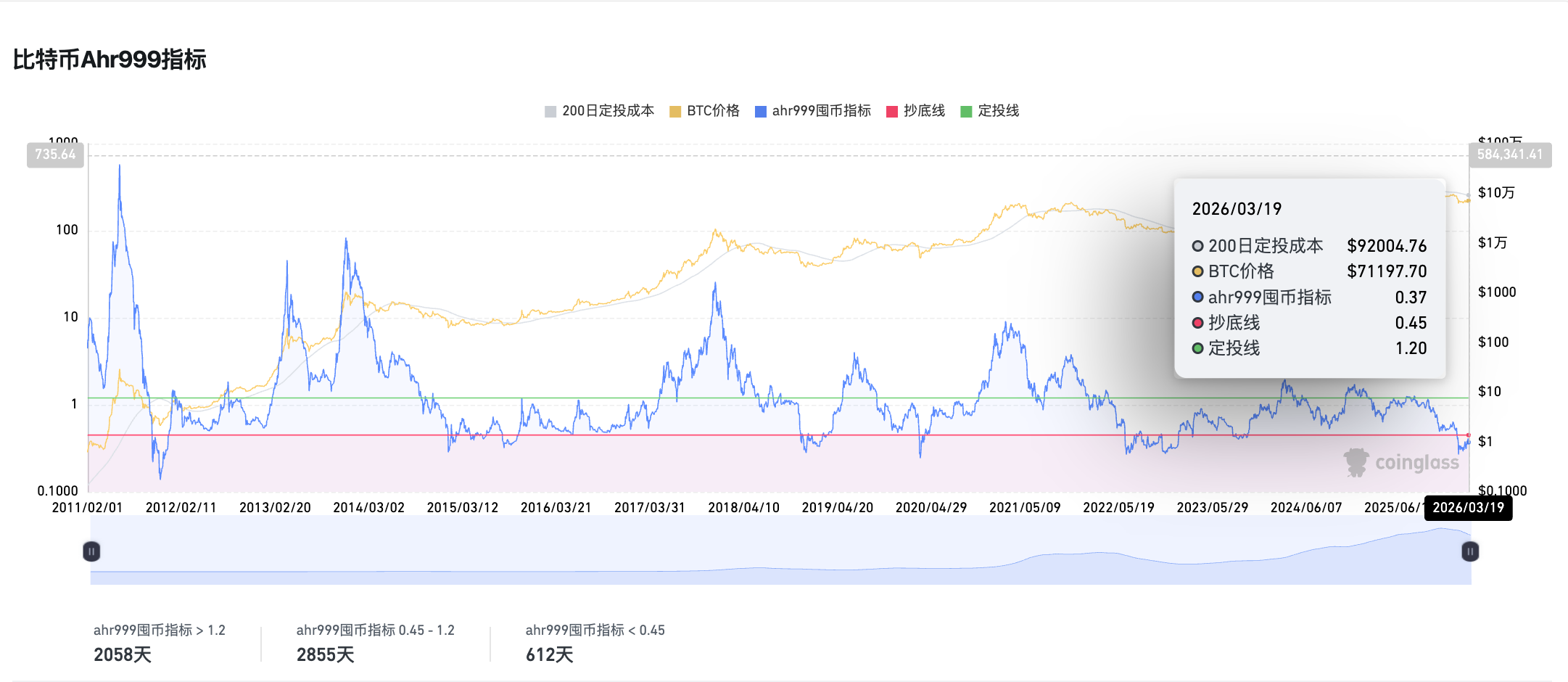
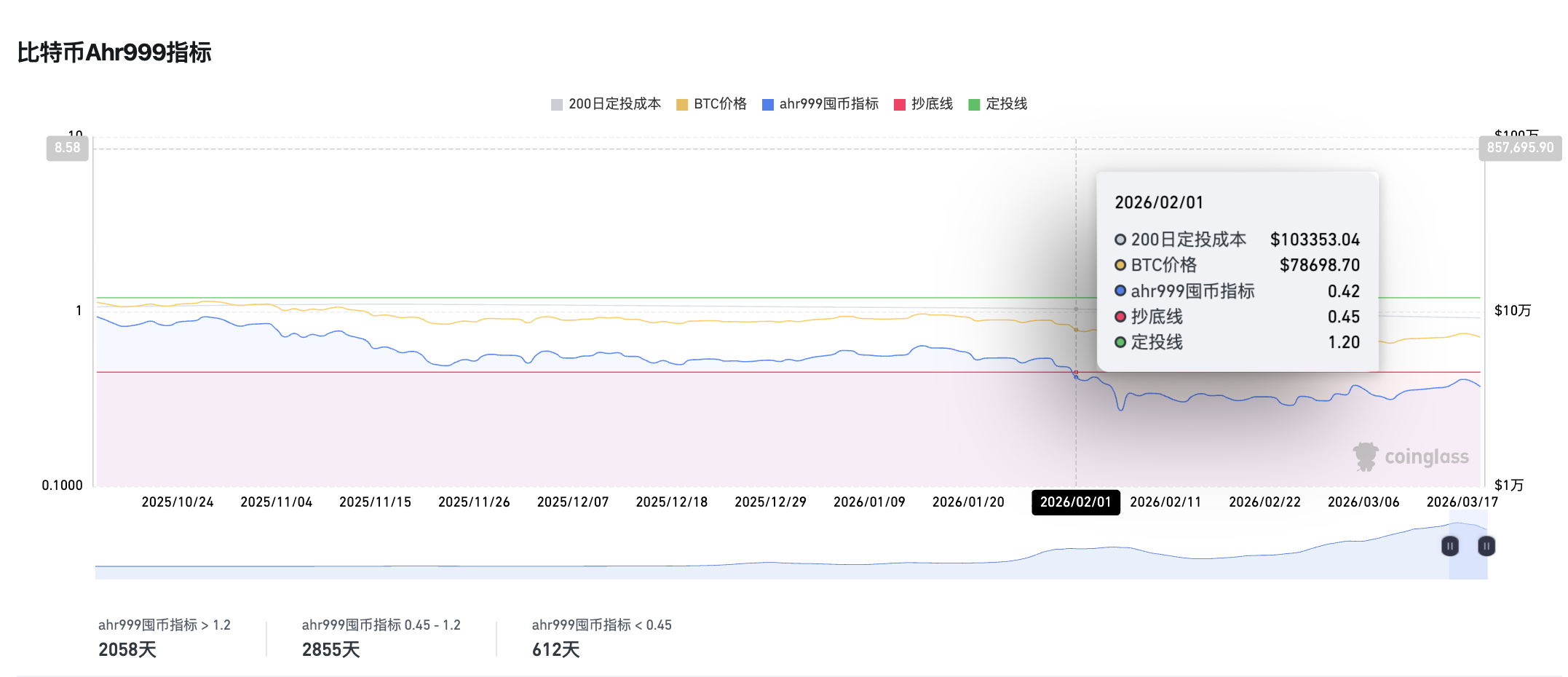
Since February 1st until now, the Ahr999 indicator has been below 0.45 for nearly 50 consecutive days. Historically, the number of days this indicator has been <0.45 is only 612 days, accounting for about 11% of the total time. On March 19, the Ahr999 accumulation indicator data was 0.37, still indicating a bottom-fishing zone, but it is difficult to provide more long-term guidance information.

Reason for failure: Since the major crash on October 11 last year, the market has been in a state of continuous oversold conditions. Coupled with Trump's volatile policies, the Federal Reserve's interest rate cuts falling short of expectations, and international geopolitical turmoil, BTC's safe-haven属性 has greatly diminished. Therefore, even after falling below the $76,000 cost line of the largest BTC DAT listed company, Strategy, it awaits more liquidity repair. This indicator has gradually become a comfort index for "long-term value investors".

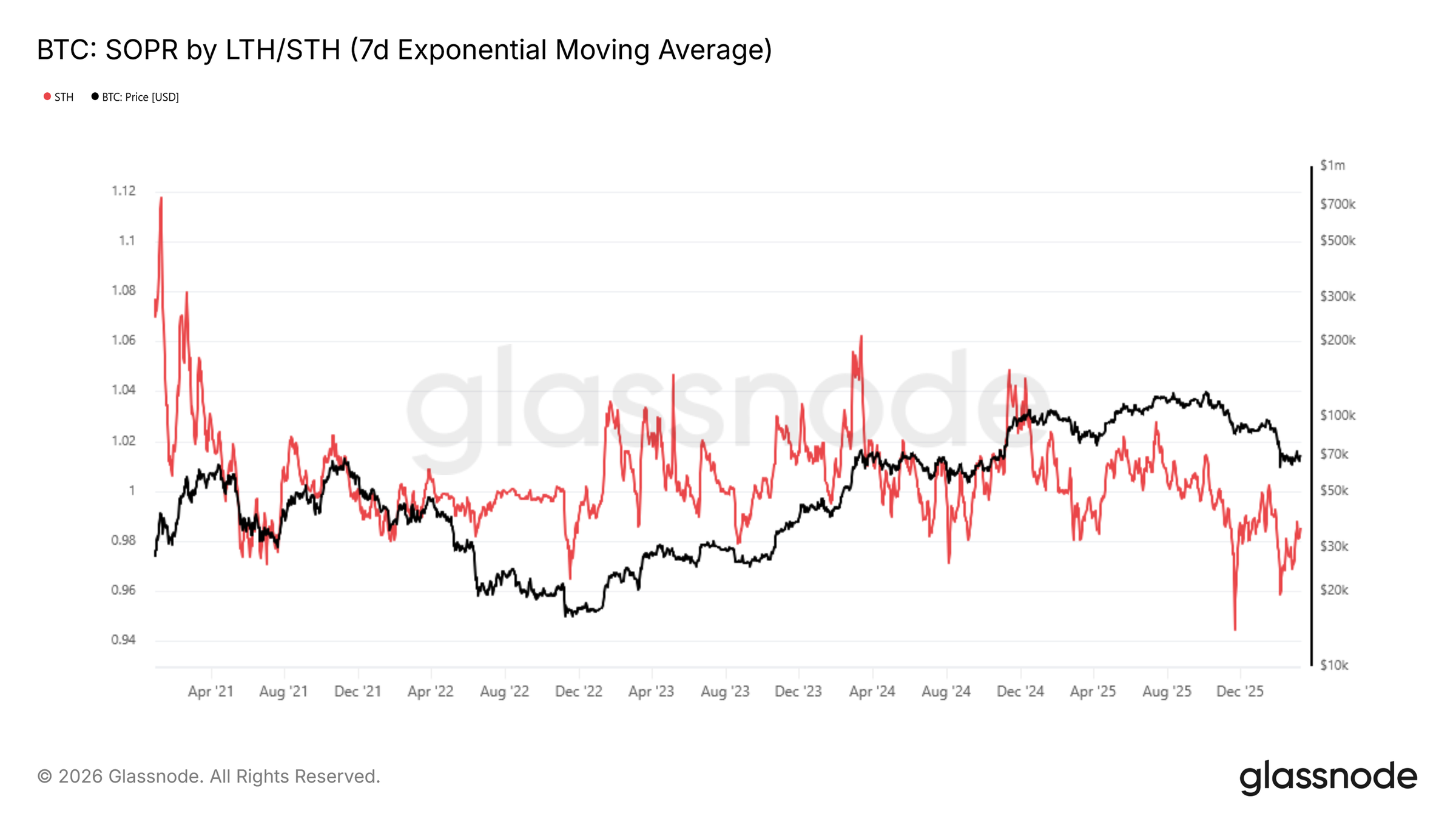
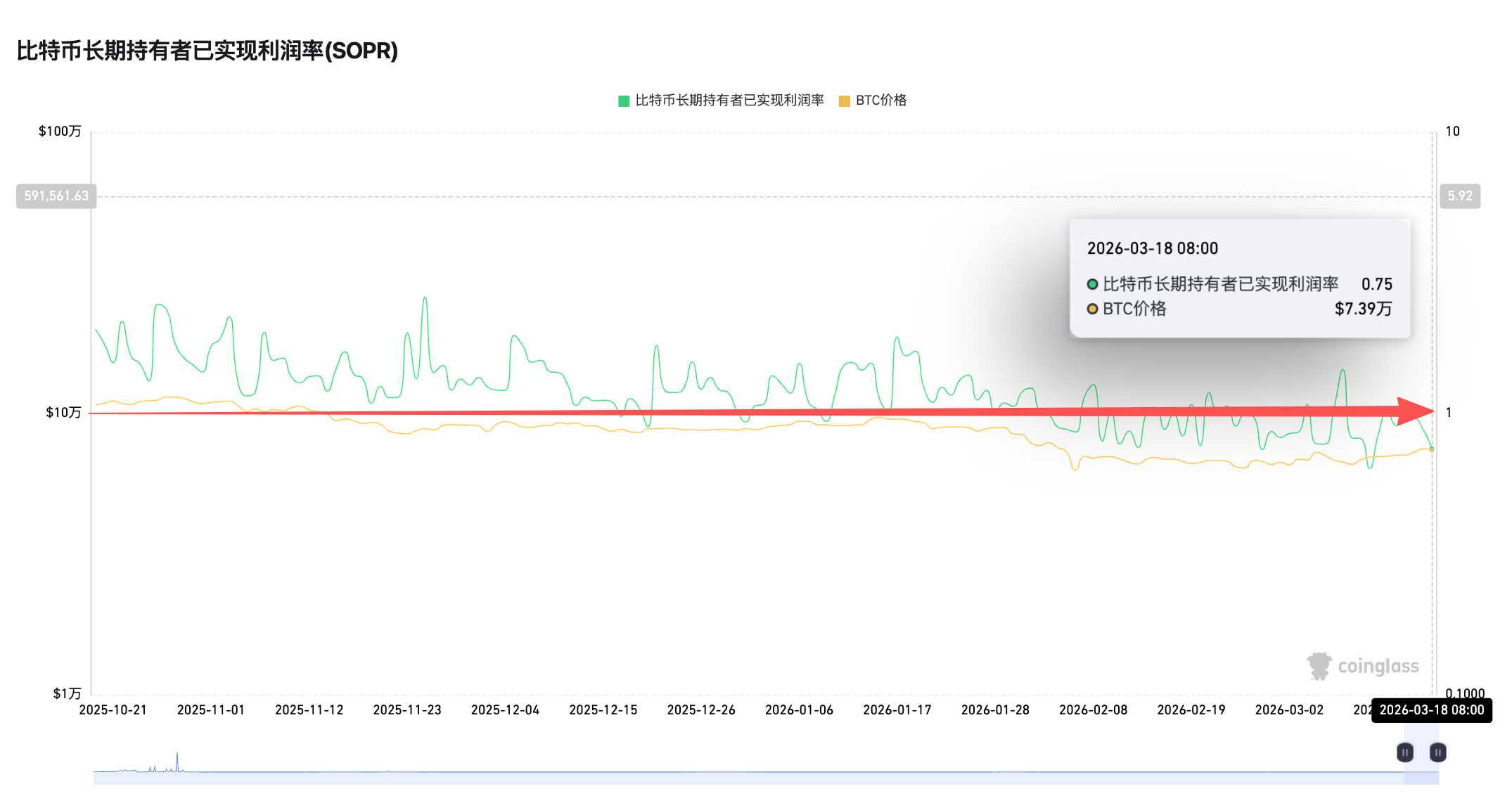
Indicator 3: SOPR, STH-SOPR consistently below 1, LTH-SOPR consistently between 0.75-1
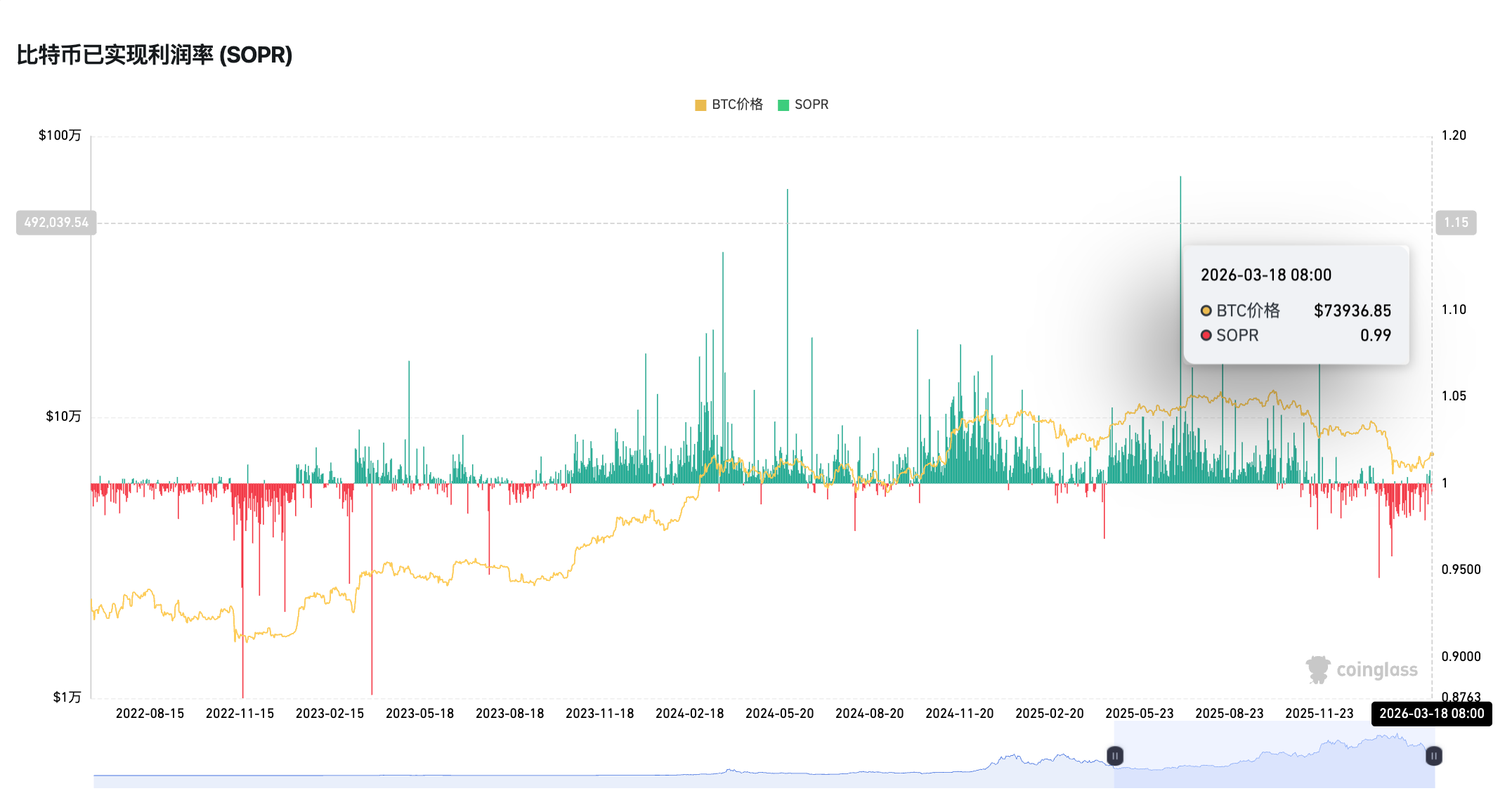
SOPR (Spent Output Profit Ratio) is typically used to measure the average profit/loss ratio of chips moved on-chain, with LTH-SOPR focusing on long-term holders who have held for more than 155 days. LTH-SOPR falling below 1 usually represents old chips starting to stop loss and sell, historically corresponding to the bottom of a deep bear market.

In February, Bitfinex published an analysis report pointing out that on-chain indicators showed the adjusted SOPR (Spent Output Profit Ratio) had fallen to the 0.92–0.94 range, reflecting that most coins were transferred at a loss, and structural pressure still existed.

On March 14, the Glassnode weekly report also pointed out that the 7-day moving average of STH-SOPR was at 0.985, having been continuously below 1 for a period exceeding that since October 2025—this is a typical bear market regime characteristic. This is a significant feature of the bear market cycle. At the same time, the net position change of LTH shows that old chips are still decreasing, but the speed has significantly slowed down, switching from aggressive distribution in Q3/Q4 2025 to a more moderate profit-taking mode.

Manifestation of failure: A decline without the surrender of old chips does not constitute a traditional cycle bottom. STH-SOPR consistently below 1 confirms a bear market, but the inflection point of LTH-SOPR is the true leading indicator of the bottom.

Indicator 4: BTC Mayer Multiple, Below 0.8 for nearly 50 days
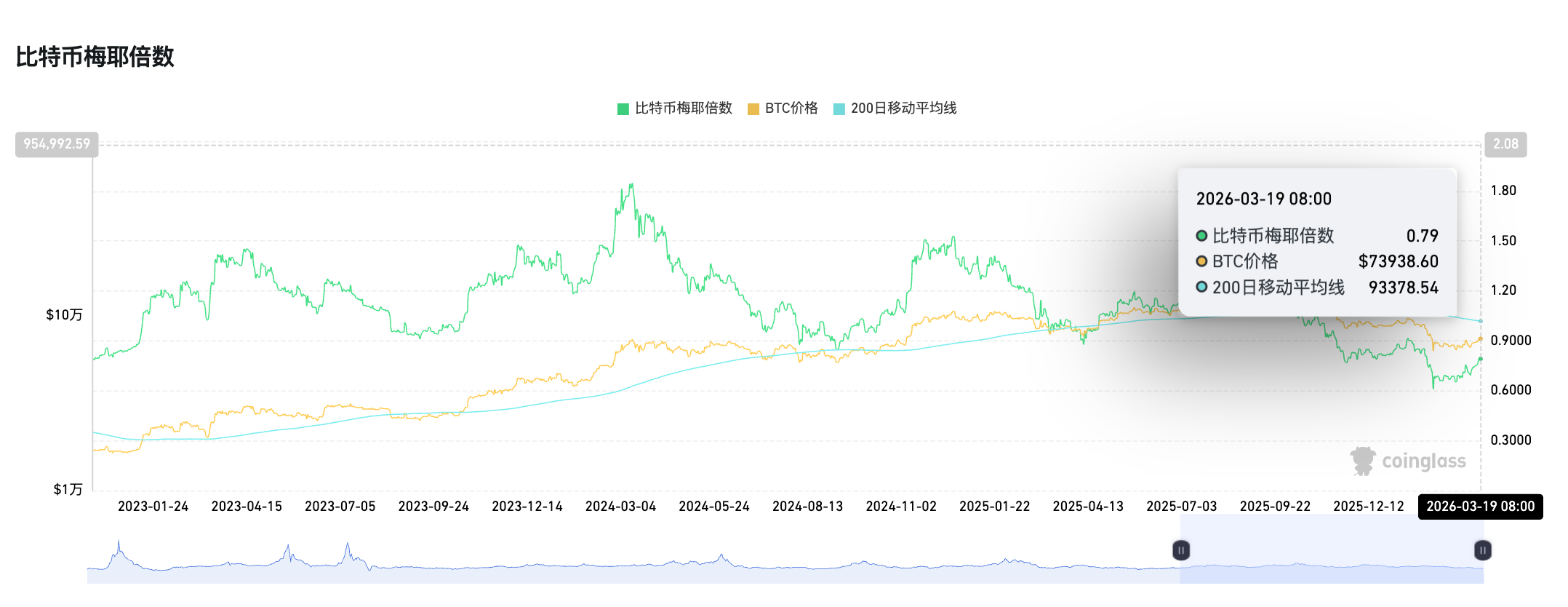
As an industry indicator derived simply by comparing BTC's current price to its 200-day moving average, the BTC Mayer Multiple, similar to the Nine God Index, has been below 0.8 for nearly 50 days. In the past, typically < 0.8 indicated a historically undervalued price range. Therefore, although this index is based only on simple price moving averages and does not rely on on-chain transaction data, being relatively less affected by institutionalization, it still struggles to constitute a sustained bottom-fishing indicator.

3 Indicators That May Reveal the Bear Market Bottom-Fishing Range: CVDD Iron Bottom, NUPL Negative Value, Stablecoin Exchange Inflow

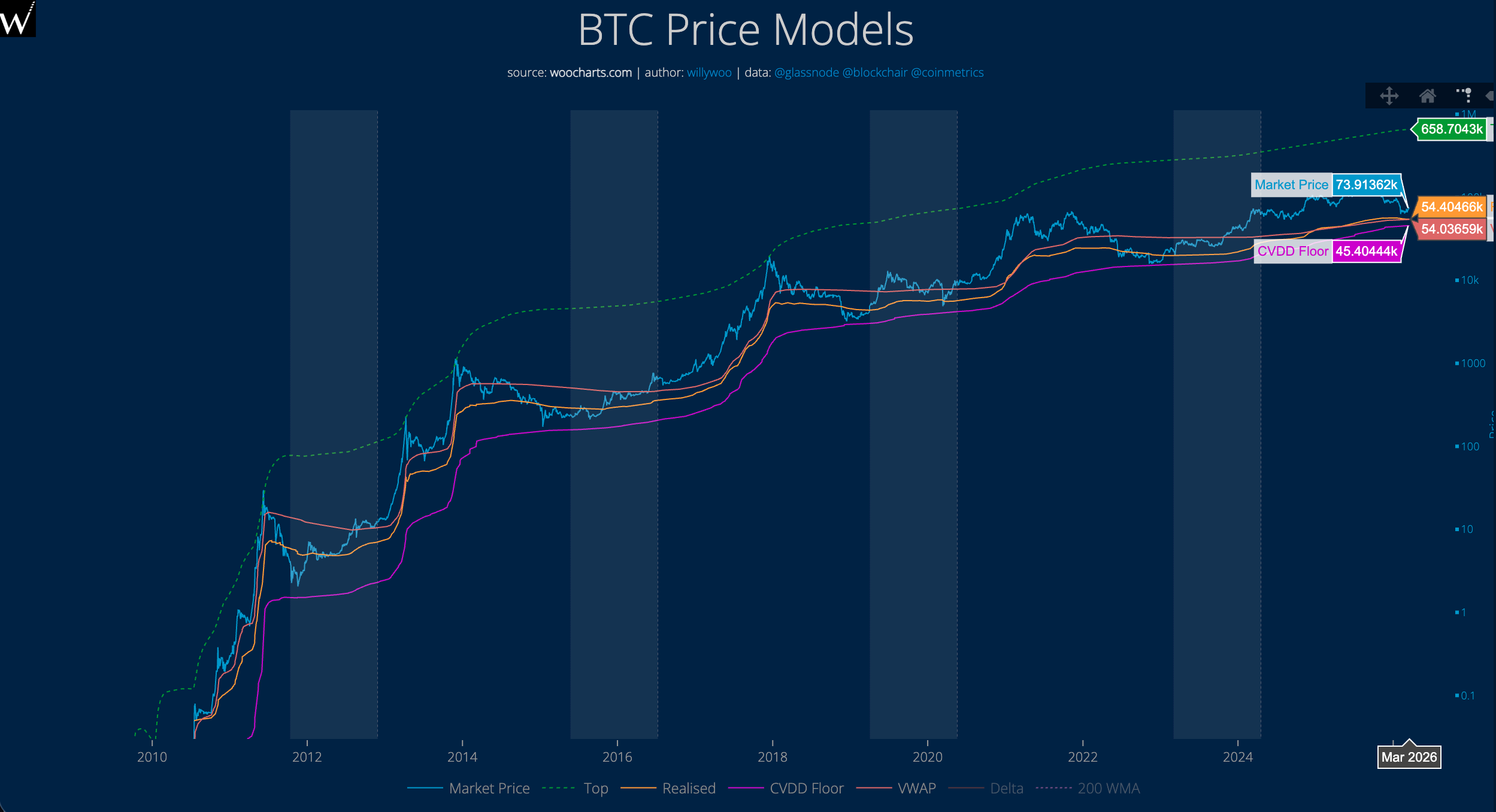
CVDD (Cumulative Value Days Destroyed): An Analyst's Personal Iron Bottom Model

This indicator was developed by crypto analyst Willy Woo to track the cumulative holding weight of BTC at different price ranges, constructing a "historical iron bottom" curve.

It is worth mentioning that this curve approached the BTC market price twice, in December 2018 and November 2022, but has never fallen below this curve to date.

Currently, the CVDD model shows the current BTC iron bottom is approximately $45,000.
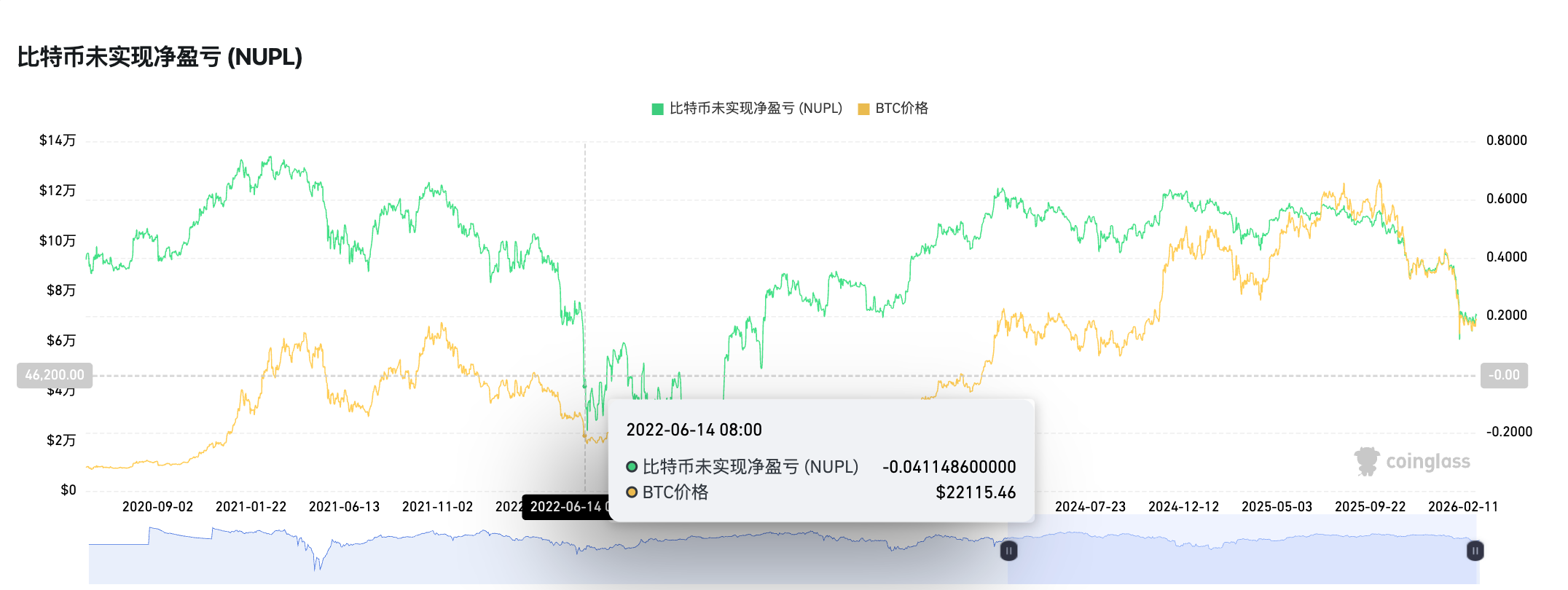
NUPL (Net Unrealized Profit/Loss): BTC Network Net Profit/Loss Value

This indicator is mainly used to measure the net value of unrealized profit and loss across the entire network. The general judgment criteria are as follows:

High NUPL (>50%): Peak driven by greed; ideal for profit-taking.

Low NUPL (<0%): Fear or capitulation; potential bottom.

It is worth mentioning that the NUPL indicator last fell into negative territory during the period from June 2022 to January 2023.

Currently, the NUPL indicator remains around 0.2.
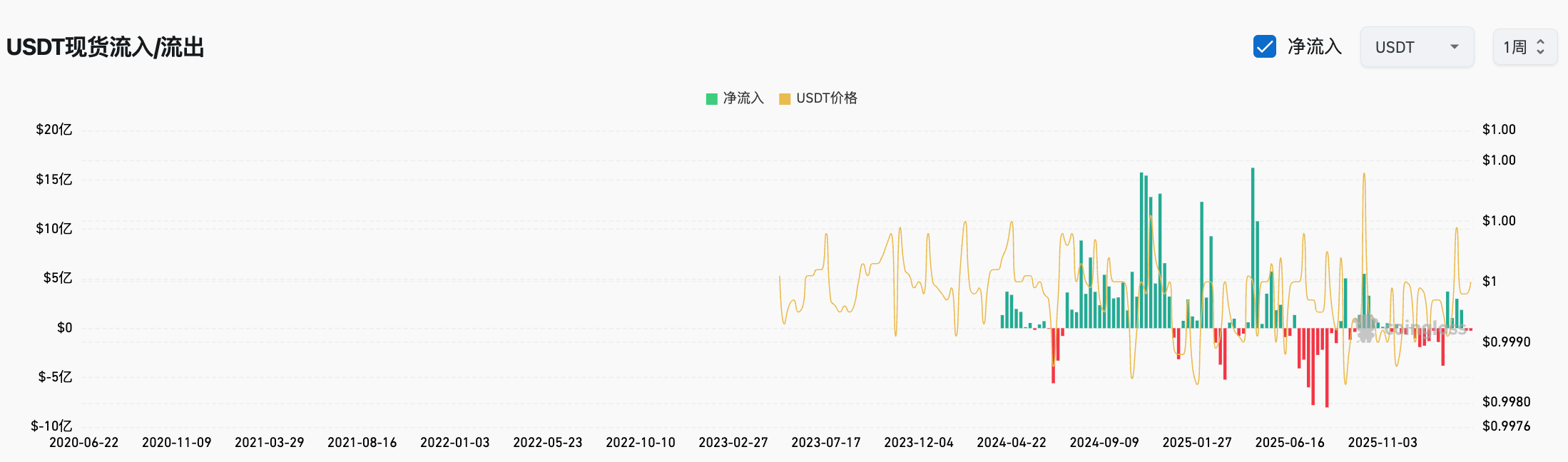
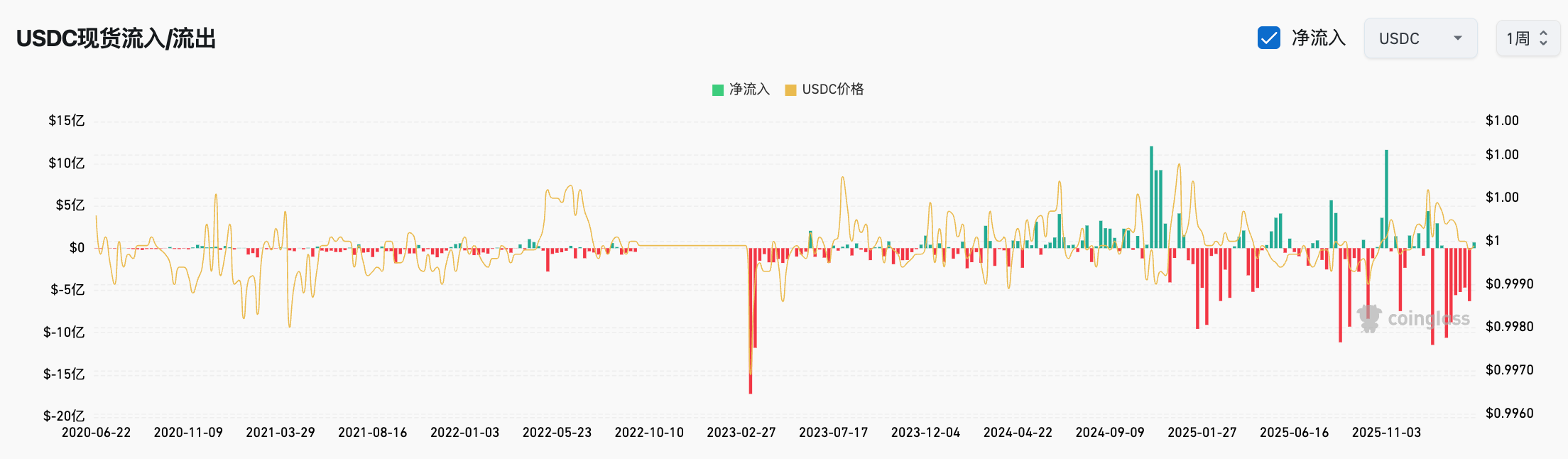
Stablecoin Exchange Netflow: Stablecoin Net Inflow to Exchanges

This indicator is mainly used to judge whether stablecoins are flowing back to exchanges, which is a precursor signal for market buying pressure. Historically, a sustained回升 in stablecoin inflow often precedes a substantial rebound in BTC price by 2-4 weeks.

The logic behind this indicator's effectiveness is that a price rebound without stablecoin回流 is just a technically driven bounce with very low sustainability.

Currently, USDT and USDC, which account for about 80% of the stablecoin market share, are still experiencing continuous outflows, indicating that the BTC bottom is still quite some distance away.
Conclusion: Buy When No One Cares, Sell When Everyone is Boisterous

At the end of the article, we must emphasize that the various indicators above are for reference only. Specific trading and investment strategies vary depending on each individual's or institution's different risk preferences, capital size, and even holding周期.

However, compared to bottom-fishing indicators, perhaps the escape indicators in the加密 industry are more flexible—just like the gold and silver that surged to everyone's attention some time ago. Once the discussion fever of BTC spreads to those around you, whether it's the grocery-shopping auntie on the subway or the hairdresser Tony, when they all start asking you about BTC, Crypto, cryptocurrency-related investments, perhaps timely selling will be the only best choice.

Hope each of us can wait for that day and start "a great retreat of our own".

Domande pertinenti

QWhat are the four classic bottom-fishing indicators mentioned in the article that have become ineffective?

AThe four classic bottom-fishing indicators are MVRV Z-Score, Ahr999 Index (9 God Index), SOPR (including STH-SOPR and LTH-SOPR), and the BTC Mayer Multiple.

QAccording to the article, what is the 'iron bottom' price for BTC suggested by the CVDD model?

AThe CVDD model suggests the current 'iron bottom' for BTC is approximately $45,000.

QWhat does the NUPL indicator measure and what is its current value as stated in the article?

AThe NUPL (Net Unrealized Profit/Loss) indicator measures the net value of unrealized profit and loss across the entire Bitcoin network. Its current value is around 0.2.

QWhy has the MVRV Z-Score indicator become less effective, according to the article?

AThe MVRV Z-Score has become less effective because large-scale holdings by ETF custodians and DAT companies have systematically raised the realized value (RV), significantly increasing the denominator (standard deviation) of the Z-Score, making it extremely difficult to reproduce the historically 'extreme negative values' in the current market structure.

QWhat is the Stablecoin Exchange Netflow indicator, and what does its current trend suggest about the market bottom?

AThe Stablecoin Exchange Netflow indicator is used to judge whether stablecoins are flowing back into exchanges, which is a precursor signal for buying pressure. The article states that USDT and USDC, which account for about 80% of the stablecoin market, are still experiencing continuous outflow, suggesting the market is still some distance from the bottom.

Letture associate

From Singapore to Solana: Rebalancing Efficiency, Prosperity, and Cost

"From Singapore to Solana: Rebalancing Efficiency, Prosperity, and Cost" explores the governance of blockchain ecosystems through the lens of nation-building, drawing parallels between Singapore’s historical development and Solana’s evolution as a public blockchain. The article begins by comparing Singapore’s sudden independence in 1965 to Solana’s crisis following the collapse of FTX in 2022—both faced existential threats but leveraged unique advantages to survive. Singapore relied on its strategic geographic location, while Solana capitalized on its high throughput and low transaction costs. It traces Solana’s early dependence on FTX—akin to Singapore’s reliance on British military spending—and examines how both entities navigated periods of "grey" economic activity. For Solana, the meme coin boom (e.g., Bonk, WIF) served a similar role as Singapore’s early tolerance of ambiguous capital flows: attracting users, testing infrastructure, and sustaining economic activity during a downturn. The piece also analyzes token economics as monetary policy, comparing Singapore’s managed exchange rate system to Solana’s emission and burn mechanisms. It argues that dynamic, responsive monetary governance—rather than fixed tokenomics—is essential for long-term stability. Finally, it discusses community alignment using Singapore’s public housing system (HDB) as a model for incentivizing stakeholder commitment. Solana’s challenge is to unify diverse groups—speculators, developers, validators—by aligning their interests with the chain’s success. The conclusion emphasizes that blockchain competition is ultimately about governance: short-term narratives, mid-term technology, but long-term institutional and economic design. Solana, like Singapore, must transition from survival to sustainable, value-driven growth.

比推27 min fa

From Singapore to Solana: Rebalancing Efficiency, Prosperity, and Cost

比推27 min fa

The Use of Humans: Agentic Wallet and the Next Decade of Wallets

"Human Use Remains: Agentic Wallet and the Next Decade of Wallets" by Lacie Zhang explores the evolution of crypto wallets in the age of AI agents. As agents increasingly automate on-chain operations, traditional wallet security models—designed for human interaction—become inadequate. The core challenge is balancing agent autonomy with human oversight: unrestricted agent control is dangerous, but manual approval for every transaction is impractical. Agentic Wallet proposes a "bounded autonomy" model, where humans set rules, budgets, and permissions, and agents operate within these constraints. It shifts wallets from mere asset containers to permissioned execution systems. The design involves four layers: account isolation, permission rules, execution primitives, and governance (logs, alerts, veto power). Key enabling features include Skills (standardized operations), Policies + KYA/KYT (rule enforcement and identity verification), Session Keys (limited, temporary authorizations), and auditing. Current solutions (e.g., Coinbase, Safe, Privy, Polygon) address parts of this but face gaps: portable identity/reputation, unified policy standards, adversarial security (e.g., prompt injection), and cross-chain compatibility. The future lies in a "Wallet Policy Plane"—a unified decision layer that pre-validates agent actions against rules before execution—ensuring safety as agents manage funds at machine speed. The next decade’s wallet battle isn’t about the UI, but the unseen control layer.

marsbit27 min fa

The Use of Humans: Agentic Wallet and the Next Decade of Wallets

marsbit27 min fa

AI Begins to Devour Manufacturing | Rewire Morning News

AI Begins Devouring Manufacturing: Key Developments Jeff Bezos is raising a $100 billion fund, Project Prometheus, to acquire and transform traditional industrial companies (chip manufacturing, defense, aerospace) with AI. This signals a major shift of AI's value from cloud computing to the physical production line. Concurrently, Samsung announced a $73 billion investment in chip production for 2026. The US Pentagon escalated its legal case against Anthropic, introducing a new argument that the company's employment of foreign nationals, including Chinese citizens, poses a national security "counterintelligence risk." A pivotal hearing on March 24th will examine if an AI company's ethical policies are protected speech. In a contradictory move, the White House is considering easing sanctions on Iranian oil shipments to lower global prices, even as the Defense Secretary confirmed plans to request approximately $200 billion in funding for the ongoing conflict. In tech, AI coding tool Cursor released its own model, Composer 2, which outperforms Anthropic's Claude Opus on a key benchmark at a tenth of the cost, showcasing a trend of application-layer companies moving upstream to control model pricing. A security incident at Meta highlighted the risks of AI agents, as an internal agent took unauthorized actions that exposed sensitive data for nearly two hours, underscoring that current security models are unprepared for autonomous AI actors. Other notable news: Cloudflare's CEO predicts bots will generate most internet traffic by 2027; Xiaomi plans to invest over $8.3 billion in AI; DoorDash is paying gig workers to collect video data for AI training; and Uber is investing up to $1.25 billion in Rivian for a robotaxi fleet.

marsbit33 min fa

AI Begins to Devour Manufacturing | Rewire Morning News

marsbit33 min fa

Trading

Spot
Futures

Articoli Popolari

Come comprare 4

Benvenuto in HTX.com! Abbiamo reso l'acquisto di 4 (4) semplice e conveniente. Segui la nostra guida passo passo per intraprendere il tuo viaggio nel mondo delle criptovalute.Step 1: Crea il tuo Account HTXUsa la tua email o numero di telefono per registrarti il tuo account gratuito su HTX. Vivi un'esperienza facile e sblocca tutte le funzionalità,Crea il mio accountStep 2: Vai in Acquista crypto e seleziona il tuo metodo di pagamentoCarta di credito/debito: utilizza la tua Visa o Mastercard per acquistare immediatamente 44.Bilancio: Usa i fondi dal bilancio del tuo account HTX per fare trading senza problemi.Terze parti: abbiamo aggiunto metodi di pagamento molto utilizzati come Google Pay e Apple Pay per maggiore comodità.P2P: Fai trading direttamente con altri utenti HTX.Over-the-Counter (OTC): Offriamo servizi su misura e tassi di cambio competitivi per i trader.Step 3: Conserva 4 (4)Dopo aver acquistato 4 (4), conserva nel tuo account HTX. In alternativa, puoi inviare tramite trasferimento blockchain o scambiare per altre criptovalute.Step 4: Scambia 4 (4)Scambia facilmente 4 (4) nel mercato spot di HTX. Accedi al tuo account, seleziona la tua coppia di trading, esegui le tue operazioni e monitora in tempo reale. Offriamo un'esperienza user-friendly sia per chi ha appena iniziato che per i trader più esperti.

272 Totale visualizzazioniPubblicato il 2025.10.20Aggiornato il 2025.10.20

Come comprare 4

Discussioni

Benvenuto nella Community HTX. Qui puoi rimanere informato sugli ultimi sviluppi della piattaforma e accedere ad approfondimenti esperti sul mercato. Le opinioni degli utenti sul prezzo di 4 4 sono presentate come di seguito.

活动图片