The Truth of Trading: A Numbers Game of Patterns and Probabilities

深潮Pubblicato 2025-12-26Pubblicato ultima volta 2025-12-26

Introduzione

The Truth of Trading: A Numbers Game of Patterns and Probability Most traders fail not due to a lack of methods or information, but because they misunderstand the nature of trading. Mark Douglas, in "Trading in the Zone," redefines the market as a probabilistic environment where an edge only materializes over a sufficiently long period. Trading is not about prediction or seeking certainty; it is a numbers game of pattern recognition. A valid trading pattern does not guarantee that any single trade will be profitable. It merely indicates a historical probability of success. Each individual trade outcome is random, but the overall probability distribution over many trades is not. Traders must evaluate performance like a casino: focus on long-term expectation and repeated execution, not single wins or losses. Accepting that "anything can happen" is liberating. It removes the emotional sting from losses, enables disciplined stop-loss execution, and eliminates hesitation. The ideal "flow state" is not excitement but emotional neutrality—executing the plan without attachment to outcomes or need to be right. Ultimately, traders cannot control results, but they can control their execution. Success comes from emotional detachment and consistent repetition. When traders stop trying to prove themselves right and let the probabilities work over time, they align with the true nature of the market: a numbers game based on pattern recognition and disciplined repetition.

Written by: AsymTrading

Compiled by: AididiaoJP, Foresight News

Most traders fail not because they lack methods, indicators, or information, but because they don't understand what trading truly is.

In "Trading in the Zone," Mark Douglas completely shatters the notion that trading is about prediction, seeking certainty, or being right. Instead, he redefines the market: it is a probabilistic environment where your edge only manifests over a sufficiently long period.

This is why many experienced traders summarize Douglas's core idea with a simple phrase:

Trading is a numbers game of pattern recognition.

This article aims to clarify what this phrase really means and how misunderstanding it can quietly destroy your otherwise decent trading system.

Trading Is Not Prediction

Douglas's most fundamental point is very direct:

You never know what will happen next, and you don't need to know.

At the level of a single trade, the market is uncertain. No pattern, indicator, or news can guarantee the outcome of the next trade. When you constantly seek certainty from a single trade, fear, hesitation, and emotional interference all emerge.

According to Douglas's definition, trading is not about predicting the next second's rise or fall but about how to effectively execute a plan amid uncertainty.

Patterns Don't Predict—They Define "Edge"

Douglas does not否定 pattern recognition. In fact, he believes traders should have their own trading methods.

What he aims to correct is the mindset traders have toward these patterns.

An effective trading pattern does not mean:

  • This trade "must" make money

  • The market "owes" you a profit

  • A single loss proves the method is "invalid"

A pattern only means one thing:

Historically, when this pattern or condition appears, the probability of making money is higher.

That's it.

Patterns only tell you probability; they don't guarantee outcomes. Once you start expecting specific results, you are no longer "trading probabilities" but "protecting your ego."

Random Outcomes, Non-Random Probabilities

This is a crucial distinction in "Trading in the Zone":

  • The outcome of each individual trade is random.

  • But the overall probability distribution over a series of trades is not random.

A truly effective trading method might lose five times in a row. This doesn't mean the method is invalid; it just doesn't align with your幻想 of "certainty."

Douglas believes traders should evaluate their performance like a casino:

Don't look at single wins or losses; look at the long-term, large sample size of trades.

Profit comes from 【Expected Value × Number of Repetitions】, not from the "rightness" of your single judgment.

"Anything Can Happen"—This Is Actually Your Edge

Douglas constantly emphasizes this phrase:

Anything can happen.

Most people see this as a threat, but Douglas means the opposite.

When a trader truly accepts that "anything can happen," they find:

  • Losses no longer feel personal

  • Stop-loss setting and execution become clean and decisive

  • Hesitation disappears

  • Overconfidence diminishes

Accepting randomness is not pessimism; it's a form of liberation.

When you let go of the obsession with certainty, your execution actually improves.

The "Flow State" Is Emotional Neutrality, Not Excited Euphoria

The "flow state" is often misunderstood as a state of high excitement or mystical feeling.

Douglas's definition is very practical. Entering the "flow state" means:

  • No emotional attachment to trading outcomes

  • No need to prove oneself "correct"

  • No fear of "making a mistake"

  • Once the trading plan is executed, there is no impulsive interference

At this point, you take the next trade simply because the plan calls for it, not because you "feel" confident or fearful at the moment.

The flow state is absolute loyalty to the trading process amidst uncertainty.

Why Is It a "Numbers Game"?

Douglas never promoted slogans, but the mathematical logic behind his thinking is very clear:

  • Identify patterns to find a probabilistic edge.

  • This edge creates a probabilistic bias.

  • You must repeatedly and extensively execute trades that align with this edge.

  • The final result can only manifest after a sufficiently large sample size of trades.

Therefore, veterans summarize it in plain language:

Trading is a numbers game of pattern recognition.

Not prediction, not intuition, not belief.

It's about probability, repetition, and discipline.

Why Do Most People Still Struggle?

Many traders rationally agree with Douglas but emotionally and behaviorally reject his conclusions.

They still:

  • Judge themselves based on the success or failure of a single trade

  • Expect every pattern to "work"

  • Feel that a loss is a personal offense

  • Modify rules mid-trade

  • Stop executing an originally effective strategy after a few losses

In other words, they verbally believe in probability but in action expect certainty every time.

Douglas's focus is not on teaching you to find a better trading method.

It's about how to correctly apply the method you already have.

In the End

This article teaches us a simple yet hard-to-accept truth:

You cannot control outcomes, but you can control execution.

Patterns give you probability, not promises. Consistent profitability requires emotional "numbness" and repetitive action.

When traders stop trying to "prove themselves right" and start letting the "probability numbers" work for them, trading truly gets on the right track.

This is the full meaning behind that phrase:

The market is a numbers game of pattern recognition.

Domande pertinenti

QWhat is the core idea of Mark Douglas's trading philosophy as presented in the article?

AThe core idea is that trading is not about prediction or seeking certainty, but rather a probability environment where success comes from recognizing patterns, executing plans consistently, and allowing the statistical edge to manifest over a large number of trades.

QAccording to the article, what does a valid trading pattern represent?

AA valid trading pattern does not guarantee a profitable outcome for any single trade. It only indicates that, historically, such a pattern or condition has a higher probability of being profitable.

QHow does the article differentiate between the outcome of a single trade and the overall probability of a trading method?

AThe outcome of any single trade is random, but the overall probability distribution of a series of trades from a valid method is non-random. Profit comes from the expected value multiplied by the number of repetitions, not from being right on a single trade.

QWhat is the 'flow state' in trading as described in the text?

AThe 'flow state' is not a state of excitement or euphoria. It is a state of emotional neutrality where the trader has no emotional attachment to results, doesn't need to prove they are right, isn't afraid of being wrong, and executes the trading plan without impulsive interference.

QWhy do most traders fail despite understanding the concept of probability, according to the article?

AMost traders fail because, while they may rationally accept the concept of probability, they emotionally and behaviorally reject it. They judge themselves on single trades, expect every pattern to work, take losses personally, change rules mid-trade, and abandon effective strategies after a few losses, essentially seeking certainty in every outcome.

Letture associate

The Glamour Belongs to the 'Epsteins', Saylor Just Wants to Hoard Bitcoin

Summary: The recently unsealed Epstein files revealed an unexpected connection to Michael Saylor, CEO of MicroStrategy (now Strategy). In a 2010 email, Epstein's PR coordinator, Peggy Siegal, complained about Saylor's presence at a high-society dinner, describing him as a "zombie on drugs" who was impossible to engage socially and had no personality or understanding of social etiquette. This social awkwardness, however, may have been his saving grace, as it from deeper involvement in the scandal. This perceived personal flaw is presented as a professional strength in his role as a Bitcoin maximalist. Saylor’s company is the largest corporate holder of Bitcoin, with 712,647 BTC purchased at an average cost of $76,037. Despite recent market volatility pushing the price down and his company's stock falling 60%, Saylor remains committed to his strategy of buying Bitcoin weekly, famously tweeting "More Orange" to signal his intent to continue accumulating. The article argues that the traits that made him a social outcast—being闷 (boring), uninteresting, and unresponsive to external noise—are the exact same traits that make him a successful "Bitcoin zombie." His strategy is simple and requires no complex decision-making: buy and never sell. While his approach is not advisable for the average investor without his corporate financial tools, the core lesson is that in investing, "interesting" strategies like frequent trading and chasing hype often lead to losses. The most profitable strategies are often boring. The piece concludes that both in investing and in life, the spotlight of "热闹" (excitement/hot spots) is often fleeting and dangerous, while long-term value is found in committed, "boring" work.

marsbit22 min fa

The Glamour Belongs to the 'Epsteins', Saylor Just Wants to Hoard Bitcoin

marsbit22 min fa

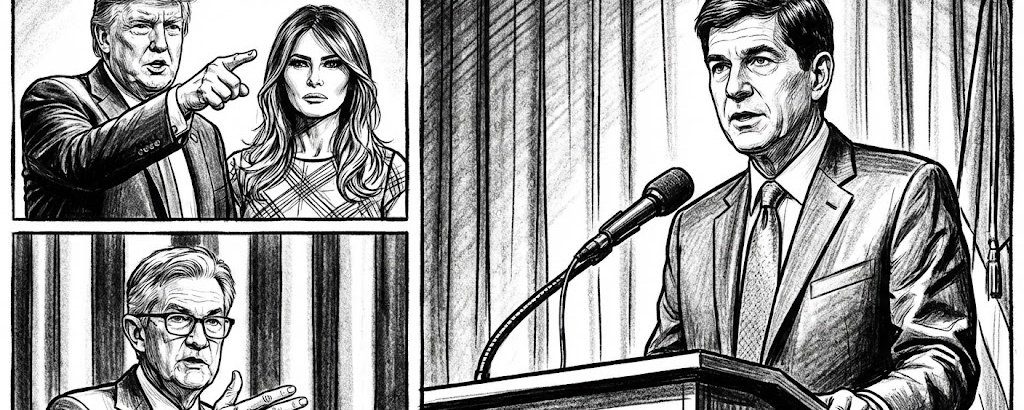
The Era Without Good Answers: Understanding Warsh, Trump, and the Next Four Years of a New Era

The article "An Era Without Good Answers: Understanding Warsh, Trump, and the Next Four Years" analyzes the potential implications of Kevin Warsh becoming the next Federal Reserve Chair under a Trump administration. It argues that Warsh represents not just a shift from dovish to hawkish policy, but a fundamental redefinition of the Fed's role. His appointment signals a move away from the Fed acting as a perpetual backstop for markets and government debt—a role perfected by Chair Powell during crises like the pandemic. Instead, Warsh advocates for monetary and fiscal discipline, opposing unconditional quantitative easing and emphasizing market rules over intervention. However, the US economy's reality—characterized by massive debt, deficit spending, and market dependence on low rates—severely limits any radical change. Warsh's proposed policies of raising rates and reducing the Fed's balance sheet risk triggering market volatility, higher borrowing costs, and political backlash, likely forcing a retreat to familiar stimulus measures. From Trump’s perspective, Warsh is a "controllable reformer" who can publicly push for fiscal restraint, forcing Congress to address unsustainable spending—while also serving as a convenient scapegoat if reforms fail. Ultimately, the core constraint remains America’s debt-dominated economy, which eliminates any possibility of a definitive solution. The coming years will involve managing, not solving, these problems through a painful and iterative process of half-measures and trade-offs—a era defined not by prosperity, but by the explicit return of economic constraints.

marsbit23 min fa

The Era Without Good Answers: Understanding Warsh, Trump, and the Next Four Years of a New Era

marsbit23 min fa

Trading

Spot
Futures

Articoli Popolari

Cosa è USAT

I. Introduzione al ProgettoUSA₮ è la stablecoin regolamentata negli Stati Uniti da Tether, supportata dal dollaro, sviluppata specificamente per operare all'interno del nuovo quadro federale delle stablecoin degli Stati Uniti stabilito dalla GENIUS Act. L'emittente di USA₮ è Anchorage Digital Bank, N.A., il primo emittente di stablecoin regolamentato a livello federale negli Stati Uniti.II. Informazioni sul Token1) Informazioni di BaseNome del token: USAT (USAT)III. Link CorrelatiSito web: https://usat.io/Esploratori:https://etherscan.io/token/0x07041776f5007ACa2A54844F50503a18A72A8b68Social:https://twitter.com/usatNota: L'introduzione al progetto proviene dai materiali pubblicati o forniti dal team ufficiale del progetto, che è solo a scopo di riferimento e non costituisce consulenza per gli investimenti. HTX non si assume responsabilità per eventuali perdite dirette o indirette risultanti.

134 Totale visualizzazioniPubblicato il 2026.01.27Aggiornato il 2026.01.27

Come comprare USAT

Benvenuto in HTX.com! Abbiamo reso l'acquisto di USAT (USAT) semplice e conveniente. Segui la nostra guida passo passo per intraprendere il tuo viaggio nel mondo delle criptovalute.Step 1: Crea il tuo Account HTXUsa la tua email o numero di telefono per registrarti il tuo account gratuito su HTX. Vivi un'esperienza facile e sblocca tutte le funzionalità,Crea il mio accountStep 2: Vai in Acquista crypto e seleziona il tuo metodo di pagamentoCarta di credito/debito: utilizza la tua Visa o Mastercard per acquistare immediatamente USATUSAT.Bilancio: Usa i fondi dal bilancio del tuo account HTX per fare trading senza problemi.Terze parti: abbiamo aggiunto metodi di pagamento molto utilizzati come Google Pay e Apple Pay per maggiore comodità.P2P: Fai trading direttamente con altri utenti HTX.Over-the-Counter (OTC): Offriamo servizi su misura e tassi di cambio competitivi per i trader.Step 3: Conserva USAT (USAT)Dopo aver acquistato USAT (USAT), conserva nel tuo account HTX. In alternativa, puoi inviare tramite trasferimento blockchain o scambiare per altre criptovalute.Step 4: Scambia USAT (USAT)Scambia facilmente USAT (USAT) nel mercato spot di HTX. Accedi al tuo account, seleziona la tua coppia di trading, esegui le tue operazioni e monitora in tempo reale. Offriamo un'esperienza user-friendly sia per chi ha appena iniziato che per i trader più esperti.

71 Totale visualizzazioniPubblicato il 2026.01.27Aggiornato il 2026.01.27

Come comprare BIRB

Benvenuto in HTX.com! Abbiamo reso l'acquisto di Moonbirds (BIRB) semplice e conveniente. Segui la nostra guida passo passo per intraprendere il tuo viaggio nel mondo delle criptovalute.Step 1: Crea il tuo Account HTXUsa la tua email o numero di telefono per registrarti il tuo account gratuito su HTX. Vivi un'esperienza facile e sblocca tutte le funzionalità,Crea il mio accountStep 2: Vai in Acquista crypto e seleziona il tuo metodo di pagamentoCarta di credito/debito: utilizza la tua Visa o Mastercard per acquistare immediatamente MoonbirdsBIRB.Bilancio: Usa i fondi dal bilancio del tuo account HTX per fare trading senza problemi.Terze parti: abbiamo aggiunto metodi di pagamento molto utilizzati come Google Pay e Apple Pay per maggiore comodità.P2P: Fai trading direttamente con altri utenti HTX.Over-the-Counter (OTC): Offriamo servizi su misura e tassi di cambio competitivi per i trader.Step 3: Conserva Moonbirds (BIRB)Dopo aver acquistato Moonbirds (BIRB), conserva nel tuo account HTX. In alternativa, puoi inviare tramite trasferimento blockchain o scambiare per altre criptovalute.Step 4: Scambia Moonbirds (BIRB)Scambia facilmente Moonbirds (BIRB) nel mercato spot di HTX. Accedi al tuo account, seleziona la tua coppia di trading, esegui le tue operazioni e monitora in tempo reale. Offriamo un'esperienza user-friendly sia per chi ha appena iniziato che per i trader più esperti.

87 Totale visualizzazioniPubblicato il 2026.01.28Aggiornato il 2026.01.28

Discussioni

Benvenuto nella Community HTX. Qui puoi rimanere informato sugli ultimi sviluppi della piattaforma e accedere ad approfondimenti esperti sul mercato. Le opinioni degli utenti sul prezzo di A A sono presentate come di seguito.

活动图片