Live-Action Short Series Forced onto the Big Screen by AI

marsbitPubblicato 2026-07-17Pubblicato ultima volta 2026-07-17

Introduzione

Live-action short dramas, originally a popular online format, are now attempting to enter the cinema. Several top IPs like "What a Good Girl" and "One Family, Same Class" have received approval for film adaptations. This shift is driven by several pressures within the short drama industry. After rapid growth fueled by low costs and platform support, the sector now faces a slowdown with fewer hits and reduced investment. A major disruptor is the explosive rise of AI-generated short dramas, which dominate new releases and challenge the traditional model with their speed and low cost. Platform policy changes, such as adjustments to revenue guarantees, have further squeezed producers. In this context, film adaptation is seen as a potential new growth path. It offers a chance to extend a short-lived online hit into a longer-lasting IP asset, moving beyond the "fast production, fast consumption" cycle. Established short dramas bring pre-validated stories and emotional appeal to the table, potentially lowering the risk for film investors. However, significant challenges remain. Translating a fast-paced, fragmented viewing experience designed for phones into a compelling cinematic narrative is difficult. Past attempts by popular TV shows and variety programs to make films have often failed due to weak content. A short drama's massive online viewership does not guarantee box office success, as cinema requires a higher commitment of time and money from audiences. Ultimately, the succe...

Live-action short series are now collectively setting their sights on movie theaters.

Recently, the movie adaptation of the hit short series "Good Girl" has reportedly started preliminary work, with filming expected to begin in September in Sanya. This short-form drama IP, approved as early as May, achieved 4 billion views on the Hongguo platform in 2025 and propelled Ke Chun and Yu Yin to become top stars in the short series realm. However, after the initial hype, both the web series version and the Korean adaptation of "Good Girl" have generated relatively smaller ripples.
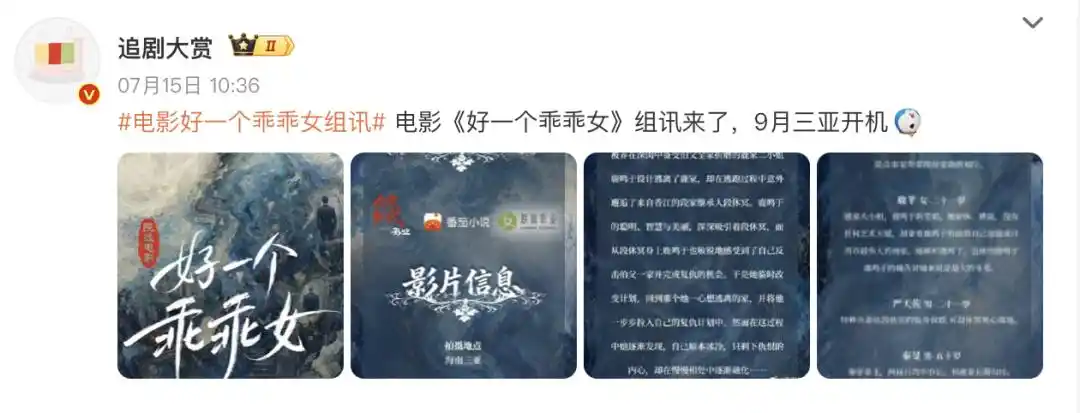
Previously, other top short series IPs like "A Family of Three in the Same Class" and "The Table Flipping" have also been approved by the National Film Administration. From web series to movies, from vertical screen to the big screen, live-action short series are attempting to step beyond their familiar content ecosystem.

This shift is not accidental.

Over the past two years, live-action short series rapidly rose by relying on frequent hits, low production costs, and platform support, becoming the fastest-growing new track in the entertainment industry. However, entering 2026, industry trends are changing: hit series are decreasing, projects are being scaled back, platform policies are adjusting, and AI-generated short series are rapidly expanding. The growth dividends that live-action short series once thrived on are beginning to fade.

Movies are becoming a brand-new attempt for live-action short series to find a second growth curve. But questions immediately arise: Can movies truly become a new outlet for live-action short series?

Short Series Start Making Movies

In the past few years, short series and movies were two barely intersecting tracks. Now, that boundary is being broken.

Including "Good Girl," other recent hit short series IPs like "A Family of Three in the Same Class" and "The Table Flipping" were approved by the National Film Administration in May this year and are expected to release movie versions. This means live-action short series are taking their first step from vertical-screen content towards theatrical films.
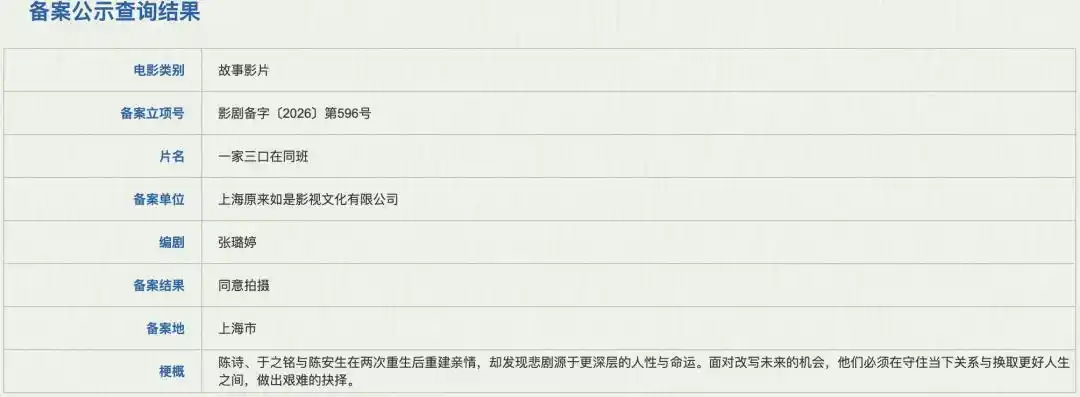
While these short series have all chosen cinematic adaptation, their paths differ.

Among them, "Good Girl" leans more towards re-creation. According to the approval information, the movie version will retain the core character relationships and emotional essence of the original but will not copy the short series plot directly. Instead, it will reconstruct the story to fit cinematic narrative pacing. This approach emphasizes the extension of IP value, hoping to attract not just the original short series audience but a broader movie-going public.

In contrast, "The Table Flipping" and "A Family of Three in the Same Class" are more akin to IP continuation, extending the world-building while preserving the original story setting and character relationships. This is closer to fan-oriented development, hoping to leverage the accumulated viewer base for cross-media conversion.

Beyond differing content development approaches, moves within the industry chain are becoming more pronounced.

In recent years, platforms like Tomato Novel and Hongguo Short Series have begun opening up their short series IPs for movie adaptation rights, encouraging mature short series IPs to enter the film market. Previously, commercial development of short series IPs mostly stayed within an internal cycle of sequels, spin-offs, and long-form series. Now, movies are becoming a new development direction, indicating that short series IPs are extending towards a more complete content industry chain.

More notably, those entering this track are no longer just short series companies.

For example, behind the movie versions of "A Family of Three in the Same Class" and "The Table Flipping" is Shanghai Yuanlai Rushi Culture. Though not long established, this company's core team has long been involved in movie promotion and IP marketing, having participated in marketing campaigns for hit films like "Ne Zha" and "Dying to Survive." Its upstream affiliate is Bukong Culture, responsible for projects like "Hi, Mom" and "YOLO," with core businesses in IP development and film/TV word-of-mouth marketing.

This shows that the cinematic adaptation of short series is beginning to attract participation from the traditional film industry chain, not merely a cross-border attempt by short series teams.

In fact, this isn't the first time short series have moved closer to film.

Previously, Xiaohongshu launched a short film support program, and many platforms have also explored content forms like microfilms and vertical-screen films. Meanwhile, top short series actors like Ke Chun and Yu Yin have also reportedly been planning moves into the big screen. From actors to IPs to production companies, the short series industry is probing the film market in various ways.

Observing these actions together reveals a common trend: live-action short series are proactively breaking through their original content boundaries.

However, this doesn't mean film has become the standard answer for live-action short series. Against the backdrop of rapid AI content growth and slowing live-action short series expansion, film seems more like an active exploration by the industry for a second growth curve. Its emergence is not just because the film market still has space, but because the original development model of live-action short series has reached a stage where it must find new increments.

Why Has Cinematization Become a New Choice for Live-Action Short Series?

If interpreting the increasing number of short series IPs being made into movies as proactive upgrading might not be accurate.

The live-action short series' venture into theaters is essentially an experiment born of necessity—its underlying tone is not ambition but anxiety.

Over the past two years, live-action short series almost captured the last wave of content dividends from the mobile internet. Relying on advantages like short production cycles, high投放 efficiency, and mature business models, numerous production companies quickly flooded in, frequently producing hits. "Ten days to shoot, one week to recoup costs" once became an industry myth. However, as the track shifted from an incremental to a存量 market, the original development logic of live-action short series began to falter.

Judging from the first half of this year, under the impact of AI series, live-action short series are entering a major reshuffling phase. According to China Netcasting Services Association data, about 128,000 micro-short series were launched industry-wide in Q1 2026, with AI series accounting for over 95%. Phenomena like project reductions, actors out of work, and investment withdrawal have successively shattered the prosperity dream of the live-action short series industry. Particularly, top production teams struggling to produce new hit series, the scarcity of high-quality short series, and the prevalence of last year's backlogged series being aired have fueled talk of a live-action short series decline.
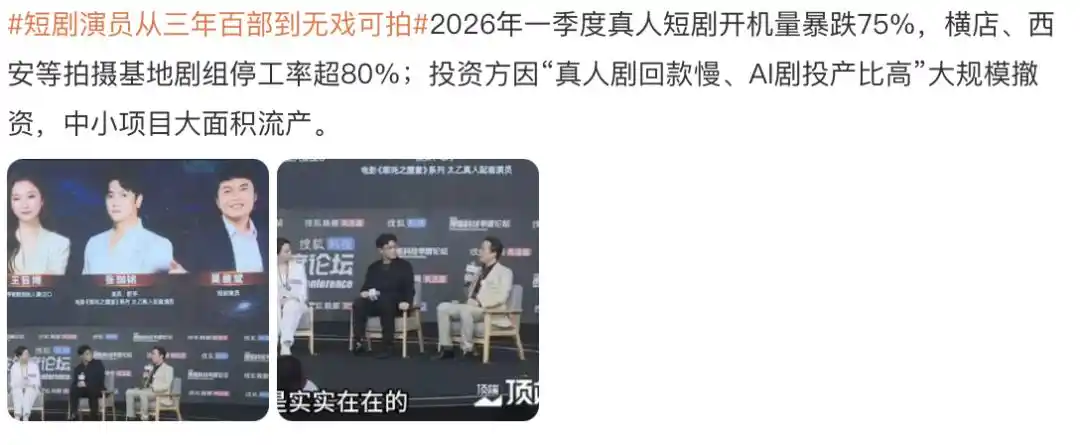
This change is also reflected among practitioners. Top short series actors like Yu Yin and Han Yutong have publicly mentioned the decrease in live-action short series productions, with many actors finding themselves unemployed. Actor Xu Peng even chose to return to his hometown to sell vegetables for a living.

Simultaneously, platform strategies are also changing.

This year, Hongguo Short Series adjusted its guaranteed底 policy, with profit-sharing for some projects decreasing. Many production teams had to reassess project收益, and some live-action short series in preparation even chose to suspend development. For many production companies relying on rolling projects to operate, fewer projects and lower guarantees mean increased cash flow pressure and收益 uncertainty, indicating that the past volume-driven development model is no longer viable.

The era when platforms bore more risk and production companies rapidly expanded is gradually ending. As platform红利 weaken, live-action short series are forced to seek new revenue streams. Cinematization has become one of the most obvious possibilities.

Secondly, what AI changes is not just efficiency, but the entire competitive rules. If platform policies affect profits, then AI alters the very competitive environment live-action short series rely on for survival.

Previously, the biggest advantage of live-action short series was being faster than long-form series and cheaper than movies. But after the emergence of AI, this advantage is rapidly eroding. Now, an AI short series—from script generation and character design to shot production—can be quickly completed with models.
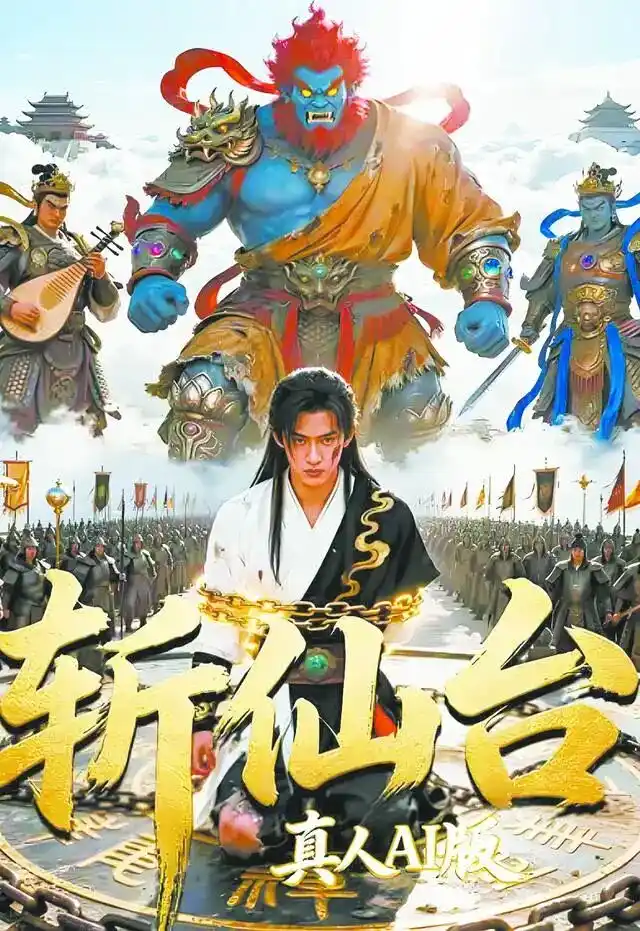
This means the competition live-action short series face is no longer just another production company, but an almost infinitely growing content supply. And the first sector AI冲击 isn't film or long-form series, but precisely the流水线 content that live-action short series excel at and depend on most. Because the more standardized and formulaic the story, the easier it is for AI to replicate.

This is also why more and more live-action short series teams are starting to consider new directions.

If they remain within the competitive logic of "faster, cheaper, higher output," live-action can almost certainly not win against AI. But if they shift towards content forms emphasizing character development, actor performance, and emotional expression, developing films based on short series IPs, live-action still possesses advantages difficult for AI to replace.

Furthermore, the excessively short IP lifecycle has always been an issue in the short series industry.

Over the past two years, live-action short series created one hit神话 after another. Works like "Good Girl," "Peerless," and "I Became a Stepmother in the 80s" achieved惊人的 view counts and讨论度 in extremely short times. But this热度 often comes and goes quickly. The entire industry始终 revolves around the高速 cycle of "produce a hit—monetize the hit—find the next hit," making it difficult to form long-term IP assets through持续运营, unlike TV dramas or films.

Cinematization恰恰 offers such a possibility.

For top短 series that have already undergone market validation, a movie doesn't just mean producing another work; it means transforming a one-time hit into a long-term asset. After the movie, further developments like long-form series, overseas adaptations, merchandise, brand collaborations, and线下 experiences can follow, forming a more complete商业 chain.

Live-action short series choosing cinematization本质上 is about expanding跨媒介 IP operational capabilities.

Will Film Become a New Outlet for Live-Action Short Series?

At this year's Shanghai International Film Festival, the production team for "A Family of Three in the Same Class" admitted that cinematization faces challenges like funding, industrial standards, and team跨越. "We genuinely love it, love it enough to set aside personal talk and first discuss whether this story deserves to be made."

There's no standard answer for whether short series IP cinematization can succeed. What's certain is that it's neither a baseless adventure nor a "cure-all" that solves every problem, but more like an industry upgrade experiment.

Objectively speaking, the most obvious advantage of "remaking" short series IPs into movies is reducing the trial-and-error cost for original films.

In recent years, the most noticeable change in the film market is increasing investment caution. Whether platforms or film companies, they prefer investing in mature IPs already market-tested rather than building original stories from scratch. From web novels and comics to hit TV series and myths, IP adaptation has become a major source for the film market.
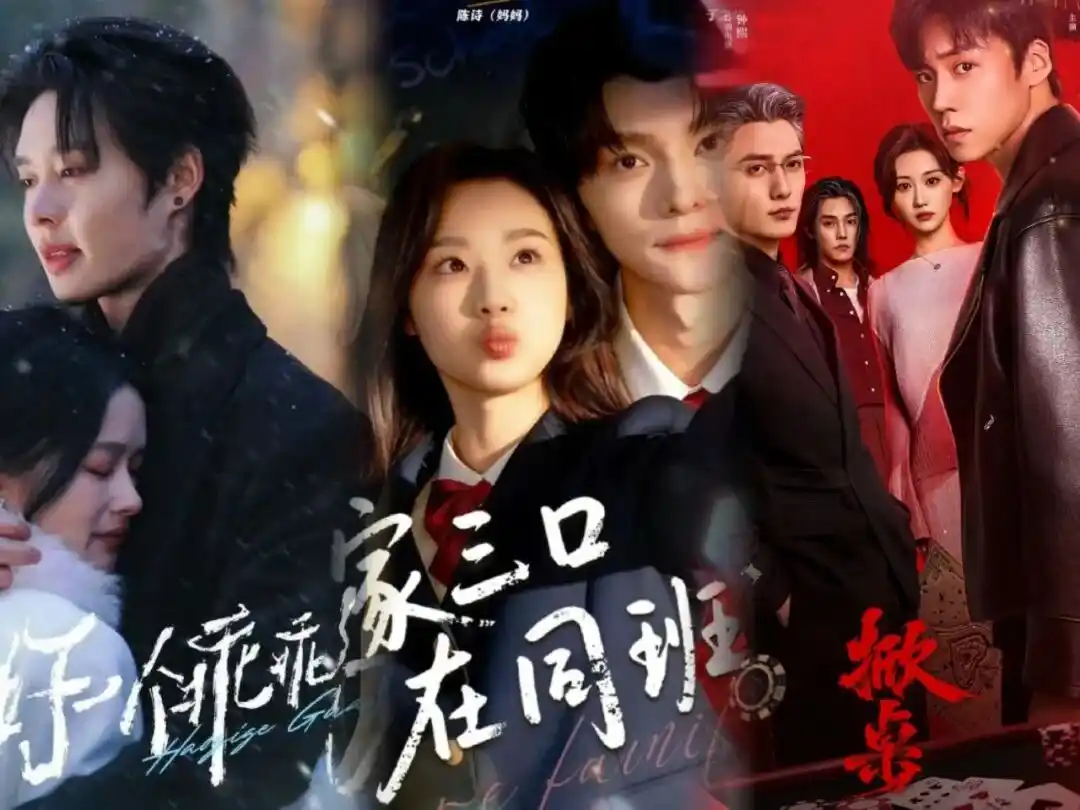
Live-action short series similarly possess this foundation. That "Good Girl" achieved over 4.2 billion views on Hongguo platform doesn't just indicate它拥有流量; it proves it has completed a round of market validation. For the film market, the greatest value of such IPs lies not in any自带票房 but in having proven the story, characters, and emotions work.

Secondly, the greatest competitive edge of live-action short series was never production scale, but emotional efficiency. Many believed the main feature of short series was "instant gratification." But what truly supports users'持续付费 isn't the twists themselves, but the ability to evoke emotions within a短时间.

Whether it's the emotional tension in "Good Girl" or the family dynamics in "A Family of Three in the Same Class," they essentially accurately hit a certain大众 emotion. And the success of works like "Hi, Mom," "YOLO," and "Letters to A-Ma" in recent years also shows audiences are willing to pay for genuine emotions and character relationships, not just grand production scenes.
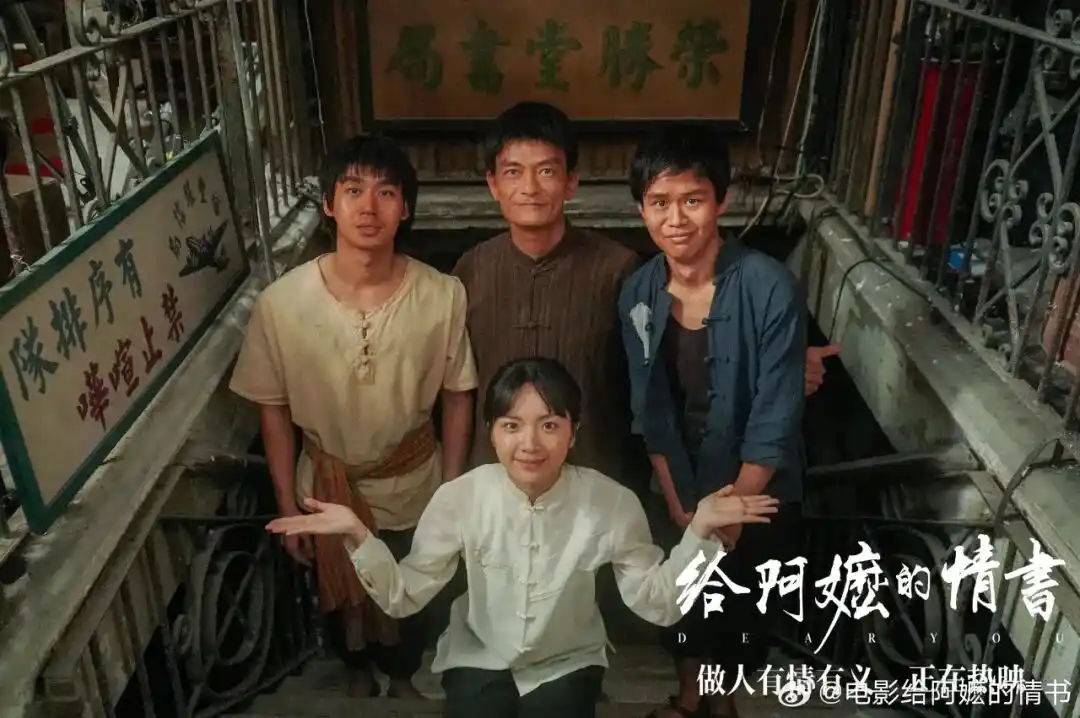
If short series IPs can move beyond simple "gratification point stacking" to further enrich character growth and完善 story structure, they might well grow into viable films.

However, it must be admitted that no matter how popular, short series IPs were essentially one-off deals in the past, lacking long-term value maintenance.

After all, short series and films, while both audiovisual content, have completely different consumption logics. Short series rely on fragmented viewing; users can unlock episodes for free, pay per episode, or exit anytime, with极低试错成本.

Film is entirely different. Audiences need to spend dozens of yuan upfront on a ticket and invest nearly two hours for a complete消费.

This消费门槛 determines that the流量 accumulated by a short series cannot be simply converted into box office. Original short series viewers won't necessarily become your movie audience.

In the past, popular variety shows and TV dramas like "Keep Running!," "Go Fighting!," and "iPartment" released movie versions hoping to leverage IP influence to attract viewers. However, due to insufficient content quality, they ultimately suffered both口碑 and票房 setbacks. These cases have proven that a成熟 IP can help a film get its first wave of viewers but cannot determine the final box office.

In other words, merely lengthening a short series or piling on more gratification points could easily lead to repeating the failures of past variety show movies or TV drama movies.

Moreover, this year, the domestic film market overall is under pressure, audiences are increasingly cautious, and theater scheduling relies more on word-of-mouth驱动. For short series, film standards won't lower just because an IP is hot; instead, it means entering an even more fiercely competitive content market.

What truly attracts audiences to theaters might not be the most流量的 short series, but rather the one with the most complete story, most solid characters, and most持久 emotions. This is perhaps the greatest significance of cinematization for live-action short series.

This article is from the WeChat public account "Entertainment Voice," author: Voice Editorial Department

Crypto di tendenza

Domande pertinenti

QWhat is the main reason why live-action short dramas are turning to the big screen, according to the article?

AThe primary driver is anxiety and the need to find a second growth curve. The industry is facing a decline due to fewer hit projects, platform policy adjustments, and most significantly, the rapid expansion and competition from AI-generated short dramas. Movie adaptation is seen as a new attempt to break through these challenges.

QWhat are two different approaches mentioned for adapting popular short dramas into movies?

ATwo approaches are mentioned: 1) Creative adaptation (like '好一个乖乖女'), which retains the core relationships and emotional core but rebuilds the story structure for cinematic pacing, aiming for a broader audience. 2) Continuation/sequel (like '掀桌' and '一家三口在同班'), which continues the original story's world and settings, focusing more on fan conversion.

QAccording to the article, how has AI impacted the live-action short drama industry's competitive environment?

AAI has fundamentally changed the competition rules. It has eroded the core advantage of live-action short dramas—being faster and cheaper than traditional film/TV. AI can now produce standardized, formulaic stories (the short drama sweet spot) at an almost infinite scale and speed, putting immense pressure on live-action production.

QWhat key advantage does a successful short drama IP have for movie investors, as per the article?

AA successful short drama IP provides pre-market validation, reducing the trial-and-error cost for original films. High viewership numbers prove that the story, characters, and emotional hooks are already effective with an audience, which is a lower-risk starting point for movie investors compared to a completely new concept.

QWhat is a major challenge in converting short drama popularity into movie success, as warned by the article?

AThe biggest challenge is that the consumption logic is entirely different. Short dramas thrive on low-commitment, fragmented viewing (free/freemium, short episodes), while movies require a significant upfront cost (ticket price) and time investment (2 hours). Past failed adaptations of popular TV shows and variety shows prove that IP traffic alone cannot guarantee box office success; the movie's inherent quality is paramount.

Letture associate

From Somersaults to Working 24/7: We Saw the ‘Working-Class’ Aura in Robots at WAIC

From performing acrobatics to working 24/7: Robots at WAIC are getting down to business. This year's World Artificial Intelligence Conference (WAIC) in Shanghai showcased a significant shift in the robotics industry. While "show-off" robots that dance, play music, or compete in sports are still present, the dominant trend is now practical, task-oriented machines. Hundreds of wheeled and humanoid robots were deployed as guides, baristas, factory workers, and even traffic controllers, moving beyond mere demonstrations to highlight real-world "work capabilities." The focus has pivoted from showcasing technical parameters to pursuing mass production and industrial落地 (landing/implementation). This transition presents major challenges. First, deploying powerful AI models onto robots requires overcoming hardware limitations in computing power and latency. Second, robots demand complex, integrated systems for real-time perception and control. Third, achieving reliable mass production necessitates unprecedented industry-wide collaboration on standards and supply chains. A key bottleneck identified by industry leaders is the robot's "brain"—its AI and cognitive capabilities. While hardware and basic movement ("little brain") have advanced rapidly, the higher-level intelligence for understanding complex instructions and adapting to unstructured environments is progressing more slowly. Companies are investing heavily in developing more advanced "brain" systems, but fully autonomous operation in dynamic settings remains a work in progress. Cost is another critical hurdle. While some consumer-oriented humanoid robots are now priced under $15,000, capable industrial models often cost $50,000 or more. The industry consensus is that bringing robots into unstructured home environments for tasks like comprehensive cleaning is still at least five years away due to technical, safety, and cost barriers. Therefore, 2026 is being called the "first year of mass production," but primarily for industrial and specific commercial applications. WAIC 2026 served less as a stage for spectacular tricks and more as a serious examination of robots' commercial viability, marking their transition from laboratory prototypes to real-world products that must prove their value through stable, repetitive work.

marsbit2 h fa

From Somersaults to Working 24/7: We Saw the ‘Working-Class’ Aura in Robots at WAIC

marsbit2 h fa

Asymmetry of Algorithmic Agency: When AI Makes Decisions for You, You Don't Even Have the Right to Oppose

As AI increasingly makes decisions on our behalf, a critical asymmetry emerges: the entities deploying these systems understand and refine their algorithms, while individuals merely endure the consequences. This article explores the three layers of this "algorithmic agency asymmetry." First, opacity shields system goals, incentives, and flaws, creating a "black box fallacy" where outputs seem objective. Second, algorithms amplify historical biases, repackaging past inequalities in a seemingly neutral, computational form. Third, recursive systems lead to "algorithmic drift," where users train the system and are simultaneously trained by it, shaping their own choices and behaviors. This asymmetry has profound implications, extending into hiring, education, policing, and daily life. Users adapt to what the system rewards, but only see the end result—a score, recommendation, or price—without understanding the underlying logic or manipulated conditions. To rebalance this power dynamic, the article proposes policy interventions: 1) Meaningful transparency and explainability for users affected by AI decisions. 2) Enforceable impact assessments before deploying high-risk systems. 3) Genuine human oversight with the power to challenge outputs. 4) Mandatory post-deployment monitoring and auditing. 5) Outright bans on manipulative or exploitative systems. Finally, fostering widespread "algorithmic literacy" is essential public infrastructure. Ultimately, this asymmetry is a structural power imbalance. Good policy cannot eliminate it but can narrow the gap by making automated influence visible, contestable, auditable, and governable.

marsbit3 h fa

Asymmetry of Algorithmic Agency: When AI Makes Decisions for You, You Don't Even Have the Right to Oppose

marsbit3 h fa

Trading

Spot

Articoli Popolari

Cosa è GROK AI

Grok AI: Rivoluzionare la Tecnologia Conversazionale nell'Era Web3 Introduzione Nel panorama in rapida evoluzione dell'intelligenza artificiale, Grok AI si distingue come un progetto notevole che collega i domini della tecnologia avanzata e dell'interazione con l'utente. Sviluppato da xAI, un'azienda guidata dal rinomato imprenditore Elon Musk, Grok AI cerca di ridefinire il modo in cui interagiamo con l'intelligenza artificiale. Mentre il movimento Web3 continua a prosperare, Grok AI mira a sfruttare il potere dell'IA conversazionale per rispondere a query complesse, offrendo agli utenti un'esperienza che è non solo informativa ma anche divertente. Cos'è Grok AI? Grok AI è un sofisticato chatbot di intelligenza artificiale conversazionale progettato per interagire dinamicamente con gli utenti. A differenza di molti sistemi di intelligenza artificiale tradizionali, Grok AI abbraccia un'ampia gamma di domande, comprese quelle tipicamente considerate inappropriate o al di fuori delle risposte standard. Gli obiettivi principali del progetto includono: Ragionamento Affidabile: Grok AI enfatizza il ragionamento di buon senso per fornire risposte logiche basate sulla comprensione contestuale. Supervisione Scalabile: L'integrazione dell'assistenza degli strumenti garantisce che le interazioni degli utenti siano sia monitorate che ottimizzate per la qualità. Verifica Formale: La sicurezza è fondamentale; Grok AI incorpora metodi di verifica formale per migliorare l'affidabilità delle sue uscite. Comprensione del Lungo Contesto: Il modello di IA eccelle nel trattenere e richiamare una vasta storia di conversazione, facilitando discussioni significative e consapevoli del contesto. Robustezza Adversariale: Concentrandosi sul miglioramento delle sue difese contro input manipolati o malevoli, Grok AI mira a mantenere l'integrità delle interazioni degli utenti. In sostanza, Grok AI non è solo un dispositivo di recupero informazioni; è un partner conversazionale immersivo che incoraggia un dialogo dinamico. Creatore di Grok AI Il cervello dietro Grok AI non è altri che Elon Musk, un individuo sinonimo di innovazione in vari campi, tra cui automotive, viaggi spaziali e tecnologia. Sotto l'egida di xAI, un'azienda focalizzata sull'avanzamento della tecnologia AI in modi benefici, la visione di Musk mira a rimodellare la comprensione delle interazioni con l'IA. La leadership e l'etica fondamentale sono profondamente influenzate dall'impegno di Musk nel superare i confini tecnologici. Investitori di Grok AI Sebbene i dettagli specifici riguardanti gli investitori che sostengono Grok AI rimangano limitati, è pubblicamente riconosciuto che xAI, l'incubatore del progetto, è fondato e supportato principalmente dallo stesso Elon Musk. Le precedenti imprese e partecipazioni di Musk forniscono un robusto sostegno, rafforzando ulteriormente la credibilità e il potenziale di crescita di Grok AI. Tuttavia, al momento, le informazioni riguardanti ulteriori fondazioni di investimento o organizzazioni che supportano Grok AI non sono facilmente accessibili, segnando un'area per potenziali esplorazioni future. Come Funziona Grok AI? Le meccaniche operative di Grok AI sono innovative quanto il suo framework concettuale. Il progetto integra diverse tecnologie all'avanguardia che facilitano le sue funzionalità uniche: Infrastruttura Robusta: Grok AI è costruito utilizzando Kubernetes per l'orchestrazione dei container, Rust per prestazioni e sicurezza, e JAX per il calcolo numerico ad alte prestazioni. Questo trio garantisce che il chatbot operi in modo efficiente, si scaldi efficacemente e serva gli utenti prontamente. Accesso alla Conoscenza in Tempo Reale: Una delle caratteristiche distintive di Grok AI è la sua capacità di attingere a dati in tempo reale attraverso la piattaforma X—precedentemente nota come Twitter. Questa capacità consente all'IA di accedere alle informazioni più recenti, permettendole di fornire risposte e raccomandazioni tempestive che altri modelli di IA potrebbero perdere. Due Modalità di Interazione: Grok AI offre agli utenti la scelta tra “Modalità Divertente” e “Modalità Normale”. La Modalità Divertente consente uno stile di interazione più giocoso e umoristico, mentre la Modalità Normale si concentra sulla fornitura di risposte precise e accurate. Questa versatilità garantisce un'esperienza su misura che soddisfa varie preferenze degli utenti. In sostanza, Grok AI sposa prestazioni con coinvolgimento, creando un'esperienza che è sia arricchente che divertente. Cronologia di Grok AI Il viaggio di Grok AI è segnato da traguardi fondamentali che riflettono le sue fasi di sviluppo e distribuzione: Sviluppo Iniziale: La fase fondamentale di Grok AI si è svolta in circa due mesi, durante i quali sono stati condotti l'addestramento iniziale e il perfezionamento del modello. Rilascio Beta di Grok-2: In un significativo avanzamento, è stata annunciata la beta di Grok-2. Questo rilascio ha introdotto due versioni del chatbot—Grok-2 e Grok-2 mini—ognuna dotata delle capacità per chattare, programmare e ragionare. Accesso Pubblico: Dopo lo sviluppo beta, Grok AI è diventato disponibile per gli utenti della piattaforma X. Coloro che hanno account verificati tramite un numero di telefono e attivi per almeno sette giorni possono accedere a una versione limitata, rendendo la tecnologia disponibile a un pubblico più ampio. Questa cronologia racchiude la crescita sistematica di Grok AI dall'inizio all'impegno pubblico, enfatizzando il suo impegno per il miglioramento continuo e l'interazione con gli utenti. Caratteristiche Chiave di Grok AI Grok AI comprende diverse caratteristiche chiave che contribuiscono alla sua identità innovativa: Integrazione della Conoscenza in Tempo Reale: L'accesso a informazioni attuali e rilevanti differenzia Grok AI da molti modelli statici, consentendo un'esperienza utente coinvolgente e accurata. Stili di Interazione Versatili: Offrendo modalità di interazione distinte, Grok AI soddisfa varie preferenze degli utenti, invitando alla creatività e alla personalizzazione nella conversazione con l'IA. Avanzata Struttura Tecnologica: L'utilizzo di Kubernetes, Rust e JAX fornisce al progetto un solido framework per garantire affidabilità e prestazioni ottimali. Considerazione del Discorso Etico: L'inclusione di una funzione di generazione di immagini mette in mostra lo spirito innovativo del progetto. Tuttavia, solleva anche considerazioni etiche riguardanti il copyright e la rappresentazione rispettosa di figure riconoscibili—una discussione in corso all'interno della comunità AI. Conclusione Come entità pionieristica nel campo dell'IA conversazionale, Grok AI incarna il potenziale per esperienze utente trasformative nell'era digitale. Sviluppato da xAI e guidato dall'approccio visionario di Elon Musk, Grok AI integra conoscenze in tempo reale con capacità di interazione avanzate. Si sforza di spingere i confini di ciò che l'intelligenza artificiale può realizzare, mantenendo un focus su considerazioni etiche e sicurezza degli utenti. Grok AI non solo incarna il progresso tecnologico, ma rappresenta anche un nuovo paradigma conversazionale nel panorama Web3, promettendo di coinvolgere gli utenti con sia conoscenze esperte che interazioni giocose. Man mano che il progetto continua a evolversi, si erge come testimonianza di ciò che l'incrocio tra tecnologia, creatività e interazione simile a quella umana può realizzare.

520 Totale visualizzazioniPubblicato il 2024.12.26Aggiornato il 2024.12.26

Cosa è GROK AI

Cosa è ERC AI

Euruka Tech: Una Panoramica di $erc ai e delle sue Ambizioni in Web3 Introduzione Nel panorama in rapida evoluzione della tecnologia blockchain e delle applicazioni decentralizzate, nuovi progetti emergono frequentemente, ciascuno con obiettivi e metodologie uniche. Uno di questi progetti è Euruka Tech, che opera nel vasto dominio delle criptovalute e del Web3. L'obiettivo principale di Euruka Tech, in particolare del suo token $erc ai, è presentare soluzioni innovative progettate per sfruttare le crescenti capacità della tecnologia decentralizzata. Questo articolo si propone di fornire una panoramica completa di Euruka Tech, un'esplorazione dei suoi obiettivi, della funzionalità, dell'identità del suo creatore, dei potenziali investitori e della sua importanza nel contesto più ampio del Web3. Cos'è Euruka Tech, $erc ai? Euruka Tech è caratterizzato come un progetto che sfrutta gli strumenti e le funzionalità offerte dall'ambiente Web3, concentrandosi sull'integrazione dell'intelligenza artificiale nelle sue operazioni. Sebbene i dettagli specifici sul framework del progetto siano piuttosto sfuggenti, è progettato per migliorare l'engagement degli utenti e automatizzare i processi nello spazio crypto. Il progetto mira a creare un ecosistema decentralizzato che non solo faciliti le transazioni, ma incorpori anche funzionalità predittive attraverso l'intelligenza artificiale, da cui il nome del suo token, $erc ai. L'obiettivo è fornire una piattaforma intuitiva che faciliti interazioni più intelligenti e un'elaborazione delle transazioni più efficiente all'interno della crescente sfera del Web3. Chi è il Creatore di Euruka Tech, $erc ai? Attualmente, le informazioni riguardanti il creatore o il team fondatore di Euruka Tech rimangono non specificate e piuttosto opache. Questa assenza di dati solleva preoccupazioni, poiché la conoscenza del background del team è spesso essenziale per stabilire credibilità nel settore blockchain. Pertanto, abbiamo classificato queste informazioni come sconosciute fino a quando dettagli concreti non saranno resi disponibili nel dominio pubblico. Chi sono gli Investitori di Euruka Tech, $erc ai? Allo stesso modo, l'identificazione degli investitori o delle organizzazioni di supporto per il progetto Euruka Tech non è prontamente fornita attraverso la ricerca disponibile. Un aspetto cruciale per i potenziali stakeholder o utenti che considerano di impegnarsi con Euruka Tech è la garanzia che deriva da partnership finanziarie consolidate o dal supporto di società di investimento rispettabili. Senza divulgazioni sulle affiliazioni di investimento, è difficile trarre conclusioni complete sulla sicurezza finanziaria o sulla longevità del progetto. In linea con le informazioni trovate, anche questa sezione rimane allo stato di sconosciuto. Come funziona Euruka Tech, $erc ai? Nonostante la mancanza di specifiche tecniche dettagliate per Euruka Tech, è essenziale considerare le sue ambizioni innovative. Il progetto cerca di sfruttare la potenza computazionale dell'intelligenza artificiale per automatizzare e migliorare l'esperienza dell'utente all'interno dell'ambiente delle criptovalute. Integrando l'IA con la tecnologia blockchain, Euruka Tech mira a fornire funzionalità come operazioni automatizzate, valutazioni del rischio e interfacce utente personalizzate. L'essenza innovativa di Euruka Tech risiede nel suo obiettivo di creare una connessione fluida tra gli utenti e le vaste possibilità presentate dalle reti decentralizzate. Attraverso l'utilizzo di algoritmi di apprendimento automatico e IA, mira a ridurre le sfide degli utenti alle prime armi e semplificare le esperienze transazionali all'interno del framework Web3. Questa simbiosi tra IA e blockchain sottolinea l'importanza del token $erc ai, fungendo da ponte tra le interfacce utente tradizionali e le avanzate capacità delle tecnologie decentralizzate. Cronologia di Euruka Tech, $erc ai Sfortunatamente, a causa delle limitate informazioni disponibili riguardo a Euruka Tech, non siamo in grado di presentare una cronologia dettagliata dei principali sviluppi o traguardi nel percorso del progetto. Questa cronologia, tipicamente preziosa per tracciare l'evoluzione di un progetto e comprendere la sua traiettoria di crescita, non è attualmente disponibile. Man mano che le informazioni su eventi notevoli, partnership o aggiunte funzionali diventano evidenti, gli aggiornamenti miglioreranno sicuramente la visibilità di Euruka Tech nella sfera crypto. Chiarimento su Altri Progetti “Eureka” È importante sottolineare che più progetti e aziende condividono una nomenclatura simile con “Eureka.” La ricerca ha identificato iniziative come un agente IA della NVIDIA Research, che si concentra sull'insegnamento ai robot di compiti complessi utilizzando metodi generativi, così come Eureka Labs ed Eureka AI, che migliorano l'esperienza utente nell'istruzione e nell'analisi del servizio clienti, rispettivamente. Tuttavia, questi progetti sono distinti da Euruka Tech e non dovrebbero essere confusi con i suoi obiettivi o funzionalità. Conclusione Euruka Tech, insieme al suo token $erc ai, rappresenta un attore promettente ma attualmente oscuro nel panorama del Web3. Sebbene i dettagli sul suo creatore e sugli investitori rimangano non divulgati, l'ambizione centrale di combinare intelligenza artificiale e tecnologia blockchain si erge come un punto focale di interesse. Gli approcci unici del progetto nel promuovere l'engagement degli utenti attraverso l'automazione avanzata potrebbero distinguerlo mentre l'ecosistema Web3 progredisce. Con l'evoluzione continua del mercato crypto, gli stakeholder dovrebbero tenere d'occhio gli sviluppi riguardanti Euruka Tech, poiché lo sviluppo di innovazioni documentate, partnership o una roadmap definita potrebbe presentare opportunità significative nel prossimo futuro. Così com'è, attendiamo ulteriori approfondimenti sostanziali che potrebbero svelare il potenziale di Euruka Tech e la sua posizione nel competitivo panorama crypto.

544 Totale visualizzazioniPubblicato il 2025.01.02Aggiornato il 2025.01.02

Cosa è ERC AI

Cosa è DUOLINGO AI

DUOLINGO AI: Integrare l'apprendimento delle lingue con Web3 e innovazione AI In un'era in cui la tecnologia rimodella l'istruzione, l'integrazione dell'intelligenza artificiale (AI) e delle reti blockchain annuncia una nuova frontiera per l'apprendimento delle lingue. Entra in scena DUOLINGO AI e la sua criptovaluta associata, $DUOLINGO AI. Questo progetto aspira a fondere la potenza educativa delle principali piattaforme di apprendimento delle lingue con i benefici della tecnologia decentralizzata Web3. Questo articolo esplora gli aspetti chiave di DUOLINGO AI, esaminando i suoi obiettivi, il framework tecnologico, lo sviluppo storico e il potenziale futuro, mantenendo chiarezza tra la risorsa educativa originale e questa iniziativa indipendente di criptovaluta. Panoramica di DUOLINGO AI Alla sua base, DUOLINGO AI cerca di stabilire un ambiente decentralizzato in cui gli studenti possono guadagnare ricompense crittografiche per il raggiungimento di traguardi educativi nella competenza linguistica. Applicando smart contracts, il progetto mira ad automatizzare i processi di verifica delle competenze e le allocazioni di token, aderendo ai principi di Web3 che enfatizzano la trasparenza e la proprietà da parte degli utenti. Il modello si discosta dagli approcci tradizionali all'acquisizione linguistica, facendo forte affidamento su una struttura di governance guidata dalla comunità, che consente ai detentori di token di suggerire miglioramenti ai contenuti dei corsi e alle distribuzioni delle ricompense. Alcuni degli obiettivi notevoli di DUOLINGO AI includono: Apprendimento Gamificato: Il progetto integra traguardi blockchain e token non fungibili (NFT) per rappresentare i livelli di competenza linguistica, promuovendo la motivazione attraverso ricompense digitali coinvolgenti. Creazione di Contenuti Decentralizzati: Apre opportunità per educatori e appassionati di lingue di contribuire con i propri corsi, facilitando un modello di condivisione dei ricavi che beneficia tutti i collaboratori. Personalizzazione Guidata dall'AI: Utilizzando modelli avanzati di machine learning, DUOLINGO AI personalizza le lezioni per adattarsi ai progressi individuali, simile alle funzionalità adattive presenti nelle piattaforme consolidate. Creatori del Progetto e Governance A partire da aprile 2025, il team dietro $DUOLINGO AI rimane pseudonimo, una pratica comune nel panorama decentralizzato delle criptovalute. Questa anonimato è inteso a promuovere la crescita collettiva e il coinvolgimento degli stakeholder piuttosto che concentrarsi su sviluppatori individuali. Lo smart contract distribuito sulla blockchain di Solana annota l'indirizzo del wallet dello sviluppatore, che segna l'impegno verso la trasparenza riguardo alle transazioni, nonostante l'identità dei creatori sia sconosciuta. Secondo la sua roadmap, DUOLINGO AI mira a evolversi in un'Organizzazione Autonoma Decentralizzata (DAO). Questa struttura di governance consente ai detentori di token di votare su questioni critiche come l'implementazione di funzionalità e le allocazioni del tesoro. Questo modello si allinea con l'etica dell'empowerment della comunità presente in varie applicazioni decentralizzate, enfatizzando l'importanza del processo decisionale collettivo. Investitori e Partnership Strategiche Attualmente, non ci sono investitori istituzionali o capitalisti di rischio identificabili pubblicamente legati a $DUOLINGO AI. Invece, la liquidità del progetto proviene principalmente da scambi decentralizzati (DEX), segnando un netto contrasto con le strategie di finanziamento delle aziende tradizionali di tecnologia educativa. Questo modello di base indica un approccio guidato dalla comunità, riflettendo l'impegno del progetto verso la decentralizzazione. Nel suo whitepaper, DUOLINGO AI menziona la formazione di collaborazioni con “piattaforme educative blockchain” non specificate, mirate ad arricchire la sua offerta di corsi. Sebbene partnership specifiche non siano ancora state divulgate, questi sforzi collaborativi suggeriscono una strategia per mescolare innovazione blockchain con iniziative educative, ampliando l'accesso e il coinvolgimento degli utenti attraverso diverse vie di apprendimento. Architettura Tecnologica Integrazione AI DUOLINGO AI incorpora due componenti principali guidate dall'AI per migliorare la sua offerta educativa: Motore di Apprendimento Adattivo: Questo sofisticato motore apprende dalle interazioni degli utenti, simile ai modelli proprietari delle principali piattaforme educative. Regola dinamicamente la difficoltà delle lezioni per affrontare le sfide specifiche degli studenti, rinforzando le aree deboli attraverso esercizi mirati. Agenti Conversazionali: Utilizzando chatbot alimentati da GPT-4, DUOLINGO AI offre una piattaforma per gli utenti per impegnarsi in conversazioni simulate, promuovendo un'esperienza di apprendimento linguistico più interattiva e pratica. Infrastruttura Blockchain Costruito sulla blockchain di Solana, $DUOLINGO AI utilizza un framework tecnologico completo che include: Smart Contracts per la Verifica delle Competenze: Questa funzionalità assegna automaticamente token agli utenti che superano con successo i test di competenza, rinforzando la struttura di incentivi per risultati di apprendimento genuini. Badge NFT: Questi token digitali significano vari traguardi che gli studenti raggiungono, come completare una sezione del loro corso o padroneggiare competenze specifiche, consentendo loro di scambiare o mostrare digitalmente i loro successi. Governance DAO: I membri della comunità dotati di token possono partecipare alla governance votando su proposte chiave, facilitando una cultura partecipativa che incoraggia l'innovazione nell'offerta di corsi e nelle funzionalità della piattaforma. Cronologia Storica 2022–2023: Concettualizzazione I lavori per DUOLINGO AI iniziano con la creazione di un whitepaper, evidenziando la sinergia tra i progressi dell'AI nell'apprendimento delle lingue e il potenziale decentralizzato della tecnologia blockchain. 2024: Lancio Beta Un lancio beta limitato introduce offerte in lingue popolari, premiando i primi utenti con incentivi in token come parte della strategia di coinvolgimento della comunità del progetto. 2025: Transizione DAO Ad aprile, avviene un lancio completo della mainnet con la circolazione di token, stimolando discussioni nella comunità riguardo a possibili espansioni nelle lingue asiatiche e ad altri sviluppi dei corsi. Sfide e Direzioni Future Ostacoli Tecnici Nonostante i suoi obiettivi ambiziosi, DUOLINGO AI affronta sfide significative. La scalabilità rimane una preoccupazione costante, in particolare nel bilanciare i costi associati all'elaborazione dell'AI e nel mantenere una rete decentralizzata reattiva. Inoltre, garantire la creazione e la moderazione di contenuti di qualità in un'offerta decentralizzata presenta complessità nel mantenere standard educativi. Opportunità Strategiche Guardando al futuro, DUOLINGO AI ha il potenziale per sfruttare partnership di micro-credentialing con istituzioni accademiche, fornendo validazioni verificate dalla blockchain delle competenze linguistiche. Inoltre, l'espansione cross-chain potrebbe consentire al progetto di attingere a basi utenti più ampie e a ulteriori ecosistemi blockchain, migliorando la sua interoperabilità e portata. Conclusione DUOLINGO AI rappresenta una fusione innovativa di intelligenza artificiale e tecnologia blockchain, presentando un'alternativa focalizzata sulla comunità ai sistemi tradizionali di apprendimento delle lingue. Sebbene il suo sviluppo pseudonimo e il modello economico emergente comportino alcuni rischi, l'impegno del progetto verso l'apprendimento gamificato, l'istruzione personalizzata e la governance decentralizzata illumina un percorso per la tecnologia educativa nel regno di Web3. Man mano che l'AI continua a progredire e l'ecosistema blockchain evolve, iniziative come DUOLINGO AI potrebbero ridefinire il modo in cui gli utenti interagiscono con l'istruzione linguistica, potenziando le comunità e premiando il coinvolgimento attraverso meccanismi di apprendimento innovativi.

500 Totale visualizzazioniPubblicato il 2025.04.11Aggiornato il 2025.04.11

Cosa è DUOLINGO AI

Discussioni

Benvenuto nella Community HTX. Qui puoi rimanere informato sugli ultimi sviluppi della piattaforma e accedere ad approfondimenti esperti sul mercato. Le opinioni degli utenti sul prezzo di AI AI sono presentate come di seguito.

活动图片