Original | Odaily Planet Daily(@OdailyChina)
Author | Azuma(@azuma_eth)
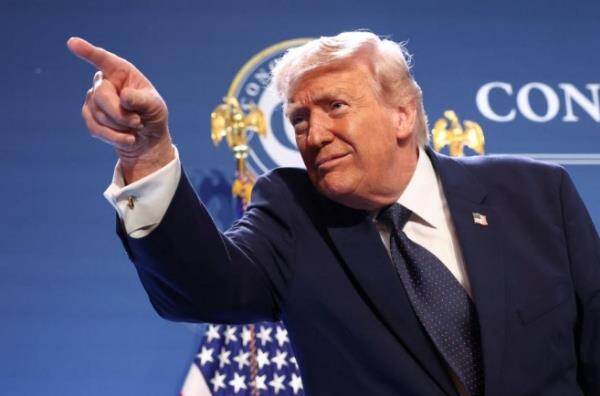
Trump has once again pulled off a "stunt" that defies public perception.
The Financial Times reports that Trump Media & Technology Group (TMTG) is exploring ways to commercialize the real-time news feed on its Truth Social platform, planning to offer low-latency data services to institutional clients for as much as $100,000 per month. Institutions purchasing this service will be able to access Trump's latest posts faster than regular users, to track policy signals, market sentiment, and the potential impact of political events.
The Time Advantage is the Most Valuable Thing in the Market
For investors focused on the U.S. market, Truth Social is not an ordinary social media platform. After the January 6th Capitol riot in 2021, Trump was banned from mainstream platforms like Twitter (now X) and Facebook. Subsequently, TMTG launched Truth Social, and Trump began using it as his primary channel for communication. Although Trump later regained his X account, his major policy statements on tariffs, trade, foreign affairs, regulation, and more are still often published first on Truth Social, gradually making it the primary source for global investors tracking Trump's movements.
Even so, this seems like an almost unbelievable business. After all, Truth Social is itself a public platform, and every post Trump makes becomes visible to everyone within seconds. Since the information is public, why would institutions be willing to pay such a high price for it?
The answer is actually quite simple. In financial markets, the most expensive thing has never been the information itself, but the time advantage of obtaining it earlier than others.
For the average user, seeing a post a few seconds earlier is almost meaningless. But for quantitative funds, high-frequency trading firms, and even some crypto trading teams, those few seconds can determine whether a trade results in profit or loss. When the market has become accustomed to repricing assets based on Trump's every move, whoever gets the information first has the chance to act first.
In other words, what TMTG is really selling is not a post, but a form of "Presidential Alpha."
The 'Trump Terminal' That Surpasses Bloomberg Terminal
In fact, TMTG is not the first to think of this business.
On Wall Street, selling real-time data is an extremely mature business model. Whether it's Bloomberg, Reuters, the New York Stock Exchange, or Nasdaq, they all have long provided paid data services to institutions. From corporate earnings reports and macroeconomic data to stock tick-by-tick trades and order book changes, these institutions can often access information earlier via dedicated lines or data interfaces with lower latency and higher stability.
Notably, what they sell is mostly not "exclusive news" — the vast majority of information is eventually made public to the entire market. What's truly valuable is that institutions can receive this information milliseconds, hundreds of milliseconds, or even seconds faster than others. This time advantage often translates to trading opportunities and can directly determine a strategy's profitability.
TMTG is doing the same thing, even taking it a step further — unlike traditional financial terminals like Bloomberg Terminal, which are merely collectors and distributors of information, Trump himself is the source. No matter how fast a Bloomberg Terminal is, it is essentially aggregating and transmitting market information; what TMTG is selling is exclusive priority access to every update Trump posts on Truth Social.
In other words, no matter how powerful the Bloomberg Terminal is, it's just a second-hand information broker, while the leader's "Trump Terminal" is absolute firsthand intelligence.
This Money, Only Trump Can Make
Theoretically, every U.S. president, as well as leaders of other major nations, possess a similar ability to influence markets.
From key official appointments to fiscal policies, from diplomatic maneuvers to war conflicts, a leader's words and actions can sway the pricing of global capital markets. But Trump is probably the only one to actually package this influence into a business and unabashedly sell it to Wall Street.
The crucial premise here is that Trump's firsthand information is truly valuable enough.
Over the past few years, Trump's Truth Social has become a critical information source for global investors. From tariff policies and trade negotiations to cryptocurrency regulation and Federal Reserve Chair selections, Trump's posts have repeatedly triggered sharp fluctuations in the stock market, the U.S. dollar, gold, and crypto markets. A series of trading strategies formed around expectations of Trump's policies, such as "Trump Trades" and "TACO Trades," further demonstrate that the market has long viewed his pronouncements as a tradable "market factor."
But the more important reason might be Trump himself. If past U.S. presidents largely viewed their political influence as a public resource, Trump is more accustomed to seeing influence as an asset that can be operated, amplified, and commercialized.
Looking back over recent years, from NFTs and meme coins to Truth Social, Truth.Fi, Trump Mobile, and now selling real-time Truth Social data services to institutions, the product forms have constantly changed, but the underlying logic has remained unchanged — continuously transforming the "Trump" IP into a commercial product that can be sold, subscribed to, and invested in.
For many traditional politicians, the presidency signifies power and necessitates maintaining a distance from commercial interests. In Trump's eyes, the two do not seem to have a natural boundary. As long as the market is willing to pay for influence, then influence itself can become a commodity.
In other words, Trump did not create the demand; rather, he realized earlier than anyone else that "presidential influence" itself is an asset that can be priced and sold.