Author: The Kobeissi Letter
Compiled by: Jesse
This is an in-depth analysis from The Kobeissi Letter regarding the Greenland tariff incident and Trump's "tariff strategy".
Is the Trade War Making a Comeback Due to New Tariffs on Greenland?
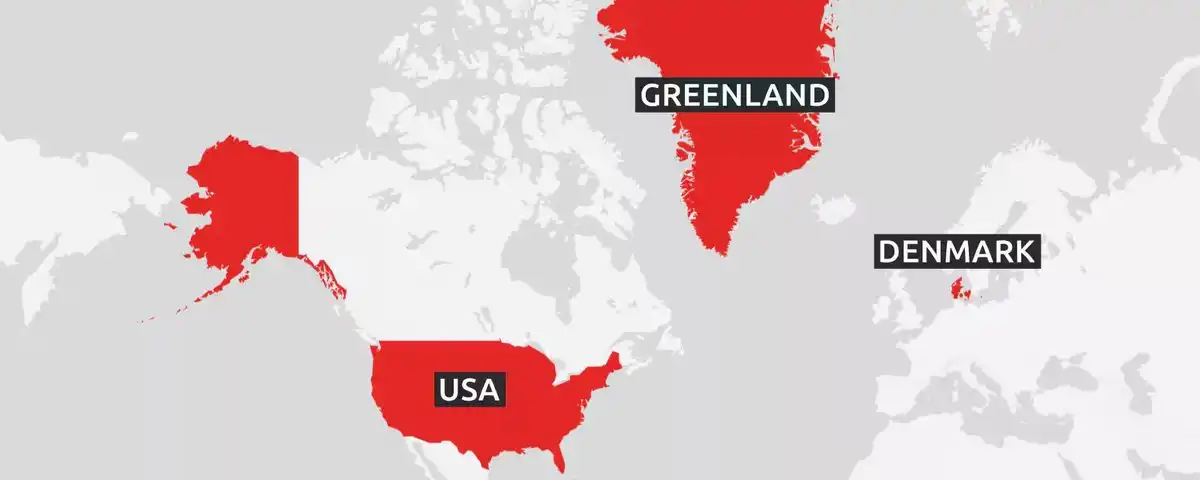
Just moments ago, President Trump announced new tariffs on the European Union and confirmed his primary strategic objective: the acquisition of Greenland. This includes a new 10% tariff on Denmark, Norway, Sweden, France, Germany, the United Kingdom, the Netherlands, and Finland, effective February 1st.
Furthermore, these tariffs will be increased to 25% on June 1st and will absolutely not be canceled until a Greenland deal is reached. According to Trump, this deal must be a "complete and comprehensive purchase" of Greenland.
Before analyzing our precise strategy, it must first be noted: trade wars have become a "cyclical headwind." Tariffs always return when the market least expects it, only to slowly dissipate. This is the product of President Trump's "tariff strategy," which is meticulously designed.
A recent case occurred on October 10th, when President Trump threatened to impose 100% tariffs on China starting November 1st (just 21 days after the announcement). This timing might sound familiar because it is an integral part of the strategy playbook. After the news broke, S&P 500 futures extended their intraday decline to -3.5% before the weekend.
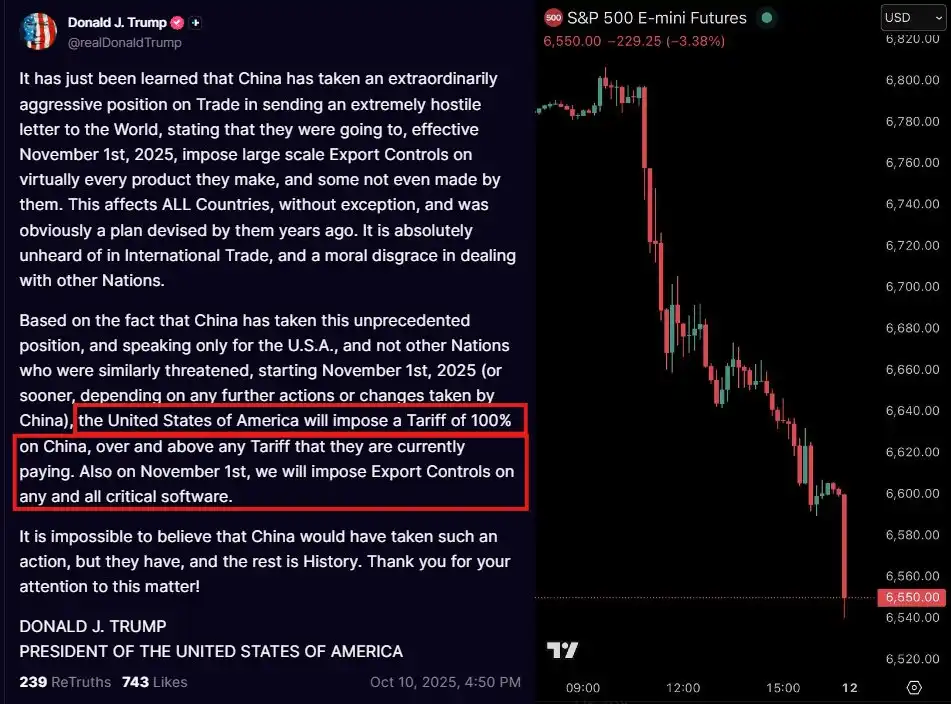
October 10th - Trump threatens 100% tariffs on China
President Trump always begins with punitive and threatening messages, which is part of his negotiation tactics. And, this move works for him. In the October confrontation with China, it ultimately ended with the signing of a new trade agreement and China canceling its rare earth export restrictions, which Trump had said were harming the U.S.
This time, the announcement was made on a Saturday, and market futures won't open until Monday evening (because Monday is a federal holiday). The market reaction might be accompanied by similar "emotional selling," but considering there is time to digest the news, the impact might be less severe.
This is all part of President Trump's "tariff strategy," which we will detail below:
The Tariff Strategy Playbook
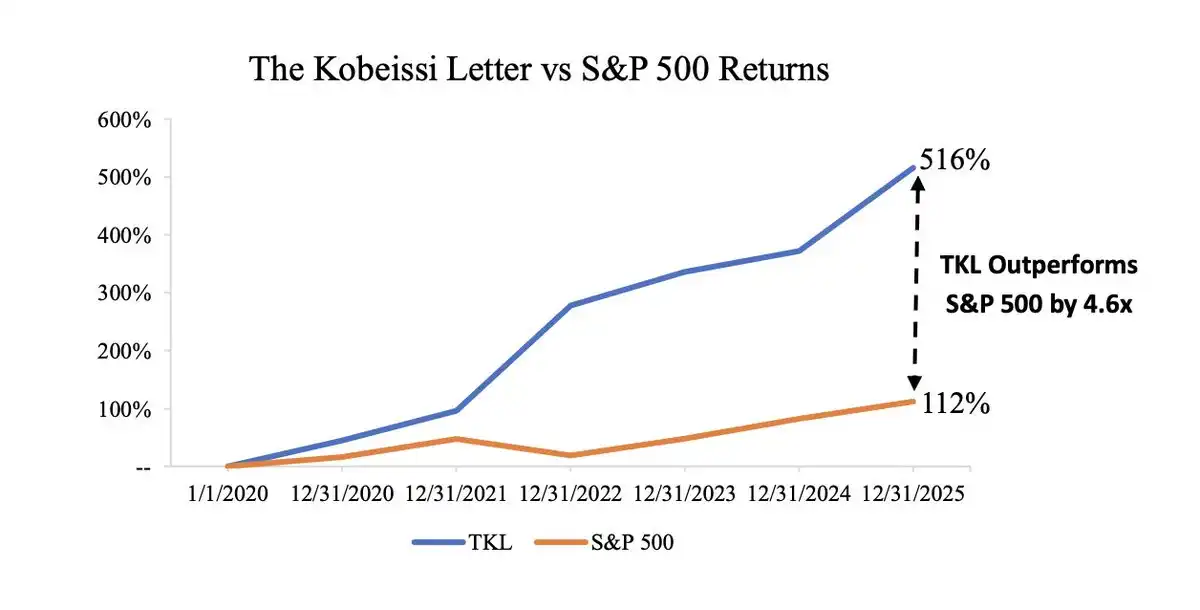
In 2025, our investment strategy's returns were almost double that of the S&P 500, largely because we capitalized early on asset price volatility during trade wars. Below is the specific coping strategy we have consistently applied:
A comprehensive step-by-step guide to navigating Trump's trade wars:
-
Friday: President Trump posts an obscure message hinting at tariffs on a specific country or industry. Markets decline as uncertainty increases. This event started Friday with Trump threatening tariffs on Denmark.
-
Later that day or shortly after (Saturday in this case): President Trump announces a massive new tariff, usually 25% or higher.
-
Saturday and Sunday: President Trump repeatedly escalates tariff threats while markets are closed to maximize psychological impact.
-
Over the weekend: The targeted country(ies) typically respond publicly or signal willingness to negotiate.
-
Sunday 6 PM ET (Monday evening in this instance): Futures open, and the market reacts initially with an emotional sell-off to the tariff headlines; futures prices drop.
-
Monday and Tuesday: President Trump continues public pressure, but investors start realizing tariffs are not yet in effect and are weeks away from implementation (e.g., Feb 1st).
-
Wednesday of the same week: Dip buyers step in and trigger a relief rally, but this move often fades and leads to another decline. This is usually when the "smart money" starts buying.
-
The following weekend (about a week later): President Trump posts that negotiations are underway and he is working with the target country's leader(s) towards a solution.
-
Sunday 6 PM ET that weekend: Futures open sharply on optimism, but gains pare back after the Monday cash market open.
-
After Monday open: Senior administration officials like Treasury Secretary Bessent appear on live TV, reassuring investors and highlighting progress towards a deal.
-
The next 2-4 weeks: Officials across the Trump administration continuously leak progress on the trade deal.
-
Eventually: The trade deal is officially announced, and markets hit new all-time highs.
-
Cycle: Repeat from Step 1.
Of course, this is not a 100% guaranteed roadmap, but based on our experience, almost every trade war flare-up since January 2025 has followed roughly this same path.
Note: This time, President Trump's plan to acquire Greenland is undoubtedly a higher demand than getting China to cut export controls. Therefore, the execution of this strategy might be more prolonged, but it will follow a similar sequence of events.
Timing is Key
President Trump's entire negotiation strategy revolves around timing and pressure. He provides a 2-3 week buffer before tariffs take effect to allow for a deal. Trump's goal is for these tariffs never to actually take effect; he wants the deal. This also explains why these announcements increasingly occur on weekends when markets are closed. He pushes the threat to the brink. This is why they work: if they were actually implemented and sustained, they would have the power to shake markets and change the world.
In the last round of the trade war with China, President Trump announced a new trade deal with China on November 1st—the very day the 100% tariffs were scheduled to take effect.
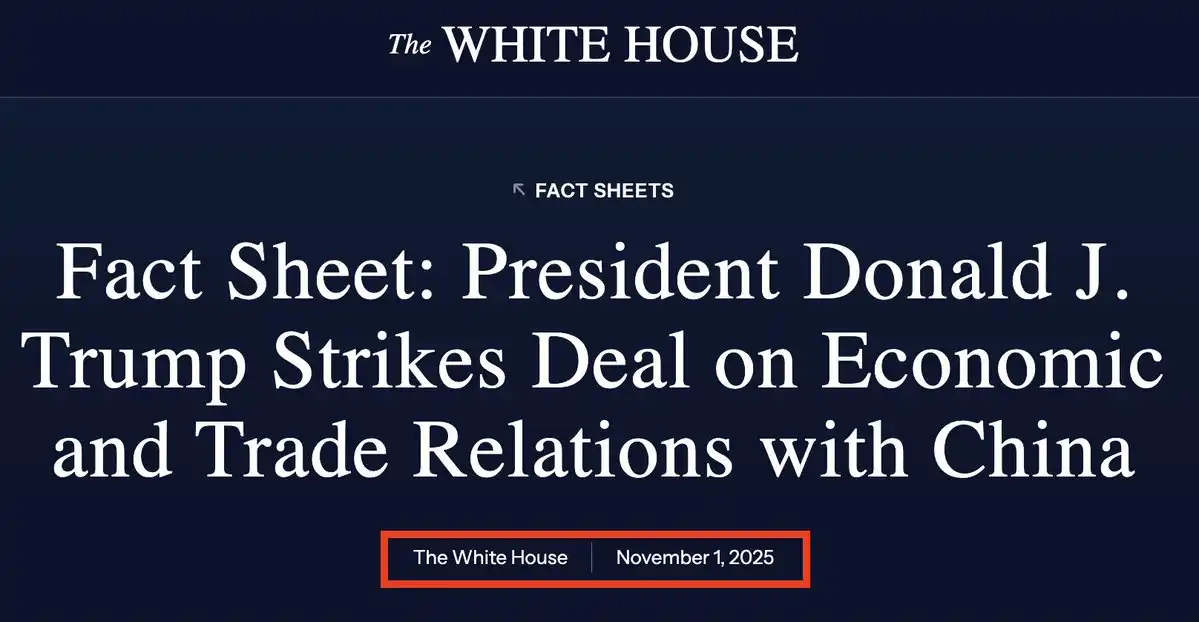
Ultimately, those who can remain objective and follow the process during trade war volatility are accessing one of the best trading environments ever.
As mentioned, this objective, systematic approach has led to our performance outperforming the market benchmark. As shown in the chart below, our investment strategy's returns have been nearly five times that of the S&P 500 since 2020.
Conclusion
This time, President Trump's plan to acquire Greenland is indeed a higher demand than previous ones. Market turbulence might last longer, but we reiterate the original point: the best traders are profiting from the asset price volatility caused by trade war headlines.
Volatility equals opportunity.