Hormuz Strait Reopening: Will the Fed Turn "Dovish" and the Market Reprice "Rate Cuts"?

marsbitPubblicato 2026-06-16Pubblicato ultima volta 2026-06-16

Introduzione

The article outlines two key factors that may lead the U.S. Federal Reserve, under Chair Wash, to adopt a more dovish stance at the upcoming FOMC meeting. First, the anticipated reopening of the Strait of Hormuz is expected to ease oil and energy prices, thereby reducing upward inflationary pressures. This shift could lead the Fed to view energy prices as a neutral or even deflationary factor. Second, recent core CPI data showed significant cooling, with a monthly increase of only 0.21%, contrasting with the still-strong core PCE. This divergence supports a dovish interpretation. Market implications are significant. While the FOMC is expected to remove "easing bias" language and project unchanged rates for the year—moves already priced in—Chair Wash's potential for more dovish commentary presents an upside risk. Consequently, there is room for the market to further price out remaining hike expectations and increase expectations for rate cuts. The report notes that the 2-year Treasury yield, though down recently, remains well above February levels, indicating further potential downside as inflation risks fade.

Written by: Zhao Ying

Source: Wall Street News

Two major catalysts for disinflation are simultaneously unfolding, providing ample justification for Fed Chair Wash to adopt a more dovish stance at this week's Federal Open Market Committee (FOMC) meeting.

According to a report from Citi Research released on June 15th via Wind Trading Desk, the planned reopening of the Strait of Hormuz is expected to push oil prices lower, eliminating the upside risk to inflation from energy prices. Meanwhile, last week's core CPI data came in surprisingly cool, with a month-on-month increase of only 0.21%.

The combination of these two developments further weakens the rationale for the Fed to maintain a hawkish stance, bringing the path to eventual rate cuts back onto the table.

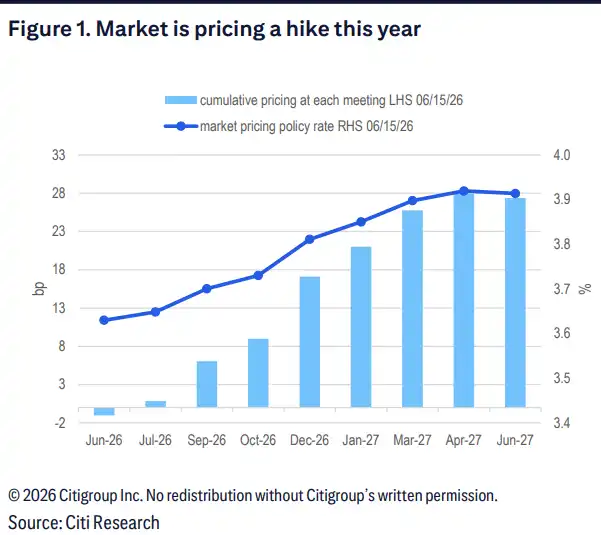
For the markets, this assessment has direct pricing implications. The two-year Treasury yield has fallen by about 13 basis points compared to a week ago, but remains more than 60 basis points higher than its February level. There is still room for market pricing of rate hikes to be compressed, and for pricing of rate cuts to be further increased.
Energy Price Pressures Ease, Upside Inflation Risks Blunt

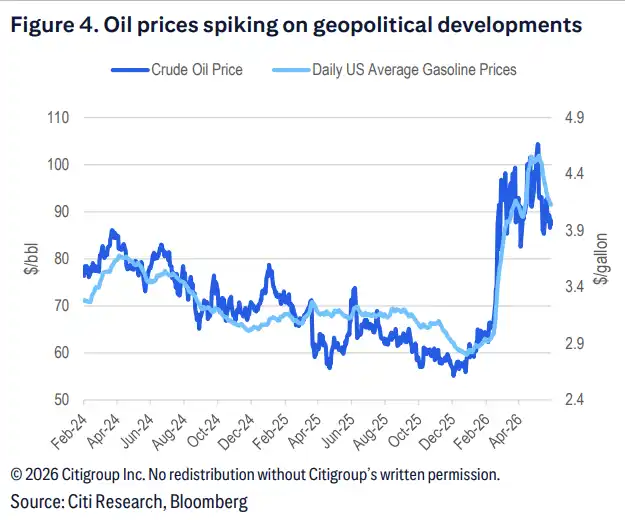
Expectations for the reopening of the Strait of Hormuz are a core driver of the current dovish narrative. Once the strait resumes passage, increased crude oil supply will lead to lower oil and other energy prices.

Gasoline prices have been declining for a full month, with the national average dropping from around $4.50 per gallon to $4.00. Citi expects further declines following other energy commodities. This trend is likely to produce at least several months of negative overall inflation readings in the coming months, prompting Fed officials to shift their characterization of energy prices from an "inflation risk" to a "neutral or even disinflationary factor."
Core CPI Cools, Divergence Among Inflation Metrics Intensifies

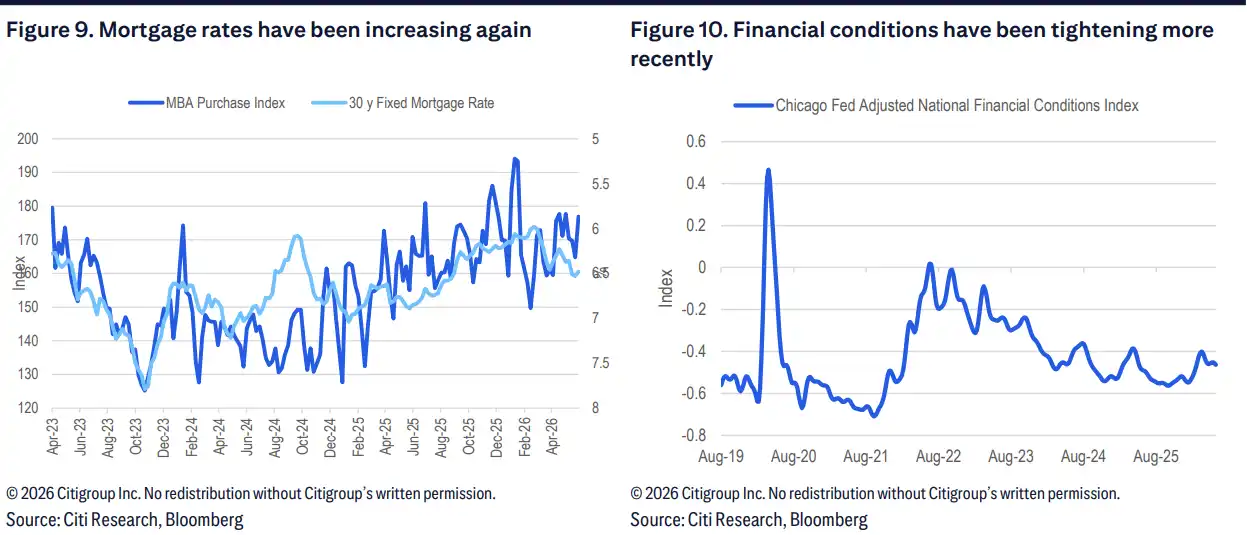
On the core inflation front, although May's core PCE is still expected to remain strong, core CPI has shown clear signs of cooling, with a month-on-month increase of only 0.21%.

Core PCE is increasingly becoming an "outlier" among current inflation metrics—both trimmed-mean PCE and core CPI are closer to target levels and show a clearer downward trend. This divergence is being increasingly recognized by both markets and Fed officials, also providing data support for a dovish stance.

FOMC Hawkish Adjustments Fully Priced In, Dovish Signals Have Upside Potential

The report expects this week's FOMC statement to remove the "easing bias" wording, and the median dot in the interest rate projections (dot plot) will indicate rates held steady this year. However, these hawkish adjustments are already fully anticipated by the market and do not constitute new information.

The real variable lies in Chair Wash's wording. Considering the latest developments regarding the Strait of Hormuz reopening and the cooling trend in core inflation, the risk of Wash delivering more dovish signals at this meeting is tilting to the upside. If his wording proves more accommodative than expected, the market's repricing of the rate cut path could accelerate.

Room for Treasury Yields to Fall Further, Market Pricing Has Adjustment Room

From a market pricing perspective, the report believes implied probabilities of rate hikes in interest rate futures remain elevated. Although the two-year Treasury yield has fallen about 13 basis points from a week ago, it is still over 60 basis points higher than its February level, indicating the market has not fully priced in the impact of receding inflation risks.

As the previously supporting upside inflation risks to the hawkish outlook gradually dissipate, the market is expected to further compress pricing for rate hikes while simultaneously increasing pricing for rate cuts, leaving further room for Treasury yields to decline.
Domande pertinenti

QAccording to the article, what are the two catalysts for inflation decline that could push the Fed towards a dovish turn?

AThe two catalysts are: 1) The planned reopening of the Strait of Hormuz, which is expected to push down oil prices and reduce energy price pressure on inflation. 2) The cooler-than-expected core CPI data for the previous week, which showed a monthly increase of only 0.21%.

QHow does the article describe the trend of gasoline prices and its expected impact?

AGasoline prices have been falling for a month, with the national average dropping from about $4.50 per gallon to $4.00. Citi expects them to fall further in line with other energy prices. This trend is projected to deliver several months of negative overall inflation readings and lead the Fed to view energy prices as a neutral or even deflationary factor rather than an inflation risk.

QWhat divergence in inflation indicators does the article highlight, and why is it significant?

AThe article highlights a divergence between core PCE and other inflation metrics like core CPI and trimmed-mean PCE. While core PCE remains strong, core CPI and trimmed-mean PCE are closer to the Fed's target and show a clearer disinflationary trend. This growing recognition of the divergence provides data support for a more dovish Fed stance.

QWhat is the market's current pricing for interest rates according to the report, and what potential adjustment does it see?

AThe market has already priced in expected hawkish adjustments from the FOMC, such as removing "accommodative bias" language. However, the report states that interest rate futures still imply an overly high probability of rate hikes. There is room for the market to further price out hikes and increase pricing for rate cuts, suggesting Treasury yields have more room to fall.

QWhat is the key variable for the market at the upcoming FOMC meeting, according to the article's analysis?

AThe key variable is the tone and wording of Fed Chair Wash's statements. Given the latest developments (Strait of Hormuz reopening, cooling core inflation), the risk is tilted towards Wash delivering a more dovish message than expected. If his wording is more temperate, the market's repricing of the rate cut path could accelerate.

Letture associate

Spain Held to a Draw by Cape Verde, Jucom Prediction Market Witnesses Historic Upset

In a major upset at the 2026 FIFA World Cup, tournament favorites Spain were held to a surprising 0-0 draw by debutants Cape Verde in their Group H opener on June 16, Beijing time. Despite dominating possession (74%) and recording 27 shots with an expected goals figure of 2.16, Spain failed to break down a resilient Cape Verde defense, with their 40-year-old goalkeeper Vozinha making 7 saves to earn Man of the Match. Pre-match predictions on the Jucom prediction market had heavily favored Spain, assigning them a 92% win probability. The actual result, a goalless draw, triggered significant volatility across related prediction markets. This outcome forces a market-wide reassessment of several key probabilities, including Spain's likelihood of winning the group and the tournament itself, while Cape Verde's previously near-zero chance of advancing is now being re-evaluated. The event highlights both the efficiency and the inherent limitations of prediction markets. While prices aggregate known information, football's low-scoring, high-variance nature means unquantifiable in-game factors can lead to unlikely results. The core value of such markets lies not in perfect foresight but in their ability to dynamically reflect how new information is incorporated into collective expectations. Platforms like Jucom, which track outcomes from single matches to the final champion, provide a real-time lens into how global consensus evolves with each game.

链捕手1 min fa

Spain Held to a Draw by Cape Verde, Jucom Prediction Market Witnesses Historic Upset

链捕手1 min fa

Standard Chartered Bank Places a 40x 'Bet', Calls for UNI to Rise to $100

Standard Chartered Bank’s digital asset research head, Geoff Kendrick, initiated coverage on Uniswap with a highly bullish long-term price target of $100 for its UNI token by 2030—a roughly 40-fold increase from its ~$2.60 trading price at the time of the report. The bank’s thesis hinges on the exponential growth of tokenized real-world assets (RWA), projected to surge from ~$340 billion to $4 trillion by 2028. It expects the share of these assets deployed in DeFi to rise from 3.5% to 30%, driving total DeFi TVL to around $2.7 trillion. As the leading decentralized exchange (DEX), Uniswap is positioned to capture a significant portion of this liquidity influx. A key catalyst is Uniswap’s “fee switch,” activated in late 2024, which directs a portion of protocol fees to UNI token buybacks and burns. This transforms UNI from a pure governance token into a yield-generating, deflationary asset, narrowing its valuation gap with centralized exchanges like Coinbase. The report draws an analogy: Coinbase operates like Netflix (centralized, high-cost), while Uniswap functions like YouTube (open, user-generated, network-effect driven). Despite its dominant market share and recent institutional adoption—such as BlackRock’s BUIDL fund and Fidelity’s stablecoin using Uniswap for liquidity—the path faces challenges. Competition from Solana-based DEXs and aggregators threatens user mindshare, while regulatory delays or setbacks in RWA adoption could slow the projected growth. Furthermore, UNI remains down over 92% from its 2021 peak, reflecting persistent market skepticism. Ultimately, Standard Chartered’s report signals a shift in traditional finance’s perception of DeFi, valuing network effects and cash flow potential. However, realizing the $100 target depends on Uniswap successfully navigating intense competition, regulatory hurdles, and the multi-year timeline for massive tokenized asset adoption.

marsbit26 min fa

Standard Chartered Bank Places a 40x 'Bet', Calls for UNI to Rise to $100

marsbit26 min fa

For Those Still Obsessed with Altcoins, Just Go All-in on HOOD

Title: "For Those Still Fixated on Altcoins, Just Bet on HOOD" The article argues that Robinhood (HOOD) stock is a compelling alternative for investors still holding onto hopes for altcoin rallies. It highlights HOOD's recent strong performance, briefly touching $100, and expresses continued optimism. The bullish thesis is multi-faceted: HOOD's operational data for May showed record highs in key metrics like total assets and funded customers, though crypto volume was weaker. Positive catalysts include Robinhood launching its own prediction market (Rothera) to capture more revenue, gaining approval to act as an IPO underwriter for major upcoming listings, and being selected to manage the new "Trump Account" government savings program for millions of future US newborns. Insider and institutional buying, along with raised price targets, provide further confidence. The core argument is that HOOD is successfully decoupling from the crypto market's fortunes. While crypto-related revenue was once a major contributor, its share of total revenue has been declining, hitting 13% in Q1 2026. Although HOOD's price historically moved with Bitcoin, a recent divergence is noted. The author posits that Robinhood's growing equity trading, prediction markets, and IPO-related businesses can drive growth independently of a crypto bull market. Thus, HOOD offers asymmetric exposure: it stands to benefit if the crypto market recovers but is no longer wholly dependent on it. For those disillusioned with altcoins' risks, HOOD presents a potentially safer way to maintain exposure to the fintech and speculative trading space.

marsbit34 min fa

For Those Still Obsessed with Altcoins, Just Go All-in on HOOD

marsbit34 min fa

Trading

Spot
Futures
活动图片