Has Microsoft Lost Its Way in the AI Race, and Can Copilot Bring It Back on Track?

marsbitPubblicato 2026-05-23Pubblicato ultima volta 2026-05-23

Introduzione

Microsoft, once seen as an early AI frontrunner due to its investment in OpenAI, is navigating a strategic shift amid increased competition. Its initial reliance on OpenAI’s GPT models has been complicated by OpenAI’s growing ambitions as a direct competitor, rapid advancements from rivals like Claude and Gemini, and the disruptive rise of AI agents, which challenge its traditional SaaS business model. These factors contributed to stock declines and slower-than-expected adoption of its flagship Copilot products. In response, CEO Satya Nadella has taken a hands-on role in product development, signaling the urgency of change. Microsoft is pivoting from a model-centric strategy to a "model-agnostic" enterprise platform approach. It aims to become the foundational layer connecting various AI models—from OpenAI, Anthropic, or its own new "Superintelligence" team—with enterprise workflows, data, security, and cloud services. Recent organizational changes merged consumer and enterprise Copilot teams to accelerate innovation, exemplified by new products like Copilot Tasks and Copilot Cowork. However, this transformation comes at a high cost. Microsoft faces massive capital expenditures, potentially reaching ~$190 billion by 2026, to support AI infrastructure. While its platform strategy shows early signs of traction with growing Azure AI revenue, it must balance startup-like agility with the reliability expected by enterprise clients. The core challenge is no longer being the sole ...

Editor's Note: Microsoft was once one of the first tech giants to place a winning bet on OpenAI in the generative AI wave. Thanks to its investment in OpenAI and exclusive cloud partnership, Microsoft was initially seen as the most certain winner of the AI era: Azure gained model advantages, and its Office, Bing, GitHub, and enterprise software lines were fully integrated with Copilot. Satya Nadella, like he did leading Microsoft's shift to the cloud, was expected to orchestrate another platform-level migration.

But two years later, Microsoft's advantages have become more complicated. OpenAI is no longer just Microsoft's technology supplier, but also a direct competitor vying for enterprise customers. Models like Claude and Gemini have rapidly caught up, diminishing the sense of lead brought by GPT's exclusivity. The emergence of AI Agents further challenges the long-term SaaS business model that Microsoft relies on. Stock price pullbacks, slower-than-expected Copilot paid adoption rates, and GitHub Copilot being overtaken by Cursor and Claude Code have forced Microsoft to re-evaluate its AI strategy.

The most noteworthy aspect of this article is not whether Microsoft can catch up to OpenAI, Anthropic, or Google in model capabilities, but that Microsoft is attempting to redefine its position: it is no longer betting entirely on a single model, but shifting towards an "model-agnostic" enterprise AI platform strategy. In other words, Microsoft wants to become the foundational layer connecting models, data, security, workflows, cloud computing, and enterprise software. Models can come from OpenAI, Anthropic, or even in the future from Microsoft's own Superintelligence team. What truly stays within Microsoft's ecosystem is the enterprise customer's work platform, data assets, development environment, and security framework.

This is also the context for Nadella personally getting involved in Copilot product development. For Microsoft, the AI competition is no longer just a model race between labs, but a systematic competition about organizational speed, product form, customer relationships, and capital expenditure. Claude Code and Claude Cowork have shown that AI Agents could reshape software development and office workflows; open-source projects like OpenClaw indicate that an "always-on" AI assistant is moving from concept to reality. What Microsoft must do is package these more radical AI-native experiences within the security, compliance, and governance frameworks acceptable to enterprise clients.

However, the cost of this path is not low. To catch up with cutting-edge models and support agent-based products, Microsoft is pushing the AI competition towards "gigawatt-scale" infrastructure investment: more data centers, larger chip clusters, higher capital expenditure. By 2026, Microsoft's capital expenditure is expected to reach about $190 billion. In other words, Microsoft in the AI era must both experiment rapidly like a startup and sustain heavy asset investments like a cloud computing giant.

The real problem Microsoft faces is not whether it can remain the sole winner of the AI era, but whether it can continue to hold the core gateway to enterprise software amid rapidly commoditizing models and ongoing disruption of software business models by Agents. For Nadella, this may not be an ordinary product adjustment, but more like Microsoft's second startup phase during this AI platform migration.

The following is the original text:
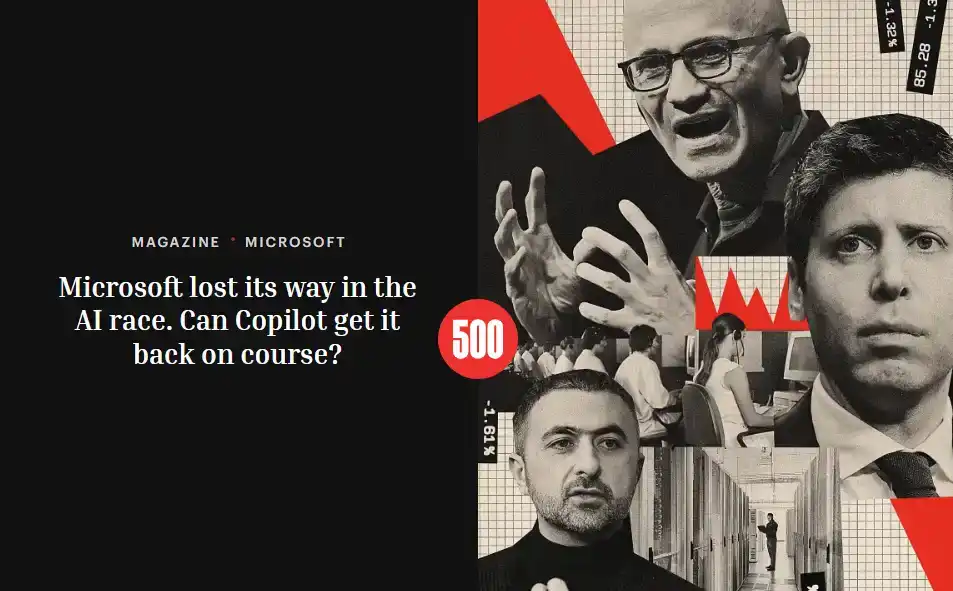
Mid-January 2026, Redmond, Washington. The weather was cold, gray, and dark, the kind of morning perfect for hitting the snooze button. But inside Building 92 on Microsoft's sprawling campus, a team of engineers had already arrived early.

They were fighting a tough battle, and they were already behind.

This team was developing a new AI product. It was more of a personal assistant, capable of helping users book flights, reply to emails, even find a reliable local plumber. The team members were well aware that other tech companies were developing similar products. Right at that moment, Microsoft CEO Satya Nadella arrived on the scene. He wanted to show them something.

Nadella opened his laptop and launched an application. It was a system for directing and controlling multiple AI Agents, which he called a "Chain of Debate." Nadella demonstrated it while explaining to the engineers. Team members exchanged knowing glances, like seasoned basketball players suddenly realizing a new teammate actually knew how to play.

Because this application wasn't something Nadella had asked someone else to build for him; he had written it himself using an AI tool called "vibe coding."

"It really set the tone for how hard the team was going to push over the coming weeks," recalls Jacob Andreou, Microsoft Executive Vice President in charge of Copilot design. Nadella was in the same room with them, almost standing behind the engineers, opening his own laptop and participating.

Seeing the CEO so excited about building a new product hands-on energized the team. By late February, the sprint concluded, and Microsoft launched Copilot Tasks—an AI tool that acts as a personal assistant capable of using a computer. The prototype Nadella had built also served as a reference model for a feature called "model council" within Copilot and other components.

But the fact that Nadella is diving this deeply and frequently into AI product teams, even personally building prototypes, itself speaks to Microsoft's current situation. After all, this is a $3 trillion tech giant, not a scrappy startup where the CEO frequently codes alongside developers during sprints.

Nadella's concern about Microsoft's AI strategy is evident enough. Last October, he announced he would step back from some commercial duties to focus more on AI research, product innovation, and AI data center construction.

This concern is not unfounded. Microsoft's stock had gone through a tough period. After hitting an all-time high last October, over the next five months, Microsoft's stock price fell by about 34%. Meanwhile, AI-related revenue for Microsoft's cloud platform Azure more than doubled over the past year.

Microsoft also became a poster child for the so-called "SaaSpocalypse" (SaaS Armageddon sell-off). The emergence of AI coding Agents triggered a collective sell-off of software stocks. Many investors began to believe such products meant companies would no longer buy AI products from SaaS vendors like Microsoft in the future, and might not even buy off-the-shelf software at all.

Between October 28, 2025, and March 27, 2026, Microsoft's stock price fell by 34%. Sales of Microsoft's enterprise Copilot product were also slower than the company expected. Among the 450 million users of the Microsoft 365 office suite, less than 4.5% currently pay for Copilot features. Meanwhile, usage of the consumer-facing Copilot chatbot also lags far behind ChatGPT, Gemini, and Claude. The once-leading AI coding assistant GitHub Copilot was also overtaken by AI startups Cursor and Anthropic's Claude Code.

Two years ago, Microsoft looked like one of the earliest winners of the AI era. Thanks to Nadella's foresighted bet on OpenAI, Microsoft gained exclusive access to the models of this rapidly growing AI startup and could integrate them into its own product suite. If enterprises wanted to use OpenAI's technology, the only cloud service provider they could choose was Microsoft Azure. Microsoft even once believed OpenAI gave it its best chance in years to challenge Google Search.

At that time, Nadella had been at Microsoft's helm for a decade. He had led Microsoft's platform migration from desktop software to the cloud, and now seemed poised to replicate that success in the AI era.

But AI changes too fast. Two years is already a long cycle. The story that follows is how Microsoft missed its early AI lead, and how it is trying to regain the initiative.

What Went Wrong

Microsoft's initial position at the forefront of the AI race was precisely due to its partnership with OpenAI; but what partly put it on the back foot was also this same partnership.

Microsoft spotted this young San Francisco company early, first investing $1 billion in 2019, with total committed investment in OpenAI reaching $13 billion later. Microsoft used OpenAI's technology to launch a series of AI products branded as Copilot across its consumer and enterprise software lines.

But after ChatGPT's release in late 2022, OpenAI's explosive growth and rapidly expanding ambitions quickly strained the relationship. The two companies clashed on multiple issues: on computing resources, OpenAI always wanted more; on intellectual property, Microsoft believed OpenAI wasn't fulfilling contractual obligations to share technological innovations promptly enough; on customer relationships, OpenAI began directly pitching AI models to the same enterprise customers Microsoft was also selling Copilot to; and when OpenAI sought restructuring, they disagreed over how much equity Microsoft should receive in the new for-profit company.

Nadella knew betting Microsoft's AI strategy on a single, not-yet-fully-proven startup was inherently risky. In November 2023, that risk was laid bare: the non-profit board controlling OpenAI's for-profit business fired CEO Sam Altman for "not being consistently candid," notifying Nadella only minutes before announcing the decision publicly.

Nadella had to quickly reassure investors, emphasizing Microsoft still had access to OpenAI's technology; simultaneously, he collaborated with Altman to pressure the board to reverse its decision. Nadella announced Microsoft was prepared to hire Altman and any OpenAI employees willing to follow him to Microsoft. The threat of a mass exodus ultimately forced the board to relent and reinstate Altman.

Within OpenAI, this five-day crisis later became known as "the blip." But according to people familiar with Nadella's thinking, it shook him deeply. He had to find a hedge for Microsoft's AI bets.

"When Nadella joined an AI engineer team's sprint, it really set the tone for how hard the team was going to push over the coming weeks." —Jacob Andreou, Microsoft Copilot Executive Vice President

Microsoft's Plan B was Mustafa Suleyman.

Suleyman is a co-founder of Google DeepMind who later left to start his own AI startup, Inflection. In March 2024, Microsoft hired Suleyman and Inflection's technical team in a $650 million deal, also licensing its technology. Suleyman was then appointed CEO of Microsoft's new AI division, abbreviated as MAI. Its responsibilities were twofold: first, building Microsoft's own cutting-edge models as a hedge against OpenAI risk; second, expanding the user base of Microsoft's Copilot chatbot.

But this step didn't go smoothly. Microsoft's partnership agreement with OpenAI prohibited it from training models beyond a certain size. Suleyman told Fortune: "We were essentially limited to training Microsoft's own native models, and only up to the scale of SLMs, or small language models."

MAI's first publicly tested general-purpose language model, named MAI-1 preview, launched in August 2025 but ranked quite low on various performance leaderboards and was never widely released.

MAI also failed to turn the Copilot chatbot into a consumer hit. According to media reports, a year after Suleyman took over, Copilot usage stagnated at around 20 million weekly active users, while ChatGPT's user base soared, eventually approaching 900 million. In 2025, Microsoft attempted a major upgrade of Copilot to make it more like a personal assistant capable of performing tasks, but this upgrade did not reignite growth. As for the new AI-powered version of Bing search, it also barely dented Google's share of the search market.

Meanwhile, Plan A also began to encounter trouble.

In 2023, OpenAI's GPT models led the industry by a wide margin. But by early 2025, Anthropic's Claude was often topping AI leaderboards, and many enterprises preferred it for complex tasks. Google's Gemini also became increasingly competitive in visual tasks. Yet Microsoft's Copilot products were still entirely powered by GPT. The engine that once underpinned Microsoft's AI strategy was starting to feel like a heavy burden.

Microsoft Commercial CEO Judson Althoff admits the company made several mistakes. First, naming both consumer and enterprise products "Copilot" was inherently confusing. Althoff, who holds a private pilot's license, quipped: "The only thing worse than not having a copilot is having more than one copilot."

Microsoft also incentivized sales reps to promote both free and premium versions of the enterprise M365 Copilot, but only the premium version truly delivered value for enterprise clients. "We got that wrong," he said.

Microsoft was also struggling to keep pace with the speed of AI evolution. A key turning point came in 2025 when Anthropic released Claude Code. Developers simply describe what they want, and it can autonomously write complete programs. This was no longer a "copilot," but "autopilot." Within six months, it reshaped software development.

Then in January this year, Anthropic launched Claude Cowork. This is an Agent capable of using software, including Microsoft productivity tools like Excel and PowerPoint, and autonomously completing tasks.

Claude Cowork poses a serious challenge to M365 Copilot and the AI Agents Microsoft has been pushing clients to adopt. In fact, it threatens not just Microsoft, but most commercial software. It was this realization that triggered the so-called "SaaSpocalypse" software stock sell-off. Ultimately, over $2 trillion was wiped from tech market value, including a single-day $357 billion plunge in Microsoft's market cap.

How Microsoft is Correcting Course

By the fall of 2025, Nadella realized Microsoft had to reboot its AI strategy. Since then, the company's actions reflect a difficult balancing act: on one hand, it must innovate quickly like an AI startup; on the other, it must still reliably serve investors and enterprise clients like the steady Microsoft of old.

Nadella handed off many commercial and day-to-day operational duties to Microsoft veteran Althoff so he could focus on AI product development. Althoff says he handles "Horizon Zero and Horizon One," while Nadella handles "Horizon Two and Horizon Three." Meanwhile, Nadella began breaking down internal silos, making Microsoft faster, flatter, and more agile.

In March this year, Nadella merged the consumer and enterprise Copilot teams. Suleyman no longer oversees consumer AI products, instead leading a renamed model development project: the Superintelligence team. Suleyman says the name reflects the team's ambition and helps attract top researchers.

Jacob Andreou joined Microsoft in 2025, previously at Snap and venture firm Greylock. He now oversees both consumer and enterprise Copilot Experience and reports directly to Nadella. Joining Suleyman and Andreou on the Copilot leadership team are three other Microsoft Executive Vice Presidents: Charles Lamanna, responsible for Copilot, AI Agents, and platform; Ryan Roslansky, responsible for Microsoft Office and LinkedIn; Perry Clarke, serving as Applications Chief Technology Officer.

Lamanna says: "We want it to be a back end, a brain, driving both the consumer side and the work side." Nadella himself attends the Copilot leadership team's weekly stand-up and participates in a dedicated Teams channel discussing Copilot development progress.

Microsoft faces a delicate balance: it must innovate fast enough to catch up with AI rivals like Anthropic and Google, yet must remain a reliable partner in the eyes of large enterprise customers.

Andreou points to two new products as evidence the unified Copilot team is operating as Nadella envisioned: one is Copilot Tasks for consumers, the product Nadella personally helped prototype in January; the other is Copilot Cowork for enterprise clients.

He says: "Both of those are basically frontier-level experiences, one for consumers, one for enterprise users. And they were both put together by our team pulling resources together and building them in a matter of weeks."

Microsoft has also agreed to OpenAI's long-pending restructuring, with significantly less restrictive terms. The software giant received a 27% equity stake in OpenAI. If OpenAI goes public as widely expected, this provides potential upside. But the exclusivity arrangements in the old agreement have been abandoned: OpenAI can now partner with other cloud providers, and Microsoft can use models from other AI companies.

Suleyman says the new agreement finally allows Microsoft to build larger, more capable frontier AI models and ultimately achieve self-sufficiency. But he adds it will still take Microsoft two to three years to catch up with top AI labs.

The reshaped partnership also allows Microsoft to embrace OpenAI's main rival, Anthropic. Last November, Microsoft pledged up to $5 billion in investment in Anthropic and began offering its models on Azure. The ability to power Copilot with Claude has proven popular with enterprise clients and helped Microsoft build Copilot Cowork.

"You've got to give credit: OpenAI and Anthropic are helping us go faster." —Judson Althoff, Microsoft Commercial CEO

But Microsoft isn't simply swapping dependence on one loss-making AI startup for another. The investment in Anthropic reflects Microsoft's judgment about industry direction: AI models will become increasingly commoditized. At least in the enterprise market, the real value won't concentrate solely in the AI "brain," but will shift to the tools, data, security, cloud computing, and workflow systems surrounding that brain.

This is precisely where Microsoft believes it can win.

It already possesses many key assets: software tools, security systems, data warehouses, and cloud computing capabilities. Microsoft has also built a series of products branded with "IQ" to help companies create customized workflows, aggregate their own data, and build, deploy, and monitor Agents running those workflows based on any AI model from any supplier.

Althoff says: "We don't believe enterprises will change their information work platform, their development environment, their security environment every time a new model drops."

This strategic pivot also brings a new business model.

Previously, Microsoft typically charged per-user licensing fees, such as $30 per user per month for Copilot. Customers liked this model because budgets were easier to plan. But if the AI Agents within these products use models Microsoft doesn't own, Microsoft must pay corresponding token usage fees to the AI supplier.

Therefore, Microsoft has begun shifting to a hybrid pricing model: a base portion still charged per user license, including a limited token quota; any excess is billed per token. This is to avoid the "model-agnostic" strategy eroding profit margins.

For cost control, Microsoft has also started streamlining its workforce. In April this year, Microsoft announced its first-ever voluntary employee severance program, primarily targeting its longest-tenured employees. The company said about 7% of its U.S. workforce, roughly 8,750 employees, were eligible for the program, with an expected cost of $900 million.

There are signs Microsoft's adjusted enterprise strategy is working. As of the end of March, Azure revenue grew 40% year-over-year, and Microsoft's overall AI business reached $37 billion in annualized sales, up 123% year-over-year. Currently, 20 million M365 users pay for Copilot, a quarter of whom signed up in the first four months of 2026. Althoff says adoption is accelerating.

UBS analyst Karl Keirstead says more Microsoft customers are telling him they're starting to see Copilot's value. But overall user numbers remain unsatisfactory. He says: "I don't think they're at a penetration rate yet that Wall Street would be happy with."

Microsoft's "model-agnostic" strategy may also have a vulnerability: what if those high-profile AI startups also begin building Microsoft-style enterprise tools and connective systems?

This is no longer hypothetical. In February this year, OpenAI launched its Frontier platform for enterprises, offering many capabilities Microsoft is building into its new tools. Anthropic is also moving in this direction, launching Claude Managed Agents service.

Microsoft's argument is that decades of enterprise customer relationships, reputation for reliability and security, and deep integration with customers' existing software systems give it an advantage. Althoff says he welcomes the competition. "You've got to give credit: OpenAI and Anthropic are helping us go faster," he says.

But some question whether a company of Microsoft's size can truly match the agility of AI-native startups. UBS's Keirstead says: "Microsoft, and frankly all software companies, are facing something they haven't faced in over a decade: highly innovative, brand-new competitors. Expecting a large incumbent like Microsoft to pivot as quickly as OpenAI and Anthropic is probably asking too much."

Bank of America analyst Tal Liani sides with "Team Nadella." He believes AI companies are unlikely to build the full suite of products Microsoft offers. This means Microsoft doesn't necessarily have to win the AI race; it just needs to not lose it.

He says: "It doesn't have to be the best, as long as it's good enough, and when you bundle it you get a high value, that's really Microsoft's value proposition."

Yet, even just "not losing" comes at a high cost.

Like other hyperscale cloud providers, Microsoft is spending huge sums on data centers and specialized chips. In fiscal year 2025, Microsoft's capital expenditure reached $88.2 billion, roughly on par with peers like Google Cloud and Amazon AWS. But in hindsight, this was still too conservative. Surging demand left Microsoft short on computing power and unable to recognize signed AI revenue as actual revenue at the expected pace.

"I thought we would catch up," CFO Amy Hood admitted on last October's earnings call. "We have not."

Now, Microsoft is doubling down. The company expects capital expenditure in 2026 could reach about $190 billion, more than triple its 2024 spending. Wall Street, once nervous about such spending levels, now seems willing to tolerate these massive investments. But if investor sentiment reverses, Microsoft will be more exposed to risk than ever before.

In November 2025, an independent developer named Peter Steinberger released OpenClaw. This is a free, open-source system that can turn any AI model into a long-running, autonomous, always-on Agent: it can develop software, act as a virtual executive assistant, even manage inventory for an online store.

OpenClaw became popular among developers and AI power users. Reportedly, Nadella is one of them.

But OpenClaw, while popular, has a clear problem: to truly function, it needs access to systems, data, payment information, and passwords, making it extremely risky. It also consumes tokens at a staggering rate.

Nadella said at a tech conference in San Francisco in March: "I can't launch OpenClaw at Microsoft. I don't have the authority to do that, because it would be considered Microsoft releasing a virus. But at the same time, it is an incredible innovation."

Nadella has tasked the unified Copilot team with building Microsoft's version of OpenClaw: one that retains the fun and ease-of-use of a consumer-grade product while having the security and governance capabilities enterprises require. Andreou sees this as a test for the new organization: "That's what we call winning here."

Lamanna believes this could be the key to igniting Copilot growth. He says: "The hardest problem has always been: how do you help people change the way they work?"

If a perpetually running AI assistant is truly feasible, it will make that change easier to happen. It also means the basic unit of AI will shift from "model" to "always-on Agent." This is precisely the kind of paradigm shift that will test whether Microsoft's "connective tissue" strategy can hold when the core form factor changes. Lamanna says an enterprise-grade Microsoft version of OpenClaw is not far off.

"Gigawatt" Scale

The week of March 30, Suleyman gathered the new Superintelligence team in Miami for a three-day offsite. The team, about 500 people from around the world, met to chart a roadmap for achieving "gigawatt-scale" AI training runs. Training at this scale would enable Microsoft to compete directly with OpenAI, Anthropic, Google DeepMind, Meta, and xAI.

Suleyman says this is crucial for Microsoft to achieve self-sufficiency by 2030. Microsoft will lose access to OpenAI's technology in 2032.

The entire team gathered in a large ballroom to hear keynote speeches from Suleyman and Nadella and participate in an "Ask Me Anything" session. According to Suleyman, Nadella described this moment as Microsoft's "refounding of the company" in response to the AI platform shift.

This is a telling statement.

After the keynote, the meeting broke into different workstreams. Teams huddled around 40 whiteboards placed around the ballroom, brainstorming and planning eight-week sprints. Nadella didn't leave; he stayed.

For the next three hours, he moved from table to table, talking with researchers, offering suggestions, sharing ideas.

If this is truly a "refounding," then Nadella is playing the role of startup CEO. He takes no advantage for granted. He knows Microsoft could lose everything, and still has everything to fight for.


Domande pertinenti

QWhat was Microsoft's initial strategy in the generative AI race, and why has it become complicated?

AMicrosoft's initial strategy was to leverage its exclusive partnership and investment in OpenAI, integrating GPT models into its product suite (Azure, Office, Bing, GitHub) under the Copilot brand. This positioned it as an early leader. However, the advantage became complicated because OpenAI started competing directly for enterprise clients, rival models like Claude and Gemini closed the capability gap, and the rise of AI Agents began to challenge Microsoft's core SaaS business model.

QHow is Microsoft redefining its AI strategy to address current challenges?

AMicrosoft is shifting from a model-centric strategy to a 'model-agnostic' enterprise AI platform strategy. It aims to become the foundational layer connecting models, data, security, workflows, and cloud services. The value proposition is no longer just the AI 'brain' (which can be sourced from OpenAI, Anthropic, or its own teams) but the secure, integrated platform where enterprise work, data, and applications reside.

QWhat key challenges and setbacks did Microsoft's Copilot products face according to the article?

AKey challenges and setbacks include: less than 4.5% of Microsoft 365's 450 million users paying for Copilot; consumer Copilot usage lagging far behind ChatGPT, Gemini, and Claude; GitHub Copilot being overtaken by competitors like Cursor and Claude Code; and the broader 'SaaSpocalypse' market sell-off triggered by AI Agents threatening traditional SaaS business models.

QWhat is the significance of Microsoft's increased capital expenditure, particularly the projection for 2026?

AThe projected capital expenditure of approximately $190 billion in 2026 (triple the 2024 spend) signifies the immense cost of staying competitive in the AI era. This 'gigawatt-scale' investment is for data centers and specialized chips needed to train frontier AI models and support agent-based products. It reflects a dual challenge: innovating like a startup while maintaining the massive infrastructure investments of a cloud giant.

QHow does Satya Nadella's direct involvement in AI product development reflect Microsoft's current situation?

ASatya Nadella's hands-on involvement, including personally coding prototypes (like the 'Chain of Debate' system) and participating in engineering sprints, signals a high level of strategic urgency. It reflects that Microsoft is in a fight to catch up and reinvent itself, requiring startup-like speed and agility that is unusual for a $3 trillion corporation. His shift in focus from commercial duties to AI innovation underscores the pivotal nature of this platform transition for the company's future.

Letture associate

Warsh's First Day in Office, Markets Deliver a 'Wake-up Call': Rate Hike Expected This Year

On his first day in office, newly inaugurated Federal Reserve Chairman Warsh received a stark market warning, with expectations now fully pricing in a 25-basis-point interest rate hike this year. The shift was triggered by hawkish remarks from Fed Governor Waller, who stated that inflation is now the key policy "driver" and that the odds of a hike or cut are evenly split. This sent short-term Treasury yields higher. Waller signaled a significant pivot in his stance, citing disappointing inflation and labor data. He suggested removing "easing bias" language from Fed statements and did not rule out future rate increases if inflation fails to recede, though he noted immediate action isn't warranted without signs of unanchored inflation expectations. Chairman Warsh faces immediate pressure at his first FOMC meeting in June. With the preferred inflation gauge at a three-year high, analysts warn that failing to hike could be interpreted as an implicit easing of policy. The geopolitical situation in the Middle East is adding to existing price pressures. The market's expectation for a hike contrasts sharply with earlier forecasts for multiple cuts. While long-term Treasury yields have been contained by lower energy prices recently, analysts note they remain under structural upward pressure. Warsh's swearing-in at the White House highlights political scrutiny over Fed independence. However, the market has made it clear that inflation is the most urgent challenge, leaving the new chairman little time to settle in.

marsbit5 h fa

Warsh's First Day in Office, Markets Deliver a 'Wake-up Call': Rate Hike Expected This Year

marsbit5 h fa

Why Haven't Forex Stablecoins Taken Off?

Why FX Stablecoins Never Took Off: A Path Forward via Synthetic FX Despite the explosive growth of stablecoin-powered digital banking, which has seen ~$6B in VC investment and a 24x surge in crypto card spending in under a year, a major limitation persists: these banks are essentially dollar-only accounts. This leaves 95-99% of global accounts, which are denominated in non-USD currencies, underserved. Attempts to create native foreign currency (FX) stablecoins (like EURC) have largely failed, with total FX stablecoin TVL at ~$600M compared to $400B for USD stablecoins—a 700x gap. These FX tokens face critical challenges: fragile pegs due to low liquidity, limited exchange/FinTech acceptance, poor on/off-ramps, complex regional compliance, and a chicken-and-egg adoption problem. The article argues that the solution lies not in competing with entrenched USD stablecoin networks (USDT/USDC), but in adopting a synthetic FX model inspired by traditional finance. Specifically, it advocates for Mark-to-Market Non-Deliverable Forwards (NDFs)—cash-settled FX derivatives that allow users to maintain underlying USD stablecoin holdings while having their account balance and P&L denominated in a foreign currency. This approach offers key advantages: strong oracle-based pegs, retention of deep USD stablecoin liquidity and yield, superior on/off-ramps, scalability to any currency with a reliable feed, and capital efficiency. It mirrors how modern institutional FX markets operate. Primary use cases for on-chain NDFs include: 1. **Digital Banks/Wallets:** Enabling multi-currency accounts for international users without leaving the USD stablecoin ecosystem, boosting deposits and retention. 2. **FX Carry Trade Vaults:** Offering access to sovereign interest rate differentials (e.g., earning yield on BRL) in a more stable and scalable format than crypto-native products like Ethena. 3. **Global Enterprise Payments:** Allowing merchants to receive payments in local currency equivalents while settling in USD stablecoins, similar to services offered by Stripe for fiat. The conclusion is that synthetic FX, not native FX stablecoins, is the viable path to integrating foreign exchange into the growing stablecoin digital banking landscape, potentially unlocking the next phase of institutional DeFi and multi-trillion-dollar global adoption.

链捕手6 h fa

Why Haven't Forex Stablecoins Taken Off?

链捕手6 h fa

Trading

Spot
Futures

Articoli Popolari

Cosa è GROK AI

Grok AI: Rivoluzionare la Tecnologia Conversazionale nell'Era Web3 Introduzione Nel panorama in rapida evoluzione dell'intelligenza artificiale, Grok AI si distingue come un progetto notevole che collega i domini della tecnologia avanzata e dell'interazione con l'utente. Sviluppato da xAI, un'azienda guidata dal rinomato imprenditore Elon Musk, Grok AI cerca di ridefinire il modo in cui interagiamo con l'intelligenza artificiale. Mentre il movimento Web3 continua a prosperare, Grok AI mira a sfruttare il potere dell'IA conversazionale per rispondere a query complesse, offrendo agli utenti un'esperienza che è non solo informativa ma anche divertente. Cos'è Grok AI? Grok AI è un sofisticato chatbot di intelligenza artificiale conversazionale progettato per interagire dinamicamente con gli utenti. A differenza di molti sistemi di intelligenza artificiale tradizionali, Grok AI abbraccia un'ampia gamma di domande, comprese quelle tipicamente considerate inappropriate o al di fuori delle risposte standard. Gli obiettivi principali del progetto includono: Ragionamento Affidabile: Grok AI enfatizza il ragionamento di buon senso per fornire risposte logiche basate sulla comprensione contestuale. Supervisione Scalabile: L'integrazione dell'assistenza degli strumenti garantisce che le interazioni degli utenti siano sia monitorate che ottimizzate per la qualità. Verifica Formale: La sicurezza è fondamentale; Grok AI incorpora metodi di verifica formale per migliorare l'affidabilità delle sue uscite. Comprensione del Lungo Contesto: Il modello di IA eccelle nel trattenere e richiamare una vasta storia di conversazione, facilitando discussioni significative e consapevoli del contesto. Robustezza Adversariale: Concentrandosi sul miglioramento delle sue difese contro input manipolati o malevoli, Grok AI mira a mantenere l'integrità delle interazioni degli utenti. In sostanza, Grok AI non è solo un dispositivo di recupero informazioni; è un partner conversazionale immersivo che incoraggia un dialogo dinamico. Creatore di Grok AI Il cervello dietro Grok AI non è altri che Elon Musk, un individuo sinonimo di innovazione in vari campi, tra cui automotive, viaggi spaziali e tecnologia. Sotto l'egida di xAI, un'azienda focalizzata sull'avanzamento della tecnologia AI in modi benefici, la visione di Musk mira a rimodellare la comprensione delle interazioni con l'IA. La leadership e l'etica fondamentale sono profondamente influenzate dall'impegno di Musk nel superare i confini tecnologici. Investitori di Grok AI Sebbene i dettagli specifici riguardanti gli investitori che sostengono Grok AI rimangano limitati, è pubblicamente riconosciuto che xAI, l'incubatore del progetto, è fondato e supportato principalmente dallo stesso Elon Musk. Le precedenti imprese e partecipazioni di Musk forniscono un robusto sostegno, rafforzando ulteriormente la credibilità e il potenziale di crescita di Grok AI. Tuttavia, al momento, le informazioni riguardanti ulteriori fondazioni di investimento o organizzazioni che supportano Grok AI non sono facilmente accessibili, segnando un'area per potenziali esplorazioni future. Come Funziona Grok AI? Le meccaniche operative di Grok AI sono innovative quanto il suo framework concettuale. Il progetto integra diverse tecnologie all'avanguardia che facilitano le sue funzionalità uniche: Infrastruttura Robusta: Grok AI è costruito utilizzando Kubernetes per l'orchestrazione dei container, Rust per prestazioni e sicurezza, e JAX per il calcolo numerico ad alte prestazioni. Questo trio garantisce che il chatbot operi in modo efficiente, si scaldi efficacemente e serva gli utenti prontamente. Accesso alla Conoscenza in Tempo Reale: Una delle caratteristiche distintive di Grok AI è la sua capacità di attingere a dati in tempo reale attraverso la piattaforma X—precedentemente nota come Twitter. Questa capacità consente all'IA di accedere alle informazioni più recenti, permettendole di fornire risposte e raccomandazioni tempestive che altri modelli di IA potrebbero perdere. Due Modalità di Interazione: Grok AI offre agli utenti la scelta tra “Modalità Divertente” e “Modalità Normale”. La Modalità Divertente consente uno stile di interazione più giocoso e umoristico, mentre la Modalità Normale si concentra sulla fornitura di risposte precise e accurate. Questa versatilità garantisce un'esperienza su misura che soddisfa varie preferenze degli utenti. In sostanza, Grok AI sposa prestazioni con coinvolgimento, creando un'esperienza che è sia arricchente che divertente. Cronologia di Grok AI Il viaggio di Grok AI è segnato da traguardi fondamentali che riflettono le sue fasi di sviluppo e distribuzione: Sviluppo Iniziale: La fase fondamentale di Grok AI si è svolta in circa due mesi, durante i quali sono stati condotti l'addestramento iniziale e il perfezionamento del modello. Rilascio Beta di Grok-2: In un significativo avanzamento, è stata annunciata la beta di Grok-2. Questo rilascio ha introdotto due versioni del chatbot—Grok-2 e Grok-2 mini—ognuna dotata delle capacità per chattare, programmare e ragionare. Accesso Pubblico: Dopo lo sviluppo beta, Grok AI è diventato disponibile per gli utenti della piattaforma X. Coloro che hanno account verificati tramite un numero di telefono e attivi per almeno sette giorni possono accedere a una versione limitata, rendendo la tecnologia disponibile a un pubblico più ampio. Questa cronologia racchiude la crescita sistematica di Grok AI dall'inizio all'impegno pubblico, enfatizzando il suo impegno per il miglioramento continuo e l'interazione con gli utenti. Caratteristiche Chiave di Grok AI Grok AI comprende diverse caratteristiche chiave che contribuiscono alla sua identità innovativa: Integrazione della Conoscenza in Tempo Reale: L'accesso a informazioni attuali e rilevanti differenzia Grok AI da molti modelli statici, consentendo un'esperienza utente coinvolgente e accurata. Stili di Interazione Versatili: Offrendo modalità di interazione distinte, Grok AI soddisfa varie preferenze degli utenti, invitando alla creatività e alla personalizzazione nella conversazione con l'IA. Avanzata Struttura Tecnologica: L'utilizzo di Kubernetes, Rust e JAX fornisce al progetto un solido framework per garantire affidabilità e prestazioni ottimali. Considerazione del Discorso Etico: L'inclusione di una funzione di generazione di immagini mette in mostra lo spirito innovativo del progetto. Tuttavia, solleva anche considerazioni etiche riguardanti il copyright e la rappresentazione rispettosa di figure riconoscibili—una discussione in corso all'interno della comunità AI. Conclusione Come entità pionieristica nel campo dell'IA conversazionale, Grok AI incarna il potenziale per esperienze utente trasformative nell'era digitale. Sviluppato da xAI e guidato dall'approccio visionario di Elon Musk, Grok AI integra conoscenze in tempo reale con capacità di interazione avanzate. Si sforza di spingere i confini di ciò che l'intelligenza artificiale può realizzare, mantenendo un focus su considerazioni etiche e sicurezza degli utenti. Grok AI non solo incarna il progresso tecnologico, ma rappresenta anche un nuovo paradigma conversazionale nel panorama Web3, promettendo di coinvolgere gli utenti con sia conoscenze esperte che interazioni giocose. Man mano che il progetto continua a evolversi, si erge come testimonianza di ciò che l'incrocio tra tecnologia, creatività e interazione simile a quella umana può realizzare.

470 Totale visualizzazioniPubblicato il 2024.12.26Aggiornato il 2024.12.26

Cosa è GROK AI

Cosa è ERC AI

Euruka Tech: Una Panoramica di $erc ai e delle sue Ambizioni in Web3 Introduzione Nel panorama in rapida evoluzione della tecnologia blockchain e delle applicazioni decentralizzate, nuovi progetti emergono frequentemente, ciascuno con obiettivi e metodologie uniche. Uno di questi progetti è Euruka Tech, che opera nel vasto dominio delle criptovalute e del Web3. L'obiettivo principale di Euruka Tech, in particolare del suo token $erc ai, è presentare soluzioni innovative progettate per sfruttare le crescenti capacità della tecnologia decentralizzata. Questo articolo si propone di fornire una panoramica completa di Euruka Tech, un'esplorazione dei suoi obiettivi, della funzionalità, dell'identità del suo creatore, dei potenziali investitori e della sua importanza nel contesto più ampio del Web3. Cos'è Euruka Tech, $erc ai? Euruka Tech è caratterizzato come un progetto che sfrutta gli strumenti e le funzionalità offerte dall'ambiente Web3, concentrandosi sull'integrazione dell'intelligenza artificiale nelle sue operazioni. Sebbene i dettagli specifici sul framework del progetto siano piuttosto sfuggenti, è progettato per migliorare l'engagement degli utenti e automatizzare i processi nello spazio crypto. Il progetto mira a creare un ecosistema decentralizzato che non solo faciliti le transazioni, ma incorpori anche funzionalità predittive attraverso l'intelligenza artificiale, da cui il nome del suo token, $erc ai. L'obiettivo è fornire una piattaforma intuitiva che faciliti interazioni più intelligenti e un'elaborazione delle transazioni più efficiente all'interno della crescente sfera del Web3. Chi è il Creatore di Euruka Tech, $erc ai? Attualmente, le informazioni riguardanti il creatore o il team fondatore di Euruka Tech rimangono non specificate e piuttosto opache. Questa assenza di dati solleva preoccupazioni, poiché la conoscenza del background del team è spesso essenziale per stabilire credibilità nel settore blockchain. Pertanto, abbiamo classificato queste informazioni come sconosciute fino a quando dettagli concreti non saranno resi disponibili nel dominio pubblico. Chi sono gli Investitori di Euruka Tech, $erc ai? Allo stesso modo, l'identificazione degli investitori o delle organizzazioni di supporto per il progetto Euruka Tech non è prontamente fornita attraverso la ricerca disponibile. Un aspetto cruciale per i potenziali stakeholder o utenti che considerano di impegnarsi con Euruka Tech è la garanzia che deriva da partnership finanziarie consolidate o dal supporto di società di investimento rispettabili. Senza divulgazioni sulle affiliazioni di investimento, è difficile trarre conclusioni complete sulla sicurezza finanziaria o sulla longevità del progetto. In linea con le informazioni trovate, anche questa sezione rimane allo stato di sconosciuto. Come funziona Euruka Tech, $erc ai? Nonostante la mancanza di specifiche tecniche dettagliate per Euruka Tech, è essenziale considerare le sue ambizioni innovative. Il progetto cerca di sfruttare la potenza computazionale dell'intelligenza artificiale per automatizzare e migliorare l'esperienza dell'utente all'interno dell'ambiente delle criptovalute. Integrando l'IA con la tecnologia blockchain, Euruka Tech mira a fornire funzionalità come operazioni automatizzate, valutazioni del rischio e interfacce utente personalizzate. L'essenza innovativa di Euruka Tech risiede nel suo obiettivo di creare una connessione fluida tra gli utenti e le vaste possibilità presentate dalle reti decentralizzate. Attraverso l'utilizzo di algoritmi di apprendimento automatico e IA, mira a ridurre le sfide degli utenti alle prime armi e semplificare le esperienze transazionali all'interno del framework Web3. Questa simbiosi tra IA e blockchain sottolinea l'importanza del token $erc ai, fungendo da ponte tra le interfacce utente tradizionali e le avanzate capacità delle tecnologie decentralizzate. Cronologia di Euruka Tech, $erc ai Sfortunatamente, a causa delle limitate informazioni disponibili riguardo a Euruka Tech, non siamo in grado di presentare una cronologia dettagliata dei principali sviluppi o traguardi nel percorso del progetto. Questa cronologia, tipicamente preziosa per tracciare l'evoluzione di un progetto e comprendere la sua traiettoria di crescita, non è attualmente disponibile. Man mano che le informazioni su eventi notevoli, partnership o aggiunte funzionali diventano evidenti, gli aggiornamenti miglioreranno sicuramente la visibilità di Euruka Tech nella sfera crypto. Chiarimento su Altri Progetti “Eureka” È importante sottolineare che più progetti e aziende condividono una nomenclatura simile con “Eureka.” La ricerca ha identificato iniziative come un agente IA della NVIDIA Research, che si concentra sull'insegnamento ai robot di compiti complessi utilizzando metodi generativi, così come Eureka Labs ed Eureka AI, che migliorano l'esperienza utente nell'istruzione e nell'analisi del servizio clienti, rispettivamente. Tuttavia, questi progetti sono distinti da Euruka Tech e non dovrebbero essere confusi con i suoi obiettivi o funzionalità. Conclusione Euruka Tech, insieme al suo token $erc ai, rappresenta un attore promettente ma attualmente oscuro nel panorama del Web3. Sebbene i dettagli sul suo creatore e sugli investitori rimangano non divulgati, l'ambizione centrale di combinare intelligenza artificiale e tecnologia blockchain si erge come un punto focale di interesse. Gli approcci unici del progetto nel promuovere l'engagement degli utenti attraverso l'automazione avanzata potrebbero distinguerlo mentre l'ecosistema Web3 progredisce. Con l'evoluzione continua del mercato crypto, gli stakeholder dovrebbero tenere d'occhio gli sviluppi riguardanti Euruka Tech, poiché lo sviluppo di innovazioni documentate, partnership o una roadmap definita potrebbe presentare opportunità significative nel prossimo futuro. Così com'è, attendiamo ulteriori approfondimenti sostanziali che potrebbero svelare il potenziale di Euruka Tech e la sua posizione nel competitivo panorama crypto.

490 Totale visualizzazioniPubblicato il 2025.01.02Aggiornato il 2025.01.02

Cosa è ERC AI

Cosa è DUOLINGO AI

DUOLINGO AI: Integrare l'apprendimento delle lingue con Web3 e innovazione AI In un'era in cui la tecnologia rimodella l'istruzione, l'integrazione dell'intelligenza artificiale (AI) e delle reti blockchain annuncia una nuova frontiera per l'apprendimento delle lingue. Entra in scena DUOLINGO AI e la sua criptovaluta associata, $DUOLINGO AI. Questo progetto aspira a fondere la potenza educativa delle principali piattaforme di apprendimento delle lingue con i benefici della tecnologia decentralizzata Web3. Questo articolo esplora gli aspetti chiave di DUOLINGO AI, esaminando i suoi obiettivi, il framework tecnologico, lo sviluppo storico e il potenziale futuro, mantenendo chiarezza tra la risorsa educativa originale e questa iniziativa indipendente di criptovaluta. Panoramica di DUOLINGO AI Alla sua base, DUOLINGO AI cerca di stabilire un ambiente decentralizzato in cui gli studenti possono guadagnare ricompense crittografiche per il raggiungimento di traguardi educativi nella competenza linguistica. Applicando smart contracts, il progetto mira ad automatizzare i processi di verifica delle competenze e le allocazioni di token, aderendo ai principi di Web3 che enfatizzano la trasparenza e la proprietà da parte degli utenti. Il modello si discosta dagli approcci tradizionali all'acquisizione linguistica, facendo forte affidamento su una struttura di governance guidata dalla comunità, che consente ai detentori di token di suggerire miglioramenti ai contenuti dei corsi e alle distribuzioni delle ricompense. Alcuni degli obiettivi notevoli di DUOLINGO AI includono: Apprendimento Gamificato: Il progetto integra traguardi blockchain e token non fungibili (NFT) per rappresentare i livelli di competenza linguistica, promuovendo la motivazione attraverso ricompense digitali coinvolgenti. Creazione di Contenuti Decentralizzati: Apre opportunità per educatori e appassionati di lingue di contribuire con i propri corsi, facilitando un modello di condivisione dei ricavi che beneficia tutti i collaboratori. Personalizzazione Guidata dall'AI: Utilizzando modelli avanzati di machine learning, DUOLINGO AI personalizza le lezioni per adattarsi ai progressi individuali, simile alle funzionalità adattive presenti nelle piattaforme consolidate. Creatori del Progetto e Governance A partire da aprile 2025, il team dietro $DUOLINGO AI rimane pseudonimo, una pratica comune nel panorama decentralizzato delle criptovalute. Questa anonimato è inteso a promuovere la crescita collettiva e il coinvolgimento degli stakeholder piuttosto che concentrarsi su sviluppatori individuali. Lo smart contract distribuito sulla blockchain di Solana annota l'indirizzo del wallet dello sviluppatore, che segna l'impegno verso la trasparenza riguardo alle transazioni, nonostante l'identità dei creatori sia sconosciuta. Secondo la sua roadmap, DUOLINGO AI mira a evolversi in un'Organizzazione Autonoma Decentralizzata (DAO). Questa struttura di governance consente ai detentori di token di votare su questioni critiche come l'implementazione di funzionalità e le allocazioni del tesoro. Questo modello si allinea con l'etica dell'empowerment della comunità presente in varie applicazioni decentralizzate, enfatizzando l'importanza del processo decisionale collettivo. Investitori e Partnership Strategiche Attualmente, non ci sono investitori istituzionali o capitalisti di rischio identificabili pubblicamente legati a $DUOLINGO AI. Invece, la liquidità del progetto proviene principalmente da scambi decentralizzati (DEX), segnando un netto contrasto con le strategie di finanziamento delle aziende tradizionali di tecnologia educativa. Questo modello di base indica un approccio guidato dalla comunità, riflettendo l'impegno del progetto verso la decentralizzazione. Nel suo whitepaper, DUOLINGO AI menziona la formazione di collaborazioni con “piattaforme educative blockchain” non specificate, mirate ad arricchire la sua offerta di corsi. Sebbene partnership specifiche non siano ancora state divulgate, questi sforzi collaborativi suggeriscono una strategia per mescolare innovazione blockchain con iniziative educative, ampliando l'accesso e il coinvolgimento degli utenti attraverso diverse vie di apprendimento. Architettura Tecnologica Integrazione AI DUOLINGO AI incorpora due componenti principali guidate dall'AI per migliorare la sua offerta educativa: Motore di Apprendimento Adattivo: Questo sofisticato motore apprende dalle interazioni degli utenti, simile ai modelli proprietari delle principali piattaforme educative. Regola dinamicamente la difficoltà delle lezioni per affrontare le sfide specifiche degli studenti, rinforzando le aree deboli attraverso esercizi mirati. Agenti Conversazionali: Utilizzando chatbot alimentati da GPT-4, DUOLINGO AI offre una piattaforma per gli utenti per impegnarsi in conversazioni simulate, promuovendo un'esperienza di apprendimento linguistico più interattiva e pratica. Infrastruttura Blockchain Costruito sulla blockchain di Solana, $DUOLINGO AI utilizza un framework tecnologico completo che include: Smart Contracts per la Verifica delle Competenze: Questa funzionalità assegna automaticamente token agli utenti che superano con successo i test di competenza, rinforzando la struttura di incentivi per risultati di apprendimento genuini. Badge NFT: Questi token digitali significano vari traguardi che gli studenti raggiungono, come completare una sezione del loro corso o padroneggiare competenze specifiche, consentendo loro di scambiare o mostrare digitalmente i loro successi. Governance DAO: I membri della comunità dotati di token possono partecipare alla governance votando su proposte chiave, facilitando una cultura partecipativa che incoraggia l'innovazione nell'offerta di corsi e nelle funzionalità della piattaforma. Cronologia Storica 2022–2023: Concettualizzazione I lavori per DUOLINGO AI iniziano con la creazione di un whitepaper, evidenziando la sinergia tra i progressi dell'AI nell'apprendimento delle lingue e il potenziale decentralizzato della tecnologia blockchain. 2024: Lancio Beta Un lancio beta limitato introduce offerte in lingue popolari, premiando i primi utenti con incentivi in token come parte della strategia di coinvolgimento della comunità del progetto. 2025: Transizione DAO Ad aprile, avviene un lancio completo della mainnet con la circolazione di token, stimolando discussioni nella comunità riguardo a possibili espansioni nelle lingue asiatiche e ad altri sviluppi dei corsi. Sfide e Direzioni Future Ostacoli Tecnici Nonostante i suoi obiettivi ambiziosi, DUOLINGO AI affronta sfide significative. La scalabilità rimane una preoccupazione costante, in particolare nel bilanciare i costi associati all'elaborazione dell'AI e nel mantenere una rete decentralizzata reattiva. Inoltre, garantire la creazione e la moderazione di contenuti di qualità in un'offerta decentralizzata presenta complessità nel mantenere standard educativi. Opportunità Strategiche Guardando al futuro, DUOLINGO AI ha il potenziale per sfruttare partnership di micro-credentialing con istituzioni accademiche, fornendo validazioni verificate dalla blockchain delle competenze linguistiche. Inoltre, l'espansione cross-chain potrebbe consentire al progetto di attingere a basi utenti più ampie e a ulteriori ecosistemi blockchain, migliorando la sua interoperabilità e portata. Conclusione DUOLINGO AI rappresenta una fusione innovativa di intelligenza artificiale e tecnologia blockchain, presentando un'alternativa focalizzata sulla comunità ai sistemi tradizionali di apprendimento delle lingue. Sebbene il suo sviluppo pseudonimo e il modello economico emergente comportino alcuni rischi, l'impegno del progetto verso l'apprendimento gamificato, l'istruzione personalizzata e la governance decentralizzata illumina un percorso per la tecnologia educativa nel regno di Web3. Man mano che l'AI continua a progredire e l'ecosistema blockchain evolve, iniziative come DUOLINGO AI potrebbero ridefinire il modo in cui gli utenti interagiscono con l'istruzione linguistica, potenziando le comunità e premiando il coinvolgimento attraverso meccanismi di apprendimento innovativi.

447 Totale visualizzazioniPubblicato il 2025.04.11Aggiornato il 2025.04.11

Cosa è DUOLINGO AI

Discussioni

Benvenuto nella Community HTX. Qui puoi rimanere informato sugli ultimi sviluppi della piattaforma e accedere ad approfondimenti esperti sul mercato. Le opinioni degli utenti sul prezzo di AI AI sono presentate come di seguito.

活动图片