Author: Elad Gil (Data Analysis: Shreyan Jain)
Compiled by: Deep Tide TechFlow
Deep Tide Guide: Elad Gil's team has been tracking the distribution of global unicorn market value for six consecutive years. The 2025 data points to a clear conclusion: the San Francisco Bay Area is becoming a supercluster for generative AI, with 91% of the world's AI unicorn market value concentrated within a one-hour drive. Meanwhile, the birth rate of new unicorns is slowing, but the average valuation of existing unicorns has hit a six-year high. This report uses hard data to reveal that the global startup ecosystem's center of power is accelerating its tilt towards the United States and the Bay Area.
All data is as of December 31 of the respective year. "2025" below refers to the market value as of December 31, 2025 / January 1, 2026.
Over the past two years, we have experienced a market correction in the post-zero interest rate era, the explosive rise of frontier AI labs like OpenAI and Anthropic, and ongoing debates about the "AI bubble." The data shows that the San Francisco Bay Area has evolved into an AI supercluster, with 91% of the world's private AI market value concentrated within a one-hour drive radius.
Previous analyses can be referenced: 2019, 2020, 2021, 2023.
Key Findings
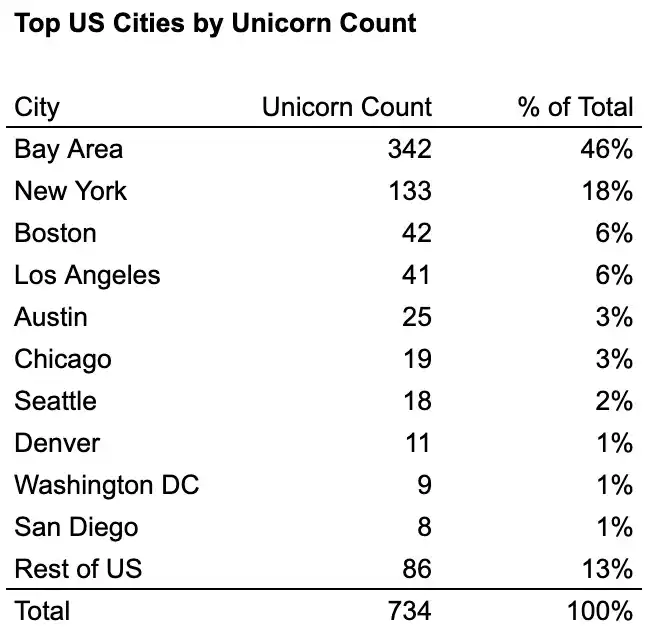
- Generative AI has turned the Bay Area into a supercluster. The Bay Area now accounts for about 39% of global unicorn market value, more than 4 times that of the second-ranked city. A year ago, this figure was only 29%. Looking solely at generative AI unicorns, the Bay Area's share is as high as 91%.
- Absolute dominance of US unicorns. The US added nearly $1.2 trillion in unicorn market value over the past year, accounting for about 65% of the global total. Europe has surpassed China in market value share but still only holds around 10%.
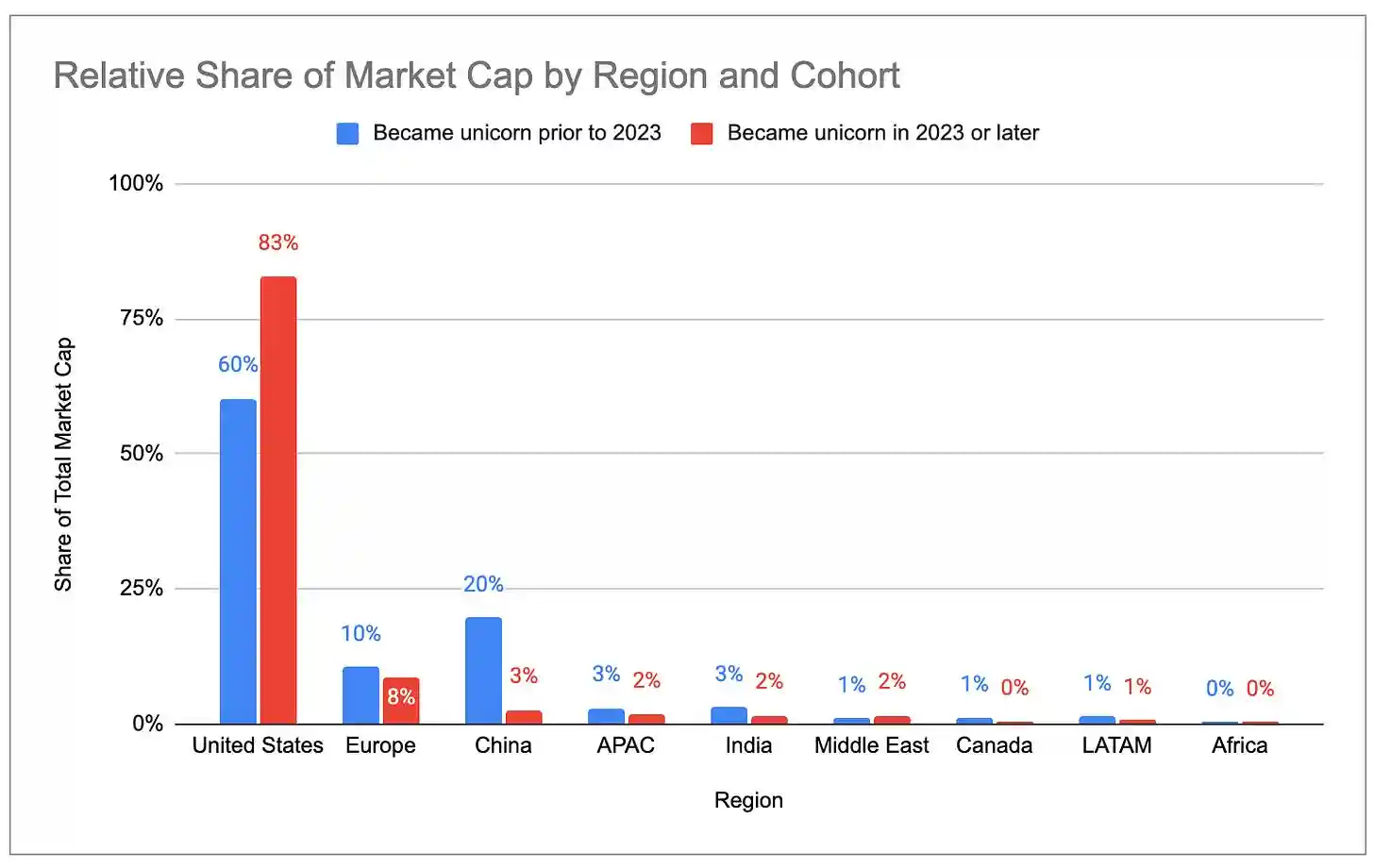
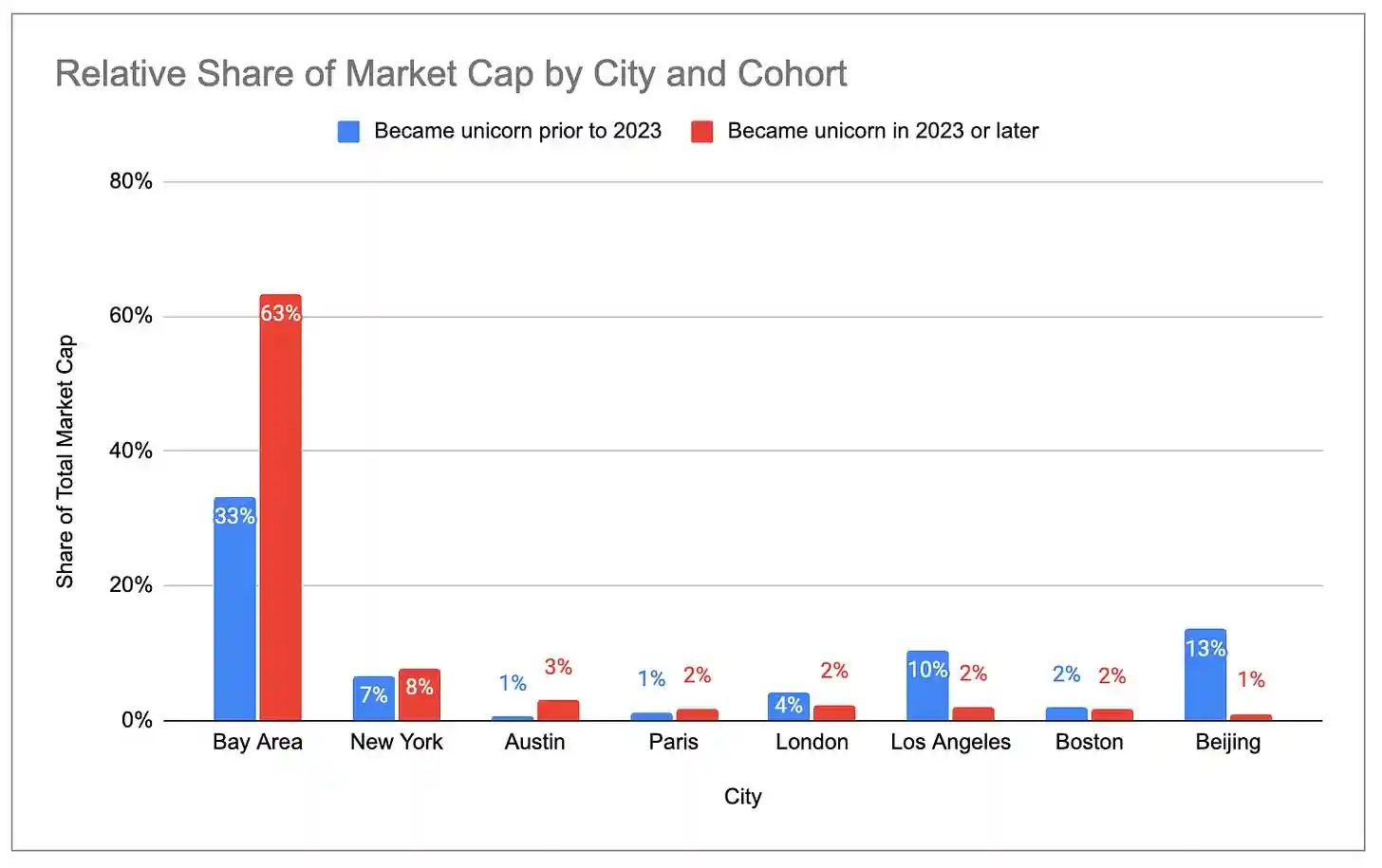
- Newer unicorns are more concentrated in the US and the Bay Area. Among unicorns born in 2023 and later, the US accounts for 83% of the total market value, compared to only 60% for those born in 2022 and earlier. The Bay Area's share is even more dramatic: 63% for the new generation vs. 33% for the old generation.
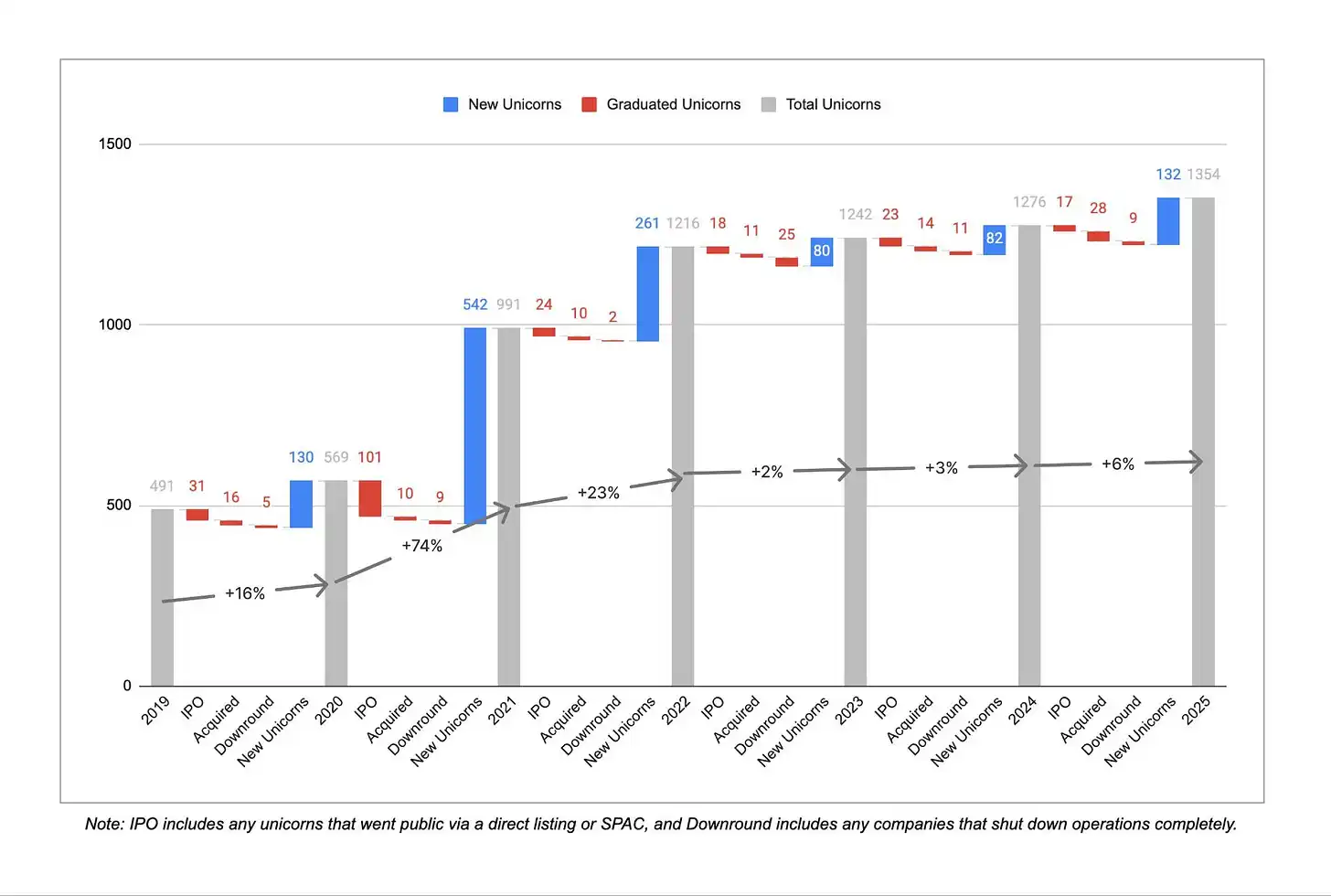
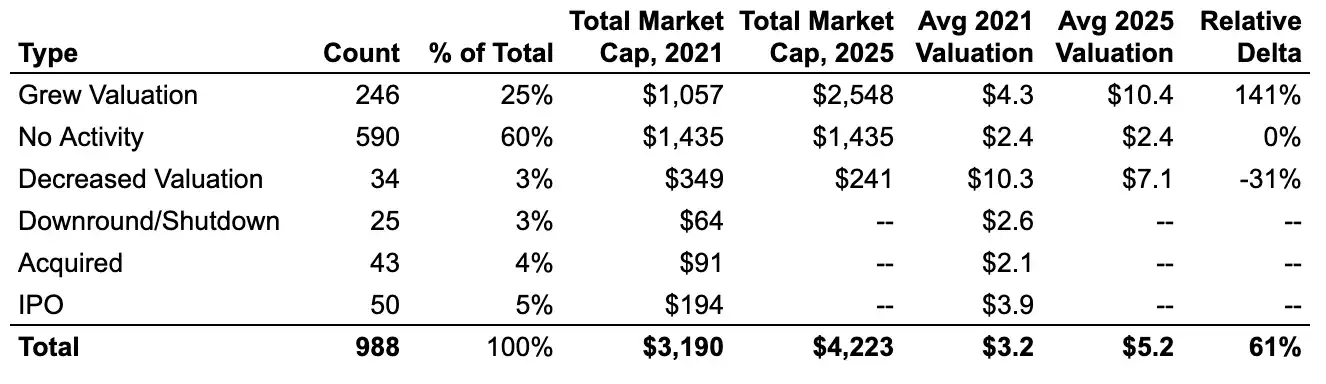
- The birth rate of new unicorns is slowing down. Only about 300 new unicorns were added between 2022 and 2025, compared to over 900 in the previous three years.
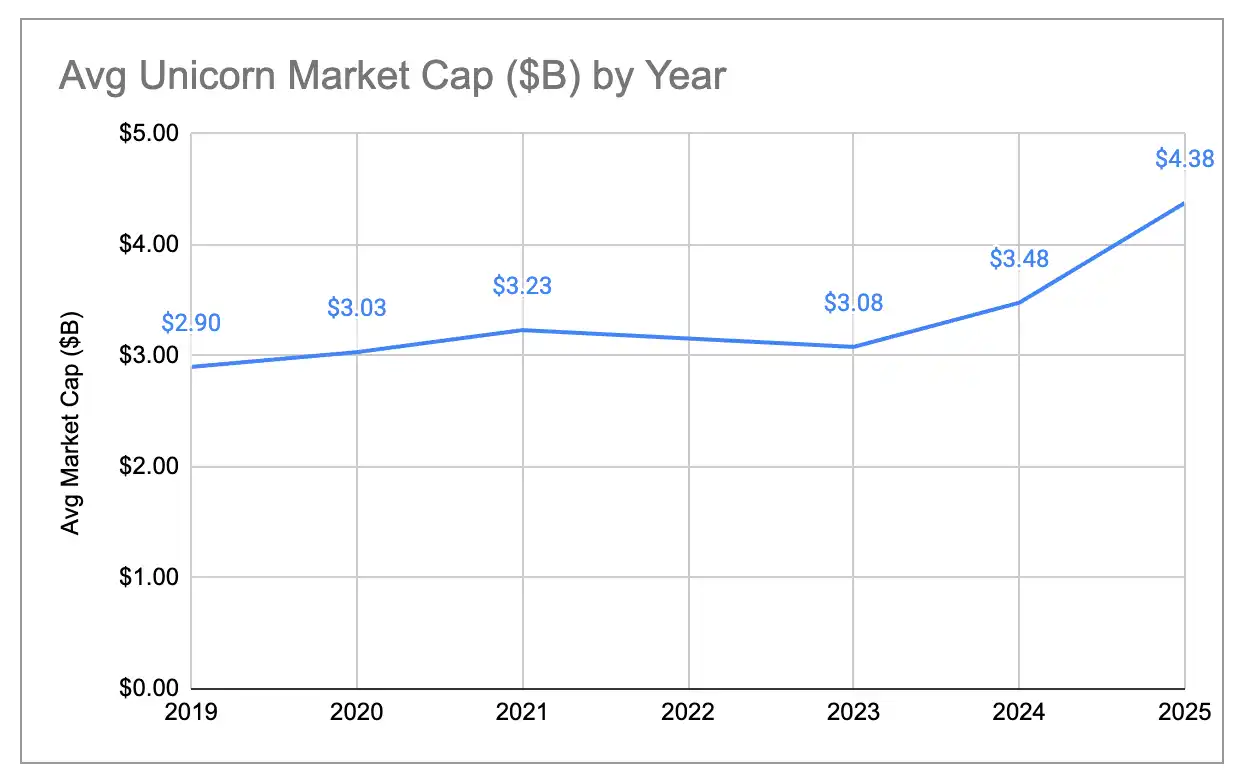
- But existing unicorns are more valuable than ever. The total number of unicorns increased by only 6% year-on-year, but the total market value grew by 33%. The average market value per unicorn reached its highest level in six years.
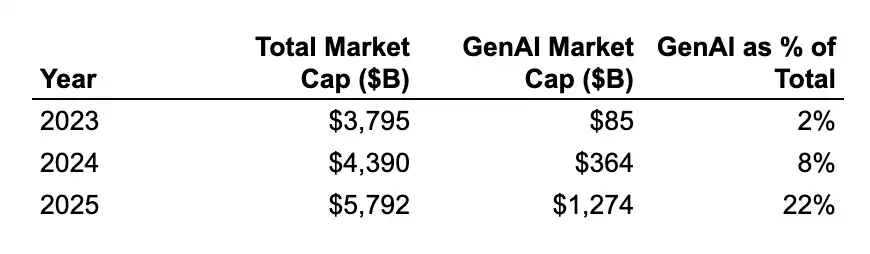
- Valuation growth is primarily driven by AI companies. In 2025, the valuation of generative AI unicorns grew by an average of about $2.2 billion year-on-year, compared to only about $400 million for non-AI unicorns. The share of generative AI in the global unicorn market value surged from 2% in 2024 to 22%. The concentration in the Bay Area will only continue to increase.
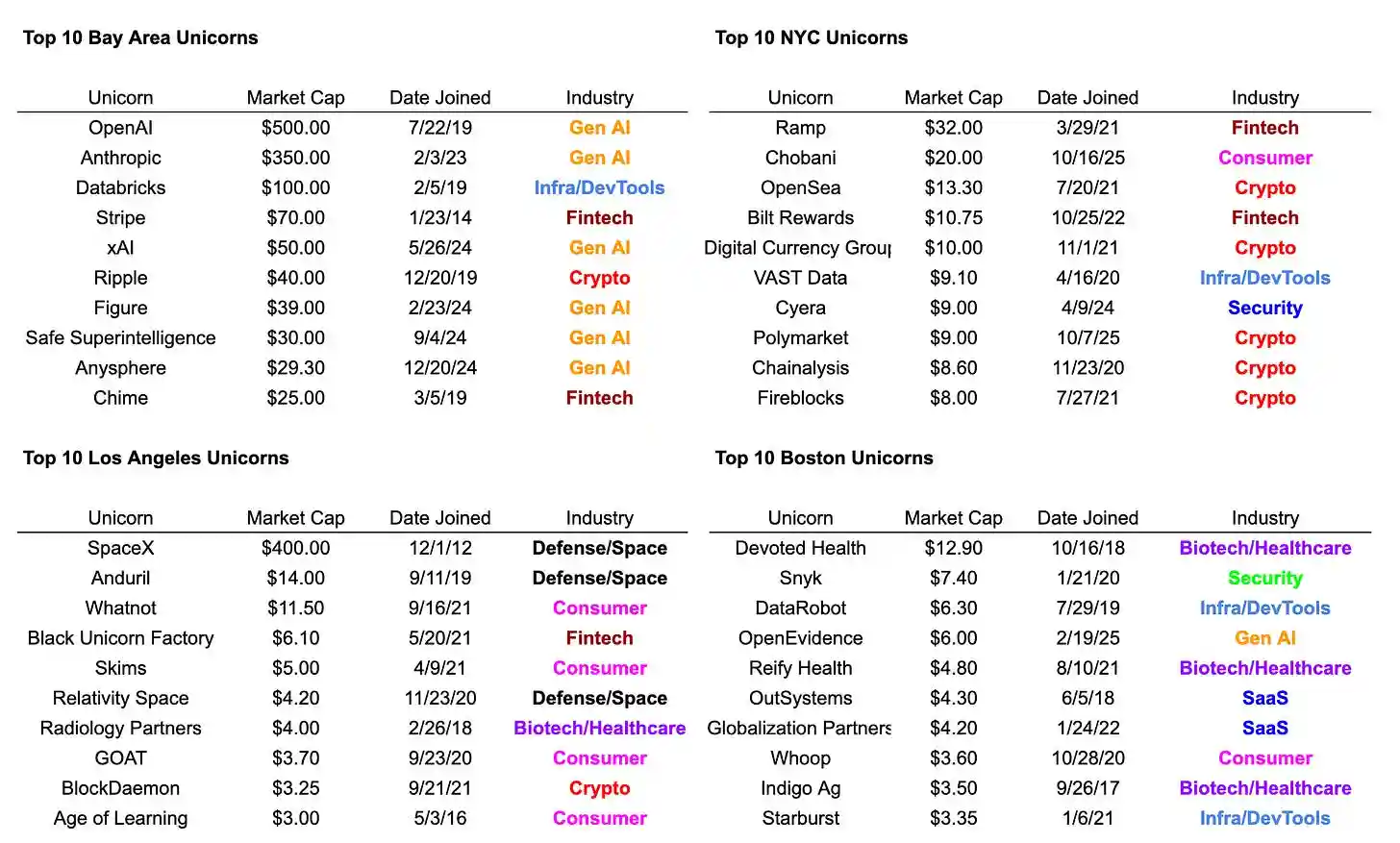
- Unicorn hubs cluster around specific industries. 6 of the Bay Area's top 10 unicorns are AI companies; 7 of New York's top 10 are fintech/crypto companies; 3 of Los Angeles' top 5 are defense/space companies (SpaceX, Anduril, Relativity, accounting for 83% of LA's total market value), and its top 10 includes 4 consumer companies.
Data Notes
All raw data comes from CB Insights, viewable here. A few points to note:
There is a lag in updating private financing rounds in public datasets; some unicorn valuations may not be the latest. For example, the latest funding rounds for Anduril, Stripe, and SpaceX are not reflected in the data.
Unicorn market value is, at best, a rough, lagging proxy indicator of startup ecosystem activity, and there are inevitable errors in mapping companies to valuations, cities, and industries. But we believe the data is accurate in its broad direction.
Unicorn Concentration
The geographical concentration of global unicorn market value is at an all-time high. The US accounts for 65% of all unicorn market value, up from 58% a year ago and 44% in 2020. The US share is about 4 times that of China, the second-ranked country.
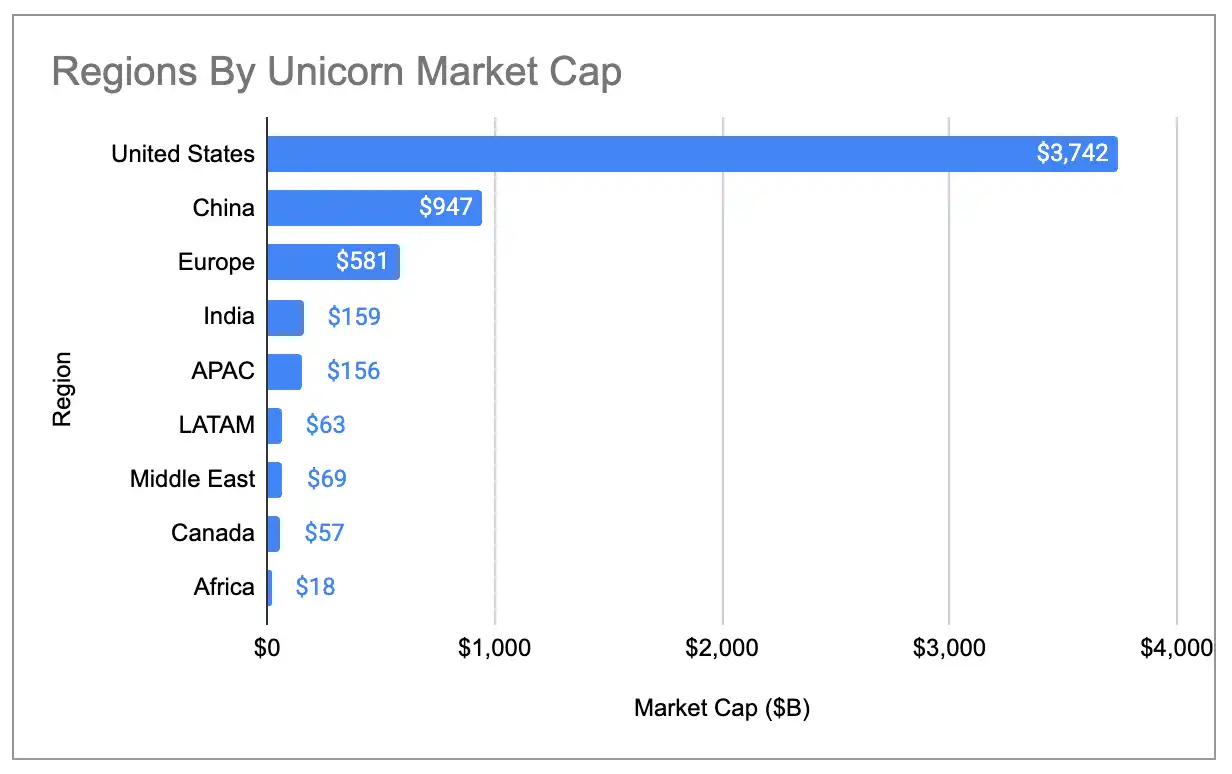
Caption: Global share of unicorn market value by country (including three outliers)
The Bay Area's unicorn market value is more than 4 times that of the second-ranked city, with its global share growing from 29% in 2024 to 39%:
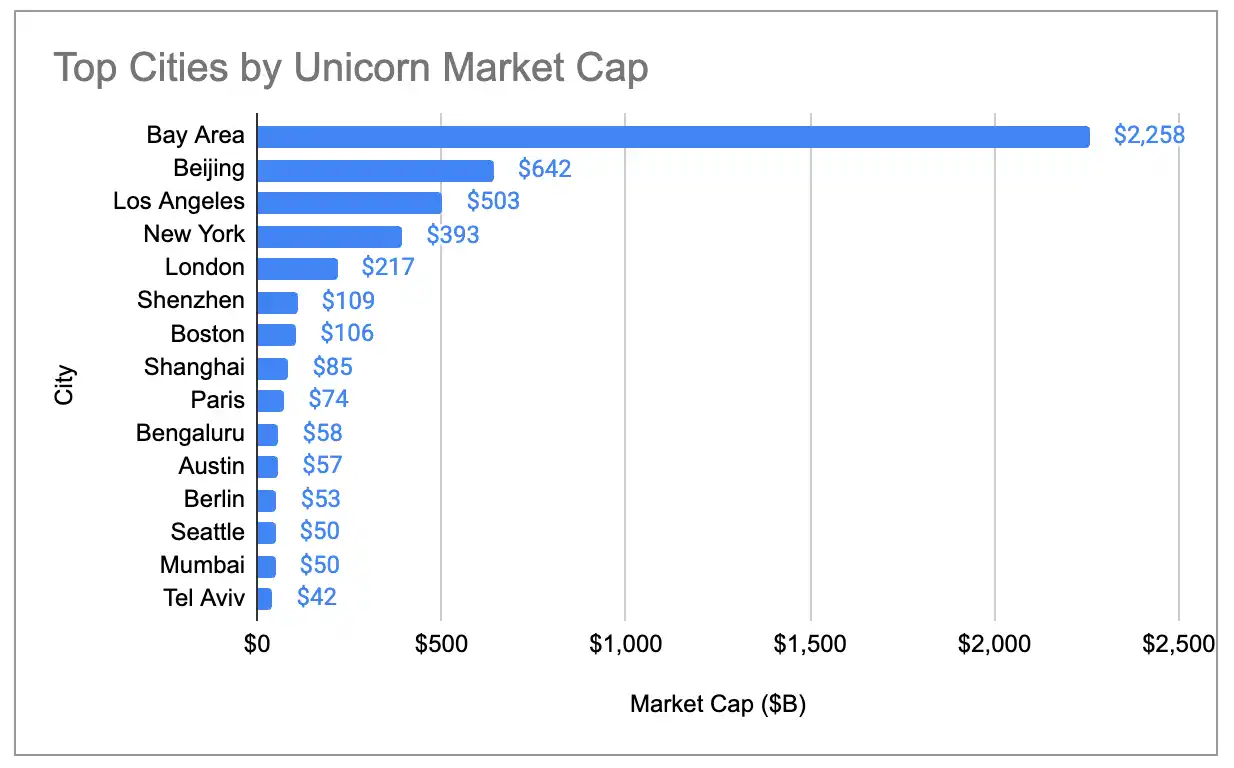
Caption: Global share of unicorn market value by city (including three outliers)
Even after removing the three largest outliers—OpenAI ($500B), SpaceX ($400B), and ByteDance ($300B)—the major ecosystems have continued to concentrate since 2019. The US share has steadily risen, while China's has steadily declined. Europe's total unicorn market value surpassed China's in 2024, and New York and London have also overtaken Beijing.
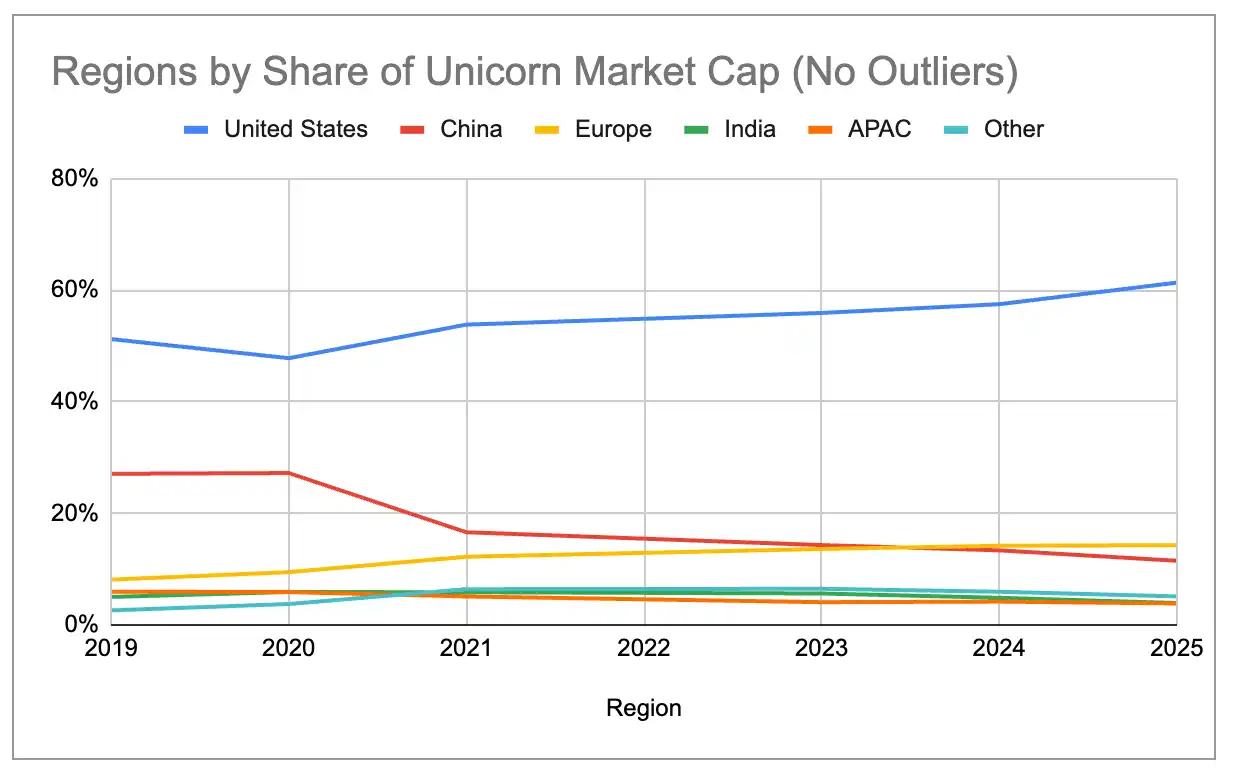
Caption: Global share of unicorn market value by country (excluding three outliers)
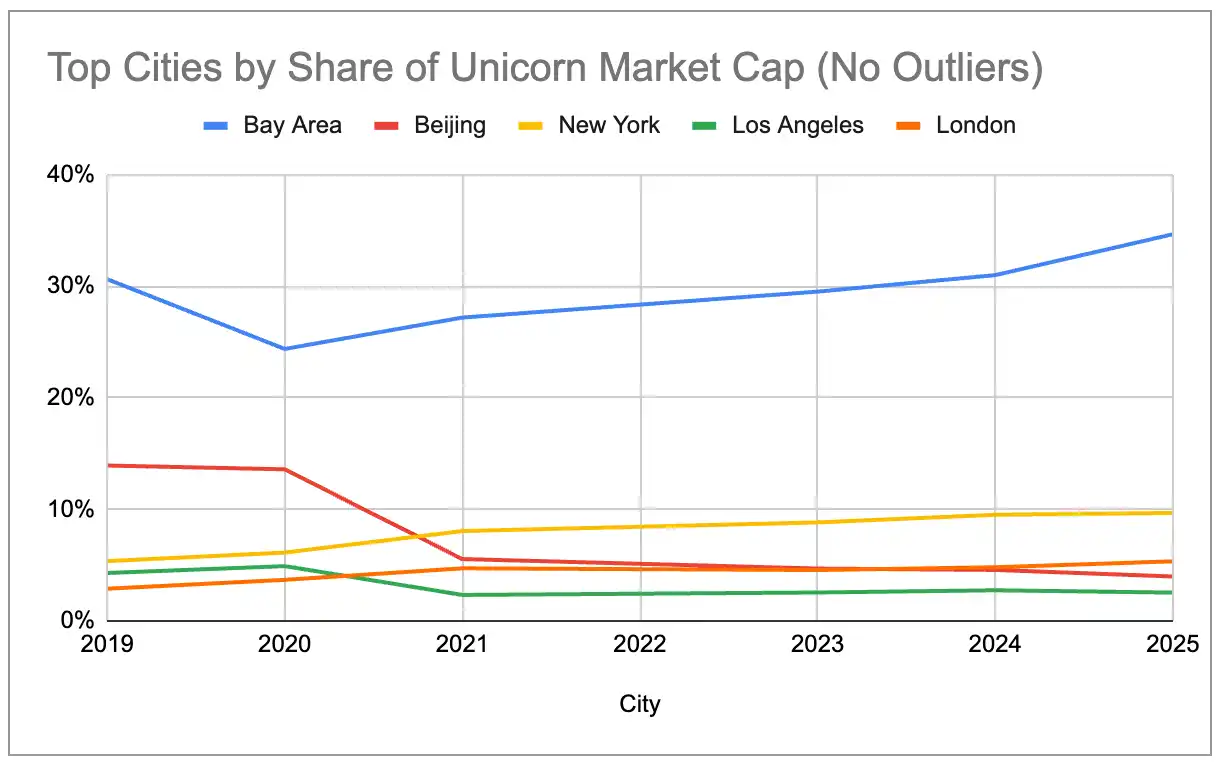
Caption: Global share of unicorn market value by city (excluding three outliers)
Super Concentration of Generative AI
Looking solely at the 97 unicorns whose core revenue comes from generative AI products/services, the cluster effect in the Bay Area is even more extreme. The Bay Area holds 91% of the global AI unicorn market value, with no other city exceeding 2%.
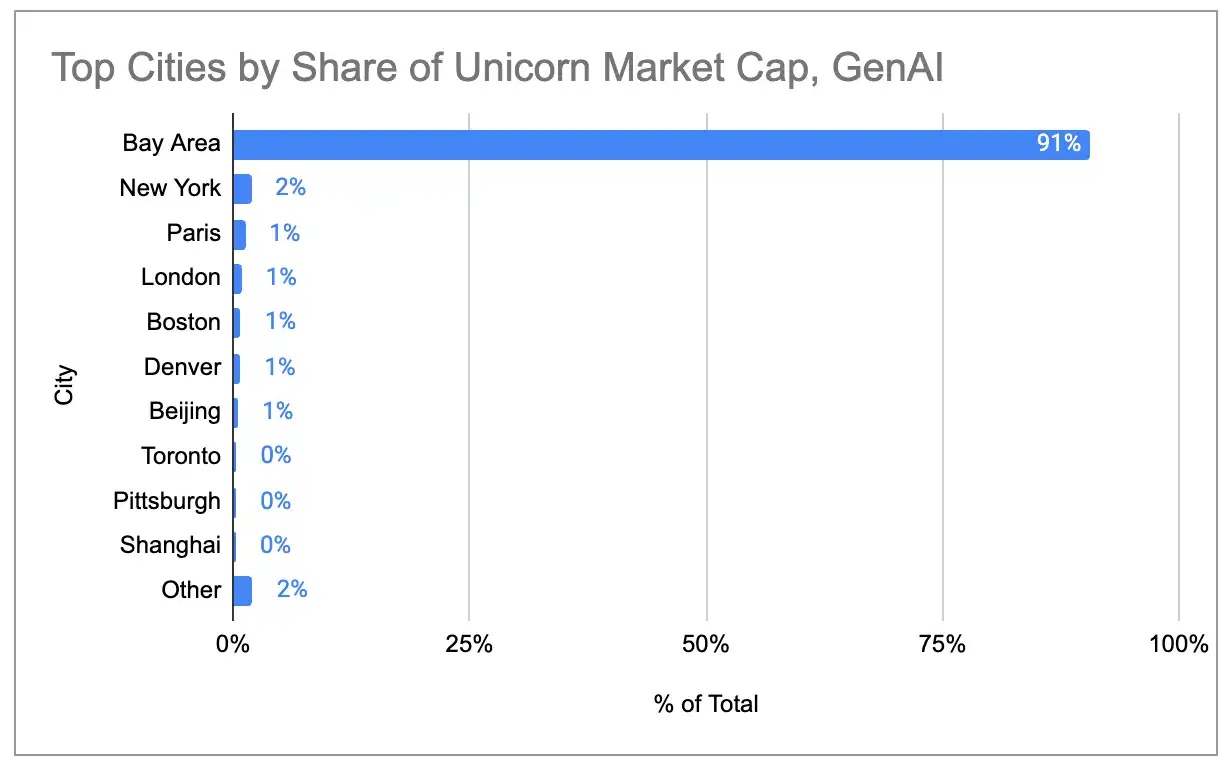
Caption: City distribution of generative AI unicorn market value
The total market value of generative AI unicorns has grown exponentially, with almost all the增量 coming from the US, especially the Bay Area.
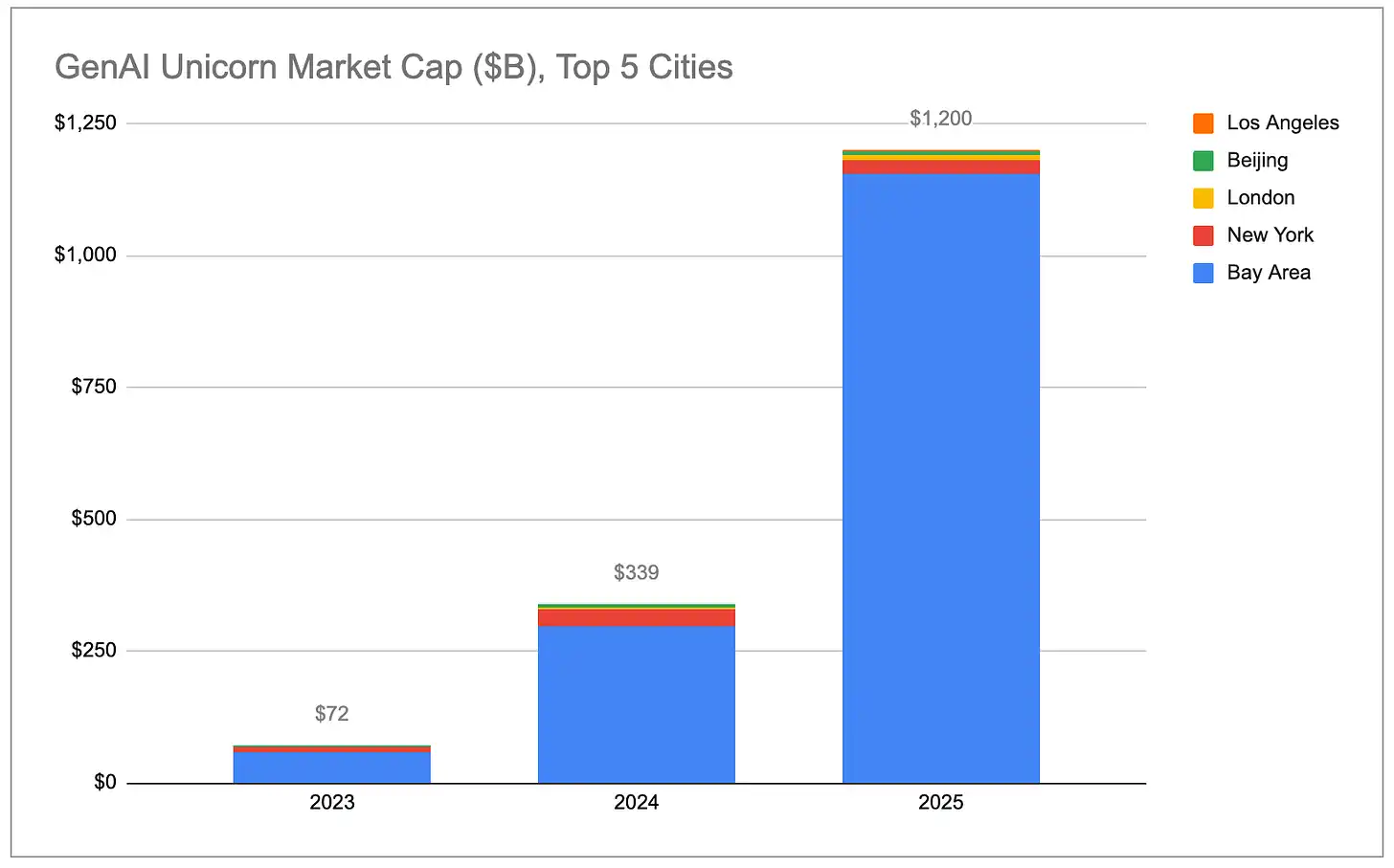
Caption: Total market value of generative AI unicorns (by country)

Caption: Total market value of generative AI unicorns (by city)
AI unicorn valuation growth far outpaces non-AI unicorns. The 48 AI companies that were unicorns throughout 2025 saw their total market value grow by $778 billion during the year. This figure exceeds the combined market value increase of the remaining 1100+ non-AI unicorns. Even excluding OpenAI (~$343B increase) and Anthropic (~$334B increase), the average year-on-year valuation growth for generative AI unicorns was about $2.2 billion, 5 times the average growth of non-AI unicorns (~$440 million).

Caption: Market value growth comparison: AI unicorns vs. non-AI unicorns
In relative terms, generative AI companies grew from 2% of the global unicorn market value in 2023 to 22%. If this trend continues, the Bay Area's share of the global unicorn market value will continue to expand, thanks to its de facto monopoly on top AI companies and talent.
<极div>