Pope Issues First AI Encyclical: 40,000 Words, 10 Key Points, Clarifying AI Anxiety

marsbitPubblicato 2026-05-28Pubblicato ultima volta 2026-05-28

Introduzione

Pope Leo XIV's historic encyclical "Magnifica Humanitas," released in May 2026, marks the Catholic Church's first major document addressing artificial intelligence. The 40,000-word text moves beyond theological abstraction to confront practical AI anxieties affecting society. It argues that AI is no longer a mere tool but an embedded environment influencing daily decisions in areas like employment, healthcare, justice, and information, often without users' awareness. The encyclical presents ten core concerns. It highlights that the central issue isn't just regulation, but who holds the underlying *power*—control over data, compute, and platforms—often concentrated in private entities. It warns that even developers cannot fully explain AI systems, creating accountability gaps. While AI can simulate human interaction and creativity, it cautions against treating it as a moral agent capable of bearing true responsibility or forming genuine relationships. Key risks identified include AI's role in opaque decision-making for jobs or welfare, the amplification of persuasive disinformation, and the potential for education to focus on tool use over critical thinking. The document stresses that work has value beyond efficiency, and AI should enhance human capabilities, not merely replace roles. It firmly states that irreversible decisions, especially involving life and death, must remain under human judgment. Ultimately, the encyclical frames AI's challenge as anthropological, not ju...

On May 15, 2026, Pope Leo XIV signed his name on a document spanning over forty thousand words. That day marked exactly the 135th anniversary of the release of the encyclical "Rerum Novarum" by Pope Leo XIII. Signed in 1891, that document was the Catholic Church's first formal response to the impact of the Industrial Revolution on the labor order.

Ten days later, on May 25, 2026, Leo XIV personally attended a press conference, formally promulgating this encyclical titled "Magnifica Humanitas" to the world. This is the first encyclical in the history of the Catholic Church to focus on artificial intelligence as its core theme. At this press conference, besides cardinals and theology professors, there was also Chris Olah, co-founder of Anthropic.
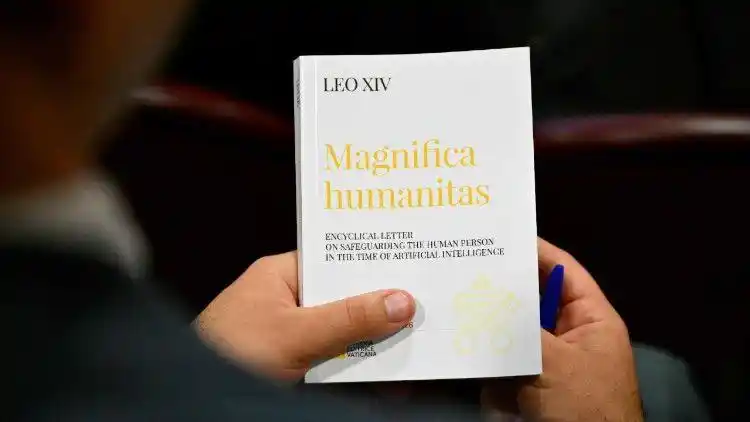
(Image source: Vatican News)

Many find it absurd. AI is science; the Church is theology. While the two disciplines have their own moral concerns, they never seemed to sit at the same table. Having the Vatican talk about algorithms is like asking a weather bureau to judge philosophy—completely unrelated.

However, upon a detailed reading of the "Magnifica Humanitas" encyclical, Lei Technology discovered that this time the Vatican did not use "God" to interpret AI from a lofty position. Instead, it engaged more down-to-earth, discussing topics like war, employment, education, healthcare, and public decision-making—topics the public often struggles to delve into deeply. We have distilled ten core viewpoints from the encyclical to see what the Pope actually said and what it means.

The Ten Viewpoints of the Encyclical, Hitting the Core of People's AI Anxieties

"Magnifica Humanitas" (Sublime Humanity) exceeds forty thousand words, covering war, employment, education, healthcare, information, and public decision-making—touching on almost all current AI controversies. However, it is essentially not a technical document but a moral checklist. It doesn't tell you how to train models; it asks: Whom is AI serving, who is responsible, and who is being left behind? We have extracted ten viewpoints most directly relevant to China's current reality from the encyclical, along with detailed interpretations.

1. AI Is Not the Enemy, But It Has Entered Daily Decision Systems

Technology itself is not the enemy of humanity, but emerging technologies have embedded themselves into daily life and have begun influencing decision-making processes and social imagination.

Leo XIV's attitude is exactly as he wrote. He does not want to label AI as a 'dangerous technology' but describes a change that has already occurred: AI is no longer just a tool but is gradually becoming the environment.

In the past, you had to actively open software to use a technology; now, many AI decisions happen in the background, and users may not even know they have already been assessed by a system. In China, short-video platforms use algorithms to decide content distribution; e-commerce platforms use algorithms to rank products; recruitment platforms perform job matching; office software summarizes meetings and generates documents; educational platforms grade homework and analyze learning situations. Ordinary people might think they only occasionally ask large models, but the real change is that AI has already intervened before they make choices.

(Image source: Lei Technology chart)

Many people might still be thinking or 'resisting' the AI wave by not using AI themselves, but in reality, AI large models have already penetrated our lives deeply. Almost no one can truly escape.

2. The AI Issue Isn't Just About Regulation, But Who Wields Technological Power

The problem is not limited to regulation. Many of the key actors driving technological development today are private institutions with transnational capabilities and immense resources.

Many AI discussions stop at 'whether to regulate.' But the encyclical probes deeper: Who exactly holds technological power? In my view, this is the sharpest point in the entire 40,000-word encyclical and a question the entire industry struggles to answer perfectly.

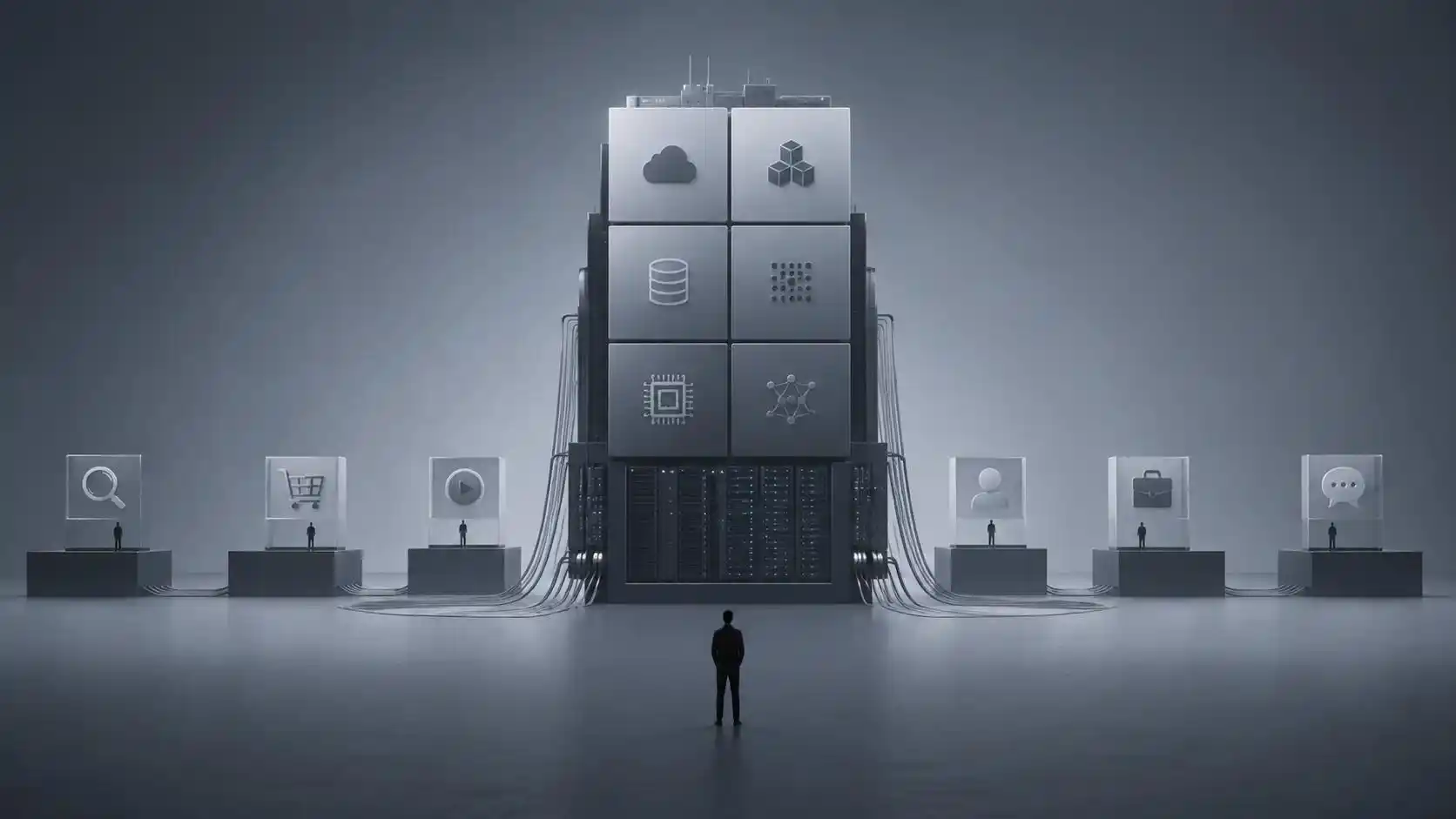
In the AI era, power comes not only from model parameters but also from computing power, data, cloud platforms, access points, and workflows. For example, Baidu has search and intelligent cloud; Alibaba has cloud and the Tongyi system; Tencent has WeChat, Enterprise WeChat, and office collaboration; ByteDance has content distribution and Feishu; DingTalk and WPS are also embedding AI into enterprise processes. A small or medium-sized enterprise wanting to develop an AI application often cannot bypass APIs, cloud services, model licensing, and platform rules.
(Image source: Lei Technology chart)

In my view, AI industry competition appears to be about model capability, but at its foundation, it's about control over infrastructure. Whoever can integrate AI into workflows for office work, search, content, transactions, and enterprise management is not just selling tools but reshaping the next generation of digital infrastructure. This is why the question of 'who to regulate' is so difficult to answer.

3. AI Is Powerful, But Even Developers Cannot Fully Explain It

AI offers many astonishing possibilities, but even its designers have limited understanding of the internal mechanisms of generative AI systems.

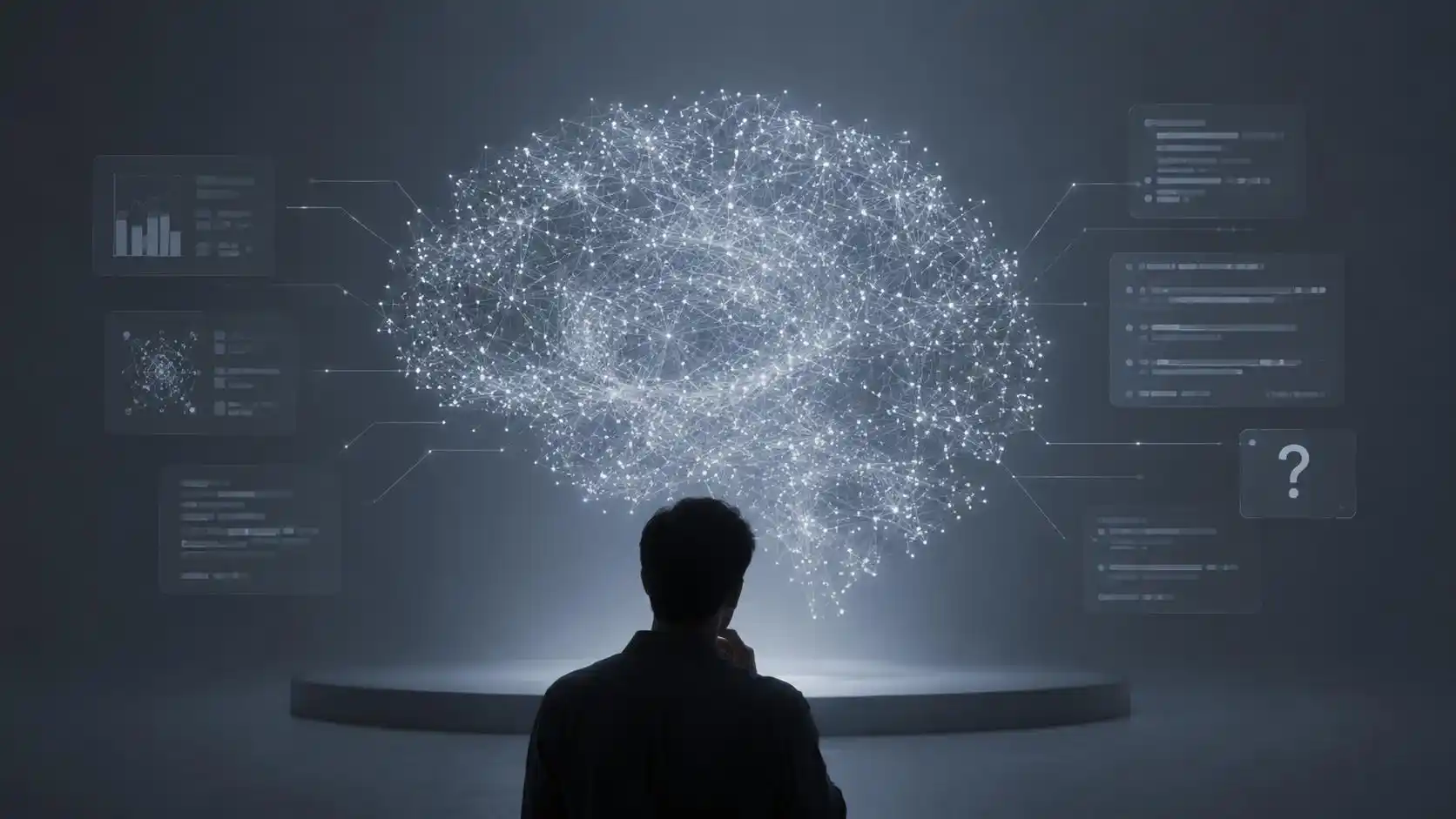
Over the past year, domestic enterprises' attitudes towards large models have shifted from 'must adopt AI' to 'which areas can we safely delegate to AI?' Customer service, marketing copywriting, meeting minutes, code assistance, and knowledge base Q&A are relatively easy to implement because error costs are controllable and human modification is convenient. However, financial risk control, medical diagnosis, legal review, and government services are different. In these scenarios, AI cannot just provide a seemingly correct answer; it must also explain its reasoning, retain logs, support audits, and allow for human takeover when necessary.
(Image source: Lei Technology chart)

Now, many enterprises procuring AI products no longer just look at how powerful the model is. They also consider data isolation, permission systems, on-premises deployment, and audit tracking capabilities. This change indicates one thing: the next threshold for enterprise AI is not whether it can generate but whether it can be held accountable. The more a model resembles an expert, the more users need to know when it might be unreliable.

4. AI Must Not Be Treated as Human Intelligence, Nor as a Moral Agent

AI is not a pile of data but a subject possessing freedom, relationships, and moral responsibility.

Now, many AI products strive to become 'more human-like.' They comfort, act coquettishly, remember preferences, and maintain long-term relationships with users. CCTV reported on a reminder from the Jiangsu Consumer Council about risks associated with AI companions, including privacy leaks, consumption traps, and emotional dependency. Xin Kuai Bao also reported on platforms like "Xingye" and "Cat Box," where young people pay to 'exclusively own' virtual lovers' AI characters. After popular characters are bought out, other users collectively experience 'heartbreak.'

(Image source: Lei Technology chart)

This actually shows users are not buying a piece of code; they are investing real emotions. AI companionship is not inherently wrong; it does fulfill needs for loneliness and companionship. But products must clearly define boundaries. AI can simulate relationships but cannot bear the responsibilities inherent in real relationships. This isn't moral preaching but a boundary that should be seriously considered at the product design level, especially when targeting minors, the elderly, and emotionally vulnerable individuals.

5. AI Decisions Are Affecting Employment, Healthcare, Welfare, and Justice

Employment, welfare, judicial, and medical decisions—sensitive choices—may be influenced by data systems. Therefore, mechanisms for transparency, accountability, and human oversight are essential.

Recruitment is the scenario where ordinary people most easily feel the pressure of AI decisions. First Financial reported that BOSS Zhipin is testing an end-to-end AI recruitment Agent called "DeepHire," covering AI resume polishing, automatic application submission, batch resume parsing on the enterprise side, automatic replies, and intelligent interview scheduling. AI entering the recruitment process certainly improves efficiency; HR is no longer overwhelmed by massive resumes, and job seekers can better present their experiences. But the problem lies here: if resumes are first batch-parsed, scored, and sorted by AI, job seekers might be filtered out by the system before ever being seen by a human.

My view is that AI can assist in screening but should not leave job seekers facing a completely black-box rejection. At the very least, when affecting hiring decisions and interview opportunities, platforms should retain human judgment, clearly mark AI-generated content, and provide necessary appeal channels. This is not limiting AI but leaving a door open for those rejected by the system. Similar dilemmas exist for beneficiary decisions in welfare agencies and judicial determinations of illegal acts.

6. Morally Defined by a Few Is Insufficient; AI Resources Should Serve the Common Good

If ethical standards are defined by only a few, then even more ethical AI is insufficient. Data, knowledge, science, and technology should serve the common good.

Making AI public does not mean demanding all models be free or excluding commercial companies. It means preventing the definition, use, and benefit rights of AI from becoming overly concentrated. This is similar to the ongoing debate about open-source versus closed-source models.

Models like Tongyi Qianwen and DeepSeek continue to open some of their capabilities. Smart computing centers across regions and core nodes of the National Supercomputing Internet also emphasize inclusive computing power and open-source model ecosystems. Abroad, initiatives like NAIRR (National AI Research Resource) aim to provide computing power, data, and model resources to universities, research institutions, and small teams.

I believe that if only a few companies can train models, access computing power, and control high-quality data, while ordinary entrepreneurs, SMEs, and university teams can only work on peripheral applications, AI will instead create new digital divides. A truly healthy AI ecosystem should allow more people to participate, not just wait for tech giants to open a few APIs. In this regard, China's current AI environment is relatively more open, with companies like Alibaba and DeepSeek providing assistance to universities and SMEs.

7. Truth Is a Public Good; AI Amplifies Misinformation and Cognitive Manipulation

Misinformation did not originate with AI, but AI enables it to be more massive, persuasive, and harder to distinguish from genuine dissemination.

This is an age-old problem. Ultimately, it's not about whether AI has hallucinations, but that the cost of using AI for fabrication has become very low.

CCTV reported cases of people using AI to fabricate fake news like "Yichang, Hubei Tour Boat Capsizes," accompanied by AI-processed fake images. In Dali, Yunnan, AI was used to create fake traffic accident scene videos. After an earthquake in Kuqa, Xinjiang, self-media used AI to generate images and audiovisuals inconsistent with the real disaster, publishing false information like "collapsed houses." Images, videos, and so-called on-scene descriptions can all be generated together, making it harder for ordinary people to distinguish.

(Image source: Lei Technology chart)

The state has already issued the "Measures for Labeling AI-Generated and Synthesized Content," requiring labeling of such content. Platforms are also improving their ability to detect fakes. But I believe this is not the end. In the AI era, what is truly scarce is not content but trustworthy content. The more content proliferates, the more important its source becomes.

8. AI Education Must Not Just Teach Tool Use; It Must Preserve Questioning and Judgment

AI education cannot be reduced to technical training. Schools should still cultivate the ability to question, relate, and think critically.

Regarding this part, China is actually at the forefront globally. For example, in 2025, the Ministry of Education released the "Guidelines for General AI Education in Primary and Secondary Schools" and the "Guidelines for the Use of Generative AI by Primary and Secondary School Students." The former emphasizes a tiered, progressive AI general education system, while the latter clarifies usage norms and safety boundaries for each educational stage.

However, if AI education merely teaches students to write prompts and get answers from models, it cultivates not intelligent societal abilities but more proficient dependency. Nowadays, students use AI to write essays, solve problems, and create PPTs; teachers use AI to generate lesson plans, test questions, and comments. Efficiency improves, but the thinking process may be compressed.

Therefore, I also agree with this viewpoint in the encyclical: AI in educational settings should be a tool, not a ghostwriter. Truly good AI education is not about getting answers faster but about enabling students to ask better questions, verify, compare, and express—in other words, learning the thinking process is more important than learning how to get AI to provide solutions directly.

9. AI Will Reshape Labor, But Work Is Not Just About Efficiency

AI can enhance productivity by taking over routine repetitive tasks, but work is also an important place for human development and social participation.

Currently, the attitude of global enterprises towards AI deployment is very uniform: "reducing costs and increasing efficiency," which has become a standard move in almost every industry. But the question is whether AI is augmenting humans or replacing them—this has always been a source of anxiety about AI. If AI in the office merely enables employees to complete reports and meeting minutes faster, it can improve work efficiency, and employees can have more free time for personal activities after finishing work. But if enterprises only use AI to compress positions, lower wages, and strengthen monitoring, it creates new insecurity.

In fact, a healthy AI workflow should allow employees to shift towards judgment, communication, creation, and complex problem-solving, not turn them into repair workers for model outputs.

10. Irreversible Life-and-Death Decisions Cannot Be Entrusted to AI

Lethal or other irreversible decisions should not be delegated to automated systems. Human judgment and moral responsibility cannot be reduced to calculation.

On the surface, this talks about military AI, but it equally applies to all high-risk scenarios like autonomous driving, medical emergencies, industrial robots, and security systems.

Commercialization of intelligent driving in China is rapid. Automated parking, unmanned delivery, and unmanned mining trucks are accelerating deployment. Users care about experience; enterprises care about cost and scale. But once an accident occurs, questions immediately arise: Was it the user's failure to take over in time, or a system misjudgment? An algorithm issue or a sensor problem? The automaker's responsibility or the driver's? Medical AI is similar. It can indeed assist in reading scans, triage, and generating medical records, but it cannot make irreversible judgments without a doctor being responsible.

High-risk scenarios cannot only emphasize the level of intelligence; they must also clarify human supervision, emergency takeover, accident review, and the chain of responsibility. So-called "disarming AI," in an industrial context, means not allowing technological capability to cross the boundary of responsibility.

40,000 Words, 10 Viewpoints: The Pope Wants to Say One Thing

After dissecting this 40,000-word encyclical, Lei Technology believes the Pope essentially wants to clarify one thing from start to finish: technology is not neutral.

Simply put, what AI looks like depends on who builds it. ChatGPT designed by OpenAI, Gemini created by Google, Doubao built by ByteDance—each has its own "preferences and biases." Whose values enter the training data, whose interests determine the product direction, who controls computing power and access points, who formulates the so-called "ethical frameworks"—all these are becoming part of the experience we feel daily when interacting with AI.

For example, when AI enters recruitment, the screening logic is defined by the platform, and job seekers don't know by what criteria they are filtered. When AI enters education, what constitutes a 'good answer' is determined by the model, and students' thinking gradually aligns with the model. When AI generates content, what is 'credible' is determined by algorithmic distribution, and misinformation circulates in the guise of truth. Behind each scenario lies the same question: Who is defining these rules, and whom are these rules shaping?

The encyclical does not name any company, but it speaks to all companies. What the Pope wants to highlight is that every AI tool you use is not just a tool but a product of certain value judgments. Sometimes you find an AI useful enough, perhaps because it's sufficiently "obedient to you."

In the document, Leo XIV uses a word almost never appearing in AI discussions: "anthropology." He says the challenge posed by AI is fundamentally not a technological challenge but an anthropological one.

AI can write, create music, generate images, simulate dialogue, and make seemingly reasonable judgments. When machines can do all these, humans are forced to answer a question they have long been able to avoid: What is the meaning of us doing these things? If AI writes more fluent articles, generates more pleasing music, and gives more efficient advice, then what is the value of "humans doing this"?

The encyclical contains this passage:

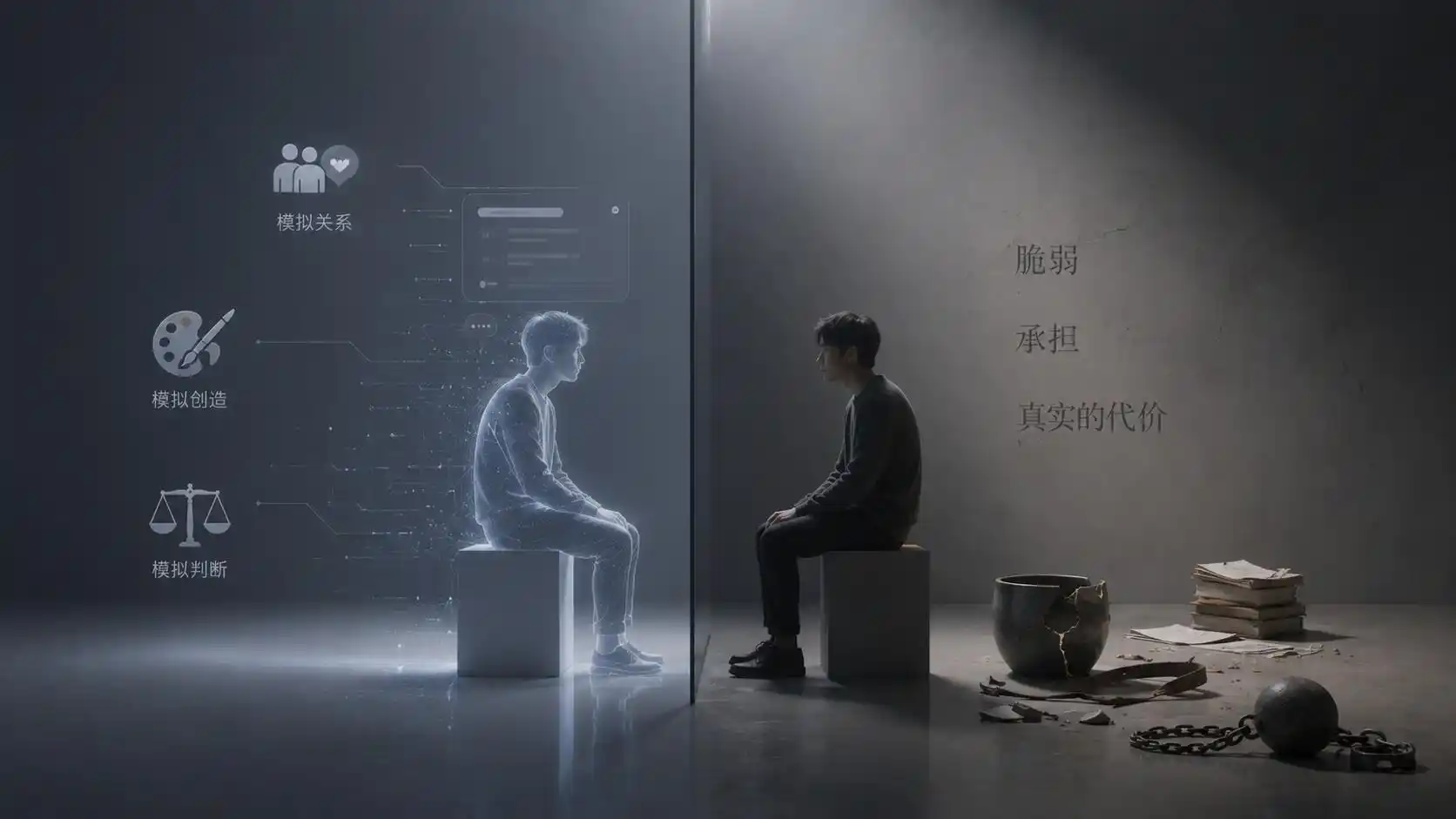
AI can simulate relationships but cannot bear the responsibilities within them; AI can simulate creation but cannot possess the will behind creation; AI can simulate judgment but cannot be accountable for the consequences of judgment. It can achieve the surface, but beneath that surface—the things that make 'human action' meaningful, like vulnerability, commitment, and real cost—it has none.

This makes us think of 1891 when the Catholic Church signed the "Rerum Novarum" encyclical. The Industrial Revolution arrived, and humanity was also experiencing a similarly difficult time. Machines replaced much physical labor but did not replace humans. Humans redefined their position and found things machines couldn't do. This time, the difference is that AI is entering the cognitive domain—creation, judgment. These parts once considered 'uniquely human' are being systematically simulated.
(Image source: Lei Technology chart)

Leo XIV calls this process "the eclipse of the human sense." If we do not seriously answer "what is a human?", AI will answer for us. And its answer comes from training data. As for who provides that training data, that depends on who holds the initiative with large models.

The line in the encyclical, "Technology is never neutral," is correct. But the question immediately following is: Who has the ability to turn the expectation of 'neutrality' into the reality of 'constraint'? Leo XIV does not answer this question, nor can he. What he can do is place a set of moral language into the pool of public discourse, let it circulate, and let it influence those who set rules, deploy technology, and use products. In fact, this has always been what the Church does.

Therefore, this is not absurd. At a time when tech companies, governments, international institutions, and society have yet to find answers, a two-thousand-year-old institution has spoken first.

This article is from "Lei Technology."

Domande pertinenti

QWhat is the main argument presented by Pope Leo XIV in the AI encyclical 'Magnifica Humanitas'?

AThe main argument is that technology, particularly AI, is not neutral. Its development and application are shaped by the values, interests, and power structures of those who create and control it. The encyclical frames AI's challenges as fundamentally anthropological, forcing humans to reconsider what makes human actions meaningful when machines can simulate creativity, judgment, and relationship.

QAccording to the article, what are two specific areas where AI decision-making is raising significant ethical concerns?

ATwo specific areas are employment (e.g., AI-powered resume screening and hiring processes that could create opaque rejection systems) and public information (e.g., AI's role in amplifying and making disinformation more convincing and harder to distinguish from truth).

QWhat does the encyclical suggest about the relationship between AI and human responsibility in high-stakes scenarios?

AThe encyclical asserts that irreversible decisions, especially those involving life and death, should not be delegated to automated systems. Human judgment and moral responsibility cannot be reduced to calculation. It calls for clear human oversight, emergency takeover protocols, and defined chains of responsibility in areas like autonomous weapons, healthcare, and self-driving cars.

QHow does the article contrast the current AI revolution with the Industrial Revolution discussed in the 1891 encyclical 'Rerum Novarum'?

AThe Industrial Revolution primarily replaced human physical labor, leading people to redefine their roles around tasks machines couldn't do. The AI revolution, however, is entering the cognitive domain—simulating creativity, judgment, and relationship—areas traditionally considered uniquely human. This presents a deeper challenge to human identity and purpose.

QWhat is one of the key concerns the encyclical raises regarding AI development power dynamics, according to the article's analysis?

AA key concern is that the power to define, develop, and deploy AI is concentrated in a few large, resource-rich private corporations (e.g., tech giants controlling data, compute, models, and platform ecosystems). This raises the risk of creating a new digital divide where only a few entities shape the rules and benefits of AI, potentially undermining the common good.

Letture associate

Morning News | Coinbase Partners with Standard Chartered to Expand Multi-Currency Fiat Channels; Sharplink and Forward to be Included in Russell Indices; JPMorgan May Issue Stablecoin in the Future

Daily Crypto Recap: Key Developments Institutional adoption continues: Coinbase partners with Standard Chartered to expand multi-currency fiat rails for institutions via Coinbase Prime, supporting AUD, SGD, CAD, CHF, EUR, and GBP. Meanwhile, Sharplink and Forward Industries, companies holding significant ETH and SOL reserves respectively, are set to be included in the Russell indexes, providing indirect crypto exposure to traditional index investors. Regulatory and compliance moves are in focus. Hong Kong's monetary authority announced new measures for investment accounts of mainland Chinese investors, including retroactive document checks to January 2023. Prediction market Polymarket is considering implementing KYC requirements to address sanctions and legal risks. Major financial players signal deeper involvement. JPMorgan Chase CEO Jamie Dimon suggested the bank might issue a stablecoin in the future. Concurrently, Falcon Finance and Anchorage Digital launched fUSD, a compliant, institution-focused stablecoin. Market sentiment presents a mixed picture. Bitmine's Tom Lee predicts an incoming crypto "supercycle," driven by Wall Street tokenization and AI agents, with Ethereum as a key beneficiary. However, a prominent trader cautions that the current period of investor losses may not be long enough to confirm a bear market bottom, and TD Cowen analysts note diminished chances for U.S. crypto market structure legislation this year due to a worsening political climate. Other notable news includes a16z crypto's observation that most tokenized assets are merely "digitized" and not actively used in DeFi, South Korea's crypto trading volume falling to about 8% of KOSPI's, and the Chinese Supreme Court stating it will research judicial rules for virtual currency cases.

链捕手1 h fa

Morning News | Coinbase Partners with Standard Chartered to Expand Multi-Currency Fiat Channels; Sharplink and Forward to be Included in Russell Indices; JPMorgan May Issue Stablecoin in the Future

链捕手1 h fa

Sitting on a Trillion-Dollar Market, Why Hasn't Real Estate Tokenization Taken Off?

For years, real estate tokenization has been hailed as a breakthrough technology poised to democratize property investment. In theory, it promises fractional ownership of premium assets, rapid transactions, and enhanced liquidity. Yet, in practice, it has failed to gain traction, accounting for less than 0.1% of the global real estate market. The core issue is not a lack of tokens, but the absence of a robust legal, operational, and compliant framework that grants them credibility as financial instruments. The industry initially erred by prioritizing technology over investor needs, creating products with unclear ownership and unreliable liquidity. Key infrastructure remains missing: legally sound ownership structures, compliant transfer mechanisms, professional servicing, and interoperability with traditional finance. This regulatory ambiguity and operational complexity deter institutional investors, who already have access to established, well-governed investment channels. A mature model would feature low minimum investments in institutional-grade assets, transparent rental income distribution, and genuine liquidity through regulated secondary markets. While regulatory progress in regions like the UAE and growth in other tokenized asset sectors (like treasuries) are positive signs, the focus must shift from issuing tokens to building foundational systems. The investment proposition of tokenized real estate is not to create new returns, but to improve access, efficiency, and liquidity for existing income-generating properties. For mainstream adoption, the sector must demonstrate tangible economic advantages over traditional models, not just technical novelty. The next phase depends on proving scalable, compliant operations with auditable track records. The barrier is no longer technology, but infrastructure and regulation. The vision remains unfulfilled until this gap is bridged.

marsbit1 h fa

Sitting on a Trillion-Dollar Market, Why Hasn't Real Estate Tokenization Taken Off?

marsbit1 h fa

Trading

Spot
Futures

Articoli Popolari

Cosa è GROK AI

Grok AI: Rivoluzionare la Tecnologia Conversazionale nell'Era Web3 Introduzione Nel panorama in rapida evoluzione dell'intelligenza artificiale, Grok AI si distingue come un progetto notevole che collega i domini della tecnologia avanzata e dell'interazione con l'utente. Sviluppato da xAI, un'azienda guidata dal rinomato imprenditore Elon Musk, Grok AI cerca di ridefinire il modo in cui interagiamo con l'intelligenza artificiale. Mentre il movimento Web3 continua a prosperare, Grok AI mira a sfruttare il potere dell'IA conversazionale per rispondere a query complesse, offrendo agli utenti un'esperienza che è non solo informativa ma anche divertente. Cos'è Grok AI? Grok AI è un sofisticato chatbot di intelligenza artificiale conversazionale progettato per interagire dinamicamente con gli utenti. A differenza di molti sistemi di intelligenza artificiale tradizionali, Grok AI abbraccia un'ampia gamma di domande, comprese quelle tipicamente considerate inappropriate o al di fuori delle risposte standard. Gli obiettivi principali del progetto includono: Ragionamento Affidabile: Grok AI enfatizza il ragionamento di buon senso per fornire risposte logiche basate sulla comprensione contestuale. Supervisione Scalabile: L'integrazione dell'assistenza degli strumenti garantisce che le interazioni degli utenti siano sia monitorate che ottimizzate per la qualità. Verifica Formale: La sicurezza è fondamentale; Grok AI incorpora metodi di verifica formale per migliorare l'affidabilità delle sue uscite. Comprensione del Lungo Contesto: Il modello di IA eccelle nel trattenere e richiamare una vasta storia di conversazione, facilitando discussioni significative e consapevoli del contesto. Robustezza Adversariale: Concentrandosi sul miglioramento delle sue difese contro input manipolati o malevoli, Grok AI mira a mantenere l'integrità delle interazioni degli utenti. In sostanza, Grok AI non è solo un dispositivo di recupero informazioni; è un partner conversazionale immersivo che incoraggia un dialogo dinamico. Creatore di Grok AI Il cervello dietro Grok AI non è altri che Elon Musk, un individuo sinonimo di innovazione in vari campi, tra cui automotive, viaggi spaziali e tecnologia. Sotto l'egida di xAI, un'azienda focalizzata sull'avanzamento della tecnologia AI in modi benefici, la visione di Musk mira a rimodellare la comprensione delle interazioni con l'IA. La leadership e l'etica fondamentale sono profondamente influenzate dall'impegno di Musk nel superare i confini tecnologici. Investitori di Grok AI Sebbene i dettagli specifici riguardanti gli investitori che sostengono Grok AI rimangano limitati, è pubblicamente riconosciuto che xAI, l'incubatore del progetto, è fondato e supportato principalmente dallo stesso Elon Musk. Le precedenti imprese e partecipazioni di Musk forniscono un robusto sostegno, rafforzando ulteriormente la credibilità e il potenziale di crescita di Grok AI. Tuttavia, al momento, le informazioni riguardanti ulteriori fondazioni di investimento o organizzazioni che supportano Grok AI non sono facilmente accessibili, segnando un'area per potenziali esplorazioni future. Come Funziona Grok AI? Le meccaniche operative di Grok AI sono innovative quanto il suo framework concettuale. Il progetto integra diverse tecnologie all'avanguardia che facilitano le sue funzionalità uniche: Infrastruttura Robusta: Grok AI è costruito utilizzando Kubernetes per l'orchestrazione dei container, Rust per prestazioni e sicurezza, e JAX per il calcolo numerico ad alte prestazioni. Questo trio garantisce che il chatbot operi in modo efficiente, si scaldi efficacemente e serva gli utenti prontamente. Accesso alla Conoscenza in Tempo Reale: Una delle caratteristiche distintive di Grok AI è la sua capacità di attingere a dati in tempo reale attraverso la piattaforma X—precedentemente nota come Twitter. Questa capacità consente all'IA di accedere alle informazioni più recenti, permettendole di fornire risposte e raccomandazioni tempestive che altri modelli di IA potrebbero perdere. Due Modalità di Interazione: Grok AI offre agli utenti la scelta tra “Modalità Divertente” e “Modalità Normale”. La Modalità Divertente consente uno stile di interazione più giocoso e umoristico, mentre la Modalità Normale si concentra sulla fornitura di risposte precise e accurate. Questa versatilità garantisce un'esperienza su misura che soddisfa varie preferenze degli utenti. In sostanza, Grok AI sposa prestazioni con coinvolgimento, creando un'esperienza che è sia arricchente che divertente. Cronologia di Grok AI Il viaggio di Grok AI è segnato da traguardi fondamentali che riflettono le sue fasi di sviluppo e distribuzione: Sviluppo Iniziale: La fase fondamentale di Grok AI si è svolta in circa due mesi, durante i quali sono stati condotti l'addestramento iniziale e il perfezionamento del modello. Rilascio Beta di Grok-2: In un significativo avanzamento, è stata annunciata la beta di Grok-2. Questo rilascio ha introdotto due versioni del chatbot—Grok-2 e Grok-2 mini—ognuna dotata delle capacità per chattare, programmare e ragionare. Accesso Pubblico: Dopo lo sviluppo beta, Grok AI è diventato disponibile per gli utenti della piattaforma X. Coloro che hanno account verificati tramite un numero di telefono e attivi per almeno sette giorni possono accedere a una versione limitata, rendendo la tecnologia disponibile a un pubblico più ampio. Questa cronologia racchiude la crescita sistematica di Grok AI dall'inizio all'impegno pubblico, enfatizzando il suo impegno per il miglioramento continuo e l'interazione con gli utenti. Caratteristiche Chiave di Grok AI Grok AI comprende diverse caratteristiche chiave che contribuiscono alla sua identità innovativa: Integrazione della Conoscenza in Tempo Reale: L'accesso a informazioni attuali e rilevanti differenzia Grok AI da molti modelli statici, consentendo un'esperienza utente coinvolgente e accurata. Stili di Interazione Versatili: Offrendo modalità di interazione distinte, Grok AI soddisfa varie preferenze degli utenti, invitando alla creatività e alla personalizzazione nella conversazione con l'IA. Avanzata Struttura Tecnologica: L'utilizzo di Kubernetes, Rust e JAX fornisce al progetto un solido framework per garantire affidabilità e prestazioni ottimali. Considerazione del Discorso Etico: L'inclusione di una funzione di generazione di immagini mette in mostra lo spirito innovativo del progetto. Tuttavia, solleva anche considerazioni etiche riguardanti il copyright e la rappresentazione rispettosa di figure riconoscibili—una discussione in corso all'interno della comunità AI. Conclusione Come entità pionieristica nel campo dell'IA conversazionale, Grok AI incarna il potenziale per esperienze utente trasformative nell'era digitale. Sviluppato da xAI e guidato dall'approccio visionario di Elon Musk, Grok AI integra conoscenze in tempo reale con capacità di interazione avanzate. Si sforza di spingere i confini di ciò che l'intelligenza artificiale può realizzare, mantenendo un focus su considerazioni etiche e sicurezza degli utenti. Grok AI non solo incarna il progresso tecnologico, ma rappresenta anche un nuovo paradigma conversazionale nel panorama Web3, promettendo di coinvolgere gli utenti con sia conoscenze esperte che interazioni giocose. Man mano che il progetto continua a evolversi, si erge come testimonianza di ciò che l'incrocio tra tecnologia, creatività e interazione simile a quella umana può realizzare.

475 Totale visualizzazioniPubblicato il 2024.12.26Aggiornato il 2024.12.26

Cosa è GROK AI

Cosa è ERC AI

Euruka Tech: Una Panoramica di $erc ai e delle sue Ambizioni in Web3 Introduzione Nel panorama in rapida evoluzione della tecnologia blockchain e delle applicazioni decentralizzate, nuovi progetti emergono frequentemente, ciascuno con obiettivi e metodologie uniche. Uno di questi progetti è Euruka Tech, che opera nel vasto dominio delle criptovalute e del Web3. L'obiettivo principale di Euruka Tech, in particolare del suo token $erc ai, è presentare soluzioni innovative progettate per sfruttare le crescenti capacità della tecnologia decentralizzata. Questo articolo si propone di fornire una panoramica completa di Euruka Tech, un'esplorazione dei suoi obiettivi, della funzionalità, dell'identità del suo creatore, dei potenziali investitori e della sua importanza nel contesto più ampio del Web3. Cos'è Euruka Tech, $erc ai? Euruka Tech è caratterizzato come un progetto che sfrutta gli strumenti e le funzionalità offerte dall'ambiente Web3, concentrandosi sull'integrazione dell'intelligenza artificiale nelle sue operazioni. Sebbene i dettagli specifici sul framework del progetto siano piuttosto sfuggenti, è progettato per migliorare l'engagement degli utenti e automatizzare i processi nello spazio crypto. Il progetto mira a creare un ecosistema decentralizzato che non solo faciliti le transazioni, ma incorpori anche funzionalità predittive attraverso l'intelligenza artificiale, da cui il nome del suo token, $erc ai. L'obiettivo è fornire una piattaforma intuitiva che faciliti interazioni più intelligenti e un'elaborazione delle transazioni più efficiente all'interno della crescente sfera del Web3. Chi è il Creatore di Euruka Tech, $erc ai? Attualmente, le informazioni riguardanti il creatore o il team fondatore di Euruka Tech rimangono non specificate e piuttosto opache. Questa assenza di dati solleva preoccupazioni, poiché la conoscenza del background del team è spesso essenziale per stabilire credibilità nel settore blockchain. Pertanto, abbiamo classificato queste informazioni come sconosciute fino a quando dettagli concreti non saranno resi disponibili nel dominio pubblico. Chi sono gli Investitori di Euruka Tech, $erc ai? Allo stesso modo, l'identificazione degli investitori o delle organizzazioni di supporto per il progetto Euruka Tech non è prontamente fornita attraverso la ricerca disponibile. Un aspetto cruciale per i potenziali stakeholder o utenti che considerano di impegnarsi con Euruka Tech è la garanzia che deriva da partnership finanziarie consolidate o dal supporto di società di investimento rispettabili. Senza divulgazioni sulle affiliazioni di investimento, è difficile trarre conclusioni complete sulla sicurezza finanziaria o sulla longevità del progetto. In linea con le informazioni trovate, anche questa sezione rimane allo stato di sconosciuto. Come funziona Euruka Tech, $erc ai? Nonostante la mancanza di specifiche tecniche dettagliate per Euruka Tech, è essenziale considerare le sue ambizioni innovative. Il progetto cerca di sfruttare la potenza computazionale dell'intelligenza artificiale per automatizzare e migliorare l'esperienza dell'utente all'interno dell'ambiente delle criptovalute. Integrando l'IA con la tecnologia blockchain, Euruka Tech mira a fornire funzionalità come operazioni automatizzate, valutazioni del rischio e interfacce utente personalizzate. L'essenza innovativa di Euruka Tech risiede nel suo obiettivo di creare una connessione fluida tra gli utenti e le vaste possibilità presentate dalle reti decentralizzate. Attraverso l'utilizzo di algoritmi di apprendimento automatico e IA, mira a ridurre le sfide degli utenti alle prime armi e semplificare le esperienze transazionali all'interno del framework Web3. Questa simbiosi tra IA e blockchain sottolinea l'importanza del token $erc ai, fungendo da ponte tra le interfacce utente tradizionali e le avanzate capacità delle tecnologie decentralizzate. Cronologia di Euruka Tech, $erc ai Sfortunatamente, a causa delle limitate informazioni disponibili riguardo a Euruka Tech, non siamo in grado di presentare una cronologia dettagliata dei principali sviluppi o traguardi nel percorso del progetto. Questa cronologia, tipicamente preziosa per tracciare l'evoluzione di un progetto e comprendere la sua traiettoria di crescita, non è attualmente disponibile. Man mano che le informazioni su eventi notevoli, partnership o aggiunte funzionali diventano evidenti, gli aggiornamenti miglioreranno sicuramente la visibilità di Euruka Tech nella sfera crypto. Chiarimento su Altri Progetti “Eureka” È importante sottolineare che più progetti e aziende condividono una nomenclatura simile con “Eureka.” La ricerca ha identificato iniziative come un agente IA della NVIDIA Research, che si concentra sull'insegnamento ai robot di compiti complessi utilizzando metodi generativi, così come Eureka Labs ed Eureka AI, che migliorano l'esperienza utente nell'istruzione e nell'analisi del servizio clienti, rispettivamente. Tuttavia, questi progetti sono distinti da Euruka Tech e non dovrebbero essere confusi con i suoi obiettivi o funzionalità. Conclusione Euruka Tech, insieme al suo token $erc ai, rappresenta un attore promettente ma attualmente oscuro nel panorama del Web3. Sebbene i dettagli sul suo creatore e sugli investitori rimangano non divulgati, l'ambizione centrale di combinare intelligenza artificiale e tecnologia blockchain si erge come un punto focale di interesse. Gli approcci unici del progetto nel promuovere l'engagement degli utenti attraverso l'automazione avanzata potrebbero distinguerlo mentre l'ecosistema Web3 progredisce. Con l'evoluzione continua del mercato crypto, gli stakeholder dovrebbero tenere d'occhio gli sviluppi riguardanti Euruka Tech, poiché lo sviluppo di innovazioni documentate, partnership o una roadmap definita potrebbe presentare opportunità significative nel prossimo futuro. Così com'è, attendiamo ulteriori approfondimenti sostanziali che potrebbero svelare il potenziale di Euruka Tech e la sua posizione nel competitivo panorama crypto.

498 Totale visualizzazioniPubblicato il 2025.01.02Aggiornato il 2025.01.02

Cosa è ERC AI

Cosa è DUOLINGO AI

DUOLINGO AI: Integrare l'apprendimento delle lingue con Web3 e innovazione AI In un'era in cui la tecnologia rimodella l'istruzione, l'integrazione dell'intelligenza artificiale (AI) e delle reti blockchain annuncia una nuova frontiera per l'apprendimento delle lingue. Entra in scena DUOLINGO AI e la sua criptovaluta associata, $DUOLINGO AI. Questo progetto aspira a fondere la potenza educativa delle principali piattaforme di apprendimento delle lingue con i benefici della tecnologia decentralizzata Web3. Questo articolo esplora gli aspetti chiave di DUOLINGO AI, esaminando i suoi obiettivi, il framework tecnologico, lo sviluppo storico e il potenziale futuro, mantenendo chiarezza tra la risorsa educativa originale e questa iniziativa indipendente di criptovaluta. Panoramica di DUOLINGO AI Alla sua base, DUOLINGO AI cerca di stabilire un ambiente decentralizzato in cui gli studenti possono guadagnare ricompense crittografiche per il raggiungimento di traguardi educativi nella competenza linguistica. Applicando smart contracts, il progetto mira ad automatizzare i processi di verifica delle competenze e le allocazioni di token, aderendo ai principi di Web3 che enfatizzano la trasparenza e la proprietà da parte degli utenti. Il modello si discosta dagli approcci tradizionali all'acquisizione linguistica, facendo forte affidamento su una struttura di governance guidata dalla comunità, che consente ai detentori di token di suggerire miglioramenti ai contenuti dei corsi e alle distribuzioni delle ricompense. Alcuni degli obiettivi notevoli di DUOLINGO AI includono: Apprendimento Gamificato: Il progetto integra traguardi blockchain e token non fungibili (NFT) per rappresentare i livelli di competenza linguistica, promuovendo la motivazione attraverso ricompense digitali coinvolgenti. Creazione di Contenuti Decentralizzati: Apre opportunità per educatori e appassionati di lingue di contribuire con i propri corsi, facilitando un modello di condivisione dei ricavi che beneficia tutti i collaboratori. Personalizzazione Guidata dall'AI: Utilizzando modelli avanzati di machine learning, DUOLINGO AI personalizza le lezioni per adattarsi ai progressi individuali, simile alle funzionalità adattive presenti nelle piattaforme consolidate. Creatori del Progetto e Governance A partire da aprile 2025, il team dietro $DUOLINGO AI rimane pseudonimo, una pratica comune nel panorama decentralizzato delle criptovalute. Questa anonimato è inteso a promuovere la crescita collettiva e il coinvolgimento degli stakeholder piuttosto che concentrarsi su sviluppatori individuali. Lo smart contract distribuito sulla blockchain di Solana annota l'indirizzo del wallet dello sviluppatore, che segna l'impegno verso la trasparenza riguardo alle transazioni, nonostante l'identità dei creatori sia sconosciuta. Secondo la sua roadmap, DUOLINGO AI mira a evolversi in un'Organizzazione Autonoma Decentralizzata (DAO). Questa struttura di governance consente ai detentori di token di votare su questioni critiche come l'implementazione di funzionalità e le allocazioni del tesoro. Questo modello si allinea con l'etica dell'empowerment della comunità presente in varie applicazioni decentralizzate, enfatizzando l'importanza del processo decisionale collettivo. Investitori e Partnership Strategiche Attualmente, non ci sono investitori istituzionali o capitalisti di rischio identificabili pubblicamente legati a $DUOLINGO AI. Invece, la liquidità del progetto proviene principalmente da scambi decentralizzati (DEX), segnando un netto contrasto con le strategie di finanziamento delle aziende tradizionali di tecnologia educativa. Questo modello di base indica un approccio guidato dalla comunità, riflettendo l'impegno del progetto verso la decentralizzazione. Nel suo whitepaper, DUOLINGO AI menziona la formazione di collaborazioni con “piattaforme educative blockchain” non specificate, mirate ad arricchire la sua offerta di corsi. Sebbene partnership specifiche non siano ancora state divulgate, questi sforzi collaborativi suggeriscono una strategia per mescolare innovazione blockchain con iniziative educative, ampliando l'accesso e il coinvolgimento degli utenti attraverso diverse vie di apprendimento. Architettura Tecnologica Integrazione AI DUOLINGO AI incorpora due componenti principali guidate dall'AI per migliorare la sua offerta educativa: Motore di Apprendimento Adattivo: Questo sofisticato motore apprende dalle interazioni degli utenti, simile ai modelli proprietari delle principali piattaforme educative. Regola dinamicamente la difficoltà delle lezioni per affrontare le sfide specifiche degli studenti, rinforzando le aree deboli attraverso esercizi mirati. Agenti Conversazionali: Utilizzando chatbot alimentati da GPT-4, DUOLINGO AI offre una piattaforma per gli utenti per impegnarsi in conversazioni simulate, promuovendo un'esperienza di apprendimento linguistico più interattiva e pratica. Infrastruttura Blockchain Costruito sulla blockchain di Solana, $DUOLINGO AI utilizza un framework tecnologico completo che include: Smart Contracts per la Verifica delle Competenze: Questa funzionalità assegna automaticamente token agli utenti che superano con successo i test di competenza, rinforzando la struttura di incentivi per risultati di apprendimento genuini. Badge NFT: Questi token digitali significano vari traguardi che gli studenti raggiungono, come completare una sezione del loro corso o padroneggiare competenze specifiche, consentendo loro di scambiare o mostrare digitalmente i loro successi. Governance DAO: I membri della comunità dotati di token possono partecipare alla governance votando su proposte chiave, facilitando una cultura partecipativa che incoraggia l'innovazione nell'offerta di corsi e nelle funzionalità della piattaforma. Cronologia Storica 2022–2023: Concettualizzazione I lavori per DUOLINGO AI iniziano con la creazione di un whitepaper, evidenziando la sinergia tra i progressi dell'AI nell'apprendimento delle lingue e il potenziale decentralizzato della tecnologia blockchain. 2024: Lancio Beta Un lancio beta limitato introduce offerte in lingue popolari, premiando i primi utenti con incentivi in token come parte della strategia di coinvolgimento della comunità del progetto. 2025: Transizione DAO Ad aprile, avviene un lancio completo della mainnet con la circolazione di token, stimolando discussioni nella comunità riguardo a possibili espansioni nelle lingue asiatiche e ad altri sviluppi dei corsi. Sfide e Direzioni Future Ostacoli Tecnici Nonostante i suoi obiettivi ambiziosi, DUOLINGO AI affronta sfide significative. La scalabilità rimane una preoccupazione costante, in particolare nel bilanciare i costi associati all'elaborazione dell'AI e nel mantenere una rete decentralizzata reattiva. Inoltre, garantire la creazione e la moderazione di contenuti di qualità in un'offerta decentralizzata presenta complessità nel mantenere standard educativi. Opportunità Strategiche Guardando al futuro, DUOLINGO AI ha il potenziale per sfruttare partnership di micro-credentialing con istituzioni accademiche, fornendo validazioni verificate dalla blockchain delle competenze linguistiche. Inoltre, l'espansione cross-chain potrebbe consentire al progetto di attingere a basi utenti più ampie e a ulteriori ecosistemi blockchain, migliorando la sua interoperabilità e portata. Conclusione DUOLINGO AI rappresenta una fusione innovativa di intelligenza artificiale e tecnologia blockchain, presentando un'alternativa focalizzata sulla comunità ai sistemi tradizionali di apprendimento delle lingue. Sebbene il suo sviluppo pseudonimo e il modello economico emergente comportino alcuni rischi, l'impegno del progetto verso l'apprendimento gamificato, l'istruzione personalizzata e la governance decentralizzata illumina un percorso per la tecnologia educativa nel regno di Web3. Man mano che l'AI continua a progredire e l'ecosistema blockchain evolve, iniziative come DUOLINGO AI potrebbero ridefinire il modo in cui gli utenti interagiscono con l'istruzione linguistica, potenziando le comunità e premiando il coinvolgimento attraverso meccanismi di apprendimento innovativi.

452 Totale visualizzazioniPubblicato il 2025.04.11Aggiornato il 2025.04.11

Cosa è DUOLINGO AI

Discussioni

Benvenuto nella Community HTX. Qui puoi rimanere informato sugli ultimi sviluppi della piattaforma e accedere ad approfondimenti esperti sul mercato. Le opinioni degli utenti sul prezzo di AI AI sono presentate come di seguito.

活动图片