Variant Founder: Everything is a Market, the Endgame of Finance is 'Invisible'

marsbitPubblicato 2026-02-23Pubblicato ultima volta 2026-02-23

Introduzione

Jesse Walden, founder of Variant Fund, argues that crypto is fundamentally about finance—but in a radically expanded sense. He identifies three core drivers reshaping finance: mass participation, permissionless markets, and programmable endpoints. Mass participation is lowering barriers, intertwining finance with culture as trading becomes a form of expressive, accessible engagement. Permissionless innovation allows new markets to emerge outside traditional systems, forcing regulatory evolution—as seen with prediction markets, stablecoins, and ICOs. Programmable markets, combined with AI, are evolving from outputs into infrastructure. Markets generate real-time, hard-to-fake data that AI and applications can consume as APIs, enabling new products and automated decision-making. Ultimately, finance is transitioning from a vertical industry to a horizontal, invisible infrastructure layer embedded into the fabric of culture and technology.

Author: Jesse Walden, Founder of Variant

Compiled by: Yuliya, PANews

Editor's Note: Variant Fund founder Jesse Walden presents the forward-looking view that "everything is a market" in this article, arguing that cryptocurrency is expanding the boundaries of finance into the cultural realm, becoming a horizontal infrastructure layer. The article explores the three core drivers—mass participation, permissionless innovation, and market programmability—to discuss how finance is evolving into a ubiquitous infrastructure, and paints a future vision of finance becoming invisible as crypto technology integrates with artificial intelligence.

Full text below:

There has been much debate about whether cryptocurrency is purely for finance or has a grander purpose. My view is: yes, cryptocurrency is for finance. But the key point is that the connotation of finance is becoming much broader than commonly understood.

Behind this transformation lie three fundamental drivers:

  • Mass Participation: As market access barriers lower, finance is increasingly intertwining with and being deeply influenced by culture.

  • Permissionless Markets: This force acts as an agent of change, allowing global users to exhibit new behavioral patterns and, in the process, forcing regulators and traditional institutions to evolve.

  • Programmable Endpoints: Financial markets are evolving from discrete venues into APIs. They embed economic data, generate real-time information that other systems cannot produce and is extremely difficult to fake, and are seamlessly available for use by AI Agents.

Mass participation changes who uses markets; permissionless innovation changes which markets can exist; and the programmability of new markets opens up a new design space for how we (and AI agents) use them.

In summary, as value in the world becomes increasingly software-based, finance is undergoing a radical transformation, requiring us to adopt a more expansive perspective on its endgame.
Towards a Billion Traders

In 2020, Variant proposed the vision of the "Ownership Economy" at its inception, aiming to make a billion users become owners: owning their identity, funds, data, and the products and services they use daily. Today, user ownership has been realized in some important but vertical software areas, primarily focused on financial attributes: such as store-of-value assets (BTC/ETH), decentralized blockchains, and financial markets (Solana, Uniswap, Morpho, Hyperliquid)—we are fortunate to be investors in these projects.

In hindsight, the 2020 thesis was correct: people want economic upside in things they understand and care about. But I originally thought this would extend to all products users engage with daily, similar to employee stock options; however, the opportunity turned out to be making a "stake" in anything you have conviction in.

Today, "trading" has become a broader, non-skeuomorphic way for users to participate in economic upside (and downside). It turns out that trading provides more immediate and expressive feedback compared to owning digital identity, money, data, or platforms.

Trading is often the gateway to participating in broader markets. Many of the talented people I've met in crypto follow a similar growth trajectory:

  • Learning a lesson on a volatile altcoin;

  • Learning to manage risk like a trader;

  • Eventually becoming a more mature long-term investor.

Even failed experiences are meaningful: a gambler who loses everything becomes a trader if they decide to only bet on what they understand; a trader becomes an investor if they develop conviction and extend their time horizon.

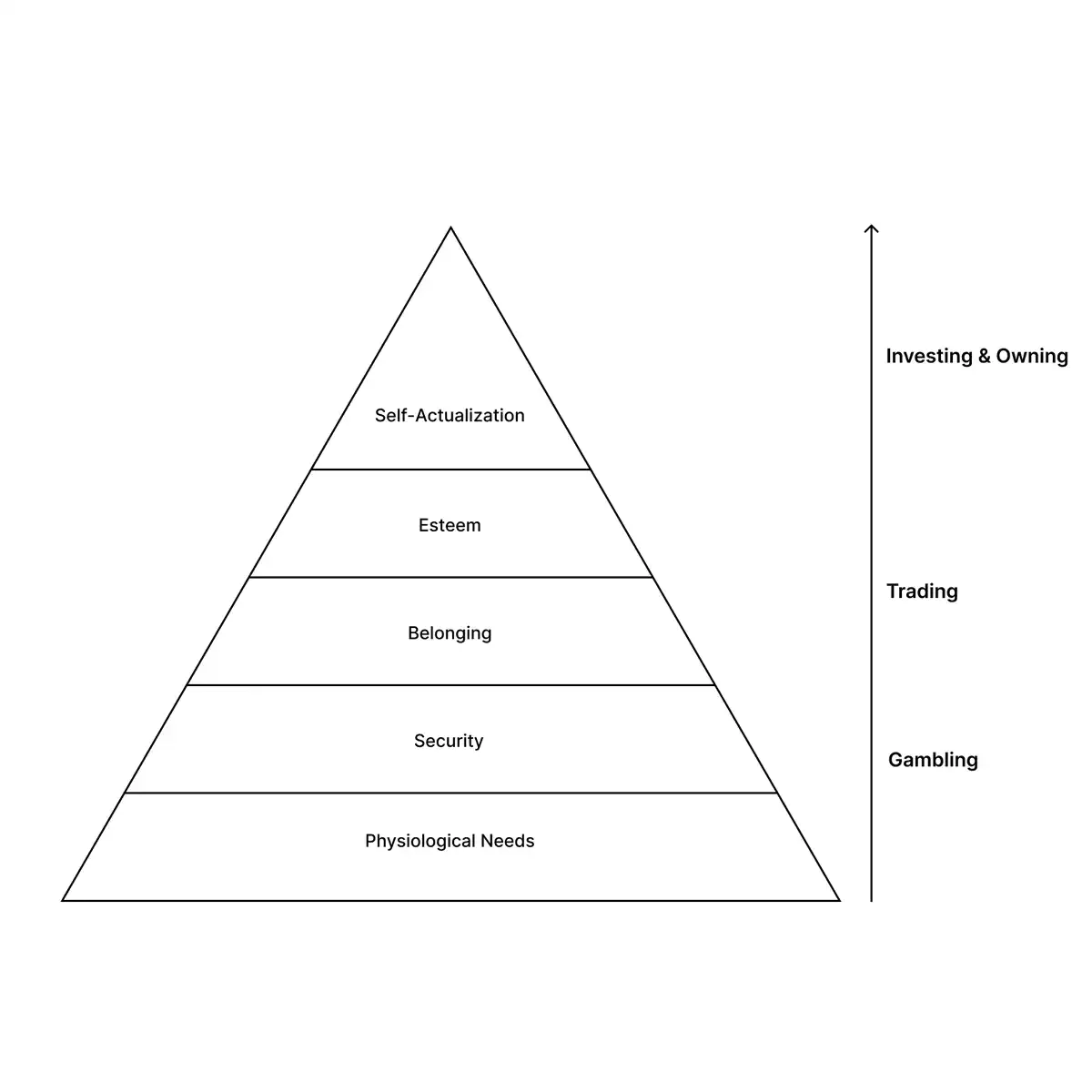
We can view this continuum of risk-taking through the lens of Maslow's hierarchy of needs:

  • Gambling and trading satisfy lower-level needs: security (escaping economic hardship by making a big win), or a sense of belonging (like WallStreetBets trying to fight Citadel, or you and your friends betting on a team).

  • Investing is closer to self-actualization and purpose at the top. Owning a home is the American Dream; investing in a company is expressing belief in its future. But it's hard to achieve this conviction if your attention is still focused on lower-level needs.

PANews Note: WallStreetBets (WSB) is a famous subreddit known as a hub for retail investors famous for high-risk, aggressive investing, and meme stock trading. It is renowned for encouraging the use of leveraged options trading and pursuing short-term, high returns, gaining global financial notoriety in 2021 for orchestrating the GameStop (GME) short squeeze. Citadel is a top-tier hedge fund and financial services company, known for its rigorous risk control and high returns, and is one of the most influential financial giants on Wall Street.
Due to short timeframes and high volatility, trading can satisfy more urgent needs for more people. And, because permissionless markets can exist for almost anything—from derivatives to memes to political outcomes—the channels for people to access economic gains have never been broader.

In many of these markets, life experience can (at least briefly) become an advantage. A kid who understands TikTok trends understands memes better than Citadel; a player living in a virtual economy understands the game better than a game analyst.

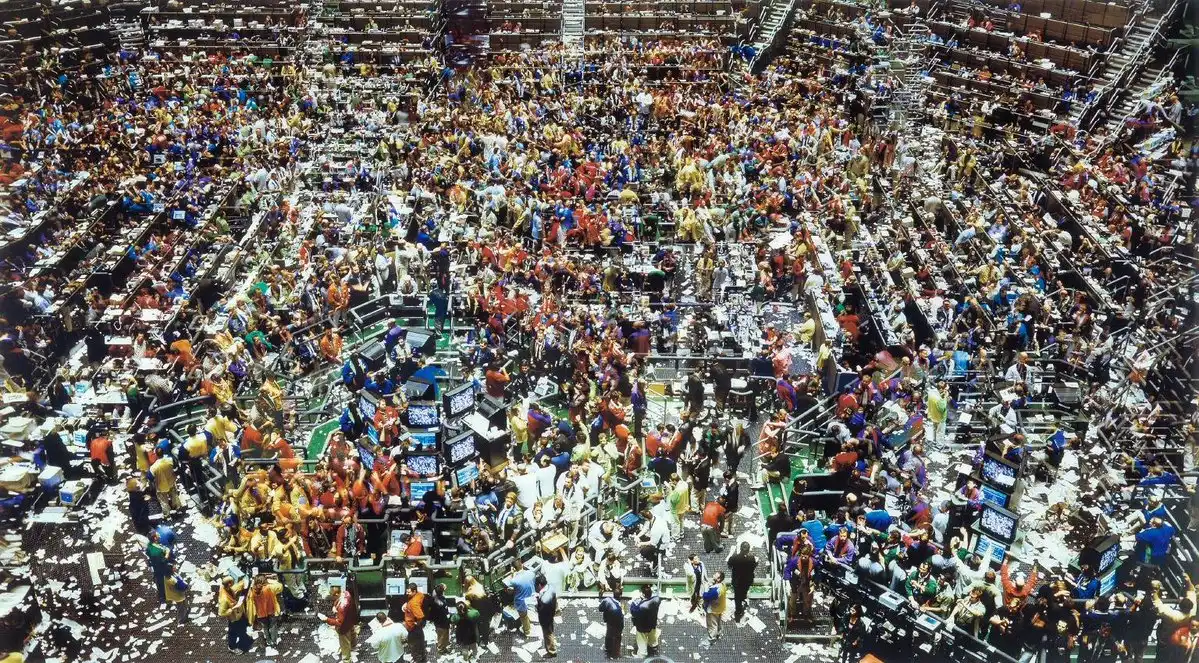
The old adage "invest in what you know" is becoming increasingly feasible today. The result is that market participation is no longer a professional career but a mass-participation culture with its own status games, memes, heroes, villains, subcultures, and language. Due to this newfound expressiveness and accessibility, financial markets are increasingly intertwining with culture. And culture—from trends to political events—is increasingly expressed through markets.

(Image: Balenciaga S2023 fashion show at the New York Stock Exchange)

We are witnessing exponential expansion of global economic access through stablecoins; at the other end of the spectrum, financial risk-taking through trading and markets is also expanding, moving towards a scale of a billion daily active traders.

Markets as Agents of Change

In the 1960s, the average holding period for stocks was over 8 years. By 2020, this average had fallen to less than a year. This is the world we live in today: a mass-participation market where trading has become the main artery for people trying to capture economic gains.

This world hasn't entirely emerged within the boundaries of the traditional financial system. New markets have been built primarily outside, often intentionally and out of necessity. Leveraging new technology and free markets to pressure regulators and institutions is one of the most reliable patterns for the adaptation and evolution of traditional systems.

As I wrote in the original thesis:

"The history of protocol adoption follows a pattern: first, early adopters use the new protocol to do things that were impossible before the new technology enabled them. This new behavior often involves breaking the rules. Then, the winning strategy for founders is to build products that make these new patterns accessible to a broader audience."

A classic example is BitTorrent, invented in 2003. It enabled streaming, and at its peak, piracy via this protocol accounted for a third of total internet traffic. Later, Spotify productized streaming by striking compliant deals (and actually used BitTorrent technology underneath initially).

Cryptocurrency is doing to value what BitTorrent did to information: remaking it permissionlessly.

  • Prediction Markets: Polymarket operated for years on offshore crypto rails when prediction markets were banned in the US. Today, thanks to new regulatory clarity, they have a mobile app in the US (though not on-chain).

  • Stablecoins: Similarly survived in a regulatory gray area, initially bootstrapping liquidity on offshore exchanges. Last year, the GENIUS bill brought them inside the system.

  • ICOs & Fundraising: In 2017, ICOs enabled permissionless crowdfunding when early-stage venture investment was restricted. A hostile SEC subsequently cracked down, but this highlighted a problem: the returns from technological innovation and growth were captured privately, with diminishing opportunities for public participation in the upside. But this year, Congress is working on market structure legislation in the CLARITY Act, explicitly allowing founders to raise funds broadly via public token sales and share ownership.

Permissionless markets constantly try to "break the rules," allowing people to access the economic gains of private companies (wouldn't you want to own a piece of Claude or ChatGPT?). Robinhood recently tried to launch tokenized exposure to private companies like OpenAI and SpaceX on crypto rails in Europe and applied to the SEC to bring private market funds to US retail investors. Startups are trying to offer synthetic exposure to private companies through novel products.

This could be a path back to the original "Ownership Economy" thesis, where users actually get economic exposure to the products and services they use daily. But as we've seen with other markets, forcing regulatory change takes time and often relies on scaled and proven market demand.

More directly, I expect we will see many new, net-add markets take off, which raises the question: what is the full design space of these new markets? How are they different from previous ones? And who, or what, is trading and consuming them?

Markets as APIs

What makes this moment different from previous waves of financial innovation is the simultaneous expansion of two representations in software:

  • Cryptocurrency (Crypto): Provides the most powerful rails for new markets—permissionless creation, programmable settlement, composable liquidity, and global access, with costs rapidly approaching zero. Now, we can tokenize and trade things that were previously illiquid, inaccessible, or simply didn't exist.

  • Artificial Intelligence (AI): Makes it possible to build, model, and automate things that were previously unmanageable.

Crypto + AI creates a combinatorial design space: every price generated by a market is a signal an AI can act on, and every new thing an AI can model is an object a market can use to price.

Arguably, intelligence is the ability to predict or make informed decisions. Markets and crypto provide the best "prediction" mechanisms we know. AI can use these prices to understand and simulate the future and make decisions.

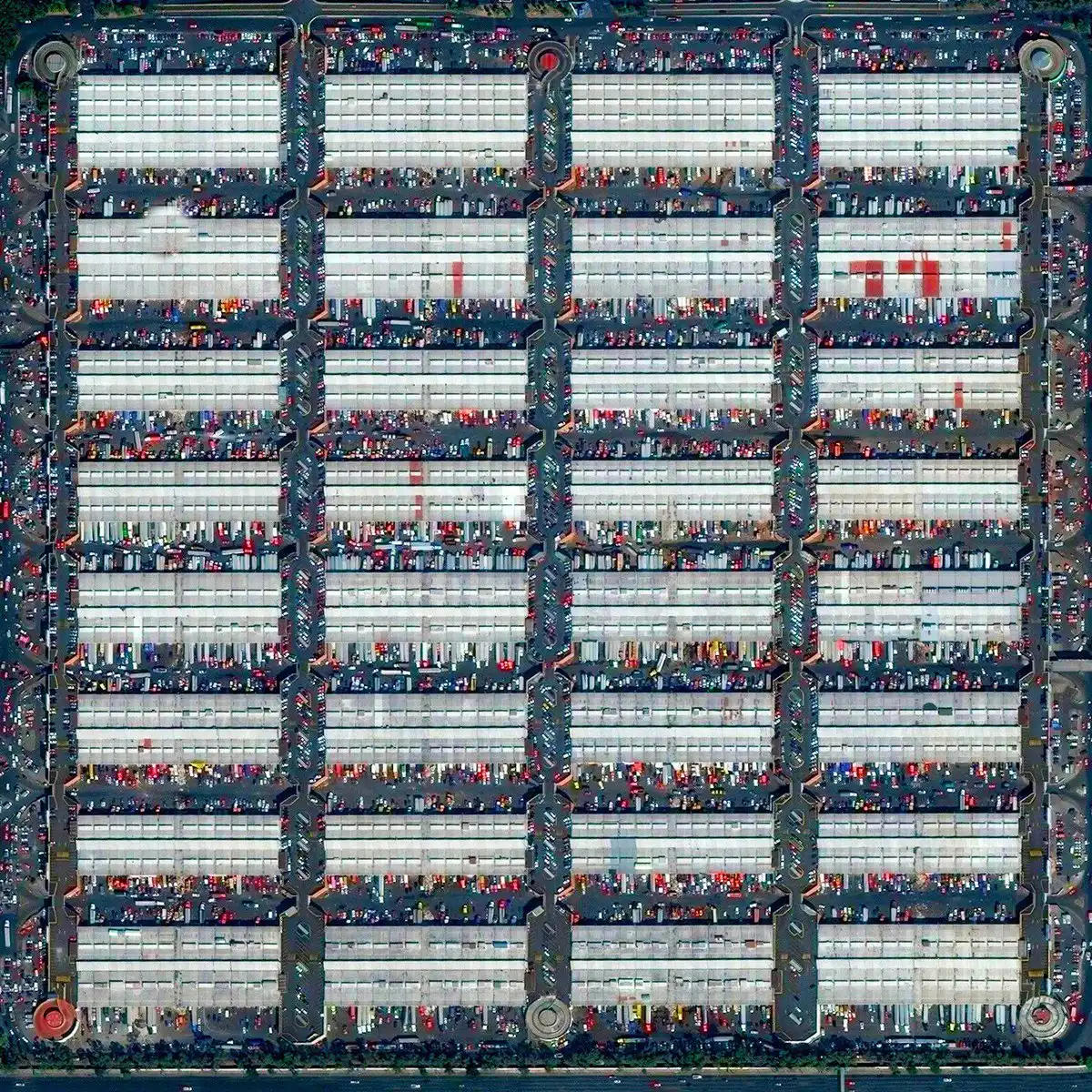
This design space is why markets are evolving from "outputs" to "infrastructure." The last decade, crypto built the underlying infrastructure enabling an explosion of new markets. The next decade, markets will increasingly become infrastructure themselves; endpoints consumed as inputs by applications and agents.
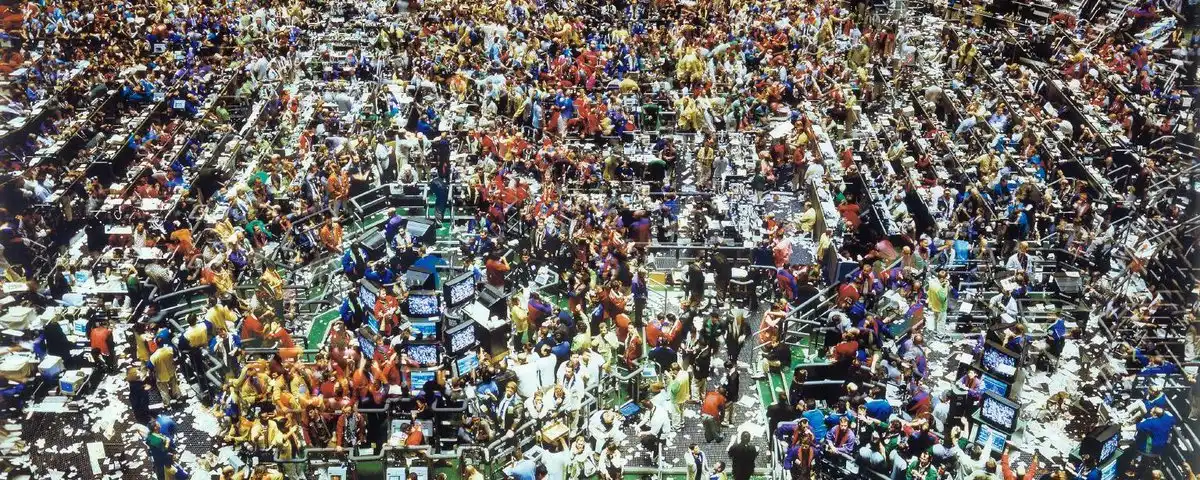
(Image: Central de Abasto food wholesale market in Mexico City)

Traditional APIs return stored data. As APIs, markets generate real-time data through adversarial competition between participants willing to risk capital on their convictions. This makes markets more expressive than ordinary APIs; they don't just provide information, they generate it. And because the information generated by markets is costly to produce, it is also harder to fake.

On-chain markets are even superior to traditional APIs because, by default, they are permissionless and composable (anyone can call them), globalized, and use standardized interfaces.

Composing markets directly into products has already begun in finance, known as the "DeFi Mullet": fintech products with familiar front-end experiences built on DeFi back-end rails, like Morpho vaults. Coinbase's borrow and earn products offer users dynamic interest rates, which are paid or earned by querying Morpho's on-chain lending markets. Users enjoy these features without needing to understand the underlying lending market dynamics.

Beyond financial services, Polymarket's odds for the Golden Globes are a recent intuitive example of this phenomenon. The API provides real-time prices, composed into entertainment products (the market accurately predicted 26 out of 27 winners).

As we tokenize more of the world's value and bring new markets on-chain, this pattern will expand beyond fintech wrappers or live event odds. Although not currently on-chain, Apple's "Clean Energy Charging" is an illustrative mainstream example. In the US, when you plug in your phone to charge, Apple uses real-time predictions of grid carbon intensity to schedule charging times for maximum energy and cost efficiency. You never see the underlying energy market, but Apple's product is calling an endpoint for market data, using its signal as an input to make decisions and optimize the product.

MetaDAO, a crowdfunding platform powered by prediction markets, takes this idea further. When faced with a governance decision, it creates two conditional markets: one assuming the token price if the proposal passes, another if it fails. Whichever market price is higher determines the outcome: the proposal automatically takes effect or is rejected. The DAO no longer decides by voting but calls upon markets to make decisions, with participants betting real money on the future outcome they believe is better. Here, the underlying market is not just an input to the decision but the decision mechanism itself.

If you assume all finance and markets are becoming programmable while AI is becoming more powerful, then holding an expansive view of finance's endgame is reasonable and exciting. Price signals, prediction market outcomes, on-chain capital flows, etc., will become inputs that any application or agent can read, interpret, and act upon. If an agent can earn a penny more than its inference cost by creating or participating in a market, it becomes rational to do so.

When we factor in the consumption and market participation of AI agents, "a billion active traders" might be a severe underestimate of the scale of the future.

The Endgame of Finance

Finance is undergoing a transformation from a unique vertical industry into a horizontal foundational layer.

As markets become more expressive and accessible, finance is embedding itself into culture, and culture itself is increasingly expressed through finance. Simultaneously, as markets become permissionless software, they accelerate their role as agents of change, opening new opportunities for users seeking economic upside (and downside) in things they understand and love. And users will also want their AI agents to participate in markets to improve their lives.

As markets become more programmable, finance is becoming increasingly ubiquitous as a new building block of information infrastructure. The most successful infrastructure is often invisible, and finance is on a path to being woven into the fabric of everything.

This is why I'm willing to hold an extremely grand, expansive perspective on the endgame of "finance."

Domande pertinenti

QWhat are the three fundamental drivers behind the expansion of finance's meaning according to Jesse Walden?

AThe three fundamental drivers are: 1) Mass participation, as lower market access barriers intertwine finance with culture; 2) Permissionless markets, which act as change agents allowing global users to exhibit new behaviors; 3) Programmable endpoints, where financial markets evolve from discrete venues into APIs embedded with economic data.

QHow does the author describe the evolution of a participant's journey in the crypto space?

AThe author describes a common trajectory: starting with a lesson from a volatile altcoin, learning to manage risk like a trader, and eventually maturing into a long-term investor. Even failed experiences are meaningful, transforming a gambler into a trader who bets on what they know, and then into an investor with conviction and a longer time horizon.

QWhat role do permissionless markets play in driving regulatory and institutional change?

APermissionless markets, often built outside traditional financial systems, act as change agents by allowing new behaviors that 'break the rules.' This forces regulators and traditional institutions to adapt and evolve. Examples include prediction markets (Polymarket), stablecoins, and ICOs, which eventually lead to new legislation and regulatory clarity after demonstrating proven market demand.

QHow does the combination of Crypto and AI create a new design space for markets?

ACrypto provides the infrastructure for permissionless, programmable, and globally accessible markets, while AI enables the modeling and automation of previously unmanageable things. This combination creates a design space where every price generated by a market becomes actionable data for AI, and every new thing AI can model becomes an object that markets can price. Markets evolve from outputs to infrastructure, serving as APIs that applications and AI agents can consume.

QWhat is the ultimate vision for the future of finance as presented in the article?

AThe ultimate vision is that finance is transitioning from a distinct vertical industry into a horizontal infrastructure layer that becomes 'invisible.' It is increasingly embedded into culture and expressed through it, driven by mass participation and permissionless innovation. As markets become more accessible and programmable, finance will integrate into the fabric of everything, serving as a universal information infrastructure for both humans and AI agents to consume and act upon.

Letture associate

Trading

Spot
Futures

Articoli Popolari

Cosa è $S$

Comprendere SPERO: Una Panoramica Completa Introduzione a SPERO Mentre il panorama dell'innovazione continua a evolversi, l'emergere delle tecnologie web3 e dei progetti di criptovaluta gioca un ruolo fondamentale nel plasmare il futuro digitale. Un progetto che ha attirato l'attenzione in questo campo dinamico è SPERO, denotato come SPERO,$$s$. Questo articolo mira a raccogliere e presentare informazioni dettagliate su SPERO, per aiutare gli appassionati e gli investitori a comprendere le sue basi, obiettivi e innovazioni nei domini web3 e crypto. Che cos'è SPERO,$$s$? SPERO,$$s$ è un progetto unico all'interno dello spazio crypto che cerca di sfruttare i principi della decentralizzazione e della tecnologia blockchain per creare un ecosistema che promuove l'impegno, l'utilità e l'inclusione finanziaria. Il progetto è progettato per facilitare interazioni peer-to-peer in modi nuovi, fornendo agli utenti soluzioni e servizi finanziari innovativi. Al suo interno, SPERO,$$s$ mira a responsabilizzare gli individui fornendo strumenti e piattaforme che migliorano l'esperienza dell'utente nello spazio delle criptovalute. Questo include la possibilità di metodi di transazione più flessibili, la promozione di iniziative guidate dalla comunità e la creazione di percorsi per opportunità finanziarie attraverso applicazioni decentralizzate (dApps). La visione sottostante di SPERO,$$s$ ruota attorno all'inclusività, cercando di colmare le lacune all'interno della finanza tradizionale mentre sfrutta i vantaggi della tecnologia blockchain. Chi è il Creatore di SPERO,$$s$? L'identità del creatore di SPERO,$$s$ rimane piuttosto oscura, poiché ci sono risorse pubblicamente disponibili limitate che forniscono informazioni dettagliate sul suo fondatore o fondatori. Questa mancanza di trasparenza può derivare dall'impegno del progetto per la decentralizzazione—un ethos che molti progetti web3 condividono, dando priorità ai contributi collettivi rispetto al riconoscimento individuale. Centrando le discussioni attorno alla comunità e ai suoi obiettivi collettivi, SPERO,$$s$ incarna l'essenza dell'empowerment senza mettere in evidenza individui specifici. Pertanto, comprendere l'etica e la missione di SPERO rimane più importante che identificare un creatore singolo. Chi sono gli Investitori di SPERO,$$s$? SPERO,$$s$ è supportato da una varietà di investitori che vanno dai capitalisti di rischio agli investitori angelici dedicati a promuovere l'innovazione nel settore crypto. Il focus di questi investitori generalmente si allinea con la missione di SPERO—dando priorità a progetti che promettono avanzamenti tecnologici sociali, inclusività finanziaria e governance decentralizzata. Queste fondazioni di investitori sono tipicamente interessate a progetti che non solo offrono prodotti innovativi, ma contribuiscono anche positivamente alla comunità blockchain e ai suoi ecosistemi. Il supporto di questi investitori rafforza SPERO,$$s$ come un concorrente degno di nota nel dominio in rapida evoluzione dei progetti crypto. Come Funziona SPERO,$$s$? SPERO,$$s$ impiega un framework multifunzionale che lo distingue dai progetti di criptovaluta convenzionali. Ecco alcune delle caratteristiche chiave che sottolineano la sua unicità e innovazione: Governance Decentralizzata: SPERO,$$s$ integra modelli di governance decentralizzati, responsabilizzando gli utenti a partecipare attivamente ai processi decisionali riguardanti il futuro del progetto. Questo approccio favorisce un senso di proprietà e responsabilità tra i membri della comunità. Utilità del Token: SPERO,$$s$ utilizza il proprio token di criptovaluta, progettato per servire varie funzioni all'interno dell'ecosistema. Questi token abilitano transazioni, premi e la facilitazione dei servizi offerti sulla piattaforma, migliorando l'impegno e l'utilità complessivi. Architettura Stratificata: L'architettura tecnica di SPERO,$$s$ supporta la modularità e la scalabilità, consentendo un'integrazione fluida di funzionalità e applicazioni aggiuntive man mano che il progetto evolve. Questa adattabilità è fondamentale per mantenere la rilevanza nel panorama crypto in continua evoluzione. Coinvolgimento della Comunità: Il progetto enfatizza iniziative guidate dalla comunità, impiegando meccanismi che incentivano la collaborazione e il feedback. Nutrendo una comunità forte, SPERO,$$s$ può affrontare meglio le esigenze degli utenti e adattarsi alle tendenze di mercato. Focus sull'Inclusione: Offrendo basse commissioni di transazione e interfacce user-friendly, SPERO,$$s$ mira ad attrarre una base utenti diversificata, inclusi individui che potrebbero non aver precedentemente interagito nello spazio crypto. Questo impegno per l'inclusione si allinea con la sua missione generale di empowerment attraverso l'accessibilità. Cronologia di SPERO,$$s$ Comprendere la storia di un progetto fornisce preziose intuizioni sulla sua traiettoria di sviluppo e sui traguardi. Di seguito è riportata una cronologia suggerita che mappa eventi significativi nell'evoluzione di SPERO,$$s$: Fase di Concettualizzazione e Ideazione: Le idee iniziali che formano la base di SPERO,$$s$ sono state concepite, allineandosi strettamente con i principi di decentralizzazione e focus sulla comunità all'interno dell'industria blockchain. Lancio del Whitepaper del Progetto: Dopo la fase concettuale, è stato rilasciato un whitepaper completo che dettaglia la visione, gli obiettivi e l'infrastruttura tecnologica di SPERO,$$s$ per suscitare interesse e feedback dalla comunità. Costruzione della Comunità e Prime Interazioni: Sono stati effettuati sforzi attivi di outreach per costruire una comunità di early adopters e potenziali investitori, facilitando discussioni attorno agli obiettivi del progetto e ottenendo supporto. Evento di Generazione del Token: SPERO,$$s$ ha condotto un evento di generazione del token (TGE) per distribuire i propri token nativi ai primi sostenitori e stabilire una liquidità iniziale all'interno dell'ecosistema. Lancio della Prima dApp: La prima applicazione decentralizzata (dApp) associata a SPERO,$$s$ è stata attivata, consentendo agli utenti di interagire con le funzionalità principali della piattaforma. Sviluppo Continuo e Partnership: Aggiornamenti e miglioramenti continui alle offerte del progetto, inclusi partnership strategiche con altri attori nello spazio blockchain, hanno plasmato SPERO,$$s$ in un concorrente competitivo e in evoluzione nel mercato crypto. Conclusione SPERO,$$s$ rappresenta una testimonianza del potenziale del web3 e delle criptovalute di rivoluzionare i sistemi finanziari e responsabilizzare gli individui. Con un impegno per la governance decentralizzata, il coinvolgimento della comunità e funzionalità progettate in modo innovativo, apre la strada verso un panorama finanziario più inclusivo. Come per qualsiasi investimento nello spazio crypto in rapida evoluzione, si incoraggiano potenziali investitori e utenti a ricercare approfonditamente e a impegnarsi in modo riflessivo con gli sviluppi in corso all'interno di SPERO,$$s$. Il progetto mostra lo spirito innovativo dell'industria crypto, invitando a ulteriori esplorazioni delle sue innumerevoli possibilità. Mentre il percorso di SPERO,$$s$ è ancora in fase di sviluppo, i suoi principi fondamentali potrebbero effettivamente influenzare il futuro di come interagiamo con la tecnologia, la finanza e tra di noi in ecosistemi digitali interconnessi.

75 Totale visualizzazioniPubblicato il 2024.12.17Aggiornato il 2024.12.17

Cosa è AGENT S

Agent S: Il Futuro dell'Interazione Autonoma in Web3 Introduzione Nel panorama in continua evoluzione di Web3 e criptovalute, le innovazioni stanno costantemente ridefinendo il modo in cui gli individui interagiscono con le piattaforme digitali. Uno di questi progetti pionieristici, Agent S, promette di rivoluzionare l'interazione uomo-computer attraverso il suo framework agentico aperto. Aprendo la strada a interazioni autonome, Agent S mira a semplificare compiti complessi, offrendo applicazioni trasformative nell'intelligenza artificiale (AI). Questa esplorazione dettagliata approfondirà le complessità del progetto, le sue caratteristiche uniche e le implicazioni per il dominio delle criptovalute. Cos'è Agent S? Agent S si presenta come un innovativo framework agentico aperto, progettato specificamente per affrontare tre sfide fondamentali nell'automazione dei compiti informatici: Acquisizione di Conoscenze Specifiche del Dominio: Il framework apprende in modo intelligente da varie fonti di conoscenza esterne ed esperienze interne. Questo approccio duale gli consente di costruire un ricco repository di conoscenze specifiche del dominio, migliorando le sue prestazioni nell'esecuzione dei compiti. Pianificazione su Lungo Orizzonte di Compiti: Agent S impiega una pianificazione gerarchica potenziata dall'esperienza, un approccio strategico che facilita la suddivisione e l'esecuzione efficiente di compiti complessi. Questa caratteristica migliora significativamente la sua capacità di gestire più sottocompiti in modo efficiente ed efficace. Gestione di Interfacce Dinamiche e Non Uniformi: Il progetto introduce l'Interfaccia Agente-Computer (ACI), una soluzione innovativa che migliora l'interazione tra agenti e utenti. Utilizzando Modelli Linguistici Multimodali di Grandi Dimensioni (MLLM), Agent S può navigare e manipolare senza sforzo diverse interfacce grafiche utente. Attraverso queste caratteristiche pionieristiche, Agent S fornisce un framework robusto che affronta le complessità coinvolte nell'automazione dell'interazione umana con le macchine, preparando il terreno per innumerevoli applicazioni nell'AI e oltre. Chi è il Creatore di Agent S? Sebbene il concetto di Agent S sia fondamentalmente innovativo, informazioni specifiche sul suo creatore rimangono elusive. Il creatore è attualmente sconosciuto, il che evidenzia sia la fase embrionale del progetto sia la scelta strategica di mantenere i membri fondatori sotto anonimato. Indipendentemente dall'anonimato, l'attenzione rimane sulle capacità e sul potenziale del framework. Chi sono gli Investitori di Agent S? Poiché Agent S è relativamente nuovo nell'ecosistema crittografico, informazioni dettagliate riguardanti i suoi investitori e sostenitori finanziari non sono documentate esplicitamente. La mancanza di approfondimenti pubblicamente disponibili sulle fondazioni di investimento o sulle organizzazioni che supportano il progetto solleva interrogativi sulla sua struttura di finanziamento e sulla roadmap di sviluppo. Comprendere il supporto è cruciale per valutare la sostenibilità del progetto e il suo potenziale impatto sul mercato. Come Funziona Agent S? Al centro di Agent S si trova una tecnologia all'avanguardia che gli consente di funzionare efficacemente in contesti diversi. Il suo modello operativo è costruito attorno a diverse caratteristiche chiave: Interazione Uomo-Computer Simile a Quella Umana: Il framework offre una pianificazione AI avanzata, cercando di rendere le interazioni con i computer più intuitive. Mimando il comportamento umano nell'esecuzione dei compiti, promette di elevare le esperienze degli utenti. Memoria Narrativa: Utilizzata per sfruttare esperienze di alto livello, Agent S utilizza la memoria narrativa per tenere traccia delle storie dei compiti, migliorando così i suoi processi decisionali. Memoria Episodica: Questa caratteristica fornisce agli utenti una guida passo-passo, consentendo al framework di offrire supporto contestuale mentre i compiti si sviluppano. Supporto per OpenACI: Con la capacità di funzionare localmente, Agent S consente agli utenti di mantenere il controllo sulle proprie interazioni e flussi di lavoro, allineandosi con l'etica decentralizzata di Web3. Facile Integrazione con API Esterne: La sua versatilità e compatibilità con varie piattaforme AI garantiscono che Agent S possa adattarsi senza problemi agli ecosistemi tecnologici esistenti, rendendolo una scelta attraente per sviluppatori e organizzazioni. Queste funzionalità contribuiscono collettivamente alla posizione unica di Agent S all'interno dello spazio crittografico, poiché automatizza compiti complessi e multi-fase con un intervento umano minimo. Man mano che il progetto evolve, le sue potenziali applicazioni in Web3 potrebbero ridefinire il modo in cui si svolgono le interazioni digitali. Cronologia di Agent S Lo sviluppo e le tappe di Agent S possono essere riassunti in una cronologia che evidenzia i suoi eventi significativi: 27 Settembre 2024: Il concetto di Agent S è stato lanciato in un documento di ricerca completo intitolato “Un Framework Agentico Aperto che Usa i Computer Come un Umano”, mostrando le basi per il progetto. 10 Ottobre 2024: Il documento di ricerca è stato reso pubblicamente disponibile su arXiv, offrendo un'esplorazione approfondita del framework e della sua valutazione delle prestazioni basata sul benchmark OSWorld. 12 Ottobre 2024: È stata rilasciata una presentazione video, fornendo un'idea visiva delle capacità e delle caratteristiche di Agent S, coinvolgendo ulteriormente potenziali utenti e investitori. Questi indicatori nella cronologia non solo illustrano i progressi di Agent S, ma indicano anche il suo impegno per la trasparenza e il coinvolgimento della comunità. Punti Chiave su Agent S Man mano che il framework Agent S continua a evolversi, diversi attributi chiave si distinguono, sottolineando la sua natura innovativa e il potenziale: Framework Innovativo: Progettato per fornire un uso intuitivo dei computer simile all'interazione umana, Agent S porta un approccio nuovo all'automazione dei compiti. Interazione Autonoma: La capacità di interagire autonomamente con i computer attraverso GUI segna un passo avanti verso soluzioni informatiche più intelligenti ed efficienti. Automazione di Compiti Complessi: Con la sua metodologia robusta, può automatizzare compiti complessi e multi-fase, rendendo i processi più veloci e meno soggetti a errori. Miglioramento Continuo: I meccanismi di apprendimento consentono ad Agent S di migliorare dalle esperienze passate, migliorando continuamente le sue prestazioni e la sua efficacia. Versatilità: La sua adattabilità attraverso diversi ambienti operativi come OSWorld e WindowsAgentArena garantisce che possa servire un'ampia gamma di applicazioni. Man mano che Agent S si posiziona nel panorama di Web3 e delle criptovalute, il suo potenziale per migliorare le capacità di interazione e automatizzare i processi segna un significativo avanzamento nelle tecnologie AI. Attraverso il suo framework innovativo, Agent S esemplifica il futuro delle interazioni digitali, promettendo un'esperienza più fluida ed efficiente per gli utenti in vari settori. Conclusione Agent S rappresenta un audace passo avanti nell'unione tra AI e Web3, con la capacità di ridefinire il modo in cui interagiamo con la tecnologia. Sebbene sia ancora nelle sue fasi iniziali, le possibilità per la sua applicazione sono vaste e coinvolgenti. Attraverso il suo framework completo che affronta sfide critiche, Agent S mira a portare le interazioni autonome al centro dell'esperienza digitale. Man mano che ci addentriamo nei regni delle criptovalute e della decentralizzazione, progetti come Agent S giocheranno senza dubbio un ruolo cruciale nel plasmare il futuro della tecnologia e della collaborazione uomo-computer.

273 Totale visualizzazioniPubblicato il 2025.01.14Aggiornato il 2025.01.14

Come comprare S

Benvenuto in HTX.com! Abbiamo reso l'acquisto di Sonic (S) semplice e conveniente. Segui la nostra guida passo passo per intraprendere il tuo viaggio nel mondo delle criptovalute.Step 1: Crea il tuo Account HTXUsa la tua email o numero di telefono per registrarti il tuo account gratuito su HTX. Vivi un'esperienza facile e sblocca tutte le funzionalità,Crea il mio accountStep 2: Vai in Acquista crypto e seleziona il tuo metodo di pagamentoCarta di credito/debito: utilizza la tua Visa o Mastercard per acquistare immediatamente SonicS.Bilancio: Usa i fondi dal bilancio del tuo account HTX per fare trading senza problemi.Terze parti: abbiamo aggiunto metodi di pagamento molto utilizzati come Google Pay e Apple Pay per maggiore comodità.P2P: Fai trading direttamente con altri utenti HTX.Over-the-Counter (OTC): Offriamo servizi su misura e tassi di cambio competitivi per i trader.Step 3: Conserva Sonic (S)Dopo aver acquistato Sonic (S), conserva nel tuo account HTX. In alternativa, puoi inviare tramite trasferimento blockchain o scambiare per altre criptovalute.Step 4: Scambia Sonic (S)Scambia facilmente Sonic (S) nel mercato spot di HTX. Accedi al tuo account, seleziona la tua coppia di trading, esegui le tue operazioni e monitora in tempo reale. Offriamo un'esperienza user-friendly sia per chi ha appena iniziato che per i trader più esperti.

354 Totale visualizzazioniPubblicato il 2025.01.15Aggiornato il 2025.03.21

Discussioni

Benvenuto nella Community HTX. Qui puoi rimanere informato sugli ultimi sviluppi della piattaforma e accedere ad approfondimenti esperti sul mercato. Le opinioni degli utenti sul prezzo di S S sono presentate come di seguito.

活动图片