Author: David, TechFlow
On August 5th, Sam Blackshear posted on X, announcing his departure from Mysten Labs to join Anthropic and conduct defensive security research related to AI.
This name might be unfamiliar to many, but what he created, you've most likely heard of. Move, the underlying programming language for the Sui blockchain, was his creation.
Around 2018, while at Meta during Zuckerberg's Libra stablecoin project, Blackshear was part of the core technical team, specifically designing a new programming language for the project: Move.
Libra later renamed to Diem, and eventually, the entire stablecoin project was halted by regulators. But the Move language survived.
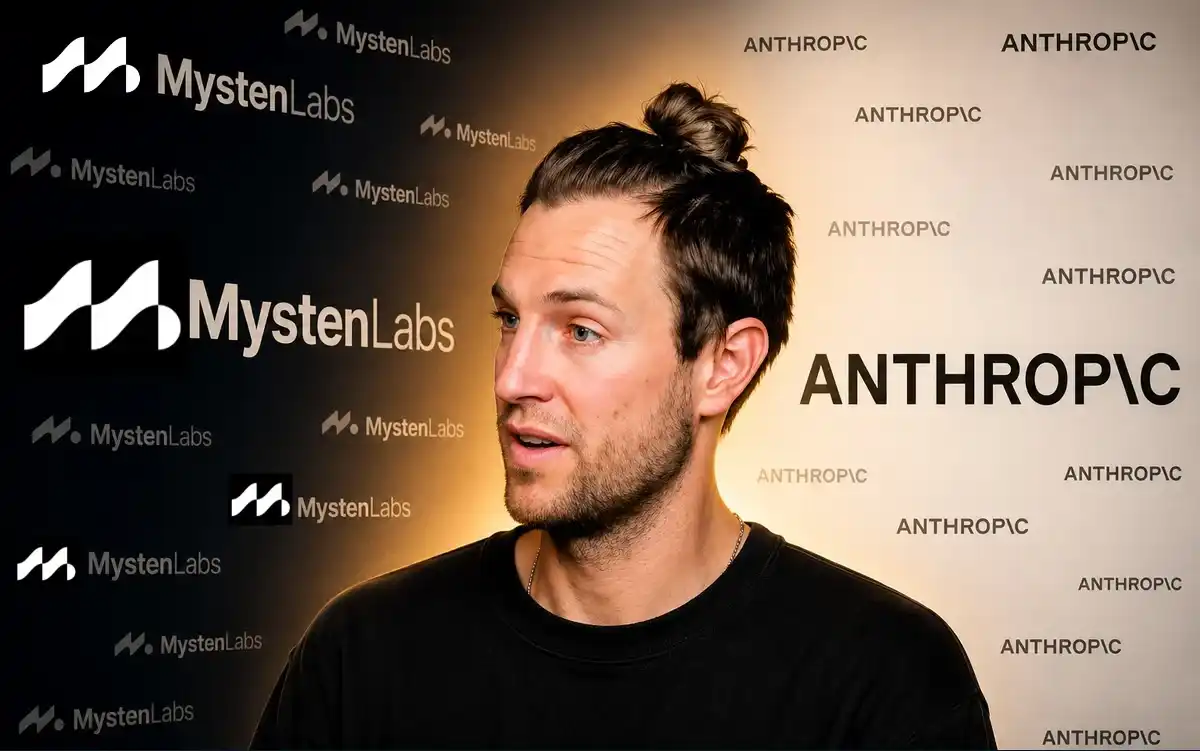
In September 2021, Blackshear and four former Meta colleagues co-founded Mysten Labs, bringing Move out of Meta's ruins and building a new public blockchain, Sui, around it. Moreover, from conception to his departure, he had invested over eight years in this language.
I imagine most readers, in a crypto market that has already turned bearish, don't have a distinct feel for personnel changes.
So, how can one understand the weight of this brain drain?
How secure a blockchain is, what it can and cannot do, largely depends on the design of its underlying language. Blackshear's role in Sui and Move can be roughly compared to that of Vitalik in Ethereum and Solidity.
These kinds of individuals, within a crypto project, are not easily measured by job titles.
They might be the language designers, the decision-makers for protocol evolution direction, those who determine the flow of funds... In more common terms, these are a batch of crypto projects' "gatekeepers," defining how high an ecosystem can grow.
Now, such individuals are visibly moving into the AI industry. Blackshear is not an isolated case.
AI, a Brave New World
Before Blackshear left, there was a revealing moment.
During a roundtable discussion on project security this April, he recounted something that also highlights the exceptional appeal AI holds for crypto industry tech leaders:
He had written an analysis tool during his Facebook days. Later, he wanted to migrate it to Move and use it to scan Move code for potential vulnerabilities; this kind of migration work used to be done entirely manually, his own words were "it would take a very, very long time."
Later, he gave this task to Claude.
Claude automatically completed the migration and flagged a batch of potential vulnerabilities. Blackshear's reaction to the result was, "whoa, we've entered a new world."
I find this detail significant.
Do you have this feeling: when someone hears about how great AI is on social media, it's hard to be genuinely moved internally; it's only when you're doing your most skilled, most routine work that you discover AI can solve problems unexpectedly, even exceeding your own level.
Therefore, tech leaders leaving crypto projects for AI is both a career plan and a genuine belief in its vast potential.
Similar things are happening to more crypto practitioners.
In February this year, Tomasz Stańczak, co-executive director of the Ethereum Foundation, announced his resignation, less than a year into the role. Stańczak previously founded Nethermind, one of the most important clients in the Ethereum ecosystem, and he himself was a core participant in the evolution direction of the Ethereum protocol layer.
When leaving, he wrote in his blog, "I now know that Agentic systems and AI-assisted discovery are reshaping the world." This is another "gatekeeper." Only what he guarded wasn't language security, but the direction of Ethereum protocol upgrades.
As for those who left earlier, you are surely not unfamiliar either.
OpenSea co-founder Alex Atallah resigned as CTO in 2022 during the peak of the NFT boom, later founded the AI model aggregation platform OpenRouter, now valued at $500 million;
Leopold Aschenbrenner, who came from the FTX Future Fund, authored that 165-page "Situational Awareness" paper, now manages a multi-billion dollar AI investment fund, though recently suffering significant losses, he continues developing in another circle;
His former colleague Avital Balwit, also left the FTX system, is now chief of staff to Anthropic CEO Dario Amodei.
These individuals, dispersed across different projects, different roles, and different time points of departure from crypto, the work in their hands happens to be what the AI industry currently lacks the most.
So, rather than saying they are "fleeing" crypto, it's more like pieces of a puzzle being pulled out of a system with slowing growth and plugged into another system spinning faster.
The Exodus of Technology and Capital
The earlier points were about specific individuals; now, let's look at data.
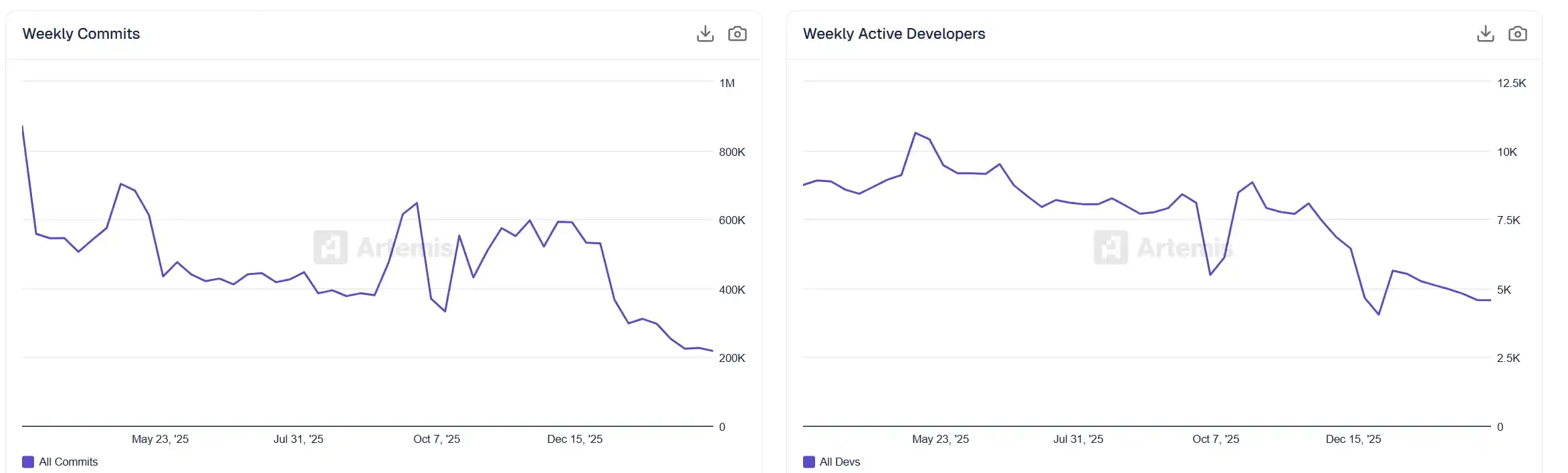
According to Artemis analytics platform data from March this year, the weekly code commits for crypto projects on GitHub dropped from about 850,000 in early 2025 to about 210,000.
A 75% decrease.
During the same period, weekly active developers dropped from about 8,700 to 4,600, more than halved. Ethereum developers decreased by 34% in three months, Solana by 40%, and BNB Chain's code commits plummeted by 85%.
This is not a problem of any single chain; almost all ecosystems are bleeding.
And the GitHub platform as a whole is growing. In 2025, approximately 36 million new developers were added, and platform-wide code commits increased by 25% year-on-year. According to GitHub's Octoverse report, the increment mainly flowed to AI projects, with over 4.3 million AI-related code repositories, and imports of large language model SDKs increased by 178% in a year.
Omar, an investor at Dragonfly, believes the reasons for this situation are: industry attention shifting to AI, declining token prices reducing economic incentives for developers, and some teams moving from open-source to closed-source development—the code hasn't disappeared, you just can't see it on GitHub.
So, more accurately, the crypto industry isn't "dying," it's shrinking. The periphery is dispersing, core teams are tightening. But the problem is, the type of gatekeepers mentioned in the previous chapter are not from the periphery; they are from the core.
This year, at least 9 senior researchers and leadership members left the Ethereum Foundation, with 5 concentrated in May. The protocol research team was almost hollowed out, while Vitalik has, in a sense, become Ethereum's last "gatekeeper," still controlling the core direction of the project's development.
And those who left had various reasons: disagreements over internal governance, salary issues, dissatisfaction with the L2 roadmap. Regardless of the reason, these positions are now vacant.
Meanwhile, the direction of capital is also changing.
According to a Bloomberg report in July, Paradigm closed its $1.2 billion new fund, for the first time expanding its investment scope to include AI and robotics. Managing partner Palmedo said, "There's too much happening out there, it's hard to pretend not to see it."
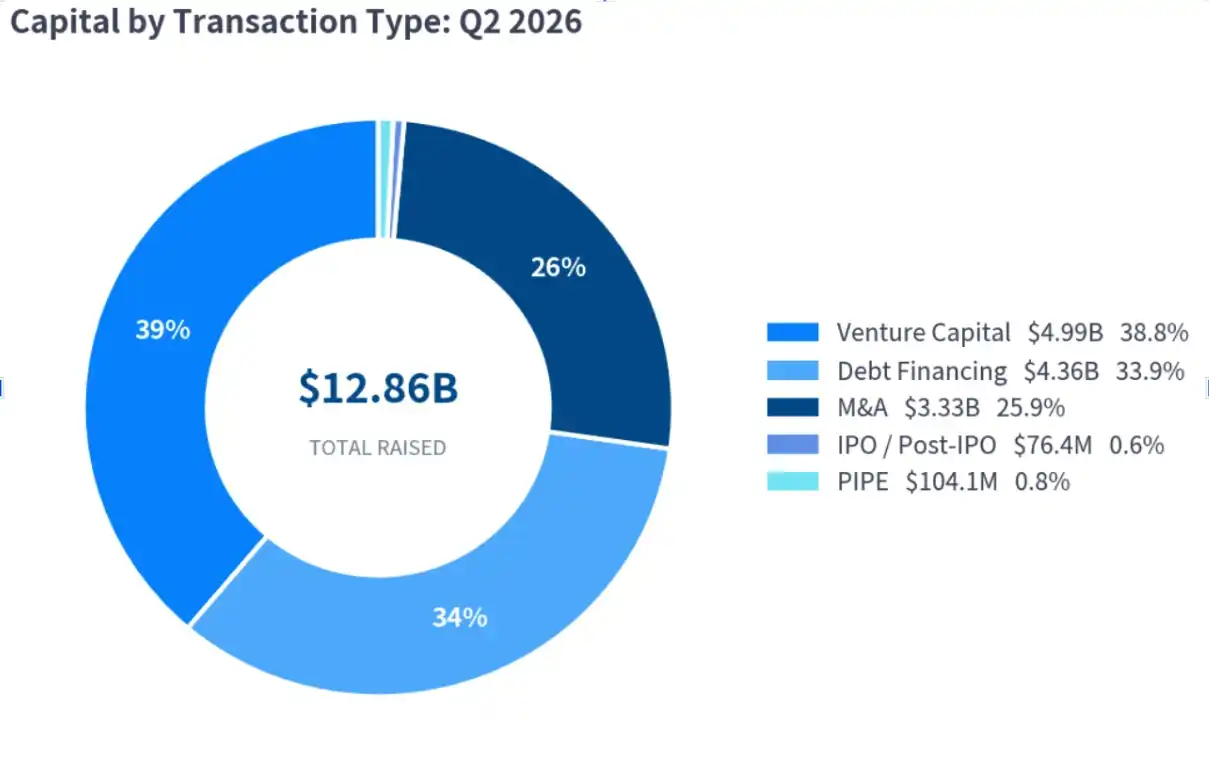
Chart: In Q2 this year, total crypto financing amounted to $12.8 billion
Source: cryptorank
Actually, it's not just Paradigm. Framework Ventures raised $400 million last month to invest in AI and robotics; Haun Ventures raised $1 billion in May, incorporating AI for the first time. According to Crunchbase data, global VC investments in H1 2026 reached $510 billion, with OpenAI and Anthropic accounting for over 40% of that. During the same period, the total financing for the entire crypto industry was less than 5% of that figure.
The people writing code are leaving, and the money paying their salaries is also changing direction.
Black Swans Behind the Unmanned Gate
The crypto industry has never been safe, but recent incidents have been especially dense.
On July 30th, the hardware wallet Coldcard exposed a firmware vulnerability; 1,196 wallets were emptied within 41 minutes, with losses exceeding 1,082 BTC, approximately $70 million. This vulnerability had been hidden in the code for over five years, undiscovered.
Afterward, a Reddit developer fed Coldcard's open-source code to Claude Code with the instruction "Check for vulnerabilities." Eight minutes later, Claude audited and identified the issue.

Dragonfly managing partner Haseeb Qureshi said on social media that approximately "$2 worth of AI compute" could have prevented this attack.
So, looking at it together, the crypto industry is entering an awkward situation:
Security threats are escalating, AI-driven attack methods are becoming more sophisticated, and the batch of people who define security boundaries and audit underlying code in the industry are being picked off one by one by the AI industry.
Those who remain may have to rely on AI for code auditing and project development in the future. This is a seemingly efficient but actually quite slapdash approach. Without someone who truly understands the system providing oversight, is something built purely by AI secure?
Many are asking when the bull market will come. But in an environment where gatekeepers are leaving in bulk, perhaps the more pertinent question is: what method will be needed to guard against the next black swan?