Kyle Samani Is Back: This Time, We're Outperforming CEX in Efficiency!

marsbitPubblicato 2026-03-12Pubblicato ultima volta 2026-03-12

Introduzione

Kyle Samani, former co-founder of Multicoin Capital, has returned to advocate for PropAMM, a breakthrough in market microstructure innovation on Solana. He argues that PropAMM could surpass traditional centralized exchanges (CEXs) in efficiency by hosting market maker algorithms directly on the blockchain, eliminating latency from bidirectional communication between exchanges and market makers. In CEXs, market makers co-locate servers and constantly exchange data with the exchange, leading to delays. In contrast, PropAMM runs algorithms on the same physical hardware as the Solana blockchain, allowing price updates to occur almost instantaneously within the same silicon chip. This reduces latency significantly compared to traditional systems. Currently, PropAMM already offers narrower spreads for SOL-USDC spot trading than major CEXs. Samani expects it to dominate on-chain trading this year, including spots, perpetuals, and prediction markets. Challenges remain in ensuring best execution for takers due to private algorithms and non-deterministic routing, but solutions from aggregators like Jupiter and dFlow are anticipated. Upcoming Solana upgrades—such as higher compute limits, reduced slot times, and lower network latency—will further enhance PropAMM performance, solidifying its advantage over CEXs.

Source:Kyle Samani

Compiled | Odaily Planet Daily (@OdailyChina); Translator | Azuma (@azuma_eth)

Editor's Note: The man who knows best how to promote Solana, former co-founder of Multicoin Capital Kyle Samani, who had loudly exited the crypto world not long ago, is back!

Last night, Kyle Samani posted a long Thread on his personal X account. In the post, Kyle Samani once again demonstrated his highly persuasive "promotion" (not derogatory here) rhetoric, using "efficiency"—a weak point in the decentralized narrative—as a breakthrough. He detailed how the PropAMM currently being promoted in the Solana ecosystem will catch up with or even surpass traditional centralized models in efficiency, arguing that PropAMM is one of the most important innovations in market microstructure in recent years, or even decades.

  • Related articles: 《The Man Who Knows Best How to Promote SOL Exits the Crypto World》; 《Is There More to Kyle Samani's Exit?》.

Below is the original content by Kyle Samani, compiled by Odaily Planet Daily.

PropAMM is one of the most important innovations in market microstructure in recent years, and perhaps even one of the most significant in decades.

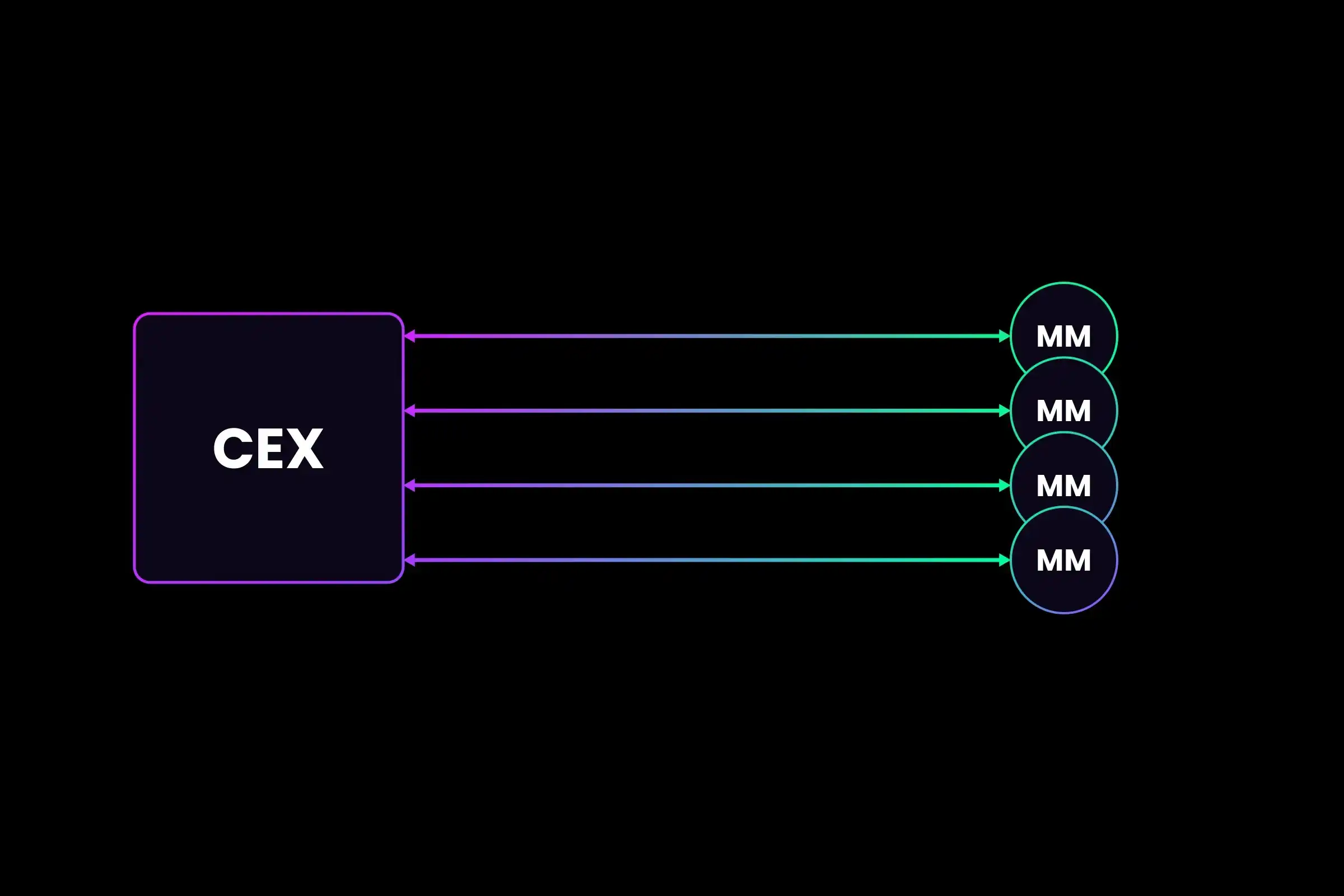
To help everyone understand this conclusion, let's first look at how market makers (MM) quote prices on traditional centralized exchanges (CEX).

Market makers typically physically co-locate with the exchange. Each market maker runs an algorithm on a server and connects to another server running the exchange's system via a network cable of uniform length (e.g., 50 meters).

A massive stream of data is constantly sent back and forth between market makers and the exchange. Every time a market maker sends an order to the exchange—whether it's a limit order, cancellation, or market order—the exchange must broadcast this information to all other market makers; then, other market makers resend their own orders based on the new information; this cycle repeats indefinitely.

Here is a simple diagram.
Now let's look at how propAMM works on the Solana mainnet.

The beauty of propAMM on Solana is that the blockchain itself directly "hosts" the market maker algorithms. This means the system no longer needs to send billions of messages back and forth between market makers and the exchange; the market-making algorithms will run directly on the same physical machine as the exchange.

The new diagram is as follows. (Yes, only the Solana blockchain is needed!)
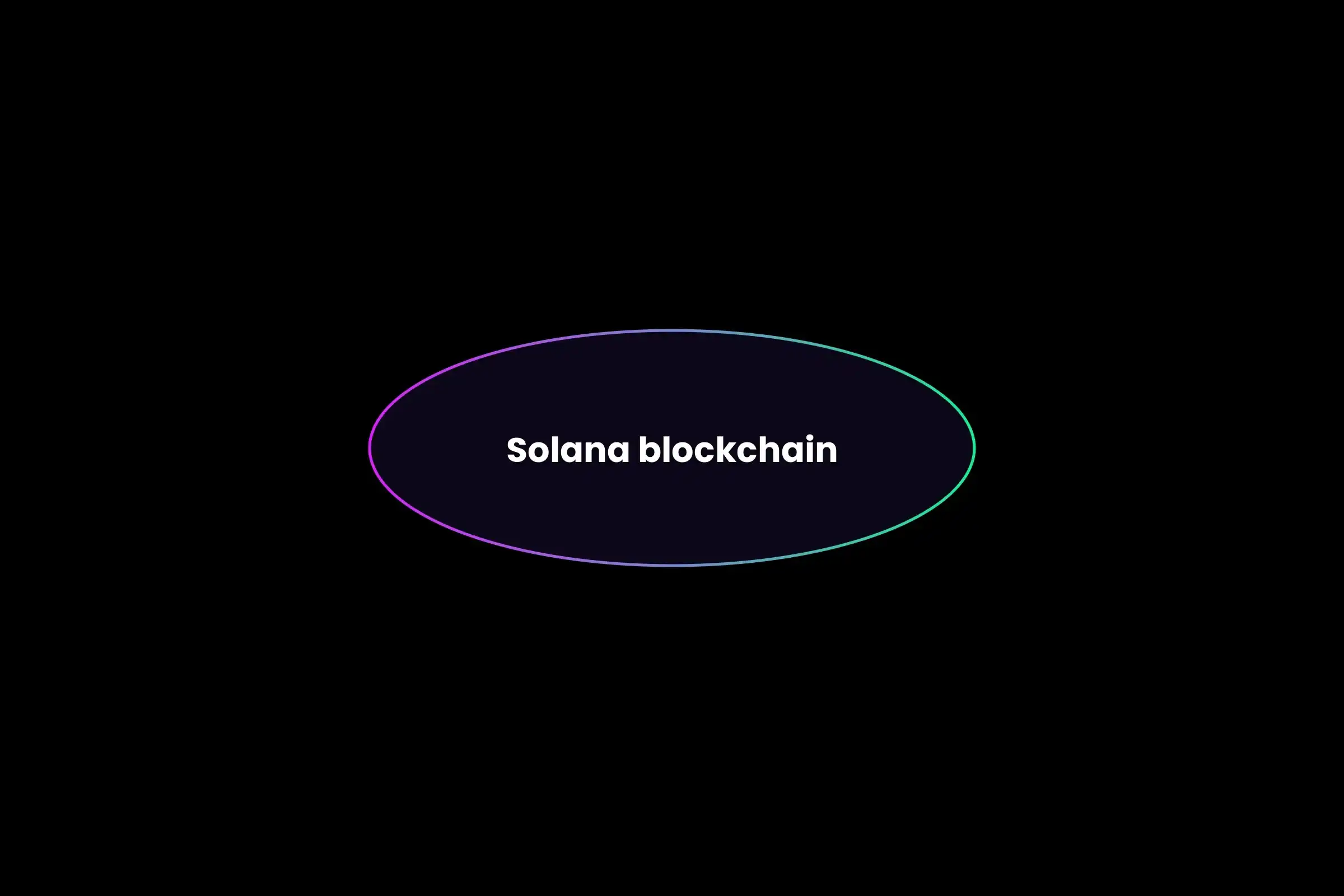
There has long been a common view in the cryptocurrency industry that decentralized systems must be slower (have higher latency) than centralized systems because they require communication between global nodes.

But if you think about it differently, on-chain hosted algorithms may actually have lower latency than traditional centralized exchanges in finance.

Why is that? The reason is that the latency required for propAMM to update prices only involves electrons moving within the same physical piece of silicon. For example, if the last market order causes a change in the SOL-USD price, this information is immediately visible to all propAMMs and used to price the next market order. Everything happens within the same piece of silicon; no bidirectional communication between servers is needed.

It's worth noting that propAMM does require frequent oracle updates, but this is not a problem and does not change the overall fact I described above.

The most critical point remains: when the exchange—in this case, the Solana blockchain—directly hosts the propAMM algorithms, the market makers' pricing changes in real-time within the same physical piece of silicon.

propAMM has already become the dominant mechanism for SOL-USDC spot quotes on Solana, with narrower spreads than all major CEXs. I expect this market structure to become the dominant model for on-chain trading this year, including spot, perpetual contracts (perps), and even prediction markets.

The biggest challenge for propAMM is that there is currently no way to ensure that the taker always gets the best execution, because:

  • All propAMM algorithms are not public (which is reasonable, as traditional market-making algorithms are also proprietary);
  • When routing trades between multiple propAMMs, the result is non-deterministic.

However, this problem can be solved. I expect all relevant aggregator teams to launch solutions this year, such as Jupiter and dFlow for spot, and Phoenix for contracts.

Current propAMM is still not fully optimized and is subject to various limitations of the Solana blockchain itself. This year, Solana will roll out a series of major upgrades that will significantly improve propAMM's performance, including:

  1. Higher CU (compute unit) limits per transaction and larger transaction sizes;
  2. Higher CU limits per block;
  3. Alpenglow: reducing slot time from 400ms to 100–150ms;
  4. DoubleZero: reducing global network latency;
  5. Application-controlled execution;
  6. Multiple concurrent leaders.

If propAMM on the Solana mainnet can already offer narrower quotes than all CEXs without these upgrades, imagine how powerful they will become as these upgrades are gradually implemented.


Domande pertinenti

QWhat is PropAMM and why does Kyle Samani consider it a major innovation in market microstructure?

APropAMM is a mechanism on Solana where market-making algorithms are hosted directly on the blockchain, eliminating the need for constant bidirectional communication between market makers and exchanges. Kyle Samani considers it one of the most important innovations in market microstructure in recent years, or even decades, because it significantly improves efficiency by running algorithms on the same physical hardware as the exchange, reducing latency and narrowing spreads compared to traditional CEXs.

QHow does PropAMM on Solana achieve lower latency compared to traditional centralized exchanges (CEXs)?

APropAMM achieves lower latency by hosting market-making algorithms directly on the Solana blockchain, which runs on the same physical hardware. This means price updates and order processing occur within the same silicon chip, eliminating the delay caused by network communication between separate servers in traditional CEX setups. Electronic movements within the chip are faster than inter-server data transfers.

QWhat current evidence does Kyle Samani provide to show PropAMM's effectiveness on Solana?

AKyle Samani points out that PropAMM has become the dominant mechanism for SOL-USDC spot quotes on Solana, with narrower spreads than all major centralized exchanges (CEXs). This demonstrates its superior performance in market efficiency and execution quality compared to traditional systems.

QWhat are the main challenges facing PropAMM, and how does Samani expect them to be addressed?

AThe main challenges are ensuring best execution for takers, as PropAMM algorithms are not public and routing between multiple PropAMMs is non-deterministic. Samani expects solutions to be developed by aggregator teams like Jupiter and dFlow for spot trading, and Phoenix for perpetual contracts, within the year to optimize routing and execution.

QWhat upcoming Solana upgrades does Samani mention that will further enhance PropAMM performance?

ASamani mentions several Solana upgrades: higher CU (Compute Unit) limits per transaction and larger transaction sizes, higher CU limits per block, Alpenglow (reducing slot time from 400ms to 100-150ms), DoubleZero (reducing global network latency), application-controlled execution, and multiple concurrent leaders. These will collectively boost PropAMM efficiency and performance.

Letture associate

How Much Money Has Kalshi Actually Made? Deconstructing the Prediction Market Business Behind 200 Million Trades

In this analysis of Kalshi, a leading prediction market platform, the author examines its business model, transaction data, and regulatory landscape. By accessing Kalshi’s public API, the study reveals that the platform has processed over 203 million transactions with a total volume exceeding $41.7 billion. More than 82% of this volume comes from sports betting, positioning Kalshi as a de facto sports gambling platform accessible to users as young as 18. The platform operates a central limit order book (CLOB) where users trade binary contracts that settle at either $1 (if the event occurs) or $0 (if it does not). Kalshi generates revenue through a variable fee structure: Takers pay a fee based on the formula 0.07 × C × P × (1-P), where C is the number of contracts and P is the price, while Makers pay a quarter of that rate. Total fee income amounts to $545.6 million. Kalshi ecosystem includes markets, events, and series, with major volumes driven by events like the 2024 U.S. presidential election and Super Bowl outcomes. The platform’s fee model is compared to traditional sportsbooks, highlighting how its variable structure adapts to implied probability. Regulatory oversight falls under the CFTC, though enforcement remains limited, creating a grey area that allows Kalshi to operate with fewer restrictions than conventional gambling platforms. The analysis also touches on market结算 practices, liquidity incentives, and the broader context of prediction markets, including competitors like Polymarket and regulatory cases such as PredictIt’s legal battle with the CFTC.

marsbit10 min fa

How Much Money Has Kalshi Actually Made? Deconstructing the Prediction Market Business Behind 200 Million Trades

marsbit10 min fa

Web4 Is Here: When the Internet Is No Longer Built Only for Humans

Amid a crypto bear market, a significant debate has emerged around redefining the internet's future, sparked by the concept of "Web4" introduced by crypto researcher Sigil Wen. He argues that advanced AI lacks not intelligence, but "write access to the world"—the ability to act autonomously via wallets, payments, and smart contracts. This idea, termed the "Web4 Manifesto," resonated widely, gaining millions of views and triggering industry reflection. Dragonfly's Haseeb Qureshi added that crypto's complexity—long addresses, irreversible transactions, phishing risks—may stem from it being designed more for AI than humans. These features, cumbersome for people, are structured and verifiable for AI agents. Web4 proposes shifting internet agency from humans to AI, granting it "action rights": reading, writing, transacting, and collaborating autonomously. Projects like OpenClaw demonstrate this shift, enabling AI to manage emails, calendars, and tasks independently. Underlying protocols (e.g., Coinbase’s x402, Anthropic’s MCP, Google’s A2A) are standardizing machine-to-machine interactions, making the internet more agent-friendly. Cryptocurrencies, especially stablecoins, are positioned as ideal "machine money"—programmable, low-friction, and embeddable in automated workflows. Real-World Assets (RWA) could serve as reserves for AI economies. This vision suggests crypto’s future lies not in human adoption but in enabling agent-driven economies, with billions of AI agents potentially using wallets. However, Vitalik Buterin cautions against reduced human oversight, emphasizing the need for accountability and control. The Web4 debate highlights a fundamental shift: the internet is evolving from a human-operated interface to a system where humans delegate actions to AI agents, redefining who the primary users are.

marsbit1 h fa

Web4 Is Here: When the Internet Is No Longer Built Only for Humans

marsbit1 h fa

Trading

Spot
Futures
活动图片