Behind DeepSeek V4's Stunning Debut: Silicon Valley Is 'Building Walls,' China Is 'Paving Roads'

marsbitPubblicato 2026-04-26Pubblicato ultima volta 2026-04-26

Introduzione

China's AI landscape is witnessing a strategic divergence from Silicon Valley’s closed-source competition to a collaborative open-source ecosystem. On April 24, DeepSeek released V4, a top-ranked open-source model on Hugging Face, featuring breakthroughs like million-token context length with minimal KV cache and native support for domestic chips like Huawei’s Ascend. Similarly, Kimi’s K2.6, released days earlier, also adopted open-source principles. Unlike U.S. giants such as OpenAI and Anthropic—locked in revenue disputes and tactical product clashes—Chinese firms embrace shared innovation. DeepSeek and Kimi openly build on each other’s advances, like the MLA architecture and Muon optimizer, avoiding redundant R&D and driving down costs. DeepSeek V4 focused on pushing base model capabilities, while Kimi specialized in Agent-based applications. Although U.S. firms lead in revenue and valuation, China’s open-source models achieve comparable performance at a fraction of the cost (e.g., DeepSeek V3 trained for $5.58M vs. GPT-5’s $500M+). With token usage growing exponentially, China’s collaborative model promises scalable, affordable AI built on domestic hardware, shaping a more accessible path to AGI.

By Alter

On the morning of April 24th, the long-awaited DeepSeek V4 finally made its appearance.

That same day, DeepSeek-V4-Pro immediately topped the Hugging Face open-source model leaderboard, with two "bombshell innovations" being widely praised:

First, a million-token-level ultra-long context, but with a KV cache only 10% that of V3.2, praised by Amazon engineers as a solution to the HBM shortage problem;

Second, its adaptation to domestic chips, having closely collaborated with Huawei during R&D and promptly adapted to domestic chips like Ascend and Cambricon.
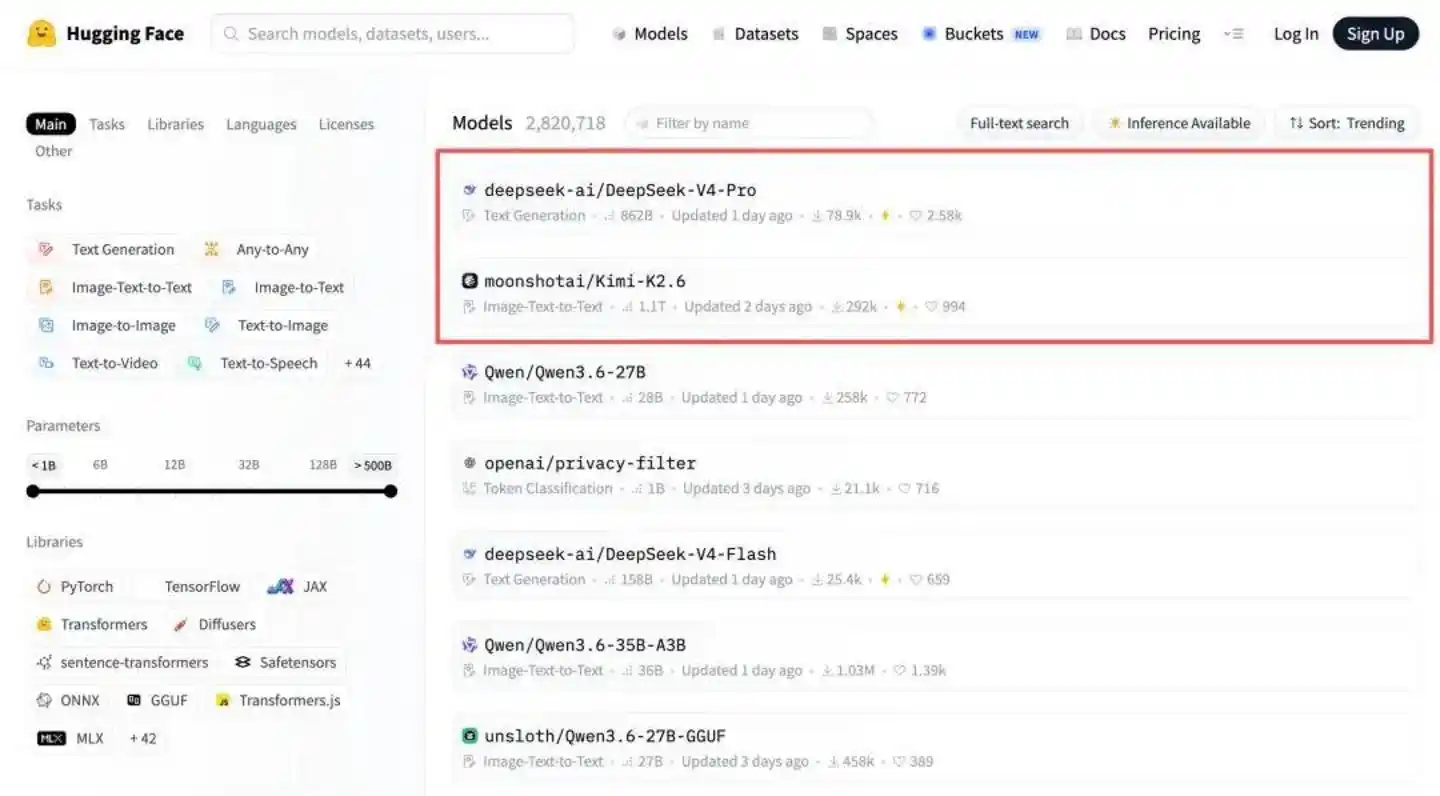
Coincidentally, ranked second on the Hugging Face open-source model leaderboard was Kimi K2.6, which was released and open-sourced late on April 20th.

If this were happening across the Pacific, the "clash" of two trillion-parameter models would inevitably lead to mutual attacks over valuations and commercial territories. Domestically, however, a completely different scene unfolded: there was no drama of exposing each other's secrets, no undercurrents of PR warfare, and even a "swap" at the technical foundation.

Behind this "unusual" situation lies a divergence in AI technology paths between China and the U.S.: Silicon Valley is frantically "erecting high walls," trying to protect vested interests through closed-source models; Chinese large model vendors, however, are choosing to "tear down the walls," moving toward collaborative evolution on the soil of open source.

01 Silicon Valley Trapped in a "Game of Thrones"

Unlike the open-source approach flourishing domestically, Silicon Valley's AI leaders—OpenAI, Anthropic, and Google's Gemini—are all staunch advocates of closed-source models.

As cutting-edge technological innovations are locked away in their respective data centers, under the pressure of computing costs and market expectations, the "Silicon Valley spirit" known for openness and collaboration is gradually fading. Players inevitably find themselves in a zero-sum "game of thrones."

Over the past two years, technical "shadow wars" have evolved into public spats. The most typical tactic is mutual "spotlight stealing": quickly unveiling their own major updates at competitors' key product launch moments to curb the other's momentum has become a routine operation in Silicon Valley.

As early as May 2024, OpenAI and Google simultaneously released new AI products, one claiming GPT-4o was globally leading, the other touting the Gemini family's coverage of the entire ecosystem and path. Eventually, the CEOs of both companies couldn't sit still, publicly mocking each other on social media.

It's not just a "tangle" with Google; the rivalry between OpenAI and Anthropic has also intensified: on April 16th, just after Anthropic released its new model Claude Opus 4.7, OpenAI announced a major update to Codex over two hours later, proclaiming "Codex for (almost) everything." It was clear to everyone that the timing was no coincidence but a carefully planned "snipe" by OpenAI against Anthropic.

Beyond the "cultural fights" in the court of public opinion, "military fights" of mutual "exposure" have also become the norm in Silicon Valley.

Anthropic proudly announced on April 7th that its annualized revenue had reached $30 billion, successfully surpassing OpenAI's $25 billion.

A week later, OpenAI's Chief Revenue Officer stated bluntly in an internal letter to all employees: Anthropic's claimed $30 billion in annualized revenue was seriously inflated because it used the "gross method," fully counting the share given to cloud service providers like Amazon and Google into its total revenue, resulting in an overestimation of about $8 billion.

The practice of undermining competitors in internal letters is uncommon in the tech industry, aiming无非是告诉投资人——Anthropic's growth myth is inflated.

And once hostility breeds, it permeates every decision.

After Anthropic "fell out" with the Pentagon for refusing to delete specific security clauses from a contract, OpenAI announced within hours that it had reached a cooperation agreement with the U.S. Department of Defense.

During the 2026 Super Bowl, Anthropic heavily advertised with a commercial whose content was "Advertising is entering the AI field, but it won't enter Claude." This was essentially a direct challenge to OpenAI, which had just begun testing ad features.......

Why have former "brothers-in-arms" come to such loggerheads?

The root lies in the inherent logic of the closed-source business model: the survival foundation of closed source is building moats, and the prerequisite for building moats is blocking technology diffusion, monopolizing the most advanced productivity. Coupled with incompatible technical routes and opposing product narratives, it naturally forms a Nash equilibrium: whoever "ceases fire" first will see their brand narrative collapse, ultimately sinking deeper into the quagmire of internal consumption.

02 The "Collaborative Evolution" of the Open-Source Camp

Turning the focus back to China, the script unfolds completely differently.

Rewind to over a year ago, the emergence of DeepSeek-R1 slammed the brakes on the狂奔的大模型创业赛 (frantic large model startup race), with the finalist large model "Six Little Tigers" being the first affected. The biggest difference from Silicon Valley is that DeepSeek did not play the role of a "shark" eating all the fish in the pond, but rather acted like a catfish that activated the entire Chinese large model ecosystem, leading everyone to embrace open source.

A direct example is Moonlight (Yue Zhi An Mian - 月之暗面), whose growth trajectory highly overlaps with DeepSeek's: both are startup teams that began in 2023, both maintain extremely small teams with high talent concentration, and both are firm believers in Scaling Law.

In July 2025, Moonlight released the world's first trillion-parameter open-source model, Kimi K2, openly stating in its technical report that it adopted the MLA architecture open-sourced by DeepSeek. For large models, the biggest nightmare of processing ultra-long text is the memory wall. The disruptive nature of the MLA architecture lies in its clever achievement of a staggering over 93% compression rate for KV Cache.

With the "industry standard" contributed by DeepSeek, large model teams like Moonlight no longer needed to reinvent the wheel, quickly reducing inference costs.

The story didn't stop there.

Looking through the DeepSeek V4 technical documentation, it details the model's architecture. One important upgrade was switching the optimizer for most modules from AdamW to Muon, achieving faster convergence speed and better training stability.
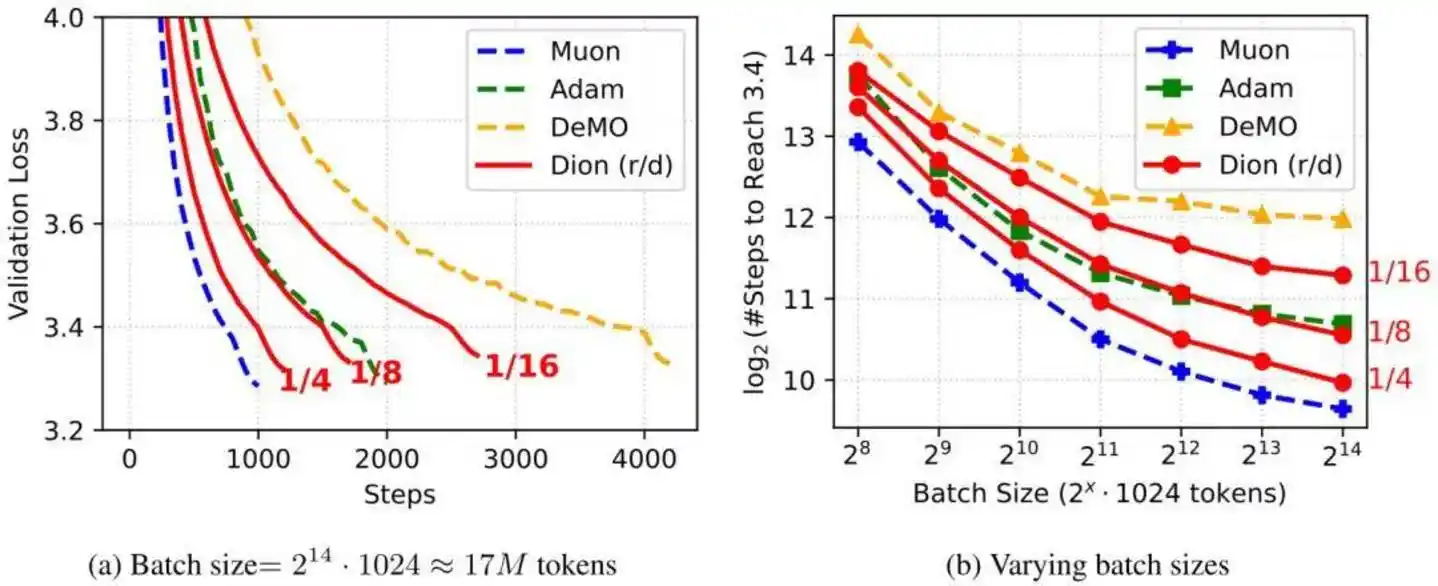
In the Kimi K2.6 technical documentation, the Muon optimizer is also mentioned, achieving a 2x efficiency improvement under the same training volume.

The Muon optimizer, mentioned by both models, was first proposed by independent researcher Keller Jordan in a blog post in late 2024. The Moonlight team, also troubled by AdamW, made key engineering improvements to Muon in early 2025, adding capabilities like Weight Decay and RMS control, and named it MuonClip.

Moonlight率先 validated the stability of the Muon optimizer on Kimi K2, achieving "zero Loss Spike" throughout pre-training. DeepSeek also adopted the validated Muon optimizer when training the V4 large model.

It's important to note that the "collaborative evolution" of open-source large models has not fallen into homogeneity but is moving towards a path of "harmony in diversity."

For example, DeepSeek-V4 focuses on core capabilities攻坚 of the base model, further solidifying the global open-source large model performance ceiling and providing the entire industry with a base foundation rivaling closed-source flagships; Kimi K2.6深耕 Agent engineering and落地, solving the pain points of long-range autonomous execution for large models, and打通关键路径 for large models to enter real production scenarios.

Throughout this process, there were no protracted商业谈判, no tense patent battles. In the open-source camp, technological innovation flows freely like water; whoever does it well, everyone uses it.

Absorbing nutrients from the open-source ecosystem, complementing each other in technical routes. China's large model vendors are demonstrating to the world another possibility beyond Silicon Valley through action.

03 The U.S. Is "Building Walls," China Is "Paving Roads"

While marveling at the collaborative evolution of open source, one must face a商业现实 squarely.

Currently, OpenAI and Anthropic's annualized revenues have both reached the tens of billions of USD, while the revenue of domestic leading large model vendors has just crossed the threshold of annualized $100 million.

OpenAI's valuation in the secondary market is about $880 billion, Anthropic's valuation has soared to around $1 trillion, while the valuations for Kimi and DeepSeek's latest funding rounds are $18 billion and $20 billion respectively.

Some exclaim that Chinese large model vendors are undervalued, while others believe: "The ability to translate technical reputation into real money is a life-and-death test facing Chinese companies." For a time, discussions about the "cost-effectiveness" of open source are rampant.

To see the endgame, one might start from the competition stages of large models:
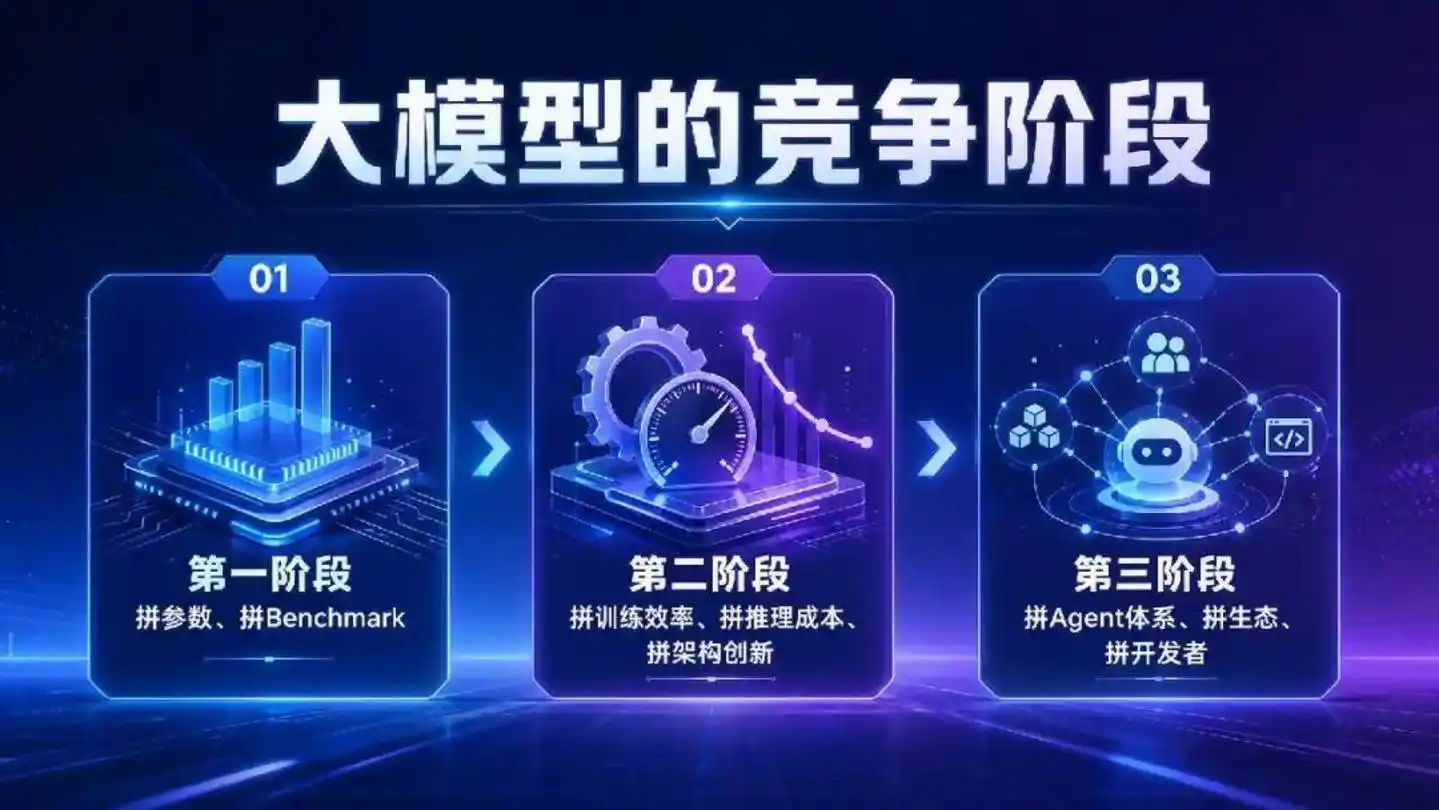
The first stage was "competing on parameters, competing on Benchmark." By the end of April 2026, this stage is basically over, as scores on leaderboards can no longer create substantial gaps.

The second stage is "competing on training efficiency, competing on inference cost, competing on architectural innovation." This is the current segment, also an inevitable result forced by computing cost pressures.

The third stage will be "competing on Agent systems, competing on ecosystem, competing on developers." When Tokens change from free traffic to "fuel" for executing tasks, the prosperity of the ecosystem will determine survival.

What is the ecological niche of domestic open-source large models? We found two sets of直观的对比数据 (intuitive comparative data).

One is training cost.

GPT-5, released in August 2025, had a training cost exceeding $500 million; Kimi K2 Thinking around the same time cost about $4.6 million to train; DeepSeek did not公布 the training cost of the V4 series models, but the V3 model cost only $5.576 million... Domestic large model vendors used resources amounting to less than pocket change for OpenAI to train models of comparable level.

The other is call volume.

After entering 2026, data from the multi-model aggregation platform OpenRouter shows: driven by Agent products represented by OpenClaw, global Token consumption has shown exponential growth. China's "Open-Source Dream Team,"凭借 "好用又便宜"的口碑 (relying on a reputation for being "user-friendly and cheap"), has seen its volume连续多周超越美国 (surpass that of the U.S. for multiple consecutive weeks).

The reason isn't hard to explain.

China's open-source camp has already successfully run a "positive feedback flywheel": Company A open-sources underlying technology, Company B adopts and performs engineering optimizations, then feeds the optimization results and experiences back to the entire ecosystem. If the evolution of closed-source models is linear growth built on massive computing power stacking, what awaits the open-source route is the exponential diffusion brought by the collision of technological innovations.

According to J.P. Morgan's research report, China's AI inference token consumption will achieve a compound annual growth rate (CAGR) of about 330% between 2025 and 2030,激增 (soaring) from 10 trillion tokens in 2025 to 3900 trillion tokens in 2030, a growth scale of 370 times.

This means that 2026 is still in the early stages of the AI explosion, with hundreds of times more growth opportunities in the next 5 years—far from the time for a final verdict.

Precisely because of confidence in long-term opportunities, while Silicon Valley giants are desperately building walls, Chinese large model vendors are choosing to use collaborative positioning to continuously solidify the road to AGI.

04 In Conclusion

In this轰轰烈烈的AI浪潮 (grand AI wave), who will have the last laugh? The answer concerns not only the models but also the autonomous controllability of computing power. If models are compared to "atomic bombs," then domestic computing power, free from external technological blockades, is the "rocket" that sends the atomic bomb into the sky.

It is gratifying that the integration of domestic models and domestic computing power is becoming increasingly close: in the DeepSeek V4 technical documentation, Ascend NPU is listed alongside NVIDIA GPU in the hardware verification list; Moonlight's latest论文 (paper) runs large model inference's prefill and decoding on different chips, opening the door for domestic chips to participate in model inference on a large scale.

In early 2025, DeepSeek R1 secured a seat at the table for domestic large models; by 2026, China's open-source large model camp is continuously creating more定义牌桌规则的硬资本 (hard capital that defines the rules of the table) through collaboration.


Domande pertinenti

QWhat are the two major innovations of DeepSeek V4 mentioned in the article?

AThe two major innovations are: 1) A million-level ultra-long context with only 10% of the KV cache of V3.2, praised by Amazon engineers for solving HBM shortage issues; 2) Adaptation to domestic chips, with close collaboration with Huawei and immediate support for Ascend and Cambricon chips.

QHow does the AI development approach in Silicon Valley differ from that in China according to the article?

ASilicon Valley AI leaders like OpenAI, Anthropic, and Google Gemini advocate for closed-source models, leading to zero-sum games and internal conflicts. In contrast, Chinese AI companies embrace open-source collaboration, promoting synergistic evolution and shared technological advancements.

QWhat is the significance of the Muon optimizer in the development of DeepSeek V4 and Kimi K2.6?

AThe Muon optimizer, improved by Moonshot AI and adopted by DeepSeek, replaced AdamW in most modules, achieving faster convergence speeds and better training stability. It contributed to a 2x efficiency improvement with the same training volume in Kimi K2.6.

QWhat are the three stages of AI model competition as described in the article?

AThe three stages are: 1) Competing on parameters and benchmark performance; 2) Competing on training efficiency, inference cost, and architectural innovation; 3) Competing on Agent systems, ecosystem, and developer support.

QHow does the article characterize the relationship between Chinese open-source AI models and domestic computing hardware?

AThe article highlights a tight integration, where Chinese AI models like DeepSeek V4 and Kimi K2.6 actively adapt to and validate domestic chips such as Huawei's Ascend and Cambricon, reducing reliance on external technology and enhancing autonomous controllability of computing power.

Letture associate

TechFlow Intelligence Bureau: ChatGPT Helps Amateur Mathematician Crack 60-Year-Old Problem, CFTC Sues New York Regulator Over Coinbase and Gemini

An amateur mathematician, with the assistance of ChatGPT, has solved a combinatorial mathematics puzzle originally proposed by Hungarian mathematician Paul Erdős in the 1960s. This marks another milestone in AI-aided mathematical research, demonstrating the evolving capabilities of large language models in formal reasoning. In other AI developments, OpenAI introduced a new privacy filter tool for enterprise API usage, automatically screening sensitive data. Meanwhile, the Qwen3.6-27B model achieved 100 tokens per second on a single RTX 5090 GPU using quantization, significantly lowering the cost barrier for local AI deployment. In crypto and Web3, the U.S. CFTC sued New York’s financial regulator, challenging its oversight of Coinbase and Gemini—a first-of-its-kind federal-state regulatory clash. Following a vulnerability, KelpDAO and major DeFi protocols established a recovery fund. Tether froze $344 million in assets linked to Iran’s central bank upon U.S. Treasury request, highlighting the centralized control risks in stablecoins. Separately, Litecoin underwent a 3-hour chain reorganization to undo a privacy-layer exploit. In the U.S., former President Trump invoked the Defense Production Act to address power grid bottlenecks affecting AI data centers and dismissed the entire National Science Board, raising concerns over research independence. A retail trader gained 250% on a $600k Intel options bet amid AI-related speculation. Xiaomi announced its first performance electric vehicle, targeting rivals like Tesla. Meanwhile, iPhone users reported devices automatically reinstalling a hidden app daily, suspected to be MDM-related. A Chinese securities report noted that A-share institutional crowding has reached its second-longest streak since 2007, signaling high valuations and potential style rotation. The day’s developments reflect a dual narrative: AI is enabling unprecedented individual breakthroughs, while centralized power structures—whether governmental or corporate—are becoming more assertive, underscoring that decentralization is as much a political-economic challenge as a technical one.

marsbit17 min fa

TechFlow Intelligence Bureau: ChatGPT Helps Amateur Mathematician Crack 60-Year-Old Problem, CFTC Sues New York Regulator Over Coinbase and Gemini

marsbit17 min fa

From Theft to Re-entry: How Was $292 Million "Laundered"?

A sophisticated crypto laundering operation was executed following the $292 million hack of Kelp DAO on April 18. The attack, attributed to the North Korean Lazarus group, began with anonymous infrastructure preparation using Tornado Cash to fund wallets untraceably. The hacker exploited a vulnerability in Kelp’s cross-chain bridge, stealing 116,500 rsETH. To avoid crashing the market, the attacker used Aave and Compound as laundering tools—depositing the stolen rsETH as collateral to borrow $190 million in clean, liquid ETH. This move triggered a bank run on Aave, causing an $8 billion drop in TVL. After consolidating funds, the attacker fragmented them across hundreds of wallets to evade detection. A major breakpoint was THORChain, where over $460 million in volume—30 times its usual activity—was processed in 24 hours, converting ETH into Bitcoin. This shift to Bitcoin’s UTXO model exponentially increased tracing complexity by shattering funds into countless untraceable fragments. The final destination was Tron-based USDT, the primary channel for illicit crypto flows. From there, funds were cashed out via OTC brokers in China and Southeast Asia, using unlicensed underground banks and UnionPay networks outside Western sanctions scope. Ultimately, the laundered money supports North Korea’s weapons programs, which rely heavily on crypto hacking for foreign currency. The incident underscores structural challenges in DeFi: its openness, composability, and lack of central control make such laundering not just possible, but inherently difficult to prevent.

marsbit4 h fa

From Theft to Re-entry: How Was $292 Million "Laundered"?

marsbit4 h fa

Trading

Spot
Futures

Articoli Popolari

Cosa è $S$

Comprendere SPERO: Una Panoramica Completa Introduzione a SPERO Mentre il panorama dell'innovazione continua a evolversi, l'emergere delle tecnologie web3 e dei progetti di criptovaluta gioca un ruolo fondamentale nel plasmare il futuro digitale. Un progetto che ha attirato l'attenzione in questo campo dinamico è SPERO, denotato come SPERO,$$s$. Questo articolo mira a raccogliere e presentare informazioni dettagliate su SPERO, per aiutare gli appassionati e gli investitori a comprendere le sue basi, obiettivi e innovazioni nei domini web3 e crypto. Che cos'è SPERO,$$s$? SPERO,$$s$ è un progetto unico all'interno dello spazio crypto che cerca di sfruttare i principi della decentralizzazione e della tecnologia blockchain per creare un ecosistema che promuove l'impegno, l'utilità e l'inclusione finanziaria. Il progetto è progettato per facilitare interazioni peer-to-peer in modi nuovi, fornendo agli utenti soluzioni e servizi finanziari innovativi. Al suo interno, SPERO,$$s$ mira a responsabilizzare gli individui fornendo strumenti e piattaforme che migliorano l'esperienza dell'utente nello spazio delle criptovalute. Questo include la possibilità di metodi di transazione più flessibili, la promozione di iniziative guidate dalla comunità e la creazione di percorsi per opportunità finanziarie attraverso applicazioni decentralizzate (dApps). La visione sottostante di SPERO,$$s$ ruota attorno all'inclusività, cercando di colmare le lacune all'interno della finanza tradizionale mentre sfrutta i vantaggi della tecnologia blockchain. Chi è il Creatore di SPERO,$$s$? L'identità del creatore di SPERO,$$s$ rimane piuttosto oscura, poiché ci sono risorse pubblicamente disponibili limitate che forniscono informazioni dettagliate sul suo fondatore o fondatori. Questa mancanza di trasparenza può derivare dall'impegno del progetto per la decentralizzazione—un ethos che molti progetti web3 condividono, dando priorità ai contributi collettivi rispetto al riconoscimento individuale. Centrando le discussioni attorno alla comunità e ai suoi obiettivi collettivi, SPERO,$$s$ incarna l'essenza dell'empowerment senza mettere in evidenza individui specifici. Pertanto, comprendere l'etica e la missione di SPERO rimane più importante che identificare un creatore singolo. Chi sono gli Investitori di SPERO,$$s$? SPERO,$$s$ è supportato da una varietà di investitori che vanno dai capitalisti di rischio agli investitori angelici dedicati a promuovere l'innovazione nel settore crypto. Il focus di questi investitori generalmente si allinea con la missione di SPERO—dando priorità a progetti che promettono avanzamenti tecnologici sociali, inclusività finanziaria e governance decentralizzata. Queste fondazioni di investitori sono tipicamente interessate a progetti che non solo offrono prodotti innovativi, ma contribuiscono anche positivamente alla comunità blockchain e ai suoi ecosistemi. Il supporto di questi investitori rafforza SPERO,$$s$ come un concorrente degno di nota nel dominio in rapida evoluzione dei progetti crypto. Come Funziona SPERO,$$s$? SPERO,$$s$ impiega un framework multifunzionale che lo distingue dai progetti di criptovaluta convenzionali. Ecco alcune delle caratteristiche chiave che sottolineano la sua unicità e innovazione: Governance Decentralizzata: SPERO,$$s$ integra modelli di governance decentralizzati, responsabilizzando gli utenti a partecipare attivamente ai processi decisionali riguardanti il futuro del progetto. Questo approccio favorisce un senso di proprietà e responsabilità tra i membri della comunità. Utilità del Token: SPERO,$$s$ utilizza il proprio token di criptovaluta, progettato per servire varie funzioni all'interno dell'ecosistema. Questi token abilitano transazioni, premi e la facilitazione dei servizi offerti sulla piattaforma, migliorando l'impegno e l'utilità complessivi. Architettura Stratificata: L'architettura tecnica di SPERO,$$s$ supporta la modularità e la scalabilità, consentendo un'integrazione fluida di funzionalità e applicazioni aggiuntive man mano che il progetto evolve. Questa adattabilità è fondamentale per mantenere la rilevanza nel panorama crypto in continua evoluzione. Coinvolgimento della Comunità: Il progetto enfatizza iniziative guidate dalla comunità, impiegando meccanismi che incentivano la collaborazione e il feedback. Nutrendo una comunità forte, SPERO,$$s$ può affrontare meglio le esigenze degli utenti e adattarsi alle tendenze di mercato. Focus sull'Inclusione: Offrendo basse commissioni di transazione e interfacce user-friendly, SPERO,$$s$ mira ad attrarre una base utenti diversificata, inclusi individui che potrebbero non aver precedentemente interagito nello spazio crypto. Questo impegno per l'inclusione si allinea con la sua missione generale di empowerment attraverso l'accessibilità. Cronologia di SPERO,$$s$ Comprendere la storia di un progetto fornisce preziose intuizioni sulla sua traiettoria di sviluppo e sui traguardi. Di seguito è riportata una cronologia suggerita che mappa eventi significativi nell'evoluzione di SPERO,$$s$: Fase di Concettualizzazione e Ideazione: Le idee iniziali che formano la base di SPERO,$$s$ sono state concepite, allineandosi strettamente con i principi di decentralizzazione e focus sulla comunità all'interno dell'industria blockchain. Lancio del Whitepaper del Progetto: Dopo la fase concettuale, è stato rilasciato un whitepaper completo che dettaglia la visione, gli obiettivi e l'infrastruttura tecnologica di SPERO,$$s$ per suscitare interesse e feedback dalla comunità. Costruzione della Comunità e Prime Interazioni: Sono stati effettuati sforzi attivi di outreach per costruire una comunità di early adopters e potenziali investitori, facilitando discussioni attorno agli obiettivi del progetto e ottenendo supporto. Evento di Generazione del Token: SPERO,$$s$ ha condotto un evento di generazione del token (TGE) per distribuire i propri token nativi ai primi sostenitori e stabilire una liquidità iniziale all'interno dell'ecosistema. Lancio della Prima dApp: La prima applicazione decentralizzata (dApp) associata a SPERO,$$s$ è stata attivata, consentendo agli utenti di interagire con le funzionalità principali della piattaforma. Sviluppo Continuo e Partnership: Aggiornamenti e miglioramenti continui alle offerte del progetto, inclusi partnership strategiche con altri attori nello spazio blockchain, hanno plasmato SPERO,$$s$ in un concorrente competitivo e in evoluzione nel mercato crypto. Conclusione SPERO,$$s$ rappresenta una testimonianza del potenziale del web3 e delle criptovalute di rivoluzionare i sistemi finanziari e responsabilizzare gli individui. Con un impegno per la governance decentralizzata, il coinvolgimento della comunità e funzionalità progettate in modo innovativo, apre la strada verso un panorama finanziario più inclusivo. Come per qualsiasi investimento nello spazio crypto in rapida evoluzione, si incoraggiano potenziali investitori e utenti a ricercare approfonditamente e a impegnarsi in modo riflessivo con gli sviluppi in corso all'interno di SPERO,$$s$. Il progetto mostra lo spirito innovativo dell'industria crypto, invitando a ulteriori esplorazioni delle sue innumerevoli possibilità. Mentre il percorso di SPERO,$$s$ è ancora in fase di sviluppo, i suoi principi fondamentali potrebbero effettivamente influenzare il futuro di come interagiamo con la tecnologia, la finanza e tra di noi in ecosistemi digitali interconnessi.

75 Totale visualizzazioniPubblicato il 2024.12.17Aggiornato il 2024.12.17

Cosa è $S$

Cosa è AGENT S

Agent S: Il Futuro dell'Interazione Autonoma in Web3 Introduzione Nel panorama in continua evoluzione di Web3 e criptovalute, le innovazioni stanno costantemente ridefinendo il modo in cui gli individui interagiscono con le piattaforme digitali. Uno di questi progetti pionieristici, Agent S, promette di rivoluzionare l'interazione uomo-computer attraverso il suo framework agentico aperto. Aprendo la strada a interazioni autonome, Agent S mira a semplificare compiti complessi, offrendo applicazioni trasformative nell'intelligenza artificiale (AI). Questa esplorazione dettagliata approfondirà le complessità del progetto, le sue caratteristiche uniche e le implicazioni per il dominio delle criptovalute. Cos'è Agent S? Agent S si presenta come un innovativo framework agentico aperto, progettato specificamente per affrontare tre sfide fondamentali nell'automazione dei compiti informatici: Acquisizione di Conoscenze Specifiche del Dominio: Il framework apprende in modo intelligente da varie fonti di conoscenza esterne ed esperienze interne. Questo approccio duale gli consente di costruire un ricco repository di conoscenze specifiche del dominio, migliorando le sue prestazioni nell'esecuzione dei compiti. Pianificazione su Lungo Orizzonte di Compiti: Agent S impiega una pianificazione gerarchica potenziata dall'esperienza, un approccio strategico che facilita la suddivisione e l'esecuzione efficiente di compiti complessi. Questa caratteristica migliora significativamente la sua capacità di gestire più sottocompiti in modo efficiente ed efficace. Gestione di Interfacce Dinamiche e Non Uniformi: Il progetto introduce l'Interfaccia Agente-Computer (ACI), una soluzione innovativa che migliora l'interazione tra agenti e utenti. Utilizzando Modelli Linguistici Multimodali di Grandi Dimensioni (MLLM), Agent S può navigare e manipolare senza sforzo diverse interfacce grafiche utente. Attraverso queste caratteristiche pionieristiche, Agent S fornisce un framework robusto che affronta le complessità coinvolte nell'automazione dell'interazione umana con le macchine, preparando il terreno per innumerevoli applicazioni nell'AI e oltre. Chi è il Creatore di Agent S? Sebbene il concetto di Agent S sia fondamentalmente innovativo, informazioni specifiche sul suo creatore rimangono elusive. Il creatore è attualmente sconosciuto, il che evidenzia sia la fase embrionale del progetto sia la scelta strategica di mantenere i membri fondatori sotto anonimato. Indipendentemente dall'anonimato, l'attenzione rimane sulle capacità e sul potenziale del framework. Chi sono gli Investitori di Agent S? Poiché Agent S è relativamente nuovo nell'ecosistema crittografico, informazioni dettagliate riguardanti i suoi investitori e sostenitori finanziari non sono documentate esplicitamente. La mancanza di approfondimenti pubblicamente disponibili sulle fondazioni di investimento o sulle organizzazioni che supportano il progetto solleva interrogativi sulla sua struttura di finanziamento e sulla roadmap di sviluppo. Comprendere il supporto è cruciale per valutare la sostenibilità del progetto e il suo potenziale impatto sul mercato. Come Funziona Agent S? Al centro di Agent S si trova una tecnologia all'avanguardia che gli consente di funzionare efficacemente in contesti diversi. Il suo modello operativo è costruito attorno a diverse caratteristiche chiave: Interazione Uomo-Computer Simile a Quella Umana: Il framework offre una pianificazione AI avanzata, cercando di rendere le interazioni con i computer più intuitive. Mimando il comportamento umano nell'esecuzione dei compiti, promette di elevare le esperienze degli utenti. Memoria Narrativa: Utilizzata per sfruttare esperienze di alto livello, Agent S utilizza la memoria narrativa per tenere traccia delle storie dei compiti, migliorando così i suoi processi decisionali. Memoria Episodica: Questa caratteristica fornisce agli utenti una guida passo-passo, consentendo al framework di offrire supporto contestuale mentre i compiti si sviluppano. Supporto per OpenACI: Con la capacità di funzionare localmente, Agent S consente agli utenti di mantenere il controllo sulle proprie interazioni e flussi di lavoro, allineandosi con l'etica decentralizzata di Web3. Facile Integrazione con API Esterne: La sua versatilità e compatibilità con varie piattaforme AI garantiscono che Agent S possa adattarsi senza problemi agli ecosistemi tecnologici esistenti, rendendolo una scelta attraente per sviluppatori e organizzazioni. Queste funzionalità contribuiscono collettivamente alla posizione unica di Agent S all'interno dello spazio crittografico, poiché automatizza compiti complessi e multi-fase con un intervento umano minimo. Man mano che il progetto evolve, le sue potenziali applicazioni in Web3 potrebbero ridefinire il modo in cui si svolgono le interazioni digitali. Cronologia di Agent S Lo sviluppo e le tappe di Agent S possono essere riassunti in una cronologia che evidenzia i suoi eventi significativi: 27 Settembre 2024: Il concetto di Agent S è stato lanciato in un documento di ricerca completo intitolato “Un Framework Agentico Aperto che Usa i Computer Come un Umano”, mostrando le basi per il progetto. 10 Ottobre 2024: Il documento di ricerca è stato reso pubblicamente disponibile su arXiv, offrendo un'esplorazione approfondita del framework e della sua valutazione delle prestazioni basata sul benchmark OSWorld. 12 Ottobre 2024: È stata rilasciata una presentazione video, fornendo un'idea visiva delle capacità e delle caratteristiche di Agent S, coinvolgendo ulteriormente potenziali utenti e investitori. Questi indicatori nella cronologia non solo illustrano i progressi di Agent S, ma indicano anche il suo impegno per la trasparenza e il coinvolgimento della comunità. Punti Chiave su Agent S Man mano che il framework Agent S continua a evolversi, diversi attributi chiave si distinguono, sottolineando la sua natura innovativa e il potenziale: Framework Innovativo: Progettato per fornire un uso intuitivo dei computer simile all'interazione umana, Agent S porta un approccio nuovo all'automazione dei compiti. Interazione Autonoma: La capacità di interagire autonomamente con i computer attraverso GUI segna un passo avanti verso soluzioni informatiche più intelligenti ed efficienti. Automazione di Compiti Complessi: Con la sua metodologia robusta, può automatizzare compiti complessi e multi-fase, rendendo i processi più veloci e meno soggetti a errori. Miglioramento Continuo: I meccanismi di apprendimento consentono ad Agent S di migliorare dalle esperienze passate, migliorando continuamente le sue prestazioni e la sua efficacia. Versatilità: La sua adattabilità attraverso diversi ambienti operativi come OSWorld e WindowsAgentArena garantisce che possa servire un'ampia gamma di applicazioni. Man mano che Agent S si posiziona nel panorama di Web3 e delle criptovalute, il suo potenziale per migliorare le capacità di interazione e automatizzare i processi segna un significativo avanzamento nelle tecnologie AI. Attraverso il suo framework innovativo, Agent S esemplifica il futuro delle interazioni digitali, promettendo un'esperienza più fluida ed efficiente per gli utenti in vari settori. Conclusione Agent S rappresenta un audace passo avanti nell'unione tra AI e Web3, con la capacità di ridefinire il modo in cui interagiamo con la tecnologia. Sebbene sia ancora nelle sue fasi iniziali, le possibilità per la sua applicazione sono vaste e coinvolgenti. Attraverso il suo framework completo che affronta sfide critiche, Agent S mira a portare le interazioni autonome al centro dell'esperienza digitale. Man mano che ci addentriamo nei regni delle criptovalute e della decentralizzazione, progetti come Agent S giocheranno senza dubbio un ruolo cruciale nel plasmare il futuro della tecnologia e della collaborazione uomo-computer.

421 Totale visualizzazioniPubblicato il 2025.01.14Aggiornato il 2025.01.14

Cosa è AGENT S

Come comprare S

Benvenuto in HTX.com! Abbiamo reso l'acquisto di Sonic (S) semplice e conveniente. Segui la nostra guida passo passo per intraprendere il tuo viaggio nel mondo delle criptovalute.Step 1: Crea il tuo Account HTXUsa la tua email o numero di telefono per registrarti il tuo account gratuito su HTX. Vivi un'esperienza facile e sblocca tutte le funzionalità,Crea il mio accountStep 2: Vai in Acquista crypto e seleziona il tuo metodo di pagamentoCarta di credito/debito: utilizza la tua Visa o Mastercard per acquistare immediatamente SonicS.Bilancio: Usa i fondi dal bilancio del tuo account HTX per fare trading senza problemi.Terze parti: abbiamo aggiunto metodi di pagamento molto utilizzati come Google Pay e Apple Pay per maggiore comodità.P2P: Fai trading direttamente con altri utenti HTX.Over-the-Counter (OTC): Offriamo servizi su misura e tassi di cambio competitivi per i trader.Step 3: Conserva Sonic (S)Dopo aver acquistato Sonic (S), conserva nel tuo account HTX. In alternativa, puoi inviare tramite trasferimento blockchain o scambiare per altre criptovalute.Step 4: Scambia Sonic (S)Scambia facilmente Sonic (S) nel mercato spot di HTX. Accedi al tuo account, seleziona la tua coppia di trading, esegui le tue operazioni e monitora in tempo reale. Offriamo un'esperienza user-friendly sia per chi ha appena iniziato che per i trader più esperti.

836 Totale visualizzazioniPubblicato il 2025.01.15Aggiornato il 2025.03.21

Come comprare S

Discussioni

Benvenuto nella Community HTX. Qui puoi rimanere informato sugli ultimi sviluppi della piattaforma e accedere ad approfondimenti esperti sul mercato. Le opinioni degli utenti sul prezzo di S S sono presentate come di seguito.

活动图片