AI PC Battle: Bet on the Toll Booth, Not the Camp

marsbitPubblicato 2026-06-04Pubblicato ultima volta 2026-06-04

Introduzione

**Title:** The AI PC Battle: Don't Bet on Sides, Bet on the Tollbooth **Summary:** The AI PC competition is moving beyond simple "x86 vs. Arm" narratives. The core investment thesis should focus on identifying which players can sustain margins, cash flow, and pricing power throughout the upgrade cycle, rather than backing a particular architecture. The opportunity is analyzed in three layers: 1. **The Advanced Foundry Tollbooth:** TSMC is positioned to collect "tolls" regardless of which chip designer wins, due to its dominant ~70% share in advanced semiconductor manufacturing, which is essential for high-end AI PC chips. 2. **Compute & Platform Spillover:** AMD represents an offensive in the x86 CPU+GPU space, while NVIDIA leverages its GPU and CUDA software stack dominance. Both benefit from the demand for increased local AI compute. 3. **Architecture Diffusion & Turnaround Plays:** ARM and Intel offer potential for significant upside (elasticity), but investments here require stricter discipline due to higher execution risks and competitive challenges. The industry is transitioning from concept to shipment validation. While short-term forecasts for AI PC adoption have been revised down slightly due to tariffs and procurement delays, the long-term trend towards AI becoming a standard PC feature remains intact. The key driver for upgrade cycles will be whether compelling enterprise applications (e.g., privacy-sensitive computing, low-latency inference) emerge beyon...

Roger Lee|BIT U.S. Stock Market Special Analyst

With 21 years of experience in investment banking, asset management, and financial institutions, I have long focused on AI industry chain research, U.S. stock market macro liquidity, and options strategy research.

NVIDIA and MediaTek entering the AI PC arena, on the surface, means consumer PCs have a new chipset combination. In essence, it signifies that the Windows on-device AI ecosystem is moving from isolated trials into a phase of multi-player competition. My assessment is that this war should not be oversimplified into a religious "x86 vs. Arm" allegiance; what truly warrants study is who can weather the replacement cycle and consistently secure gross margins, cash flow, and pricing power within the supply chain.

I view the AI PC opportunity in three layers:

  • The first layer is the advanced process toll booth. Whoever wins, TSMC is more likely to collect the toll.
  • The second layer is the spillover of computing power and platforms. AMD and NVDA represent the offensive of x86 and the extension of GPU software stacks, respectively.
  • The third layer is architecture proliferation and contrarian plays. Both ARM and INTC have potential upside, but position discipline must be stricter.

I. Industry Assessment: AI PCs Transition from Concept to Shipment Validation Phase

Gartner once forecasted in 2024 that AI PC shipments would reach 114.225 million units in 2025, accounting for 43% of the PC market. After updating in 2025, and influenced by tariff and procurement timing disruptions, the forecast was revised down to 77.792 million units, representing 31% market share, but it still expects shipments to reach 143.113 million units in 2026 with a penetration rate of 54.7%. This data suggests to me not that "AI PC demand is disproven," but that short-term timing will fluctuate, while the long-term direction toward becoming standard equipment remains unchanged.

From an investment perspective, the real challenge for AI PCs is not "whether there is an NPU," but whether users are willing to upgrade their machines for the local AI experience. If the application layer remains limited to meeting transcripts, image generation, and simple assistants, the replacement elasticity will be lower than the most optimistic market expectations. However, if the enterprise side begins to adopt privacy computing, low-latency inference, and local knowledge base deployment as standard configurations, the AI PC narrative will shift from a consumer electronics story to an enterprise IT refresh story.

II. Competitive Landscape: Chipmakers Fight, TSMC Collects Tolls

The surface-level narrative of AI PCs is Arm challenging x86, but I am more concerned with where the profit pools migrate. NVIDIA excels in GPU and AI software stacks, AMD excels in x86 CPU and GPU combinations, Qualcomm excels in low power and communications, and Intel excels in installed base ecosystems and enterprise channels. Each has its strengths, but the commonality is clear: high-end chips cannot avoid advanced processes.

TrendForce disclosed that global foundry revenue in Q2 2025 was approximately $41.7 billion, with TSMC holding a 70.2% share. Global foundry revenue in Q4 2025 was approximately $46.3 billion, with TSMC's share around 70.4%. This means that as long as AI PCs, AI servers, mobile APs, and edge AI chips continue to compete for advanced process capacity, TSMC is not merely a cyclical stock but more like the toll gate for the entire AI hardware era.

I do not believe every new product launch is worth chasing. However, I believe that every time competition within the supply chain intensifies, one should ask this counter-question: If the winner is still uncertain, who can charge all potential winners? In the AI PC line, my answer remains advanced processes, packaging, key IP, and platform software, rather than simply betting on any single architecture slogan.

III. Stock Ranking: Core Holdings Look to TSM, Offensive Plays Look to AMD, Contrarian/Upside Plays Look to Intel/ARM

Semiconductor stocks have already priced in AI PCs, on-device AI, and compute spillover to some extent over the past year. Yahoo Finance daily price data shows that within the sample period, AMD, Intel, ARM, and TSM have all demonstrated strong elasticity, but they represent different risk-return profiles. My approach is not to buy all AI PC-related stocks together, but to stratify them based on certainty, valuation discipline, and position in the supply chain.

My core conclusion is simple: This is not a war where you must only bet on the winner; it is a war where you should bet on the toll booth, the platform, and companies with certain cash flows. If the market prices in all the hype on news release days, I prefer to wait. If a pullback restores the risk-reward profile of good companies to a reasonable range, I would first look at TSM and AMD, and only then consider the elastic opportunities with ARM and Intel.

IV. Risk Disclosure

The risks on this theme cannot be ignored:

First, AI PC applications may fall short of expectations, leading to a weaker replacement cycle than imagined.

Second, if Windows on Arm compatibility improvements progress too slowly, the narratives for Qualcomm and new entrants will be dampened.

Third, tariffs, pauses in corporate procurement, and macro uncertainty will affect PC demand.

Fourth, if there is a temporary mismatch between supply and demand for advanced processes, TSMC may also experience valuation contraction.

Fifth, valuations across the entire AI chain are high; once U.S. stock market risk appetite declines, the most elastic stocks often correct the fastest.

Therefore, I prefer to treat AI PCs as a long-term industrial migration trend rather than a short-term news-driven trade. The truly professional approach is not to buy the hype on launch day, but to buy the ecosystem, the toll booths, and the companies that can consistently deliver cash flows after the hype subsides.

This report was prepared by a special analyst. The views expressed herein are solely those of the author and do not represent the views of the BIT platform. This material is for reference only and does not constitute investment advice.


Domande pertinenti

QWhat does the author suggest is the core investment strategy for AI PC, rather than betting on the winner of the CPU architecture war?

AThe author suggests investing in 'toll booths' – companies like TSMC that benefit from advanced process technology and are essential to all competitors, regardless of who wins. The strategy is to focus on companies that can generate sustainable profits, cash flow, and have pricing power in the supply chain.

QHow does the author categorize the investment opportunities within the AI PC landscape?

AThe author categorizes the opportunities into three layers: 1) The advanced process 'toll booth' (TSMC). 2) The computing power and platform spillover, represented by AMD (x86 offensive) and NVIDIA (GPU software stack extension). 3) Architecture diffusion and potential turnaround plays, like ARM and Intel, which offer more risk/return volatility.

QWhat is the key challenge for AI PC adoption according to the analysis?

AThe key challenge is whether users are willing to upgrade their PCs for local AI experiences. If applications are limited to meeting summaries, image generation, and simple assistants, upgrade demand will be lower than optimistic expectations. True growth depends on enterprise adoption for private computing, low-latency inference, and local knowledge base deployments.

QWhy is TSMC described as the 'toll booth' for the AI hardware era?

ABecause TSMC holds a dominant ~70% market share in advanced semiconductor foundry processes. As AI PC, server, and edge AI chips compete for cutting-edge manufacturing, TSMC becomes a necessary passage for all major players, allowing it to collect consistent revenue regardless of which specific architecture or company succeeds.

QWhat are the main risks associated with the AI PC investment theme as outlined in the article?

AThe main risks include: 1) AI PC applications falling short of expectations, weakening the upgrade cycle. 2) Slow improvement in Windows on Arm compatibility hindering new entrants. 3) Tariffs, corporate procurement pauses, and macroeconomic uncertainty affecting PC demand. 4) Potential valuation contraction for TSMC due to temporary supply-demand mismatch in advanced processes. 5) High valuations across the AI chain making stocks vulnerable to a broader market risk-off sentiment.

Letture associate

Interpreting Investment Opportunities in the Age of Great Navigation, Invesco Great Wall Fund Releases '2026 Report on Chinese Enterprises Going Global'

Invesco Great Wall Fund has released its "2026 China Corporate Globalization Report," titled "The 'Great Navigation Era' of Chinese Enterprises." The report analyzes the new trends and investment opportunities as Chinese companies expand globally, moving from simple product exports to comprehensive overseas operations involving services, branding, and local production. Driven by factors like trade friction, the pursuit of higher profit margins abroad, and policy support, globalization is becoming essential for Chinese companies. The report outlines an evolution: from early product export ("Globalization 1.0") to the current "Globalization 2.0," characterized by overseas capacity, capital goods investment, consumer brand expansion, and service exports. Chinese firms' competitive advantages are highlighted, including a vast engineer talent pool, low-cost and robust infrastructure, and complete industrial clusters. Specific sectors with significant出海 potential are identified: * **Capital Goods** (e.g., engineering machinery, power equipment): Benefiting from global demand, especially in Belt & Road markets and the AI-driven power grid upgrade cycle. * **Consumer Brands**: Transitioning from cost to brand advantage, leveraging供应链 efficiency. * **Technology & Innovation**: Including AI applications, optical modules within global tech supply chains, and new energy vehicles focusing on local production. * **Pharmaceuticals**: Chinese biotech firms are becoming preferred partners for global pharma, with potential for breakthrough drugs in areas like oncology and weight loss. The report concludes that corporate globalization represents a sustained, core theme for China's capital markets, though companies must navigate challenges like geopolitics and localization.

marsbitAdesso

Interpreting Investment Opportunities in the Age of Great Navigation, Invesco Great Wall Fund Releases '2026 Report on Chinese Enterprises Going Global'

marsbitAdesso

GitHub, Transfixed by AI

On the night of February 9th, GitHub suffered a major outage caused by a simple configuration change—reducing a cache refresh interval from 12 to 2 hours—that triggered a cascade of failures. This was not an isolated event, but part of a broader pattern. In early 2026, GitHub experienced at least 8 major incidents, failing to meet its promised 99.9% availability. These outages stemmed from structural issues: explosive growth in load, tight service coupling, and insufficient protection against abnormal traffic. This unprecedented load is driven by AI Agents. In 2025, GitHub handled ~1 billion commits. By 2026, weekly commits reached 275 million, projecting to ~14 billion for the year—a 14x increase. AI tools like Claude Code now contribute 4.5% of all public repository commits, with weekly submissions surging 25x in just three months. AI-generated pull requests jumped from 4 million to 17 million per month in half a year. Unlike human developers, AI Agents work continuously, generating commits at a scale that overwhelms infrastructure designed for human rhythms. The surge also shattered GitHub's business model. Copilot's flat-rate pricing, based on assisting human developers, became unsustainable as Agentic AI sessions consumed resources worth hundreds of dollars for a few dollars in fees. In response, GitHub imposed usage limits and, by June 1st, shifted to a pay-per-use "AI Credits" system. Facing this new reality, GitHub realized a 10x scaling plan was insufficient. It announced a need to *redesign* its architecture for 30x current scale—decoupling services, adding fault isolation, and improving change management to prevent cascading failures. Other platforms like Stripe and AWS are facing similar challenges with AI Agents. Fundamentally, GitHub is transitioning from a human collaboration platform to an "exhaust pipe" for automated AI workflows. Its detailed post-mortem reports aim to maintain trust during this turbulent rebuild. The February outage was not just a technical glitch, but a signal of the software industry's entry into a new, AI-driven era.

marsbit40 min fa

GitHub, Transfixed by AI

marsbit40 min fa

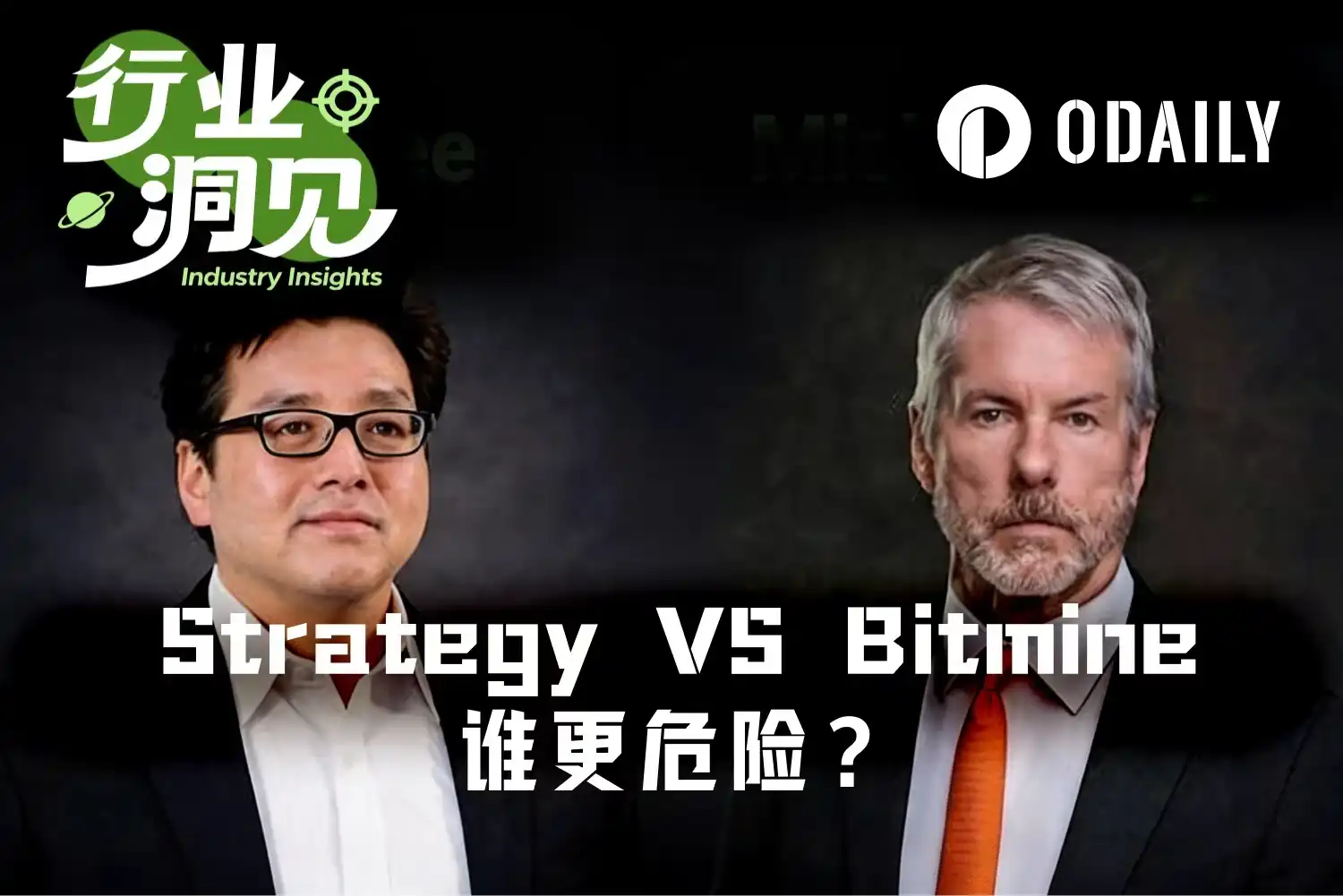
Both Suffer Massive Losses Exceeding $90 Billion, Which Is in Greater Peril: Strategy or Bitmine?

Facing massive paper losses exceeding $90 billion each amidst a sharp market downturn, "Digital Asset Treasury" (DAT) giants Strategy and Bitmine find themselves in a precarious position, but with different underlying risks. Strategy, heavily invested in Bitcoin (BTC), faces significant financial strain. Its strategy relies heavily on debt, including convertible notes and preferred stock (STRC) requiring substantial dividend payments. With its cash reserves dwindling and BTC offering no staking yield for cash flow, Strategy's high leverage makes it vulnerable. A continued price decline could force asset sales to meet obligations, potentially creating a negative feedback loop. Its market value has already fallen sharply. In contrast, Bitmine, an Ethereum (ETH) holder, appears on firmer financial ground. It primarily funds its purchases through equity offerings (like ATM programs), avoiding debt pressure. It also generates income by staking a large portion of its ETH holdings. While not immune to market drops and shareholder dilution concerns, Bitmine maintains more flexibility, recently announcing a new preferred share offering to raise further capital. The core divergence lies in their financing: Bitmine uses equity (investor money), while Strategy uses debt (borrowed money). Consequently, Bitmine currently faces less immediate liquidity pressure than Strategy, which must navigate the dual challenge of servicing debt/dividends and a declining core asset (BTC) price.

marsbit47 min fa

Both Suffer Massive Losses Exceeding $90 Billion, Which Is in Greater Peril: Strategy or Bitmine?

marsbit47 min fa

Trading

Spot
Futures

Articoli Popolari

Come comprare CAMP

Benvenuto in HTX.com! Abbiamo reso l'acquisto di Camp Network (CAMP) semplice e conveniente. Segui la nostra guida passo passo per intraprendere il tuo viaggio nel mondo delle criptovalute.Step 1: Crea il tuo Account HTXUsa la tua email o numero di telefono per registrarti il tuo account gratuito su HTX. Vivi un'esperienza facile e sblocca tutte le funzionalità,Crea il mio accountStep 2: Vai in Acquista crypto e seleziona il tuo metodo di pagamentoCarta di credito/debito: utilizza la tua Visa o Mastercard per acquistare immediatamente Camp NetworkCAMP.Bilancio: Usa i fondi dal bilancio del tuo account HTX per fare trading senza problemi.Terze parti: abbiamo aggiunto metodi di pagamento molto utilizzati come Google Pay e Apple Pay per maggiore comodità.P2P: Fai trading direttamente con altri utenti HTX.Over-the-Counter (OTC): Offriamo servizi su misura e tassi di cambio competitivi per i trader.Step 3: Conserva Camp Network (CAMP)Dopo aver acquistato Camp Network (CAMP), conserva nel tuo account HTX. In alternativa, puoi inviare tramite trasferimento blockchain o scambiare per altre criptovalute.Step 4: Scambia Camp Network (CAMP)Scambia facilmente Camp Network (CAMP) nel mercato spot di HTX. Accedi al tuo account, seleziona la tua coppia di trading, esegui le tue operazioni e monitora in tempo reale. Offriamo un'esperienza user-friendly sia per chi ha appena iniziato che per i trader più esperti.

356 Totale visualizzazioniPubblicato il 2025.08.27Aggiornato il 2026.06.02

Come comprare CAMP

Discussioni

Benvenuto nella Community HTX. Qui puoi rimanere informato sugli ultimi sviluppi della piattaforma e accedere ad approfondimenti esperti sul mercato. Le opinioni degli utenti sul prezzo di CAMP CAMP sono presentate come di seguito.

活动图片