Cursor: Why Did It Board Elon Musk's Rocket?

marsbitPubblicato 2026-06-17Pubblicato ultima volta 2026-06-17

Introduzione

SpaceX announced its first major acquisition after its historic IPO: a $60 billion all-stock deal to acquire AI programming startup Cursor (parent company Anysphere). Cursor is a popular AI coding assistant that allows developers to switch between models from OpenAI, Anthropic, Google, and others. Founded in 2022 by MIT graduates including CEO Michael Truell, Cursor saw explosive revenue growth, reaching a $4 billion annualized run rate by early 2026. However, its market share had declined as key supplier Anthropic launched its own competing product, Claude Code. Facing dependency risks, Cursor decided to build its own AI model, Composer, but lacked the necessary computing power. In April 2026, Cursor and SpaceX revealed a partnership and an option agreement: SpaceX could acquire Cursor for $60 billion post-IPO, or pay a breakup fee and provide substantial computing resources. After SpaceX's successful IPO, it exercised the option. The deal gives Cursor access to SpaceX's massive "Colossus" supercomputer, while SpaceX gains Cursor's strong foothold among elite software engineers to boost its AI capabilities, as Musk's xAI model Grok lags in programming. The acquisition aligns with SpaceX's broader AI and orbital data center ambitions, as Musk targets $1 trillion in revenue by 2030. For Truell, who once aimed to build an enduring independent company, joining SpaceX represents a monumental bet on an unprecedented scale.

Original article by Boyang, Tencent Technology

On June 16th, US local time, just four days after completing its record-breaking IPO, SpaceX announced its first major acquisition post-listing.

According to filings with the US Securities and Exchange Commission (SEC), SpaceX will acquire Anysphere, the parent company of AI programming startup Cursor, in an all-stock deal valued at $60 billion. The transaction is expected to close in the third quarter of 2026, subject to regulatory approvals.

Following the news, SpaceX's stock price surged over 16% intraday, briefly pushing its market cap above $2.94 trillion, surpassing Microsoft temporarily. By the market close, SpaceX had overtaken Amazon to become the fourth-largest company by market capitalization in the US. From its IPO price of $135 per share, SpaceX's stock has gained nearly 50%.

CNBC host Jim Cramer commented: "Buying SpaceX is essentially buying Elon Musk's brain." He believes traditional valuation models struggle to measure Musk's ability to translate grand visions into commercial reality.

01 What is Cursor, and Why is it Worth $60 Billion?

Cursor is currently one of the world's hottest AI programming tools, co-founded in 2022 by Michael Truell and his MIT classmates Sualeh Asif, Arvid Lunnemark, and Aman Sanger. Headquartered in San Francisco, the company has about 700 employees and serves 60% of Fortune 500 companies.

Cursor's core product is an AI programming assistant that allows developers to flexibly switch between leading AI models from OpenAI, Anthropic, xAI, Google, etc. It can automatically generate, edit, and review code, competing directly with Anthropic's Claude Code and OpenAI's Codex.

Cursor's revenue growth has been astonishing. In November 2025, its annualized revenue surpassed $1 billion, a roughly tenfold increase from a year earlier. Reports suggest that in the following three months, its annualized revenue doubled again to $4 billion. Currently, Cursor ranks 37th on CNBC's 2026 Disruptor 50 list.

However, according to Ramp spending data, Cursor's market share has declined from 41% in June 2025 to about 26% in May 2026, while Anthropic's Claude Code now commands roughly half the market in this segment.

02 The Entrepreneurial Journey of a Prodigy
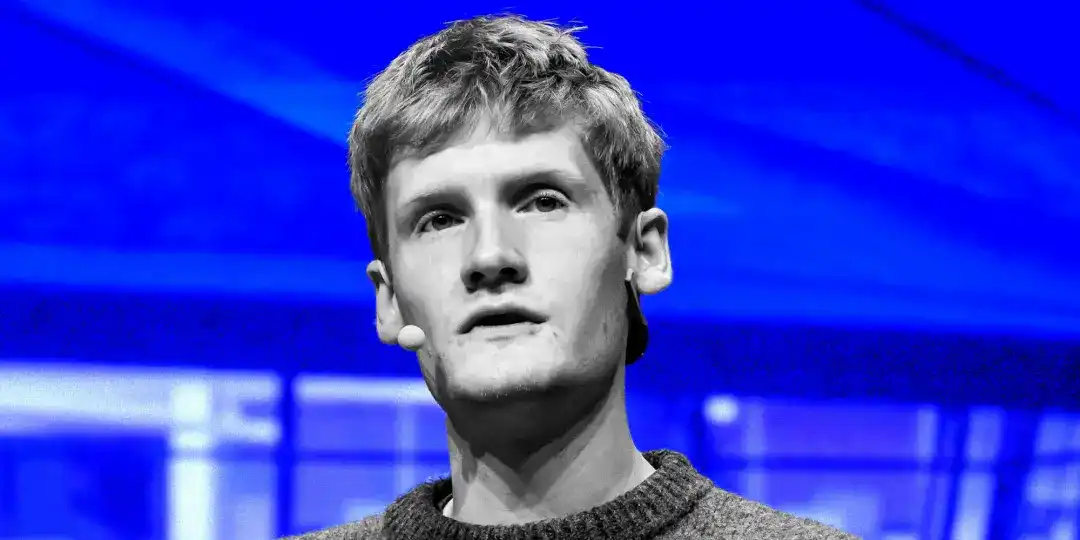
Cursor CEO Michael Truell

The story of Cursor begins with a quiet, red-haired teenager.

In 2019, an 18-year-old MIT freshman named Truell faced a programming test expected to take an hour. He finished and submitted it in under ten minutes. Tech investor Ali Partovi, who was overseeing the exam for a program scouting top student programmers, later asked Truell to test him. He realized the teenager's code was neat and concise, while his own answer sheet was a mess.

Growing up in New York with journalist parents, Truell displayed exceptional programming talent from a young age. At 15, attending the prestigious private school Horace Mann, he co-developed a programming game called Halite. It taught programming basics by having players conquer grid territories, attracting thousands of middle and high school students who had never coded before, and won him a $10,000 prize from a leading mathematics society.

At MIT, Truell pursued a double major in Computer Science and Mathematics while beginning to incubate startup ideas. Claire Shorall, who mentored him in a startup bootcamp, recalled being impressed by his curiosity and humility. "I gave him some advice, but he clearly already had a plan in mind."

After graduating in 2022, Truell co-founded Anysphere with three MIT classmates. Initially positioned as a code editing platform, they built an enhanced version of Microsoft's open-source VS Code editor, reaching $1 million in monthly recurring revenue within a year. In March 2023, Cursor officially launched and quickly gained traction among developers and enterprise users.

03 The "Strange" Relationship with Anthropic

Cursor's rise was not without challenges, with the biggest variable coming from its core AI supplier—Anthropic.

The two companies were highly interdependent: Cursor's product relied heavily on Anthropic's AI models, and Cursor's explosive growth had once contributed about 40% to 50% of Anthropic's revenue. Both sides were acutely aware of each other's importance.

However, before launching its own code editor, Claude Code, Anthropic privately assured Cursor's management that the product was more research-oriented and not a major commercial deployment. Yet, Claude Code quickly swept through the developer community.

By February 2026, Claude Code's annualized revenue had grown to $2.5 billion, about $500 million higher than Cursor's revenue at the time. A wave of developers began posting on social media about abandoning Cursor for Claude Code. Furthermore, Anthropic's prior decision to cut off model access to Windsurf during its acquisition talks with OpenAI heightened Cursor management's concerns about over-reliance on a single supplier.

On January 5, 2026, Truell held an "emergency" all-hands meeting, described by internal employees, announcing that Cursor must develop its own AI models. His message was clear and forceful: We cannot fall behind, cancel all unnecessary meetings, be ready for cross-team collaboration, we must stay agile and adapt quickly.

Thereafter, Cursor launched its self-developed programming model suite, Composer. The underlying technology was based on open-source models from the Chinese AI lab Moonshot, but according to Cursor, over 85% of the work in the Composer 2.5 version released in May was Cursor's own R&D (based on the Kimi K2.5 model). Cursor engineer Lucas Garza stated that thanks to its low price and extremely fast response times, Composer received an "extremely enthusiastic" reception among developers.

04 Moving Closer to Musk: A High-Stakes Win-Win Gamble

Developing models in-house requires massive computing power, which was Cursor's weak spot. This spring, Truell found another founder with grand ambitions to fill that gap.

On April 21, Truell posted on X, in his characteristically concise style: "Excited to be working with the SpaceX team to scale Composer. Big step forward in building the best AI platform for programming."

On the same day, SpaceX also publicly announced on X that it had secured an option to acquire Cursor. SpaceX could choose to acquire Cursor for $60 billion in an all-stock deal after completing its IPO. If SpaceX declined, it would have to pay a $1 billion breakup fee plus $8.5 billion worth of free computing resources.

Days after SpaceX successfully concluded its record-breaking IPO, SpaceX formally exercised the acquisition option, announcing the $60 billion acquisition of Cursor, fulfilling the "foreshadowing" planted back in April.

The deal serves different purposes for both sides. Cursor gains access to SpaceX's Colossus supercomputer, a system comprising hundreds of thousands of top-tier Nvidia AI chips. Meanwhile, SpaceX aims to leverage Cursor's deep penetration among elite software engineers to leapfrog in the AI programming race. Musk's AI chatbot, Grok, currently lags behind mainstream models in programming, with one xAI contractor admitting Grok "isn't good at coding."

Many Cursor employees were caught off guard by the announcement. After all, Truell had repeatedly expressed his desire to build a "long-lasting company" and viewed selling as "a significant risk and a significant bet." Early investor Partovi, who wrote the first check for Cursor, said he believed Truell was the type of founder inclined to stay independent, "He has the ambition, confidence, and drive to go the distance."

SpaceX stated that the Colossus supercomputer was a key attraction for Cursor. "Cursor's leading product and distribution among top software engineers, combined with SpaceX's Colossus supercomputer with over a million H100 equivalents of compute, will enable us to build the most useful AI models in the world."

05 Grander Ambitions: Satellite Data Centers and Trillion-Dollar Revenue

This acquisition also serves SpaceX's broader AI strategy. The company is seeking regulatory approval to deploy up to 1 million AI satellites, exploring solar-powered orbital data centers to handle terrestrial computing tasks. Concurrently, SpaceX has announced multi-billion-dollar cloud computing agreements with Anthropic and Google, significantly bolstering its revenue base ahead of the IPO.

However, Musk also stated on X that SpaceX reserves the right to cancel these agreements if Colossus computing capacity becomes constrained.

On June 14, Musk posted that SpaceX "might achieve around $1 trillion in revenue by 2030." Compared to the company's $18.7 billion revenue in 2025, this would represent a qualitative leap. In 2025, SpaceX recorded a net loss of $4.9 billion, and the loss widened to $4.28 billion in the first quarter of this year.

For Musk, the goal has always been clear. He wrote on X: "Whether it becomes the best remains to be seen, but I never give up. Never."

For Truell, this is perhaps the biggest test of his life: Can the bet with Musk pay off? "It is indeed a bit crazy," he said, "but we know how special this is—how unprecedented it is in history."


Domande pertinenti

QWhat is Cursor and why did SpaceX acquire it for $60 billion?

ACursor is a leading AI-powered coding assistant that allows developers to switch flexibly between major AI models to generate, edit, and review code. SpaceX acquired its parent company, Anysphere, to gain Cursor's deep penetration among top software engineers and its distribution capabilities. In return, Cursor gains access to SpaceX's massive 'Colossus' supercomputing resources, enabling both companies to accelerate their ambitions in the AI programming race.

QWho is Michael Truell and what is his background?

AMichael Truell is the CEO and co-founder of Cursor (Anysphere). A programming prodigy, he developed a coding game called Halite at age 15. He later attended MIT, where he founded the company with classmates in 2022. Known for his exceptional coding skills and quiet determination, Truell led Cursor to rapid growth before navigating the challenges that led to the SpaceX acquisition.

QWhat was the 'strange' relationship between Cursor and Anthropic?

ACursor and Anthropic had a highly interdependent relationship. Cursor's product initially relied heavily on Anthropic's AI models, and at one point Cursor contributed 40-50% of Anthropic's revenue. However, the relationship became strained when Anthropic launched its own competitive code editor, Claude Code, which quickly captured market share. This move, coupled with fears of supplier dependency, prompted Cursor to begin developing its own AI model, Composer.

QWhat was the deal structure between Cursor and SpaceX announced in April?

AThe deal announced in April was an acquisition option agreement. SpaceX secured the right to acquire Cursor for $60 billion in an all-stock transaction after its IPO. If SpaceX chose not to proceed with the acquisition, it would have to pay Cursor a $1 billion breakup fee and provide $8.5 billion worth of free computing resources.

QWhat is SpaceX's broader AI ambition mentioned in the article?

ASpaceX's broader AI ambition includes deploying up to 1 million AI satellites to create solar-powered orbital data centers that can handle computing tasks traditionally done on Earth. The acquisition of Cursor, along with multi-billion dollar cloud computing deals with Anthropic and Google, supports this macro strategy to build a massive AI infrastructure and achieve Elon Musk's stated goal of reaching roughly $1 trillion in revenue by 2030.

Letture associate

Unveiling the Whales of the World Cup Prediction Market: Smart Money Stumbles on the Pitch, 'Buy No' Outperforms 'Buy Yes'

**Title: Unveiling the Whales of the World Cup Prediction Market: "Smart Money" Stumbles on the Pitch as "Buying No" Outperforms "Buying Yes"** An analysis of pre-match trades over $5,000 on Polymarket for 20 completed group stage matches reveals a counterintuitive finding: large "smart money" bets were not consistently accurate. Aggregated pre-match buying volume was $89.55 million, with a weighted hit rate of only 48.5%. Holding these positions would have resulted in an estimated net loss of about $1.76 million (ROI -2.0%), challenging the notion that big money reliably predicts outcomes. The data highlights several key dynamics. Draws proved to be a major risk, significantly impacting bets on favored teams, as seen in Belgium-Egypt and Spain-Cape Verde. Markets were more efficient for clear mismatches (e.g., Germany's big win) but became prone to bias when favorites were overvalued. Notably, buying "No" shares (betting against a specific outcome) significantly outperformed buying "Yes," with hit rates of 62.4% vs. 37.5%. This suggests the market often overprices popular narratives, creating value in contrarian positions. Individual trades showed extreme volatility. One wallet (mintblade) earned an estimated $6.77 million by betting against Iran, while another (LEEEROYJENKINS) lost roughly $8.39 million on a Belgium win. The market favors high-risk, high-reward information trading rather than steady arbitrage. For sustained insight, wallets with consistent performance across multiple matches (e.g., swisstony) are more telling than one-off big bets. Ultimately, the Polymarket acts less as a crystal ball and more as a mirror, reflecting crowd bias and the inherent unpredictability of football. True "smart money" may lie not in predicting the future, but in identifying and exploiting market mispricings while respecting risk.

marsbit11 min fa

Unveiling the Whales of the World Cup Prediction Market: Smart Money Stumbles on the Pitch, 'Buy No' Outperforms 'Buy Yes'

marsbit11 min fa

Bezos' Third Startup Still Can't Avoid Musk

Jeff Bezos Returns as CEO for Third Venture, Still Can't Avoid Musk After stepping down as Amazon CEO in 2021, Jeff Bezos has returned to the front lines as co-CEO of Prometheus, an AI startup he founded. In a recent CNBC interview, Bezos described the experience as "Type 2 fun"—exhausting but ultimately rewarding. Founded less than a year ago, Prometheus has already raised over $18 billion in two funding rounds, achieving a staggering $41 billion valuation. Prometheus aims to develop a "General Engineer AI" to accelerate the entire "invention loop"—design, simulation, testing, and manufacturing—for complex physical products like jet engines, spacecraft, and medical devices. This positions the company at the intersection of Bezos's past experiences: Amazon's platform-building scale and Blue Origin's rigorous physical engineering. This marks Bezos's third major venture, following Amazon and Blue Origin. His co-CEO is Vik Bajaj, bringing expertise from life sciences and hard tech. Bezos now dedicates most of his time to Prometheus, signaling his belief in its transformative potential. The move also comes as Bezos's space company, Blue Origin, faces challenges, including a recent test explosion delaying its New Glenn rocket. Meanwhile, Elon Musk's SpaceX achieved a record-breaking IPO, surpassing Amazon's market cap. While Musk focuses on AI for executing physical tasks (like Tesla's robots and SpaceX's engineering), Bezos is betting on AI to *invent* in the physical world. Prometheus enters a crowded industrial AI field with players like OpenAI, NVIDIA, and Tesla's Optimus. Its lofty valuation bets on the unproven but massive opportunity to become the foundational platform for engineering in the AI era—a "blue ocean" Bezos hopes to define before Musk does.

marsbit13 min fa

Bezos' Third Startup Still Can't Avoid Musk

marsbit13 min fa

Won't US Stocks Ever Fall Again? The 'Great Melt-up' Trap in the Era of High Debt

The article analyzes a popular theory circulating online that the U.S. stock market may be mathematically incapable of a true, sustained decline due to the country's massive and growing national debt. The argument suggests that the government's only path to managing this debt is through inflation and money printing, which would nominally lift asset prices like stocks, creating a perpetual "melt-up." The author places this idea within the historical context of market melt-ups, such as the dot-com bubble and Japan's asset bubble, where prices detach from fundamentals driven by momentum and FOMO. While acknowledging that a high-debt environment creates incentives for inflation, which is generally favorable for assets over cash, the article refutes key claims of the online theory. It clarifies that interest payments are not about to exceed GDP, that printing money is not the only option for the government, and that stocks do not reliably rise in lockstep with hyperinflation, citing historical examples from Germany, Zimbabwe, and Venezuela. The more probable outcome, according to the author, is a prolonged period of financial repression—moderate inflation above interest rates that slowly erodes debt and cash purchasing power, leading to nominally higher asset prices but potentially lower real returns. The core warning is that while long-term market trends may be upward, this does not eliminate the risk of significant interim crashes (30%, 40%, or more) or guarantee real wealth creation during inflationary times. The conclusion advises against betting one's entire financial future on a smooth, perpetually rising market narrative. Instead, it recommends a disciplined, diversified strategy involving productive assets (stocks, real estate, some gold, short-term bonds) and an adequate cash buffer to avoid forced selling during downturns. The key takeaway is to avoid extreme concentration in expensive assets and leverage, and not to base investment decisions on the hope that every market dip will inevitably be rescued.

marsbit34 min fa

Won't US Stocks Ever Fall Again? The 'Great Melt-up' Trap in the Era of High Debt

marsbit34 min fa

The Fate of Digital Banks: No Fancy App Can Outshine a Banking License

The Fate of Digital Banks: A Flashy App is No Match for a Banking License The article argues that despite attracting billions of users with fee-free checking accounts and sleek apps, most "neobanks" struggle to be profitable because their core business—transaction fees—is inherently low-margin. The real profit engine of banking is lending (credit), which generates interest income. However, many early neobanks operated without their own banking licenses, which restricted their ability to lend at scale. Examples like Nubank, Revolut, and Chime illustrate the point. While they gained users with free accounts, their eventual profitability came from rolling out credit products. The piece highlights systemic risks for neobanks that rely on third-party infrastructure, citing the Synapse bankruptcy, which froze user funds and revealed the fragility of such models. The solution, according to the author, is obtaining a formal banking license, like the U.S. OCC's national trust charter. This provides regulatory backing, allows direct custody of funds, and eliminates dependency on intermediary partners. The trend is now evident in the crypto sector, where companies like Kraken, SoFi, and others are actively pursuing such licenses. The article concludes that while technology changes, the fundamental business logic of banking—profiting from lending—remains constant. Successful digital banks ultimately conform to this old model, just with better interfaces and fairer terms.

Foresight News42 min fa

The Fate of Digital Banks: No Fancy App Can Outshine a Banking License

Foresight News42 min fa

Trading

Spot
Futures
活动图片