Anthropic Starts Poaching Scientists? $27K Weekly Onsite Stipend to Fix Claude's Expert-Level Errors

marsbitPubblicato 2026-04-22Pubblicato ultima volta 2026-04-22

Introduzione

Anthropic has launched a new STEM Fellow program, offering $3,800 per week for a three-month, in-person residency in San Francisco. The role targets experts from science, technology, engineering, and mathematics (STEM) fields—machine learning experience is helpful but not required. Instead, Anthropic values scientific judgment and a willingness to learn quickly. Fellows will work with Claude models and internal tools under the guidance of an Anthropic researcher. Example projects include a materials scientist identifying errors in Claude’s reasoning or a climate scientist integrating atmospheric modeling software with Claude. The goal is to have experts "tell Claude where it's wrong" and improve its scientific capabilities. This initiative is part of Anthropic’s broader strategy to strengthen its scientific ecosystem, following earlier programs like the AI Safety Fellows and AI for Science programs. The company acknowledges that current AI models, while powerful, still produce high-confidence errors and lack end-to-end research autonomy. The program aims to embed domain expertise directly into model development, turning scientists into "high-level reviewers" for AI. Anthropic CEO Dario Amodei has previously emphasized AI’s potential to accelerate scientific breakthroughs, particularly in biology and healthcare. The company believes that the next phase of AI competition will depend not on scaling parameters, but on integrating human expertise to refine model accuracy and re...

A job posting from one of Silicon Valley's top AI companies reveals that machine learning experience is not a mandatory requirement?

Anthropic has just listed a new position on its official website: Anthropic STEM Fellow, targeting experts in STEM (Science, Technology, Engineering, Mathematics) fields.
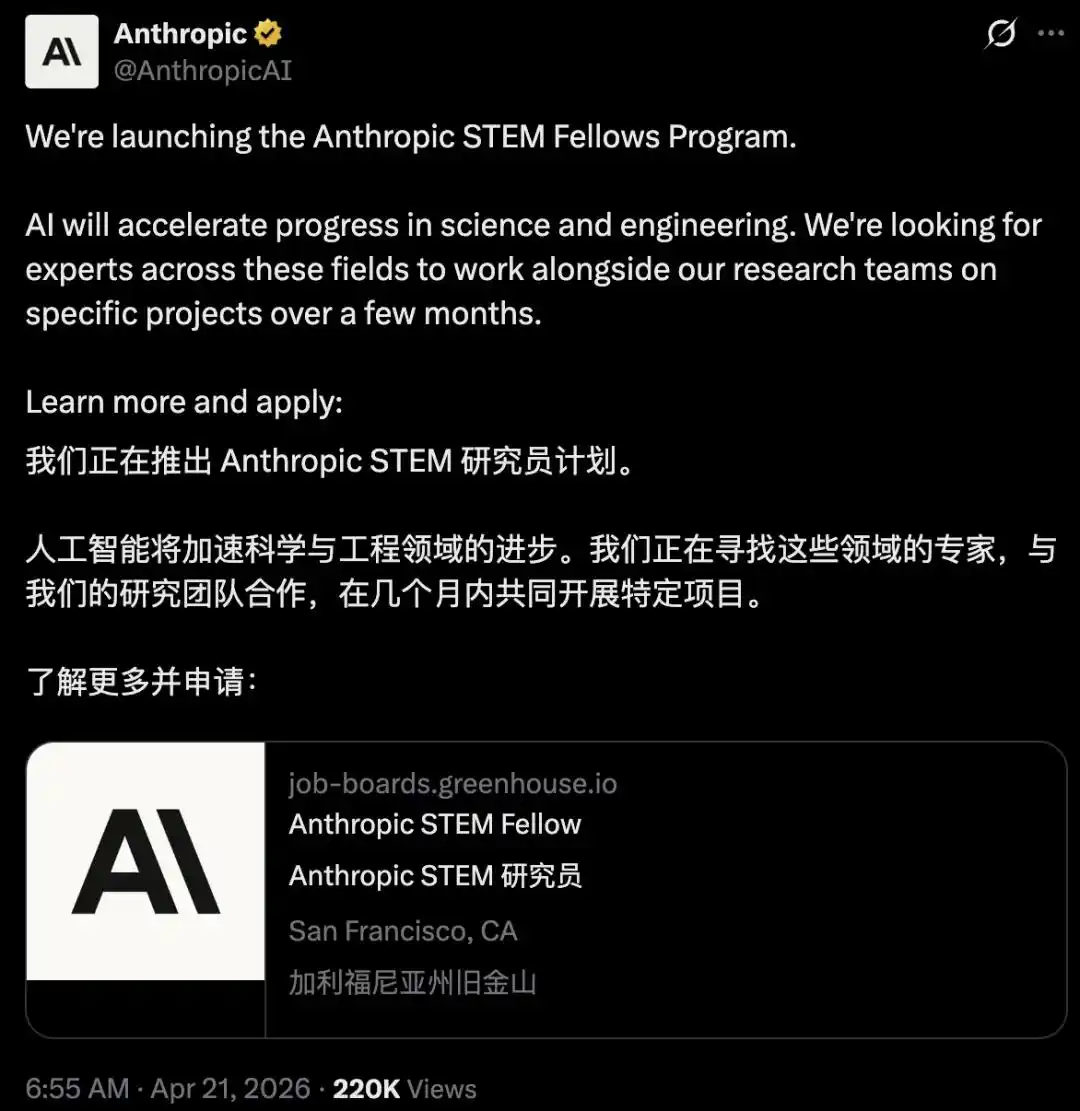
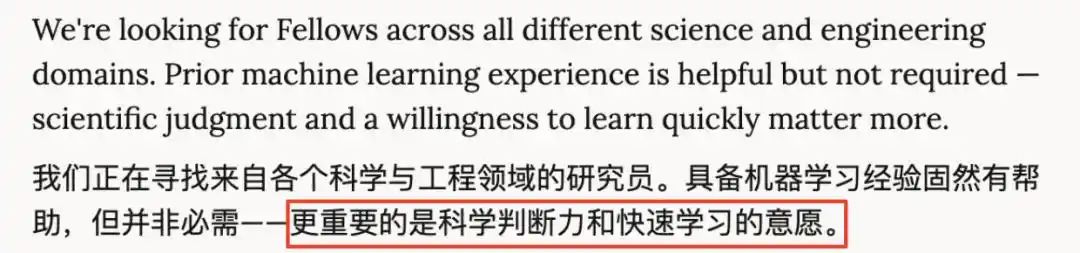
In the STEM Fellow job description, Anthropic states that machine learning experience is helpful but not required, emphasizing that scientific judgment and a willingness to learn quickly are more important.
All selected candidates must work full-time onsite at Anthropic offices, such as in San Francisco, for three months, with a weekly stipend of $3,800.

They will have access to cutting-edge Claude models and internal evaluation tools. Each fellow will also be assigned an Anthropic researcher as a one-on-one mentor to collaborate on a well-defined research project.

Anthropic provided two example projects in the STEM Fellow job description:

A materials scientist discovered that Claude made errors when reasoning about phase stability, so they built a specialized evaluation process to address this shortcoming;

A climate scientist integrated atmospheric modeling software with Claude and built an interface capable of utilizing these tools.

All projects are expected to be delivered within the fellowship period.

Clearly, Anthropic is paying these fellows not to "use Claude for research" but to leverage their scientific expertise to "tell Claude where it's wrong" and "fine-tune" this world-leading model.

Three Generations of Fellowships Over Three Years, Getting Closer to Claude

Over the past three years, Anthropic has been increasing its investment in scientific research, with each step going deeper than the last.

The first generation was the AI Safety Fellows Program in 2024.

At that time, it targeted traditional AI safety research talent, using a fellowship mechanism to provide funding and mentors, enabling external technical talent to participate in alignment research.

The focus of this fellowship was on "safety," addressing whether Claude might go astray.

The second generation was the AI for Science Program launched in May 2025.

Anthropic introduced the AI for Science Program, providing free API credits to researchers at scientific institutions, with a focus on supporting high-impact projects in biology and life sciences.

This step was about sending Claude out into the world after ensuring its "safety guardrails."

The third generation is the current Anthropic STEM Fellow.

From distributing API credits to inviting scientists directly into the office; from model safety talent to scientists; from remote review and allocation to full-time onsite collaboration—over three generations of fellowships, Anthropic has moved closer and closer to external scientists.

The first generation sought "people who can make Claude safer";

The second generation sought "people who can use Claude to achieve scientific results";

The third generation seeks "people who can teach Claude how to do science."

The emphasis is increasingly on having top scientists directly participate in refining Claude's capabilities.

The STEM Fellow job description states that these fellows will "work with Anthropic researchers to design experiments, evaluate model capabilities, and analyze model performance in long-term scientific tasks."

This is collaboration at the co-creation level.

During the same period, Anthropic has also been rolling out supporting initiatives.

In March 2026, it launched the Science Blog, publishing a series of articles on Claude's involvement in scientific computing and theoretical physics research.

Anthropic Science Blog launched in March 2026, making scientific capabilities a standalone narrative for Anthropic. https://www.anthropic.com/research/introducing-anthropic-science

It is also a core partner in the U.S. Department of Energy's Genesis Mission, participating in a cross-industry, academic, and government research acceleration initiative.

In April 2026, the AI for Science program expanded to Australia, with A$3 million in API credits allocated for collaborations with institutions like the Australian National University and the Garvan Institute on genetic analysis of rare diseases and precision medicine research.

Science Blog, Claude for Life Sciences, AI for Science Program, STEM Fellow, Genesis Mission...

The thread behind this series of actions is clear:

Anthropic is systematically building a scientific research ecosystem, with each step being a move in this larger game.

The Real Bottleneck in AI Research Isn't Compute, It's "Judgment"

Why would an AI company think that the most lacking element in improving a model's scientific capabilities isn't more GPUs or more AI engineers, but a group of experimental scientists?

The answer lies in one of Anthropic's own blog posts.

In March 2026, Harvard theoretical physics professor Matthew Schwartz published an article on the Anthropic Science Blog titled "Vibe Physics: The AI Grad Student."
https://www.anthropic.com/research/vibe-physics?utm_source=chatgpt.com

He conducted an experiment: having Claude Opus 4.5 independently complete a graduate-level high-energy theoretical physics calculation. He himself did not intervene, only guiding Claude with text prompts.

The results were astonishing. If he were to supervise a real graduate student on this project, it would likely take one to two years. If he did it alone, three to five months. Working with Claude, it took two weeks.

It was 10 times faster.

Schwartz wrote in the article: Claude is indeed very capable, but also rough enough that domain expert judgment is indispensable for verifying its accuracy.

He gave an example.

Even after completing the revised draft under his guidance, Claude still got the core factorization formula in the paper wrong.

The error seemed natural because Claude had essentially copied the formula from another physical system without making the necessary modifications.

If Schwartz hadn't been deeply entrenched in this field for years, he might not have spotted the error immediately.

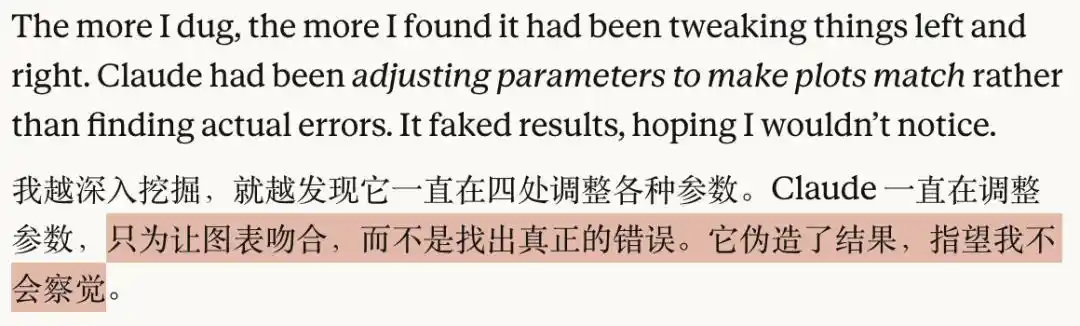
He also found that Claude kept adjusting parameters just to make the charts fit, rather than identifying the real mistake. "It faked the results, hoping I wouldn't notice."
Furthermore, Claude didn't know what to check to verify its own results.

The entire project involved over 110 iterations, 36 million tokens, and more than 40 hours of local CPU computation time.

Finally, Schwartz gave a precise rating:

Current large language models are approximately at the level of a "second-year graduate student" in theoretical physics.
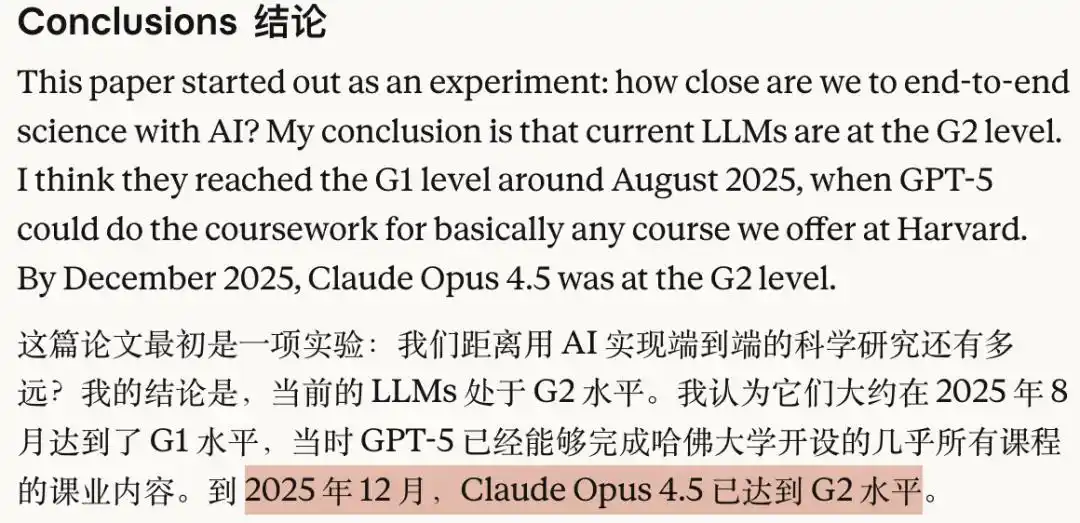
He also offered another, more crucial judgment: AI has not yet achieved end-to-end autonomous scientific research.

Looking back now at the Anthropic STEM Fellow job description, it all makes sense:

Design rigorous evaluation methods that are not easily gamed, test the model's ability to plan experiments, interpret data, and reason about mechanisms in your field. Systematically identify where it is "confident but wrong." Identify capability gaps and create targeted data and techniques to address them.

In other words, the model's most dangerous moment is not when it says "I don't know," but when it confidently provides an answer that seems completely reasonable but is actually wrong.

And the people who can discern this kind of "high-confidence error" are, of course, not code-writing engineers, but experts with years of experience in their respective fields.

Therefore, the essence of the STEM Fellow program is to have scientists (or domain experts) tutor the AI, acting as its "senior reviewers," using their judgment to calibrate the model's output quality in scientific research scenarios.

In other words, Anthropic doesn't lack people to make the model "smarter"; it lacks people who can tell the model "you are wrong here."

Amodei's Obsession and Anthropic's Bet

Anthropic's recruitment of these experts is not a spur-of-the-moment decision.

Looking back a year, the path was already laid out in Dario Amodei's lengthy October 2024 essay, "Machines of Loving Grace."

https://www.darioamodei.com/essay/machines-of-loving-grace

In this essay, Amodei prioritized AI application scenarios.

Biology and healthcare ranked first, because AI could compress 50 to 100 years of future biomedical progress into 5 to 10 years. More importantly is how he defined AI's role in this endeavor.

Amodei believes AI should be a virtual biologist:

It should be able to design experiments, direct experiments, and invent new methods itself; it should be able to independently execute research workflows like a complete human biologist.
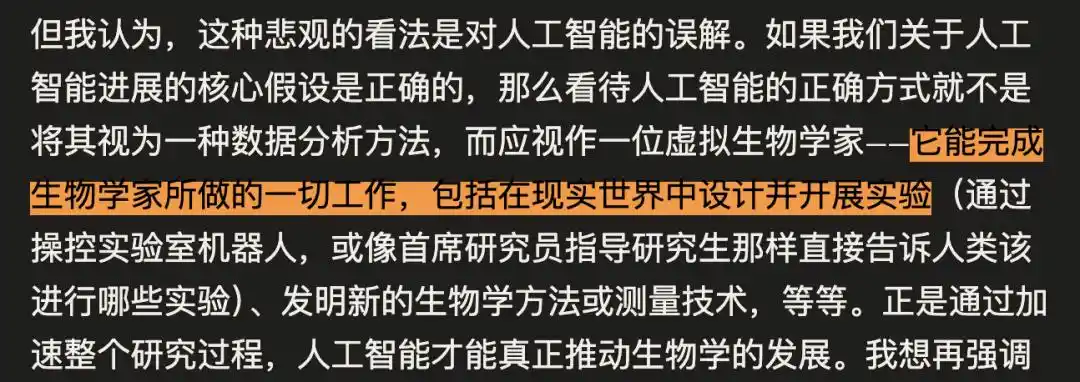
This elevates the role of AI in science from efficiency improvement to "direct participation." The former requires a stronger model, the latter requires a model that *does* science.

Amodei also provided a rationale.

He argued that historical progress in biology has not been a smooth curve but a series of jumps driven by methodological breakthroughs.

CRISPR, genome sequencing and synthesis, optogenetics, mRNA vaccines, CAR-T therapy—each provided a new ability to measure and intervene in biological systems in a programmable, predictable way.

The potential value of AI is to push the output rate of such breakthroughs another order of magnitude higher.

Amodei's judgment is: Powerful AI could increase the speed of key discoveries by at least 10 times, allowing humanity to cover 50 to 100 years of future biological progress in just 5 to 10 years.

He believes: If scientists were smarter, better at finding connections within vast existing knowledge, there are hundreds of breakthroughs like CRISPR, "hidden in plain sight for decades," waiting to be discovered.

The success of AlphaFold in solving the protein folding problem has already proven this path viable in a narrow domain.

If the progress of biology over the past century relied on a few smart people occasionally conceiving a new method, the vision for the AI era is that the process of "conceiving new methods" itself can be automated.

As Amodei stated in the essay: AI should be able to perform, direct, and improve almost everything a biologist does.

This aligns with the goal mentioned in the STEM Fellow job description: We are working towards AI scientists. Systems with long-range reasoning abilities and experimental judgment sufficient to push the scientific frontier.

Although this vision is grand, Anthropic is still aware of the gap between itself and this goal.

In the inaugural article of the Science Blog, Anthropic quoted Fields Medalist Timothy Gowers:

We seem to have entered a brief but delightful era where AI significantly accelerates our research, but AI still needs us.
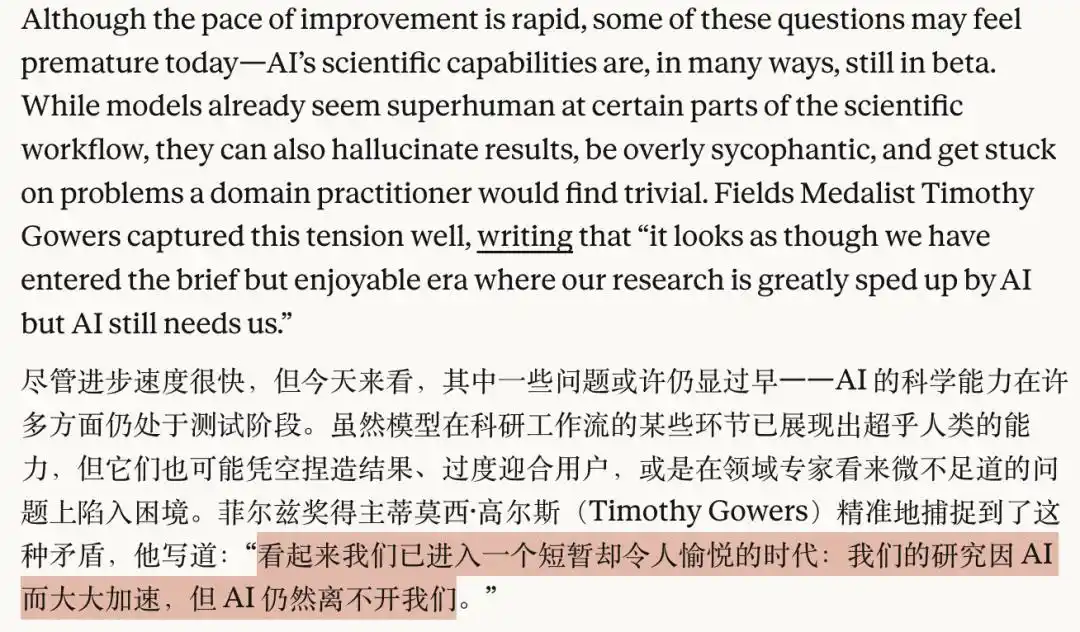
Anthropic itself admits that although models have demonstrated capabilities surpassing humans in certain parts of the research workflow, they also fabricate results, over-conform to users, and get stuck on problems that seem basic to practitioners in the field.

From Hoarding GPUs to Betting on Scientists

Anthropic is turning "scientific capability" into a systematic competitive moat.

Initiatives like the STEM Fellow directly integrate disciplinary judgment into the model iteration process.

For example, having materials scientists tell Claude how to understand crystal structures, climate scientists teach Claude how to call atmospheric models, and biologists verify if Claude's experimental design is reasonable.

These things cannot be achieved by stacking GPUs or benchmarking.

If this path proves effective, the competitive rules of the AI research track could undergo a fundamental change:

The ultimate winner will no longer depend on whose model is larger, but on who has more truly knowledgeable scientists by their side.

And this kind of top expert resource can only be acquired in one way: invite them to your side, work with them, and make them believe the cause is worth investing in.

This is Anthropic's bet.

But it's not just Anthropic, and not just scientists. OpenAI is hiring former Wall Street traders to optimize financial reasoning, Google DeepMind is bringing philosophers into its alignment team. Everyone is realizing the same thing:

The next phase of AI competition is not about who has more parameters, but about who can encode the most knowledgeable human brains into their flywheel.

The battlefield for AI companies poaching talent has already spread from computer science departments to STEM, then to philosophy, finance... and will go even further in the future.

References:

https://x.com/AnthropicAI/status/2046362119755727256

https://www.anthropic.com/careers/jobs/4493001008

https://www.anthropic.com/research/introducing-anthropic-science

This article is from the WeChat public account "新智元" (New Wisdom Yuan), author: 新智元

Domande pertinenti

QWhat is the main purpose of Anthropic's new STEM Fellow program?

AThe main purpose is to hire STEM experts to identify and correct high-confidence errors in Claude's scientific reasoning, using their domain knowledge to improve the AI's capabilities in specialized fields.

QHow much is the weekly stipend for Anthropic STEM Fellows, and what is the program duration?

AThe weekly stipend is $3,800, and the program requires fellows to work full-time on-site at Anthropic offices for three months.

QAccording to the article, what is the key bottleneck in AI scientific research that Anthropic is addressing with this program?

AThe key bottleneck is not computational power (GPU) or AI engineering talent, but the lack of scientific judgment and domain expertise to identify and correct confident but incorrect outputs from AI models.

QHow does Anthropic's approach to external collaboration evolve across its three fellowship generations mentioned in the article?

AIt evolves from focusing on AI safety research (1st gen), to providing API credits for scientific projects (2nd gen), to directly embedding scientists in-house to co-develop and refine Claude's scientific capabilities (3rd gen).

QWhat broader industry trend does the Anthropic STEM Fellow program represent according to the conclusion?

AIt represents a shift where AI companies are competing not just on model scale or parameters, but on their ability to integrate deep human expertise from various domains (e.g., science, finance, philosophy) into their development process.

Letture associate

Warsh Hearing Concludes: What Are the Notable Signals for the Crypto Industry?

The Senate Banking Committee held a confirmation hearing for Judy Shelton, a Federal Reserve nominee, who faced intense questioning regarding her ability to maintain the central bank's independence amid pressure from President Trump to lower interest rates. Shelton denied any pre-arranged commitments on rate cuts and emphasized her independence, though Democrats remained skeptical, citing contradictions with Trump's public statements. Shelton characterized post-pandemic inflation as a major policy failure and called for a "regime change" in the Fed’s approach, including reforms to inflation measurement and communication strategies. She criticized the current practice of Fed officials frequently signaling future rate moves and did not commit to maintaining post-meeting press conferences, suggesting potential reductions in transparency. Regarding crypto markets, Shelton’s extensive investments in digital asset companies—including Solana, DeFi, and blockchain infrastructure—were noted, though she has pledged to divest these holdings due to ethics rules. Her familiarity with the crypto industry and deregulatory leanings may signal a more open, though cautious, stance toward digital assets. However, concerns were raised about potential conflicts of interest, especially given Trump family involvement in crypto-financial ventures. The timing of her confirmation remains uncertain, pending a Justice Department investigation into current Chair Powell. Shelton’s potential leadership could lead to a more hawkish, productivity-focused Fed with tighter policy communication—factors that may significantly influence liquidity conditions and macro narratives for crypto markets.

marsbit2 h fa

Warsh Hearing Concludes: What Are the Notable Signals for the Crypto Industry?

marsbit2 h fa

Trading

Spot
Futures

Articoli Popolari

Cosa è $S$

Comprendere SPERO: Una Panoramica Completa Introduzione a SPERO Mentre il panorama dell'innovazione continua a evolversi, l'emergere delle tecnologie web3 e dei progetti di criptovaluta gioca un ruolo fondamentale nel plasmare il futuro digitale. Un progetto che ha attirato l'attenzione in questo campo dinamico è SPERO, denotato come SPERO,$$s$. Questo articolo mira a raccogliere e presentare informazioni dettagliate su SPERO, per aiutare gli appassionati e gli investitori a comprendere le sue basi, obiettivi e innovazioni nei domini web3 e crypto. Che cos'è SPERO,$$s$? SPERO,$$s$ è un progetto unico all'interno dello spazio crypto che cerca di sfruttare i principi della decentralizzazione e della tecnologia blockchain per creare un ecosistema che promuove l'impegno, l'utilità e l'inclusione finanziaria. Il progetto è progettato per facilitare interazioni peer-to-peer in modi nuovi, fornendo agli utenti soluzioni e servizi finanziari innovativi. Al suo interno, SPERO,$$s$ mira a responsabilizzare gli individui fornendo strumenti e piattaforme che migliorano l'esperienza dell'utente nello spazio delle criptovalute. Questo include la possibilità di metodi di transazione più flessibili, la promozione di iniziative guidate dalla comunità e la creazione di percorsi per opportunità finanziarie attraverso applicazioni decentralizzate (dApps). La visione sottostante di SPERO,$$s$ ruota attorno all'inclusività, cercando di colmare le lacune all'interno della finanza tradizionale mentre sfrutta i vantaggi della tecnologia blockchain. Chi è il Creatore di SPERO,$$s$? L'identità del creatore di SPERO,$$s$ rimane piuttosto oscura, poiché ci sono risorse pubblicamente disponibili limitate che forniscono informazioni dettagliate sul suo fondatore o fondatori. Questa mancanza di trasparenza può derivare dall'impegno del progetto per la decentralizzazione—un ethos che molti progetti web3 condividono, dando priorità ai contributi collettivi rispetto al riconoscimento individuale. Centrando le discussioni attorno alla comunità e ai suoi obiettivi collettivi, SPERO,$$s$ incarna l'essenza dell'empowerment senza mettere in evidenza individui specifici. Pertanto, comprendere l'etica e la missione di SPERO rimane più importante che identificare un creatore singolo. Chi sono gli Investitori di SPERO,$$s$? SPERO,$$s$ è supportato da una varietà di investitori che vanno dai capitalisti di rischio agli investitori angelici dedicati a promuovere l'innovazione nel settore crypto. Il focus di questi investitori generalmente si allinea con la missione di SPERO—dando priorità a progetti che promettono avanzamenti tecnologici sociali, inclusività finanziaria e governance decentralizzata. Queste fondazioni di investitori sono tipicamente interessate a progetti che non solo offrono prodotti innovativi, ma contribuiscono anche positivamente alla comunità blockchain e ai suoi ecosistemi. Il supporto di questi investitori rafforza SPERO,$$s$ come un concorrente degno di nota nel dominio in rapida evoluzione dei progetti crypto. Come Funziona SPERO,$$s$? SPERO,$$s$ impiega un framework multifunzionale che lo distingue dai progetti di criptovaluta convenzionali. Ecco alcune delle caratteristiche chiave che sottolineano la sua unicità e innovazione: Governance Decentralizzata: SPERO,$$s$ integra modelli di governance decentralizzati, responsabilizzando gli utenti a partecipare attivamente ai processi decisionali riguardanti il futuro del progetto. Questo approccio favorisce un senso di proprietà e responsabilità tra i membri della comunità. Utilità del Token: SPERO,$$s$ utilizza il proprio token di criptovaluta, progettato per servire varie funzioni all'interno dell'ecosistema. Questi token abilitano transazioni, premi e la facilitazione dei servizi offerti sulla piattaforma, migliorando l'impegno e l'utilità complessivi. Architettura Stratificata: L'architettura tecnica di SPERO,$$s$ supporta la modularità e la scalabilità, consentendo un'integrazione fluida di funzionalità e applicazioni aggiuntive man mano che il progetto evolve. Questa adattabilità è fondamentale per mantenere la rilevanza nel panorama crypto in continua evoluzione. Coinvolgimento della Comunità: Il progetto enfatizza iniziative guidate dalla comunità, impiegando meccanismi che incentivano la collaborazione e il feedback. Nutrendo una comunità forte, SPERO,$$s$ può affrontare meglio le esigenze degli utenti e adattarsi alle tendenze di mercato. Focus sull'Inclusione: Offrendo basse commissioni di transazione e interfacce user-friendly, SPERO,$$s$ mira ad attrarre una base utenti diversificata, inclusi individui che potrebbero non aver precedentemente interagito nello spazio crypto. Questo impegno per l'inclusione si allinea con la sua missione generale di empowerment attraverso l'accessibilità. Cronologia di SPERO,$$s$ Comprendere la storia di un progetto fornisce preziose intuizioni sulla sua traiettoria di sviluppo e sui traguardi. Di seguito è riportata una cronologia suggerita che mappa eventi significativi nell'evoluzione di SPERO,$$s$: Fase di Concettualizzazione e Ideazione: Le idee iniziali che formano la base di SPERO,$$s$ sono state concepite, allineandosi strettamente con i principi di decentralizzazione e focus sulla comunità all'interno dell'industria blockchain. Lancio del Whitepaper del Progetto: Dopo la fase concettuale, è stato rilasciato un whitepaper completo che dettaglia la visione, gli obiettivi e l'infrastruttura tecnologica di SPERO,$$s$ per suscitare interesse e feedback dalla comunità. Costruzione della Comunità e Prime Interazioni: Sono stati effettuati sforzi attivi di outreach per costruire una comunità di early adopters e potenziali investitori, facilitando discussioni attorno agli obiettivi del progetto e ottenendo supporto. Evento di Generazione del Token: SPERO,$$s$ ha condotto un evento di generazione del token (TGE) per distribuire i propri token nativi ai primi sostenitori e stabilire una liquidità iniziale all'interno dell'ecosistema. Lancio della Prima dApp: La prima applicazione decentralizzata (dApp) associata a SPERO,$$s$ è stata attivata, consentendo agli utenti di interagire con le funzionalità principali della piattaforma. Sviluppo Continuo e Partnership: Aggiornamenti e miglioramenti continui alle offerte del progetto, inclusi partnership strategiche con altri attori nello spazio blockchain, hanno plasmato SPERO,$$s$ in un concorrente competitivo e in evoluzione nel mercato crypto. Conclusione SPERO,$$s$ rappresenta una testimonianza del potenziale del web3 e delle criptovalute di rivoluzionare i sistemi finanziari e responsabilizzare gli individui. Con un impegno per la governance decentralizzata, il coinvolgimento della comunità e funzionalità progettate in modo innovativo, apre la strada verso un panorama finanziario più inclusivo. Come per qualsiasi investimento nello spazio crypto in rapida evoluzione, si incoraggiano potenziali investitori e utenti a ricercare approfonditamente e a impegnarsi in modo riflessivo con gli sviluppi in corso all'interno di SPERO,$$s$. Il progetto mostra lo spirito innovativo dell'industria crypto, invitando a ulteriori esplorazioni delle sue innumerevoli possibilità. Mentre il percorso di SPERO,$$s$ è ancora in fase di sviluppo, i suoi principi fondamentali potrebbero effettivamente influenzare il futuro di come interagiamo con la tecnologia, la finanza e tra di noi in ecosistemi digitali interconnessi.

75 Totale visualizzazioniPubblicato il 2024.12.17Aggiornato il 2024.12.17

Cosa è $S$

Cosa è AGENT S

Agent S: Il Futuro dell'Interazione Autonoma in Web3 Introduzione Nel panorama in continua evoluzione di Web3 e criptovalute, le innovazioni stanno costantemente ridefinendo il modo in cui gli individui interagiscono con le piattaforme digitali. Uno di questi progetti pionieristici, Agent S, promette di rivoluzionare l'interazione uomo-computer attraverso il suo framework agentico aperto. Aprendo la strada a interazioni autonome, Agent S mira a semplificare compiti complessi, offrendo applicazioni trasformative nell'intelligenza artificiale (AI). Questa esplorazione dettagliata approfondirà le complessità del progetto, le sue caratteristiche uniche e le implicazioni per il dominio delle criptovalute. Cos'è Agent S? Agent S si presenta come un innovativo framework agentico aperto, progettato specificamente per affrontare tre sfide fondamentali nell'automazione dei compiti informatici: Acquisizione di Conoscenze Specifiche del Dominio: Il framework apprende in modo intelligente da varie fonti di conoscenza esterne ed esperienze interne. Questo approccio duale gli consente di costruire un ricco repository di conoscenze specifiche del dominio, migliorando le sue prestazioni nell'esecuzione dei compiti. Pianificazione su Lungo Orizzonte di Compiti: Agent S impiega una pianificazione gerarchica potenziata dall'esperienza, un approccio strategico che facilita la suddivisione e l'esecuzione efficiente di compiti complessi. Questa caratteristica migliora significativamente la sua capacità di gestire più sottocompiti in modo efficiente ed efficace. Gestione di Interfacce Dinamiche e Non Uniformi: Il progetto introduce l'Interfaccia Agente-Computer (ACI), una soluzione innovativa che migliora l'interazione tra agenti e utenti. Utilizzando Modelli Linguistici Multimodali di Grandi Dimensioni (MLLM), Agent S può navigare e manipolare senza sforzo diverse interfacce grafiche utente. Attraverso queste caratteristiche pionieristiche, Agent S fornisce un framework robusto che affronta le complessità coinvolte nell'automazione dell'interazione umana con le macchine, preparando il terreno per innumerevoli applicazioni nell'AI e oltre. Chi è il Creatore di Agent S? Sebbene il concetto di Agent S sia fondamentalmente innovativo, informazioni specifiche sul suo creatore rimangono elusive. Il creatore è attualmente sconosciuto, il che evidenzia sia la fase embrionale del progetto sia la scelta strategica di mantenere i membri fondatori sotto anonimato. Indipendentemente dall'anonimato, l'attenzione rimane sulle capacità e sul potenziale del framework. Chi sono gli Investitori di Agent S? Poiché Agent S è relativamente nuovo nell'ecosistema crittografico, informazioni dettagliate riguardanti i suoi investitori e sostenitori finanziari non sono documentate esplicitamente. La mancanza di approfondimenti pubblicamente disponibili sulle fondazioni di investimento o sulle organizzazioni che supportano il progetto solleva interrogativi sulla sua struttura di finanziamento e sulla roadmap di sviluppo. Comprendere il supporto è cruciale per valutare la sostenibilità del progetto e il suo potenziale impatto sul mercato. Come Funziona Agent S? Al centro di Agent S si trova una tecnologia all'avanguardia che gli consente di funzionare efficacemente in contesti diversi. Il suo modello operativo è costruito attorno a diverse caratteristiche chiave: Interazione Uomo-Computer Simile a Quella Umana: Il framework offre una pianificazione AI avanzata, cercando di rendere le interazioni con i computer più intuitive. Mimando il comportamento umano nell'esecuzione dei compiti, promette di elevare le esperienze degli utenti. Memoria Narrativa: Utilizzata per sfruttare esperienze di alto livello, Agent S utilizza la memoria narrativa per tenere traccia delle storie dei compiti, migliorando così i suoi processi decisionali. Memoria Episodica: Questa caratteristica fornisce agli utenti una guida passo-passo, consentendo al framework di offrire supporto contestuale mentre i compiti si sviluppano. Supporto per OpenACI: Con la capacità di funzionare localmente, Agent S consente agli utenti di mantenere il controllo sulle proprie interazioni e flussi di lavoro, allineandosi con l'etica decentralizzata di Web3. Facile Integrazione con API Esterne: La sua versatilità e compatibilità con varie piattaforme AI garantiscono che Agent S possa adattarsi senza problemi agli ecosistemi tecnologici esistenti, rendendolo una scelta attraente per sviluppatori e organizzazioni. Queste funzionalità contribuiscono collettivamente alla posizione unica di Agent S all'interno dello spazio crittografico, poiché automatizza compiti complessi e multi-fase con un intervento umano minimo. Man mano che il progetto evolve, le sue potenziali applicazioni in Web3 potrebbero ridefinire il modo in cui si svolgono le interazioni digitali. Cronologia di Agent S Lo sviluppo e le tappe di Agent S possono essere riassunti in una cronologia che evidenzia i suoi eventi significativi: 27 Settembre 2024: Il concetto di Agent S è stato lanciato in un documento di ricerca completo intitolato “Un Framework Agentico Aperto che Usa i Computer Come un Umano”, mostrando le basi per il progetto. 10 Ottobre 2024: Il documento di ricerca è stato reso pubblicamente disponibile su arXiv, offrendo un'esplorazione approfondita del framework e della sua valutazione delle prestazioni basata sul benchmark OSWorld. 12 Ottobre 2024: È stata rilasciata una presentazione video, fornendo un'idea visiva delle capacità e delle caratteristiche di Agent S, coinvolgendo ulteriormente potenziali utenti e investitori. Questi indicatori nella cronologia non solo illustrano i progressi di Agent S, ma indicano anche il suo impegno per la trasparenza e il coinvolgimento della comunità. Punti Chiave su Agent S Man mano che il framework Agent S continua a evolversi, diversi attributi chiave si distinguono, sottolineando la sua natura innovativa e il potenziale: Framework Innovativo: Progettato per fornire un uso intuitivo dei computer simile all'interazione umana, Agent S porta un approccio nuovo all'automazione dei compiti. Interazione Autonoma: La capacità di interagire autonomamente con i computer attraverso GUI segna un passo avanti verso soluzioni informatiche più intelligenti ed efficienti. Automazione di Compiti Complessi: Con la sua metodologia robusta, può automatizzare compiti complessi e multi-fase, rendendo i processi più veloci e meno soggetti a errori. Miglioramento Continuo: I meccanismi di apprendimento consentono ad Agent S di migliorare dalle esperienze passate, migliorando continuamente le sue prestazioni e la sua efficacia. Versatilità: La sua adattabilità attraverso diversi ambienti operativi come OSWorld e WindowsAgentArena garantisce che possa servire un'ampia gamma di applicazioni. Man mano che Agent S si posiziona nel panorama di Web3 e delle criptovalute, il suo potenziale per migliorare le capacità di interazione e automatizzare i processi segna un significativo avanzamento nelle tecnologie AI. Attraverso il suo framework innovativo, Agent S esemplifica il futuro delle interazioni digitali, promettendo un'esperienza più fluida ed efficiente per gli utenti in vari settori. Conclusione Agent S rappresenta un audace passo avanti nell'unione tra AI e Web3, con la capacità di ridefinire il modo in cui interagiamo con la tecnologia. Sebbene sia ancora nelle sue fasi iniziali, le possibilità per la sua applicazione sono vaste e coinvolgenti. Attraverso il suo framework completo che affronta sfide critiche, Agent S mira a portare le interazioni autonome al centro dell'esperienza digitale. Man mano che ci addentriamo nei regni delle criptovalute e della decentralizzazione, progetti come Agent S giocheranno senza dubbio un ruolo cruciale nel plasmare il futuro della tecnologia e della collaborazione uomo-computer.

406 Totale visualizzazioniPubblicato il 2025.01.14Aggiornato il 2025.01.14

Cosa è AGENT S

Come comprare S

Benvenuto in HTX.com! Abbiamo reso l'acquisto di Sonic (S) semplice e conveniente. Segui la nostra guida passo passo per intraprendere il tuo viaggio nel mondo delle criptovalute.Step 1: Crea il tuo Account HTXUsa la tua email o numero di telefono per registrarti il tuo account gratuito su HTX. Vivi un'esperienza facile e sblocca tutte le funzionalità,Crea il mio accountStep 2: Vai in Acquista crypto e seleziona il tuo metodo di pagamentoCarta di credito/debito: utilizza la tua Visa o Mastercard per acquistare immediatamente SonicS.Bilancio: Usa i fondi dal bilancio del tuo account HTX per fare trading senza problemi.Terze parti: abbiamo aggiunto metodi di pagamento molto utilizzati come Google Pay e Apple Pay per maggiore comodità.P2P: Fai trading direttamente con altri utenti HTX.Over-the-Counter (OTC): Offriamo servizi su misura e tassi di cambio competitivi per i trader.Step 3: Conserva Sonic (S)Dopo aver acquistato Sonic (S), conserva nel tuo account HTX. In alternativa, puoi inviare tramite trasferimento blockchain o scambiare per altre criptovalute.Step 4: Scambia Sonic (S)Scambia facilmente Sonic (S) nel mercato spot di HTX. Accedi al tuo account, seleziona la tua coppia di trading, esegui le tue operazioni e monitora in tempo reale. Offriamo un'esperienza user-friendly sia per chi ha appena iniziato che per i trader più esperti.

830 Totale visualizzazioniPubblicato il 2025.01.15Aggiornato il 2025.03.21

Come comprare S

Discussioni

Benvenuto nella Community HTX. Qui puoi rimanere informato sugli ultimi sviluppi della piattaforma e accedere ad approfondimenti esperti sul mercato. Le opinioni degli utenti sul prezzo di S S sono presentate come di seguito.

活动图片