Author: Pu Fan, Touzhong Net
What Buffett opposes is replacing concrete investment judgments with agnosticism or even a certain deific rhetoric.
"Buffett and VC, one must lose."
These words were relayed to me by a colleague. Recently, he has been traveling across the country for research and found that many people have mentioned this view, with reasons roughly the same:
On one hand, Buffett's Berkshire Hathaway has been a net seller of stocks for nearly three consecutive years. By May this year, its cash and equivalents totaled a historic high of $397 billion.
On the other hand, the U.S. capital market has witnessed an unprecedented "tech boom." The combined market capitalization of U.S. companies in the information technology sector is close to $30 trillion, accounting for 37% to 39% of the S&P 500 index, far exceeding the dot-com bubble era—and that's not even counting the various AI unicorns that haven't gone public yet.
By comparison, isn't this Buffett and VCs betting against each other's future? The old man Buffett is using practical actions to express his concerns, hinting that the tech industry has entered a standard "bubble state" and it's time to seek refuge. Venture capitalists, however, are pouring the liquidity they've managed to recover all at once into artificial intelligence, semiconductors, and computing centers, signaling to the outside world with unprecedented valuation growth rates and investment paces that "the bubble doesn't exist" and "value is still significantly underestimated."
Whichever of their possibilities becomes reality means "complete elimination" for the other side.
Following my colleague's account, I conducted a thorough search. First, the conclusion: Very few people discuss this topic directly, and the confrontational sentiment isn't this severe. Among all the information I retrieved, the heaviest tone probably came from a May 21 Yahoo Finance column titled "Buffett Issues His Sternest Warning Yet," which didn't mention VC or venture capital but focused more on Berkshire Hathaway's investment strategy.
But many are heavily implying it. For example, not long ago, the World Economic Forum released a research report titled "The Future of Venture Capital 2026: Unlocking Liquidity and Growth." The report sharply pointed out: For a long time, venture capital has been a powerful engine for economic growth and technological advancement, but the capital cycle supporting its ecosystem is breaking.
This cycle refers to "funds investing in early-stage companies, successful companies exiting through IPOs or M&A, and then reinvesting the distributed capital into the next generation of startups"—yet today, VC-backed companies stay private much longer than in past decades. Globally, about 1,900 VC-backed unicorns (i.e., startups with valuations of $1 billion or more) remain private, representing over $7.3 trillion in valuation, with an estimated $3 trillion in unrealized value stuck on venture capital funds' balance sheets.
Around the time U.S. semiconductor stocks recently crashed, memes like this also started circulating online:

What's more interesting is that, although Buffett and VCs haven't publicly clashed or criticized each other this time, in fact, during the two historic financial storm moments of 2000 and 2008, Buffett engaged in fierce debates with many investors. This is also the theme of today's article. I want to use the topic "Buffett and VC must have a showdown" to revisit the arguments Buffett had with the capital market back then.
"The Internet Has a Negative Impact on Capital"
In December 1999, the well-known business magazine Barron's published a provocative column titled "What's Wrong, Warren?". At the very beginning, the author clearly set the tone of the entire article: Buffett was increasingly viewed by investors as too conservative, even outdated. As chairman and CEO of Berkshire Hathaway, Buffett might be the world's greatest investor, but he neither foresaw the tech stock boom of the past few years nor profited from it.
Now, from our god's-eye view, it's easy to overturn this conclusion. At the very least, Berkshire Hathaway is still active in the capital market, with an overall market cap exceeding $1 trillion, an undisputed "grandmaster" in the financial industry. And those star companies that created phenomenal growth during the dot-com bubble, like Pets.com, WebVan, and Netscape, are long gone.
But at the time, this article garnered considerable support. Because then, the entire Nasdaq was experiencing unprecedented暴涨 under the momentum of internet concept stocks. Qualcomm's stock price rose over 2600%, twelve stocks gained over 1000%, and seven stocks gained over 900%. Meanwhile, because the internet craze was so high, it triggered severe FOMO sentiment in the market, attracting many investors to switch positions. This actually led to more declining than advancing stocks on the Nasdaq in 1999, with an overall increase of about 85%, while the S&P 500 rose 19.5%.
Under this premise, although people also recognized the existence of a bubble, they generally believed it was hardly a "critical moment."
More importantly, the "What's Wrong, Warren?" article used numerous detailed cases to support the claim of Buffett's "aging and stubbornness." For example, the author mentioned that between 1998 and 1999, Buffett, despite "maintaining a long-term friendship with Bill Gates," made completely opposite investment choices, using large amounts of cash to acquire General Reinsurance Corporation, Dairy Queen, MidAmerican Energy (a utility), and a furniture retailer. The author pointed out these deals could only bring "stability," not "excitement" to Wall Street.
Furthermore, the author mentioned a detail: he once sought direct dialogue with Buffett, but Berkshire Hathaway refused the request. The original text stated, "Buffett — who hides a fierce competitive streak beneath a modest, humble demeanor — felt his ego had been bruised." Coupled with Berkshire Hathaway's stock price experiencing its first decline since 1990, creating the second-worst annual performance in the company's history since 1965, many people became even more convinced in their "belief" after reading this article, which also became the "general guideline" for the capital market's opposition to Buffett for some time thereafter:
A financial titan from the old era, claiming unparalleled investment experience and always known for brilliant investment performance, is showing signs of collapse in an almost狼狈 manner—what could better prove the correctness of the "Internet economy" than this?
So how did Buffett fight back?
The first direct confrontation occurred at the Sun Valley Conference in July 1999. Founded in 1983 and hosted by the American investment bank Allen & Company, the Sun Valley Conference is held every July in Sun Valley, Idaho. Only absolute top elites from various global fields can attend, such as Bill Gates, Bezos, Zuckerberg, etc. "Coincidentally," many highly influential business events indeed often occurred shortly after the conference, making Sun Valley a frequent subject of "conspiracy theories," akin to the "Freemasons" or "Illuminati."
That's a digression. In short, at this Sun Valley Conference, the host appropriately invited many internet nouveau riche. But Buffett, as the closing keynote speaker, chose to pour cold water. He started by saying, "The stock market often deviates from its true value over longer periods, but ultimately, value is the decisive factor," and this essence means "identifying a transformative technology is a completely different thing from picking specific winning companies."
Buffett considered the aircraft and automobile industries a very concrete example. The early 20th-century automotive and aviation industries. Both inventions fundamentally changed human civilization, but nearly all of the early hundreds of car manufacturers and airlines went bankrupt. Based on this premise, Buffett believed one of the biggest lessons from his investment career is that "the key to investing is not assessing how much impact an industry will have on society or its growth potential, but determining the competitive advantage of a specific company and, more importantly, how long that advantage can last."
Getting more specific about the emerging capital frenzy, Buffett made a judgment: "I find it hard to find a compelling reason to believe the stock market's performance over the next 17 years can come close to that of the past 17 years," even bluntly stating, "Karl Marx couldn't have done as much damage to capitalists as the Wright brothers."
This speech occurred in July 1999. In November 1999, Fortune magazine obtained authorization to publish it officially, causing an uproar. In fact, it was this speech that led to Barron's "What's Wrong, Warren?" and similar widespread criticism.
The second confrontation occurred in early 2000, a few months after being ridiculed. The beginning of this confrontation was slightly beyond expectations because the old man admitted his "failure." In an open letter released in March 2000, Buffett publicly admitted that "1999 was the worst year of his investment career," also agreeing that companies like General Re, Coca-Cola, and Gillette were somewhat outdated, noting they "found it difficult to adapt to the changing global landscape."
But in the same open letter, the old man also毫不掩饰 his contempt for疯狂的风险投资人 and疯狂的科技股投资人, saying "If someone starts explaining to you what's really happening in the truly manic parts of this 'enchanted' market, you might recall the proverb: 'A fool gives you reasons; a wise man never tries'", and publicly announced the following predictions and decisions:
1. Berkshire Hathaway is confident in its investment portfolio, believing its return over the next few years will outperform the S&P 500 index, so the company will not initiate buybacks due to temporary stock price declines;
2. Berkshire Hathaway believes the S&P 500's performance over the next few years will be far below its performance since 1982, and the current market prosperity cannot sustain, so they will not adjust current investment decisions.
And the phrase I used as the subheading is from the third confrontation, which occurred at the Berkshire Hathaway shareholders' meeting in April 2000. Answering investor questions, Buffett said: "If you analyze the internet, you'll find it's more likely to reduce corporate profitability rather than increase it. It will improve corporate efficiency, but many things can improve American corporate efficiency... So far, it (the internet) has raised the monetary value of American businesses, but that's just following economic laws. And I think it's more likely to cause the overall value of American businesses to be lower than it otherwise would have been."
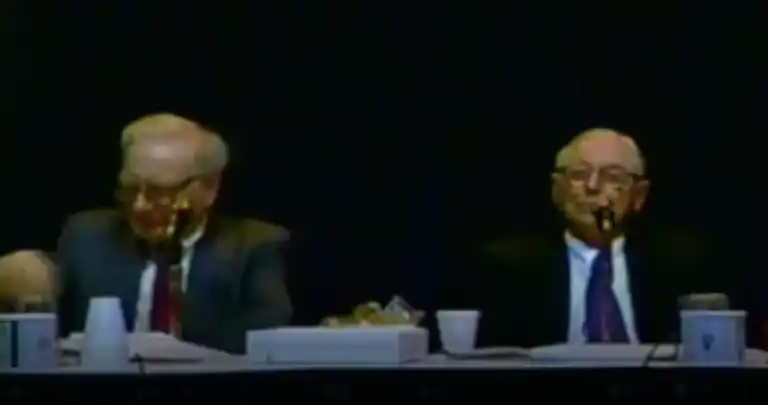
(Buffett and Munger in 2000, source: video screenshot)
Of course, strictly speaking, this probably wasn't a "confrontation" anymore. Because the Nasdaq index had already started its downward cycle after peaking in March 2000. By the end of April 2000, the Nasdaq had experienced a staggering单周25% drop; it was "settlement time." However, a significant number of investors also believed Buffett wasn't the real winner. For example, A16z founder Marc Andreessen believed Buffett was merely "delaying" or "avoiding" something; the "internet bubble" itself wasn't wrong, just "ill-timed."
He said: "The bursting of the internet bubble instantly turned all ideas deemed genius into utter madness and stupidity. Pets.com is a classic example. But actually, all those ideas work today. I can't think of a single idea that doesn't work now."
"Most of the Time, IQ Cannot Defeat Risk"
If the 2000 debate was Buffett's仓促应战 under excessive market繁荣, then in the second debate a few years later, Buffett's role was more of the "主动出击" one.
Fast forward to May 2006. At the annual shareholders' meeting, Buffett抛出了一个观点, believing that over a sufficiently long time horizon, the so-called "professionals" engaged in "active management" would underperform "stay-put" business investors, because these professionals charge "excessive" management fees, preventing investors from accessing assets at low cost. To validate his point, Buffett proposed a bet: if anyone could find five high-fee,知名管理人管理的 hedge funds whose returns could match a non-managed S&P 500 index fund, he was willing to lose $500,000 to them.
Given Buffett's stature in the江湖, and his "prophet-like" performance during the internet bubble, no one dared to rashly question this view, let alone challenge it. So it wasn't until July 2007 that a challenger finally emerged: the hedge fund Protégé Partners LLC.
First, a brief introduction to Protégé Partners. Its founder is Jeffrey Glynn Tarrant, a金融行业的标准老兵. He attended Harvard Business School and his first job after graduation—in 1985—was at Berkeley Asset Management co-managing one of America's earliest hedge funds, the Sequoia Fund. Protégé Partners was Tarrant's second entrepreneurial venture (his first was Altvest, a consulting firm established in 1996, later acquired by咨询巨头晨星). Initially a venture capital fund focused on early-stage projects, it gradually evolved into a hedge fund firm as business expanded.
Of course, the key point is Protégé's战绩辉煌. By mid-2007 when they issued the challenge, their assets under management were $3.5 billion with a 95% return. Most notably, they敏锐地察觉ed as early as 2004 that "the real estate market and subprime mortgage values were severely overvalued and即将暴跌," so they entrusted $60 million to legendary hedge fund manager John Paulson, who was坚定看空 the U.S. housing market. They ultimately succeeded in making a fortune in 2008. Their story was also written into a non-fiction business book titled "The Greatest Trade Ever: The Behind-the-Scenes Story of How John Paulson Defied Wall Street and Made Financial History."
In short, Protégé fully met Buffett's criteria:足够知名, able to charge higher fees, a hedge fund. The specific bet was that Protégé, represented by co-founder Ted Seides, would wager on the performance of five hedge funds, specifically their average return after deducting all fees, costs, and expenses. As a benchmark, Buffett chose the performance of a low-cost S&P 500 index fund from Vanguard (with a management fee of only 0.04%). The bet would begin on January 1, 2008, last for 10 years, and be decided on December 31, 2017.
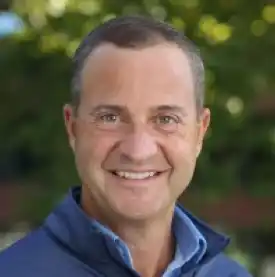
(Ted Seides, source: personal social media)
Again,先说结论: Buffett won again, and ended the match early. From 2008 to 2016, over nine years, all five hedge funds selected by Ted Seides underperformed the index fund chosen by Buffett. Three of the funds甚至 had annualized returns of less than 1%.
Seides had to admit Buffett's correctness in his article宣布"认输", stating, "He was right, hedge fund fees are indeed high, and his argument is persuasive. Fees are crucial in investing; that's undeniable." Buffett also showed足够的风度 after the bet ended, saying both Seides and the managers of these five funds were "honest and smart people." But he added, "the typical hedge fund fee structure of 2% management fee plus 20% of profits means that even though fund managers often offer nothing but晦涩难懂的废话, they get handsomely rewarded."
But the整个过程 wasn't as smooth as the outcome suggests. Because众所周知, the 2008 subprime mortgage crisis triggered a global financial storm, and such an environment could particularly highlight the value of "hedge funds," namely their "抗风险能力." Looking at具体业绩, the index fund chosen by Buffett lost 37.0% of its value, while the hedge funds lost 23.9%. It took four years for the index fund's returns to surpass them again.
During this period, Buffett's own investment business also遭遇了滑铁卢. At the 2009 shareholders' meeting, Buffett announced his personal wealth suffered an unprecedented loss of $3 billion in 2008. Berkshire Hathaway's losses exceeded $8 billion, with profits down 62%, the worst performance since he took over the company. Buffett's self-criticism in the shareholder letter was profound: "In 2008, I did some dumb things," believing everyone had遭遇ed an "economic Pearl Harbor" and悲观地预测 this recession would be "long and deep." In 2015, the positive returns of the hedge funds selected by Seides briefly超越ed the index fund.
And perhaps the most讽刺意味的是, the best收益 in the entire bet wasn't from Buffett's chosen fund nor Seides' chosen funds, but from the Treasury bonds purchased with the wager. In 2008, both sides bought $640,000 worth of ten-year Treasury bonds, expected to grow to $1 million upon maturity,刚好满足 the original $500,000 each pledge. However, due to the subprime crisis and the subsequent global low-interest-rate救市 policies, these bonds反而暴涨ed. By 2012, the account had reached $1 million, and by 2017, the账面 value was $1.8 million.
So, similar to the debate during the internet bubble era, the hedge funds were essentially doomed after 2015, but they不服. Seides said: "The goal of hedge funds isn't to beat the market but to strive for positive returns over the long term regardless of market conditions. Their mindset is vastly different from traditional 'relative return' investors, whose main goal is to beat the market, even if that means losing less than the market average when it declines."
Economist Noel Watson believed that although Buffett won the bet, the whole victory seemed more like "turning a funeral into a celebration," because it seemed to indicate the capital market had become highly homogenized. One最直观的理由 is that the five hedge funds Seides selected were very diverse; stocks were only a small part. Bonds, commodities, derivatives, currencies, real estate were all included. Seides also pointed out in another article that Buffett's victory was merely幸运地遇到ing the "post-economic crisis recovery period," and the fact that the S&P 500 became one of the world's best-performing indices actually benefited from收益 brought by "market exposure."
From an investment logic perspective, Seides believed "hedge funds—especially the fund-of-funds selected in the bet—were more geographically diversified,偏向小盘股, and carried significantly less market risk compared to fully long-only portfolios."
In response, Buffett directly corrected his矛头指向 in his 2016 shareholder letter and毫不保留地嘲讽ed: "Many very smart people set out to achieve above-average returns in securities markets. We call them active investors. Their opposites, passive investors, will by definition do about average... But, on balance, their efforts cancel each other out, and their IQ will not overcome the costs they impose on investors. Over the long term, the average investor, investing in a low-cost index fund, will do better than investors in a portfolio of hedge funds."
"Mr. Market Should Serve You, Not Instruct You"
So, in summary, what Buffett truly opposes isn't the internet, nor hedge funds, nor all active management. He opposes two more fundamental things:
First, using agnosticism or even a certain deific rhetoric to replace concrete investment judgments;
Second, artificially adding too many variables and barriers in investment decisions, with the ultimate goal merely being "process monetization."
These two things can probably also be applied to the current VC and AI narratives. VCs certainly have their difficulties. Early-stage investing is inherently about betting on incomplete information. If every company already had profits, moats, and certainty, VCs wouldn't be VCs anymore. The World Economic Forum report mentioned at the beginning also acknowledges that venture capital remains a crucial engine for technological advancement. One of the most直观的数据例证s is that in the U.S., companies that once received VC funding and eventually went public account for 94% of the R&D spending by companies founded in the past 50 years.
But the report also contains another set of changes more suitable for today's context: AI is changing the economics of venture capital. On one hand, AI-native companies can achieve revenue scales previously unimaginable with much smaller teams; on the other hand, the computing power, data centers, and energy systems they rely on require industrial-level capital投入. In 2025, AI already accounted for over half of global VC deal value, and more资金 is concentrating in large funding rounds of $100 million or more.
This is probably where Buffett would be interested. He might not deny that AI represents the future. But he would most likely continue追问: How does this company ultimately make money? Will the profits stay with the model company, or flow to芯片, cloud providers, electricity, and data centers? Are today's valuations supported by cash flow, or by the next round of financing? If an industry requires more巨额资本开支 the further it advances, what are investors buying—technology红利, or capital消耗?
So, if a debate between Buffett and the capital market truly erupts again, as it did during the two previous financial storms, I believe the old man's靶子 wouldn't be VC per se. He would simply remind investors whether they are again using "this time is different" to skip price, using "the future is too big" to skip business models, and using complex structures and private market valuations to obscure the simplest questions.
Finally, I'd like to end with a寓言 Buffett shared at the 1987 shareholders' meeting: "You should imagine market quotations as coming from a particularly helpful fellow—Mr. Market, who is your partner in a private business. Mr. Market unfailingly appears every day and names a price at which he will either buy your interest or sell you his.
Even though the business the two of you own may have stable economic characteristics, Mr. Market's quotations will be anything but. For, sadly, the poor fellow has incurable emotional problems. At times he feels euphoric and can see only the favorable factors affecting the business. In that mood, he names a very high buy-sell price because he fears you will snap up his interest and rob him of imminent gains. At other times he is depressed and can see nothing but trouble ahead for both the business and the world. On those occasions he will name a very low price, since he is terrified that you will unload your interest on him.
So, behave like Cinderella at the ball with Mr. Market. You must heed one warning, or everything will turn into pumpkins and mice: Mr. Market is there to serve you, not to instruct you. It is his pocketbook, not his wisdom, that you will find useful. If he shows up some day in a particularly foolish mood, you are free to ignore him or to take advantage of him, but it will be disastrous if you fall under his influence. In fact, if you aren't certain that you understand and can value your business far better than Mr. Market, you don't belong in the game."