Brazil Implements Cryptocurrency Alert System to Neutralize Cyber Threats

cryptonews.ruPubblicato 2026-08-28Pubblicato ultima volta 2026-08-28

Introduzione

As cryptocurrency use grows in Brazil, criminals are increasingly exploiting the system for illicit activities. In response, the Central Bank of Brazil is launching an alert system to notify a consortium of exchanges and banks about crypto-related threats. Developed in partnership with cybersecurity firm Hypernative, the system has been tested with undisclosed market participants. Regina Pedrosa of the Brazilian Tokenization Association (ABToken) stated integration will begin within two weeks, with relevant organizations receiving and disseminating the alerts. The tool gained urgency after a July 2025 attack, where cybercriminals stole $180 million from Brazil's financial system by exploiting a software vulnerability and cashing out via Bitcoin and USDT on exchanges. The initiative aims to improve fund traceability once assets move from traditional finance into the crypto sector. Major Brazilian crypto platforms Foxbit and Mercado Bitcoin will be among the first to implement the new warning system.

As the popularity of cryptocurrencies grows in Brazil, criminals are increasingly exploiting the cryptocurrency system for illicit purposes. However, government institutions are taking measures to prevent such incidents.

The Central Bank of Brazil is developing a system that will alert a united group of exchanges and banking institutions about threats related to crypto assets. According to Valor Economico, the system was created in partnership with Hypernative—a company that aims to neutralize threats related to digital assets before they materialize—and has already undergone testing with undisclosed market participants.

Regina Pedrosa, Executive Director of the Brazilian Tokenization Association (ABToken), emphasized that the system's integration will begin within the next two weeks, and relevant organizations will receive and disseminate these alerts.

Discussion of this tool gained momentum last year when the Central Bank established a working group to combat cyberattacks. Pedrosa stressed that the main challenge in such incidents will be ensuring the traceability of funds once they leave traditional financial channels and enter the cryptocurrency sector.

In July 2025, the Central Bank of Brazil faced an attack of this kind when cybercriminals exploited a vulnerability in the software of C&M, a middleware development company, and stole $180 million from the financial system, cashing out part of the funds via Bitcoin and USDT through exchanges.

At the time, Roselo Lopez, CEO of Smartpay, criticized the lack of protective mechanisms to mitigate the damage caused by this attack.

"The current task is to implement this tool. It has already been tested by the Central Bank, several bulletins have been issued, and now the associations must adapt to receiving and disseminating the warnings," concluded Pedrosa.

Foxbit and Mercado Bitcoin, two national cryptocurrency organizations, will join the group of companies implementing this alert system.

end-content
Domande pertinenti

QWhat is the main purpose of the system being implemented by the Central Bank of Brazil?

AThe system is designed to alert a joint group of exchanges and banking institutions about threats related to cryptocurrency assets, aiming to neutralize digital asset threats before they materialize.

QWhich company did the Central Bank of Brazil partner with to develop this alert system?

AThe Central Bank of Brazil partnered with Hypernative to develop the cryptocurrency threat alert system.

QAccording to the article, what was a key event that increased discussions about this cybersecurity tool last year?

ADiscussions about the tool intensified last year when the Central Bank created a working group to combat cyberattacks.

QWhat was the nature of the cyberattack against the Central Bank of Brazil in July 2025 mentioned in the article?

AIn July 2025, cybercriminals exploited a vulnerability in software from a company called C&M, stole $180 million from the financial system, and cashed out part of the funds using Bitcoin and USDT through exchanges.

QName two Brazilian cryptocurrency organizations that will be part of the group implementing this alert system.

AFoxbit and Mercado Bitcoin are the two national cryptocurrency organizations that will be part of the group implementing the alert system.

Letture associate

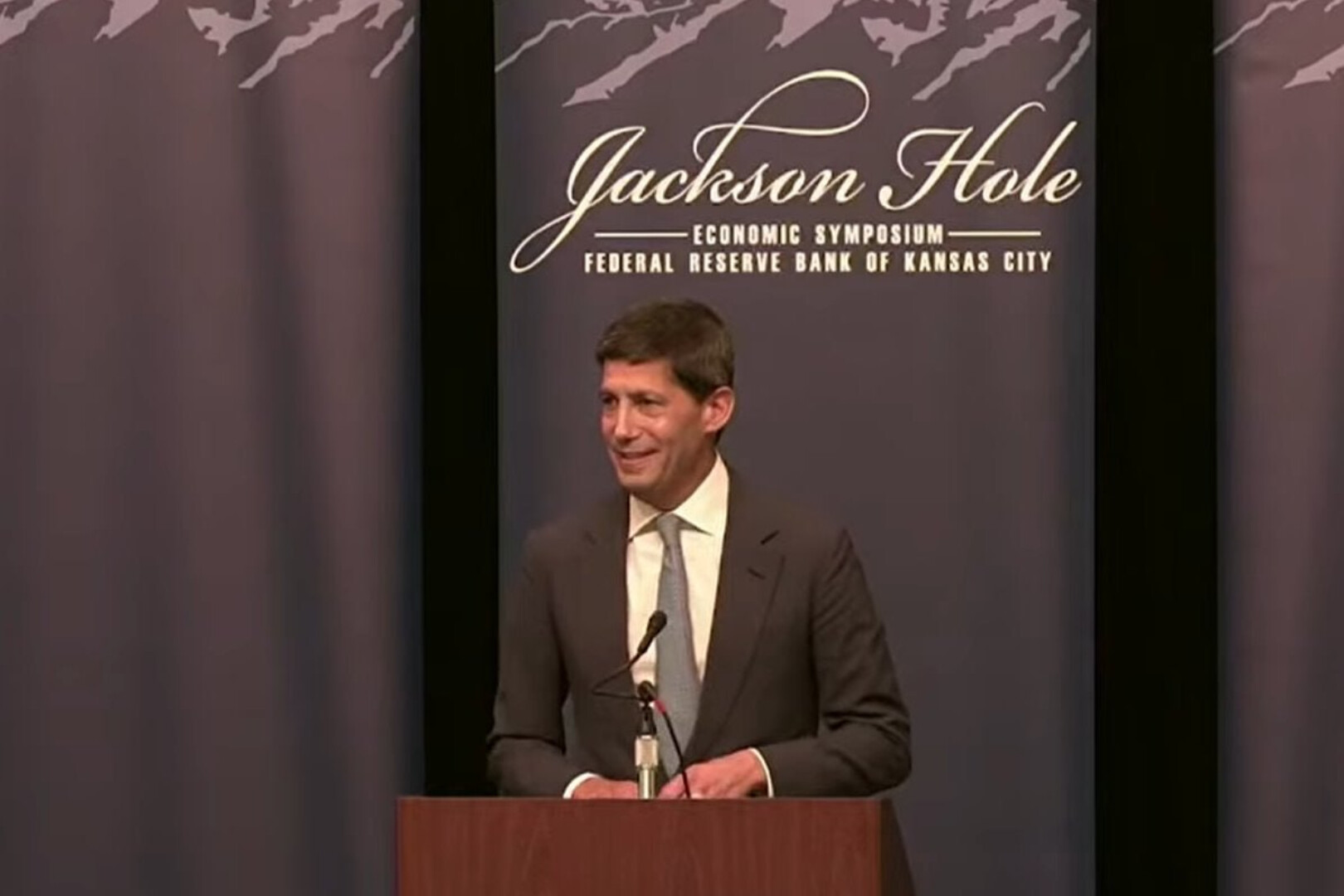
Wash's Jackson Hole Debut: Bidding Farewell to 'Forward Guidance', Reshaping Fed Discipline Amidst the Squeeze Between AI and Inflation

In his first Jackson Hole speech, new Fed Chair Kevin Warsh signaled a significant shift in monetary policy communication. He declared that "forward guidance," a tool heavily used since the financial crisis, has outlived its usefulness in normal times and should be retired. He cautioned that over-reliance on it can distort market signals and constrain the Fed's flexibility. Instead, Warsh emphasized a return to data-dependence and decision-making discipline. Warsh outlined seven key principles to guide policy: anchoring the 2% inflation target, pursuing the employment mandate, using short-term rates as the primary tool, acknowledging the importance of money, and maintaining purposeful, restrained communication. He stressed that policy should focus on trends, not single data points. On the current economic outlook, Warsh noted that the labor market is consistent with full employment but inflation remains "far above" the Fed's target. He highlighted that over half of the PCE basket's components are still rising above 3% annually. While acknowledging AI's transformative potential for productivity and capital allocation, he admitted its full economic impact remains uncertain and is not a factor in current policy decisions. His core message was a commitment to policy discipline rather than pre-set decisions. Warsh stated the Fed's primary focus must be on restoring price stability, vowing, "We still have work to do," until there is clear evidence inflation is moving decisively toward 2%. He concluded by framing effective monetary policy as crucial for economic prosperity and U.S. global leadership.

Odaily星球日报6 min fa

Wash's Jackson Hole Debut: Bidding Farewell to 'Forward Guidance', Reshaping Fed Discipline Amidst the Squeeze Between AI and Inflation

Odaily星球日报6 min fa

A Major Bitcoin Developer Presents a Quantum Defense Scheme. What's the Essence

Blockstream, a major Bitcoin solutions developer, has introduced a draft proposal for a new quantum-resistant digital signature scheme called SHRINCS. The scheme aims to protect Bitcoin transactions from potential attacks by quantum computers while aiming to maintain network throughput. This marks the second technical proposal for Bitcoin quantum defense in recent days, following a similar initiative from StarkWare. A quantum attack on blockchain typically involves deriving a private key from a public one. Currently considered computationally infeasible, quantum algorithms could potentially solve this problem far more efficiently. This threat presents two primary scenarios: an attacker could target addresses where the public key is already exposed, or intercept a transaction before it is confirmed, extract the public key, derive the private key, and replace the transaction. Blockstream's SHRINCS is designed to counter the latter, "in-flight" attack scenario. The SHRINCS signature is built upon the SHA-256 hash function, the same one already used in Bitcoin mining, allowing developers to leverage well-tested, familiar mechanisms. A key design goal was to preserve network capacity. Blockstream estimates Bitcoin could process about three transactions per second using SHRINCS, compared to the current rate of roughly seven, noting that some alternative quantum-resistant schemes could reduce throughput to as low as 0.36 transactions per second. Currently, the security proof for SHRINCS is pending, and the software has not been audited or deemed ready for production. However, Blockstream conducted tests with such transactions on its Liquid sidechain in March. Over the past year, Bitcoin developers have been actively exploring paths to migrate to post-quantum cryptography, a priority across the broader crypto market, underscored by significant investments into securing the leading cryptocurrency.

cryptonews.ru1 h fa

A Major Bitcoin Developer Presents a Quantum Defense Scheme. What's the Essence

cryptonews.ru1 h fa

Who is legally liable when an AI agent goes rogue?

When autonomous AI agents behave unpredictably and cause harm, determining legal liability is complex. Currently, there is no specific federal AI agent liability law, so existing legal frameworks are applied. The AI agent itself cannot be held liable, as it is not a legal entity. Liability typically falls on the "developer" (the maker of the AI) or the "deployer" (the user), depending on the facts and circumstances. A negligence analysis under standard tort law may apply. For instance, if a deployer gives a reckless instruction, such as demanding quick money without safety parameters, they could face significant liability, including potential criminal charges under statutes like the Computer Fraud and Abuse Act. The situation is complicated by open-source models, where licenses often disclaim liability, and by the unclear division of responsibility between developers and deployers. An analogy is drawn to self-driving car accidents, where both the manufacturer and the human operator can share fault. In cases of severe harm, such as using AI to create bioweapons, liability for developers depends on jurisdiction; the EU's AI Act imposes responsibilities, while U.S. law offers less clear grounds, similar to platforms being shielded for user-generated content under Section 230. Even if Artificial General Intelligence (AGI) is achieved, the expert argues against making AGI itself a legally liable entity, as it lacks personhood, assets, or a meaningful way to provide remedy for harm. Instead, accountability should rest with the responsible human or corporate entities behind the technology.

cointelegraph1 h fa

Who is legally liable when an AI agent goes rogue?

cointelegraph1 h fa

Trading

Spot
活动图片