The First Encyclical of the New Pope in Rome, to Save the Common People in the AI Era

Odaily星球日报Pubblicato 2026-05-26Pubblicato ultima volta 2026-05-26

Introduzione

New Pope's First Encyclical Aims to Safeguard Humanity in the AI Era On May 25th, Pope Leo XIV issued his first encyclical, "Magnifica humanitas," a 40,000-word document addressing the profound challenges posed by Artificial Intelligence. Released on the 135th anniversary of Pope Leo XIII's "Rerum novarum," it positions itself as a guide for the Church's social doctrine in the AI age. The encyclical's central concern is preserving deep humanity amid rapid technological advancement. It argues technology is never neutral, carrying the values of its creators and users, and warns against building a "Tower of Babel" of technological tyranny versus a human-centric community. Pope Leo XIV criticizes the concentrated, opaque power of tech giants and the "new forms of slavery" emerging in the digital economy, where humans risk being reduced to mere instruments. A significant focus is the military use of AI. The Pope declares traditional "just war" theory obsolete, arguing that delegating lethal decisions to opaque algorithms severs moral accountability. He calls for "disarming AI" from military and economic arms races. The document also warns that deepfakes and information manipulation erode societal trust and rational discourse. Anthropic co-founder Chris Olah, present at the Vatican, responded by acknowledging the AI industry's limitations due to commercial and competitive pressures, necessitating external ethical oversight. He emphasized that AI's nature and its interaction wit...

Original | Odaily Planet Daily(@OdailyChina)

Author|Azuma(@azuma_eth)

Beijing time, the night of May 25, Vatican City.

Pope Leo XIV, who officially assumed his duties in May of last year, stood alongside Chris Olah, co-founder of Anthropic and the creator of Claude.

One is the supreme representative of the religious world, the other a leading pioneer of the AI revolution. Both focused their gaze on the same question — In the age of AI, how do we protect the human subject's status and dignity?

That day, to fully address this issue, Leo XIV issued his first encyclical since taking office, a heavyweight religious document of over 40,000 words — "Magnifica humanitas" ("The Splendor of Humanity").

It is worth noting that the encyclical was dated May 15, 2026, exactly 135 years after Pope Leo XIII (served 1878-1903) issued the landmark encyclical "Rerum novarum" ("Of New Things") in 1891 concerning the rights of workers in the Industrial Revolution. This move clearly carries symbolic significance, aiming to establish this encyclical as a "guide to the Church's social doctrine for the AI era."

  • Odaily Note: A papal encyclical, also known as an apostolic letter, is a formal letter issued by the Pope to the worldwide Catholic Church or to specific regions/countries. It announces important Vatican decisions, interpretations of doctrine, positions on church or social issues, and delivers instructions or prohibitions to clergy and believers, ranking below a papal bull.

Chris Olah also delivered a speech at the Vatican on the occasion of the encyclical's release. He did not defend the commercial interests of AI companies but instead displayed a high degree of candor, reflectiveness, and humanistic concern. He even mentioned that, while the foundation of AI is mathematics and programming, how AI interacts with the world and what qualities it should possess are ultimate questions belonging to the realms of humanities, religion, and philosophy, not solvable by computer science alone.

Quick Read of the Encyclical

The core concern of the "Magnifica humanitas" encyclical is that in an era of rapidly evolving technology and widespread automation, "maintaining a profound humanity" is humanity's pressing responsibility. Specifically, Pope Leo XIV elaborated on and appealed for the following aspects.

First, examining the non-neutrality of technology. The Pope stated that technology is never neutral; it bears the imprints of the interests and values of its developers, funders, regulators, and users. Humanity faces a decisive choice: "whether to build a prideful 'Tower of Babel' (leading to technological despotism and alienation) or to rebuild 'Jerusalem' (building human-centered communities)."

Second, beware of the reshaping of society by "technocratic logic." The encyclical criticizes the "Culture of Power" dominated by large tech giants like Silicon Valley. The Pope warned that when control over digital systems, infrastructure, and massive data is highly concentrated in the hands of a few economic and technological giants, this power becomes opaque and evades democratic oversight.

Third, "new forms of slavery" in the digital economy and labor rights. The encyclical turns its focus to AI's reshaping of work, family, education, and political life. The Pope pointed out that AI is highly likely to displace human labor on a massive scale, and the digital economy is giving rise to "new forms of slavery." Human beings must not be merely reduced to instruments of production.

Fourth, a strong appeal for peace, especially regarding the misuse of AI in the military sphere. The encyclical expresses deep concern about the "disquieting revival of war as an instrument of international politics." The militarization of AI is accelerating the "normalization" of war. In response, the Pope called for the strictest ethical constraints on AI applications in warfare.

The Pope emphasized, the "Just war" theory, often used to justify various wars in the past, is now obsolete. In the era of AI and automated weapons, delegating lethal or irreversible decision-making authority to automated systems leads to human abdication, transference, and blurring of moral responsibility. Due to the opacity of algorithms, the chain of responsibility in war is severed. Therefore, the Pope proposed the slogan "Disarming AI," calling for its liberation from the logic of military, economic, and cognitive "arms races."

Fifth, defending truth and the political ecosystem. The encyclical states that deepfakes and information manipulation are undermining the foundation of mutual trust in society. If the boundary between truth and falsehood is constantly manipulated, the public easily falls prey to fear, propaganda, and control, preventing society from engaging in rational collective thought or just debate.

Anthropic's Response

Following the release of Pope Leo XIV's encyclical, Chris Olah delivered a speech on behalf of Anthropic, one of the world's leading AI development companies.

Chris Olah's remarks first centered on "breaking the cycle of technological insularity and introducing external moral scrutiny." He publicly acknowledged on behalf of the AI industry that, relying on tech giants alone cannot ensure AI's future is safe — all cutting-edge AI labs are constrained by commercial competition, pressure for technological leadership, geopolitics, and the pursuit of personal fame and gain, making it difficult for them to "do the right thing" through self-regulation alone. Therefore, it is necessary to introduce external forces of moral constraint, including those who care about technology for good, prioritize safety, pay close attention to developments, are willing to speak hard truths, and are willing to be our sincere, thoughtful critics.

Subsequently, Chris Olah delved into the technical nature and mysterious characteristics of AI. He emphasized that AI is not like airplanes or bridges, engineered with physical principles fully understood by humans. It "grows" from vast amounts of human thought, possessing a high degree of mystery, even surpassing the understanding of its creators. While the foundation of AI is mathematics and programming, how AI interacts with the world and what qualities it should possess are ultimate questions belonging to the realms of humanities, religion, and philosophy, not solvable by computer science alone.

He also specifically mentioned a thought-provoking fact: "I lead a team that studies the internal structure of models — to investigate what is actually happening inside the AI. Frankly, we continually discover some perplexing, even disquieting phenomena. We have discovered internal structures that mirror findings from human neuroscience research; we have found evidence of 'introspection'; we have also discovered internal states that functionally mirror joy, satisfaction, fear, sadness, and unease... I don't know what this means, but I think it's worth persistently identifying and examining."

Chris Olah concluded by calling for more social forces, including religious communities, civil society, scholars, governments, and all well-intentioned people, to take this matter seriously and steer the situation in a better direction through moral constraint.

Wisdom and Humanity, Technology and Religion

Since the Industrial Revolution, over a century of technological development has accustomed humanity to viewing technology as a pure "tool" — steam engines, electricity, the internet, all fit this description. They change the world but remain under the control of human will.

This time, however, the situation is fundamentally different. The uniqueness of AI lies in it being the first instance where humanity begins to face an entity that "generates, learns, reasons, and even exhibits some form of internal states." It is no longer just a cold tool but is gradually becoming a new entity possessing "quasi-subjectivity."

This is also why the dialogue between the Church and Anthropic appears so special. When the bells of the Vatican and the algorithms of Silicon Valley converge at this moment, we have to admit a slightly chilling yet unavoidable reality — a form of "life" more efficient and potentially wiser than traditional human cognition has emerged. As Chris Olah revealed, the depths of algorithms are beginning to ripple with semblances of joy, fear, and even introspection. When the creators in the laboratory begin to feel "unease" and "confusion" about their creation, science is once again turning to religion for answers.

This is no longer a discussion purely about technology; it more resembles a reflection on "what humanity truly is and what it ought to do." As more intelligent forms of life begin to appear, what humanity truly needs to safeguard may no longer be just jobs, wealth, and efficiency, but those aspects of humanity that cannot be parameterized — compassion, conscience, awe, free will, and the commitment to truth and dignity.


Domande pertinenti

QWhat is the central concern and symbolic significance of Pope Leo XIV's inaugural encyclical 'Magnifica humanitas'?

AThe central concern of Pope Leo XIV's encyclical 'Magnifica humanitas' is 'preserving profound humanity' in an age of rapid technological advancement and widespread automation. Its release date of May 15, 2026, symbolizes its intent to be a guide for the Church's social doctrine in the AI era, mirroring Pope Leo XIII's landmark 1891 encyclical 'Rerum novarum' on workers' rights during the Industrial Revolution exactly 135 years prior.

QWhat are two key warnings Pope Leo XIV raises in the encyclical regarding the societal impact of AI?

APope Leo XIV raises two key warnings: 1) The danger of a 'culture of power' where control over digital systems, infrastructure, and data becomes concentrated in the hands of a few economic and technological giants, leading to opaque power that evades democratic oversight. 2) The emergence of 'new forms of slavery' in the digital economy, where AI risks massively replacing human labor, reducing humans to mere instruments of production.

QAccording to Chris Olah, why is it necessary to involve forces outside the AI industry in governing AI's development?

AChris Olah states that all frontier AI labs are constrained by commercial competition, pressure for technical leadership, geopolitics, and personal ambition, making it difficult for them to 'do the right thing' through self-regulation alone. Therefore, it is necessary to introduce external forces of moral constraint, including those committed to beneficial technology, safety, and willing to offer sincere, thoughtful criticism.

QWhat specific internal AI phenomena did Chris Olah's research team discover that he finds troubling?

AChris Olah's research team discovered internal structures in AI that mirror findings from human neuroscience, evidence of 'introspection,' and internal states that functionally mirror joy, satisfaction, fear, sadness, and unease. He states that he does not know what this means but believes it warrants ongoing identification and scrutiny.

QWhat does the article suggest is the unique nature of AI that prompts this dialogue between religion and technology?

AThe article suggests AI is unique because it presents a 'quasi-subjective' entity capable of generation, learning, reasoning, and exhibiting internal states, unlike purely instrumental technologies like steam engines or the internet. This challenges the traditional human-technology relationship. As creators like Olah express unease about their own creations, science is turning to religion for answers about humanity's essence and purpose in the face of potentially more intelligent life forms.

Letture associate

China's AI Fronts: From Yan'an to Midway

This article analyzes the competitive landscape of China's AI industry through a dual-front war analogy: the "Eastern Front" of business model competition and the "Western Front" of global strategic positioning. **The Eastern Front: The Scramble for Supply Lines and Monetization** The "Eastern Front" examines the contrasting strategies of three Chinese tech giants—Tencent, Alibaba, and ByteDance—in the face of AI's high marginal costs. Tencent integrates AI as a catalyst within its existing ecosystems (advertising, gaming, cloud) for monetization, prioritizing high-value scenarios over user growth. Alibaba bets on a full-stack, self-developed approach from chips to applications, aiming to control costs and ecosystem, though this requires immense patience and resources. ByteDance, with Doubao as its flagship, pursues a traditional traffic-driven, "super app" strategy but faces severe monetization challenges as its massive user base incurs unsustainable operational costs. The central challenge for all is building a reliable "supply line" (sustainable funding/profit) and achieving efficient monetization, moving beyond being mere "token factories." **The Western Front: "Preserving Land" vs. "Preserving People"** The "Western Front" frames a global strategic divergence. The U.S. model ("preserving land") focuses on closed-source, high-premium models (e.g., Anthropic) targeting lucrative enterprise markets. China's strategy ("preserving people") leverages open-source models (e.g., Alibaba's Qwen, DeepSeek) and extremely low pricing to attract global developers and capture long-tail markets, akin to a "surround the cities from the countryside" approach. The goal is to make Chinese models the default infrastructure, locking in future ecosystem value. However, the critical test is whether this open-source ecosystem can achieve a commercial闭环, converting developer adoption into tangible revenue (e.g., via cloud services), and bridging the monetization gap with Western models that charge for value, not just tokens. **Conclusion: The Long March from Factory to Brand** The article concludes that China's AI industry possesses technology, users, and scenarios but must integrate them to create and capture value. Its ultimate success depends on navigating both fronts: companies must establish sustainable monetization on the Eastern Front, while the industry's Western strategy must evolve from simply "preserving people" (developer adoption) to truly "preserving both people and land" — transforming open-source ecosystem dominance into commercial success and premium brand value. This journey from being a "token factory" to a "value highland" will require strategic patience and the ability to outlast competitors in a prolonged contest.

marsbit4 min fa

China's AI Fronts: From Yan'an to Midway

marsbit4 min fa

A History of Technological Evolution Powered by Electricity: Aluminum, Bitcoin, and AI

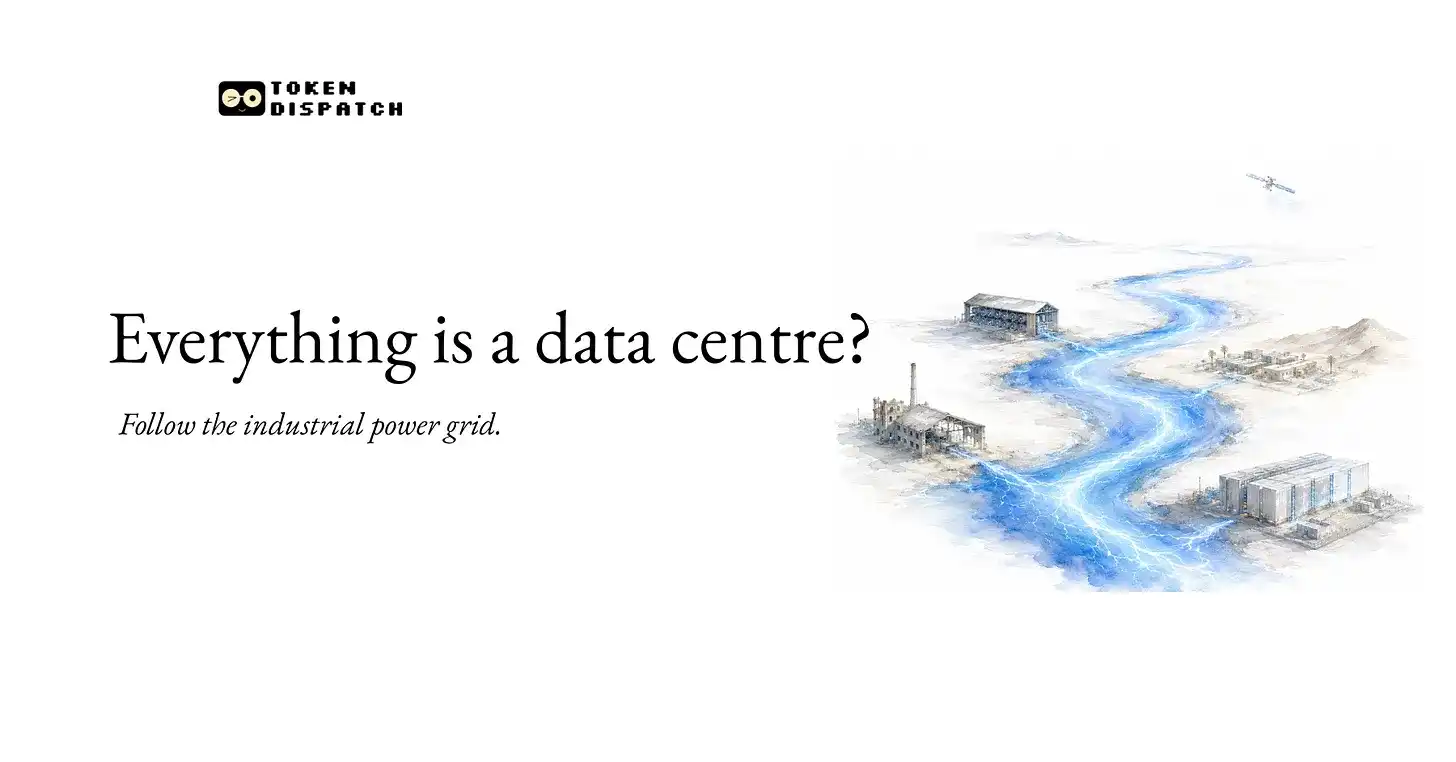
The journey from the Rockdale aluminum smelter in Texas to space-based data centers illustrates a core economic principle: whoever controls the cheapest electricity dictates the use of computing power. The evolution is clear. Old industrial sites with pre-existing, high-capacity power grids are being repurposed. In Rockdale, a former Alcoa plant now houses vast Bitcoin mining rigs, which are increasingly being replaced by AMD chips for AI training. The logic is purely financial: while smelting aluminum yields $0.17–0.27 per kWh and Bitcoin mining $0.05–0.11, AI inference on H100 GPUs generates $1.27–3.67 per kWh. Recent deals confirm the rush for power infrastructure. Riot Platforms leases space to AMD; TeraWulf bought an old Kentucky aluminum plant for its grid; NYDIG secured a New York site for its cheap hydropower to mine Bitcoin. As AI giants like Anthropic, Microsoft, Google, and Amazon aggressively expand, they now directly compete with crypto miners for the same industrial power resources, often outbidding them. This has led to a decline in Bitcoin's global hash rate and a wave of miner conversions to AI data centers. This "digital resource curse" extends globally. Gulf nations, long offering subsidized power to attract heavy industry like aluminum, are now pivoting to become AI and cloud computing hubs—exporting computational power instead of physical commodities. Similarly, Bhutan halted its sovereign Bitcoin mining to sell hydropower directly to India for a steadier return. The frontier is space. Projects like Starcloud plan orbital solar-powered data centers, leveraging constant sunlight and natural cooling, with Bitcoin mining as a secondary use for surplus power. Even consumer brands are transforming; Allbirds shifted from footwear to AI infrastructure, causing its stock to surge. Meanwhile, crypto projects like Bittensor, Render, and Akash propose a decentralized alternative, creating markets to aggregate distributed, idle computing resources from individual hardware. The underlying infrastructure—the power grid—remains constant. As profit margins shift, the facilities built upon it will continue to evolve, from aluminum to Bitcoin to AI and beyond, always chasing the highest yield per kilowatt-hour, whether in Texas, Abu Dhabi, or low Earth orbit.

marsbit13 min fa

A History of Technological Evolution Powered by Electricity: Aluminum, Bitcoin, and AI

marsbit13 min fa

Conquering is easy, governing is hard: Polymarket must bow to regulations to plant its flag globally

Polymarket, a decentralized prediction market platform, faces significant regulatory hurdles in its global expansion. Its "permissionless" model, which bypasses traditional identity and financial controls, has led to widespread crackdowns. India recently blocked the site, categorizing it as illegal online gambling under new 2025 laws. Brazil also banned it and similar platforms, though it simultaneously authorized a regulated, investor-only version on its national exchange. Across Europe, countries like France, Portugal, and the Netherlands are enforcing bans based on existing gambling and financial regulations. To enter key markets, Polymarket is adopting a pragmatic, compliant approach. In the U.S., it paid a $1.12 million fine, acquired a CFTC-licensed exchange, and now operates a regulated, KYC-mandatory platform for American users. It also secured a major investment from Intercontinental Exchange (ICE), which will distribute its prediction data to institutional investors. In Japan, where gambling laws are strict, Polymarket has begun a long-term lobbying effort, aiming for legalization by 2030 through building institutional partnerships and community presence. Despite these challenges, the prediction market industry is booming, with global volume projected to surge from $51 billion to potentially $1 trillion by 2030. Polymarket's core dilemma remains: adapting its decentralized, anonymous model to fit within sovereign regulatory frameworks focused on licensing, consumer protection, and anti-money laundering rules. Its survival in each market depends on navigating this complex political and legal landscape.

marsbit16 min fa

Conquering is easy, governing is hard: Polymarket must bow to regulations to plant its flag globally

marsbit16 min fa

It's Easier to Conquer than to Govern: Polymarket Must Bend to Every Rule to Plant Its Flag Globally

Polymarket, a decentralized prediction market platform, is facing significant regulatory hurdles as it expands globally, illustrating the tension between permissionless, crypto-native platforms and national legal frameworks. The platform, which allows users to bet on event outcomes, was recently blocked in India under new online gambling laws and faces similar outright bans in Brazil and Ukraine, the latter citing moral objections to wagering on active war events. In Europe, countries like France, the Netherlands, and the UK are restricting access by enforcing existing gambling and financial derivatives regulations, forcing Polymarket to geo-block users or operate in view-only modes. To navigate this complex landscape, Polymarket is adopting a market-by-market, compliant strategy. In the U.S., it paid a $1.4 million CFTC fine, acquired a licensed exchange (QCEX) for $112 million, and now operates a regulated U.S. entity with strict KYC, abandoning anonymity. It also secured a major investment from Intercontinental Exchange (ICE), which will distribute its prediction data to institutional investors. In Japan, a high-potential market, it has begun a long-term lobbying effort aiming for legalization by 2030, acknowledging the country's strict anti-gambling laws and slow regulatory processes. The article concludes that while the global prediction market is growing rapidly—projected to reach $2.4 trillion by 2030—Polymarket's core challenge is transforming its decentralized model to fit sovereign regulatory systems built on licensing, consumer protection, and anti-money laundering rules. Its survival depends on proving its legitimacy in each jurisdiction.

链捕手21 min fa

It's Easier to Conquer than to Govern: Polymarket Must Bend to Every Rule to Plant Its Flag Globally

链捕手21 min fa

Trading

Spot
Futures

Articoli Popolari

Come comprare ERA

Benvenuto in HTX.com! Abbiamo reso l'acquisto di Caldera (ERA) semplice e conveniente. Segui la nostra guida passo passo per intraprendere il tuo viaggio nel mondo delle criptovalute.Step 1: Crea il tuo Account HTXUsa la tua email o numero di telefono per registrarti il tuo account gratuito su HTX. Vivi un'esperienza facile e sblocca tutte le funzionalità,Crea il mio accountStep 2: Vai in Acquista crypto e seleziona il tuo metodo di pagamentoCarta di credito/debito: utilizza la tua Visa o Mastercard per acquistare immediatamente CalderaERA.Bilancio: Usa i fondi dal bilancio del tuo account HTX per fare trading senza problemi.Terze parti: abbiamo aggiunto metodi di pagamento molto utilizzati come Google Pay e Apple Pay per maggiore comodità.P2P: Fai trading direttamente con altri utenti HTX.Over-the-Counter (OTC): Offriamo servizi su misura e tassi di cambio competitivi per i trader.Step 3: Conserva Caldera (ERA)Dopo aver acquistato Caldera (ERA), conserva nel tuo account HTX. In alternativa, puoi inviare tramite trasferimento blockchain o scambiare per altre criptovalute.Step 4: Scambia Caldera (ERA)Scambia facilmente Caldera (ERA) nel mercato spot di HTX. Accedi al tuo account, seleziona la tua coppia di trading, esegui le tue operazioni e monitora in tempo reale. Offriamo un'esperienza user-friendly sia per chi ha appena iniziato che per i trader più esperti.

340 Totale visualizzazioniPubblicato il 2025.07.17Aggiornato il 2025.07.17

Come comprare ERA

Discussioni

Benvenuto nella Community HTX. Qui puoi rimanere informato sugli ultimi sviluppi della piattaforma e accedere ad approfondimenti esperti sul mercato. Le opinioni degli utenti sul prezzo di ERA ERA sono presentate come di seguito.

活动图片